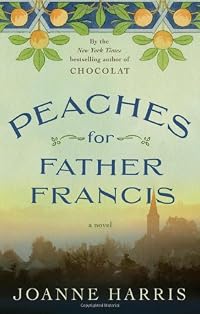
On This Page
Description
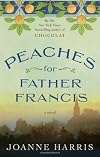
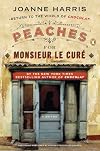
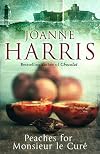
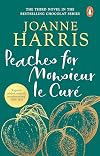
Vianne Rochet returns to the French village of Lansquenet with her daughters, Anouk and Rosette, before allying herself with a desperate Father Frances Reynaud to reverse disturbing local changes.Tags
Recommendations












Member Reviews
Peaches may be in the title of this novel and are a major motif throughout, but what else was I going to indulge in when we’re about as far away from fresh peach season as possible? Chocolate of course! After the tumultuous events of the previous novel, where Vianne and Anouk almost lost it all to trickster Zosie, and a well timed letter from their dearly departed friend Armandé it is time for their little family to return to Lansquenet. Alongside them follows their familiar winds, but what they don’t realize (even with Armandé’s warning that their help will be desperately needed) is how much things have changed in the sleepy little village that they stired up with their chocolaterie. The winds have already blown in a new group show more of people, immigrants from the Middle East and North Africa, whose customs are even farther removed than Vianne’s in the eyes of some of the villagers. Some are just fine and make friends with the newcomers at first, but their stubborn curate Reynaud has a hard time acclimatizing to the new realities in France (and in the practises of his own church) and runs afoul of the group by apparent accident. The story is rife with small town sensibilities (and their inescapable micro dramas), and in a surprising twist we find ourselves spending much of the story inside the character of the obdurate priest as he struggles with his faith, his community, and ultimately his heart. Reynaud may be a bit of an unlikeable character from the outside, as his cold demeanour does not win him friends or even passive allies, but seeing the town from his perspective is a gratifying structural element that keeps the story from becoming a politicized retelling of the first novel in the series. Harris also steps away from what we might expect from a triumphant return to Lansquenet with the highly modernized story that relies on current events to drive everything - we may be back in small town France, but the themes about female empowerment, immigration, and changing times are fraught with an all to realistic tension. There were definitely parts of the story that felt distinctly uncomfortable in comparison to the cozier tendencies of Vianne’s usual stories, and a few characters and events felt particularly fraught, but by the finale Harris revealed a surprising depth of knowledge about the Muslim community and the impacts and changes that its women are going through. Vianne, Anouk, and Rosette (and their chocolate) are far smaller characters it seems in this story, but in doing so they make room for new and unique stories to be told: those of Reynaud, the Woman in Black Inès Bencharki, and of the new community that calls Lansequenet home. show less
Scrying with chocolate is an uncertain business, closer to dreams than to truth, more likely to throw up fantasies than anything that I can use. It flutters like dark confetti, each piece an ephemeral fragment, gleaming for a second and then going out like a blown spark. For a moment I think I see Roux; then I recognize Reynaud, walking, head lowered, by the Tannes. Reynaud as a vagrant, unshaven and pale, carrying a rucksack with a broken leather strap. What does it mean? Why Reynaud?
If you were paying attention, you might have gathered that Peaches is a sequel to Chocolat - it's the third in the series. Actually, I think it fits nicely as a direct sequel, as if The Girl with the Lollipop Shoes had never been put to paper. And show more although Lollipop is okay, I believe Peaches is a superior work.
It is so nice to be back in Lansquenet again, with all the familiar faces and plenty of new ones too. And Vianne, wading in and stirring the pot in her own magical way. I always love Harris' knack for small villages - how everyone changes and doesn't at the same time. If Chocolat was Vianne's book, Peaches is Reynaud's. I never thought I would feel such affection for him, but he's grown on me. show less
If you were paying attention, you might have gathered that Peaches is a sequel to Chocolat - it's the third in the series. Actually, I think it fits nicely as a direct sequel, as if The Girl with the Lollipop Shoes had never been put to paper. And show more although Lollipop is okay, I believe Peaches is a superior work.
It is so nice to be back in Lansquenet again, with all the familiar faces and plenty of new ones too. And Vianne, wading in and stirring the pot in her own magical way. I always love Harris' knack for small villages - how everyone changes and doesn't at the same time. If Chocolat was Vianne's book, Peaches is Reynaud's. I never thought I would feel such affection for him, but he's grown on me. show less
Joanne Harris attempts something rather different with [b:Peaches for Monsieur le Curé|13153972|Peaches for Monsieur le Curé (Chocolat, #3)|Joanne Harris|https://i.gr-assets.com/images/S/compressed.photo.goodreads.com/books/1333578274l/13153972._SY75_.jpg|18332182] to [b:Chocolat|47401|Chocolat (Chocolat, #1)|Joanne Harris|https://i.gr-assets.com/images/S/compressed.photo.goodreads.com/books/1388674628l/47401._SY75_.jpg|2930558] and [b:The Lollipop Shoes|1022699|The Lollipop Shoes (Chocolat, #2)|Joanne Harris|https://i.gr-assets.com/images/S/compressed.photo.goodreads.com/books/1342810333l/1022699._SY75_.jpg|1008826]. The first two novels in the series touch on social issues, but focus on personal relationships, small community bonds, show more and cosy conjuring. Here she examines social and religious integration in modern France, which doesn't always combine well with Vianne making magical jam. I respect the attempt and the theme of questioning short-term outsider intervention as a solution to complex problems. Nonetheless, I do not think it entirely works to give the points of view to Vianne and Father Reynaud, as this leaves the Muslim community as mysterious outsiders. For me, this slightly undermined the point that the village can live together as one awkward community of different people. Vianne's magic doesn't help the situation, so the narrative seems a bit disjointed. I think it would have been a stronger book if Ines had been a third protagonist, rather than a shadowy threatening presence. I also wasn't keen on the ending. It seemed far too convenient to have Ines and her evil son fall into the river and die. Had that not happened, how would the village have reckoned with his crimes and her tragic past?
That said, I found Reynaud's narration interesting and the plot compelling enough to read the whole novel in an evening. There are some lovely character moments and the vivid sensual details continue to be pleasing. Although there isn't much chocolate-making, some of the meals sound pretty amazing. I certainly found it a fun break from reading theory, despite not enjoying it as much as [b:Chocolat|47401|Chocolat (Chocolat, #1)|Joanne Harris|https://i.gr-assets.com/images/S/compressed.photo.goodreads.com/books/1388674628l/47401._SY75_.jpg|2930558] or [b:The Lollipop Shoes|1022699|The Lollipop Shoes (Chocolat, #2)|Joanne Harris|https://i.gr-assets.com/images/S/compressed.photo.goodreads.com/books/1342810333l/1022699._SY75_.jpg|1008826] show less
That said, I found Reynaud's narration interesting and the plot compelling enough to read the whole novel in an evening. There are some lovely character moments and the vivid sensual details continue to be pleasing. Although there isn't much chocolate-making, some of the meals sound pretty amazing. I certainly found it a fun break from reading theory, despite not enjoying it as much as [b:Chocolat|47401|Chocolat (Chocolat, #1)|Joanne Harris|https://i.gr-assets.com/images/S/compressed.photo.goodreads.com/books/1388674628l/47401._SY75_.jpg|2930558] or [b:The Lollipop Shoes|1022699|The Lollipop Shoes (Chocolat, #2)|Joanne Harris|https://i.gr-assets.com/images/S/compressed.photo.goodreads.com/books/1342810333l/1022699._SY75_.jpg|1008826] show less
Chocolat, book three.
I've been a fan of Joanne Harris for many years now (though not of her newer Young Adult fantasy series), and another book in the Chocolat series is a treat. I did wish I'd read Lollipop Shoes (The Girl with No Shadow) before reading this book though, as there were definitely some gaps caused by jumping straight from Chocolat. Unfortunately I didn't have time to read both before the discussion.
The subject matter is highly topical, particularly in France, where it has been declared illegal to wear a face veil, or niqab. The sleepy village of Lansquenet, where Vianne had opened her chocolaterie eight years before, is now home to a growing population of North African Muslims. A community has sprung up on the far side show more of the river and animosity has developed on both sides. A mysterious letter draws Vianne back, along with her, now teenage daughter, Anouk and her younger sister, Rosette. Meanwhile, Roux awaits for their return on a houseboat in Paris.
The animosity between Vianne and Father Reynaud is still there, but he has changed and no longer has the power over the village that he once had. Several other familiar faces take their place in the narrative, like old friends returning.
Eight year old Rosette is a lively addition to the Roche family, she is such a character, and she plays an important role in events. The descriptions of the village are just beautiful and the whole flavour of France is wonderfully evoked.
There are misunderstandings to be tackled and a question lurking in the past that must be addressed, and Vianne stays longer than she had originally planned.
I was surprised when my book group slated this book, as I'd enjoyed it, maybe not quite as much as Chocolat, but it was a solid 4 stars. They criticised it for being too unbelievable, but I think you expect to need a little imagination for Joanne Harris books.
Ms Harris handles the racial tension with a deft hand, raising a subject that is rarely written about in contemporary novels. This seems a natural progression for an author who wrote about Catholicism in Holy Fools, and she handles it with discretion.
I sincerely hope this is not the last we have seen of Vianne and the little village of Lansquenet. The author will be at the Dubai Literary Festival in March, hopefully she will have good news :)
Also read:
Chocolat (5 stars)
Blackberry Wine (5 stars)
Sleep, Pale Sister (4 stars)
Gentlemen and Players (5 stars)
Runemarks (2 stars)
Coastliners (5 stars)
Holy Fools (4 stars)
Five Quarters of the Orange (5 stars) show less
I've been a fan of Joanne Harris for many years now (though not of her newer Young Adult fantasy series), and another book in the Chocolat series is a treat. I did wish I'd read Lollipop Shoes (The Girl with No Shadow) before reading this book though, as there were definitely some gaps caused by jumping straight from Chocolat. Unfortunately I didn't have time to read both before the discussion.
The subject matter is highly topical, particularly in France, where it has been declared illegal to wear a face veil, or niqab. The sleepy village of Lansquenet, where Vianne had opened her chocolaterie eight years before, is now home to a growing population of North African Muslims. A community has sprung up on the far side show more of the river and animosity has developed on both sides. A mysterious letter draws Vianne back, along with her, now teenage daughter, Anouk and her younger sister, Rosette. Meanwhile, Roux awaits for their return on a houseboat in Paris.
The animosity between Vianne and Father Reynaud is still there, but he has changed and no longer has the power over the village that he once had. Several other familiar faces take their place in the narrative, like old friends returning.
Eight year old Rosette is a lively addition to the Roche family, she is such a character, and she plays an important role in events. The descriptions of the village are just beautiful and the whole flavour of France is wonderfully evoked.
There are misunderstandings to be tackled and a question lurking in the past that must be addressed, and Vianne stays longer than she had originally planned.
I was surprised when my book group slated this book, as I'd enjoyed it, maybe not quite as much as Chocolat, but it was a solid 4 stars. They criticised it for being too unbelievable, but I think you expect to need a little imagination for Joanne Harris books.
Ms Harris handles the racial tension with a deft hand, raising a subject that is rarely written about in contemporary novels. This seems a natural progression for an author who wrote about Catholicism in Holy Fools, and she handles it with discretion.
I sincerely hope this is not the last we have seen of Vianne and the little village of Lansquenet. The author will be at the Dubai Literary Festival in March, hopefully she will have good news :)
Also read:
Chocolat (5 stars)
Blackberry Wine (5 stars)
Sleep, Pale Sister (4 stars)
Gentlemen and Players (5 stars)
Runemarks (2 stars)
Coastliners (5 stars)
Holy Fools (4 stars)
Five Quarters of the Orange (5 stars) show less
I am no longer the Vianne Rocher who blew into town eight years ago. [...] I am in charge of my destiny. I call the wind. It answers to me.(23)While I've read quite a bit of Harris' oeuvre, I've never gotten around to her most famous novel, Chocolat.2 Peaches for Father Francis is the third book to feature characters from Chocolat. I haven't read Chocolat's first sequel, The Girl with No Shadow,3 either. To my mind, Peaches for Father Francis functions perfectly well as a stand along novel, though a a familiarity with Chocolat's storyline and characters is useful to the reader.
The primary action of Peaches for Father Francis takes place in Lansquenet-sous-Tannes, the fictional French village that was the setting of Chocolat (The Girl show more with No Shadow takes place in Paris, which is where Peaches for Father Francis begins). A letter from her now-deceased friend Armande Voizin summons protagonist Vianne back to Lansquenet, which Armande suspects will be in need of Vivianne's help by the time the letter is delivered to her. When Vianne arrives in Lansquenet much has changed in the village. The storefront where she sold chocolate once upon a time is now being used as a small Muslim girls school or was until a recent arson attack. The primary suspect in the attack is Vianne's old nemesis (and the novel's second protagonist), village curate Reynaud Francis.
Reynaud finds an unlikely ally in Vianne, who is quick to surmise that all is not as it seems in Lansquenet. Peaches for Father Francis is classic Harris. Her prose is gorgeous, evocative, and tinged with magic. The story, which revolves around the problems caused by prejudice within a community affected by conservatism within and self-segregation of its (Moroccan Muslim) immigrant population, is timely. The novel's themes--which include tolerance and forgiveness, was is vs. what seems to be, the inevitability of change--are timeless.
Here's a quote from Reynaud that struck me:
A couple other truisms from the novel:
Of course, I know God has a plan. But in recent years I've found it increasingly hard to believe that the plan is running as smoothly as He intended. The more I think about it now, the more I see God as a harried bureaucrat, wanting to help, but crippled by paperwork and committees. If He sees us at all, [...] it is from behind a desk piled high with accounts and works-in-progress. That's why He has priests to do His work, and bishops to oversee them. [...] But try to juggle too many balls, and this is what happens. Some go astray. (244)
Peaches for Father Francis is a must-read for lovers of Harris and/or Chocolat. Despite its timeliness I'm not sure that I'd recommend Peaches for Father Francis as an introduction to Harris' work since it builds upon groundwork laid in Chocolat (and probably also in The Girl with No Shadow). Rather I'd recommend Peaches for Father Francis in conjunction with Chocolat.
Love is random, centreless; striking out like pestilence. (268)
Vianne: But we have the uncanny knack of focusing on difference; as if excluding others could make our identity stronger. But in all my travels, I have found that people are mostly the same everywhere. Under the veil, the beard, the soutane, it's always the same machinery. (221)
For full review (with footnotes) see: morsie reads: Peaches for Father Francis by Joanne Harris. show less
When Peaches for Monsieur le Curé landed on my doorstep for review I wasn’t particularly enthusiastic. I remembered seeing the movie Chocolat quite some years ago (purely because Johnny Depp starred) and not being overly impressed, however with a few pages of this novel I was hooked and hated having to put it down, even briefly.
Peaches for Monsieur le Curé is the third book in the Chocolat series, following on from Chocolat and The Girl with No Shadow. Vianne, Roux, Anouk and Rosette are living in Paris when a letter arrives from Luc Clairmont within which is a letter from Armande, despite her death more than 8 years before. In it, Armande pleads for Vianne to return to Lansquenet with the conviction that that the townspeople need show more her once again. With some trepidation, Vianne and her daughters do as Armande asks, only to discover a village divided and her old rival, Monsieur Reynaud le Curé in trouble. The wind is restless as are the people and this time, Vianne’s magic may not be enough to unite the people of Lansquenet.
Joanne Harris conjures the town of Lansquenet and its people so wonderfully, I was immediately entranced by the novel. I enjoyed being introduced to the author’s versions of the characters, admiring Vianne’s spirit and desire to create peace between the French and growing community of les Maghrébins (Muslims) who have established themselves at the fringes of the town. I even came to like Monsieur le Curé, despite his stiff necked ways.
Peaches for Monsieur le Curé sensitively explores themes such as religious difference, tolerance, change and the meaning of home. The ‘war’ between the (Catholic)French and Muslims is portrayed without disrespecting either religion, as Vianne tries to determine what is at the heart of the conflict.
For Vianne the changes in Lansquent are disorientating at first, not only the development of Les Marauds, but also the changes in the people she once knew so well, like Josephine and Reynaud. Vianne’s experiences in Lansquanet forces her to consider if in always seeking change, Vianne has simply been running away.
It is food in general, rather than Vianne’s chocolates, that unites the people of this story, from the peaches growing in the garden of Armande’s house where Vianne and her daughters are living, to the feasts served at sundown in Les Marauds. Harris’s descriptions of the food, the sight, smell and taste is wonderfully evocative.
I was surprised at the rather fundamental differences between Harris characters and those in the movie of Chocolat, for example Reynaud is the town mayor in the movie, but a priest in the book. Co-incidentally, Chocolat was shown on television the night after I finished Peaches for Monsieur le Cure so I watched and was disappointed with the lack of whimsy and nuance in the film (though, Johnny Depp *sigh*).
Peaches for Monsieur le Curé (titled Peaches for Father Frances in the US) is a delicious read. I adored the subtle touch of magical realism, the lyricism of the writing, the fascinating characters and engrossing story and plan to read the first two books as soon as I can. Charming, delightful, magical, Peaches for Monsieur le Curé is a wonderful novel. show less
Peaches for Monsieur le Curé is the third book in the Chocolat series, following on from Chocolat and The Girl with No Shadow. Vianne, Roux, Anouk and Rosette are living in Paris when a letter arrives from Luc Clairmont within which is a letter from Armande, despite her death more than 8 years before. In it, Armande pleads for Vianne to return to Lansquenet with the conviction that that the townspeople need show more her once again. With some trepidation, Vianne and her daughters do as Armande asks, only to discover a village divided and her old rival, Monsieur Reynaud le Curé in trouble. The wind is restless as are the people and this time, Vianne’s magic may not be enough to unite the people of Lansquenet.
Joanne Harris conjures the town of Lansquenet and its people so wonderfully, I was immediately entranced by the novel. I enjoyed being introduced to the author’s versions of the characters, admiring Vianne’s spirit and desire to create peace between the French and growing community of les Maghrébins (Muslims) who have established themselves at the fringes of the town. I even came to like Monsieur le Curé, despite his stiff necked ways.
Peaches for Monsieur le Curé sensitively explores themes such as religious difference, tolerance, change and the meaning of home. The ‘war’ between the (Catholic)French and Muslims is portrayed without disrespecting either religion, as Vianne tries to determine what is at the heart of the conflict.
For Vianne the changes in Lansquent are disorientating at first, not only the development of Les Marauds, but also the changes in the people she once knew so well, like Josephine and Reynaud. Vianne’s experiences in Lansquanet forces her to consider if in always seeking change, Vianne has simply been running away.
It is food in general, rather than Vianne’s chocolates, that unites the people of this story, from the peaches growing in the garden of Armande’s house where Vianne and her daughters are living, to the feasts served at sundown in Les Marauds. Harris’s descriptions of the food, the sight, smell and taste is wonderfully evocative.
I was surprised at the rather fundamental differences between Harris characters and those in the movie of Chocolat, for example Reynaud is the town mayor in the movie, but a priest in the book. Co-incidentally, Chocolat was shown on television the night after I finished Peaches for Monsieur le Cure so I watched and was disappointed with the lack of whimsy and nuance in the film (though, Johnny Depp *sigh*).
Peaches for Monsieur le Curé (titled Peaches for Father Frances in the US) is a delicious read. I adored the subtle touch of magical realism, the lyricism of the writing, the fascinating characters and engrossing story and plan to read the first two books as soon as I can. Charming, delightful, magical, Peaches for Monsieur le Curé is a wonderful novel. show less
It isn't often you receive a letter from the dead. When Vianne Rocher receives a letter from beyond the grave, she has no choice but to follow the wind that blows her back to Lansquenet, the village in south-west France where, eight years ago, she opened up a chocolate shop. But Vianne is completely unprepared for what she finds there. Women veiled in black, the scent of spices and peppermint tea, and there, on the bank of the river Tannes, facing the square little tower of the church of Saint-Jerome like a piece on a chessboard - slender, bone-white and crowned with a silver crescent moon - a minaret. Nor is it only the incomers from North Africa that have brought big changes to the community. Father Reynaud, Vianne's erstwhile show more adversary, is now disgraced and under threat. Could it be that Vianne is the only one who can save him?
Vianne Rocher, the woman who set up shop in Lansquenet in Chocolat returns to the town at the request of one of her friends - now long dead - via a letter left for her to be handed over on her grandson's 21st birthday.
She brings her two daughters Anouk and Rosette (and their not-quite-invisible friends) with her, but her partner Roux remains in Paris on their house boat. His anger at how the boat people were treated the last time has not disappaited enough for him to return. Vianne returns to find things have changed significantly - Father Renaud is no longer saying mass in the church, and is in some kind of disgrace and the old tanneries outside of town is now packed with Muslims from North Africa. The influx of these second and third generation immigrants - barely keeping inside the law with respect to their mosque and schools - is causing tension within the community and Vianne has returned into this tension between the two communities.
Vianne uses her charm and special skills in an attempt to bring some form of calm to the community. She comes across some of her old adversaries, many of whom are in various levels of success or disappointment. The young Muslim women, who previously had enjoyed a level of western freedom of dress, are taking to the veil and removing themselves from community, and it is seen to be the effect of another recent arrival in town, who remains under the veil since the day she arrived.
Finally things come to a head, where people have gone missing, the river-rats (including Roux) have arrived back in town, and it seems there have a lot of accusations, misunderstandings, and secrets are exposed on both sides that mean the story reaches a crises point, and it is only a meeting of both groups around the river (that metaphorically and physically runs between the two sets of people) that brings things to a head and allows it to be resolved.
There is the usual magical realism in this, where Vianne uses her skills (Chocolate, Tarot cards, reading colours/auras) to try and work out what's happening. Vianne's lack of self confidence kicks in when she sees the son of a friend, who was born after Chocolat, and whose father just might be Roux. The story is told from a French atheist (pagan?) woman and the local Catholic priest, rather than that of any Muslim, so this can only be told from their point of view. Each woman is portrayed as a human first, rather than a stereotype, and the story goes some way as to show how things are handled according to the strict rules of each person’s community…
This is/was a well timed book, having been published in 2012, when there were still questions over whether the Niqab was to be banned in France. I have seen some reviewers complain that perhaps Muslim women should be allowed to tell their own stories their own way, but until Western readers and publishers are open enough to publish (buy, read, promote) books by Muslim women, then we will have to make use of those who can handle the story adequately. show less
Vianne Rocher, the woman who set up shop in Lansquenet in Chocolat returns to the town at the request of one of her friends - now long dead - via a letter left for her to be handed over on her grandson's 21st birthday.
She brings her two daughters Anouk and Rosette (and their not-quite-invisible friends) with her, but her partner Roux remains in Paris on their house boat. His anger at how the boat people were treated the last time has not disappaited enough for him to return. Vianne returns to find things have changed significantly - Father Renaud is no longer saying mass in the church, and is in some kind of disgrace and the old tanneries outside of town is now packed with Muslims from North Africa. The influx of these second and third generation immigrants - barely keeping inside the law with respect to their mosque and schools - is causing tension within the community and Vianne has returned into this tension between the two communities.
Vianne uses her charm and special skills in an attempt to bring some form of calm to the community. She comes across some of her old adversaries, many of whom are in various levels of success or disappointment. The young Muslim women, who previously had enjoyed a level of western freedom of dress, are taking to the veil and removing themselves from community, and it is seen to be the effect of another recent arrival in town, who remains under the veil since the day she arrived.
Finally things come to a head, where people have gone missing, the river-rats (including Roux) have arrived back in town, and it seems there have a lot of accusations, misunderstandings, and secrets are exposed on both sides that mean the story reaches a crises point, and it is only a meeting of both groups around the river (that metaphorically and physically runs between the two sets of people) that brings things to a head and allows it to be resolved.
There is the usual magical realism in this, where Vianne uses her skills (Chocolate, Tarot cards, reading colours/auras) to try and work out what's happening. Vianne's lack of self confidence kicks in when she sees the son of a friend, who was born after Chocolat, and whose father just might be Roux. The story is told from a French atheist (pagan?) woman and the local Catholic priest, rather than that of any Muslim, so this can only be told from their point of view. Each woman is portrayed as a human first, rather than a stereotype, and the story goes some way as to show how things are handled according to the strict rules of each person’s community…
This is/was a well timed book, having been published in 2012, when there were still questions over whether the Niqab was to be banned in France. I have seen some reviewers complain that perhaps Muslim women should be allowed to tell their own stories their own way, but until Western readers and publishers are open enough to publish (buy, read, promote) books by Muslim women, then we will have to make use of those who can handle the story adequately. show less
Members
- Recently Added By
Lists

Top Five Books of 2013
1,564 works; 716 members

New Books I Can't Wait to read...
55 works; 14 members

Books Read in 2016
4,666 works; 199 members

Stories set in Western Europe
36 works; 1 member
Author Information

61+ Works 32,097 Members
Joanne Harris was born in Barnsley, Yorkshire, England on July 3, 1964. She studied Modern and Mediaeval Languages at St Catharine's College, Cambridge. While working as a teacher for fifteen years, she published three novels: The Evil Seed (1989), Sleep, Pale Sister (1993) and Chocolat (1999), which was made into a film starring Juliette Binoche show more and Johnny Depp. Her other works include Blackberry Wine, Five Quarters of the Orange, Coastliners, Holy Fools, The Lollipop Shoes and Runemarks. She also co-wrote two cookbooks with cookery writer Fran Warde: The French Kitchen and The French Market. (Bowker Author Biography) show less
Series

Belongs to Publisher Series
Gallimard, Folio (5806)
Work Relationships
Is contained in
Common Knowledge
- Canonical title
- Peaches for Monsieur le Curé
- Original title
- Peaches for Monsieur le Curé
- Alternate titles
- Peaches for Father Francis
- Original publication date
- 2012
- People/Characters
- Vianne Rocher; Roux; Anouk Rocher; Rosette Rocher; Father Reynaud
- Important places
- Lansquenet-sous-Tannes, France
- Dedication
- To my father, Bob Short, who would never let good fruit go to waste.
- First words
- Someone once told me that, in France alone, a quarter of a million letters are delivered every year to the dead.
- Quotations
- Scrying with chocolate is an uncertain business, closer to dreams than to truth, more likely to throw up fantasies than anything that I can use. It flutters like dark confetti, each piece an ephemeral fragment, gleaming for a... (show all) second and then going out like a blown spark.
- Last words
- (Click to show. Warning: May contain spoilers.)We have a party to go to.
- Disambiguation notice
- British title: Peaches for Monsieur le Curé (May 2012); US title: Peaches For Father Francis (October 2012);
from Wikipedia.
Classifications
Statistics
- Members
- 910
- Popularity
- 29,286
- Reviews
- 40
- Rating
- (3.90)
- Languages
- 12 — Danish, Dutch, Dzongkha, English, Finnish, French, German, Hungarian, Italian, Polish, Portuguese, Spanish
- Media
- Paper, Audiobook, Ebook
- ISBNs
- 50
- ASINs
- 9