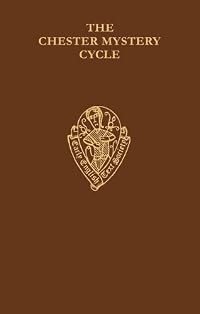
The Chester Mystery Cycle, Volume 1
by R. M. Lumiansky
On This Page
Description
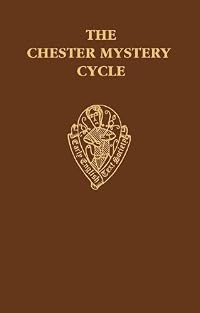
This edition of the medieval Chester cycle - 24 plays dramatizing the history of the world from Creation to Doomsday - is based on all eight extant manuscripts. Using modern English spelling and punctuation throughout, it includes introductory essays to each play.Tags
Recommendations



















Member Reviews
What we have here are the Tudor remains of a two hundred year group effort by the people of Chester. Part entertainment, part education. I’ve seen it pointed out somewhere (perhaps by Richard Beadle) that they first started staging it in the generation after the Black Death. So perhaps also a form of ritualised magic. It would certainly explain why they went to such lengths and why they chose to do something in story form. No surprises, all prophesied, a kind of insistence that everything is still proceeding as expected.
Don’t expect Shakespeare. It’s not that there aren’t some felicitous lines, but it’s the grand sweep of the thing rather than each individual pageant. That being said, many of the pageants work on the page, and show more you can see that many others would work if staged well. They’re obviously having fun and there’s an air of innocence about the whole thing, and an unexpected use of humour. Very interesting too, if you’re in to old stuff.
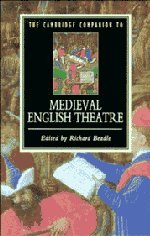
It’s not the most accessible text. My advice would be to get hold of Beadle’s Cambridge Companion to Medieval English Theatre, in particular Meg Twycross’s essay on staging. What you’re reading will make much more sense if you can picture what it’s a record of. Also, the Tudors could not spell. It’s not uncommon to have the same word spelled two different ways in the same line. Under that patina it’s modern English for the most part, but with a fair few Middle English words thrown in. It must have sounded pretty archaic by 1575. Once you modernise one word and the metre and rhyme starts to unravel…
Anyway, a quick word about editions as there are three. The cycle has the most complex textual history I think I’ve ever seen in an English work. There’s no set text and each manuscript has something that the others lack, and vice versa. The first edition was Wright’s in 1843. You can get this for free online if you don’t mind an ebook. He didn’t look at all the manuscripts so you’re not getting the full cycle and it’s probably a bit old fashioned in other ways. The second edition was Deimling’s. EETS ES 62. I’ve not seen this but apparently where there were differences from his base text, even whole pageants, he printed them in footnotes. Certainly EETS isn’t in this for the money and they don’t publish a new edition if it isn’t required. This one’s really nicely laid out with those big variations printed full size as appendices. This one also has a good technical introduction and instructions on how to use the book. I kid you not. Some pages look more like Algol than English. I pity the fool that has to study this, but reading for pleasure, don’t be intimidated. You can ignore the textual notes and just read the text, which is nice and clear. All other editions are translations or selections. I say in for a penny. show less
Don’t expect Shakespeare. It’s not that there aren’t some felicitous lines, but it’s the grand sweep of the thing rather than each individual pageant. That being said, many of the pageants work on the page, and show more you can see that many others would work if staged well. They’re obviously having fun and there’s an air of innocence about the whole thing, and an unexpected use of humour. Very interesting too, if you’re in to old stuff.
It’s not the most accessible text. My advice would be to get hold of Beadle’s Cambridge Companion to Medieval English Theatre, in particular Meg Twycross’s essay on staging. What you’re reading will make much more sense if you can picture what it’s a record of. Also, the Tudors could not spell. It’s not uncommon to have the same word spelled two different ways in the same line. Under that patina it’s modern English for the most part, but with a fair few Middle English words thrown in. It must have sounded pretty archaic by 1575. Once you modernise one word and the metre and rhyme starts to unravel…
Anyway, a quick word about editions as there are three. The cycle has the most complex textual history I think I’ve ever seen in an English work. There’s no set text and each manuscript has something that the others lack, and vice versa. The first edition was Wright’s in 1843. You can get this for free online if you don’t mind an ebook. He didn’t look at all the manuscripts so you’re not getting the full cycle and it’s probably a bit old fashioned in other ways. The second edition was Deimling’s. EETS ES 62. I’ve not seen this but apparently where there were differences from his base text, even whole pageants, he printed them in footnotes. Certainly EETS isn’t in this for the money and they don’t publish a new edition if it isn’t required. This one’s really nicely laid out with those big variations printed full size as appendices. This one also has a good technical introduction and instructions on how to use the book. I kid you not. Some pages look more like Algol than English. I pity the fool that has to study this, but reading for pleasure, don’t be intimidated. You can ignore the textual notes and just read the text, which is nice and clear. All other editions are translations or selections. I say in for a penny. show less
Ratings
Members
- Recently Added By
Author Information
9+ Works 84 Members
Common Knowledge
- Canonical title
- The Chester Mystery Cycle: A New Edition With Modernised Spelling; The Chester Mystery Cycle, Volume 1
Classifications
- Genres
- Fiction and Literature, Literature Studies and Criticism
- DDC/MDS
- 822.0516 — Literature & rhetoric English & Old English literatures English drama English drama Other dramatic, by type Serious dramatic Religious, morality
- LCC
- PR1261 .C54 — Language and Literature English English Literature Collections of English literature
- BISAC
Statistics
- Members
- 35
- Popularity
- 814,198
- Reviews
- 1
- Rating
- (3.70)
- Languages
- English
- Media
- Paper, Ebook
- ISBNs
- 4