On This Page
Description
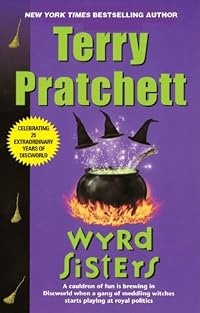
Terry Pratchett's fantasy classic Wyrd Sisters, a novel in the Discworld series, is the story of Granny Weatherwax, the most highly regarded non-leader a coven of non-social witches could ever have. Generally, these loners don't get involved in anything, much less royal intrigue. But then there are those times they can't help it. As Granny Weatherwax is about to discover, though, it's a lot harder to stir up trouble in the castle than some theatrical types would have you think. Even when show more you've got a few unexpected spells up your sleeve. Granny Weatherwax teams with two other witches - Nanny Ogg and Margat Garlick - as an unlikely alliance to save a prince and restore him to the throne of Lancre, in a tale that borrows - or is it parodies - some of William Shakespeare's best-loved works. show lessTags
Recommendations

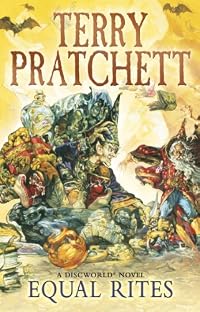
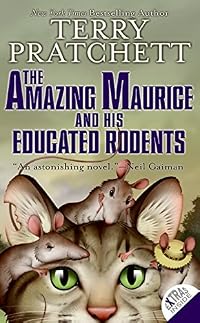
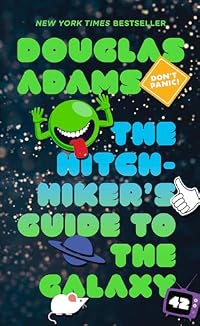
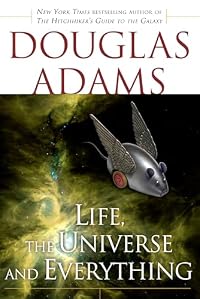
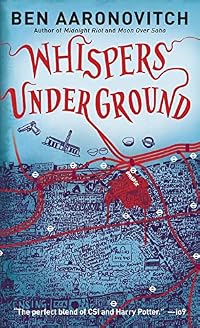
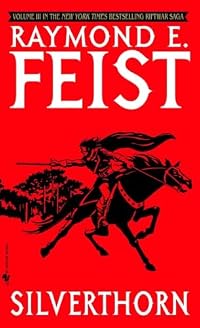
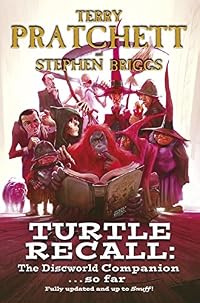
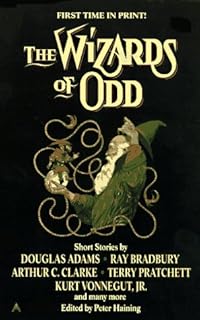
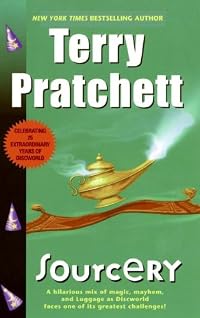
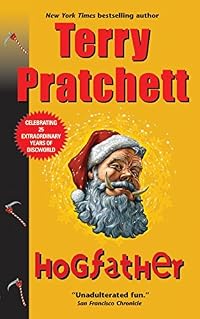
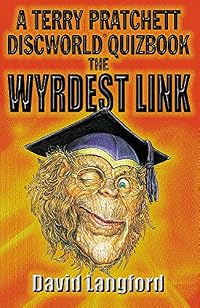
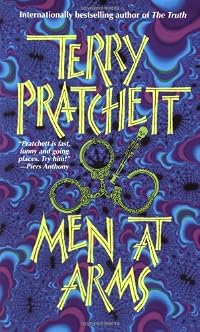
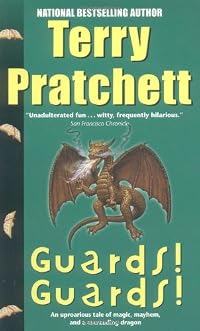
Member Recommendations
Tallulah_Rose "Wyrd Sisters" is a parody of "Macbeth", so everyone who enjoyed "Macbeth" might also like "Wyrd Sisters". On the other hand it's essential to have read "Macbeth" before reading "Wyrd Sisters".
215

unlucky Both are comedic with insight and satirical in nature, making fun of conventions in their respective genres.
103
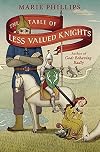
charl08 Humour, magic, and a crack at gender stereotypes in fantasy.
20
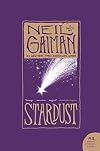
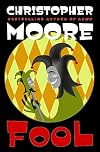
by Othemts
Member Reviews
3.5 stars
I read this for the Free Space for Halloween Bingo
She gave the guards a nod as she went through. It didn’t occur to either of them to stop her because witches, like beekeepers and big gorillas, went where they liked.
Part of the Discworld but also the Witches series, Granny, Nanny, and Magrat run and steal the show. I would describe this as kind of a Monty Python take on Macbeth and Hamlet (with a little bit of King Lear, Sleeping Beauty, Hansel and Gretel, and probably splashes of more I missed). If you're a reader of the Discworld, you'll be ready for the little bit chaotic, humor, brick wall bleakness, and underlining too true takes on humanity.
A kingdom is made up of all sorts of things. Ideas. Loyalties. Memories. It all show more sort of exists together. And then all these things create some kind of life. Not a body kind of life, more like a living idea. Made up of everything that’s alive and what they’re thinking. And what the people before them thought.”
We start off with the murder of a King, who becomes a ghost, our three witches taking a baby from soldiers, the new mad King and his reveling in her evilness wife, and a wise fool. Even though the witches normally try to stay out of things, Granny decides that she needs to set things to rights and have the true heir on the throne. I enjoyed the first half, which was more Macbeth, than the magically fast forward 15 years Hamlet like second.
The duke smiled out over the forest. “It works,” he said. “The people mutter against the witches. How do you do it, Fool?”
“Jokes, nuncle. And gossip. People are halfway ready to believe it anyway. Everyone respects the witches. The point is that no one actually likes them very much.”
Shining through and underlining all these seemingly chaotic going-ons, are some excellent hot takes on propaganda and how history is recorded, by who, why they are writing events and figures the way they are, and how this influences and shapes future attitudes. This is an aspect of history that I don't think is talked about enough, questioning the motives behind historical recorders.
“But I’m his Fool,” said the Fool. “A Fool has to be loyal to his master. Right up until he dies. I’m afraid it’s tradition. Tradition is very important.”
“But you don’t even like being a Fool!”
“I hate it. But that’s got nothing to do with it. If I’ve got to be a Fool, I’ll do it properly.”
“That’s really stupid,”said Magrat.
“Foolish, I’d prefer.”
Granny is the immediate stand-out in this but the Fool is the dark horse. In all this spoofing, he has some of the most thought provoking quotes; they bordered on dystopian at times. I couldn't help reading this through a current political climate lens and it hurt at times reading the scenes with the Fool, the new King, and his wife. Even when we get the second part of the witches work to change things, it doesn't end up quite to their preference but maybe for the best? This would be a great book club selection as I highlighted the heck out of this and could have endless discussions about it.
I've mentioned before how humor is a tough one for me, so that hurt my overall enjoyment along with the frenetic/chaotic tone pushing against my more structured self. Many friends have said this is one of their favorites from the disc world and I can see why, the three witches will delight you, I felt the second half let them down a bit. Even though things may not have worked out exactly like Granny wanted, I leave you with some inspiration from her,
Granny Weatherwax was often angry. She considered it one of her strong points. Genuine anger was one of the world’s great creative forces. But you had to learn how to control it. That didn’t mean you let it trickle away. It meant you dammed it, carefully, let it develop a working head, let it drown whole valleys of the mind and then, just when the whole structure was about to collapse, opened a tiny pipeline at the base and let the iron-hard stream of wrath power the turbines of revenge. show less
I read this for the Free Space for Halloween Bingo
She gave the guards a nod as she went through. It didn’t occur to either of them to stop her because witches, like beekeepers and big gorillas, went where they liked.
Part of the Discworld but also the Witches series, Granny, Nanny, and Magrat run and steal the show. I would describe this as kind of a Monty Python take on Macbeth and Hamlet (with a little bit of King Lear, Sleeping Beauty, Hansel and Gretel, and probably splashes of more I missed). If you're a reader of the Discworld, you'll be ready for the little bit chaotic, humor, brick wall bleakness, and underlining too true takes on humanity.
A kingdom is made up of all sorts of things. Ideas. Loyalties. Memories. It all show more sort of exists together. And then all these things create some kind of life. Not a body kind of life, more like a living idea. Made up of everything that’s alive and what they’re thinking. And what the people before them thought.”
We start off with the murder of a King, who becomes a ghost, our three witches taking a baby from soldiers, the new mad King and his reveling in her evilness wife, and a wise fool. Even though the witches normally try to stay out of things, Granny decides that she needs to set things to rights and have the true heir on the throne. I enjoyed the first half, which was more Macbeth, than the magically fast forward 15 years Hamlet like second.
The duke smiled out over the forest. “It works,” he said. “The people mutter against the witches. How do you do it, Fool?”
“Jokes, nuncle. And gossip. People are halfway ready to believe it anyway. Everyone respects the witches. The point is that no one actually likes them very much.”
Shining through and underlining all these seemingly chaotic going-ons, are some excellent hot takes on propaganda and how history is recorded, by who, why they are writing events and figures the way they are, and how this influences and shapes future attitudes. This is an aspect of history that I don't think is talked about enough, questioning the motives behind historical recorders.
“But I’m his Fool,” said the Fool. “A Fool has to be loyal to his master. Right up until he dies. I’m afraid it’s tradition. Tradition is very important.”
“But you don’t even like being a Fool!”
“I hate it. But that’s got nothing to do with it. If I’ve got to be a Fool, I’ll do it properly.”
“That’s really stupid,”said Magrat.
“Foolish, I’d prefer.”
Granny is the immediate stand-out in this but the Fool is the dark horse. In all this spoofing, he has some of the most thought provoking quotes; they bordered on dystopian at times. I couldn't help reading this through a current political climate lens and it hurt at times reading the scenes with the Fool, the new King, and his wife. Even when we get the second part of the witches work to change things, it doesn't end up quite to their preference but maybe for the best? This would be a great book club selection as I highlighted the heck out of this and could have endless discussions about it.
I've mentioned before how humor is a tough one for me, so that hurt my overall enjoyment along with the frenetic/chaotic tone pushing against my more structured self. Many friends have said this is one of their favorites from the disc world and I can see why, the three witches will delight you, I felt the second half let them down a bit. Even though things may not have worked out exactly like Granny wanted, I leave you with some inspiration from her,
Granny Weatherwax was often angry. She considered it one of her strong points. Genuine anger was one of the world’s great creative forces. But you had to learn how to control it. That didn’t mean you let it trickle away. It meant you dammed it, carefully, let it develop a working head, let it drown whole valleys of the mind and then, just when the whole structure was about to collapse, opened a tiny pipeline at the base and let the iron-hard stream of wrath power the turbines of revenge. show less
Wyrd Sisters is the first book in the Discworld series to involve the witches of Lancre, a small kingdom whose king has just been killed (or clumsily fell down the stairs to his death, depending on who is telling the story). This means that you can easily read this book without having read any other Discworld book. Granny Weatherwax is a formidable witch who doesn't trust what she can't see with her eyes and, frankly, doesn't trust many people either. Nanny Ogg is a mother and grandmother of so many I doubt even she can keep count. But you can always count on her for a dirty joke or two, at which Granny will scoff. Magrat Garlick is a new-age witch, who likes her crystals and candles, but still has a lot to learn as far as the other two show more (more traditional) witches are concerned. What's concerning them right now is the baby that's been left at their feet, a royal baby who father is now dead. They do the proper thing and hide the child and the crown and settle back into normal life in Lancre. Except Lancre itself is no longer normal. What does one do when the very country itself (more than just the people within it) rejects the usurper to the throne? What does the usurper do to rewrite history? Should the witches even involve themselves in the matter?
As with all Pratchett novels, this one is very funny. The footnotes are often the best part, explaining, for instance just why the Theives have a Guild and why guild members must therefore give receipts to those they rob. The story involves many references to Shakepeare's plays, including Hamlet, Macbeth, Othello, and others. The characters are by turns endearing, intriguing, and in some cases horrifying. Death makes his usual cameo appearance and steals the show, literally. This is my favorite series, and I'm eagerly rereading the whole set. show less
As with all Pratchett novels, this one is very funny. The footnotes are often the best part, explaining, for instance just why the Theives have a Guild and why guild members must therefore give receipts to those they rob. The story involves many references to Shakepeare's plays, including Hamlet, Macbeth, Othello, and others. The characters are by turns endearing, intriguing, and in some cases horrifying. Death makes his usual cameo appearance and steals the show, literally. This is my favorite series, and I'm eagerly rereading the whole set. show less
I think this is the first book in the Discworld Series where Pratchett really shows off his versatility and genius. The previous books are all funny and clever, but this is the first one that is funny, and clever, and makes some profound points about the nature of humanity and reality, and introduces more complexity to some characters, and includes more intellectual humor.
The afterword makes the salient point that this book is to Macbeth what Rosencrantz and Guildenstern are Dead is to Hamlet. The book is about three witches who, through a silly tangle of events, end up playing the role of the Wyrd Sisters in a production of Macbeth, and also shape reality outside of the play.
The afterword makes the salient point that this book is to Macbeth what Rosencrantz and Guildenstern are Dead is to Hamlet. The book is about three witches who, through a silly tangle of events, end up playing the role of the Wyrd Sisters in a production of Macbeth, and also shape reality outside of the play.
Terry Pratchett is a hugely skilled writer, especially when it comes to humor. This book will make you smile and laugh and maybe even believe for a while that everything is going to turn out ok. Or at least allow you to escape into a world where it really will. And that's all we really want sometimes, isn't it?
It also has interesting characters. Each of the witches has a distinct personality, with character traits the reader can understand as being common to witches as a group but also separate ones that show their diversity. Personally, I loved the fact that one got married and had many children and grandchildren, while another stayed single into her old age, showing that both options are valid. The third witch is young and trying to show more do things a little differently but still dependent on the older witches as her mentors, and isn't that a reflection of life?
Another thing I greatly appreciated was that the witches are very practical and principled. They protect the innocent. They cast spells with common household supplies. They don't want to make a power grab because they know it wouldn't turn out well for anyone with magic to be in charge. They mostly use their powers in little ways, to help their communities, and this depiction reflects what I imagine to be the reality of women who were actually accused of being witches back in the day (if they actually had powers, I mean). This book even pushes the narrative closer to reality when the king decides to get back at the witches by spreading rumors of evil deeds to make people hate them. This, more than anything else, kept me eagerly awaiting the restoration of justice. I didn't see how it could happen, but I felt confident it would somehow, and I was looking forward to seeing the author pull it off.
In those ways, the book holds up quite well for having been published in the eighties. But then there's the narrative treatment of the youngest witch, Magrat. I liked some things about her, like the unique way she practices magic, but then there's the way she's described. The first time I frowned a bit was an explanation as to why the witches were surprised to be described as "charming". I didn't really see what being flat-chested had to do with anything, but it was at least presented as a judgment from a potentially imperfect character in direct response to something that had been said. As the book went on, though, that detail was repeated often, along with the fact that her hair tends to frizzy and other things that are clearly meant to color her as unattractive. This coming from an omniscient narrator. And she's self-conscious about it, even giving herself some artificial padding at one point.
Also, a large part of her importance to the plotline involves a "love at first sight" thing with an important male character. We're told he loves her in spite of her ugliness because he knows deep down he can't get anyone better. And I suppose we're supposed to be happy for them to have found each other? I wish all of this had been handled differently. Having a young woman who doesn't meet conventional beauty standards as one of the major protagonists could have been incredible if only the author hadn't insulted her while simultaneously finding a way to objectify her anyway.
There's also a potentially triggering scene in which Magrat (having attempted to beautify herself first because I suppose the author wouldn't have thought it believable otherwise) is cornered by a group of men who make their intentions quite clear. Even though she gets out of it with no physical harm done, it's another scene I wish wasn't included.
Another thing that put a damper on my enjoyment of the book was the fact that some of the humor is quite dark, with references to torture and evil acts of various kinds. I'm sure these are among the realities of medieval times, but thinking about horrible suffering isn't going to make me want to laugh right afterward. And trying to describe it in a lighthearted way just makes it seem like the author is trying to downplay how horrible they are. Which probably wasn't his intention, but it does seem possible that readers could get the impression that these things aren't actually so bad. And that's really not a good worldview to encourage.
In the end, I want to recommend this book because the good parts are so good. The writing is excellent, the humor is on point (when it isn't on dark subjects), and two out of three female protagonists were exactly the kind I like to read about. I just wish it didn't have such significant drawbacks.
I think this is a case in which it's left up to the readers to decide. If you're the type to be bothered by the drawbacks I laid out, I'd recommend skipping it in favor of something else. If you're a writer looking to learn from Pratchett's style, I couldn't recommend it more highly. show less
It also has interesting characters. Each of the witches has a distinct personality, with character traits the reader can understand as being common to witches as a group but also separate ones that show their diversity. Personally, I loved the fact that one got married and had many children and grandchildren, while another stayed single into her old age, showing that both options are valid. The third witch is young and trying to show more do things a little differently but still dependent on the older witches as her mentors, and isn't that a reflection of life?
Another thing I greatly appreciated was that the witches are very practical and principled. They protect the innocent. They cast spells with common household supplies. They don't want to make a power grab because they know it wouldn't turn out well for anyone with magic to be in charge. They mostly use their powers in little ways, to help their communities, and this depiction reflects what I imagine to be the reality of women who were actually accused of being witches back in the day (if they actually had powers, I mean). This book even pushes the narrative closer to reality when the king decides to get back at the witches by spreading rumors of evil deeds to make people hate them. This, more than anything else, kept me eagerly awaiting the restoration of justice. I didn't see how it could happen, but I felt confident it would somehow, and I was looking forward to seeing the author pull it off.
In those ways, the book holds up quite well for having been published in the eighties. But then there's the narrative treatment of the youngest witch, Magrat. I liked some things about her, like the unique way she practices magic, but then there's the way she's described. The first time I frowned a bit was an explanation as to why the witches were surprised to be described as "charming". I didn't really see what being flat-chested had to do with anything, but it was at least presented as a judgment from a potentially imperfect character in direct response to something that had been said. As the book went on, though, that detail was repeated often, along with the fact that her hair tends to frizzy and other things that are clearly meant to color her as unattractive. This coming from an omniscient narrator. And she's self-conscious about it, even giving herself some artificial padding at one point.
Also, a large part of her importance to the plotline involves a "love at first sight" thing with an important male character. We're told he loves her in spite of her ugliness because he knows deep down he can't get anyone better. And I suppose we're supposed to be happy for them to have found each other? I wish all of this had been handled differently. Having a young woman who doesn't meet conventional beauty standards as one of the major protagonists could have been incredible if only the author hadn't insulted her while simultaneously finding a way to objectify her anyway.
There's also a potentially triggering scene in which Magrat (having attempted to beautify herself first because I suppose the author wouldn't have thought it believable otherwise) is cornered by a group of men who make their intentions quite clear. Even though she gets out of it with no physical harm done, it's another scene I wish wasn't included.
Another thing that put a damper on my enjoyment of the book was the fact that some of the humor is quite dark, with references to torture and evil acts of various kinds. I'm sure these are among the realities of medieval times, but thinking about horrible suffering isn't going to make me want to laugh right afterward. And trying to describe it in a lighthearted way just makes it seem like the author is trying to downplay how horrible they are. Which probably wasn't his intention, but it does seem possible that readers could get the impression that these things aren't actually so bad. And that's really not a good worldview to encourage.
In the end, I want to recommend this book because the good parts are so good. The writing is excellent, the humor is on point (when it isn't on dark subjects), and two out of three female protagonists were exactly the kind I like to read about. I just wish it didn't have such significant drawbacks.
I think this is a case in which it's left up to the readers to decide. If you're the type to be bothered by the drawbacks I laid out, I'd recommend skipping it in favor of something else. If you're a writer looking to learn from Pratchett's style, I couldn't recommend it more highly. show less
There's something to be said about Pratchett: No matter when or where you read one of his good ones, it seems like something in it was written specifically for you specifically at this point. So in Wyrd Sisters he tackles Macbeth and Shakespearean theatre in general, set against the backdrop of a murderous coup in a small mountain kingdom that leads to a complete nothing of a ruler; a man (and his obligatory scheming wife) with no ambition whatsoever beyond just being the respected ruler, a man with such brittle self-worth that he simply cannot bear the idea of anyone doubting him, who's happy to turn the people against visible minorities to maintain his power, and who one day discovers that simply saying this is all true can make it show more true... with the right script and the right spokesperson. Because people will want to believe a beautiful lie, will want to trust that their rulers are still basically good people.
Huh.
I love how easily Pratchett interweaves a bunch of stories - both Shakespeare and later - here, including how this was exactly how Macbeth came to be in Roundworld as well. Yes, including James' persecution of witches. And yet it's so easily a Discworld novel.
...spoilery quote...
Granny’s jaw sagged. “What?” she said. “But—but I showed you your true self…”
“I’m supposed to be upset by that, am I?” As the soldiers sheepishly grabbed Granny’s arms the duchess pressed her face close to Granny’s, her tremendous eyebrows a V of triumphant hatred. “I’m supposed to grovel on the floor, is that it? Well, old woman, I’ve seen exactly what I am, do you understand, and I’m proud of it! I’d do it all again, only hotter and longer! I enjoyed it, and I did it because I wanted to!”
She thumped the vast expanse of her chest.
“You gawping idiots!” she said. “You’re so weak. You really think that people are basically decent underneath, don’t you?”
The crowd on the stage backed away from the sheer force of her exultation.
“Well, I’ve looked underneath,” said the duchess. “I know what drives people. It’s fear. Sheer, deep-down fear. There’s not one of you who doesn’t fear me, I can make you widdle your drawers out of terror, and now I’m going to take—”
At this point Nanny Ogg hit her on the back of the head with the cauldron.
“She does go on, doesn’t she?” she said conversationally, as the duchess collapsed. “She was a bit eccentric, if you ask me.”
These people are so wyrd. show less
Huh.
I love how easily Pratchett interweaves a bunch of stories - both Shakespeare and later - here, including how this was exactly how Macbeth came to be in Roundworld as well. Yes, including James' persecution of witches. And yet it's so easily a Discworld novel.
...spoilery quote...
Granny’s jaw sagged. “What?” she said. “But—but I showed you your true self…”
“I’m supposed to be upset by that, am I?” As the soldiers sheepishly grabbed Granny’s arms the duchess pressed her face close to Granny’s, her tremendous eyebrows a V of triumphant hatred. “I’m supposed to grovel on the floor, is that it? Well, old woman, I’ve seen exactly what I am, do you understand, and I’m proud of it! I’d do it all again, only hotter and longer! I enjoyed it, and I did it because I wanted to!”
She thumped the vast expanse of her chest.
“You gawping idiots!” she said. “You’re so weak. You really think that people are basically decent underneath, don’t you?”
The crowd on the stage backed away from the sheer force of her exultation.
“Well, I’ve looked underneath,” said the duchess. “I know what drives people. It’s fear. Sheer, deep-down fear. There’s not one of you who doesn’t fear me, I can make you widdle your drawers out of terror, and now I’m going to take—”
At this point Nanny Ogg hit her on the back of the head with the cauldron.
“She does go on, doesn’t she?” she said conversationally, as the duchess collapsed. “She was a bit eccentric, if you ask me.”
These people are so wyrd. show less
Wyrd Sisters by Terry Pratchett
My rating: 4 of 5 stars
I loved re-reading Equal Rites in audio format, and Wyrd Sisters is even better! We’re six books into Discworld by this point, and I can tell Sir Terry was starting to get into his stride. Here, the characters are great, the story is good, and the satire is smartly layered with references to Macbeth exploring ideas of magic and destiny.
Granny Weatherwax returns, and she has two fantastic new friends in her reluctant little coven. There is Nanny Ogg, who loves a drink and a laugh; she’s much more amiable with an army of extended family from her three past marriages, and lives a kept life show more taken care of by all of them. A fun contrast to Granny (who isn’t actually a grandmother, heaven forbid!) but no less formidable. The scenes with her in the dungeon were brilliant!
Then, Magrat Garlick is a younger maiden witch who has much more ‘modern’ ideas about witchcraft. She loves crystals, folk wisdom, herbalism and foregoes the traditional hat in favour of a lot of silver jewellery. She is a lot gentler in personality than Nanny or Granny, and the narrator of the audiobook (Indira Varma) did a very sweet voice for her! However, she is not as naive as she often sounds, and can do just as much with magic as the others!
The plot is essentially a parody of Macbeth. Most obviously, there are the three witches, a murdered King, an ambitious wife, and a ghost. There is a Shakespeare character in the form of Hwel the Dwarf, who got a delightful Welsh accent. I very much enjoyed a bit of Dwarf lore there, too! The Shakespearean references abound, and as a reader, it’s nice to feel smart for picking up on them.
Destiny and the power of words are the main themes, and the way the play was used to weave those together was clever. There are other great characters to – The Fool, Tomjon, and Greebo the cat!
I had a great time! I was laughing out loud in my garden last week while I was trimming the willow tree! I’ll be getting into Witches Abroad next, which I have never read before!
REVIEW SUMMARY
I LIKED
- Very funny!
- Fantastic characters – I love all three of the witches!
- Clever layering of themes and the Shakespeare/Macbeth parody.
- Indira Varma is a great narrator (with footnotes by Bill Nighy, and Death by Peter Serafinowicz)
I DIDN’T LIKE
- Honestly, nothing!
View all my reviews show less
My rating: 4 of 5 stars
I loved re-reading Equal Rites in audio format, and Wyrd Sisters is even better! We’re six books into Discworld by this point, and I can tell Sir Terry was starting to get into his stride. Here, the characters are great, the story is good, and the satire is smartly layered with references to Macbeth exploring ideas of magic and destiny.
“She’d never mastered the talent for apologising, but she appreciated it in other people.
Granny Weatherwax returns, and she has two fantastic new friends in her reluctant little coven. There is Nanny Ogg, who loves a drink and a laugh; she’s much more amiable with an army of extended family from her three past marriages, and lives a kept life show more taken care of by all of them. A fun contrast to Granny (who isn’t actually a grandmother, heaven forbid!) but no less formidable. The scenes with her in the dungeon were brilliant!
Then, Magrat Garlick is a younger maiden witch who has much more ‘modern’ ideas about witchcraft. She loves crystals, folk wisdom, herbalism and foregoes the traditional hat in favour of a lot of silver jewellery. She is a lot gentler in personality than Nanny or Granny, and the narrator of the audiobook (Indira Varma) did a very sweet voice for her! However, she is not as naive as she often sounds, and can do just as much with magic as the others!
“Witches just aren’t like that,” said Magrat. “We live in harmony with the great cycles of Nature, and do no harm to anyone, and it’s wicked of them to say we don’t. We ought to fill their bones with hot lead.”
The plot is essentially a parody of Macbeth. Most obviously, there are the three witches, a murdered King, an ambitious wife, and a ghost. There is a Shakespeare character in the form of Hwel the Dwarf, who got a delightful Welsh accent. I very much enjoyed a bit of Dwarf lore there, too! The Shakespearean references abound, and as a reader, it’s nice to feel smart for picking up on them.
“Destiny is important, see, but people go wrong when they think it controls them. It’s the other way around.”
Destiny and the power of words are the main themes, and the way the play was used to weave those together was clever. There are other great characters to – The Fool, Tomjon, and Greebo the cat!
I had a great time! I was laughing out loud in my garden last week while I was trimming the willow tree! I’ll be getting into Witches Abroad next, which I have never read before!
REVIEW SUMMARY
I LIKED
- Very funny!
- Fantastic characters – I love all three of the witches!
- Clever layering of themes and the Shakespeare/Macbeth parody.
- Indira Varma is a great narrator (with footnotes by Bill Nighy, and Death by Peter Serafinowicz)
I DIDN’T LIKE
- Honestly, nothing!
View all my reviews show less
Updated Aug2014
Read again as this was out bookclub choice for the month. I loved it, as ever, but I suspect a number of them wont... I've read these early discworld books so many times now that my copy is about to fall apart and the story itself is no longer a surprise. But that doesn't mean there's nothing to discover in this. The thing I like about this is you don't have to be familiar with Hamlet & Macbeth or the theatre to get all the jokes, but there are so many more if you do have the passing familiarity with absolutely everything in the canon of human knowledge that Pratchett so clearly does. So there are sly asides to Shakespeare all over this, with Hwll the dwarf and dramatist struggling to cope with the showers of inspiration show more that come sleeting into his mind, at various times referencing Lloyd Webber musicals, Laurel & Hardy, Charlie Chaplin, the Marx brothers etc etc etc and trying to cram them all into one play, and wondering why it doesn't quite work in reality as it does in his imagination. It ends for the best, but not without a twist in the tale.
This is best described as Shakespeare on acid! There's a macbeth base with a seasoning of hamlet, but from there it takes on a life of its own. The king is dead but not yet departed, the three witches have a role to play, there's a missing heir and the Duke can't get rid of the blood, no matter how hard he scrubs his hands - not even with sandpaper. But the play's the thing to unlock the secrets of Lancre.
This has the witch, Granny Weatherwax, back, only this time she's got a coven to back her up. She's not mad, but can be bad and is certainly dangerous to know, especially if you happen to be in the wrong place at the wrong time when her broomstick comes whizzing out of the night. A lesson in life and if you're going to break your own rules, make sure you do it with style and break them good and proper! show less
Read again as this was out bookclub choice for the month. I loved it, as ever, but I suspect a number of them wont... I've read these early discworld books so many times now that my copy is about to fall apart and the story itself is no longer a surprise. But that doesn't mean there's nothing to discover in this. The thing I like about this is you don't have to be familiar with Hamlet & Macbeth or the theatre to get all the jokes, but there are so many more if you do have the passing familiarity with absolutely everything in the canon of human knowledge that Pratchett so clearly does. So there are sly asides to Shakespeare all over this, with Hwll the dwarf and dramatist struggling to cope with the showers of inspiration show more that come sleeting into his mind, at various times referencing Lloyd Webber musicals, Laurel & Hardy, Charlie Chaplin, the Marx brothers etc etc etc and trying to cram them all into one play, and wondering why it doesn't quite work in reality as it does in his imagination. It ends for the best, but not without a twist in the tale.
This is best described as Shakespeare on acid! There's a macbeth base with a seasoning of hamlet, but from there it takes on a life of its own. The king is dead but not yet departed, the three witches have a role to play, there's a missing heir and the Duke can't get rid of the blood, no matter how hard he scrubs his hands - not even with sandpaper. But the play's the thing to unlock the secrets of Lancre.
This has the witch, Granny Weatherwax, back, only this time she's got a coven to back her up. She's not mad, but can be bad and is certainly dangerous to know, especially if you happen to be in the wrong place at the wrong time when her broomstick comes whizzing out of the night. A lesson in life and if you're going to break your own rules, make sure you do it with style and break them good and proper! show less
Members
- Recently Added By
Lists

Best Fantasy Novels
821 works; 358 members

BBC Big Read
191 works; 45 members

Fiction Featuring Cranky, Eccentric Old Folks
80 works; 35 members

Read the book and saw the movie
1,170 works; 192 members

Books I've Read More Than Once
602 works; 49 members

Recommend the 20 best books you've read in the last five years
2,167 works; 600 members

Female Protagonist
1,056 works; 56 members

20th Century Literature
1,161 works; 54 members
Best Satire
188 works; 27 members

1980s
356 works; 23 members

Favourite Books
1,817 works; 308 members

Pleasant Surprises: Books That Exceeded Our Expectations
418 works; 143 members

Stories About Other Worlds
145 works; 13 members

One Book, Many Authors
441 works; 40 members

Fantasy novels with a female protagonist
76 works; 15 members

Genre Benders: Comic Fantasy
97 works; 16 members
75 Books Challenge 2015 Halloween Read long list
45 works; 4 members

Mind Expanding Books by hackerkid
581 works; 8 members

Huxley's reading log 2016
84 works; 3 members
Speculative Fiction to Read
706 works; 32 members

Books Read in 2023
5,547 works; 145 members

Books You Bought in 2013
35 works; 3 members

Books Read in 2016
4,666 works; 199 members
Books Read in 2015
3,298 works; 129 members

Stories Inspired by Other Fiction
127 works; 24 members

Funny Books
33 works; 2 members

Ghosts
278 works; 18 members


Books Read in 2006
417 works; 8 members

Retellings of Shakespeare Plays
42 works; 12 members
Tagged Widows
9 works; 4 members

Witchy Fiction
253 works; 126 members

Books Read in 2025
4,090 works; 97 members

Read in 1999–2000
24 works; 1 member

Read in 2024
23 works; 1 member

Books Read in 2019
4,052 works; 110 members

Books Read in 2024
4,623 works; 126 members

Shakespeare Quote Titles
112 works; 12 members

KayStJ's to-read list
1,616 works; 11 members

mediocre books by authors i otherwise adore
10 works; 1 member
Witches and Wizards Oh My
135 works; 12 members

Books Read in 2021
5,361 works; 114 members

Books Read in 2013
1,629 works; 51 members
naturallogg's 2025 in Books
50 works; 1 member
Survey of Fantasy Classics
111 works; 23 members
Author Information

429+ Works 578,366 Members
Terry Pratchett was on born April 28, 1948 in Beaconsfield, United Kingdom. He left school at the age of 17 to work on his local paper, the Bucks Free Press. While with the Press, he took the National Council for the Training of Journalists proficiency class. He also worked for the Western Daily Press and the Bath Chronicle. He produced a series show more of cartoons for the monthly journal, Psychic Researcher, describing the goings-on at the government's fictional paranormal research establishment, Warlock Hall. In 1980, he was appointed publicity officer for the Central Electricity Generating Board with responsibility for three nuclear power stations. His first novel, The Carpet People, was published in 1971. His first Discworld novel, The Colour of Magic, was published in 1983. He became a full-time author in 1987. He wrote more than 70 books during his lifetime including The Dark Side of the Sun, Strata, The Light Fantastic, Equal Rites, Mort, Sourcery, Truckers, Diggers, Wings, Dodger, Raising Steam, Dragons at Crumbling Castle: And Other Tales, and The Shephard's Crown. He was diagnosis with early onset Alzheimer's disease in 2007. He was knighted for services to literature in 2009 and received the World Fantasy award for life achievement in 2010. He died on March 12, 2015 at the age of 66. (Bowker Author Biography) show less
Some Editions
Awards and Honors
Series


Belongs to Publisher Series
Work Relationships
Is contained in
Has the adaptation
Is abridged in
Was inspired by
Common Knowledge
- Canonical title
- Wyrd Sisters
- Original title
- Wyrd Sisters
- Original publication date
- 1988-11
- People/Characters
- Granny Weatherwax; Nanny Ogg; Magrat Garlick; King Verence; Shawn Ogg; King Verence II (The Fool) (show all 12); Lord Leonal Felmet (Duke); Lady Felmet (Duchess); Greebo; Hwel; Mr. Vitoller; Tomjon
- Important places
- Lancre, Discworld; Discworld; Ankh-Morpork, Discworld
- Related movies
- Wyrd Sisters (1997 | IMDb); Wyrd Sisters (2007 | IMDb)
- First words
- The wind howled. Lightning stabbed at the earth erratically, like an inefficient assassin.
- Quotations
- The duke had a mind that ticked like a clock and, like a clock, it regularly went cuckoo.
"Actors," said Granny, witheringly. "As if the world weren't full of enough history without inventing more."
Lancre Castle was built on an outcrop of rock by an architect who had heard about Gormenghast but hadn't got the budget.
Quaffing is like drinking, but you spill more. - Last words
- (Click to show. Warning: May contain spoilers.)There is a school of thought that says that witches and wizards can never go home. They went, though, just the same.
- Original language
- English
- Canonical DDC/MDS
- 823.914
Classifications
Statistics
- Members
- 13,803
- Popularity
- 541
- Reviews
- 216
- Rating
- (4.02)
- Languages
- 22 — Bulgarian, Catalan, Czech, Dutch, English, Estonian, Finnish, French, German, Greek, Hebrew, Hungarian, Italian, Norwegian (Bokmål), Polish, Russian, Serbian, Slovenian, Spanish, Swedish, Turkish, Portuguese (Portugal)
- Media
- Paper, Audiobook, Ebook
- ISBNs
- 91
- UPCs
- 1
- ASINs
- 41