On This Page
Description
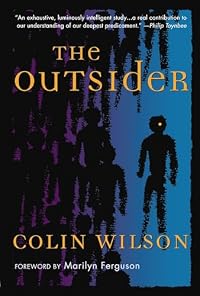
As relevant today as when it originally published, THE OUTSIDER explores the mindset of characters who exist on the margins, and the artists who take them there. Published to immense acclaim, THE OUTSIDER helped to make popular the literary concept of existentialism. Authors like Sartre, Kafka, Hemingway, and Dostoyevsky, as well as artists like Van Gogh and Nijinsky delved for a deeper understanding of the human condition in their work, and Colin Wilson's landmark book encapsulated a show more character found time and time again: the outsider. How does he influence society? And how does society influence him? It's a question as relevant to today's iconic characters (from Don Draper to Voldemort) as it was when initially published. Wilson's seminal work is a must-have for those who love books and are fascinated by that most difficult to understand of characters. show lessTags
Recommendations





















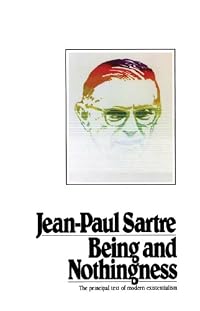



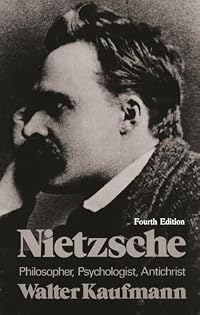




Member Reviews
Books can be dangerous if they change the way you think about your life and this book would have been dangerous for me had I read it in the 1960's. It caused a bit of a sensation in the literary world when it was first published in 1956 and it's young author has spent the rest of his career suffering from something like a backlash. It is a critique on existentialist thought that slashed and burnt it's way across the art's world of the late 1950's. The existentialist outsider as hero was a message that some young people in the 50's and 60's desperately wanted to identify with and Wilson's study hit the sweet spot, because those people who felt that they were somehow 'out of step' at the start of the consumer boom would have found plenty show more of ammunition in this book to realise that other people were singing from the same hymn sheet.
Wilson starts with Henri Barbusse and moves on to H G Wells and Hemmingway as he searches for authors that asked the questions that set them aside from the majorities views, this leads him to Sartre, Camus and Kafka. A chapter on the Romantic Outsider is a walk through the works of Herman Hesse, before he gets to three men who he claims lived the lives of outsiders rather than merely writing about it; he portrays Van Gogh, T E Lawrence and Nijinsky as men who were driven to insanity and/or early deaths because of their vision that took them outside of the world of the bourgeoisie. They were men who could not control their restless spirits, who saw the world through different eyes and suffered for it. In 'The Pain Threshold the thoughts of Nietzsche are brought into the argument before Wilson launches into a brief critique of one of the ultimate outsiders Dostoevsky, with particular reference to Crime and Punishment and The Brothers Karamazov. Wilson summarises his thoughts at the end of each chapter which gives the book a feeling of a logical argument. Here is what he says at the end of his chapter on Dostoevsky:
The Outsider wants to cease to be an outsider
He wants to be balanced
He would like to achieve a vividness of sense-perception (Lawrence, Van Gogh, Hemingway)
He would like to understand the human soul and its workings (Barbusse and Mitya Karamazov)
He would like to escape triviality forever, and be 'possessed' by a will to power. to more life
Above all he would like to know how to express himself, because that is the means by which he can get to know himself and his unknown possibilities.
Every Outsider tragedy we have studied so far has been a tragedy of self-expression
We have to guide us, two discoveries about the Outsider's 'way'
1) That his salvation 'lies in extremes'
2) That the idea of a way out often comes in 'visions' moments of intensity etc.
The following chapters take the argument into the realms of religious mysticism with studies of George Fox, William Blake and Gurdjieff and these I found less convincing, but this was perhaps because of my natural antipathy to religious thought.
The overriding message that this book brought home to me was that we should not lose sight of the thoughts and ideas of those people that dared to think outside the box, that asked the difficult questions and sought a meaning to life and their own existence. It is also a lesson to us all not to get caught up in the mechanical world of a continuous push to get more 'things' from life. The ability to stop and think is one that should be nurtured and we should be courageous enough to go wherever this takes us. Don't get caught up in the cow-like drifting of so many people in the Western World.
Wilson was considered to be one of the angry young men of the 1950's writing at a time when the majority of people were emerging from the vicissitudes of two world wars and facing the uncertainty of the atomic age. His book resonated then and can still be admired today for it's attempt to define the "Outsiders" and provide us with a critical study of the visionaries that did not shape the world, but more importantly raised questions that should make us all stop and think about how and why we live in that world. Books that make you think about your reasons for being can be dangerous and I wonder if anyone is writing any today. If not we will have to make do with such books as Wilson's [The Outsider]. A four star read. show less
Wilson starts with Henri Barbusse and moves on to H G Wells and Hemmingway as he searches for authors that asked the questions that set them aside from the majorities views, this leads him to Sartre, Camus and Kafka. A chapter on the Romantic Outsider is a walk through the works of Herman Hesse, before he gets to three men who he claims lived the lives of outsiders rather than merely writing about it; he portrays Van Gogh, T E Lawrence and Nijinsky as men who were driven to insanity and/or early deaths because of their vision that took them outside of the world of the bourgeoisie. They were men who could not control their restless spirits, who saw the world through different eyes and suffered for it. In 'The Pain Threshold the thoughts of Nietzsche are brought into the argument before Wilson launches into a brief critique of one of the ultimate outsiders Dostoevsky, with particular reference to Crime and Punishment and The Brothers Karamazov. Wilson summarises his thoughts at the end of each chapter which gives the book a feeling of a logical argument. Here is what he says at the end of his chapter on Dostoevsky:
The Outsider wants to cease to be an outsider
He wants to be balanced
He would like to achieve a vividness of sense-perception (Lawrence, Van Gogh, Hemingway)
He would like to understand the human soul and its workings (Barbusse and Mitya Karamazov)
He would like to escape triviality forever, and be 'possessed' by a will to power. to more life
Above all he would like to know how to express himself, because that is the means by which he can get to know himself and his unknown possibilities.
Every Outsider tragedy we have studied so far has been a tragedy of self-expression
We have to guide us, two discoveries about the Outsider's 'way'
1) That his salvation 'lies in extremes'
2) That the idea of a way out often comes in 'visions' moments of intensity etc.
The following chapters take the argument into the realms of religious mysticism with studies of George Fox, William Blake and Gurdjieff and these I found less convincing, but this was perhaps because of my natural antipathy to religious thought.
The overriding message that this book brought home to me was that we should not lose sight of the thoughts and ideas of those people that dared to think outside the box, that asked the difficult questions and sought a meaning to life and their own existence. It is also a lesson to us all not to get caught up in the mechanical world of a continuous push to get more 'things' from life. The ability to stop and think is one that should be nurtured and we should be courageous enough to go wherever this takes us. Don't get caught up in the cow-like drifting of so many people in the Western World.
Wilson was considered to be one of the angry young men of the 1950's writing at a time when the majority of people were emerging from the vicissitudes of two world wars and facing the uncertainty of the atomic age. His book resonated then and can still be admired today for it's attempt to define the "Outsiders" and provide us with a critical study of the visionaries that did not shape the world, but more importantly raised questions that should make us all stop and think about how and why we live in that world. Books that make you think about your reasons for being can be dangerous and I wonder if anyone is writing any today. If not we will have to make do with such books as Wilson's [The Outsider]. A four star read. show less
This is so oldtimey--and that's really sad. Questions like What is the good life? How does the individual come to terms with society? Should he (and another part of the oldtimey is that it's always a he)? How can we understand the ennui that takes us, the yearning, the gimletfaced insistence on self-assertion, the feeling that there must be another world than this? What is philosophy? Is the answer to the problem of existentialism, ultimately, only a modified religiosity?
These are the questions we never, ever talk about anymore. There's not even a countercultural impulse to pretend to talk about it, like there was up until, oh, the early part of our present millennium--now it's all just various consumerisms, judiciously flipped and show more switched for peacocking purposes by a troupe of pointless people. And academia, well, the more I see of that world the more I agree with Chomsky that poststructural theory, while very well in its place, should never have become the default mode of left-academic critique the way it did--becuase it's only a workable impetus to action to a small minority, not an elect, but a minority who can be compelled to action through complexity.
And so I feel affection for Wilson for being an Angry Young Man (and more for disavowing the label), and actually caring and shit. And as literary criticism, this is classical and effective. We start with the "stunted" outsider as represented in Sartre, Wells (Mind at the End of Its Tether), and Barbusse, where it's all "I wish I could really feel; time for a bath"; move on to the existential outsider, and it enrages me to no end that Wilson finds Meursault's solution to the problem more effective than Sartre's eventual commitment to, well, commitment--indeed, throughout, people who care are tarred (it was 1956) with the Marxist brush and pooh-poohed as inferior to those in the tradition of transcendence through expression of will. Which is fine when you're talking about Nietzsche (on whom Wilson is very good, and I'm so glad he's so insistent on aligning him in the "joy" stream of mysticism/outsiderism), but creepy when you're talking Raskolnikov, and downright scary when you're getting into your swing and coming up with all these fascistic "five percent of dominators" kind of conclusions. Let them have their religion of domination, and the rest of us will give up the opportunity for Leben durch Macht to tear them down, because when you exert your will you're always exerting it over someone, and that is unacceptable. It's a necessary sacrifice, in other words--I could even put it in the classical political terms that Wilson scorns and say "Locke over Hobbes".
But that's something it takes time to come to terms with, I guess, and this is a young man's book--as well as the production of an autodidact suffering from the British disease of resentful self-effacement (there's one comical passage where the big "act of will" under discussion is to get up and throw your boots at the actors in a subpar production of Romeo and Juliet. Very transcendent, that).
But there is a lot true here, and for anyone in the least sensitive, dissatisfied, or even just unconventional, sections of Wilson's ladder will be familiar. I kind of ride with him as far as "the great synthesis", although I reject the idea that shit has to get gross and Dostoyevskian before you find it--I can see how that makes it easier, but I am much more intrigued by those he sees as failures, the confused, the compromised--Nietzsche, George Fox. Like, do your work on yourself, but forget about perfection--when diminishing returns set in, either sit back and enjoy what you've got, or go out and help. You might even find that service is not only joy, per R. Tagore, but also freedom. show less
These are the questions we never, ever talk about anymore. There's not even a countercultural impulse to pretend to talk about it, like there was up until, oh, the early part of our present millennium--now it's all just various consumerisms, judiciously flipped and show more switched for peacocking purposes by a troupe of pointless people. And academia, well, the more I see of that world the more I agree with Chomsky that poststructural theory, while very well in its place, should never have become the default mode of left-academic critique the way it did--becuase it's only a workable impetus to action to a small minority, not an elect, but a minority who can be compelled to action through complexity.
And so I feel affection for Wilson for being an Angry Young Man (and more for disavowing the label), and actually caring and shit. And as literary criticism, this is classical and effective. We start with the "stunted" outsider as represented in Sartre, Wells (Mind at the End of Its Tether), and Barbusse, where it's all "I wish I could really feel; time for a bath"; move on to the existential outsider, and it enrages me to no end that Wilson finds Meursault's solution to the problem more effective than Sartre's eventual commitment to, well, commitment--indeed, throughout, people who care are tarred (it was 1956) with the Marxist brush and pooh-poohed as inferior to those in the tradition of transcendence through expression of will. Which is fine when you're talking about Nietzsche (on whom Wilson is very good, and I'm so glad he's so insistent on aligning him in the "joy" stream of mysticism/outsiderism), but creepy when you're talking Raskolnikov, and downright scary when you're getting into your swing and coming up with all these fascistic "five percent of dominators" kind of conclusions. Let them have their religion of domination, and the rest of us will give up the opportunity for Leben durch Macht to tear them down, because when you exert your will you're always exerting it over someone, and that is unacceptable. It's a necessary sacrifice, in other words--I could even put it in the classical political terms that Wilson scorns and say "Locke over Hobbes".
But that's something it takes time to come to terms with, I guess, and this is a young man's book--as well as the production of an autodidact suffering from the British disease of resentful self-effacement (there's one comical passage where the big "act of will" under discussion is to get up and throw your boots at the actors in a subpar production of Romeo and Juliet. Very transcendent, that).
But there is a lot true here, and for anyone in the least sensitive, dissatisfied, or even just unconventional, sections of Wilson's ladder will be familiar. I kind of ride with him as far as "the great synthesis", although I reject the idea that shit has to get gross and Dostoyevskian before you find it--I can see how that makes it easier, but I am much more intrigued by those he sees as failures, the confused, the compromised--Nietzsche, George Fox. Like, do your work on yourself, but forget about perfection--when diminishing returns set in, either sit back and enjoy what you've got, or go out and help. You might even find that service is not only joy, per R. Tagore, but also freedom. show less
Not for the general reader. If your spirit suffers from weltschmerz or existential angst, then you may be an Outsider, so add a star or two. The author explores the causes from a viewpoint that may be labelled mystical* existentialism. The book is important from a historical perspective since it was so widely read and translated after publication in 1956. It is slow reading (dense) and seems long on questions and short on answers. But spirit is a difficult topic, and the writer was well-read and perceptive about the subject.
If you are an Outsider, then know that you are not suffering alone. Becoming an Outsider is the first step towards the possible spiritual exploration that is the starting point for some of what is best from the show more world's great religions and literature.
* Gaining insight into hidden truths show less
If you are an Outsider, then know that you are not suffering alone. Becoming an Outsider is the first step towards the possible spiritual exploration that is the starting point for some of what is best from the show more world's great religions and literature.
* Gaining insight into hidden truths show less
For anyone with an interest in philosophy, art, literature, psychology and religion, "The Outside" was considered at one time to be essential reading. Wilson's main theme is the sort of creative misfit that finds himself at odds with the world (for whatever reason). Each chapter is an analysis of different psychological types (philosophical, artistic, religious, etc.), and involves lots of interesting discussion of such figures as Sartre, Nietzsche, Gurdjieff, Van Gogh, Lawrence of Arabia, Blake, Dostoevsky, and others. But aside from the character portraits, Wilson is perhaps most interested in why Outsiders exist and what this means for society, and the book gradually draws together these various strands into conclusions that are show more presented in the final chapters.
This said, there are other aspects of the book that some will find annoying. For instance, there is a slight ostentatious erudition to some of Wilson's references, which can at times can give the impression that we are just following Wilson in his own private cultural crossword puzzle. This is underlined by some repetition and over-eager cross-referencing: quotes are repeated, parallels and similarities are repeatedly drawn. However, these are minor quibbles, and the book remains a ground-breaking and fascinating work.
Gareth Southwell is a philosopher, writer and illustrator. show less
This said, there are other aspects of the book that some will find annoying. For instance, there is a slight ostentatious erudition to some of Wilson's references, which can at times can give the impression that we are just following Wilson in his own private cultural crossword puzzle. This is underlined by some repetition and over-eager cross-referencing: quotes are repeated, parallels and similarities are repeatedly drawn. However, these are minor quibbles, and the book remains a ground-breaking and fascinating work.
Gareth Southwell is a philosopher, writer and illustrator. show less
The outsider is a person who suffers from alienation -- they don't "fit in" and tend to see ordinary life as meaningless. They may become pessimists or nihilists or they may become religious mystics. They may commit crimes or suicide or they may become saints. I found this book fascinating and definitely recommend it.
The Outsider was an instant literary sensation when it was first published in 1956, thrusting its youthful author into the front rank of contemporary writers and thinkers. Wilson rationalized the psychological dislocation so characteristic of Western creative thinking into a coherent theory of alienation, and defined those affected by it as a type: the Outsider. Through the works and lives of various artists - including Kafka, Camus, Hemingway, Hesse, Lawrence, Van Gogh, Shaw, Nietzsche and Dostoevsky - Wilson explored the psyche of the Outsider, his effect on society and society's on him. Nothing that has happened in the past four decades years has made The Outsider any less relevant; it remains the seminal work on this most persistent show more of modern-day preoccupations. show less
One of the most important thinkers in the last 50 years. Wilson started off with a bang, but soon the book-chatters got in his way and made it as difficult for him as they could. But Wilson has persisted and we're glad he did. He's coming out with a book on Shakespeare soon, written with the nephew of the great Shakespearian critic Leslie Hotson. He fiddled with it in The Philosopher's Stone, now it's a full-blown book. Hurray for C.W.
Members
- Recently Added By
Lists

David Bowie's List of Top 100 Books
94 works; 6 members

David Bowie's Top 100
97 works; 23 members

Recommended Reading : 600 Classics Reviewed, Editors of Salem Press, 2015
634 works; 6 members
David Bowie’s Top 100 Favourite Reads
100 works; 3 members
Talk Discussions
Past Discussions
The Outsider by Colin Wilson, A David Bowie Top 100 Read in 75 Books Challenge for 2016 (February 2017)
Author Information

223+ Works 13,615 Members
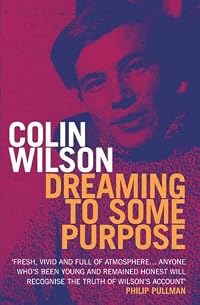
Colin Wilson was born on June 26, 1931 in Leicester, England. He attended a local technical school, where he did well in physics and chemistry, and left at 16 to work in a wool factory. Before becoming a writer, he worked as a laboratory assistant, tax clerk, laborer and hospital porter. His first book, The Outsider, was published in 1956 when he show more was 24 years old. During his lifetime, he wrote more than 100 works on a wide variety of subjects including philosophy, religion, occult and supernatural phenomenea, music, sex, crime and critical theory. His other works include Religion and the Rebel, The Age of Defeat, Ritual in the Dark, The Strength to Dream, Origins of the Sexual Impulse, The Occult, Alien Dawn, Dreaming to Some Purpose, The Angry Years: The Rise and Fall of the Angry Young Men, and Super Consciousness. His biographies include works on Bernard Shaw, David Lindsay, Herman Hesse, Wilhelm Reich, Jorge Luis Borges, Ken Russell, Rudolph Steiner, Aleister Crowley, and P. D. Ouspensky. Wilson died on December 5, 2013 at the age of 82. (Bowker Author Biography) Colin Wilson, author of such bestsellers as "The Outsider" & "The Occult", also writes on archaeology, astronomy, & cosmology. His recent book, "From Atlantis to the Sphinx", was a London "Times" bestseller. (Publisher Provided) show less
Awards and Honors
Distinctions
Notable Lists
Series

Belongs to Publisher Series
Work Relationships
Common Knowledge
- Canonical title*
- Outsidern
- Original publication date
- 1956
- First words
- Christmas Day, 1954, was an icy, grey day, and I had spent it in my room in Brockley, south London. - Introduction: The Outsider Twenty Years On
At first sight, the Outsider is a social problem. - Last words
- (Click to show. Warning: May contain spoilers.)The individual begins that long effort as an Outsider; he may finish it as a saint.
- Original language
- Engels; English
*Some information comes from Common Knowledge in other languages. Click "Edit" for more information.
Classifications
Statistics
- Members
- 1,321
- Popularity
- 18,066
- Reviews
- 15
- Rating
- (3.88)
- Languages
- 9 — Dutch, English, Finnish, Greek, Italian, Norwegian (Bokmål), Polish, Portuguese, Swedish
- Media
- Paper, Ebook
- ISBNs
- 18
- ASINs
- 27