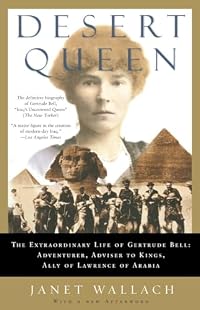
Desert Queen: The Extraordinary Life of Gertrude Bell: Adventurer, Adviser to Kings, Ally of Lawrence of Arabia
by Janet Wallach
On This Page
Description
Biography & Autobiography. History. Politics. Nonfiction. HTML:Turning her back on her privileged life in Victorian England, Gertrude Bell (1868-1926), fired by her innate curiosity, journeyed the world and became fascinated with all things Arab. Traveling the length and breadth of the Arab region, armed with a love for its language and its people, she not only produced several enormously popular books based on her experiences but became instrumental to the British foreign office. When World show more War I erupted, and the British needed the loyalty of the Arab leaders, it was Gertrude Bell's work and connections that helped provided the brain for T. E. Lawrence's military brawn. After the war she participated in both the Paris and Cairo conferences, played a major role in creating the modern Middle East, and was generally considered the most powerful woman in the British Empire.In this incident-packed biography, Janet Wallach reveals a woman whose achievements and independent spirit were especially remarkable for her times, and who brought the same passion and intensity to her explorations as she did to her rich romantic life. Too long eclipsed by Lawrence's fame, Gertrude Bell emerges in this first major biography as a woman whose accomplishments rank as crucial to world history (especially in light of the continuing geopolitical importance of the Middle East) and whose life was a grand adventure. show less
Tags
Recommendations
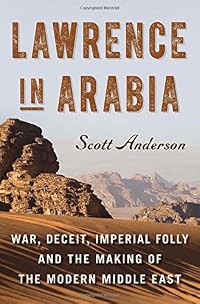

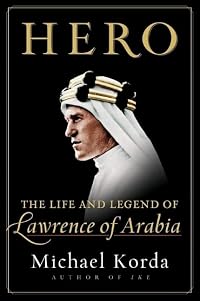
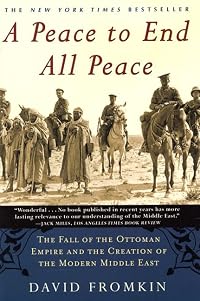


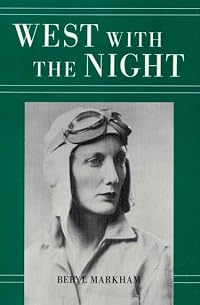














Member Recommendations
Member Reviews
Gertrude Bell was amazing. In a day when women were expected to be “politely educated,” married, and subservient, Bell was single, Oxford-educated, a mountain climber, and a desert explorer.
After teaching herself Arabic, she braved the deserts of pre-World War I Mesopotamia and Arabia with a few servants and her guns. She dined with sheiks and caliphs who normally would not discourse with a woman. She even earned their respect.
During and after the Great War, she was a champion of self-government by Arab people. She worked with her friend, Lawrence of Arabia, to further the Arab voice in the region. Ultimately, their efforts led to a newly formed country of Iraq with an Arab, Faisal I, on the throne.
While her story is amazing, show more Wallach doesn’t present her as Wonder Woman. Rather, Bell is described as a human with flaws who wants to be a Person, to be someone of consequence. She succeeds in some areas, like politics, more than others, like romance.
I found the book fascinating and truly difficult to put down. Learning from the books I read is important to me. Here I learned a lot about Arab culture and the history of Western interference in the modern Middle East. While I doubt I would have been friends with Bell if I had known her, I found much to admire and astonish. The end of Bell's life was disappointing and surprising. show less
After teaching herself Arabic, she braved the deserts of pre-World War I Mesopotamia and Arabia with a few servants and her guns. She dined with sheiks and caliphs who normally would not discourse with a woman. She even earned their respect.
During and after the Great War, she was a champion of self-government by Arab people. She worked with her friend, Lawrence of Arabia, to further the Arab voice in the region. Ultimately, their efforts led to a newly formed country of Iraq with an Arab, Faisal I, on the throne.
While her story is amazing, show more Wallach doesn’t present her as Wonder Woman. Rather, Bell is described as a human with flaws who wants to be a Person, to be someone of consequence. She succeeds in some areas, like politics, more than others, like romance.
I found the book fascinating and truly difficult to put down. Learning from the books I read is important to me. Here I learned a lot about Arab culture and the history of Western interference in the modern Middle East. While I doubt I would have been friends with Bell if I had known her, I found much to admire and astonish. The end of Bell's life was disappointing and surprising. show less
Gertrude Bell (1868-1926) was born to a privileged English family, educated at Oxford, and given the opportunity to travel to the Middle East as a young woman. The journey sparked a passion that led to her becoming the foremost expert on Middle Eastern affairs, and a key figure in establishing the state of Iraq in the early 1920s. Bell was an intrepid traveler, undaunted by harsh desert conditions or warnings of hostile tribes. She had a unique ability to establish trust with Arab leaders; throughout her career she was the only woman “at the table” and yet managed to command respect from most of the men she encountered, British and Arab alike. Bell would return from her travels with insights that shaped development of British policy show more and negotiation strategies in the Middle East. And yet, because of her gender, she was consistently placed behind the scenes and had to settle for others taking credit for her work.
Gertrude Bell found most of traditional feminine society distasteful, and suppressed her femininity and sexuality to operate in a man’s world. Bell had many colleagues and hosted elaborate parties at her Baghdad home, but had few close friends. Her closest relationships were with her father, her mentor Percy Cox, who served as British Resident, and T.E. Lawrence (aka Lawrence of Arabia). Although she had a couple of significant romantic relationships with men, she never married. Her intellect and intensity would undoubtedly have intimidated many people she came in contact with.
While Desert Queen is a biography, it reads like a novel, especially when describing Gertrude’s travels. Excerpts from letters to her father and others take the reader beyond the chronological facts and provide a sense of Gertrude as a human being who, despite her outward success, also experienced many disappointments. I couldn’t help but admire her tenacity. I’m grateful to author Janet Wallach for bringing Bell’s contributions out into the open and ensuring she gets credit for her profound and long-lasting impact in the Middle East. show less
Gertrude Bell found most of traditional feminine society distasteful, and suppressed her femininity and sexuality to operate in a man’s world. Bell had many colleagues and hosted elaborate parties at her Baghdad home, but had few close friends. Her closest relationships were with her father, her mentor Percy Cox, who served as British Resident, and T.E. Lawrence (aka Lawrence of Arabia). Although she had a couple of significant romantic relationships with men, she never married. Her intellect and intensity would undoubtedly have intimidated many people she came in contact with.
While Desert Queen is a biography, it reads like a novel, especially when describing Gertrude’s travels. Excerpts from letters to her father and others take the reader beyond the chronological facts and provide a sense of Gertrude as a human being who, despite her outward success, also experienced many disappointments. I couldn’t help but admire her tenacity. I’m grateful to author Janet Wallach for bringing Bell’s contributions out into the open and ensuring she gets credit for her profound and long-lasting impact in the Middle East. show less
This is simply an amazing book. I say this for two reasons: Gertrude Bell was a conflicted and complex woman, intelligent yet bound by Victorian mores, and because I now understand much more about what’s going on in the Middle East.
Those who cannot remember the past are condemned to repeat it. George Santayana
Nothing much has changed in the Middle East, and after reading this book, one could not expect anything different than what’s occurred. Gertrude Bell would weep hot tears if she were magically transported to Baghdad today.
1920s Middle East + technology + Israel = 2015 Middle East. Oversimplification, but all things I hear about and read about in the news are foreshadowed in this book.
*spoilers about her life below*
Gertrude show more Bell’s amazing life came about by accident because she didn’t get married in the three requisite “Seasons” to find a husband. She was articulate, intellectually precocious, dominant, and these traits weren’t conducive to finding a Victorian husband. She traveled, became interested in the Middle East, and did things to occupy her. She was very, very good at these things and learned Arabic, the power relationships in the Middle East, the personalities, and what was happening. However, she always wanted a husband and children. Even after child-bearing age, she always wanted a husband and her last romance, with Ken Cornwallis in her mid-50s, was the proof of this.
Her other love was her father, Hugh Bell. She bowed to his decrees and lived off his wealth much, if not all, of her life. The one thing I absolutely cannot understand is why, when he refused his permission for her to marry Henry Cadogan, this didn’t cause a break in their relationship. She accepted it.
The other thing she wanted was to be a Person. Someone of consequence, respected for her achievements as a man would be, someone respected. From the many quotes from her letters, Janet Wallach portrays this yearning. Sometimes it’s accomplished, othertimes she’s bewailing “not being a Person.”
In the end she had neither. Unmarried, a spinster who may or may not ever consummated a physical relationship with a man, and marginalized in the Middle East by the very government who gave her autonomy and power during the late 1910s and early 1920s.
The book ends on the sad note of the 30-foot tall statue of Faisal and the undusted bust of Gertrude Bell on a forgotten shelf in the Iraq Museum. show less
Those who cannot remember the past are condemned to repeat it. George Santayana
Nothing much has changed in the Middle East, and after reading this book, one could not expect anything different than what’s occurred. Gertrude Bell would weep hot tears if she were magically transported to Baghdad today.
1920s Middle East + technology + Israel = 2015 Middle East. Oversimplification, but all things I hear about and read about in the news are foreshadowed in this book.
*spoilers about her life below*
Gertrude show more Bell’s amazing life came about by accident because she didn’t get married in the three requisite “Seasons” to find a husband. She was articulate, intellectually precocious, dominant, and these traits weren’t conducive to finding a Victorian husband. She traveled, became interested in the Middle East, and did things to occupy her. She was very, very good at these things and learned Arabic, the power relationships in the Middle East, the personalities, and what was happening. However, she always wanted a husband and children. Even after child-bearing age, she always wanted a husband and her last romance, with Ken Cornwallis in her mid-50s, was the proof of this.
Her other love was her father, Hugh Bell. She bowed to his decrees and lived off his wealth much, if not all, of her life. The one thing I absolutely cannot understand is why, when he refused his permission for her to marry Henry Cadogan, this didn’t cause a break in their relationship. She accepted it.
The other thing she wanted was to be a Person. Someone of consequence, respected for her achievements as a man would be, someone respected. From the many quotes from her letters, Janet Wallach portrays this yearning. Sometimes it’s accomplished, othertimes she’s bewailing “not being a Person.”
In the end she had neither. Unmarried, a spinster who may or may not ever consummated a physical relationship with a man, and marginalized in the Middle East by the very government who gave her autonomy and power during the late 1910s and early 1920s.
The book ends on the sad note of the 30-foot tall statue of Faisal and the undusted bust of Gertrude Bell on a forgotten shelf in the Iraq Museum. show less
It would be interesting to do parallel lives of Gertrude Bell and Freya Stark. Both made their names as lone women travelers in the Middle East; both were successful authors; both were multilingual (Bell’s translation of the Persian poet Hafiz is still considered one of the best, and Persian wasn’t even her primary foreign language); both were adjuncts to the English diplomatic service; both were unlucky in love. The differences were great, though; Stark came from a “genteel impoverished” middle class family, while Bell’s family was extremely wealthy. Bell was formally educated at Oxford (at a time when that was quite rare for a woman); Stark was self-taught. When Stark travelled alone, she was really alone; while Bell’s show more idea of “alone” including a coterie of servants, several tents, an elaborate wardrobe, a folding canvas bathtub, a collapsible dining table, and a complete set of dinnerware with crystal – and she always dressed for dinner, even in the middle of the Arabian desert.
And Bell was a lot more influential than Stark in the diplomatic world; her travels had taken her through Syria, Arabia and Mesopotamia when they were still under Ottoman control (I had to be reminded that there was no “Iraq” in Ottoman times; instead there were separate provinces of Mosul, Baghdad and Basrah). Bell made the acquaintance of just about every prominent Arab in the area; she was somehow able to get herself treated as an “honorary man” and was able to get sheiks and holy men – many of whom had never seen an unveiled woman except their wives - to receive her and talk to her about politics. She was also trained as a surveyor and made maps of her travel areas; as a result when WWI started she was an invaluable resource.
Her personality was such, though, that she rubbed a number of her male colleagues the wrong way (one wrote home to his wife that the “… bitch … was a silly, chattering windbag of conceited, gushing, flat-chested, man-woman, globe-trotting, rump-wagging, blethering [sic] ass”. One assumes he toned down his language for his wife; perhaps he told his coworkers how he really felt.) Gradually, however, her genuine talents outweighed her interesting personality and her coworkers either learned to get along with her or resigned and went elsewhere. First assigned to draw maps and write reports a spare bedroom in Basrah with no official position or salary, the quality of her work gradually impressed the higher ups to the extent that she was eventually made a major in the Foreign Service (didn’t realize they had military ranks, but apparently so). In addition to her writing and maps, she hosted frequent dinner parties in Basrah and Baghdad mingling British diplomats with Arab sheiks and Jewish businessmen and picking up all sorts of useful political gossip. Her greatest triumph, though, was the 1921 Cairo conference which ended up establishing an Iraqi state; there a famous picture of her on a camel in front of the Sphinx, with Winston Churchill on her right and T.E> Lawrence on her left.
Alas, her romantic life was not a triumph. Biographer Janet Wallach speculates that she held men to an excessively high standard. Her one great love was apparently Dick Doughty-Wylie, “soldier, statesman, poet and adventurer, he was everything Gertrude dreamed of in a man”. Unfortunately, Doughty-Wylie was married. He and Bell met for four days in London in 1914 while Doughty-Wylie’s wife was in France; the letters Doughty-Wylie and Bell exchanged later suggest that there was a lot of “heavy petting” but no sex, because Bell drew back. Doughty-Wylie’s further letters suggested they could remain Platonic lovers; some of them are pretty turgid and sound like part of an indifferently written romance novel. The question became academic when Doughty-Wylie took a bullet to the head as an infantry captain at Gallipoli, and Bell never again engaged in anything serious.
And alas again, Bell’s diplomatic edifice also turned out to be built on sand. We know how Iraq ended up (this book was written in 1999). Bell had recognized the problem - nobody really thought of themselves as Iraqis, but as Sunni or Shi’ite or Kurdish or Arab or Baghdadi or Bedouin (or Jew or Christian, until they were all expelled or killed) – but she thought they would rally behind Faisal of Mecca as a King (and Faisal, in fact, was initially as least moderately popular). Didn’t last; even as Faisal was getting crowned in Baghdad his family was being expelled from the Arabian Peninsula by Ibn Saud.
And once there was an Iraq, there really wasn’t much use for Miss Bell any more. She was made the Curator of the Iraqi Museum but her diplomatic influence was over. Her family fortune evaporated and although she joked about having to go to the workhouse it obviously affected her. She had vague health problems; the fact the she chain-smoked Turkish cigarettes probably didn’t help. Her doctor prescribed sleeping pills; on July 11, 1926, three days before her 58th birthday she took an overdose. She was buried with full military honors.
As mentioned, Wallach’s writing sometimes has more of a romance novel than biography flavor. There are frequent and extensive descriptions of Bell’s clothing, right down to her lingerie. Initially I found this annoying, being used to more conventional biographies; however after a while I actually began to enjoy it; after all, Bell’s life was sort of like a romance novel. (And to be fair, in Bell’s role as a diplomatic hostess, her dress was important and a lot of her letters home ask for some piece of clothing or another to be sent from London. And sometimes her lingerie is directly relevant; Bell once smuggled a rifle and surveying equipment by packing them in with her underwear, correctly figuring that Ottoman authorities would be reluctant to rummage through a woman’s lacy underthings looking for contraband).
While Wallach’s writing about diplomacy and romance seems correct (not that I have much experience with either), she’s not very good with WWI history. She describes the war starting when Archduke Ferdinand was assassinated in the “Serbian capital of Sarajevo” and the Gallipoli campaign was supposedly organized to “cut off Turkish forces on their way to Baghdad”. Although this is egregiously wrong, it’s minor. Picture sections show Bell at various life stages, plus other figures in the story. Nice before and after WWI maps of the Middle East. Endnotes, but not numbered, just referenced by text.
There have been a number of Bell biographies; this is the first one I’ve read so I have no standard of comparison. I enjoyed it, though, even the mushy parts. show less
And Bell was a lot more influential than Stark in the diplomatic world; her travels had taken her through Syria, Arabia and Mesopotamia when they were still under Ottoman control (I had to be reminded that there was no “Iraq” in Ottoman times; instead there were separate provinces of Mosul, Baghdad and Basrah). Bell made the acquaintance of just about every prominent Arab in the area; she was somehow able to get herself treated as an “honorary man” and was able to get sheiks and holy men – many of whom had never seen an unveiled woman except their wives - to receive her and talk to her about politics. She was also trained as a surveyor and made maps of her travel areas; as a result when WWI started she was an invaluable resource.
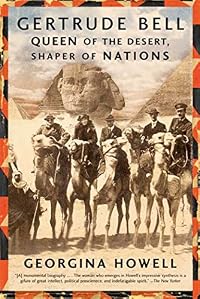
Her personality was such, though, that she rubbed a number of her male colleagues the wrong way (one wrote home to his wife that the “… bitch … was a silly, chattering windbag of conceited, gushing, flat-chested, man-woman, globe-trotting, rump-wagging, blethering [sic] ass”. One assumes he toned down his language for his wife; perhaps he told his coworkers how he really felt.) Gradually, however, her genuine talents outweighed her interesting personality and her coworkers either learned to get along with her or resigned and went elsewhere. First assigned to draw maps and write reports a spare bedroom in Basrah with no official position or salary, the quality of her work gradually impressed the higher ups to the extent that she was eventually made a major in the Foreign Service (didn’t realize they had military ranks, but apparently so). In addition to her writing and maps, she hosted frequent dinner parties in Basrah and Baghdad mingling British diplomats with Arab sheiks and Jewish businessmen and picking up all sorts of useful political gossip. Her greatest triumph, though, was the 1921 Cairo conference which ended up establishing an Iraqi state; there a famous picture of her on a camel in front of the Sphinx, with Winston Churchill on her right and T.E> Lawrence on her left.
Alas, her romantic life was not a triumph. Biographer Janet Wallach speculates that she held men to an excessively high standard. Her one great love was apparently Dick Doughty-Wylie, “soldier, statesman, poet and adventurer, he was everything Gertrude dreamed of in a man”. Unfortunately, Doughty-Wylie was married. He and Bell met for four days in London in 1914 while Doughty-Wylie’s wife was in France; the letters Doughty-Wylie and Bell exchanged later suggest that there was a lot of “heavy petting” but no sex, because Bell drew back. Doughty-Wylie’s further letters suggested they could remain Platonic lovers; some of them are pretty turgid and sound like part of an indifferently written romance novel. The question became academic when Doughty-Wylie took a bullet to the head as an infantry captain at Gallipoli, and Bell never again engaged in anything serious.
And alas again, Bell’s diplomatic edifice also turned out to be built on sand. We know how Iraq ended up (this book was written in 1999). Bell had recognized the problem - nobody really thought of themselves as Iraqis, but as Sunni or Shi’ite or Kurdish or Arab or Baghdadi or Bedouin (or Jew or Christian, until they were all expelled or killed) – but she thought they would rally behind Faisal of Mecca as a King (and Faisal, in fact, was initially as least moderately popular). Didn’t last; even as Faisal was getting crowned in Baghdad his family was being expelled from the Arabian Peninsula by Ibn Saud.
And once there was an Iraq, there really wasn’t much use for Miss Bell any more. She was made the Curator of the Iraqi Museum but her diplomatic influence was over. Her family fortune evaporated and although she joked about having to go to the workhouse it obviously affected her. She had vague health problems; the fact the she chain-smoked Turkish cigarettes probably didn’t help. Her doctor prescribed sleeping pills; on July 11, 1926, three days before her 58th birthday she took an overdose. She was buried with full military honors.
As mentioned, Wallach’s writing sometimes has more of a romance novel than biography flavor. There are frequent and extensive descriptions of Bell’s clothing, right down to her lingerie. Initially I found this annoying, being used to more conventional biographies; however after a while I actually began to enjoy it; after all, Bell’s life was sort of like a romance novel. (And to be fair, in Bell’s role as a diplomatic hostess, her dress was important and a lot of her letters home ask for some piece of clothing or another to be sent from London. And sometimes her lingerie is directly relevant; Bell once smuggled a rifle and surveying equipment by packing them in with her underwear, correctly figuring that Ottoman authorities would be reluctant to rummage through a woman’s lacy underthings looking for contraband).
While Wallach’s writing about diplomacy and romance seems correct (not that I have much experience with either), she’s not very good with WWI history. She describes the war starting when Archduke Ferdinand was assassinated in the “Serbian capital of Sarajevo” and the Gallipoli campaign was supposedly organized to “cut off Turkish forces on their way to Baghdad”. Although this is egregiously wrong, it’s minor. Picture sections show Bell at various life stages, plus other figures in the story. Nice before and after WWI maps of the Middle East. Endnotes, but not numbered, just referenced by text.
There have been a number of Bell biographies; this is the first one I’ve read so I have no standard of comparison. I enjoyed it, though, even the mushy parts. show less
This detailed biography of Gertrude Bell shows what an amazing person she was. In an era when women didn't even travel alone to lunch, she blazed trails where few Europeans and no Victorian-era women had ever been. She was brilliant, fluent in multiple languages, and extraordinarily self-confident. She became the first woman to get a first-class degree in modern history at Oxford, the first woman ever to travel alone in the Syrian desert, and the first female officer in British military intelligence.
She became fascinated by the Middle East as a young girl and as soon as she was able, she began visiting, mapping and writing about several important ancient sites. She ventured out among the Arabs, intent on making friends among them. show more Originally sent to the East to “find” a husband she decided she would rather advance British interests in the Arabian peninsula. She became the power broker in post WW1 Iraq and was named oriental secretary to the British High Commission.
The author has meticulously detailed Gertrude's travels, and some details get a little repetitive. That did not take away even one moment of my intense interest in her story. If the purpose of “Expanding our Cultural Horizons' is to learn more about a country, it's people and the culture, Desert Queen definitely fits the bill. I've owned this book for several years but never really paid that much attention to it. I'm so glad this challenge pointed me in Gertrude's direction. show less
She became fascinated by the Middle East as a young girl and as soon as she was able, she began visiting, mapping and writing about several important ancient sites. She ventured out among the Arabs, intent on making friends among them. show more Originally sent to the East to “find” a husband she decided she would rather advance British interests in the Arabian peninsula. She became the power broker in post WW1 Iraq and was named oriental secretary to the British High Commission.
The author has meticulously detailed Gertrude's travels, and some details get a little repetitive. That did not take away even one moment of my intense interest in her story. If the purpose of “Expanding our Cultural Horizons' is to learn more about a country, it's people and the culture, Desert Queen definitely fits the bill. I've owned this book for several years but never really paid that much attention to it. I'm so glad this challenge pointed me in Gertrude's direction. show less
Gertrude Bell really was extraordinary. Because of the strictures on class of the day, and her intellect, which wouldn't allow her to brook any fools, her spinster's life took off in the middle east. Her voracious mind and adventurous spirit led her all over the waning Ottoman Empire. As the British Oriental Secretary she guided the birth of several newly created states and their rulers. This was, especially in Iraq where she finally found her true home. Giants of the twentieth century such as T. E. Lawrence and Winston Churchill routinely moved through her life. This biography gives a basic understanding of the tribal and cultural dynamics of the Middle East and why the troubles that were apparent in Bell's day plague the world still.
This sumptuously detailed account of the life of Gertrude Bell is must-reading for those interested in Middle Eastern history or any reader looking for an extraordinarily captivating biography. For the uninitiated in the life of Bell, the milestones of her life such as being one of the first female graduates from Oxford, working as an archeologist/sociologist, and finally an architect of the country of Iraq is quite extraordinary to read and take in. Wallach's level of research through what must have been scores of letters shows itself in the richly detailed prose that honestly reads like a great romantic adventure novel. Bell's story with both its triumphs and sadly all too many heartaches makes for some very compelling reading and show more Wallach's style pilot's the reader's emotions as well as that of any writer working in fiction. Stocked with many insights and facts about the creation of the modern Middle East, most striking in light of today's turmoil is Bell's reasoning for including the Kurds in the creation of Iraq. This book goes along way to shedding light on the origins of much of the sectionalism that is rife there today. It also makes one wonder if Iraq was ever met to be at all. show less
Members
- Recently Added By
Lists

Women in Islam
120 works; 8 members

Watched the Movie, Probably Won't Read the Book
185 works; 34 members

Biographies of Little Known People
39 works; 2 members

Favourite Books
1,817 works; 316 members
Author Information

10 Works 1,831 Members
Awards and Honors
Notable Lists
Common Knowledge
- Canonical title*
- Aavikon kuningatar : Gertrude Bellin ainutlaatuinen elämä
- Original title
- Desert Queen: The Extraordinary Life of Gertrude Bell
- Alternate titles
- Desert queen : the extraordinary life of Gertrude Bell, adventurer, adviser to kings, ally of Lawrence of Arabia
- Original publication date
- 1996
- People/Characters
- Gertrude Bell; T. E. Lawrence; Faisal I, King of Iraq; Abdul Aziz ibn Saud
- Important places
- Iraq; Ottoman Empire
- Dedication
- To John, David and Michael, who surround me with love
*Some information comes from Common Knowledge in other languages. Click "Edit" for more information.
Classifications
- Genres
- Biography & Memoir, General Nonfiction, History, Nonfiction, Travel
- DDC/MDS
- 956.02092 — History & geography History of Asia Middle East (Near East) Middle East
- LCC
- DS61.7 .B37 .W35 — History of Europe, Asia, Africa and Oceania Asia History of Asia Middle East. Southwestern Asia. Ancient Orient. History
- BISAC
Statistics
- Members
- 1,268
- Popularity
- 19,165
- Reviews
- 24
- Rating
- (3.84)
- Languages
- 8 — Dutch, English, Finnish, French, German, Italian, Spanish, Swedish
- Media
- Paper, Audiobook, Ebook
- ISBNs
- 24
- ASINs
- 9