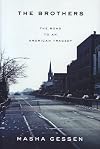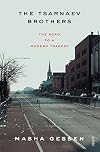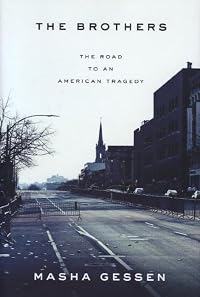
The Brothers: The Road to an American Tragedy
by M. Gessen
On This Page
Description
"On April 15, 2013, two homemade bombs exploded near the finish line of the Boston marathon, killing three people and wounding more than 264 others. In the ensuing manhunt, Tamerlan Tsarnaev died, and his younger brother Dzhokhar was captured and ultimately charged on thirty federal counts. Yet long after the bombings and the terror they sowed, after all the testimony and debate, what we still haven't learned is why. Why did the American Dream go so wrong for two immigrants? How did such a show more nightmare come to pass?"--Amazon.com. show lessTags
Recommendations




Member Reviews
Fantastic, fast paced reporting on the Boston marathon bombing and everyone involved. It reads as a thriller. It began with historical context of growing up in different independent republics of Russia, destroyed by civil wars, xenophobia, and religious persecution. What is like to grow up with parents that come from that in America.
All is fair in immigration. Except one thing: You never talk about the pain of dislocation. You do no describe the way color drains out of everyday life when nothing is familiar, how the texture of living seems to dissapear.
Then it gives little biographies of the brothers, friends, acquantainces, and family members. Theory on terrorism and living in America as an immigrant, with muslim roots, in the middle show more of the War on Terror.
Common sense and human experience show that only a small minority of people who subscribe to radical ideas - even the kinds of radical ideas that justify and promote violence - actually engage in violence. Research also shows that some terrorist do not hold strong political or ideological beliefs.
And finally (and the most riveting part of the book) after talking about the little brother's friends hiding evidence, and a old friend of the older brother (that allegedly helped him kill three people), it goes into the FBI ways of taking action, conspiracy theories, and thinly veiled conclusions (because the FBI won't disclose anything, surprise surprise). Everything goes off the rails. And this author does a fantastic job explaining what she can by looking at the inconsistencies of the story.
...,the FBI may have created terrorists out of law-abiding individuals. In these cases, the informants and agents often seemed to choose targets based on their religious or political beliefs. They often chose targets who were particularly vulnerable - whether because of mental disability, or because they were indigent and needed money that the government offered them. From former FBI agent, Michael German. show less
All is fair in immigration. Except one thing: You never talk about the pain of dislocation. You do no describe the way color drains out of everyday life when nothing is familiar, how the texture of living seems to dissapear.
Then it gives little biographies of the brothers, friends, acquantainces, and family members. Theory on terrorism and living in America as an immigrant, with muslim roots, in the middle show more of the War on Terror.
Common sense and human experience show that only a small minority of people who subscribe to radical ideas - even the kinds of radical ideas that justify and promote violence - actually engage in violence. Research also shows that some terrorist do not hold strong political or ideological beliefs.
And finally (and the most riveting part of the book) after talking about the little brother's friends hiding evidence, and a old friend of the older brother (that allegedly helped him kill three people), it goes into the FBI ways of taking action, conspiracy theories, and thinly veiled conclusions (because the FBI won't disclose anything, surprise surprise). Everything goes off the rails. And this author does a fantastic job explaining what she can by looking at the inconsistencies of the story.
...,the FBI may have created terrorists out of law-abiding individuals. In these cases, the informants and agents often seemed to choose targets based on their religious or political beliefs. They often chose targets who were particularly vulnerable - whether because of mental disability, or because they were indigent and needed money that the government offered them. From former FBI agent, Michael German. show less
Tells the story of the Boston Marathon Bombers from the perspective of their ties in Chechnya and surrounding areas. Once they are caught, she switches focus from the brothers to other Chechen Americans, including the friends of Jahar, describing their treatment by the FBI (it wasn't nice or fair; the presumption was that they were all guilty by association if nothing else). She ends by pointing out the several puzzling elements to the case (e.g., the uninvestigated triple murder several years before, the claim by the FBI to not recognize Tamerlan despite its having investigated him only two years previously, and the family on almost an annual basis for a decade) to wondering if Tamerlan was not an FBI informant gone rogue. One has show more wonder. If, however, you want a fuller description of the legal trial of the surviving brother, you'll need an additional read. But this one should definitely be in the mix. show less
When Dzhokhar Tsarnaev was arrested for the Boston Marathon bombing, my husband and I got into an argument.
"Who cares where he's from?" he said. "Everyone's talking about his family being from Chechnya like that's enough to make him a terrorist in and of itself. He's an immigrant. Okay. How is his being from Chechnya any different from his being from Ireland?"
I don't know if he picked Ireland because it's a country he's heard of, because I'm Irish, or because we're both old enough to remember a time when saying you were from Ireland would lead a listener to thoughts of (and possibly questions about) the IRA. I do know that he's someone who's morally opposed to putting people in ill-fitting boxes, and he'd just come home from a long day show more with coworkers who had no problem with the idea that Muslim immigrant = terrorist just waitin' to happen.
"I understand what you mean," I said. "And I know everyone's being a big collective idiot about he and his brother being Muslims, and I'm sick of it, too. But there's something wrong with your example. There's something more going on than that. Being from Ireland isn't anything like being from Chechnya."
I had to wait for Masha Gessen to write The Brothers before I could figure out exactly what I meant. I felt vindicated when I got to page 60 and read this:
American society, perhaps more than some others, goes through distinct cycles, separated by shifts in the national psyche. But to a new immigrant, nothing was here before – and there is no inkling that things will be different after. There is only the mood of the present moment, and this mood becomes what America feels like. The Tsarnaevs arrived a few months after the September 11, 2001 attacks on New York and Washington had united Americans in fear.
This was the idea I'd been feeling around for that tired night in the kitchen when I'd been trying to argue with my husband and wash the dishes at the same time and had ended by doing a lousy job at both. Being an immigrant is tough no matter where you're from or how much you wanted to live in your new country. Being an immigrant from a country most Americans have only heard of in relation to the War on Terror – well, that makes you the redheaded stepchild of the immigrant family, to say the least.
That's the story Gessen tells. Bear in mind that she started work on this book practically the day Dzhokhar was arrested. I started reading it the week his death sentence was announced.
This book is not about his trial, or about how he and his brother went about bombing the marathon. It's about who was arrested for that bombing and why.
It's also the story of the banality of evil. To me, the most shocking part of this book is – well, how boring the brothers were before it happened. They weren't particularly intelligent or devout. Neither of them seem as if they were interested in or engaged with the world or even their own lives. If they had a reason for waking up in the morning, I couldn't tell you what it was. They just don't come across as the kind of people who could care enough about anything to do something violent.
They reminded me of a character from a novel I love, Lolly Willowes:
Laura was not in any way religious. She was not even religious enough to speculate towards irreligion.
I'm not naïve enough to think that anyone who commits a violent crime must be some wild-eyed fanatic and/or evil genius. Frankly, as a smallish middle-aged woman living in an increasingly weird city, I'm starting to wonder if all men are just one bad day and one cheap gun away from going on a killing spree. But I did expect to get some sense of why the brothers did what they did.
Maybe one of the points of this book is that there isn't any such sense to be had. Excuse me for quoting at length, but I think this is important:
Very soon, many of Tamerlan's and Jahar's friends would be telling the FBI and the media that it was impossible that the brothers were the bombers – there had been no sign. Surely, the friends would say, if the two had been plotting something so huge and horrible, they would have seemed distracted. Or emotional. Or pensive. Or somehow, clearly, not themselves. But this assumption was a misconception. The psychiatrist and political scientist Jerrold Post, who has been studying terrorists for decades, writes, "Terrorists are not depressed, severely emotionally disturbed, or crazed fanatics." Political scientist Louise Richardson, an undisputed star in the tiny academic field of terrorism studies, writes of terrorists: "Their primary shared characteristic is their normalcy, insofar as we understand the term. Psychological studies of terrorism are virtually unanimous on this point."
Nor do terrorists tend to behave out of character just before committing an act that, to them, appears perfectly rational and fully justified. One of the September 11 hijackers called his wife in Germany on the morning of the attacks to tell her he loved her; she apparently heard nothing extraordinary in his voice. Having made the decision to commit an act of terrorism, the future bomber – even a suicide bomber – develops, it would appear, a sort of two-track mind. On one track, life goes on exactly as before; on the other, he is preparing for the event that will disrupt his life or even end it. It is precisely the ordinary nature of the man and the extraordinary effect of the act about to be committed that ensure the two tracks never cross.
This passage kept coming to mind as I listened to a news report about the mother of the gunman in the recent shooting at a Tunisian beach. The woman was horrified by what her son had done, and was frantically trying to make sense of it. What had she missed? Her son – an electrical engineering student who had a girlfriend and liked soccer and break-dancing – was outstandingly ordinary.
I might have had trouble believing that before I read this book. I have no trouble believing it now.
Sadly, I think The Brothers should be required reading. The history it covers is interesting; the ideas it offers are vital. show less
"Who cares where he's from?" he said. "Everyone's talking about his family being from Chechnya like that's enough to make him a terrorist in and of itself. He's an immigrant. Okay. How is his being from Chechnya any different from his being from Ireland?"
I don't know if he picked Ireland because it's a country he's heard of, because I'm Irish, or because we're both old enough to remember a time when saying you were from Ireland would lead a listener to thoughts of (and possibly questions about) the IRA. I do know that he's someone who's morally opposed to putting people in ill-fitting boxes, and he'd just come home from a long day show more with coworkers who had no problem with the idea that Muslim immigrant = terrorist just waitin' to happen.
"I understand what you mean," I said. "And I know everyone's being a big collective idiot about he and his brother being Muslims, and I'm sick of it, too. But there's something wrong with your example. There's something more going on than that. Being from Ireland isn't anything like being from Chechnya."
I had to wait for Masha Gessen to write The Brothers before I could figure out exactly what I meant. I felt vindicated when I got to page 60 and read this:
American society, perhaps more than some others, goes through distinct cycles, separated by shifts in the national psyche. But to a new immigrant, nothing was here before – and there is no inkling that things will be different after. There is only the mood of the present moment, and this mood becomes what America feels like. The Tsarnaevs arrived a few months after the September 11, 2001 attacks on New York and Washington had united Americans in fear.
This was the idea I'd been feeling around for that tired night in the kitchen when I'd been trying to argue with my husband and wash the dishes at the same time and had ended by doing a lousy job at both. Being an immigrant is tough no matter where you're from or how much you wanted to live in your new country. Being an immigrant from a country most Americans have only heard of in relation to the War on Terror – well, that makes you the redheaded stepchild of the immigrant family, to say the least.
That's the story Gessen tells. Bear in mind that she started work on this book practically the day Dzhokhar was arrested. I started reading it the week his death sentence was announced.
This book is not about his trial, or about how he and his brother went about bombing the marathon. It's about who was arrested for that bombing and why.
It's also the story of the banality of evil. To me, the most shocking part of this book is – well, how boring the brothers were before it happened. They weren't particularly intelligent or devout. Neither of them seem as if they were interested in or engaged with the world or even their own lives. If they had a reason for waking up in the morning, I couldn't tell you what it was. They just don't come across as the kind of people who could care enough about anything to do something violent.
They reminded me of a character from a novel I love, Lolly Willowes:
Laura was not in any way religious. She was not even religious enough to speculate towards irreligion.
I'm not naïve enough to think that anyone who commits a violent crime must be some wild-eyed fanatic and/or evil genius. Frankly, as a smallish middle-aged woman living in an increasingly weird city, I'm starting to wonder if all men are just one bad day and one cheap gun away from going on a killing spree. But I did expect to get some sense of why the brothers did what they did.
Maybe one of the points of this book is that there isn't any such sense to be had. Excuse me for quoting at length, but I think this is important:
Very soon, many of Tamerlan's and Jahar's friends would be telling the FBI and the media that it was impossible that the brothers were the bombers – there had been no sign. Surely, the friends would say, if the two had been plotting something so huge and horrible, they would have seemed distracted. Or emotional. Or pensive. Or somehow, clearly, not themselves. But this assumption was a misconception. The psychiatrist and political scientist Jerrold Post, who has been studying terrorists for decades, writes, "Terrorists are not depressed, severely emotionally disturbed, or crazed fanatics." Political scientist Louise Richardson, an undisputed star in the tiny academic field of terrorism studies, writes of terrorists: "Their primary shared characteristic is their normalcy, insofar as we understand the term. Psychological studies of terrorism are virtually unanimous on this point."
Nor do terrorists tend to behave out of character just before committing an act that, to them, appears perfectly rational and fully justified. One of the September 11 hijackers called his wife in Germany on the morning of the attacks to tell her he loved her; she apparently heard nothing extraordinary in his voice. Having made the decision to commit an act of terrorism, the future bomber – even a suicide bomber – develops, it would appear, a sort of two-track mind. On one track, life goes on exactly as before; on the other, he is preparing for the event that will disrupt his life or even end it. It is precisely the ordinary nature of the man and the extraordinary effect of the act about to be committed that ensure the two tracks never cross.
This passage kept coming to mind as I listened to a news report about the mother of the gunman in the recent shooting at a Tunisian beach. The woman was horrified by what her son had done, and was frantically trying to make sense of it. What had she missed? Her son – an electrical engineering student who had a girlfriend and liked soccer and break-dancing – was outstandingly ordinary.
I might have had trouble believing that before I read this book. I have no trouble believing it now.
Sadly, I think The Brothers should be required reading. The history it covers is interesting; the ideas it offers are vital. show less
It's an interesting if difficult read for someone who was affected by the bombing. Gessen provides some good background on the environment that the Tsarnaevs came out of but cherry picks details from their lives to portray them in a way more sympathetic than I could really take. I think her point is that they were nothing special; if so, why did this happen? There are also moments when she is tone-deaf and her analogies miss the mark. Saying that the Tsarnaev brothers were the Russian equivalent of African-Americans is.... no. I get that they were ethnic minorities who stood out and were recognizable as such but... no. The conspiracy stuff is weird also and doesn't ring true for me. Other reviewers have summarized my feelings about this show more book well so I won't belabor. But yeah. Weird book, missing bits, too easy on the brothers and their parents. show less
The background information on Russia and Chechnya and family dynamics was interesting and enlightening. Gessen also investigates what happened to Dzhorkhar's friends and Tamerlan's acquaintances after the bombing, Finally, she reports on the conspiracy theories and agrees that the FBI could have been involved in setting up the brothers who took it a step further than expected. The writing is reporterly and unexceptional.
Ratings
Members
- Recently Added By
Author Information

31+ Works 3,912 Members
Masha Gessen is a Russian American journalist. She has written several books including The Man Without a Face: The Unlikely Rise of Vladimir Putin, Words Will Break Cement: The Passion of Pussy Riot, and The Brothers: The Road to an American Tragedy. The Future Is History: How Totalitarianism Reclaimed Russia won the National Book Award for show more Nonfiction in 2017. (Bowker Author Biography) show less
Awards and Honors
Distinctions
Notable Lists
Classifications
- Genres
- Nonfiction, General Nonfiction, History, Biography & Memoir
- DDC/MDS
- 363.32509744 — Social sciences Social problems and social services Other social problems and services Other aspects of public safety Social conflict Terrorism Biography; History By Place North America
- LCC
- HV6432.8 .G47 — Social sciences Social pathology. Social and public welfare. Criminology Social pathology. Social and public welfare. Criminology Crimes and offenses
- BISAC
Statistics
- Members
- 178
- Popularity
- 183,005
- Reviews
- 5
- Rating
- (3.39)
- Languages
- English, Italian, Korean
- Media
- Paper, Audiobook, Ebook
- ISBNs
- 12
- ASINs
- 3