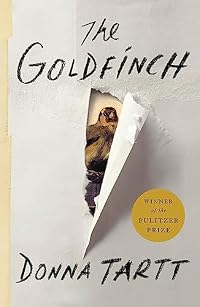
The Goldfinch
by Donna Tartt
On This Page
Description
A young boy in New York City, Theo Decker, miraculously survives an accident that takes the life of his mother. Alone and abandoned by his father, Theo is taken in by a friend's family and struggles to make sense of his new life. In the years that follow, he becomes entranced by one of the few things that reminds him of his mother; a small, mysteriously captivating painting that ultimately draws Theo into the art underworld.Tags
Recommendations
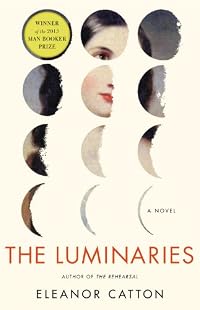
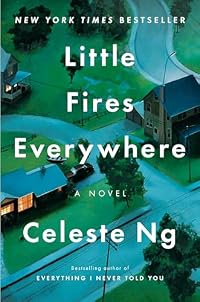
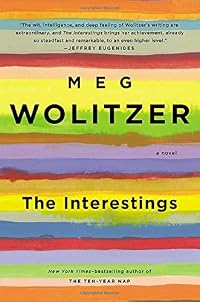
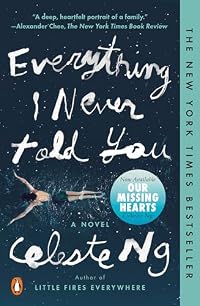
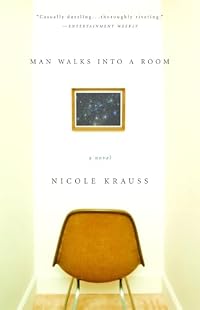
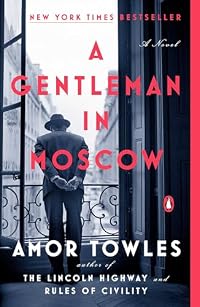
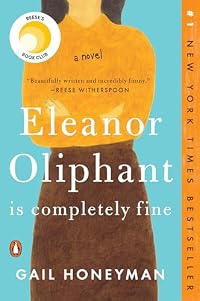
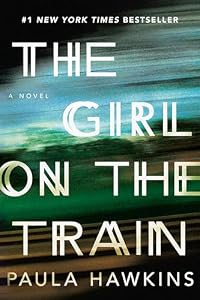
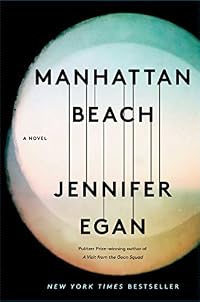
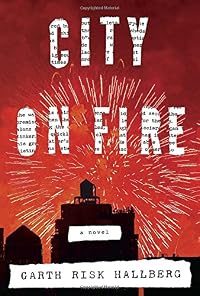
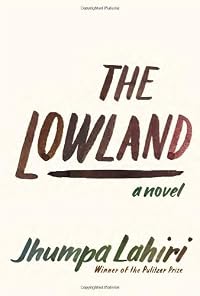
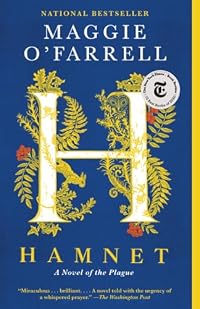
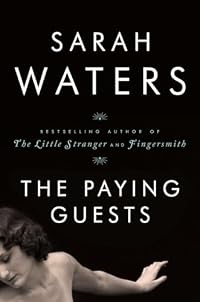
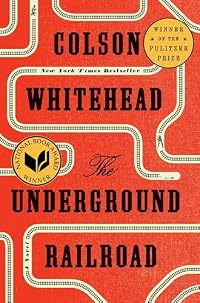
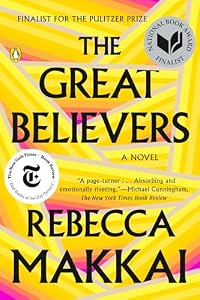
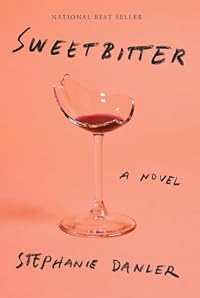
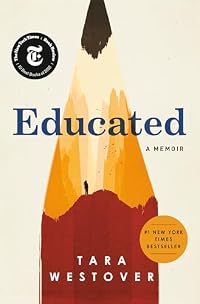
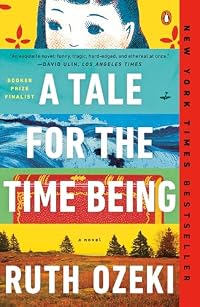
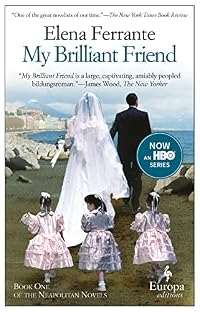
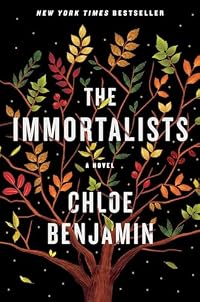
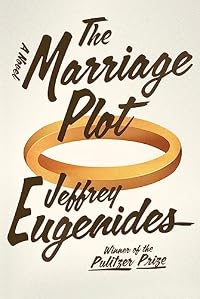
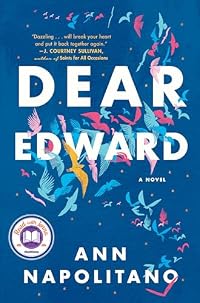
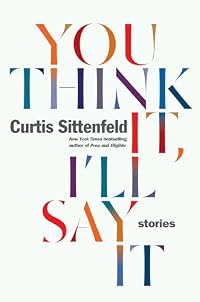
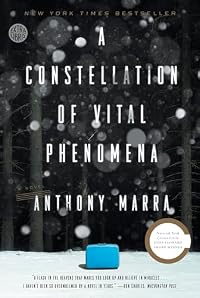
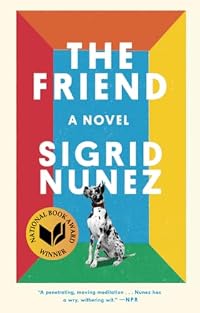
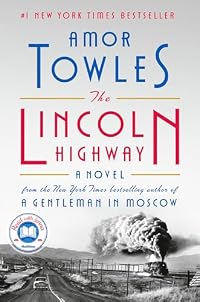
Member Recommendations
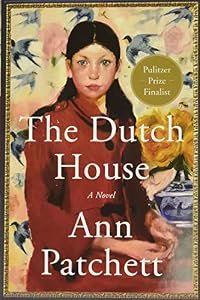
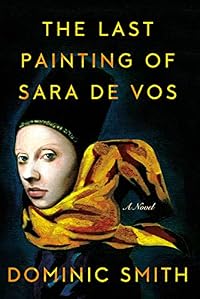
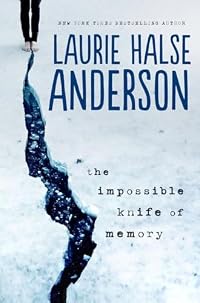
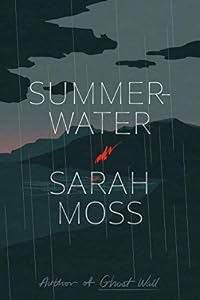
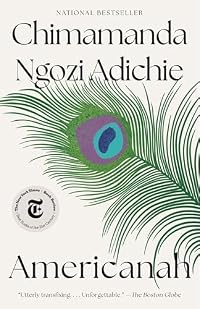
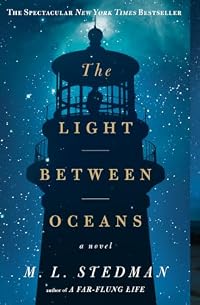
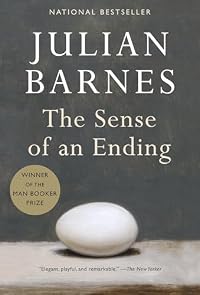
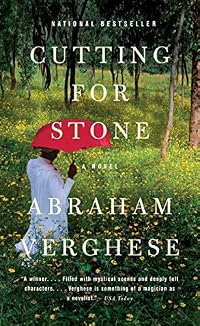
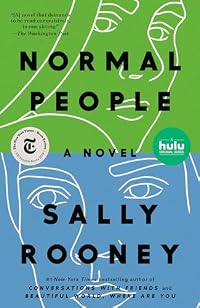
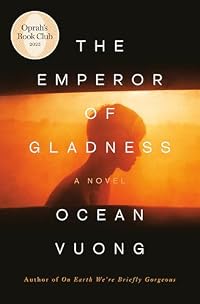
BookshelfMonstrosity Paintings are at the heart of these hefty novels, both of which combine the antics of a heist novel with ruminations on literature, history, and loss. Memorable characters and rich details add to the enjoyment of both books.
11
vwinsloe A book about trauma, guilt and complicated grief. The effect of secrets and drugs on lives and families.
11
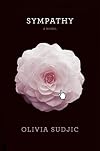
niquetteb The detailed writing styles are similar.
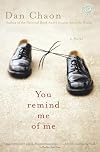
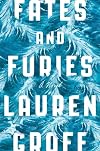
pbirch01 Both have protagonists that use rare artworks to get what they want and execute their plan over many years
01
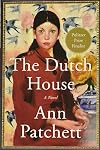
shaunie The Dutch House is in some ways a slimmed down, more enjoyable Goldfinch.
12
Member Reviews
For me, this was nothing short of a masterpiece of fiction! No wonder it won the 2014 Pulitzer Prize for Fiction. Rich, emotional, and profound are just a few descriptors that come to my mind.
THE GOLDFINCH is not just well-written, but beautifully-written. Don't be put off by its length because you will fly through this page turning plot, with fully-drawn and resonating characters, believable dialog, and insightful perspective on us humans and our lives. It is also one of the saddest books I've ever read.
The book tells the story of Theo, a teenage boy journeying into adulthood, after the sudden and tragic death of his mother. "The Goldfinch" is the 17th Dutch century painting by Carel Fabritius that accompanies Theo on his journey. show more Moving in and out are an array of fascinating personalities and seemingly disparate strata of society- Russian emigres, furniture restoration, illegal drugs, child protective services, high society in NYC, loan sharks in Las Vegas, and art thieves in Amsterdam.
It's also a story about human vulnerability where a single random event can completely redirect one's life. About the core meaning of concepts like love, trust, and right and wrong. And about the role art plays for humanity.
You can't help but become deeply involved in Theo's life. You will feel his disappointment when those he depends on let him down. You will sympathize when he sometimes makes bad decisions. And you will worry about him until the very last page. Enjoy! show less
THE GOLDFINCH is not just well-written, but beautifully-written. Don't be put off by its length because you will fly through this page turning plot, with fully-drawn and resonating characters, believable dialog, and insightful perspective on us humans and our lives. It is also one of the saddest books I've ever read.
The book tells the story of Theo, a teenage boy journeying into adulthood, after the sudden and tragic death of his mother. "The Goldfinch" is the 17th Dutch century painting by Carel Fabritius that accompanies Theo on his journey. show more Moving in and out are an array of fascinating personalities and seemingly disparate strata of society- Russian emigres, furniture restoration, illegal drugs, child protective services, high society in NYC, loan sharks in Las Vegas, and art thieves in Amsterdam.
It's also a story about human vulnerability where a single random event can completely redirect one's life. About the core meaning of concepts like love, trust, and right and wrong. And about the role art plays for humanity.
You can't help but become deeply involved in Theo's life. You will feel his disappointment when those he depends on let him down. You will sympathize when he sometimes makes bad decisions. And you will worry about him until the very last page. Enjoy! show less
The Goldfinch reportedly took its author 10 years to complete; it has taken me nearly half that time to finish reading it. I seem to recall the author appeared on Late Night with Seth Meyers, who revealed he’d read the entire book and was quite enthusiastic about it. Other sources compared it to Dickens and that was probably the approximate cause that got me started reading; I’ve liked Dickens since I was in high school. The Goldfinch wasn’t quite that.
Pip in Great Expectations learns that his whole life has been based on an illusion about who is pulling the strings. Theo is haunted throughout most of his adult life by several levels of illusion of which he is acutely self-aware from the git go, but, thanks to Boris, the show more foundation of his illusion turns out to be itself an illusion. Meanwhile, the love of Theo’s life is “Pippa.” (Her name suggests that he is in love, like Narcissus, with his own PTSD image.) But surely the disillusionment theme combined with the work of art and memory as an organizing principle seems to have been purloined from Proust.
At the center of the novel is a con job, involving objets d’art. On the one hand furniture is restored or repaired using parts of the original combined with parts that might be cannibalized from contemporary objets, as well as brand new ones. Hobie, the restorer, takes justified pride in the skills needed to create these pastiches which he creates not to deceive but as an homage to and a means of recapturing the aura of the original. On the other hand, Theo sells the pastiches as “the real thing” using convoluted rationalizations for the fraud. Both honest work of secondary art and deception; the left hand doesn’t know what the right hand is doing. Does the reader?
Fictional theft of a real artifact. Pastiche of Dickens, Proust, Henry James, Edith Wharton, Dostoyevsky, Pulp Fiction – God or Tartt knows what else. Rationalizing literary theft by analyzing the technique of a Dutch realist, technique that is both trompe l’oeil and (upon closer examination) shows that the eye has been trumped by artistic technique. The novel even has a final chapter that substitutes for the Reader’s Guide appendix found in popular trade paperbacks. But the imprisoned bird that was the basis of the painting was once real. The character who can rationalize his imprisonment in a life of misery as a work of art by God or Bozo the Clown is not real.
The novel could be read as a pastiche of jokes on the reader or as an ethical exercise. Impatient with Theo’s self-destruction? Feel superior to him because I have the good judgment not to make a series of interminable stupid decisions characteristic of PTSD victims and drug addicts, and they’re boring and I will just ignore them? I close the book on him just as I close the book on the other wretches I encounter IRL. Frustrated, as I was, with the innumerable digressions and shaggy dog stories that always seem to be postponing the revelation of What I Really Need to Know? Should hire Lee Child’s editor. Or maybe the digressions are the point? A 21st century Tristram Shandy? Source of these are a hoard of notebooks Theo has been filling since the age of 13! Heard the one about the guy who couldn’t kill himself because he couldn’t write a suicide note that wasn’t sentimental or mawkish? Which ending Is more ridiculous: the Tarentino shoot out or the sketchy tip that makes everyone a millionaire! Is the whole work a shaggy dog story, a con? Aesthetically true, authentic – or not – it’s possible to read it – or, now, re-read it – over a long period of time because the broadly drawn characters and coincidence-bloated events are easy to recall even after a long interval and those digressions that might be the novel’s reason for being. show less
Pip in Great Expectations learns that his whole life has been based on an illusion about who is pulling the strings. Theo is haunted throughout most of his adult life by several levels of illusion of which he is acutely self-aware from the git go, but, thanks to Boris, the show more foundation of his illusion turns out to be itself an illusion. Meanwhile, the love of Theo’s life is “Pippa.” (Her name suggests that he is in love, like Narcissus, with his own PTSD image.) But surely the disillusionment theme combined with the work of art and memory as an organizing principle seems to have been purloined from Proust.
At the center of the novel is a con job, involving objets d’art. On the one hand furniture is restored or repaired using parts of the original combined with parts that might be cannibalized from contemporary objets, as well as brand new ones. Hobie, the restorer, takes justified pride in the skills needed to create these pastiches which he creates not to deceive but as an homage to and a means of recapturing the aura of the original. On the other hand, Theo sells the pastiches as “the real thing” using convoluted rationalizations for the fraud. Both honest work of secondary art and deception; the left hand doesn’t know what the right hand is doing. Does the reader?
Fictional theft of a real artifact. Pastiche of Dickens, Proust, Henry James, Edith Wharton, Dostoyevsky, Pulp Fiction – God or Tartt knows what else. Rationalizing literary theft by analyzing the technique of a Dutch realist, technique that is both trompe l’oeil and (upon closer examination) shows that the eye has been trumped by artistic technique. The novel even has a final chapter that substitutes for the Reader’s Guide appendix found in popular trade paperbacks. But the imprisoned bird that was the basis of the painting was once real. The character who can rationalize his imprisonment in a life of misery as a work of art by God or Bozo the Clown is not real.
The novel could be read as a pastiche of jokes on the reader or as an ethical exercise. Impatient with Theo’s self-destruction? Feel superior to him because I have the good judgment not to make a series of interminable stupid decisions characteristic of PTSD victims and drug addicts, and they’re boring and I will just ignore them? I close the book on him just as I close the book on the other wretches I encounter IRL. Frustrated, as I was, with the innumerable digressions and shaggy dog stories that always seem to be postponing the revelation of What I Really Need to Know? Should hire Lee Child’s editor. Or maybe the digressions are the point? A 21st century Tristram Shandy? Source of these are a hoard of notebooks Theo has been filling since the age of 13! Heard the one about the guy who couldn’t kill himself because he couldn’t write a suicide note that wasn’t sentimental or mawkish? Which ending Is more ridiculous: the Tarentino shoot out or the sketchy tip that makes everyone a millionaire! Is the whole work a shaggy dog story, a con? Aesthetically true, authentic – or not – it’s possible to read it – or, now, re-read it – over a long period of time because the broadly drawn characters and coincidence-bloated events are easy to recall even after a long interval and those digressions that might be the novel’s reason for being. show less
This imposing chunkster demands a significant commitment of time on the part of the reader. The story is long, taking the protagonist from New York to Las Vegas to Amsterdam, through the world of art, antiques, drugs, and dysfunction, from the age of 13 to about 30, and still leaving the reader gasping at the end. It's a book that inspires awe at the level of detail the author presents. It arouses sympathy for some characters, and rage at others. It infuriates, cheers, exasperates, and still produces belly laughs. At the end, the reader is stunned and must sit for some time digesting all that has happened, trying to decide if the implausible scenes are at all plausible, if the plot isn't a bit too contrived, if the protagonist and all show more those around him aren't just too well-drawn to be believable. And...in the end, it all works to leave me able simply to say "This is a very good book."
Without major spoilers, this is the story of 13 year old Theo Decker, victim of a terrorist bombing in a New York Museum of Art in which his divorced mother dies. Theo somehow manages to "save" the painting entitled The Goldfinch from the carnage, doesn't tell anyone he has it, and begins a journey of several years trying to decide what to do with the painting and whether (and to whom) he should return it. In the meantime, he is also the victim of a modern day sin - lack of parenting. His father (who lives in Las Vegas) doesn't want him, his grandparents don't want him, and he ends up under the temporary care of very aristocratic upper-crusty New Yorkers whose son is a classmate.
When his father finally appears to whisk him away to Las Vegas, Theo begins a terrifying fall into the pit of drugs, crime, and gambling debts, and a life-long friendship with Boris - son of a Russian immigrant who leads him down the garden path of adolescent misdeeds, misadventures and sometimes downright crime.
As Boris and Theo mature (at least in age), so does their involvement in nefarious situations. Here is a picture of two young men, both very intelligent and cunning, with no moral compass and nothing to prevent them from becoming mired in page after page of "how did I get here and how do I get out of this?" There were times when I had to put the book down and let each adventure perk for awhile before I dared pick it up again to find out what could possible happen next. That Theo arrives alive at the end of this period of his life is as much a tribute to Tartt's writing skills as it is to the caprices of real life.
This is a major piece of fiction with more than the usual number of words. Normally, I'd be put off by its length, but Tartt uses words to paint pictures, to evoke feelings, to stimulate all our senses, so that we can place ourselves in the moment with Theo and all the powerfully portrayed supporting cast of characters who exert some influence on his eventual arrival at adulthood. I'm not sure about the ending. But then, I'm sure that there are many who will love it. show less
Without major spoilers, this is the story of 13 year old Theo Decker, victim of a terrorist bombing in a New York Museum of Art in which his divorced mother dies. Theo somehow manages to "save" the painting entitled The Goldfinch from the carnage, doesn't tell anyone he has it, and begins a journey of several years trying to decide what to do with the painting and whether (and to whom) he should return it. In the meantime, he is also the victim of a modern day sin - lack of parenting. His father (who lives in Las Vegas) doesn't want him, his grandparents don't want him, and he ends up under the temporary care of very aristocratic upper-crusty New Yorkers whose son is a classmate.
When his father finally appears to whisk him away to Las Vegas, Theo begins a terrifying fall into the pit of drugs, crime, and gambling debts, and a life-long friendship with Boris - son of a Russian immigrant who leads him down the garden path of adolescent misdeeds, misadventures and sometimes downright crime.
As Boris and Theo mature (at least in age), so does their involvement in nefarious situations. Here is a picture of two young men, both very intelligent and cunning, with no moral compass and nothing to prevent them from becoming mired in page after page of "how did I get here and how do I get out of this?" There were times when I had to put the book down and let each adventure perk for awhile before I dared pick it up again to find out what could possible happen next. That Theo arrives alive at the end of this period of his life is as much a tribute to Tartt's writing skills as it is to the caprices of real life.
This is a major piece of fiction with more than the usual number of words. Normally, I'd be put off by its length, but Tartt uses words to paint pictures, to evoke feelings, to stimulate all our senses, so that we can place ourselves in the moment with Theo and all the powerfully portrayed supporting cast of characters who exert some influence on his eventual arrival at adulthood. I'm not sure about the ending. But then, I'm sure that there are many who will love it. show less
I had to wait a few days to try and gather my thoughts a bit. I'm not sure how much progress I've made on that front, but here goes. This book is incredible. Not only is it beautifully-written, but it's heartbreaking, infuriating, moving. I love Tartt's characters, and I hate Tartt's characters. I've known a few Borises in my day and maybe an almost-Theo or two. Definitely some Kitseys. It's 771 pages that flew by like 200 and yet will stay with me for a long time.
It's fair to say this is a masterpiece - painstaking, detailed with love, agonized over, built up layer on layer, but the excruciating pace of this staggering tome nearly defeated me. I joked early that something only seemed to happen once every 100 pages; other than the burst of action in Amsterdam, I may have exaggerated. Theo takes self-absorption and self-destruction to new depths; tragically flawed and very human, but not a companion I enjoyed spending so much time with, and while Boris is entertaining, his violent charms don't attract me either. The 1% are as unpleasant here as in The Secret History, over-privileged, untouchable (the Barbours - impeccably sketched, and unwilling to believe the awful truth about their peers), show more detached from reality in every sense. Coldly beautiful; devoid of hope or redemption; not a book to read if you're feeling down on humanity. Star rating reflects my abiding unwilling delight in Tartt's prose. show less
771 pages: a large book by any standard. Unfortunately, because of teaching and other duties, I rarely have time to spend a couple of weeks on a behemoth of a novel. But several friends were so insistent I read Donna Tartt’s The Goldfinch, I decided during a break in grading to clear all other priorities and tackle this novel.
This might sound silly, but I actually enjoyed holding the book and feeling the silky smooth paper. Then I got to the novel, and I was completely blown away. This is my first experience with Donna Tartt, but I can guarantee it will not be my last.
Donna Tartt was born and raised in Mississippi, but she left the south for Bennington College in Vermont in 1982. She was raised in a family of voracious readers. She show more told one interviewer her mother read novels while driving. While at Bennington, she began writing her first novel, The Secret History, which became a bestseller. Her second novel, The Little Friend, won the prestigious W.H. Smith Award in 2002. Tartt is a slow writer – each of novels take about 10 years from conception to publication. The Goldfinch is her third novel. The detail in this compelling novel attests to the level of work that took ten years: she writes by hand on paper and note cards.
Theo Dexter lives in Manhattan with his, mother Audrey, a part-time model, actress, and artist. Theo’s father, an alcoholic with a gambling addiction abandoned the family about a year before the story begins. One day, Theo and his mother decide to stop into a museum to view some notable old masters on display. Theo spots an attractive young girl with red hair accompanied by an elderly man. He loses interest in the exhibit and begins to follow the young girl, when he is knocked to the ground by an explosion. Unhurt, Theo begins moving toward the exit now blocked. He encounters an elderly man, who has been mortally injured. He gives Theo a ring and asks him to take it to a certain address. The dying man also tells Theo to take a small painting which has fallen off the wall. This is The Goldfinch of the title. He does not see the young girl. He takes the ring to the address, and meets the elderly man’s business partner, Hobie. Together they ran an antique store. He learns that Pippa, the red headed girl, is recovering from her injuries at the home of Hobie and the elderly man, Mr. Blackwell. Meanwhile, Theo wraps the painting securely and hides it in his room. All this action occurs in about the first 50 pages.
However, I had absolutely no desire to abandon Theo, Pippa, and Hobie. Every page of this novel contains interesting characters, situations, descriptions, interior monologues of the highest order. I could not stop reading. The list of characters far exceeds the few I have mentioned here.
Janet Burroway, in her creative writing textbook, Writing Fiction, says, “every story must have a complication, crises , and resolution.” Tartt has filled this novel with a series of complications, which create one crisis after another for Theo, which he manages to resolve, through pluck, intelligence, and hard work.
Donna Tartt’s The Goldfinch moves to the top of my list for the year, and perhaps the decade. I have rarely encountered a novel of such grace, beauty, heartbreak, sadness, joy, and with thrills, mysteries, and even some chilling moments sprinkled on almost every page. This novel has it all, and I could not urge myreaders more strongly to read this book as soon as possible. You will get to know Theo; you will become a part of his family; you will be forever affected by Tartt’s power as a storyteller. I have to raise my scale to 10 stars for this extraordinary novel, which I have just learned, won the 2014 Pulitzer Prize for Fiction.
--Jim, 4/13/14 show less
This might sound silly, but I actually enjoyed holding the book and feeling the silky smooth paper. Then I got to the novel, and I was completely blown away. This is my first experience with Donna Tartt, but I can guarantee it will not be my last.
Donna Tartt was born and raised in Mississippi, but she left the south for Bennington College in Vermont in 1982. She was raised in a family of voracious readers. She show more told one interviewer her mother read novels while driving. While at Bennington, she began writing her first novel, The Secret History, which became a bestseller. Her second novel, The Little Friend, won the prestigious W.H. Smith Award in 2002. Tartt is a slow writer – each of novels take about 10 years from conception to publication. The Goldfinch is her third novel. The detail in this compelling novel attests to the level of work that took ten years: she writes by hand on paper and note cards.
Theo Dexter lives in Manhattan with his, mother Audrey, a part-time model, actress, and artist. Theo’s father, an alcoholic with a gambling addiction abandoned the family about a year before the story begins. One day, Theo and his mother decide to stop into a museum to view some notable old masters on display. Theo spots an attractive young girl with red hair accompanied by an elderly man. He loses interest in the exhibit and begins to follow the young girl, when he is knocked to the ground by an explosion. Unhurt, Theo begins moving toward the exit now blocked. He encounters an elderly man, who has been mortally injured. He gives Theo a ring and asks him to take it to a certain address. The dying man also tells Theo to take a small painting which has fallen off the wall. This is The Goldfinch of the title. He does not see the young girl. He takes the ring to the address, and meets the elderly man’s business partner, Hobie. Together they ran an antique store. He learns that Pippa, the red headed girl, is recovering from her injuries at the home of Hobie and the elderly man, Mr. Blackwell. Meanwhile, Theo wraps the painting securely and hides it in his room. All this action occurs in about the first 50 pages.
However, I had absolutely no desire to abandon Theo, Pippa, and Hobie. Every page of this novel contains interesting characters, situations, descriptions, interior monologues of the highest order. I could not stop reading. The list of characters far exceeds the few I have mentioned here.
Janet Burroway, in her creative writing textbook, Writing Fiction, says, “every story must have a complication, crises , and resolution.” Tartt has filled this novel with a series of complications, which create one crisis after another for Theo, which he manages to resolve, through pluck, intelligence, and hard work.
Donna Tartt’s The Goldfinch moves to the top of my list for the year, and perhaps the decade. I have rarely encountered a novel of such grace, beauty, heartbreak, sadness, joy, and with thrills, mysteries, and even some chilling moments sprinkled on almost every page. This novel has it all, and I could not urge myreaders more strongly to read this book as soon as possible. You will get to know Theo; you will become a part of his family; you will be forever affected by Tartt’s power as a storyteller. I have to raise my scale to 10 stars for this extraordinary novel, which I have just learned, won the 2014 Pulitzer Prize for Fiction.
--Jim, 4/13/14 show less
If you removed every third sentence from this book, I think you'd have a really powerful work that had a lot to say about the nature of loss and addiction, and about beauty and fate. As it were, there are about four hundred pages too many.
Far too often the author will come tantalizingly close to an emotionally satisfying moment, only to drown her reader in needless verbosity. The pacing is maddeningly inconsistent, with the plot at times grinding to a halt in order for our narrator to carefully describe everything he sees and hears (or to tell a nearly pointless anecdote, which is probably meant to offer the reader a history lesson and some insight into a particular character, but often ends up reading like a study guide for a high show more school exam). At other times you are whisked randomly into the future, only to have Theo explain what happened in the interim. The whole book suffers from a lot of telling versus showing. You never feel as if you're a part of events; they're always blandly related back to you after the fact. You are positively submerged in details, but none of them make the world your reading about feel any more real. It has the opposite, in fact. By leaving too little to the imagination, the author comes across as disingenuous, as if they’re trying to cover up a lie by piling on distracting details.
I have no problem with a flawed protagonist. It's essential. Without flaws, there can be no growth, and without growth you lack a compelling story. You have to give your character a chip on their shoulder so that they can struggle to remove it. Tartt's narrator, Theo, has no shortage of chips. What he lacks, however, are any qualities by which he can be redeemed. You can guess the trajectory that his character will take, and I'll admit I didn't hate wallowing in his vices (even if they were conveyed rather clinically; you simply have to take his word that he's an addict, much like you do with everything else he says), but his development never quite manages to get past them.
Perhaps that's the point, and that Theo represents the books central theme, that of obsession and fixation, as he feels more like a force that influences the other characters in the book rather than a fully developed character himself. You can feel the empty space that he should occupy, which at times feels like a glaring flaw in the book’s structure, whereas other times it helps put a spotlight on the books supporting characters, which, to the book’s credit, are rich and colorful.
Buried somewhere in this too large tome is a compelling story filled with some of the best characters I have read in a while. Had an editor been more ruthless in what they cut out, undoubtedly this would have been a masterpiece, although it very well may be anyway, warts and all. show less
Far too often the author will come tantalizingly close to an emotionally satisfying moment, only to drown her reader in needless verbosity. The pacing is maddeningly inconsistent, with the plot at times grinding to a halt in order for our narrator to carefully describe everything he sees and hears (or to tell a nearly pointless anecdote, which is probably meant to offer the reader a history lesson and some insight into a particular character, but often ends up reading like a study guide for a high show more school exam). At other times you are whisked randomly into the future, only to have Theo explain what happened in the interim. The whole book suffers from a lot of telling versus showing. You never feel as if you're a part of events; they're always blandly related back to you after the fact. You are positively submerged in details, but none of them make the world your reading about feel any more real. It has the opposite, in fact. By leaving too little to the imagination, the author comes across as disingenuous, as if they’re trying to cover up a lie by piling on distracting details.
I have no problem with a flawed protagonist. It's essential. Without flaws, there can be no growth, and without growth you lack a compelling story. You have to give your character a chip on their shoulder so that they can struggle to remove it. Tartt's narrator, Theo, has no shortage of chips. What he lacks, however, are any qualities by which he can be redeemed. You can guess the trajectory that his character will take, and I'll admit I didn't hate wallowing in his vices (even if they were conveyed rather clinically; you simply have to take his word that he's an addict, much like you do with everything else he says), but his development never quite manages to get past them.
Perhaps that's the point, and that Theo represents the books central theme, that of obsession and fixation, as he feels more like a force that influences the other characters in the book rather than a fully developed character himself. You can feel the empty space that he should occupy, which at times feels like a glaring flaw in the book’s structure, whereas other times it helps put a spotlight on the books supporting characters, which, to the book’s credit, are rich and colorful.
Buried somewhere in this too large tome is a compelling story filled with some of the best characters I have read in a while. Had an editor been more ruthless in what they cut out, undoubtedly this would have been a masterpiece, although it very well may be anyway, warts and all. show less
Members
- Recently Added By
Published Reviews
ThingScore 81
Good things are worth waiting for. . . a tour de force that will be among the best books of 2013.
added by 4leschats
It’s my happy duty to tell you that in this case, all doubts and suspicions can be laid aside. “The Goldfinch” is a rarity that comes along perhaps half a dozen times per decade, a smartly written literary novel that connects with the heart as well as the mind. I read it with that mixture of terror and excitement I feel watching a pitcher carry a no-hitter into the late innings. You keep show more waiting for the wheels to fall off, but in the case of “The Goldfinch,” they never do. show less
added by BeckyJG
Book review in English 2 out of 5
added by zwelbast
Lists

1001 Books You Must Read Before You Die
1,448 works; 1,131 members

Top Five Books of 2013
1,564 works; 716 members

Recommend the 20 best books you've read in the last five years
2,167 works; 602 members

Pulitzer Prize Winners for Fiction
102 works; 54 members

Top Five Books of 2014
1,064 works; 397 members

Your favorite books from the 2014 Baileys Women's Prize for Fiction
20 works; 23 members
2014 Tournament of Books
17 works; 20 members

Best 21st Century Books (So Far)
670 works; 85 members

Favorite Long Books
330 works; 41 members

Best Contemporary Literary Fiction (Around the Last 30 Years)
388 works; 122 members

Read the book and saw the movie
1,170 works; 195 members

Female Author
1,235 works; 67 members

Baileys Women's Prize for Fiction Winners and Shortlisted Books
61 works; 11 members

Top Five Books of 2020
982 works; 348 members
Top Five Books on LibraryThing
24 works; 7 members

Pulitzer Prize-Winning Books
42 works; 9 members

Books Set in New York City
127 works; 21 members

Top Five Books of 2015
811 works; 241 members

Books Read in 2014
2,341 works; 89 members

Vulture's 100 Best Books of the 21st Century (So Far)
98 works; 9 members

50 Books from the Past 50 Years
50 works; 8 members

child hero ~ adult novel
60 works; 12 members
LibraryThingers' 1001 Books You Must Read Before You Die
442 works; 29 members
Powell's Indiespensable
79 works; 6 members

Top Five Books of 2017
757 works; 230 members
Top Five Books of 2016
795 works; 229 members

Fiction For Men
142 works; 11 members
Best Friendship Stories
205 works; 16 members
Contemporary Fiction
109 works; 7 members
2014 Notable Books for Adults
26 works; 5 members
Phi Beta Kappa reading list
260 works; 8 members
Bitter Southerner Summer Reading Roundup
198 works; 8 members

Dysfunctional Families
133 works; 7 members

Best Antiheroes and Antiheroines
119 works; 6 members

Books Read in 2015
3,298 works; 126 members

Vote - Bookmarque's Teetering TBR Tower
33 works; 8 members

Books Read in 2023
5,547 works; 145 members
Books Read in 2016
4,666 works; 199 members
Best of American Literature
146 works; 9 members

Urban Fiction
74 works; 7 members
Animals in the Title
498 works; 11 members
SHOULD Read Books!
354 works; 9 members
USA Road Trip
50 works; 3 members

Animaux romanesques
4 works; 1 member
Main Character is aged 10-19
361 works; 6 members

covers with paintings / paintings as covers .
37 works; 1 member
Kirkus Reviews Best Fiction of 2013
99 works; 6 members

To Read Shortlist
20 works; 1 member

Powell's Indiespensable
15 works; 1 member

Secrets Books
94 works; 3 members

Plan to Read Books
75 works; 1 member

Romans
49 works; 1 member

Most Frequently Tagged "Read in 2015"
70 works; 1 member
American Lit for Eng 11 Research Project
368 works; 6 members

Fiction With Familiar Settings
277 works; 91 members
el
1,139 works; 1 member

Bibliography of How the Old World Ended by Jonathan Scott
308 works; 1 member
Books We Couldn't Put Down
443 works; 197 members

AP Lit
363 works; 6 members

Books Read in 2025
4,090 works; 97 members
Best Book and Movie Combos
70 works; 11 members
Books That Made Us Cry
278 works; 145 members

La Clave está en el Lienzo: Novelas Descifradas a Través del Arte
5 works; 1 member

Books to Read
95 works; 2 members

.
184 works; 1 member
NYT 100 best books of 21st C
100 works; 31 members

NYT Readers best of 21st C
100 works; 8 members

Books About the Arts that Aren't Art Books
21 works; 5 members

Hachette Book Group
152 works; 6 members
Fate vs. Free Will
63 works; 8 members

BB: Books That Will Keep Your Attention Until The Very Last Page
20 works; 3 members

Books Read in 2013
1,629 works; 51 members
Put a Bird On It
75 works; 12 members
Favorite Books Published in 2013
32 works; 10 members
upcoming
1 work; 1 member

Read in 2014
334 works; 11 members

KayStJ's to-read list
1,616 works; 11 members

Women Writers
16 works; 2 members

A Rainbow of Books: Colors in the Title
570 works; 24 members

PS: 43 Books to Read Before They're Movies
18 works; 5 members

Biggest Disappointments
606 works; 163 members

Books Read in 2018
4,360 works; 110 members

Retrospective of 20th- and 21st-century literature
154 works; 1 member

Books Tagged Abuse
152 works; 4 members

Movies/Shows
617 works; 7 members
Contemporary Fiction
17 works; 2 members

Ten Books Inspired By Paintings
11 works; 2 members

BingoDOG 2020 - Element in the Title
8 works; 2 members

Books Read in 2021
5,361 works; 114 members

2010s
241 works; 3 members

Books We Resisted Reading
173 works; 102 members
Talk Discussions
Past Discussions
The Goldfinch SPOILERS ALLOWED in Girlybooks (August 2014)
Author Information

16+ Works 51,483 Members
Donna Tartt was born in Greenwood, Mississippi on December 23, 1963. She wrote her first novel while attending Bennington College, where she graduated in 1986. The novel, The Secret History, was published in 1992. Her other works include The Little Friend, which won the WH Smith Literary Award in 2003, and The Goldfinch, which won the Pulitzer show more Prize in 2014 for Best Fiction, the National Book Critics Circle Award in 2013 and the Andrew Carnegie Medal for Excellence for Fiction. In 2014, Time named Tartt among their 100 Most Influential People. (Bowker Author Biography) show less
Some Editions
Awards and Honors
Awards
Distinctions
Notable Lists
Series
Belongs to Publisher Series
Work Relationships
Is contained in
Has the adaptation
Has as a supplement
Has as a commentary on the text
Has as a student's study guide
Summary - The Goldfinch:: Novel By Donna Tartt -- An Incredible Summary! (The Goldfinch: An Incredible Summary -- Audiobook, Paperback, Novel, Ebook) by Alexander Cooper
Common Knowledge
- Canonical title
- The Goldfinch
- Original title
- The Goldfinch
- Original publication date
- 2013-09-23
- People/Characters
- Theodore Decker; Boris Pavlikovsky; James Hobart ("Hobie"); Pippa; Samantha Barbour; Katherine Barbour ("Kitsey") (show all 23); Andy Barbour; Xandra Terrell; Platt Barbour; Welton Blackwell ("Weltie"); Horst; Gyuri; Victor Cherry; Lucius Reeve (Lucian Race); Sascha; Margaret Blackwell Pierce; Tom Cable; George Bracegirdle; Toddy Barbour; Havistock Irving (Sloane Griscam); Larry Decker; Audrey Decker; Francis Abernathy
- Important places
- New York, New York, USA; Amsterdam, North Holland, Netherlands; Las Vegas, Nevada, USA; Manhattan, New York, New York, USA; Metropolitan Museum of Art, New York, New York, USA; New York, USA (show all 9); Nevada, USA; North Holland, Netherlands; The Netherlands
- Related movies
- The Goldfinch (2019 | IMDb)
- Epigraph
- The absurd does not liberate; it binds.
ALBERT CAMUS - Dedication
- For Mother, For Claude
- First words
- While I was still in Amsterdam, I dreamed about my mother for the first time in years.
- Quotations
- It seemed like the kind of room where a call girl or a stewardess would be murdered on television.
He's telling you that living things don't last—it's all temporary. Death in life. That's why they're called natures mortes. Maybe you don't see it at first with all the beauty and bloom, the little speck of rot. But if you ... (show all)look closer—there it is.
Every new event—everything I did for the rest of my life—would only separate us more and more: days she was no longer a part of, an ever-growing distance between us. Every single day for the rest of my life, she would onl... (show all)y be further away.
But sometimes, unexpectedly, grief pounded over me in waves that left me gasping; and when the waves washed back, I found myself looking out over a brackish wreck which was illumined in a light so lucid, so heartsick and empt... (show all)y, that I could hardly remember that the world had ever been anything but dead.
When I looked at the painting I felt the same convergence on a single point: a flickering sun-struck instant that existed now and forever. Only occasionally did I notice the chain on the finch's ankle, or think what a cruel l... (show all)ife for a little living creature—fluttering briefly, forced always to land in the same hopeless place.
I looked like some cult-raised kid just rescued by local law enforcement, brought blinking from some basement stocked with firearms and powdered milk.
Even in some smoky post-catastrophe Manhattan, you could imagine him swaying genially at the door in the rags of his former uniform, the Barbours up in the apartment burning old National Geographics for warmth, living ... (show all)off gin and tinned crabmeat.
The problem (as I'd learned, repeatedly) was that thirty-six hours in, with your body in full revolt, and the remainder of your un-opiated life stretching out bleakly ahead of you like a prison corridor, you needed some fairl... (show all)y compelling reason to keep moving forward into darkness, rather than falling straight back into the gorgeous feather mattress you'd so foolishly abandoned.
To understand the world at all, sometimes you could only focus on a tiny bit of it, look very hard at what was close to hand and make it stand in for the whole...
I was different, but it wasn't. As the light flickered over it in bands, I had the queasy sense of my own life, in comparison, as a patternless and transient burst of energy, a fizz of biological static just as random as the ... (show all)street lamps flashing past.
Who was it said that coincidence was just God's way of remaining anonymous?
...beauty alters the grain of reality. And I keep thinking too of the more conventional wisdom: namely, that the pursuit of pure beauty is a trap, a fast track to bitterness and sorrow, that beauty has to be wedded to somethi... (show all)ng more meaningful.
A great sorrow, and one that I am only beginning to understand: we don't get to choose our own hearts. We can't make ourselves want what's good for us or what's good for other people. We don't get to choose the people we are.
And as much as I'd like to believe there's a truth beyond illusion, I've come to believe that there's no truth beyond illusion. Because, between 'reality' on the one hand, and the point where the mind strikes reality, there's... (show all) a middle zone, a rainbow edge where beauty comes into being, where two very different surfaces mingle and blur to provide what life does not: and this is the space where all art exists, and all magic.
“You'd be surprised...what small everyday things can lift us out of despair. But nobody can do it for you. You're the one who has to watch for the open door.” (Mrs. Swanson)
When we are sad...it can be comforting to cling to familiar objects, to the things that don't change. (Hobie)
It was the secret no one told you, the thing you had to learn for yourself: viz. that in the antiques trade there was really no such thing as a “correct” price. Objective value—list value—was meaningless. If a cu... (show all)stomer came in clueless with money in hand (as most of them did) it didn't matter what the books said, what the experts said, what similar items at Christie's had recently gone for. An object—any object was worth whatever you could get somebody to pay for it. (Theo)
“Oh, Theo! Isn't he adorable? Kitsey unexpectantly thrusting a friend's newborn at me—me in all sincere horror leaping back as if from a lighted match.
What you want to live and be happy in this world is a woman who has her own life and lets you have yours.(Boris)
“Well—I have to say I personally have never drawn such a sharp line between ‘good' and ‘bad' as you. For me: that line is often false. The two are never disconnected. One can't exist without the other. As long as I am... (show all) acting out of love, I feel I am doing best I know how. But you—wrapped up in judgment, always regretting the past, cursing yourself, blaming yourself, asking ‘what if,' ‘what if.' ‘Life is cruel.' ‘I wish I had died instead of.' Well—think about this. What if all your actions and choices, good or bad, make no difference to God? What if the pattern is pre-set? No no—hang on—this is a question worth struggling with. What if our badness and mistakes are the very thing that set our fate and bring us round to good? What if, for some of us, we can't get there any other way?”
“the world is much stranger than we know or can say. And I know how you think, or how you like to think, but maybe this is one instance where you can't boil down to pure ‘good' or pure ‘bad' like you always want to doâ€... (show all)”? Like, your two different piles? Bad over here, good over here? Maybe not quite so simple. Because—all the way driving here, driving all night, Christmas lights on the motorway and I'm not ashamed to tell you, I got choked up—because I was thinking, couldn't help it, about the Bible story—? you know, where the steward steals the widow's mite, but then the steward flees to far country and invests the mite wisely and brings back thousandfold cash to widow he stole from? And with joy she forgave him, and they killed the fatted calf, and made merry?” “I think that's maybe not all the same story.”
My eyes darted nervously around the living room. My mother's book ("Jane and Prudence", Barbara Pym) face-down on the back of the sofa.
The social workers ... took clipboards and pens from their briefcases ... Enrique signed his name with a flourish. "Can't promise anything," he said, clicking his pen and sticking it back in his pocket.
I lay awake in Welty's old room, his old reading glasses and fountain pens still in the desk drawers. - Last words
- (Click to show. Warning: May contain spoilers.)And I add my own love to the history of people who have loved beautiful things, and looked out for them, and pulled them from the fire, and sought them when they were lost, and tried to preserve them and save them while passing them along literally from hand to hand, singing out brilliantly from the wreck of time to the next generation of lovers, and the next.
- Publisher's editor
- Pietsch, Michael
- Blurbers
- King, Stephen
- Original language
- English
Classifications
Statistics
- Members
- 18,201
- Popularity
- 344
- Reviews
- 868
- Rating
- (3.94)
- Languages
- 21 — Bulgarian, Chinese, Czech, Danish, Dutch, English, Estonian, Finnish, French, German, Greek, Hungarian, Italian, Norwegian (Bokmål), Polish, Portuguese, Romanian, Russian, Spanish, Swedish, Turkish
- Media
- Paper, Audiobook, Ebook
- ISBNs
- 106
- ASINs
- 35