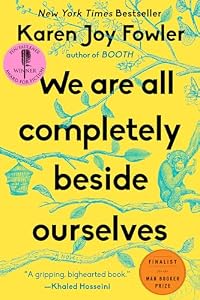
We Are All Completely Beside Ourselves
by Karen Joy Fowler
On This Page
Description
Coming of age in middle America, eighteen-year-old Rosemary evaluates how her entire youth was defined by the presence and forced removal of an endearing chimpanzee who was secretly regarded as a family member and who Rosemary loved as a sister.Tags
Recommendations
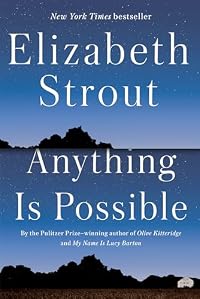
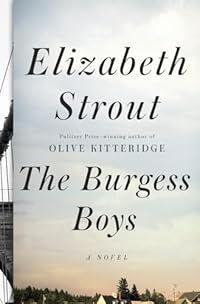
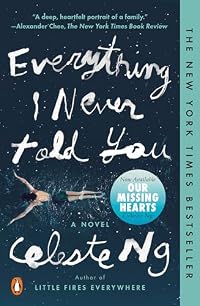
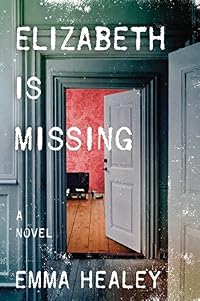



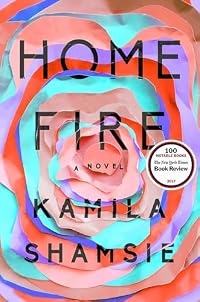
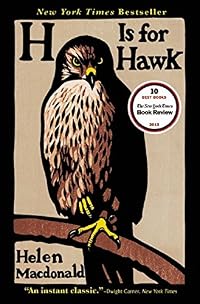
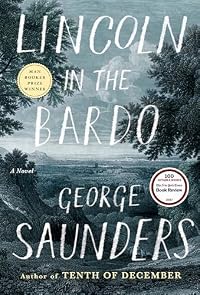
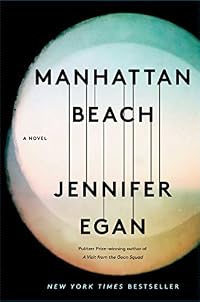
Member Recommendations
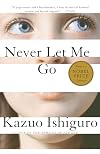
BookshelfMonstrosity Though it is less witty than We Are All Completely Beside Ourselves, Never Let Me Go is another poignant and insightful story about biological experimentation and human identity. Both novels feature lyrical prose, well-developed characterization, and haunting tones of melancholy.
40
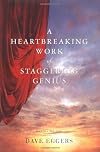
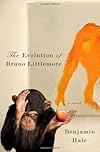

Limelite Eccentric family members, family dynamics, coming of age, with an animal in the middle of it all, only not a bear in Fowler's novel. Two intelligent and original novels of similar experimentalism and high quality.
34
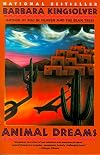
Aquila I can't really say what links these books in my mind, it's just something about the way they make me feel.

cataylor animal rights
susanbooks They’re both so good, but kind of alike, so don’t read them back to back.
Member Reviews
I was smitten by this novel, unexpectedly. The premise was kind of interesting but seemed potentially gimmicky, and this is the author of [The Jane Austen Book Club], which does not, on the face of it, seem remotely my sort of thing. However, the book was given to me, and I felt an obligation to report. Almost immediately, I was picking it up at odd moments to read when I should’ve been doing other things.
Rosemary (the narrator) and Fern are raised as sisters, along with an older brother, in the 1970s. At age five, Rosemary is sent to stay with her grandparents for a few weeks. When she is brought back, home is in a different location, with familiar items and unpacked boxes, and Fern is gone. And so are the grad students who were show more studying the concurrent development of the two, human Rosemary and chimpanzee Fern. (This is technically a spoiler, because a number of chapters go by before the salient fact is revealed, but it is the reason for reading this book, and it is in all the reviews.) Rosemary’s mother is devastated and uncommunicative. Rosemary’s psychologist father is defensive; he tells the children that Fern has gone to a farm with other chimpanzees, and a visit would disrupt her acclimation. Rosemary’s brother is sullen. Years go by, with occasional snippets of a family that hasn’t fully recovered, and when Rosemary is twelve, her brother, on the verge of college, abruptly disappears, and the family can find no trace until the FBI comes around; he is wanted for vandalism of an animal research laboratory at UC Davis.
Rosemary tells the story as she is approaching age forty, focusing on her years in college, not coincidentally at UC Davis. Away from the home town that remembers too much, she wants to present a new self, leave behind the “monkey girl” of not-quite-right social behavior, but befriends Harlow, a drama student with little regard for appropriate boundaries. And then her brother shows up, drops a crucial bit of information and a burden of responsibility, and disappears again. Rosemary begins piecing together what happened when she was old enough to remember but too young to understand, casually inserting references to the intellectual milieu of her childhood. It is her voice as much as her story that is compelling.
My father would surely want me to point out that, at five, I was still in Jean Piaget’s preoperational phase with regard to cognitive thinking and emotional development. He would want you to understand that I am undoubtedly, from my more mature perspective, imposing a logical framework on my understanding of events that didn’t exist at the time. Emotions in the preoperational phase are dichotomous and extreme. Consider it said.
Rosemary hints about Fern now, Fern who also would be approaching age forty. Where is Fern? There is precedent in other family chimpanzee experiments. Rosemary’s memories don’t precisely match her mother’s. Rosemary has not the slightest idea why her brother believes that she is to blame. Family dynamics are fragile in the present and murky in the past. Rosemary’s process of constructing a coherent story is emotionally gripping, but this is a crying and laughing at the same time sort of book, warmth and wit together. Highly highly recommended.
(read 28 Oct 2013) show less
Rosemary (the narrator) and Fern are raised as sisters, along with an older brother, in the 1970s. At age five, Rosemary is sent to stay with her grandparents for a few weeks. When she is brought back, home is in a different location, with familiar items and unpacked boxes, and Fern is gone. And so are the grad students who were show more studying the concurrent development of the two, human Rosemary and chimpanzee Fern. (This is technically a spoiler, because a number of chapters go by before the salient fact is revealed, but it is the reason for reading this book, and it is in all the reviews.) Rosemary’s mother is devastated and uncommunicative. Rosemary’s psychologist father is defensive; he tells the children that Fern has gone to a farm with other chimpanzees, and a visit would disrupt her acclimation. Rosemary’s brother is sullen. Years go by, with occasional snippets of a family that hasn’t fully recovered, and when Rosemary is twelve, her brother, on the verge of college, abruptly disappears, and the family can find no trace until the FBI comes around; he is wanted for vandalism of an animal research laboratory at UC Davis.
Rosemary tells the story as she is approaching age forty, focusing on her years in college, not coincidentally at UC Davis. Away from the home town that remembers too much, she wants to present a new self, leave behind the “monkey girl” of not-quite-right social behavior, but befriends Harlow, a drama student with little regard for appropriate boundaries. And then her brother shows up, drops a crucial bit of information and a burden of responsibility, and disappears again. Rosemary begins piecing together what happened when she was old enough to remember but too young to understand, casually inserting references to the intellectual milieu of her childhood. It is her voice as much as her story that is compelling.
My father would surely want me to point out that, at five, I was still in Jean Piaget’s preoperational phase with regard to cognitive thinking and emotional development. He would want you to understand that I am undoubtedly, from my more mature perspective, imposing a logical framework on my understanding of events that didn’t exist at the time. Emotions in the preoperational phase are dichotomous and extreme. Consider it said.
Rosemary hints about Fern now, Fern who also would be approaching age forty. Where is Fern? There is precedent in other family chimpanzee experiments. Rosemary’s memories don’t precisely match her mother’s. Rosemary has not the slightest idea why her brother believes that she is to blame. Family dynamics are fragile in the present and murky in the past. Rosemary’s process of constructing a coherent story is emotionally gripping, but this is a crying and laughing at the same time sort of book, warmth and wit together. Highly highly recommended.
(read 28 Oct 2013) show less
Antagonism in my family comes wrapped in layers of code, sideways feints, full deniability. I believe the same can be said of many families. (20)
When I was five, I bit a tooth-sized chunk out of one of Grandma Donna's Waterford goblets for no other reason than to see if I could. (21)
No more politics, Grandma Donna had said as a permanent new rule, since we wouldn't agree to disagree and all of us had access to cutlery. (21)
What have you learned? my father asked, and I didn't have the words then, but, in retrospect, the lesson seemed to be that what you accomplish will never matter so much as where you fail. (25)
There are moments when history and memory seem like a mist, as if what really happened matters less than what should have show more happened. (28)
Language does this to our memories - simplifies, solidifies, codifies, mummifies. An oft-told story is like a photograph in a family album; eventually, it replaces the moment it was meant to capture. (48)
But maybe I made that last part up, me being so upset, so alarmed. Maybe later...I saw how I should have felt and revised my memory accordingly. People do that. People do that all the time. (78)
What seems not to have been anticipated was my own confusion. Dad didn't know then what we think we know now, that the neural system of a young brain develops partly by mirroring the brains around it. (101)
There was something off about me, maybe in my gestures, in my facial expressions or eye movements, and certainly in the things I said. Years later, my father made a passing reference to the uncanny-valley response - the human aversion to things that look almost but not quite like people. (102)
The spoken word converts individual knowledge into mutual knowledge, and there is no way back once you've gone over that cliff. (126)
"You know how everything seems so normal when you're growing up," she asked plaintively, "and then comes this moment when you realize your whole family is nuts?" (130)
You learn as much from failure as from success, Dad always says. Though no one admires you for it. (197)
It seemed to Lowell that psychological studies of nonhuman animals were mostly cumbersome, convoluted, and downright peculiar. They taught us little about the animals bit lots about the researchers who designed and ran them. Take Harry Harlow... (201)
Her face when I left her. (222)
We call them feelings because we feel them. They don't start in our minds, they arise in our bodies...you can't help the things you feel, only the things you do. (223)
"The world runs," Lowell said, "on the fuel of this endless, fathomless misery. People know it, but they don't mind what they don't see. Make them look and they mind, but you're the only one they hate, because you're the one that made them look." (232)
A screen memory is a compromise between remembering something painful and defending yourself against that very remembering. (247)
I thought there were moments to complain about you parents and moments to be grateful, and it was a shame to mix those moments up. (259)
In everyone's life there are people who stay and people who go and people who are taken away against their will. (271)
When I run the world, librarians will be exempt from tragedy. Even their smaller sorrows will last only for as long as you can take out a book. (273)
My brother and my sister have led extraordinary lives, but I wasn't there, and I can't tell you that part. I've stuck to the part I can tell, the part that's mine, and still everything I've said is all about them, a chalk outline around the space where they should have been. Three children, one story. (304)
Money is the language humans speak, Lowell told me once upon a time, long, long ago. If you want to communicate with humans, then you have to learn to speak it. show less
When I was five, I bit a tooth-sized chunk out of one of Grandma Donna's Waterford goblets for no other reason than to see if I could. (21)
No more politics, Grandma Donna had said as a permanent new rule, since we wouldn't agree to disagree and all of us had access to cutlery. (21)
What have you learned? my father asked, and I didn't have the words then, but, in retrospect, the lesson seemed to be that what you accomplish will never matter so much as where you fail. (25)
There are moments when history and memory seem like a mist, as if what really happened matters less than what should have show more happened. (28)
Language does this to our memories - simplifies, solidifies, codifies, mummifies. An oft-told story is like a photograph in a family album; eventually, it replaces the moment it was meant to capture. (48)
But maybe I made that last part up, me being so upset, so alarmed. Maybe later...I saw how I should have felt and revised my memory accordingly. People do that. People do that all the time. (78)
What seems not to have been anticipated was my own confusion. Dad didn't know then what we think we know now, that the neural system of a young brain develops partly by mirroring the brains around it. (101)
There was something off about me, maybe in my gestures, in my facial expressions or eye movements, and certainly in the things I said. Years later, my father made a passing reference to the uncanny-valley response - the human aversion to things that look almost but not quite like people. (102)
The spoken word converts individual knowledge into mutual knowledge, and there is no way back once you've gone over that cliff. (126)
"You know how everything seems so normal when you're growing up," she asked plaintively, "and then comes this moment when you realize your whole family is nuts?" (130)
You learn as much from failure as from success, Dad always says. Though no one admires you for it. (197)
It seemed to Lowell that psychological studies of nonhuman animals were mostly cumbersome, convoluted, and downright peculiar. They taught us little about the animals bit lots about the researchers who designed and ran them. Take Harry Harlow... (201)
Her face when I left her. (222)
We call them feelings because we feel them. They don't start in our minds, they arise in our bodies...you can't help the things you feel, only the things you do. (223)
"The world runs," Lowell said, "on the fuel of this endless, fathomless misery. People know it, but they don't mind what they don't see. Make them look and they mind, but you're the only one they hate, because you're the one that made them look." (232)
A screen memory is a compromise between remembering something painful and defending yourself against that very remembering. (247)
I thought there were moments to complain about you parents and moments to be grateful, and it was a shame to mix those moments up. (259)
In everyone's life there are people who stay and people who go and people who are taken away against their will. (271)
When I run the world, librarians will be exempt from tragedy. Even their smaller sorrows will last only for as long as you can take out a book. (273)
My brother and my sister have led extraordinary lives, but I wasn't there, and I can't tell you that part. I've stuck to the part I can tell, the part that's mine, and still everything I've said is all about them, a chalk outline around the space where they should have been. Three children, one story. (304)
Money is the language humans speak, Lowell told me once upon a time, long, long ago. If you want to communicate with humans, then you have to learn to speak it. show less
My lord I loved this book! It is a rollicking tale with humor and heartbreak and suspense, but it is also so much more. It is a nuanced consideration of what makes a being a being. If apes and humans are fundamentally different, and feel in different ways, does that make the ape less than? If so why? Is any animal (a rat, a bug) less than? It is also about the trickiness of memory. What do we remember? Did it all happen or is in altered or utterly changed by the input of others? How are memories written on us? What makes a family? What is love? How are we affected by silence and by words? Is an unswerving path toward absolute right justified and is it worth it. How are we impacted by stasis, and by chaos? Just read it.
This is a remarkable, original, ambitious book, that succeeds in being readable, truthful (mostly) and intellectually challenging without once sounding pretentious or too clever for its own good.
It is not a conventional novel in its approach to narrative.
It starts in the middle or, at least, it claims to, although, by the end, even the narrator is no longer sure this is true.
This no-linear novel moves backwards and forwards in time not so much to develop the narrative but to trace the source of an idea, the emergence of a memory, the evolution of a state of mind, the scabbing over and unpicking of scars left by real or imagined guilt.
Rosemary, the narrator, is both disarmingly honest and regularly unreliable. She lies by omission, for show more our own good, or because she can't face telling the truth, or because someone cannot bear to hear the truth. She tells the truth and nothing but the truth but is not entirely sure that the whole truth is either desirable or possible. Rosemary is not always the same Rosemary. Sometimes she is the Rosemary in the middle, remembering Rosemary at the beginning. Sometimes she is Rosemary at the end remembering Rosemary in the middle. Sometimes Rosemary is lost, even to herself. Sometimes Rosemary is hiding, from others, from her memories, from what she might have done and from what she did not do. And yet Rosemary is consistently and uncompromisingly herself.
Now this may make it sound like "We Are All Completely Beside Ourselves" is one of those "It must be art because it's boring me to death and I only understand part of it" Booker Prize Listed novels. It isn't. It is way too subtle for that. This as an easy to read book that made me laugh and cry and want to turn the page but which also set up whispers in my head, like subliminal implants, if subliminal implants worked, that made me review my understanding of concepts and ethic and consider why the novel is constructed the way it is.
This is a big themes book: love, guilt, family, humanity are all front and centre. Behind them, like a deliberately discordant soundtrack designed to create foreboding, are challenges on the nature of memory ("like photographs that eventually replace the moment they were meant to capture", the tension between narrative and truth, the immutability (or not) of character, and the mind-bending, soul-shaping gravitational pull of the love between two sisters.
I'm not going to share anything about the plot. I picked "We Are All Completely Beside Ourselves" up because I'd enjoyed Fowlers' "The Jane Austen Book Club" a decade or so ago and I liked the first few paragraphs of the prologue. There is a big reveal in the book, that doesn't occur until Part 2. There's a reason why it's there. Personally, I'm not convinced that the reason is a good reason but I'll leave it as the author's call.
The downside of the big reveal is that, for me, it made Part 1 less compelling. The Rosemary we see in Part 1 is hard to engage with. Yes, she was a vulnerable child once, deserving of sympathy and of love, but at the middle of story, which here is the beginning, she is in her twenties and at once passive and unhappy. Part 1 was like listening to a (very long) TED Talk or an article on "Fresh Air" in PBS radio, it was charming and witty and sometimes surprising but it didn't really grab me.
By the end of Part 1, about the same time as, but not solely attributable to, the big reveal, the veneer of wit and charms begins to rub away and we see something much less appealing and much more compelling, underneath.
I was already familiar with much of the content covered here on the study of animal behaviour and intelligence and with the views and actions of the ALF but Fowler made me see it all with fresh eyes. She made it personal and important and more than a little shameful.
"We Are All Completely Beside Ourselves" is a book I know I will read again and get even more from. Even on the first read, I was marvelling at how Fowler changed my view of events and people and relationships time and again. This wasn't cheating. It was more like using time-lapsed photography to show the changes that normally happen too slowly for us to register.
If you enjoyed "The Jane Austen Book Club" then you will still find the wit and the eye for character in "We Are All Completely Beside Ourselves" but you will also see that Fowler has used the intervening decade to become a true master of her craft. show less
It is not a conventional novel in its approach to narrative.
It starts in the middle or, at least, it claims to, although, by the end, even the narrator is no longer sure this is true.
This no-linear novel moves backwards and forwards in time not so much to develop the narrative but to trace the source of an idea, the emergence of a memory, the evolution of a state of mind, the scabbing over and unpicking of scars left by real or imagined guilt.
Rosemary, the narrator, is both disarmingly honest and regularly unreliable. She lies by omission, for show more our own good, or because she can't face telling the truth, or because someone cannot bear to hear the truth. She tells the truth and nothing but the truth but is not entirely sure that the whole truth is either desirable or possible. Rosemary is not always the same Rosemary. Sometimes she is the Rosemary in the middle, remembering Rosemary at the beginning. Sometimes she is Rosemary at the end remembering Rosemary in the middle. Sometimes Rosemary is lost, even to herself. Sometimes Rosemary is hiding, from others, from her memories, from what she might have done and from what she did not do. And yet Rosemary is consistently and uncompromisingly herself.
Now this may make it sound like "We Are All Completely Beside Ourselves" is one of those "It must be art because it's boring me to death and I only understand part of it" Booker Prize Listed novels. It isn't. It is way too subtle for that. This as an easy to read book that made me laugh and cry and want to turn the page but which also set up whispers in my head, like subliminal implants, if subliminal implants worked, that made me review my understanding of concepts and ethic and consider why the novel is constructed the way it is.
This is a big themes book: love, guilt, family, humanity are all front and centre. Behind them, like a deliberately discordant soundtrack designed to create foreboding, are challenges on the nature of memory ("like photographs that eventually replace the moment they were meant to capture", the tension between narrative and truth, the immutability (or not) of character, and the mind-bending, soul-shaping gravitational pull of the love between two sisters.
I'm not going to share anything about the plot. I picked "We Are All Completely Beside Ourselves" up because I'd enjoyed Fowlers' "The Jane Austen Book Club" a decade or so ago and I liked the first few paragraphs of the prologue. There is a big reveal in the book, that doesn't occur until Part 2. There's a reason why it's there. Personally, I'm not convinced that the reason is a good reason but I'll leave it as the author's call.
The downside of the big reveal is that, for me, it made Part 1 less compelling. The Rosemary we see in Part 1 is hard to engage with. Yes, she was a vulnerable child once, deserving of sympathy and of love, but at the middle of story, which here is the beginning, she is in her twenties and at once passive and unhappy. Part 1 was like listening to a (very long) TED Talk or an article on "Fresh Air" in PBS radio, it was charming and witty and sometimes surprising but it didn't really grab me.
By the end of Part 1, about the same time as, but not solely attributable to, the big reveal, the veneer of wit and charms begins to rub away and we see something much less appealing and much more compelling, underneath.
I was already familiar with much of the content covered here on the study of animal behaviour and intelligence and with the views and actions of the ALF but Fowler made me see it all with fresh eyes. She made it personal and important and more than a little shameful.
"We Are All Completely Beside Ourselves" is a book I know I will read again and get even more from. Even on the first read, I was marvelling at how Fowler changed my view of events and people and relationships time and again. This wasn't cheating. It was more like using time-lapsed photography to show the changes that normally happen too slowly for us to register.
If you enjoyed "The Jane Austen Book Club" then you will still find the wit and the eye for character in "We Are All Completely Beside Ourselves" but you will also see that Fowler has used the intervening decade to become a true master of her craft. show less
“In 1996, ten years had passed since I’d last seen my brother, seventeen since my sister disappeared.”
As the story opens, protagonist Rose is a student at UC Davis. It is apparent that her family story is unusual and somewhat dysfunctional. As Rose tells her story, she flashes backward and forward, such that pieces and parts are gradually revealed. The reader also gradually becomes aware of the narrator’s foibles and gaps in her memories. It is obvious that one of her father’s scientific experiments did not go as planned. I do not want to reveal too much since this is a book best read without preconceptions. It is beautifully written and crafted. The premise is unique and creative. I very much enjoyed the incremental show more revealing of a fuller picture of what has happened in Rose’s life and the reasons for her psychological traumas. Themes include communication, love, family, trust, remorse, and bonds between living creatures.
4.5 show less
As the story opens, protagonist Rose is a student at UC Davis. It is apparent that her family story is unusual and somewhat dysfunctional. As Rose tells her story, she flashes backward and forward, such that pieces and parts are gradually revealed. The reader also gradually becomes aware of the narrator’s foibles and gaps in her memories. It is obvious that one of her father’s scientific experiments did not go as planned. I do not want to reveal too much since this is a book best read without preconceptions. It is beautifully written and crafted. The premise is unique and creative. I very much enjoyed the incremental show more revealing of a fuller picture of what has happened in Rose’s life and the reasons for her psychological traumas. Themes include communication, love, family, trust, remorse, and bonds between living creatures.
4.5 show less
I think there's a crucial point in this book, a subtle twist, and it's not the obvious one that comes a few chapters in, it's one that comes later, close to the end, when our narrator, Rosemary, discusses her childhood memories with her parents and discovers that her memories and those of her parents do not quite match. Things that have loomed large over her life suddenly take on a different aspect. We already know memory is mutable and subjective, in some ways the whole point of the book is Rosemary's version and how it shaped her life. Even knowing this, the scene leaves a quiet sense of shock in its wake.
Of course, the book is about an experiment. The experiment itself seems to do no real harm until it comes to a premature end, and show more in its ending it shatters a family, warps two young lives and damages two adult lives in ways that are only hinted at. A family is an experiment, of course, and damage is data. We're all primates and we barely understand each other let alone ourselves.
Fowler's writing is beautiful. The book is funny and sad and incredibly readable. It's beautifully constructed and wrestles delicately with big questions that affect us all, about being torn from our basic grouping, becoming alienated and ostracised, and the dangers of reintroduction. show less
Of course, the book is about an experiment. The experiment itself seems to do no real harm until it comes to a premature end, and show more in its ending it shatters a family, warps two young lives and damages two adult lives in ways that are only hinted at. A family is an experiment, of course, and damage is data. We're all primates and we barely understand each other let alone ourselves.
Fowler's writing is beautiful. The book is funny and sad and incredibly readable. It's beautifully constructed and wrestles delicately with big questions that affect us all, about being torn from our basic grouping, becoming alienated and ostracised, and the dangers of reintroduction. show less
I think the reason I’m so angry after finishing this book is that it could’ve been really good. In an alternate universe, had Mrs Fowler modified certain aspects of her story, I could definitely see myself giving it four stars—the concept, the set-up, is really interesting and had a lot of potential. Sadly, all this potential is squandered, and we are left with the version of ‘We Are All Completely Beside Ourselves’ that exists in this universe: the bad one.
There’s a big reveal about a third of the way through this book that essentially kick-starts the narrative. Fowler shot herself in the foot here trying to be coy and clever, since this reveal meant she essentially spent the first third of the book treading water with show more meaningless details and scene-setting while waiting for this gimmick to hit. Strike one.
Strike two is the plot, or lack thereof—nothing actually happens in this book. It’s just Rosemary remembering and doubting her memories of various events, with a heavy dose of navel-gazing to pad it out. The way it’s structured does more harm than good, too—the fractured nature of the narrative means that we’re constantly being shunted through events and scenes we know nothing about, which are later revised and reconsidered in the light of other events, and on and on. This prevents any meaningful character development or personal growth; nobody seems to have changed from the beginning to the end, and everything is still largely the same as it was to start with. Why even read a book where nothing happens, no one changes, and everything is stagnant?
Strike three: the narrator. You could extend this to cover the entire cast of characters, none of whom felt genuine or whole. Rosemary Cooke is, frankly, not an interesting main character. She’s the most boring one in her family by far, she doesn’t have anything resembling a personality, and in addition to her insipidity she’s incredibly self-important. Here’s the thing: you don’t have to like a narrator to relate to them. Humans are capable of empathising with some pretty horrible people. Rosemary could’ve easily been presented as a jealous, wilful, listless, unnecessarily rebellious person but if Fowler threw any redeeming qualities or goals her way the audience still could’ve connected with her. No such luck.
My last bone to pick is with how goddamn heavy-handed this book is. Hooooly shit. It’s about as subtle and nuanced as a right hook to the face. Every motif is drawn out so far, made so painfully obvious, that you can tell the author has no faith in her readers. The deification of Lowell was particularly terrible, as were Rosemary’s ceaseless references to Utopia. You will not be left in the dark as to Fowler’s agenda here: she practically screams it from every page.
So why did I say this had potential? Well, the nonhuman/human aspect was fascinating, as were the questions raised about the opaqueness of all animals’ mental processes. Fowler’s writing was passable and even witty in places (when she wasn’t laying it on too thick), I just wish she’d given some of her personal style and voice to her bland, boring characters! show less
There’s a big reveal about a third of the way through this book that essentially kick-starts the narrative. Fowler shot herself in the foot here trying to be coy and clever, since this reveal meant she essentially spent the first third of the book treading water with show more meaningless details and scene-setting while waiting for this gimmick to hit. Strike one.
Strike two is the plot, or lack thereof—nothing actually happens in this book. It’s just Rosemary remembering and doubting her memories of various events, with a heavy dose of navel-gazing to pad it out. The way it’s structured does more harm than good, too—the fractured nature of the narrative means that we’re constantly being shunted through events and scenes we know nothing about, which are later revised and reconsidered in the light of other events, and on and on. This prevents any meaningful character development or personal growth; nobody seems to have changed from the beginning to the end, and everything is still largely the same as it was to start with. Why even read a book where nothing happens, no one changes, and everything is stagnant?
Strike three: the narrator. You could extend this to cover the entire cast of characters, none of whom felt genuine or whole. Rosemary Cooke is, frankly, not an interesting main character. She’s the most boring one in her family by far, she doesn’t have anything resembling a personality, and in addition to her insipidity she’s incredibly self-important. Here’s the thing: you don’t have to like a narrator to relate to them. Humans are capable of empathising with some pretty horrible people. Rosemary could’ve easily been presented as a jealous, wilful, listless, unnecessarily rebellious person but if Fowler threw any redeeming qualities or goals her way the audience still could’ve connected with her. No such luck.
My last bone to pick is with how goddamn heavy-handed this book is. Hooooly shit. It’s about as subtle and nuanced as a right hook to the face. Every motif is drawn out so far, made so painfully obvious, that you can tell the author has no faith in her readers. The deification of Lowell was particularly terrible, as were Rosemary’s ceaseless references to Utopia. You will not be left in the dark as to Fowler’s agenda here: she practically screams it from every page.
So why did I say this had potential? Well, the nonhuman/human aspect was fascinating, as were the questions raised about the opaqueness of all animals’ mental processes. Fowler’s writing was passable and even witty in places (when she wasn’t laying it on too thick), I just wish she’d given some of her personal style and voice to her bland, boring characters! show less
Members
- Recently Added By
Published Reviews
ThingScore 100
Fowler, best known for her novel “The Jane Austen Book Club,” is a trustworthy guide through many complex territories: the historical allure and dicey ethics of experimental psychology, not to mention academic families and the college towns of Bloomington and Davis.
added by ozzer
Lists

1001 Books You Must Read Before You Die
1,448 works; 1,132 members

Best Contemporary Literary Fiction (Around the Last 30 Years)
388 works; 124 members

Top Five Books of 2013
1,564 works; 722 members

Best 21st Century Books (So Far)
670 works; 85 members
Booker Prize
491 works; 62 members

Man Booker Prize Longlist 2014
13 works; 9 members

Female Author
1,235 works; 65 members
Female Protagonist
1,056 works; 56 members

Best Books With Sisters
130 works; 30 members

Favourite Books
1,817 works; 308 members

Unreliable Narrators
170 works; 43 members

Top Five Books of 2014
1,064 works; 397 members

Top Five Books of 2018
802 works; 264 members
Best Family Stories
241 works; 22 members

Favorite Animal Fiction
359 works; 154 members

40 Books to Read Before You’re 40
40 works; 4 members

Pen/Faulkner Winners and Finalists
178 works; 9 members

Books Read in 2015
3,298 works; 129 members

BBC Radio 4 Bookclub
304 works; 13 members
Contemporary Fiction
109 works; 7 members

Books Read in 2023
5,547 works; 145 members

2016 Book Club Choices
52 works; 7 members

the dog was the hero
31 works; 5 members

Books Read in 2020
4,379 works; 124 members
SantaThing 2014 Gifts
299 works; 17 members

BingoDOG - Animals in Adult Fiction
78 works; 19 members

Books about Animals
86 works; 4 members

Favorite Books Published in 2013
32 works; 10 members

Books With Complete Sentence Titles
374 works; 15 members

Books recommended by Calgary Public Library staff
1,588 works; 4 members
Not the NYT list of top 100 21st century books
100 works; 6 members

Adult Stories Involving Animals
76 works; 6 members

The Five Books That Represent Us
390 works; 147 members

Recommend the 20 best books you've read in the last five years
2,167 works; 600 members
Talk Discussions
Past Discussions
We Are All Completely Beside Ourselves: SPOILERS ALLOWED in Girlybooks (November 2015)
2014 Booker Prize longlist: We Are All Completely Beside Ourselves in Booker Prize (October 2014)
Author Information

62+ Works 15,139 Members
Karen Joy Fowler is the author of several novels and short story collections. Her works include Sarah Canary, The Sweetheart Season, Sister Noon, and The Jane Austen Book Club. She has received numerous awards including the World Fantasy Award in 1999 for Black Glass, the World Fantasy Award in 2011 for What I Didn't See, and the 2014 PEN/Faulkner show more Award for Fiction for We Are All Completely Beside Ourselves. This same title was nominated for The Man Booker Prize for Best Novel in 2014. (Bowker Author Biography) show less
Some Editions
Awards and Honors
Awards
Distinctions
Common Knowledge
- Canonical title
- We Are All Completely Beside Ourselves
- Original title
- We are all completely beside ourselves
- Original publication date
- 2013-05-30
- People/Characters
- Lowell Cooke; Fern Cooke; Rosemary Cooke
- Important places
- Bloomington, Indiana, USA; Davis, California, USA
- Related movies
- We Are All Completely Beside Ourselves (IMDb)
- Epigraph
- ... Your experience as apes, gentlemen—to the extent that you have something of that sort behind you—cannot be more distant from you than mine is from me. But it tickles at the heels of everyone who walks here on earth, t... (show all)he small chimpanzee as well as the great Achilles.
—Franz Kafka, "A Report for an Academy" - Dedication
- IN MEMORY OF
the wonderful Wendy Weil,
champion of books, animals,
and, in both categories, me - First words
- Those who know me now will be surprised to learn that I was a great talker as a child. (Prologue)
So the middle of my story comes in the winter of 1996. - Quotations
- What I found in books was daughters indulged and daughters oppressed, daughters who spoke loudly and daughters made silent. I found daughters imprisoned in towers, beaten and treated as servants, beloved daughters sent off to... (show all) keep house for hideous monsters. Mostly, when girls were sent away, they were orphans, like Jane Eyre and Anne Shirley, but not always. Gretel was taken with her brother into the forest and abandoned there. Dicey Tillerman was left with her siblings in a parking lot at a shopping mall. Sara Crewe, whose father adored her, was still sent away to live at school without him. All in all, there was a wide range of possibility, and Fern's treatment fit easily inside it.
Where you succeed will never matter so much as where you fail.
Torture damages the inflicter (sic) as well as the inflicted. - Last words
- (Click to show. Warning: May contain spoilers.)As if I were looking in a mirror.
(Click to show. Warning: May contain spoilers.)Start in the middle. (Prologue) - Blurbers
- Chaon, Dan; Barrett, Andrea; Sebold, Alice; Ozeki, Ruth; Link, Kelly; Russell, Mary Doria (show all 10); Le Guin, Ursula K.; Kingsolver, Barbara; Patchett, Ann; Hosseini, Khaled
- Original language
- English
Classifications
Statistics
- Members
- 4,118
- Popularity
- 3,714
- Reviews
- 259
- Rating
- (3.81)
- Languages
- 14 — Catalan, Chinese, Dutch, English, Estonian, Finnish, French, German, Hungarian, Italian, Spanish, Swedish, Turkish, Portuguese (Portugal)
- Media
- Paper, Audiobook, Ebook
- ISBNs
- 53
- ASINs
- 23
