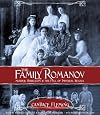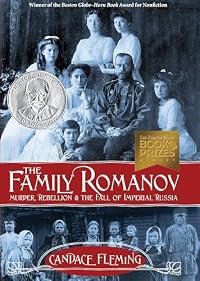
The Family Romanov: Murder, Rebellion, and the Fall of Imperial Russia
by Candace Fleming
On This Page
Description
Biography & Autobiography. History. Politics. Young Adult Nonfiction. HTML:“[A] superb history.... In these thrilling, highly readable pages, we meet Rasputin, the shaggy, lecherous mystic...; we visit the gilded ballrooms of the doomed aristocracy; and we pause in the sickroom of little Alexei, the hemophiliac heir who, with his parents and four sisters, would be murdered by the Bolsheviks in 1918.” —The Wall Street JournalHere is the tumultuous, heartrending, true story of the show more Romanovs—at once an intimate portrait of Russia's last royal family and a gripping account of its undoing. Using captivating photos and compelling first person accounts, award-winning author Candace Fleming (Amelia Lost; The Lincolns) deftly maneuvers between the imperial family’s extravagant lives and the plight of Russia's poor masses, making this an utterly mesmerizing read as well as a perfect resource for meeting Common Core standards.
"An exhilarating narrative history of a doomed and clueless family and empire." —Jim Murphy, author of Newbery Honor Books An American Plague and The Great Fire
"For readers who regard history as dull, Fleming’s extraordinary book is proof positive that, on the contrary, it is endlessly fascinating, absorbing as any novel, and the stuff of an altogether memorable reading experience." —Booklist, Starred
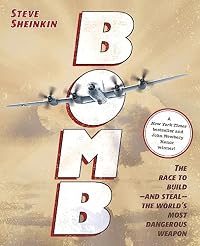
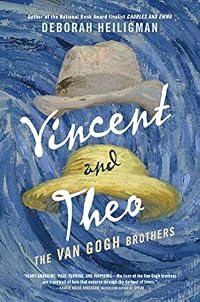
"Marrying the intimate family portrait of Heiligman’s Charles and Emma with the politics and intrigue of Sheinkin’s Bomb, Fleming has outdone herself with this riveting work of narrative nonfiction that appeals to the imagination as much as the intellect." —The Horn Book, Starred
Winner of the Los Angeles Times Book Prize for Young Adult Literature
Winner of the Boston Globe–Horn Book Award for Nonfiction
A Robert F. Sibert Honor Book
A YALSA Excellence in Nonfiction Award Finalist
Winner of the Orbis Pictus Award for Outstanding Nonfiction. show less
Tags
Recommendations














Member Reviews
I rarely read non-fiction, but I picked this up for a book club and am so glad I did. The Romanovs kept incredibly detailed diaries, took family snapshots, and wrote letters -- often in English! -- their whole lives, so this could read like fiction with direct-quotation dialog. Since the fall of the Soviet Union, the rest of the materials Fleming used have come to light, as well: court documents, testimonials from family servants and early Soviet leaders, and of course What Happened to Anastasia. Watching characters build to a foreknown conclusion is one of my favorite storytelling structures, and what better story to tell that way than a classic historical tragedy? I devoured it in two days.
This was the best description of the build-up show more to a revolution I have ever read, as well as the best case for the problems with hereditary absolute monarchy. This was not a dude who should have been, or had any desire to be, in charge of anything more than a small-town doctor's office. He just wanted to snuggle up with his family, which is all well and good when you aren't in charge of millions of dying peasants and the world's most horrifically pointless war.
The dying peasants get their own voice throughout, in a series of sidebars called "Beyond the Palace Gates." Fleming dug up all sorts of fascinating writings from visitors to villages, and the increasingly literate villagers themselves as they streamed to post-Industrial Revolution cities in search of better life in factories. I wanted more of this, but that would be another book.
Overall, give this to anyone studying Russian or 19th-20th century European history, or anyone who loves historical drama of any kind. Would work for precocious 12-year-olds through adults. (Fleming manages to tell a horrific story effectively with minimal gruesomeness and lewdness. I'm pretty sure Rasputin did a lot more than encourage noblewomen to sit on his lap, but the way Fleming tells it, that's plenty.) show less
This was the best description of the build-up show more to a revolution I have ever read, as well as the best case for the problems with hereditary absolute monarchy. This was not a dude who should have been, or had any desire to be, in charge of anything more than a small-town doctor's office. He just wanted to snuggle up with his family, which is all well and good when you aren't in charge of millions of dying peasants and the world's most horrifically pointless war.
The dying peasants get their own voice throughout, in a series of sidebars called "Beyond the Palace Gates." Fleming dug up all sorts of fascinating writings from visitors to villages, and the increasingly literate villagers themselves as they streamed to post-Industrial Revolution cities in search of better life in factories. I wanted more of this, but that would be another book.
Overall, give this to anyone studying Russian or 19th-20th century European history, or anyone who loves historical drama of any kind. Would work for precocious 12-year-olds through adults. (Fleming manages to tell a horrific story effectively with minimal gruesomeness and lewdness. I'm pretty sure Rasputin did a lot more than encourage noblewomen to sit on his lap, but the way Fleming tells it, that's plenty.) show less
I did not want this book to end, it was a fascinating, enlightening, and horrifying read. Having taken Russian history, studied abroad to St. Petersburg for two weeks, and been a huge fan of the animated movie, Anastasia, I STILL learned a ridiculous amount! This book was chock full of amazing facts, details, and accounts and was impossible to put down! This nonfiction novel chronicled the entire family history of the last Romanov family, the political tensions in Russia, and even had great first hand accounts from peasants, workers, and other Russian citizens to contrast with life in the palace. I believe this novel painted a very accurate, albeit not flattering, account of the last imperial family, but the account will still make show more readers sympathize with untimely demise of the last ruling family. It was simply fascinating, it pulled accounts from diaries, letters, official documents, and more to create a complete picture of the huge divide between the royal family and Russian subjects that left the country ripe for civil war. I was lucky enough to have visited many of the sites mentioned: The Winter Palace, Peterhof, Tsarskoye Selo, St. Peter and Paul fortress (where I was able to see the final resting place of the Romanav family), and St. Petersburg. Listening to the audiobook also added an extra dimension, because many of the accounts were narrated by Russian voice actors which really helped bring the story to life for the reader (or rather listener). I give this a well deserved five star rating. It's a must read for any history buffs or those curious about the tragedy of the end of the Russian Tzars. Simply fantastic!!! show less
Em contraste com um império empobrecido, a família Romanov e a aristocracia da Rússia de um século atrás viviam em meio a uma opulência difícil de conceber. As primeiras cenas de The family Romanov - não há título em português - descrevem um baile em que os vestidos eram cobertos com tantos diamantes que as mulheres mal podiam se mover. Nas zonas rurais, mães faziam seus filhos dormir com cantigas cujas letras aceitavam a morte como um destino muitas vezes melhor para as crianças.
A autora Candice Fleming é bem-sucedida no cuidado de se manter imparcial ao relatar a vida e a morte da família do último czar da Rússia, destituído pela Revolução Bolchevique. The family Romanov é uma obra adotada nas escolas. Mas mesmo show more quando ela é apenas descritiva os dados chocam: a família desfrutava de dezenas de palácios, iates e até trens. Os Romanov viajavam durante o ano inteiro, mas em sua principal habitação - o Palácio de Inverno em Petrogrado - havia 500 empregados e praticamente um zoológico de animais de estimação, que incluía um elefante.
O livro é baseado em testemunhos - parte deles transcritos - como o do jornalista John Reed, autor de Os dez dias que abalaram o mundo. E contém erros de localização geográfica, resultado da desatenção da autora, que se localiza mal em relação a Leste e Oeste. Sua leitura, porém, nos apresenta a personagens intrigantes como Rasputin, reporta a eclosão da Primeira Guerra Mundial, a entrada da Rússia no conflito e revela didaticamente a escalada da insatisfação do povo com seu imperador.
Mostra, também, a total inabilidade de Nicolau II em lidar com a revolução que se anunciava. A ponto de sua Guarda Imperial abrir fogo contra uma multidão que pretendia entregar uma petição ao imperador em seu palácio, ostentando ícones religiosos e cantando hinos em homenagem ao czar. O episódio em 9 de janeiro de 1905 resultou na morte de centenas de pessoas, e ficou conhecido como Domingo Sangrento.
A admiração por Nicolau II começou a fraquejar, juntando-se aos fracassos militares na guerra, a enorme perda de vidas e o aumento acelerado na penúria do povo. A insatisfação popular foi o combustível da Revolução. O czar acabou sendo obrigado a abdicar. Sua família vai perdendo privilégios até terminar em uma casa-prisão na Sibéria.
A dinastia Romanov não conhecia outro modo de vida há séculos. Ainda assim, Nicolau, sua esposa Alexandra, as quatro filhas e o filho foram se adaptando às privações até o trágico desfecho. As meninas mantinham seu espirito jovial e comunicativo mesmo em meio a um ambiente cada vez mais hostil. O que só torna a crua descrição de Candice Fleming, baseada no que foi registrado pelas testemunhas na ocasião, ainda mais chocante.
The family Romanov é um excelente resumo dos episódios históricos que antecederam o fim do czarismo e a Revolução Bolchevique. E um relato dramático da extinção de uma família. show less
A autora Candice Fleming é bem-sucedida no cuidado de se manter imparcial ao relatar a vida e a morte da família do último czar da Rússia, destituído pela Revolução Bolchevique. The family Romanov é uma obra adotada nas escolas. Mas mesmo show more quando ela é apenas descritiva os dados chocam: a família desfrutava de dezenas de palácios, iates e até trens. Os Romanov viajavam durante o ano inteiro, mas em sua principal habitação - o Palácio de Inverno em Petrogrado - havia 500 empregados e praticamente um zoológico de animais de estimação, que incluía um elefante.
O livro é baseado em testemunhos - parte deles transcritos - como o do jornalista John Reed, autor de Os dez dias que abalaram o mundo. E contém erros de localização geográfica, resultado da desatenção da autora, que se localiza mal em relação a Leste e Oeste. Sua leitura, porém, nos apresenta a personagens intrigantes como Rasputin, reporta a eclosão da Primeira Guerra Mundial, a entrada da Rússia no conflito e revela didaticamente a escalada da insatisfação do povo com seu imperador.
Mostra, também, a total inabilidade de Nicolau II em lidar com a revolução que se anunciava. A ponto de sua Guarda Imperial abrir fogo contra uma multidão que pretendia entregar uma petição ao imperador em seu palácio, ostentando ícones religiosos e cantando hinos em homenagem ao czar. O episódio em 9 de janeiro de 1905 resultou na morte de centenas de pessoas, e ficou conhecido como Domingo Sangrento.
A admiração por Nicolau II começou a fraquejar, juntando-se aos fracassos militares na guerra, a enorme perda de vidas e o aumento acelerado na penúria do povo. A insatisfação popular foi o combustível da Revolução. O czar acabou sendo obrigado a abdicar. Sua família vai perdendo privilégios até terminar em uma casa-prisão na Sibéria.
A dinastia Romanov não conhecia outro modo de vida há séculos. Ainda assim, Nicolau, sua esposa Alexandra, as quatro filhas e o filho foram se adaptando às privações até o trágico desfecho. As meninas mantinham seu espirito jovial e comunicativo mesmo em meio a um ambiente cada vez mais hostil. O que só torna a crua descrição de Candice Fleming, baseada no que foi registrado pelas testemunhas na ocasião, ainda mais chocante.
The family Romanov é um excelente resumo dos episódios históricos que antecederam o fim do czarismo e a Revolução Bolchevique. E um relato dramático da extinção de uma família. show less
http://www.hbook.com/2014/12/choosing-books/horn-book-magazine/horn-book-fanfare.....
Linda's review: http://blog.threegoodrats.com/2014/12/the-family-romanov.html
Candace Fleming has written an excellent, accessible history of the last Romanov family and the upheaval in Russia in the early 1900s through the first World War and the revolution. The Romanovs' story is juxtaposed with primary source documents from "the 99%," as it were: farmers, peasants, factory workers, the unemployed and starving.
I'm not convinced that even if Nicholas had seen firsthand evidence of his people's suffering that he would have truly understood it and acted to alleviate it, but in any case, he refused to see it or believe reports about it at all. When show more workers went on strike, he responded not with compromise but with violence. If he had been educated properly in affairs of state, his reactions might have been different, but his father didn't bother to educate him or let him gain any experience. Nicholas and Alexandra, in turn, didn't place much stock in education for their own offspring: four girls, and finally the necessary male heir, Alexei, all of whom grew up apart from the court and government.
A lot of senseless tragedy could have been averted if Nicholas had chosen to emulate his grandfather, the progressive Tsar Alexander II, or even if he had paid as much attention to events as his own father, but instead Nicholas took a head-in-the-sand approach, and Alexandra believed in leaving everything up to God. After converting to the Russian Orthodox church, Alexandra was particularly prone to putting her faith in icons and dubious "holy men" such as Rasputin.
There was much I didn't know about Russia during this period, and this book filled in many gaps. I didn't know that the Romanov family lived outside of the capital city during Nicholas' rule, or that they were moved to Tobolsk and then Ekaterinburg before they were executed. This whole episode in Russian history raises questions about the importance of individual personality and belief in divine right.
Quotes
Secluded as he was in the country [at Tsarskoe Selo], tucked away from the happenings in the capital, Nicholas quickly lost touch with people and events. His and Alexandra's life together was ' a sort of everlasting cozy tea-party,' remarked one historian, fine for an ordinary private citizen, but not for the ruler of Russia. (34)
"The weakness of one man and one woman...Oh, how terrible an autocracy without an autocrat!" (Duma member, 1915-1916, p. 150)
"...it's like water off a duck's back, all is submission to God. How else can I explain...such total blindness and deafness?" (cousin Sandro after speaking to Tsar Nicholas and Empress Alexandra, 160-161) show less
Linda's review: http://blog.threegoodrats.com/2014/12/the-family-romanov.html
Candace Fleming has written an excellent, accessible history of the last Romanov family and the upheaval in Russia in the early 1900s through the first World War and the revolution. The Romanovs' story is juxtaposed with primary source documents from "the 99%," as it were: farmers, peasants, factory workers, the unemployed and starving.
I'm not convinced that even if Nicholas had seen firsthand evidence of his people's suffering that he would have truly understood it and acted to alleviate it, but in any case, he refused to see it or believe reports about it at all. When show more workers went on strike, he responded not with compromise but with violence. If he had been educated properly in affairs of state, his reactions might have been different, but his father didn't bother to educate him or let him gain any experience. Nicholas and Alexandra, in turn, didn't place much stock in education for their own offspring: four girls, and finally the necessary male heir, Alexei, all of whom grew up apart from the court and government.
A lot of senseless tragedy could have been averted if Nicholas had chosen to emulate his grandfather, the progressive Tsar Alexander II, or even if he had paid as much attention to events as his own father, but instead Nicholas took a head-in-the-sand approach, and Alexandra believed in leaving everything up to God. After converting to the Russian Orthodox church, Alexandra was particularly prone to putting her faith in icons and dubious "holy men" such as Rasputin.
There was much I didn't know about Russia during this period, and this book filled in many gaps. I didn't know that the Romanov family lived outside of the capital city during Nicholas' rule, or that they were moved to Tobolsk and then Ekaterinburg before they were executed. This whole episode in Russian history raises questions about the importance of individual personality and belief in divine right.
Quotes
Secluded as he was in the country [at Tsarskoe Selo], tucked away from the happenings in the capital, Nicholas quickly lost touch with people and events. His and Alexandra's life together was ' a sort of everlasting cozy tea-party,' remarked one historian, fine for an ordinary private citizen, but not for the ruler of Russia. (34)
"The weakness of one man and one woman...Oh, how terrible an autocracy without an autocrat!" (Duma member, 1915-1916, p. 150)
"...it's like water off a duck's back, all is submission to God. How else can I explain...such total blindness and deafness?" (cousin Sandro after speaking to Tsar Nicholas and Empress Alexandra, 160-161) show less
Below is my review of the audiobook version of The Family Romanov. Although the print version has the added benefit of photographs (the Romanovs were very fond of photography, taking hundreds of family photos), the audiobook does a wonderful job of setting the right mood for this tumultuous time in history.
Candace Fleming brings her stellar research and nonfiction storytelling skills to the fate of Russia's last imperial family, the Romanovs, including young Anastasia. Narrator Kimberly Farr adds energy and soul to their story, conveying a range of emotions as she recounts the highs and lows of the family's life. She expresses contentment as the close-knit family enjoys their secluded palace Tsarskoe Selo and desperation whenever show more hemophilia threatens the life of the young tsarevich, Nicholas. Primarily, however, she conveys a mix of sadness and bewilderment as the royal couple cluelessly, callously, and repeatedly blunders in dealing with the struggling, and often starving subjects in their vast empire.
The story of the Romanovs cannot be told without the larger story of tsarist Russia including Rasputin, Lenin, and the brewing Bolshevik movement. In sections titled "Beyond the Palace Gates," Russian-accented narrators read period newspaper articles, diaries, and correspondence, providing a fully immersive experience of a time, a place, and a tragically doomed family.
Intersted adults, young adults and older children will welcome this well-documented and engrossing work.
http://shelf-employed.blogspot.com show less
Candace Fleming brings her stellar research and nonfiction storytelling skills to the fate of Russia's last imperial family, the Romanovs, including young Anastasia. Narrator Kimberly Farr adds energy and soul to their story, conveying a range of emotions as she recounts the highs and lows of the family's life. She expresses contentment as the close-knit family enjoys their secluded palace Tsarskoe Selo and desperation whenever show more hemophilia threatens the life of the young tsarevich, Nicholas. Primarily, however, she conveys a mix of sadness and bewilderment as the royal couple cluelessly, callously, and repeatedly blunders in dealing with the struggling, and often starving subjects in their vast empire.
The story of the Romanovs cannot be told without the larger story of tsarist Russia including Rasputin, Lenin, and the brewing Bolshevik movement. In sections titled "Beyond the Palace Gates," Russian-accented narrators read period newspaper articles, diaries, and correspondence, providing a fully immersive experience of a time, a place, and a tragically doomed family.
Intersted adults, young adults and older children will welcome this well-documented and engrossing work.
http://shelf-employed.blogspot.com show less
Narrated by Kimberly Farr. I only had a flicker of knowledge of the Romanov family and less about Rasputin (wasn't there a song from the '80s about him???), so this was a fascinating history lesson not only about this sheltered wealthy family but the historic events happening in Russia at the time (revolution and the rise of Lenin, the Bolsheviks and communism). Farr's authoritative performance will hook listeners on the doomed family's story as she reads with tones of compassion, indignance, and skeptical wonder depending on the content.
The dissonance between the very rich and the poor is the ultimate undoing of a famous Russian family.
Plot/Summary: This book tells the story of the Romanovs, who were the last imperial family of Russia. Detailed information that includes personal accounts of those who lived at that time, helps the reader to gain a deeper insight than one you would get from a traditional history book about this famous family. The book shifts between historical information about the family’s lives and primary source narratives of the poor peasants who lived very different and difficult lives and how a growing discontent led to the Russian Revolution.Their ill-fated story ends with Nicholas being deposed from his position and the entire family being show more executed by Bolshevik revolutionists.
Personal Response: Although the information from Russian history is familiar to many, this book is written in a way that reads like fiction. Fleming doesn’t recount facts, she tells the story in a way that keeps the reader hooked and wanting more. The real photographs of the family added to the book, add an eerie element, but make it all the more intriguing!
Curricular Connections: There is no better story to show how an autocratic government is one that is destined to fail at some point. The fascinating tale about these very real people who play out like characters from a book, make for engaging history lesson. show less
Plot/Summary: This book tells the story of the Romanovs, who were the last imperial family of Russia. Detailed information that includes personal accounts of those who lived at that time, helps the reader to gain a deeper insight than one you would get from a traditional history book about this famous family. The book shifts between historical information about the family’s lives and primary source narratives of the poor peasants who lived very different and difficult lives and how a growing discontent led to the Russian Revolution.Their ill-fated story ends with Nicholas being deposed from his position and the entire family being show more executed by Bolshevik revolutionists.
Personal Response: Although the information from Russian history is familiar to many, this book is written in a way that reads like fiction. Fleming doesn’t recount facts, she tells the story in a way that keeps the reader hooked and wanting more. The real photographs of the family added to the book, add an eerie element, but make it all the more intriguing!
Curricular Connections: There is no better story to show how an autocratic government is one that is destined to fail at some point. The fascinating tale about these very real people who play out like characters from a book, make for engaging history lesson. show less
Members
- Recently Added By
Lists

Books Read in 2016
4,666 works; 199 members

Robert F. Sibert Informational Book Medal
102 works; 1 member
Author Information

60+ Works 11,533 Members
Awards and Honors
Awards
Distinctions
Notable Lists
Common Knowledge
- Canonical title
- The Family Romanov: Murder, Rebellion, and the Fall of Imperial Russia
- Original publication date
- 2014
- People/Characters
- Nicholas II, Emperor of Russia
- Important places
- Imperial Russia
- Important events
- Russian Revolution
- Canonical DDC/MDS
- 947.0830922
- Canonical LCC
- DK258
Classifications
- Genres
- Nonfiction, Teen
- DDC/MDS
- 947.0830922 — History & geography History of Europe Russia and neighboring east European countries Russian & Slavic History by Period 1855- Nicholas II, 1894-1917
- LCC
- DK258 — History of Europe, Asia, Africa and Oceania Russia. Soviet Union. Former Soviet Republics – Poland History of Russia. Soviet Union. Former Soviet Republics History House of Romanov, 1613-1917
- BISAC
Statistics
- Members
- 801
- Popularity
- 34,389
- Reviews
- 50
- Rating
- (4.14)
- Languages
- English
- Media
- Paper, Audiobook, Ebook
- ISBNs
- 13
- ASINs
- 5