On This Page
Description
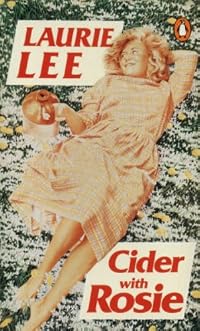
The beloved bestselling autobiography of an English boyhood Three years old and wrapped in a Union Jack to protect him from the sun, Laurie Lee arrived in the village of Slad in the final summer of the First World War. The cottage his mother had rented for three and sixpence a week had neither running water nor electricity, but it was surrounded by a lovely half-acre garden and, most importantly, it was big enough for the seven children in her care. It was here, in a verdant valley tucked show more into the rolling hills of the Cotswolds, that Laurie Lee learned to look at life with a painter's eye and a poet's heart-qualities of vision that, decades later, would make him one of England's most cherished authors. In this vivid recollection of a magical time and place, water falls from the scullery pump "sparkling like liquid sky." Autumn is more than a season-it is a land eternally aflame, like Moses's burning bush. Every midnight, on a forlorn stretch of heath, a phantom carriage reenacts its final, wild ride. And, best of all, the first secret sip of cider, "juice of those valleys and of that time," leads to a boy's first kiss, "so dry and shy, it was like two leaves colliding in air." An instant classic when it was first published in 1959, Cider with Rosie is one of the most endearing and evocative portraits of youth in all of literature. The first installment in an autobiographical trilogy that includes As I Walked Out One Midsummer Morning and A Moment of War, it is also a heartfelt and lyrical ode to England, and to a way of life that may belong to the past, but will never be forgotten. show lessTags
Recommendations







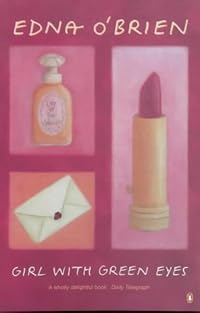
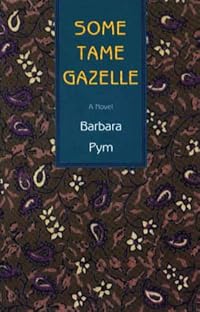
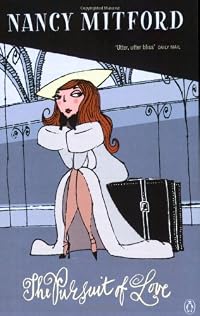
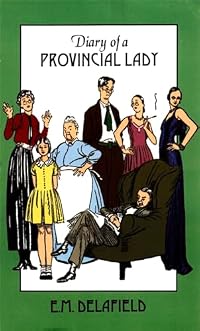







Member Recommendations
PilgrimJess Another tale of country life but one set in Wales this time.


_eskarina Although different in many aspects, apples, memories and some strange and beautiful melancholia make these books similar.
anonymous user Very similar, poetic writing style that tries to convey memories of childhood in rural Britain through an imaginative child's eyes.
Every day was summer: Childhood memories of Edwardian days in a small Welsh town by Oliver Wynne Hughes
Nickelini Both books look back a both happy and sad times growing up in small villages in the UK.

Member Reviews
Warm, humorous, but not entirely rose-tinted, stories and recollections of the joys and hardships of life in rural Gloucestershire just after the First World War. This beautifully written memoir published in 1959 contains lyrical prose describing the experiences of a poor rural childhood with fresh eyed innocence and beguiling charm. There is crime, but Lee describes it as being dealt with within the village, without recourse to external official authority.
An example of the humour:
”What’s the matter, Loll? Didn’t he like it at school, then?”
“They didn’t give me a present!”
“Present? What present?”
“They said they’d give me a present.”
“Well, now, I’m sure they didn’t.”
“They did! They said: “You’re show more Laurie Lee, ain’t you? Well, just you sit there for the present.” I sat there all day but I never got it. I ain’t going back again!”
For the occasional elegaic asides:
The village in fact was like a deep-running cave still linked to its antic past, a cave whose shadows were cluttered with spirits and by laws still vaguely ancestral. This cave we inhabited looked backwards through chambers that led to our ghostly beginnings; and had not, as yet, been tidied up, or scrubbed clean by electric light, or suburbanised by a Victorian church, or papered by cinema screens.
Highly recommended. show less
An example of the humour:
”What’s the matter, Loll? Didn’t he like it at school, then?”
“They didn’t give me a present!”
“Present? What present?”
“They said they’d give me a present.”
“Well, now, I’m sure they didn’t.”
“They did! They said: “You’re show more Laurie Lee, ain’t you? Well, just you sit there for the present.” I sat there all day but I never got it. I ain’t going back again!”
For the occasional elegaic asides:
The village in fact was like a deep-running cave still linked to its antic past, a cave whose shadows were cluttered with spirits and by laws still vaguely ancestral. This cave we inhabited looked backwards through chambers that led to our ghostly beginnings; and had not, as yet, been tidied up, or scrubbed clean by electric light, or suburbanised by a Victorian church, or papered by cinema screens.
Highly recommended. show less
Laurie is the nearly youngest of a large brood of kids growing up in a village in 1920s England. He has an, inexcusably imo, absent father and a mother understandably flustered and consumed by the task of living. Laurie charts his childhood so well. His memories are described in depth and colour and with all the significance attached, just like how we remember feeling things as a child.
The freedoms of his childhood, roaming the village and the fields and woods, the matronly mollycoddling from his older sisters, school, scrapes, girls, church and growing up are all told with a lovely turn of phrase. The village he has known, and how it was for a thousand years before him, changes forever with the motor car. The close of his childhood show more coincides with this technological and social shake-up, and it leaves you with a sadness for the loss of a simpler time. show less
The freedoms of his childhood, roaming the village and the fields and woods, the matronly mollycoddling from his older sisters, school, scrapes, girls, church and growing up are all told with a lovely turn of phrase. The village he has known, and how it was for a thousand years before him, changes forever with the motor car. The close of his childhood show more coincides with this technological and social shake-up, and it leaves you with a sadness for the loss of a simpler time. show less
A little gem: lyrical, funny, gentle and honest, sometimes shockingly so. To my shame, I had never heard of Cider with Rosie until a friend lent me it, based on a mutual taste in books and my recent adoration of Cold Comfort Farm. There are shades of Arthur Ransome's 'Swallows and Amazons' series as well as Edith Nesbit's various books (both authors firm favourites of mine whose works I regularly reread in adulthood), but this is more personal, a tad grittier, and shows life in rural England in the early decades of the 20th century from a lower socio-economic point of view, a little less middle class (although the Lee family seem in ways to straddle social boundaries.) I particularly have to mention the gorgeousness of the language and show more imagery, and the quality of character studies. Stunning. I'm convinced that I could open the book at any page and give an example of said excellence, and/or of the humour that permeates much of the text. Let's see...
p.50
The June air infected us with primitive hungers, grass-seed and thistle-down idled through the windows, we smelt the fields and were tormented by cuckoos, while every out-of-door sound that came drifting in was a sharp nudge in the solar plexus.
p. 125
When she (Mother) tired of this (walking to the shops), she'd borrow Dorothy's bicycle, though she never quite mastered the machine. Happy enough when the thing was in motion, it was stopping and starting that puzzled her. She had to be launched on her way by running parties of villagers; and to stop she road into a hedge. With the Stroud Co-op Stores, where she was a registered customer, she had come to a special arrangement. This depended for its success upon a quick ear and timing, and was a beautiful operation to watch. As she coasted downhill towards the shop's main entrance she would let out one of her screams; an assistant, specially briefed, would tear through the shop, out the side door, and catch her in his arms. He had to be both young and nimble, for if he missed her she piled up by the police-station.
p. 63
His curious, crooked, suffering face had at times the radiance of a saint, at others the blank watchfulness of an insect. He could walk by himself or keep very still, get lost or appear at wrong moments. He drew like an artist, wouldn't read or write, swallowed beads by the boxfull, sang and danced, was quite without fear, had secret friends, and was prey to terrible nightmares. Tony was the one true visionary amongst us, the tiny hermit no one quite understood...
p. 130
She grew them (plants) with rough, almost slap-dash love, but her hands possessed such an understanding of their needs they seemed to turn to her like another sun. She could snatch a dry root from field or hedgerow, dab it into the garden, give it a shake -- and almost immediately it flowered. One felt she could grow roses from a stick or chair-leg, so remarkable was this gift.
I rest my case! show less
p.50
The June air infected us with primitive hungers, grass-seed and thistle-down idled through the windows, we smelt the fields and were tormented by cuckoos, while every out-of-door sound that came drifting in was a sharp nudge in the solar plexus.
p. 125
When she (Mother) tired of this (walking to the shops), she'd borrow Dorothy's bicycle, though she never quite mastered the machine. Happy enough when the thing was in motion, it was stopping and starting that puzzled her. She had to be launched on her way by running parties of villagers; and to stop she road into a hedge. With the Stroud Co-op Stores, where she was a registered customer, she had come to a special arrangement. This depended for its success upon a quick ear and timing, and was a beautiful operation to watch. As she coasted downhill towards the shop's main entrance she would let out one of her screams; an assistant, specially briefed, would tear through the shop, out the side door, and catch her in his arms. He had to be both young and nimble, for if he missed her she piled up by the police-station.
p. 63
His curious, crooked, suffering face had at times the radiance of a saint, at others the blank watchfulness of an insect. He could walk by himself or keep very still, get lost or appear at wrong moments. He drew like an artist, wouldn't read or write, swallowed beads by the boxfull, sang and danced, was quite without fear, had secret friends, and was prey to terrible nightmares. Tony was the one true visionary amongst us, the tiny hermit no one quite understood...
p. 130
She grew them (plants) with rough, almost slap-dash love, but her hands possessed such an understanding of their needs they seemed to turn to her like another sun. She could snatch a dry root from field or hedgerow, dab it into the garden, give it a shake -- and almost immediately it flowered. One felt she could grow roses from a stick or chair-leg, so remarkable was this gift.
I rest my case! show less
There’s some beautiful writing in this (fictionalized) memoir. of a much slower, simpler time. Lee was a poet who knew how to perfectly convey a sense of time and especially place.
The author takes us through his poverty-stricken childhood and youth in rural England in the first decades of the last century. While the book is quite endearing, the author is a little too accepting of some very seamy, indeed criminal, behavior.
I did enjoy this one, but was disturbed by parts of it.
The author takes us through his poverty-stricken childhood and youth in rural England in the first decades of the last century. While the book is quite endearing, the author is a little too accepting of some very seamy, indeed criminal, behavior.
I did enjoy this one, but was disturbed by parts of it.
Classic memoir of growing up in an English village circa 1916-26.
This is not a chronological memoir that follows Lee through his childhood - it is more impressionistic with each chapter focusing on some aspect of village life or Lee's family, hence we get chapters on Winter/Summer, Lee's mother & uncles, etc. This approach is (probably) partially the reason why it is so popular - it is packed with vignettes that readers pick up on (and are short enough not to lose the interest of children - it is a favourite book in schools for teaching both literature and creative writing). Ask most readers about CWR and they will respond with an answer along the lines of "I loved the part when...". It is also suits the style of writing which is show more consciously poetic, Lee was already a published poet, which is why many readers describe it as beautiful. There is little doubt that it is well-written although the style is likely to alienate as many readers as it hooks.
What is most interesting about the method Lee adopts is what happens to Lee himself - he effectively becomes a ghost, an often peripheral figure who haunts his own book. Even when the author is centre stage - at the beginning when the family moves to the village, or discussing his childhood illnesses, or with Rosie - he is never completely there. We never get an insight into Lee's feelings or thoughts. (Interestingly, even friends and family of Lee described him in his biography as a renowned liar, a master manipulator, a man frightened to reveal his true self to anyone). This lack of a central character, allied with the structure, can be seen as a strength, allowing other characters to take the limelight, creating a more universal feel but it means the narrative has no over-riding arch. Apart from the opening and closing chapters, and perhaps even including them, the book could be read in any order.
Another reason why the book is so well-loved is nostalgia. The village has a peculiar place in the English psyche - an Arcadia with the added attraction of a community of (usually) lovable eccentrics, a pub, and a sense of belonging. It is a flavour of Englishness that still sells to the masses - Sunday night television in the UK over the last twenty years has been packed with programmes based in such an environment. Even when the village is set in Scotland or Ireland the scenario remains the same. It is life with all the unpleasantness removed - a kitsch life. Lee, to be fair, does acknowledge this less pleasant side but in an odd manner. There is a murder in the village, when someone who has done well for himself elsewhere gets beaten up and left to freeze to death - the murderers are never brought to justice though everyone knows who they are. The suggestion is that the community looks after it's own regardless, and insinuates that the victim got what he deserved by coming back and lording it over the locals in the pub. Lee builds on this idea near the end, when he is lamenting the death of village life - he admits that the community had it's problems (violence, rape, incest) but that it was dealt with when needed and the coming of civilisation, of law, was not necessarily a good thing. The idea that there may have been a section of the community, particularly women, who were victims and needed protection never dawns on him. Just as Lee abdicates from the text, he practices a form of moral abdication. This is the black heart of Lee's memoir - his cider-tinted memories dismiss the truth, creating an illusion, a precursor to all the false television environments that make viewers feel warm and safe before returning to the drudgery of work on a Monday morning.
The truth remains, however, that even when you acknowledge the flaws in Lee, the book remains a beguiling one while you are reading it - a lovely chocolate box of nostalgia that you know isn't good for you but you can't resist. However, you may just find yourself feeling a little stuffed and queasy afterward.
Enjoyable reading but take with very large pinch of salt. show less
This is not a chronological memoir that follows Lee through his childhood - it is more impressionistic with each chapter focusing on some aspect of village life or Lee's family, hence we get chapters on Winter/Summer, Lee's mother & uncles, etc. This approach is (probably) partially the reason why it is so popular - it is packed with vignettes that readers pick up on (and are short enough not to lose the interest of children - it is a favourite book in schools for teaching both literature and creative writing). Ask most readers about CWR and they will respond with an answer along the lines of "I loved the part when...". It is also suits the style of writing which is show more consciously poetic, Lee was already a published poet, which is why many readers describe it as beautiful. There is little doubt that it is well-written although the style is likely to alienate as many readers as it hooks.
What is most interesting about the method Lee adopts is what happens to Lee himself - he effectively becomes a ghost, an often peripheral figure who haunts his own book. Even when the author is centre stage - at the beginning when the family moves to the village, or discussing his childhood illnesses, or with Rosie - he is never completely there. We never get an insight into Lee's feelings or thoughts. (Interestingly, even friends and family of Lee described him in his biography as a renowned liar, a master manipulator, a man frightened to reveal his true self to anyone). This lack of a central character, allied with the structure, can be seen as a strength, allowing other characters to take the limelight, creating a more universal feel but it means the narrative has no over-riding arch. Apart from the opening and closing chapters, and perhaps even including them, the book could be read in any order.
Another reason why the book is so well-loved is nostalgia. The village has a peculiar place in the English psyche - an Arcadia with the added attraction of a community of (usually) lovable eccentrics, a pub, and a sense of belonging. It is a flavour of Englishness that still sells to the masses - Sunday night television in the UK over the last twenty years has been packed with programmes based in such an environment. Even when the village is set in Scotland or Ireland the scenario remains the same. It is life with all the unpleasantness removed - a kitsch life. Lee, to be fair, does acknowledge this less pleasant side but in an odd manner. There is a murder in the village, when someone who has done well for himself elsewhere gets beaten up and left to freeze to death - the murderers are never brought to justice though everyone knows who they are. The suggestion is that the community looks after it's own regardless, and insinuates that the victim got what he deserved by coming back and lording it over the locals in the pub. Lee builds on this idea near the end, when he is lamenting the death of village life - he admits that the community had it's problems (violence, rape, incest) but that it was dealt with when needed and the coming of civilisation, of law, was not necessarily a good thing. The idea that there may have been a section of the community, particularly women, who were victims and needed protection never dawns on him. Just as Lee abdicates from the text, he practices a form of moral abdication. This is the black heart of Lee's memoir - his cider-tinted memories dismiss the truth, creating an illusion, a precursor to all the false television environments that make viewers feel warm and safe before returning to the drudgery of work on a Monday morning.
The truth remains, however, that even when you acknowledge the flaws in Lee, the book remains a beguiling one while you are reading it - a lovely chocolate box of nostalgia that you know isn't good for you but you can't resist. However, you may just find yourself feeling a little stuffed and queasy afterward.
Enjoyable reading but take with very large pinch of salt. show less
2
A quintessential coming of age story. It tells of Laurie Lee’s childhood in Gloucestershire, just after WW1. But it is not only Lee’s coming of age, it is also that of the village, as the rural backwater changes rapidly, losing many of its traditional village ways and gaining things such as motor vehicles.
The first time I read it, I was quite young and slightly confused as it was the first book I read that was not really chronological, but instead told the story grouped by overlapping themes, such as seasons, school, grannies (not blood ones) and festivals. It also takes a very relaxed approach to consenting incest, underage sex and drink and attempted gang rape – not something I expected as a teenager reading a book of such show more antiquity! Rereading it as an adult, is rather different.
The most memorable scenes for me are not the famous cider in the haystack but two big disappointments: when Laurie is deemed too old to sleep in his mother’s bed and then when he starts school and is told to sit in a particular place “for the present”, and is bitterly disappointed not to be given said present at the end of the day.
It's interesting to compare this with DH Lawrence's early short story, nearly half a century earlier:
Love Among the Haystacks. show less
The first time I read it, I was quite young and slightly confused as it was the first book I read that was not really chronological, but instead told the story grouped by overlapping themes, such as seasons, school, grannies (not blood ones) and festivals. It also takes a very relaxed approach to consenting incest, underage sex and drink and attempted gang rape – not something I expected as a teenager reading a book of such show more antiquity! Rereading it as an adult, is rather different.
The most memorable scenes for me are not the famous cider in the haystack but two big disappointments: when Laurie is deemed too old to sleep in his mother’s bed and then when he starts school and is told to sit in a particular place “for the present”, and is bitterly disappointed not to be given said present at the end of the day.
It's interesting to compare this with DH Lawrence's early short story, nearly half a century earlier:
Love Among the Haystacks. show less
"Never to be forgotten, that first long secret drink of golden fire,juice of these valleys and of that time,wine of wild orchards,of russet summer,of plump red apples,and Rosie's burning cheeks.Never to be forgotten, or ever tasted agin........."
Firstly let me admit that I'm a fan of history and not just battles, Kings, Queens, dates etc but socila history as well. This is a book of a slice social history.We see a life set around the family kitchen, early school years,family and friends but in particular the various seasons of nature.
'Cider With Rosie' is a tale of the author's early life growing up within a large family, without a real father figure influence,in a Cotswold village in and around the 1920s and is told from the standpoint show more of a child. However, in many respects it is a tale told in a series of short stories as it concentrates on differing elements of a simple and insular village life before the arrival of the motor car. Now I personally loved the chapter about the 'Grannies in the Wainscot' in particlar. Two old ladies, so differing in their characters who despite living as neighbours never once spoke to one another yet whose lives were regulated by each others very presence. It is not a story told with any real angst or through rose tinted glasses it is just told as it was, plainly and matter of factly just as is the rest of the book. We see a life set around the family kitchen, early school years,family and friends but in particular the various seasons.
Laurie Lee was a poet and a screen-writer as well as a novelist and this shines through in his choice of language. It starts when the author is but a toddler recalling some of his earliest memories. Here his world is large, scary, cosy and baffling, a world dominated by females and the language reflects this. Lee's real skill is that as the child grows so does his vocabulary as in normal life but never does the child's voice leave it. The language is always beautiful and so suggestive it takes you in and wraps about you like a blanket.
In many ways it is a book of nostalgia, a book of a by-gone time but it is also an illustration of writing about what you know. It is seen by many as a modern classic and rightly so IMHO. show less
Firstly let me admit that I'm a fan of history and not just battles, Kings, Queens, dates etc but socila history as well. This is a book of a slice social history.We see a life set around the family kitchen, early school years,family and friends but in particular the various seasons of nature.
'Cider With Rosie' is a tale of the author's early life growing up within a large family, without a real father figure influence,in a Cotswold village in and around the 1920s and is told from the standpoint show more of a child. However, in many respects it is a tale told in a series of short stories as it concentrates on differing elements of a simple and insular village life before the arrival of the motor car. Now I personally loved the chapter about the 'Grannies in the Wainscot' in particlar. Two old ladies, so differing in their characters who despite living as neighbours never once spoke to one another yet whose lives were regulated by each others very presence. It is not a story told with any real angst or through rose tinted glasses it is just told as it was, plainly and matter of factly just as is the rest of the book. We see a life set around the family kitchen, early school years,family and friends but in particular the various seasons.
Laurie Lee was a poet and a screen-writer as well as a novelist and this shines through in his choice of language. It starts when the author is but a toddler recalling some of his earliest memories. Here his world is large, scary, cosy and baffling, a world dominated by females and the language reflects this. Lee's real skill is that as the child grows so does his vocabulary as in normal life but never does the child's voice leave it. The language is always beautiful and so suggestive it takes you in and wraps about you like a blanket.
In many ways it is a book of nostalgia, a book of a by-gone time but it is also an illustration of writing about what you know. It is seen by many as a modern classic and rightly so IMHO. show less
Members
- Recently Added By
Lists

1001 Books You Must Read Before You Die
1,448 works; 1,131 members

Best Autobiographies and Memoirs
370 works; 66 members

Best Biographies, Autobiographies and Memoirs
464 works; 156 members

Favorite Coming of Age Novels.
164 works; 51 members

The Guardian's 1000 Novels Everyone Must Read
1,005 works; 549 members
Books to Reread Someday
53 works; 7 members

Blue Pyramid 1,276 Best Books of All Time
1,248 works; 32 members

Allie's Wishlist
217 works; 2 members

Fiction about the Working Class
74 works; 10 members

Fiction with Women's Names in the Title
378 works; 15 members

1,001 BYMRBYD Concensus
723 works; 27 members
Folio Society
831 works; 53 members

Top Five Books of 2021
604 works; 181 members

Mustich's 1000 Books to Read Before You Die: A Life Changing List
1,001 works; 18 members

2024-25 reading
36 works; 1 member
Talk Discussions
Past Discussions
Australian new money killed in snowy English village in Name that Book (December 2016)
Author Information

Some Editions
Awards and Honors
Awards
Distinctions
Notable Lists
Series

Belongs to Publisher Series
Work Relationships
Is contained in
Has the adaptation
Is abridged in
Has as a study
Has as a student's study guide
Common Knowledge
- Original title
- Cider with Rosie
- Alternate titles
- The Edge of Day: A Boyhood in the West of England
- Original publication date
- 1959
- People/Characters
- Laurie Lee
- Important places
- Slad, Gloucestershire, England, UK; Stroud, Gloucestershire, England, UK; Gloucestershire, England, UK
- Related movies
- Cider with Rosie (1971 | IMDb); Cider with Rosie (1998 | IMDb)
- Dedication
- To my brothers and sisters--the half and the whole
- First words
- I was set down from the carrier's cart at the age of three; and there with a sense of bewilderment and terror my life in the village began.
- Quotations
- The scullery was a mine of all the minerals of living. |Here I discovered water -- a very different element from the green crawling scum that stank in the garden tub. You could pump it in pure blue gulps out of the ground, yo... (show all)u could swing on the pump handle and it came out sparkling like liquid sky. And it broke and ran and shone on the tiled floor, or quivered in a jug, or weighted your clothes with cold. You could drink it, draw with it, froth it with soap, swim beetles across it, or fly it in bubbles in the air. You could put your head in it, and open your eyes, and see the sides of the bucket buckle, and hear your caught breath roar, and work your mouth like a fish, and smell the lime from the ground. Substance of magic -- which you could tear or wear, confine or scatter, or send down holes, but never burn or break or destroy.
Mother had a touch with flowers. She could grow them anywhere, at any time, and they seemed to live longer for her. She grew them with rough, almost slap-dash love, but her hands possessed such an understanding of their needs... (show all) they seemed to turn to her like another sun. She could snatch a dry root from field or hedgerow, dab it into the garden, give it a shake – and almost immediately it flowered. One felt she could grow roses from a stick or chair-leg, so remarkable was this gift.
Our terraced strip of garden was Mother's monument, and she worked it headstrong, without plan. She would never control or clear this ground, merely cherish whatever was there; and she was as impartial in her encouragement to all that grew as a spell of sweet sunny weather. She would force nothing, graft nothing, nor set things in rows; she welcomed self-seeders, let each have its head, and was the enemy of very few weeds. Consequently our garden was a sprouting jungle and never an inch was wasted. Syringa shot up, laburnum hung down, white roses smothered the apple tree, red flowering-currants (smelling sharply of foxes) spread entirely along one path; such a chaos of blossom as amazed the bees and bewildered the birds in the air. Potatoes and cabbages were planted at random among foxgloves, pansies, and pinks. Often some species would entirely capture the garden – forget-me-nots one year, hollyhocks the next, then a sheet of harvest poppies. Whatever it was, one let it grow. While Mother went creeping around the wilderness, pausing to tap some Odd bloom on the head, as indulgent, gracious, amiable and inquisitive as a queen at an orphanage.
Our mother was one of those obsessive collectors who spend all their time stuffing the crannies of their lives with a ballast of wayward objects. She collected anything that came to hand ... But in one thing – old china –... (show all) Mother was a deliberate collector, and in this had an expert’s eye.
Old china to Mother was gambling, the bottle, illicit love, all stirred up together; the sensuality of touch and the ornament of a taste she was born to but could never afford. She hunted old china for miles, though she hadn’t the money to do so; haunted shops and sales with wistful passion, and by wheedling, guile, and occasional freaks of chance carried several fine pieces home. - Last words
- (Click to show. Warning: May contain spoilers.)It was then that I began to sit on my bed and stare out at the nibbling squirrels, and to make up poems from intense abstraction, hour after unmarked hour, imagination scarcely faltering once, rhythm hardly skipping a beat, while sisters called me, suns rose and fell, and the poems I made, which I never remembered, were the first and last of that time....
- Original language
- English
Classifications
Statistics
- Members
- 2,859
- Popularity
- 6,284
- Reviews
- 65
- Rating
- (3.87)
- Languages
- 8 — Catalan, Czech, English, Estonian, French, German, Spanish, Swedish
- Media
- Paper, Audiobook, Ebook
- ISBNs
- 72
- ASINs
- 94