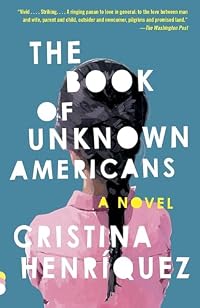
The Book of Unknown Americans
by Cristina Henríquez
On This Page
Description
Young Adult Literature. HTML:“A triumph of storytelling. Henríquez pulls us into the lives of her characters with such mastery that we hang on to them just as fiercely as they hang on to one another and their dreams. This passionate, powerful novel will stay with you long after you’ve turned the final page.” —Ben Fountain, author of Billy Lynn’s Long Halftime WalkA boy and a girl who fall in love. Two families whose hopes collide with destiny. An extraordinary novel that show more offers a resonant new definition of what it means to be American.
Arturo and Alma Rivera have lived their whole lives in Mexico. One day, their beautiful fifteen-year-old daughter, Maribel, sustains a terrible injury, one that casts doubt on whether she’ll ever be the same. And so, leaving all they have behind, the Riveras come to America with a single dream: that in this country of great opportunity and resources, Maribel can get better.
When Mayor Toro, whose family is from Panama, sees Maribel in a Dollar Tree store, it is love at first sight. It’s also the beginning of a friendship between the Rivera and Toro families, whose web of guilt and love and responsibility is at this novel’s core.
Woven into their stories are the testimonials of men and women who have come to the United States from all over Latin America. Their journeys and their voices will inspire you, surprise you, and break your heart.
Suspenseful, wry and immediate, rich in spirit and humanity, The Book of Unknown Americans is a work of rare force and originality.
Read by Yareli Arizmendi, Christine Avila, Jesse Corti, Gustavo Res, Ozzie Rodriguez, and Gabriel Romero
. show less
Tags
Recommendations

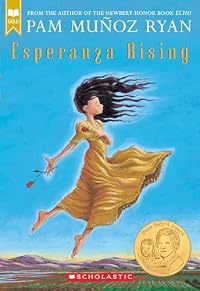
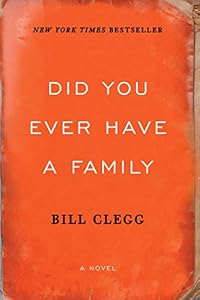
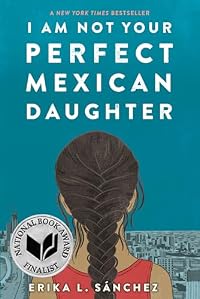
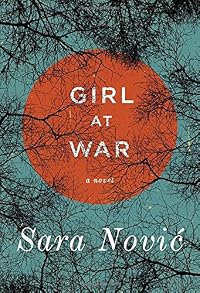
Member Recommendations
Member Reviews
This novel is a painfully realized visit with the residents of an apartment complex in Delaware, all of whom are immigrants from Mexico and Central America. Every family's story provides justification for the complete upheaval of leaving home and family, language and culture, out of fear or for economic survival. Arturo and Alma leave Mexico to receive help for daughter Maribel, who has suffered a devastating head injury and cannot be helped by any local medical facilities. Living at the apartment complex is Mayor and his family, from Panama, who develops an intense crush on Maribel, as does a threatening violent white teenager. Anyone who calls other humans "illegals" should be forced to read this book and then to try to justify their show more racist views. show less
The Rivera family enjoyed a happy life in Mexico, but after their 15-year-old daughter, Mirabel, was injured in an accident, they came to America in hopes of finding help for her recovery. Arriving in Delaware they meet the other residents of their apartment building – all from Spanish speaking countries, but each with a unique story. The Toro family is from Panama, and their son, Mayor, forms a special friendship with Mirabel. Other apartment dwellers are from Puerto Rico, Guatemala or Nicaragua. They help one another navigate this new land, but their dreams are not so easy to achieve.
Henriquez uses a different narrator for each chapter, giving us insight into the various characters, who cling to their differences while sharing a show more similar immigrant experience. The novel focuses, however, on the two teenagers – Mirabel and Mayor – and their families. With these two families Henriquez shows us various love stories – first love, married love, parental love. We also see the kind of fierce devotion to a dream that can blind one to reality, and the pain of past experience that can make one cower in fright.
I was touched by Alma, Mirabel’s mother. She blamed herself for Mirabel’s accident and felt lost and frustrated by her inability to control everything in this new, foreign environment. I was also infuriated by her. Her stubborn refusal to confide in anyone only further isolated her and cut her off from some of the assistance that might have improved things for them.
In contrast, Mayor and Mirabel’s story is a lovely, innocent look and first love. And while I cringed at some of the things they did (reckless teenagers), I also loved how these two misfits, found acceptance and joy in just being together, and helped one another feel valued and less alone.
A couple of the building residents were less than likeable – the busybody gossip, for example. But on the whole I liked the way Henriquez revealed their varied backgrounds and common goals for a better life. I found myself so caught up in their dreams that I felt almost as stunned as the characters when tragedy knocks them to the pavement. But, while there cannot be a neat happy ending, Henriquez does give us hope. I’ll be thinking about Mirabel, Mayor, Alma, Arturo, Rafael, Celia and all the other “unknown Americans” for a long time. show less
Henriquez uses a different narrator for each chapter, giving us insight into the various characters, who cling to their differences while sharing a show more similar immigrant experience. The novel focuses, however, on the two teenagers – Mirabel and Mayor – and their families. With these two families Henriquez shows us various love stories – first love, married love, parental love. We also see the kind of fierce devotion to a dream that can blind one to reality, and the pain of past experience that can make one cower in fright.
I was touched by Alma, Mirabel’s mother. She blamed herself for Mirabel’s accident and felt lost and frustrated by her inability to control everything in this new, foreign environment. I was also infuriated by her. Her stubborn refusal to confide in anyone only further isolated her and cut her off from some of the assistance that might have improved things for them.
In contrast, Mayor and Mirabel’s story is a lovely, innocent look and first love. And while I cringed at some of the things they did (reckless teenagers), I also loved how these two misfits, found acceptance and joy in just being together, and helped one another feel valued and less alone.
A couple of the building residents were less than likeable – the busybody gossip, for example. But on the whole I liked the way Henriquez revealed their varied backgrounds and common goals for a better life. I found myself so caught up in their dreams that I felt almost as stunned as the characters when tragedy knocks them to the pavement. But, while there cannot be a neat happy ending, Henriquez does give us hope. I’ll be thinking about Mirabel, Mayor, Alma, Arturo, Rafael, Celia and all the other “unknown Americans” for a long time. show less
This book made me feel, which is more than I can say about a lot of other novels. It pulled at my heartstrings and made me open my eyes to an issue that a lot of Americans don't really think or care about much, immigration. Arturo and Alma move from Mexico to the US (legally, in case you're wondering) to seek help for their brain damaged daughter. They've been told that the schools in the United States are better equipped to deal with special needs children so they decide to uproot their lives so that their beautiful daughter Maribel might have a shot a rehabilitation. Arturo takes an unskilled low paying job at a mushroom farm and his wife and daughter settle in to their new apartment. They find themselves surrounded by immigrants from show more all over: Panama, Puerto Rico, Paraguay, etc. Together they form a mismatched community or safe haven. They have each others backs as they try to adjust to the American way of life. One of the teenage boys from Panama sets his sight on Maribel and looks past her brain damage to see a sweet, loving, confused girl. Together they try to navigate their relationship just as their parents are doing.
Beautifully told and heartbreaking this novel is told through the voices of the immigrants. Each resident in the apartment complex tells their story on why they came to America and how it has or hasn't lived up to their expectations. The two key voices however, are Alma and Mayor (the Panamanian boy), and each vignette helps piece together the story of trying to make a life in America.
It's a fast, hard to put down book filled with compassion, brutal honesty, and the perseverance of the human spirit. show less
Beautifully told and heartbreaking this novel is told through the voices of the immigrants. Each resident in the apartment complex tells their story on why they came to America and how it has or hasn't lived up to their expectations. The two key voices however, are Alma and Mayor (the Panamanian boy), and each vignette helps piece together the story of trying to make a life in America.
It's a fast, hard to put down book filled with compassion, brutal honesty, and the perseverance of the human spirit. show less
The year is half over and already I’ve read so many exceptional books that I might wonder if I’ve lost all discernment. Might wonder—because the good reads stick with one, and Cristina Henríquez’s The Book of Unknown Americans is definitely one of the good ones and will definitely be sticking with me.
Set in an apartment building in Delaware that houses immigrants from several Latin American nations, The Book of Unknown Americans offers a chorus of voices. The building’s residents include several single men (among them a photographer and the building owner); a woman who directs the local experimental theater, which is perpetually under-funded; a Vietnam veteran and his wife; the Toro family, originally from Panama, with one show more son in college on a soccer scholarship and another, less confident, less athletic son still in high school; and the most recent arrivals, the Rivera family, parents and their only daughter, who is recovering from a traumatic brain injury.
One of the delights of this book is that while narrated primarily by Alma (mother of the Rivera family) and Mayor (the younger son of the Toro family), nine other narrators are given the opportunity to tell their own stories. Each of these eleven voices is distinct and articulate, giving the book an impressive scope although it’s just 304 pages in length.
The central narrative of the story is a frustrated romance between Mayor and the Rivera daughter, Maribel. Due to her brain injury Maribel has difficulties with short-term memory, focus, and speech, so Mayor’s original attraction to her is based on her appearance. But Mayor soon realizes that Maribel is more complex and, at times, more perceptive than her family gives her credit for. Watching the gradual changes in Maribel and in their relationship is one of the real pleasures of this book.
Other arcs are simpler: fear of losing a job in the recession that began under Bush and continues under Obama, job searches, conflicts about whether or not wives should work outside the home, the difficulty of communicating with relatives left behind, fear of violence, and changing loyalties among the building’s residents.
This book is both devastating and hopeful. The worst possible happens—but, at the same time, the characters find small ways to continue their lives relying on memory and one another.
Too often the immigrant in the U.S. is presented one-dimensionally, generally with a stereotype of an illegal, often criminal immigrant from Mexico. Some of the building’s residents have immigrated illegally—but others have not, going through protracted application processes. Yes, there are characters originating from Mexico, but the building houses residents originally from Cuba, Panama, and Venezuela as well, and all of these characters, to a greater or lesser extent, depending upon the time they’ve spent in the U.S. identify as Americans, see this country as home, as a land they can benefit from and contribute to.
This book is an essential read, both for its narrative and for the portrait it offers of a community too often neglected in current fiction. Read it to be moved. Read it, as well, to come to know this country better. show less
Set in an apartment building in Delaware that houses immigrants from several Latin American nations, The Book of Unknown Americans offers a chorus of voices. The building’s residents include several single men (among them a photographer and the building owner); a woman who directs the local experimental theater, which is perpetually under-funded; a Vietnam veteran and his wife; the Toro family, originally from Panama, with one show more son in college on a soccer scholarship and another, less confident, less athletic son still in high school; and the most recent arrivals, the Rivera family, parents and their only daughter, who is recovering from a traumatic brain injury.
One of the delights of this book is that while narrated primarily by Alma (mother of the Rivera family) and Mayor (the younger son of the Toro family), nine other narrators are given the opportunity to tell their own stories. Each of these eleven voices is distinct and articulate, giving the book an impressive scope although it’s just 304 pages in length.
The central narrative of the story is a frustrated romance between Mayor and the Rivera daughter, Maribel. Due to her brain injury Maribel has difficulties with short-term memory, focus, and speech, so Mayor’s original attraction to her is based on her appearance. But Mayor soon realizes that Maribel is more complex and, at times, more perceptive than her family gives her credit for. Watching the gradual changes in Maribel and in their relationship is one of the real pleasures of this book.
Other arcs are simpler: fear of losing a job in the recession that began under Bush and continues under Obama, job searches, conflicts about whether or not wives should work outside the home, the difficulty of communicating with relatives left behind, fear of violence, and changing loyalties among the building’s residents.
This book is both devastating and hopeful. The worst possible happens—but, at the same time, the characters find small ways to continue their lives relying on memory and one another.
Too often the immigrant in the U.S. is presented one-dimensionally, generally with a stereotype of an illegal, often criminal immigrant from Mexico. Some of the building’s residents have immigrated illegally—but others have not, going through protracted application processes. Yes, there are characters originating from Mexico, but the building houses residents originally from Cuba, Panama, and Venezuela as well, and all of these characters, to a greater or lesser extent, depending upon the time they’ve spent in the U.S. identify as Americans, see this country as home, as a land they can benefit from and contribute to.
This book is an essential read, both for its narrative and for the portrait it offers of a community too often neglected in current fiction. Read it to be moved. Read it, as well, to come to know this country better. show less
I don't believe this book was marketed as a YA novel (and at least some of the blurbs are not from YA authors), but that is very much how it read to me. And my issues with the book are all based on its YA feel.
I expected this to be an immigration story. And it is, but mostly it's a teen romance. And while we learn the immigration stories of the two teens' families, we only get brief glimpses of the other residents' (about 3 pages)--a tidbit to tease us, and to show how these different people all ended up in Delaware. I wanted more. The reading level is also YA, and the story line is very linear, with just the occasional chapter giving the origin story of another resident. The only other teens we meet are William, Mayor's friend he has show more fought with over Maribel and her disability, and Garrett, the white-trash skater and sexual assaulter.
So, a perfectly fine book but given the low reading level, linear storyline, and teen romance, it was totally not my kind of thing. People looking for YA teen romance and immigration stories might love it.
————
Maribel, 15, is recovering from a TBI. Her parents decide they need a better school for her, so spend a year to get a work visa and job near such a school in the US. They move into a small apartment building filled with other Spanish speakers, from a variety of countries and Puerto Rico. And there they meet the Toro family, with their son Mayor. Mayor becomes friends with Maribel, despite her disability, and they are falling in love. Meanwhile, their parents are struggling with jobs (this is post-9/11 as the economy suffered), Mayor is struggling with his father's expectations and his feelings toward Maribel, and Maribel is struggling with her memory, injury, and is often a little confused. show less
I expected this to be an immigration story. And it is, but mostly it's a teen romance. And while we learn the immigration stories of the two teens' families, we only get brief glimpses of the other residents' (about 3 pages)--a tidbit to tease us, and to show how these different people all ended up in Delaware. I wanted more. The reading level is also YA, and the story line is very linear, with just the occasional chapter giving the origin story of another resident. The only other teens we meet are William, Mayor's friend he has show more fought with over Maribel and her disability, and Garrett, the white-trash skater and sexual assaulter.
So, a perfectly fine book but given the low reading level, linear storyline, and teen romance, it was totally not my kind of thing. People looking for YA teen romance and immigration stories might love it.
————
Maribel, 15, is recovering from a TBI. Her parents decide they need a better school for her, so spend a year to get a work visa and job near such a school in the US. They move into a small apartment building filled with other Spanish speakers, from a variety of countries and Puerto Rico. And there they meet the Toro family, with their son Mayor. Mayor becomes friends with Maribel, despite her disability, and they are falling in love. Meanwhile, their parents are struggling with jobs (this is post-9/11 as the economy suffered), Mayor is struggling with his father's expectations and his feelings toward Maribel, and Maribel is struggling with her memory, injury, and is often a little confused. show less
Oh, my heart. Debating between four and five here. I was nervous, and misled, and moved, and frustrated, and distraught. The vague looming horror referenced occasionally left me uneasy even in the sweetest scenes because I knew it wouldn't pay. I didn't guess what would happen, or how the characters would react.
This book, barely 300 pages, is incredibly rich; it offers so much to the reader. It tells a very powerful story, one that will stay with you for some time. "Unknown Americans" focuses on a small community of Latin American immigrants, particularly two families, living in an apartment complex in Newark, Delaware, of all places. At an impromptu Christmas day get-together in a cramped, unheated apartment, they toast each other's origins by calling out their places of birth to cheers and laughter: "Panama ! Mexico! Puerto Rico ! Nicaragua ! .....". It is an incredible scene and the reader is struck by the realization of how little they have yet how much they have. Despite some of the "love at first sight" blurbs that are used to promote show more this book, this is not a romance. UA deals with their struggles day to day, just to survive. Losing jobs, finding jobs, doing menial work, e.g., picking mushrooms in darkened sheds. But then author Henriquez counters with incredible passages dealing with hopes, dreams, small victories. Unfortunately, there is not always a pot of gold at the end of everyone's rainbow, and some are forced to return, occasionally for the most tragic reasons, to their places of births. This is a very emotional story, very uplifting, very well written; I cannot recall one false note in this book, nor one thing I would have changed. I believe that it would be difficult for any native American to read this book and not come away with kinder, gentler feelings toward all immigrants, but particularly those from Latin America. show less
Members
- Recently Added By
Lists

Banned or Challenged Books
400 works; 39 members

Top Five Books of 2014
1,064 works; 397 members

Top Five Books of 2015
811 works; 241 members

Literature by People of Color
81 works; 9 members

Overdue Podcast
800 works; 9 members

Books Set in Delaware
2 works; 2 members
Literary Travelogue of the United States Challenge
133 works; 6 members

Books Read in 2018
4,360 works; 110 members

High School Novels about Immigration
40 works; 1 member
Author Information

Some Editions
Awards and Honors
Awards
Distinctions
Notable Lists
Common Knowledge
- Canonical title
- The Book of Unknown Americans
- Original publication date
- 2014
- People/Characters
- Maribel Rivera; Mayor Toro; Alma Rivera; Arturo Rivera
- Important places
- Wilmington, Delaware, USA; Mexico; Panama
- Epigraph
- Let us all be from somewhere.
Let us tell each other everything we can.
- Bob Hicok, "A Primer" - Dedication
- For my father, Pantaleón Henríquez III
- First words
- Back then, all we wanted was the simplest things: to eat good food, to sleep at night, to smile, to laugh, to be well.
- Last words
- (Click to show. Warning: May contain spoilers.)I will tell them all the ways I loved this country.
- Original language
- English
Classifications
Statistics
- Members
- 1,636
- Popularity
- 13,620
- Reviews
- 81
- Rating
- (3.85)
- Languages
- English, Italian, Spanish
- Media
- Paper, Audiobook, Ebook
- ISBNs
- 22
- ASINs
- 6