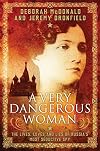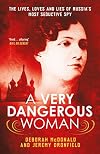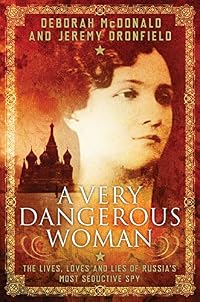
A Very Dangerous Woman: The Lives, Loves and Lies of Russia's Most Seductive Spy
by Deborah McDonald, Jeremy Dronfield
On This Page
Description
Spy, adventurer, charismatic seductress and mistress of two of the century's greatest writers, the Russian aristocrat Baroness Moura Budberg was born in 1892 to indulgence, pleasure and selfishness. But after she met the British diplomat and secret agent Robert Bruce Lockhart, she sacrificed everything for love, only to be betrayed. When Lockhart arrived in Revolutionary Russia in 1918, his official mission was Britain's envoy to the new Bolshevik government, yet his real assignment was to show more create a network of agents and plot the downfall of Lenin. Lockhart soon got to know Moura and they began a passionate affair, even though Moura was spying on him for the Bolsheviks. But when Lockhart's plot unravelled, she would forsake everything in an attempt to protect him from Lenin's secret police. Fleeing to a life of exile in England and taking a string of new lovers, including Maxim Gorky and H. G. Wells, Moura later spied for Stalin and for Britain amidst the web of scandal surrounding the Cambridge spies. Through all this she clung to the hope that Lockhart would finally return to her. Grippingly narrated, this is the first biography of Moura Budberg to use the full range of previously unexamined letters, diaries and documents. An incredible true story of passion, espionage and double crossing that encircled the globe, A Very Dangerous Woman brings her extraordinary world vividly to life with dramatic resonances to rival the most sensational novel. show lessTags
Recommendations





Member Reviews
In the Postscript to his autobiography, H. G. Wells discusses when his long-running affair with the Baroness Moura Budberg (1891-1974) should have come on an end. He had met Moura in Russia, while visiting the writer Maxim Gorky. Many years later, she and he were lovers, and he had proposed marriage after the death of his second wife-- which she rejected. She also refused to come back to Russia with him, saying it was impossible but refusing to elaborate. When Wells went to Russia, with his son Gip instead, Wells was chatting with Gorky and his interpreter. Wells said something about how Moura couldn't be there, and the interpreter said it was a shame, because Wells had just missed her-- she'd been by the previous week. And, indeed, had show more been in Russia multiple times in recent years.
It's a sort of lurching moment: Wells's world drops away from him. The woman he was in love with enough to propose marriage to (and remember, Wells slept with lots of women) had been systematically lying to him for years. Wells can't take it, especially when she can't or won't explain, and he tries to break up with her. Except that every time she comes back into his life, he accepts her again. The end of the Postscript is a sporadically updated diary from the last decade of Wells's life, and Moura keeps on returning, and despite it all, Wells takes her back, and she was with him until the end of his life.
Wells died not knowing the whole truth of Moura Budberg, but I did a little research upon finishing the Postscript and discovered that she was a Russian spy, and that in 2015, there'd been a biography of her published, collating previously unaccessible letters and archives. It's a fascinating read.
Moura wasn't a spy in the James Bond sense-- she didn't go on undercover missions in foreign countries for the Kremlin. Rather, she was a popular social presence, and that was occasionally mined for the advantage of various parties with whom she needed to curry favor. Through her first husband's family, she had ties to the Germanophile Russian community; after the Bolshevik Revolution, she threw tons of parties for them and funneled information she acquired back to the Russian government. This is the kind of spying she did for most of her life.
Her life is pretty fascinating. She was a member of the upper classes, but managed to survive the rise of Communism by being useful to the new government-- not just through spying, as she became the lover of Alexander Kerensky, leader of the provisional Russian revolutionary government. McDonald and Dronfield paint a bleak and terrifying picture of revolutionary Russia, showing just how dangerous and desolate it was, as well as how politically fraught, as various political factions moved to consolidate power. Moura was both spied on by the Cheka (the counter-counterrevolutionary police) and spied for them.
Moura had connections to the U.K. from her youth, and fell in with Bruce Lockhart, the unofficial British ambassador in Russia. (The U.K. recalled its embassy staff because it couldn't be seen to officially endorse Bolshevism, but it dearly needed Russia on its side against Germany, so Lockhart was sent to do what he could unofficially.) The two became lovers (even though both were married), just another of Moura's significant lovers, which would go on to include Wells and Gorky.*
McDonald and Dronfield cover all the extant facts about Moura, weaving them together into a compelling narrative that goes from the Revolutionary days (1916-19 get a whole 280 pages to themselves in a 340-page narrative), to the mysterious death of her husband, from her time spent selling Russian treasures abroad to obtain funds for the Soviet government to her second marriage (one of convenience, to an Estonian baron), from her time working for the BBC's propaganda department during World War II to her postwar career as a screenwriter and script doctor for Alexander Korda. There is a lot of information packed into here, extensively endnoted. I didn't always always read the endnotes, but they show that McDonald and Dronfield worked hard to sift through the many disparate accounts of Moura's life. (Moura being one of the most unreliable sources of all, given her propensity for storytelling.) Many of the endnotes are devoted to criticizing the previous biography of Moura, by Nina Berberova.
Once I adjusted to the density of the book (I always find biographies slow going, but in a sort of good way), I found the book incredibly interesting-- but I don't know that I understand Moura as a person. Perhaps no one can, given how prone she was to exaggeration, and how much she kept secret. What did she think of her time spying? The key moment, it seems to me, is almost completely skipped over, I assume because we just don't know anything about it. Suddenly she is spying on the Germanophiles for the Soviet government. But how was she recruited, and did she feel bad about the deceit this entailed? Moura never said, and neither did anyone else, so we have no way of knowing. There were similar moments like this throughout the book. At one point the authors speculate that she may have had a role in the death of her first husband... but there's no way we can ever really know, just as we will never know what role she played in the death of Gorky and its aftermath.
Moura kept so much of herself hidden-- except from Lockhart, for whom she threw a lavish Russian Orthodox funeral that no one else attended-- that even when we know what she did, it's difficult to know what she thought and felt of it. But that's a problem beyond McDonald and Dronfield's capacity to solve, I suspect, and not a dint on this well-researched tome.
* That isn't it for Moura's relations to famous folk: her niece/adopted daughter was the grandmother of Nick Clegg, Deputy Prime Minister of the U.K. from 2010 to 2015. show less
It's a sort of lurching moment: Wells's world drops away from him. The woman he was in love with enough to propose marriage to (and remember, Wells slept with lots of women) had been systematically lying to him for years. Wells can't take it, especially when she can't or won't explain, and he tries to break up with her. Except that every time she comes back into his life, he accepts her again. The end of the Postscript is a sporadically updated diary from the last decade of Wells's life, and Moura keeps on returning, and despite it all, Wells takes her back, and she was with him until the end of his life.
Wells died not knowing the whole truth of Moura Budberg, but I did a little research upon finishing the Postscript and discovered that she was a Russian spy, and that in 2015, there'd been a biography of her published, collating previously unaccessible letters and archives. It's a fascinating read.
Moura wasn't a spy in the James Bond sense-- she didn't go on undercover missions in foreign countries for the Kremlin. Rather, she was a popular social presence, and that was occasionally mined for the advantage of various parties with whom she needed to curry favor. Through her first husband's family, she had ties to the Germanophile Russian community; after the Bolshevik Revolution, she threw tons of parties for them and funneled information she acquired back to the Russian government. This is the kind of spying she did for most of her life.
Her life is pretty fascinating. She was a member of the upper classes, but managed to survive the rise of Communism by being useful to the new government-- not just through spying, as she became the lover of Alexander Kerensky, leader of the provisional Russian revolutionary government. McDonald and Dronfield paint a bleak and terrifying picture of revolutionary Russia, showing just how dangerous and desolate it was, as well as how politically fraught, as various political factions moved to consolidate power. Moura was both spied on by the Cheka (the counter-counterrevolutionary police) and spied for them.
Moura had connections to the U.K. from her youth, and fell in with Bruce Lockhart, the unofficial British ambassador in Russia. (The U.K. recalled its embassy staff because it couldn't be seen to officially endorse Bolshevism, but it dearly needed Russia on its side against Germany, so Lockhart was sent to do what he could unofficially.) The two became lovers (even though both were married), just another of Moura's significant lovers, which would go on to include Wells and Gorky.*
McDonald and Dronfield cover all the extant facts about Moura, weaving them together into a compelling narrative that goes from the Revolutionary days (1916-19 get a whole 280 pages to themselves in a 340-page narrative), to the mysterious death of her husband, from her time spent selling Russian treasures abroad to obtain funds for the Soviet government to her second marriage (one of convenience, to an Estonian baron), from her time working for the BBC's propaganda department during World War II to her postwar career as a screenwriter and script doctor for Alexander Korda. There is a lot of information packed into here, extensively endnoted. I didn't always always read the endnotes, but they show that McDonald and Dronfield worked hard to sift through the many disparate accounts of Moura's life. (Moura being one of the most unreliable sources of all, given her propensity for storytelling.) Many of the endnotes are devoted to criticizing the previous biography of Moura, by Nina Berberova.
Once I adjusted to the density of the book (I always find biographies slow going, but in a sort of good way), I found the book incredibly interesting-- but I don't know that I understand Moura as a person. Perhaps no one can, given how prone she was to exaggeration, and how much she kept secret. What did she think of her time spying? The key moment, it seems to me, is almost completely skipped over, I assume because we just don't know anything about it. Suddenly she is spying on the Germanophiles for the Soviet government. But how was she recruited, and did she feel bad about the deceit this entailed? Moura never said, and neither did anyone else, so we have no way of knowing. There were similar moments like this throughout the book. At one point the authors speculate that she may have had a role in the death of her first husband... but there's no way we can ever really know, just as we will never know what role she played in the death of Gorky and its aftermath.
Moura kept so much of herself hidden-- except from Lockhart, for whom she threw a lavish Russian Orthodox funeral that no one else attended-- that even when we know what she did, it's difficult to know what she thought and felt of it. But that's a problem beyond McDonald and Dronfield's capacity to solve, I suspect, and not a dint on this well-researched tome.
* That isn't it for Moura's relations to famous folk: her niece/adopted daughter was the grandmother of Nick Clegg, Deputy Prime Minister of the U.K. from 2010 to 2015. show less
Baroness Moura Budberg was born Maria Zakrevsky, a child of the landed gentry in the Ukraine - her father was a high-level lawyer for the Tsar. Early on she decided she liked the life of wealth and nobility, so she married into a large Estonian aristocratic family - the von Benkendorfs. Moura, though, loved the life in Petrograd, and because she was raised by an English governess, became intimately involved in the affairs of British diplomats and spies, even finding her lifelong love there.
But in 1918, the Russian Revolution brought all this luxury and privilege crashing down. Moura survived, often by playing the British and the Soviets off each other, spying for each side against the other. And here her seductiveness came into play as show more she used her sexuality to integrate into powerful society. And basically, that's how she lived her life from then on - always with a lover to take care of her, always surrounded by society people, always trading on the information and gossip she gathered.
McDonald and Dronfield have written a pretty good biography of a very interesting woman found at the intersection of some very interesting times. I'm not sure I'd go so far as to call her a "very dangerous woman" - though this is a quote from a British intelligence report on her later in life - as she seemed to trade in gossip and rumor more than anything else. (In fairness, there's some indication she may have had her hand in at least a few deaths, including her first husband.) But for a different sort of view on the events of the early to mid-20th century Europe, this is highly recommended. show less
But in 1918, the Russian Revolution brought all this luxury and privilege crashing down. Moura survived, often by playing the British and the Soviets off each other, spying for each side against the other. And here her seductiveness came into play as show more she used her sexuality to integrate into powerful society. And basically, that's how she lived her life from then on - always with a lover to take care of her, always surrounded by society people, always trading on the information and gossip she gathered.
McDonald and Dronfield have written a pretty good biography of a very interesting woman found at the intersection of some very interesting times. I'm not sure I'd go so far as to call her a "very dangerous woman" - though this is a quote from a British intelligence report on her later in life - as she seemed to trade in gossip and rumor more than anything else. (In fairness, there's some indication she may have had her hand in at least a few deaths, including her first husband.) But for a different sort of view on the events of the early to mid-20th century Europe, this is highly recommended. show less
 This review was written for LibraryThing Early Reviewers.
As seems to frequently be the case, I think the author/publisher went a bit wild with the subtitle of this book. Maria (Moura) Budberg was born into an aristocratic Ukrainian family around 1891. She was very intelligent, reveled in being the center of attention, and was extremely charismatic, one of those people that others can't seem to help but like.
She certainly did some spying against Germany, set up as a bit of a double agent, during WWI, and did her share of whispering important tidbits down the line to the British throughout the years following the Russian revolution. However, facts about was she/wasn't she spying past the 1920s aren't really available. There was largely just an awful lot of rumor, some of which she created show more herself. Whatever hints we have, they are simply hints and there really isn't any hard evidence and there will likely never be any.
That being said, it was an interesting book because she was an interesting woman. While she destroyed all of her own papers, many letters she sent were kept and she was associated with many interesting people throughout her life, including Maxim Gorky and HG Wells. The book is well written and scrupulously end-noted. It took about a third of the way in to really grip me, but made for a good read. show less
She certainly did some spying against Germany, set up as a bit of a double agent, during WWI, and did her share of whispering important tidbits down the line to the British throughout the years following the Russian revolution. However, facts about was she/wasn't she spying past the 1920s aren't really available. There was largely just an awful lot of rumor, some of which she created show more herself. Whatever hints we have, they are simply hints and there really isn't any hard evidence and there will likely never be any.
That being said, it was an interesting book because she was an interesting woman. While she destroyed all of her own papers, many letters she sent were kept and she was associated with many interesting people throughout her life, including Maxim Gorky and HG Wells. The book is well written and scrupulously end-noted. It took about a third of the way in to really grip me, but made for a good read. show less
This review was written for LibraryThing Early Reviewers.Baroness Moura Budberg is a fascinating person, but I'd hesitate to call her "very dangerous". The book tells the story of a charming and accomplished woman who was the lover of politicians, diplomats, and literary figures. There is very little information about her espionage activities. There's some indication she passed intelligence to her British diplomat lover and there seems to be evidence that she spied for the Checka (Russian security agency), but the details are hazy. The authors might have been better off angling away from the spy aspect and just presenting her as she was, an intriguing and intelligent woman who influenced some important men in the early 20th century.
This review was written for LibraryThing Early Reviewers.Mixed feelings about this book. (Not unlike its main character - such a controversial figure). Certainly a worthy history lesson. But in the first half of the book I found myself guiltily thinking: I wish Robert Massie was the author - he is so good at biographies; or Ben Macintyre - his book about double agent Kim Philby was excellent... Maybe it was the double authorship that I minded - I couldn't see an individual writing style. Plus, the abundance of quotations on every page, though appropriate to the subject matter, was distracting from the narrative itself. (Though, of course, it showed what a meticulous and thorough research was done by the authors). Still, a lot of speculations, instead of facts. I would rather speculations show more were not mentioned if they were not supported by facts. Gossip should not be part of biography. Also, the title doesn't really reflect the contents - Moura Budberg was much more than "a very dangerous woman"... "Mysterious" would be the right word. Even to quote the authors: "Moura liked being mysterious; she liked keeping people guessing"....
That said, the narrative kept my attention throughout, especially in the last one third of the book. There were some amazingly insightful sentences, though I wish there were more... A truly revealing portrait of both Maxim Gorky and H.G.Wells (both Moura's lovers, among others). Gorky especially became alive for me - I never knew of this side of his. For me, Moura's true personality emerged in the last chapters - maybe more material was available about her later life... The circle of interesting and politically weighty personalities that were attracted to her - some to her personally, some just to be around her - is astounding: A.Kerensky, Bertrand Russell, W. S. Maugham, Hemingway, Graham Greene - to name a few, though her only true love - Robert B. Lockhart - was much less known and influential. I am tempted to search the books by Chekhov and Gorky that she translated, among many others, as she was supposed to be very good at that too. (I must say, though, even if biography should be truthful - why be so petty and mention her shoplifting incident, why put such a disgraceful mark on a personality that in so many other ways was larger than life. I know, many would not agree, but that's what I think...). show less
That said, the narrative kept my attention throughout, especially in the last one third of the book. There were some amazingly insightful sentences, though I wish there were more... A truly revealing portrait of both Maxim Gorky and H.G.Wells (both Moura's lovers, among others). Gorky especially became alive for me - I never knew of this side of his. For me, Moura's true personality emerged in the last chapters - maybe more material was available about her later life... The circle of interesting and politically weighty personalities that were attracted to her - some to her personally, some just to be around her - is astounding: A.Kerensky, Bertrand Russell, W. S. Maugham, Hemingway, Graham Greene - to name a few, though her only true love - Robert B. Lockhart - was much less known and influential. I am tempted to search the books by Chekhov and Gorky that she translated, among many others, as she was supposed to be very good at that too. (I must say, though, even if biography should be truthful - why be so petty and mention her shoplifting incident, why put such a disgraceful mark on a personality that in so many other ways was larger than life. I know, many would not agree, but that's what I think...). show less
A Very Dangerous Woman was not the page turner I expected it to be. It was an interesting book at times but lagged at other times. I think the problem was lack of documents which told plainly what the woman, Moura, was involved in. Many times I asked myself, "What did she actually do?" Of course, this stemmed when the book was covering events from almost 100 years ago. It got much clearer the closer to the present the book came with her history. Looking at Russia and the rise of the USSR makes the book fascinating especially for someone who hasn't seen it outside a schoolbook but I still got bogged down in the telling of Moura and the espionage involved. I felt like the book could have been compressed and snappier. In any case, the show more subject Moura is interesting but don't expect an exciting rendition of a cloak and dagger spy. show less
This review was written for LibraryThing Early Reviewers.The Book "A very Dangerous Woman" by Deborah McDonald and Jeremy Dronfield brought to life Baroness Moura Budberg. This was a woman who spent her entire life keeping her life in secrecy, never letting anyone, even her family know what she was really like. I found it hard to put this book down. You are given such a vivid and very well researched account of the life of a woman who would do just about anything to survive in an era when women were tools to be used. Moura Budberg was able to captivate men in positions that were able to further her self interests and help those that she cared for. The only man that she ever gave her heart and soul to was Robert Bruce Lockhart who eventually betrayed that love. She was married with children show more but it was a marriage that gave her the freedom to live a life as she saw fit. This left her vowing to never let anyone that close to her again. I came away from the book with the opinion that she could have prevented Robert Bruce Lockhart from betraying her. She could have left Russia with him but she gave the excuse that she could not leave her mother or children. Her husband was murdered, her mother died, and she gave her children little of her time. Moura Budberg was a very complex person that this book tried to flesh out what little is know of her. I would highly recommend this book to anyone. show less
This review was written for LibraryThing Early Reviewers.Members
- Recently Added By
Author Information
4 Works 94 Members

12+ Works 1,196 Members
Awards and Honors
Distinctions
Common Knowledge
- Original publication date
- 2015
- People/Characters
- Moura Budberg; H. G. Wells; Maxim Gorky; R. H. Bruce Lockhart; Alexander Kerensky; Bertrand Russell (show all 51); Benito Mussolini; Nick Clegg; Alexander Korda; Enid Bagnold; Arthur Balfour; Djon Alexandrovich Benckendorff; Paul Benckendorff; Tania Benckendorff; Sir George Buchanan; Nikolai Budberg; Guy Burgess; Georgy Chicherin; Korney Chukovsky; Kira Clegg; Duff Cooper; Francis Cromie; Felix Dzerzhinsky; Kay Francis; Denis Garstin; George Hill; Anthony Hopkins; Julian Huxley; Derek Jacobi; Odette Keun; Blanche Knopf; Michael Korda; David Lean; Vivien Leigh; Vladimir Lenin; Maxim Litvinov; David Lloyd George; W. Somerset Maugham; Wilhelm Mirbach; Harold Nicolson; Yakov Peters; Frederick Poole; Sidney Reilly; Joseph Stalin; Leon Trotsky; Frank Wells; G. P. Wells; Anthony West; Margaret Wilson; Genrikh Yagoda; Grigori Zinoviev
Classifications
- Genres
- Nonfiction, Biography & Memoir, History, General Nonfiction, Politics and Government
- DDC/MDS
- 327.12092 — Social sciences Political science International Relations Foreign policy and specific topics in international relations Espionage and subversion Intelligence Gathering - subdivisions Biography And History Biography
- LCC
- HQ1595 .C65 — Social sciences The family. Marriage, Women and Sexuality The Family. Marriage. Women Women. Feminism
- BISAC
Statistics
- Members
- 81
- Popularity
- 390,584
- Reviews
- 14
- Rating
- (3.86)
- Languages
- English
- Media
- Paper, Ebook
- ISBNs
- 3
- UPCs
- 1
- ASINs
- 1