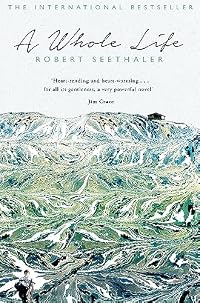
A Whole Life
by Robert Seethaler
On This Page
Description
Set in the mid-twentieth century and told with beauty and tenderness, Robert Seethaler's A Whole Life is a story of man's relationship with an ancient landscape, of the value of solitude, of the arrival of the modern world, and above all, of the moments, great and small, that make us who we are.Tags
Recommendations




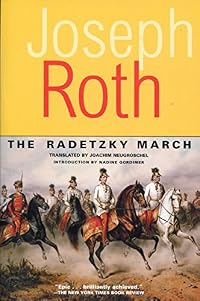
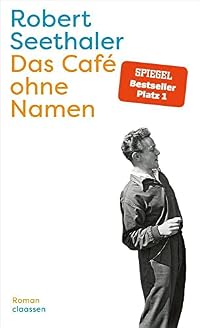




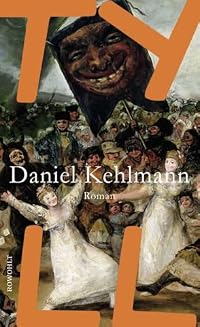
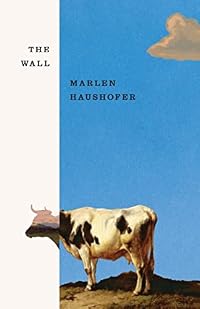

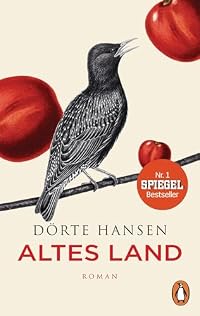



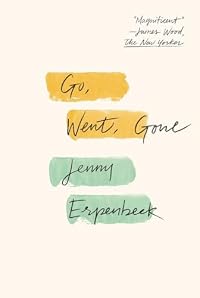
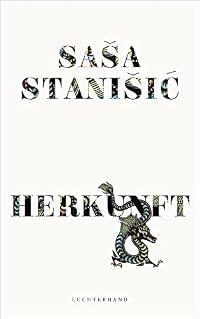
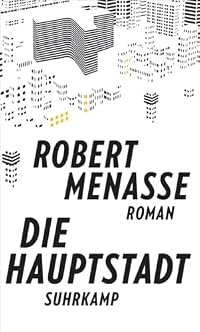




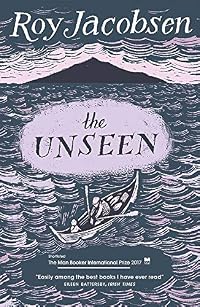





Member Recommendations
rrmmff2000 Strong sense of rural locality and connection to the environment

EerierIdyllMeme Narratives following the full lives of people who not famous and are meant to be somewhat ordinary.

EerierIdyllMeme Very similar narrative structures. Entire lives of men unimportant to history but surrounded by its passage, sometimes contemplating their role but largely swept up in the course of events.
Member Reviews
I've been remiss in not reviewing A Whole Life by Robert Seethaler before now. Darryl tipped me off about it. It has been smoothly translated into English from the German by Charlotte Collins. It was longlisted for the Booker Prize.
It is a simply, yet powerfully, rendered story of the whole life of Andreas Egger. He's a man of few words, but also, we learn, deeply complex. What he understands best is working.
In 1902, at about age four, he arrives in the mountain village where he will spend his life. His relative is a stern, abusive farmer who accepts him from a scandalous sister-in-law for a few bank notes. He beats Andreas for the slightest offense, like spilling milk, and works him hard. But Andreas grows to have enormous strength. At show more age 18, faced with another brutal punishment, this time for dropping a bowl of soup, he says, "If you hit me, I'll kill you." From then on he is on his own.
His good heart and integrity cause other workers take to him. At one point they help him overcome his shyness and make a spellbinding marriage proposal to a woman who works as hard as he does.
The mountains surround the reader, and impending avalanches have power. “It was no more than an intimation, a soft whisper stealing around the walls . . . Black clouds were racing across the night sky, a pale, shapeless moon flickering between them.”
He survives tragedy, and a prisoner of war camp. As age catches up with him, he becomes a trail guide for tourists, and sees his vivid landscape through their eyes. On a whim, he takes a bus trip out of his village. Where to? “I don’t know . . . I simply don’t know.” Eventually, he can hardly wait to return.
This is the story of a man's whole life, without fireworks or a Wellington-sized effect on history. A man worth knowing, who gets back up and adapts when life throws him down. Somehow, the story's simplicity becomes profound, his mountain village haunting, and his acquired wisdom inspiring. This is a beautiful book, one I'll be giving to others. show less
It is a simply, yet powerfully, rendered story of the whole life of Andreas Egger. He's a man of few words, but also, we learn, deeply complex. What he understands best is working.
In 1902, at about age four, he arrives in the mountain village where he will spend his life. His relative is a stern, abusive farmer who accepts him from a scandalous sister-in-law for a few bank notes. He beats Andreas for the slightest offense, like spilling milk, and works him hard. But Andreas grows to have enormous strength. At show more age 18, faced with another brutal punishment, this time for dropping a bowl of soup, he says, "If you hit me, I'll kill you." From then on he is on his own.
His good heart and integrity cause other workers take to him. At one point they help him overcome his shyness and make a spellbinding marriage proposal to a woman who works as hard as he does.
The mountains surround the reader, and impending avalanches have power. “It was no more than an intimation, a soft whisper stealing around the walls . . . Black clouds were racing across the night sky, a pale, shapeless moon flickering between them.”
He survives tragedy, and a prisoner of war camp. As age catches up with him, he becomes a trail guide for tourists, and sees his vivid landscape through their eyes. On a whim, he takes a bus trip out of his village. Where to? “I don’t know . . . I simply don’t know.” Eventually, he can hardly wait to return.
This is the story of a man's whole life, without fireworks or a Wellington-sized effect on history. A man worth knowing, who gets back up and adapts when life throws him down. Somehow, the story's simplicity becomes profound, his mountain village haunting, and his acquired wisdom inspiring. This is a beautiful book, one I'll be giving to others. show less
I was a little bit afraid when I started this short novel that it was going to turn out to be Heidi for grown-ups. And indeed, there's a goat-herd on the very first page. But I needn't have worried. As others have said, this is an unusually delicate and subtle narrative that looks for the ordinary behind the extraordinary. Andreas Egger lives in a spectacularly beautiful part of the world and undergoes hardships and experiences that most of us would think of as worthy of an epic with all possible bells and whistles, but what Seethaler wants us to learn about him are the things that make him just like all other human beings who are born, grow up, work, are caught up in the forces of history and nature, work some more, and eventually grow show more old and die. Sounds corny, and it easily could have been, but it isn't, and I think that means that Seethaler is either an extraordinarily talented or an extraordinarily lucky writer. Probably the former. show less
This deceptively simple but profoundly moving novella is set in a mountainside village in Germany, and it describes the life of Andreas Egger, an ordinary man who came to the village as a young child after the death of his mother from consumption. Despite being a quiet and obedient boy he is treated brutally by his uncle, a farmer in town, and shunned by the other members of his new family. After enduring years of physical and psychological abuse he is expelled from the farm, and is forced to fend for himself.
Andreas is a simple and taciturn man who works hard and asks for little other than a livable wage and a place to lay his head. Despite his near silence and lack of friendship he is observant of his surroundings and holds deep show more affection for those who positively touch his life. He lives from one day to the next without reflection for the most part, and his life is a struggle to keep moving forward, even when numerous obstacles and tragedies threaten to break his body and spirit. He continues to hold his head up through it all, save for brief moments of sorrow, and as he approaches the end of his life he has no guilt, regrets or fears.
I could describe Andreas' story in fuller detail, but that would spoil the joys and surprises of reading A Whole Life that I experienced. This is a remarkable story about an unremarkable man, which manages to be rich in detail and emotion despite being less than 150 pages of widely spaced print. This is easily one of the best novellas I've ever read, and I can't recommended this book highly enough. show less
Andreas is a simple and taciturn man who works hard and asks for little other than a livable wage and a place to lay his head. Despite his near silence and lack of friendship he is observant of his surroundings and holds deep show more affection for those who positively touch his life. He lives from one day to the next without reflection for the most part, and his life is a struggle to keep moving forward, even when numerous obstacles and tragedies threaten to break his body and spirit. He continues to hold his head up through it all, save for brief moments of sorrow, and as he approaches the end of his life he has no guilt, regrets or fears.
I could describe Andreas' story in fuller detail, but that would spoil the joys and surprises of reading A Whole Life that I experienced. This is a remarkable story about an unremarkable man, which manages to be rich in detail and emotion despite being less than 150 pages of widely spaced print. This is easily one of the best novellas I've ever read, and I can't recommended this book highly enough. show less
This contemporary Austrian writer, like Adalbert Stifter, is acutely aware of the rhythms and powers of the natural world. A Whole Life surveys the life of Andreas Egger, an uncomplicated man living in a remote village in the Austrian Alps. The story begins with his arrival in the village as a orphan, his “upbringing,” his marriage, and his work, including his experiences with larger forces like World War II and as a prisoner of war. Seethaler’s style and narrative are simple, matching the simplicity and rhythms of Egger’s life. Egger’s life is clearly focused on his place—a tiny one which he uncomplainingly accepts—in the larger world. Egger knows, at least subconsciously, that his life has no great meaning within the show more scope of the universe. He is at peace with that and the book’s strength is the lyrical passages that place Egger in nature and the world around him. Nature, particularly the mountains, play a key role here but Seethaler is never sentimental. Although I liked the book and will read more of Seethaler, I must also say that I think Jean Giono and Adalbert Stifter are more successful at depicting this kind of relationship. I found the translation quite fluid and the book an easy read. It made me wonder about the book’s lyricism in the original German, however; at least for me, Giono’s and Stifter’s writing is more lyrical, more evocative, more moving, at least in English translation. (Speaking of translation, I don’t know if this is true in German, but I like how, in English “A Whole Life” has two wonderfully complementary meanings: (1) whole, as in the complete life from beginning to end and (2) whole, as in the sum of its different parts.) show less
A Whole Life is a gentle, moving novella about the life of a simple, unremarkable man from the mountains. Told in matter-of-fact prose we journey with him (at some pace) through experiences that shape a lifetime, where tragedy and suffering is met with private forbearance and resignation whilst quietly extinguishing any future hope or expectation of joy.
There's more to this slim book than meets the eye, and the more I think about it the more I appreciate just how cleverly it invokes emotion despite it's apparent lack of sentimentality.
4 stars - gently moving.
There's more to this slim book than meets the eye, and the more I think about it the more I appreciate just how cleverly it invokes emotion despite it's apparent lack of sentimentality.
4 stars - gently moving.
A short novel of greater weight than its page count suggests, A Whole Life manages to do exactly what its title proclaims. It is a chronicle of the whole life of one unimportant and nondescript man, Andreas Egger, who lives on a German mountainside throughout the bulk of the twentieth century. It sounds dull, but the whole point is to identify the universality in Egger's life, and author Robert Seethaler is excellent at achieving this. The central message appears to be encapsulated in this passage from page 44: "You can buy a man's hours off him, you can steal his days from him, or you can rob him of his whole life, but no one can take away from any man so much as a single moment." Whilst I have reservations and don't want to show more wholeheartedly subscribe to the view that sentience and endurance is enough in life, I can't but argue that, through Egger, Seethaler's observation is poignant and beautiful.
Indeed, there is a lot of understated poetry in his prose (e.g. "Her hand was rough and warm like a piece of sunlit wood" (pp29-30)) and plenty of moments of quiet humanity in Egger's life for us to identify with. There's also lots of homespun wisdom and quotable passages (my favourite is "Death belonged to life like mould to bread" on page 86). It is rather ironic that a story about a man who spends the majority of his long life in one place should inform us so passionately about the need for a rich and varied life. But then I imagine a great many people harbour fantasies about escaping to the wilderness to have space to think. So when Egger serves as mountain guide to the tourists "evidently looking for something" (pg. 112), we're right along with them, and just the awareness that people are searching makes one feel closer to them out of basic empathy. The wild doesn't have all the answers – it certainly didn't for Egger – but whilst our "confused, despairing thoughts" don't necessarily melt away "in the mountain air" (pp71-2), A Whole Life does serve as something of a revival tonic. show less
Indeed, there is a lot of understated poetry in his prose (e.g. "Her hand was rough and warm like a piece of sunlit wood" (pp29-30)) and plenty of moments of quiet humanity in Egger's life for us to identify with. There's also lots of homespun wisdom and quotable passages (my favourite is "Death belonged to life like mould to bread" on page 86). It is rather ironic that a story about a man who spends the majority of his long life in one place should inform us so passionately about the need for a rich and varied life. But then I imagine a great many people harbour fantasies about escaping to the wilderness to have space to think. So when Egger serves as mountain guide to the tourists "evidently looking for something" (pg. 112), we're right along with them, and just the awareness that people are searching makes one feel closer to them out of basic empathy. The wild doesn't have all the answers – it certainly didn't for Egger – but whilst our "confused, despairing thoughts" don't necessarily melt away "in the mountain air" (pp71-2), A Whole Life does serve as something of a revival tonic. show less
A Whole Life is an unusual book to be an international bestseller. It’s a very quiet book, a kind of elegy for a very quiet, solitary man. I’ve seen it compared somewhere to Stoner by John Williams but although their principal characters share the same stoicism there isn’t the same sense of a life subordinate to self-sacrifice. Stoner, a college professor, gives up the love of his life because in America at that time divorce would have destroyed not only his career but also hers – and that sacrifice would change them both in ways that would harm their love. But (without in any way diminishing the integrity of either character), it seems to me that in A Whole Life Andreas Eggar is more of an Everyman. He leads a much more humble show more life, he has very few choices, and he loses the love of his life through a natural disaster not through any noble self-sacrifice. Seethaler’s novella is more about the quiet heroism of an ordinary man just getting by in a world that doesn’t care about him at all. He represents any man who somehow survives an awful childhood without having his spirit broken, who plods through schooling that’s irrelevant to his needs and then drifts through low-paid casual work, and who serves his country in a war he doesn’t understand and is then punished for being on the losing side. And he doesn’t even have the joys of family life because of the way fate served him.
A Whole Life starts in 1933, a date that many of us associate with Hitler’s rise to power, but the remote mountains of Austria are far away from the shrieking demagogue. The village where Eggars arrived as a child in 1902 was still farming by hand with axe and scythe, and cars and tractors have not yet replaced the horse and cart. The story begins with a curious episode that juxtaposes Death and Love on a day that Eggars will never forget. He was rescuing a near-comatose goatherd from a lonely death on the mountain when the goatherd got up off the stretcher and ran away from the Cold Lady of Death, never to be seen again. Afterwards, taking a restorative drink at the inn, Andreas then sees a lovely young woman:
Episodes from the past fill in the backstory but don’t seem to disrupt the chronology because even though progress comes to the valley there is a pervading sense of timelessness.
To read the rest of my review please visit https://anzlitlovers.com/2018/01/15/a-whole-life-by-robert-seethaler-translated-... show less
A Whole Life starts in 1933, a date that many of us associate with Hitler’s rise to power, but the remote mountains of Austria are far away from the shrieking demagogue. The village where Eggars arrived as a child in 1902 was still farming by hand with axe and scythe, and cars and tractors have not yet replaced the horse and cart. The story begins with a curious episode that juxtaposes Death and Love on a day that Eggars will never forget. He was rescuing a near-comatose goatherd from a lonely death on the mountain when the goatherd got up off the stretcher and ran away from the Cold Lady of Death, never to be seen again. Afterwards, taking a restorative drink at the inn, Andreas then sees a lovely young woman:
All his life Andreas Eggar would look back on this moment, again and again: that brief smile that afternoon in front of the quietly crackling guesthouse stove. (p.8)
Episodes from the past fill in the backstory but don’t seem to disrupt the chronology because even though progress comes to the valley there is a pervading sense of timelessness.
To read the rest of my review please visit https://anzlitlovers.com/2018/01/15/a-whole-life-by-robert-seethaler-translated-... show less
Members
- Recently Added By
Published Reviews
ThingScore 100
"No praise is too high for A Whole Life. Its daunting beauty lingers. This is a profound, wise and humane novel that no reader will forget."
added by theaelizabet
Lists

EU Fiction: 1950-2022
223 works; 68 members

Books Read in 2023
5,547 works; 144 members

Books Read in 2016
4,666 works; 199 members
International Dublin Literary Award Longlist 2017
147 works; 3 members

Dublin Literary Award Longlist 2017
147 works; 2 members

BBC World Book Club
261 works; 5 members
Author Information

17 Works 2,572 Members
Robert Seethaler was born in Vienna, Austria on August 7, 1966. He is a writer. His work includes the novel A Whole Life. He is also an actor. His movies include My Mother, My Bride and I, and La Grande Bellezza. (Bowker Author Biography)
All Editions
Some Editions
Awards and Honors
Awards
Distinctions
Notable Lists
Series
Belongs to Publisher Series
Gallimard, Folio (6409)
Common Knowledge
- Canonical title*
- Ein ganzes Leben
- Original title
- Ein ganzes Leben
- Original publication date
- 2014; 2015 (English) (English)
- People/Characters*
- Andreas Egger
- Important places
- Austria; Germany
- First words
- An einem Februarmorgen des Jahres neunzehnhundertdreiunddreißig hob Andreas Egger den sterbenden Ziegenhirten Johnannes Kalischka, der von den Talbewohnern nur der Hörnerhannes gerufen wurde, von seinem stark durchfeuchtete... (show all)n end etwas säuerlich riechenden Strohsack, um ihn über den drei Kilometer langen und unter einer dicken Schneeshicht begrabenen Bergpfad ins Dorf hinunterzutragen.
- Quotations*
- "Man einem Mann seine Stunden abkaufen, man kann ihm seine Tage stehlen oder ihm sein ganzes Leben rauben. Aber niemand kann einem Mann auch nur einen einzigen Augenblick nehmen. So ist das, und jetzt lass mich in Frieden."
Dann dachte er an seine Zukunft, die sich so unendlich weit vor ihm ausbreitete, gerade weil er nichts von ihr erwartete. Und manchmal, wenn er lange genug so dalag, hatte er das Gefühl, die Erde unter seinem Rücken würde ... (show all)sich ganz sachte heben und senken, un in diesen Momenten wusste er, dass die Berge atmeten. - Last words
- (Click to show. Warning: May contain spoilers.)»Es ist noch nicht so weit«, sagte er leise, und der Winter legte sich übers Tal.
- Original language
- German
*Some information comes from Common Knowledge in other languages. Click "Edit" for more information.
Classifications
Statistics
- Members
- 1,012
- Popularity
- 25,561
- Reviews
- 59
- Rating
- (4.02)
- Languages
- 18 — Arabic, Catalan, Danish, Dutch, English, Estonian, Finnish, French, German, Italian, Lithuanian, Norwegian (Bokmål), Polish, Portuguese, Romanian, Spanish, Swedish, Turkish
- Media
- Paper, Audiobook, Ebook
- ISBNs
- 52
- UPCs
- 1
- ASINs
- 13