The Lonely Empress: Elizabeth of Austria
by Joan Haslip
On This Page
Description
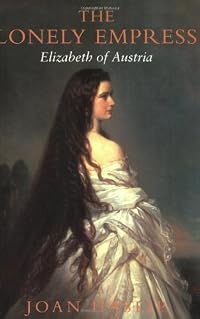
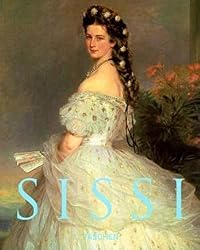
Princess Elizabeth of Bavaria was only 16 when her cousin Francis Joseph came to visit her eldest sister with a view to arranging a marriage. The 23 year old Austrian Emperor fell in love with the fine featured, long limbed, dark haired beauty Elizabeth instead, married her and loved her until her death in 1898 when she was assassinated by the Italian anarchist Luccheni. Elizabeth, though, was a ¿modern¿ woman at a time when that notion was unheard of. Her love for sport, gymnastics, show more dangerous riding, sailing, poetry and all things Greek were not catered for by Habsburg family life. Her fairy tale romance went disastrously wrong quite rapidly and she fled from her husband and their four children and the confines of her duties as an Empress. For 35 years she went from one spa to the next; suffered the loss of her son Rudolph (who was found dead at Mayerling next to the body of his mistress) and suffered bouts of ill health. But her restless search for freedom became as legendary as her beauty. In this celebrated biography, Joan Haslip provides the answer to the enigma of Elizabeth¿s flight from reality. show lessTags
Recommendations










Member Reviews
This biography is now over forty years old, but Haslip's writing, and the common sense approach which she takes towards her subject means that it is still as readable now as it was when it was first printed. Haslip is extremely good at taking an insightful and sympathetic, yet objective and critical, approach towards her subject, Elizabeth of Austria, the woman better known to history as Princess Sisi. Elizabeth was a complicated mixture of charm and frigidity, intelligence and neurosis, self-conscious beauty and shyness, and I think Haslip does a very good job at capturing those. I would agree with her assessment of Elizabeth's character to a large degree.
The book has its faults, though they are minor. I would have liked a greater deal show more of analysis of her legacy and of the immediate impact of her death; to end the book with her murder makes it seem curiously truncated, especially considering how great a mythos had grown up around Elizabeth even by the time Haslip was writing. It is also curious that she didn't use make more use of those who could remember Elizabeth and her family, and who were still alive at the time of her writing; I think the last of Elizabeth's children had died maybe only twenty to thirty years before; still, it's probable in that case that they had simply closed ranks.
The book could also have used a stronger technical editor; there was one instance where Elizabeth returned to Austria 'for Xmas', which I cannot see as being appropriate for a biographical work, and the number of comma splices was truly astronomical. Despite that, though, this is still probably one of the best books dealing with the life of the empress. show less
The book has its faults, though they are minor. I would have liked a greater deal show more of analysis of her legacy and of the immediate impact of her death; to end the book with her murder makes it seem curiously truncated, especially considering how great a mythos had grown up around Elizabeth even by the time Haslip was writing. It is also curious that she didn't use make more use of those who could remember Elizabeth and her family, and who were still alive at the time of her writing; I think the last of Elizabeth's children had died maybe only twenty to thirty years before; still, it's probable in that case that they had simply closed ranks.
The book could also have used a stronger technical editor; there was one instance where Elizabeth returned to Austria 'for Xmas', which I cannot see as being appropriate for a biographical work, and the number of comma splices was truly astronomical. Despite that, though, this is still probably one of the best books dealing with the life of the empress. show less
It felt awkward to me, as Ms Haslip is obviously not very fluent in German, and does not know Vienna. Using anglicised names of the Hasburgs also felt wrong to me.
While I do not go along with the Sisi cult that has grown up in the Austrian tourist industry, I also feel that Ms. Haslip is a bit unfair in her criticisms. Elizabeth was shown early in her marriage that she was only prized for her beauty. She was to stay out of politics. So she generally ignored politics, and only concentrated on staying beautiful. The statement that FJ might not have become such a burocrat if Elizabeth had been more understanding is ridiculous, as even in the first day of their marriage FJ spent most of his time at his desk. That part of his personality show more had been fixed before he met her.
I should try and get hold of a more recent biography of Elizabeth. show less
While I do not go along with the Sisi cult that has grown up in the Austrian tourist industry, I also feel that Ms. Haslip is a bit unfair in her criticisms. Elizabeth was shown early in her marriage that she was only prized for her beauty. She was to stay out of politics. So she generally ignored politics, and only concentrated on staying beautiful. The statement that FJ might not have become such a burocrat if Elizabeth had been more understanding is ridiculous, as even in the first day of their marriage FJ spent most of his time at his desk. That part of his personality show more had been fixed before he met her.
I should try and get hold of a more recent biography of Elizabeth. show less
1767 The Lonely Empress: A Biography of Elizabeth of Austria, by Joan Haslip (read 5 Mar 1983) This is a 1965 book. I first recall reading Empress Elizabeth's story in the summer of 1945--the book was Golden Fleece, by Bertita Harding. I found the story unforgettable, and so I was surprised I would read this book about a person so familiar to me. But the Hapsburgs have always fascinated me, and some of the bizarre facets of Empress Elizabeth's life had faded from my memory. This book is not at all scholarly, and is footnoteless. Its bibliography is very poor. Sept 10, 1898, Geneva--she was stabbed, and did not at first think she was hurt. She got up, and went on board the steamer. Then she fainted, was eventually taken back to the show more hotel, where she died. She was not an asset to the Hapsburgs, but her story fascinates nonetheless. show less
Ratings
Members
- Recently Added By
Author Information
13 Works 827 Members
Common Knowledge
- Canonical title*
- Sissi, Kaiserin von Österreich
- Original title
- The Lonely Empress: A Biography of Elizabeth of Austria
- Original publication date
- 1965
- People/Characters
- Elisabeth, Empress of Austria; Franz Joseph I, Emperor of Austria; Sophie of Bavaria, Archduchess of Austria; Archduchess Gisela of Austria; Rudolf, Crown Prince of Austria; Archduchess Marie Valerie of Austria
- Important places
- Kingdom of Bavaria; Bavaria, Germany; Austria-Hungary; Austria; Hungary; Corfu, Greece (show all 7); Switzerland
*Some information comes from Common Knowledge in other languages. Click "Edit" for more information.
Classifications
- Genres
- History, Nonfiction, Biography & Memoir, General Nonfiction
- DDC/MDS
- 943.6044092 — History & geography History of Europe Germany and neighboring central European countries Austria and Liechtenstein
- LCC
- DB88 .H3 — History of Europe, Asia, Africa and Oceania Austria – Liechtenstein – Hungary – Czechoslovakia History of Austria. Liechtenstein. Hungary. Czechoslovakia History By period 1521- 19th-20th centuries
- BISAC
Statistics
- Members
- 179
- Popularity
- 182,055
- Reviews
- 3
- Rating
- (3.31)
- Languages
- 5 — Dutch, English, Finnish, German, Swedish
- Media
- Paper
- ISBNs
- 9
- ASINs
- 7