Henry IV, Parts 1 & 2
by William Shakespeare
Henry IV (Collections and Selections — 1-2), Henriad (Collections and Selections — 2-3)
On This Page
Description
Classic text republished as an e-book.Tags
Recommendations




















Member Reviews
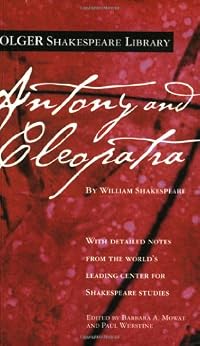
The two parts of Henry IV have all of Shakespeare's usual features for his history plays: intrigue and ringing dialogue, offset by the difficulty in knowing just who is who and on which side they fight. The Bard has done the history play better – see Henry V or Richard III (or Julius Caesar and Antony and Cleopatra) – but Henry IV's selling point is the presence of Falstaff: young Prince Hal's roguish drinking buddy and all-round scoundrel.
The first part of Henry IV is the better part for this very reason (Hal sobers up in Part 2), as Shakespeare lovingly forges the glint in Falstaff's eye. It is an inheritance of "wrenching the true cause the false way" (pg. 153) that would reach heights in the following centuries with the likes of show more Huck Finn, Jack Sparrow and Harry Flashman. The newly-anointed Hal of Part 2 might disavow the rogue, but the readers never will. show less
The first part of Henry IV is the better part for this very reason (Hal sobers up in Part 2), as Shakespeare lovingly forges the glint in Falstaff's eye. It is an inheritance of "wrenching the true cause the false way" (pg. 153) that would reach heights in the following centuries with the likes of show more Huck Finn, Jack Sparrow and Harry Flashman. The newly-anointed Hal of Part 2 might disavow the rogue, but the readers never will. show less
So many insults -- so much confusion -- intertwined scenes primarily of battle sights and brothels -- Falstaff: Zounds, will they not rob us. -- the problems of becoming King by force.
Part II only
Ratings
Members
- Recently Added By
Lists

CCE 1000 Good Books List
1,033 works; 12 members

Literary Works Read in College
316 works; 15 members

My 100 Favorite Books of All Time
57 works; 2 members

My Play Collection
769 works; 3 members
Author Information

5,936+ Works 439,806 Members
William Shakespeare, 1564 - 1616 Although there are many myths and mysteries surrounding William Shakespeare, a great deal is actually known about his life. He was born in Stratford-Upon-Avon, son of John Shakespeare, a prosperous merchant and local politician and Mary Arden, who had the wealth to send their oldest son to Stratford Grammar School. show more At 18, Shakespeare married Anne Hathaway, the 27-year-old daughter of a local farmer, and they had their first daughter six months later. He probably developed an interest in theatre by watching plays performed by traveling players in Stratford while still in his youth. Some time before 1592, he left his family to take up residence in London, where he began acting and writing plays and poetry. By 1594 Shakespeare had become a member and part owner of an acting company called The Lord Chamberlain's Men, where he soon became the company's principal playwright. His plays enjoyed great popularity and high critical acclaim in the newly built Globe Theatre. It was through his popularity that the troupe gained the attention of the new king, James I, who appointed them the King's Players in 1603. Before retiring to Stratford in 1613, after the Globe burned down, he wrote more than three dozen plays (that we are sure of) and more than 150 sonnets. He was celebrated by Ben Jonson, one of the leading playwrights of the day, as a writer who would be "not for an age, but for all time," a prediction that has proved to be true. Today, Shakespeare towers over all other English writers and has few rivals in any language. His genius and creativity continue to astound scholars, and his plays continue to delight audiences. Many have served as the basis for operas, ballets, musical compositions, and films. While Jonson and other writers labored over their plays, Shakespeare seems to have had the ability to turn out work of exceptionally high caliber at an amazing speed. At the height of his career, he wrote an average of two plays a year as well as dozens of poems, songs, and possibly even verses for tombstones and heraldic shields, all while he continued to act in the plays performed by the Lord Chamberlain's Men. This staggering output is even more impressive when one considers its variety. Except for the English history plays, he never wrote the same kind of play twice. He seems to have had a good deal of fun in trying his hand at every kind of play. Shakespeare wrote 154 sonnets, all published on 1609, most of which were dedicated to his patron Henry Wriothsley, The Earl of Southhampton. He also wrote 13 comedies, 13 histories, 6 tragedies, and 4 tragecomedies. He died at Stratford-upon-Avon April 23, 1616, and was buried two days later on the grounds of Holy Trinity Church in Stratford. His cause of death was unknown, but it is surmised that he knew he was dying. (Bowker Author Biography) show less
Some Editions
Awards and Honors
Awards
Notable Lists
Series


Belongs to Publisher Series
Work Relationships
Is contained in
Has the adaptation
Common Knowledge
- Canonical title
- Henry IV, Parts 1 & 2
- Original title
- Henry IV (Part 1 & 2) (Part 1 & 2)
- People/Characters
- Henry IV, King of England; Henry V, King of England (Prince Hal); John of Lancaster; Earl of Westmoreland; Sir Thomas Blunt; Thomas Percy, 1st Earl of Worcester (show all 21); Sir Henry Percy / Hotspur; Edmund Mortimer; Richard Scroop; Archibald Douglas, 4th Earl of Douglas; Owain Glyndŵr (Owen Glendower); Sir Richard Vernon; Sir John Falstaff; Sir Michael; Lady Percy; Lady Mortimer; Mistress Quickly; Poins; Gadshill; Peto; Bardolph
- Important places
- England, UK; Wales, UK
- Important events
- 15th century; Middle Ages
- Related movies
- Chimes at Midnight (1965 | IMDb); The King (2019 | IMDb)
- First words*
- Erschüttert wie wir sind, vor Sorge bleich,
Ersehn wir doch für den gescheuchten Frieden
Zu atmen Zeit, und abgebrochne Laute
Von neuem Kampf zu stammeln, welcher nun
Beginnen soll an weit entlegnem Strand.
(... (show all)übersetzt von August Wilhelm von Schlegel) - Last words*
- (Click to show. Warning: May contain spoilers.)Kommt, wollt Ihr mit? (übersetzt von August Wilhelm von Schlegel)
- Original language*
- Englisch
- Disambiguation notice
- This work is Henry IV Parts 1 AND 2 together in one volume. Pleeeeease do not combine it with single-play editions of just part 1 or just part 2.
*Some information comes from Common Knowledge in other languages. Click "Edit" for more information.
Classifications
Statistics
- Members
- 386
- Popularity
- 80,509
- Reviews
- 3
- Rating
- (3.78)
- Languages
- 14 — Dutch, English, Finnish, French, German, Greek, Hungarian, Italian, Polish, Portuguese, Russian, Spanish, Swedish, Turkish
- Media
- Paper, Audiobook, Ebook
- ISBNs
- 45
- UPCs
- 1
- ASINs
- 14