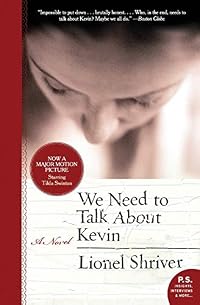
We Need to Talk About Kevin
by Lionel Shriver
On This Page
Description
Eva never really wanted to be a mother and certainly not the mother of the unlovable boy who murdered seven of his fellow high school students, a cafeteria worker, and a much-adored teacher who tried to befriend him, all two days before his sixteenth birthday. Now, two years later, it is time for her to come to terms with marriage, career, family, parenthood, and Kevin's horrific rampage in a series of startlingly direct correspondences with her estranged husband, Franklyn.Tags
Recommendations

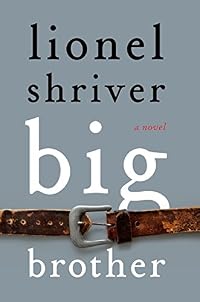

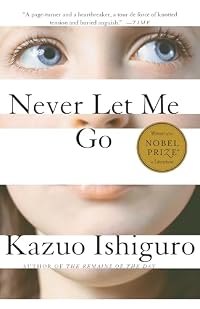
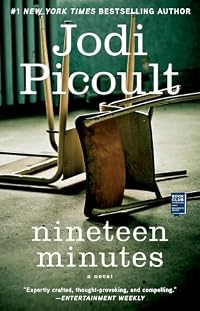
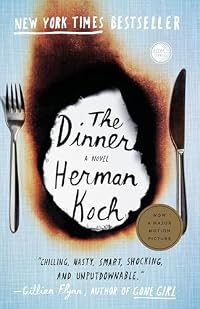

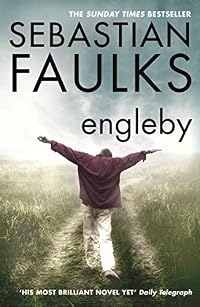
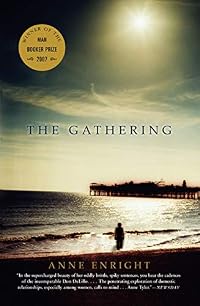
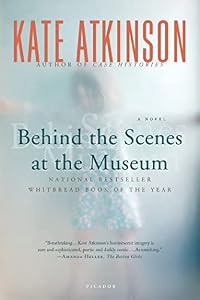
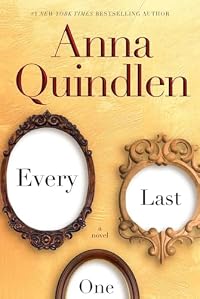
Member Recommendations
BookshelfMonstrosity Both of these novels are about school shootings and the alienated teenage boys responsible for them. 'We need to talk about Kevin' depicts the complex relationships within the shooter's family, whereas 'Nineteen minutes' focuses on the larger community affected by the event.
Also recommended by bnbookgirl
81
christiguc Both are books that explore the nature vs. nurture question in disturbing situations.
Also recommended by humppabeibi, kjuliff
60


BookshelfMonstrosity Both of these novels tell haunting, harrowing stories about the family relationships of teenage boys who commit unthinkable crimes: in 'We need to talk about Kevin' a school shooting, and in 'Before and after' a teenager's murder of his girlfriend.
50

verenka Both books deal with the aftermath of school shootings but from different perspectives.
30
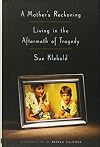
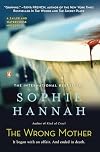
JeaniusOak Both novels explore difficult themes surrounding Motherhood.
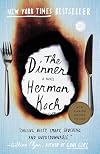
INTPLibrarian Disturbed child and parents dealing with it. Both with twists / unexpected parts.
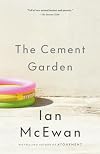
kjuliff Child Killers


Member Reviews
We Need to Talk About Kevin by Lionel Shriver relates the story of a family whose boy, Kevin, goes on a killing rampage at his high school. This is a book that shook me to the core, I had to read it in short bursts as I needed to take breaks to get away from the darkness. Written beautifully but the subject matter is distressing, shocking and ugly. Told by the mother, Eva, the story of her family unfolds in epistolary form, through letters that Eva writes to her husband, Franklin.
Eva and Franklin are very different from one another but they are deeply in love and the decision to have a child is not one that was taken lightly. Eva never really wanted children but decided to go ahead with it as she knew how much her husband desired show more parenthood. From the moment she gives birth to Kevin, her life becomes more of a horror story. Unable to bond with or love her child, Eva immediately sees Kevin as an adversary. He is shown to be a sly monster, and as he grows he is only too willing to display his evil nature to his mother. His father on the other hand does not see this side of Kevin and feels that Eva is a disinterested, cold mother. As we work our way through the book the story builds in intensity as Kevin matures and that destructive day in April approaches.
I believe that ultimately We Need To Talk About Kevin raises far more questions than it actually answers. As I read about the imploding of this family I couldn’t help but ask myself whether Eva was a reliable narrator. Can someone be born inherently evil? Can a mother’s coldness build a monster? Do parents get the children they deserve? Was this the truth as Eva saw it or is this her own anguish and guilt that she is writing about. Eva puts herself on trial and the reader must form his own judgement. show less
Eva and Franklin are very different from one another but they are deeply in love and the decision to have a child is not one that was taken lightly. Eva never really wanted children but decided to go ahead with it as she knew how much her husband desired show more parenthood. From the moment she gives birth to Kevin, her life becomes more of a horror story. Unable to bond with or love her child, Eva immediately sees Kevin as an adversary. He is shown to be a sly monster, and as he grows he is only too willing to display his evil nature to his mother. His father on the other hand does not see this side of Kevin and feels that Eva is a disinterested, cold mother. As we work our way through the book the story builds in intensity as Kevin matures and that destructive day in April approaches.
I believe that ultimately We Need To Talk About Kevin raises far more questions than it actually answers. As I read about the imploding of this family I couldn’t help but ask myself whether Eva was a reliable narrator. Can someone be born inherently evil? Can a mother’s coldness build a monster? Do parents get the children they deserve? Was this the truth as Eva saw it or is this her own anguish and guilt that she is writing about. Eva puts herself on trial and the reader must form his own judgement. show less
I love epistolary stories! And I love the somewhat pretentious prose of Lionel Shriver's books. This narrator is definitely not a fully likable person, and she does a lot of things that are arguably bad, but I feel that deep down she's trying to do the right thing. The part that always gets me is how she says when she got the call about the school shooting it didn't occur to her that Kevin might be the perpetrator. No matter how much she may have disliked him, she didn't think that badly of him.
On a personal note, I read this book when I was convinced I would never have children, and it was something to point to and say "see! that's what can happen!" But after my husband and I decided to adopt, I went back and read this book in one show more night to see if this book would make me feel differently about our decision, but it did not scare me the way it did before, which is good because I am now the mom of a beautiful daughter! show less
On a personal note, I read this book when I was convinced I would never have children, and it was something to point to and say "see! that's what can happen!" But after my husband and I decided to adopt, I went back and read this book in one show more night to see if this book would make me feel differently about our decision, but it did not scare me the way it did before, which is good because I am now the mom of a beautiful daughter! show less
Three days before his sixteenth birthday, Kevin Katchadourian goes into his high school, where he shoots and murders seven fellow pupils, a teacher and a cafeteria worker. In a series of letters to her former husband, Kevin’s mother Eva recalls his upbringing and their lives together.
I’ll be honest – for the first 100 pages of this book (my edition was exactly 400 pages) I wasn’t sure I was going to enjoy it. That said, it’s not necessarily a book that you can enjoy as such, given that it is about a school shooter. It is set in 2000, two years after the horrific incident, and while Kevin and his specific crime is fictional, it references several real life school shooters. It is a sobering subject, but despite this I have show more become absorbed in other books on the same subject (for example, the brilliant Nineteen Minutes, by Jodi Picoult).
Eva is frankly, not an easily likeable person – although I sense that she was written that way deliberately. Her ambivalence towards her son since before he was even born, was apparent, and she wrote about him as if he was evil from the moment he arrived in the world. The question at the heart of the book is whether someone can be born evil or if – in this case – Kevin turned out the way he did as a result of his mother’s attitude towards him.
From about 100 pages in however, the book captured and held my attention. I still did not really warm to Eva, although I did feel so desperately sorry for her. I wondered if she was a reliable narrator, and if all the horrible things that Kevin did prior to the school shooting were actually as she described them, but of course events bore out the fact that he was a cruel and reckless young man.
Eva is very verbose and rarely uses one word if she can manage to use twenty. She is also clearly very intellectual and has a superiority complex to others. But she is not without compassion, even if she is very selfish. I did not like her husband Franklin either, although admittedly we only ever get to know him through Eva’s own filter. But his blind defence of his son made me want to shake him for his naivety. (Again though, I wonder how the same events would have played out written from Franklin’s point of view.)
Anyway – it’s relentlessly bleak, but you kind of have to expect that going in. It’s a book I’ve been meaning to read for a number of years, and I’m glad I finally did. On the whole, I would recommend it although I don’t think I would rush to read any more books by this author. show less
I’ll be honest – for the first 100 pages of this book (my edition was exactly 400 pages) I wasn’t sure I was going to enjoy it. That said, it’s not necessarily a book that you can enjoy as such, given that it is about a school shooter. It is set in 2000, two years after the horrific incident, and while Kevin and his specific crime is fictional, it references several real life school shooters. It is a sobering subject, but despite this I have show more become absorbed in other books on the same subject (for example, the brilliant Nineteen Minutes, by Jodi Picoult).
Eva is frankly, not an easily likeable person – although I sense that she was written that way deliberately. Her ambivalence towards her son since before he was even born, was apparent, and she wrote about him as if he was evil from the moment he arrived in the world. The question at the heart of the book is whether someone can be born evil or if – in this case – Kevin turned out the way he did as a result of his mother’s attitude towards him.
From about 100 pages in however, the book captured and held my attention. I still did not really warm to Eva, although I did feel so desperately sorry for her. I wondered if she was a reliable narrator, and if all the horrible things that Kevin did prior to the school shooting were actually as she described them, but of course events bore out the fact that he was a cruel and reckless young man.
Eva is very verbose and rarely uses one word if she can manage to use twenty. She is also clearly very intellectual and has a superiority complex to others. But she is not without compassion, even if she is very selfish. I did not like her husband Franklin either, although admittedly we only ever get to know him through Eva’s own filter. But his blind defence of his son made me want to shake him for his naivety. (Again though, I wonder how the same events would have played out written from Franklin’s point of view.)
Anyway – it’s relentlessly bleak, but you kind of have to expect that going in. It’s a book I’ve been meaning to read for a number of years, and I’m glad I finally did. On the whole, I would recommend it although I don’t think I would rush to read any more books by this author. show less
Lo mejor que he leído este año y difícilmente encontraré otro que lo desbanque.
¿Se nace siendo malo o la maldad es producto del entorno familiar en el que crece un individuo?
Esta es la premisa que este libro nos plantea a través de las cartas de una madre a su amado esposo y padre de su hijo, un asesino.
No es mucho lo que puedo decir sin que revele alguna indiscreción importante de la trama de este libro, solo puedo decir que me ha tocado una fibra, que me ha movido y conmovido, que me ha hecho reflexionar en la paternidad y maternidad y la forma en que educamos y amamos a nuestros hijos, que no todos los padres son buenos o malos completamente, que nuestros hijos, son nuestros a pesar de los pesares y en cierta medida son el show more resultado de nosotros, nuestros errores y nuestros aciertos, pero también son, producto de ellos mismos y su propia personalidad.
Un libro que si bien es fuerte en el sentido de lo profundo de los sentimientos y hechos que narra, la realidad es que no es fuerte en el sentido en el que yo esperaba.
Contiene un punto de critica social, pero sin embargo plantea una premisa que de algún modo todos nos preguntamos cuando se habla de asesinos, violadores o pedófilos ¿nacen o se hacen malas personas? show less
¿Se nace siendo malo o la maldad es producto del entorno familiar en el que crece un individuo?
Esta es la premisa que este libro nos plantea a través de las cartas de una madre a su amado esposo y padre de su hijo, un asesino.
No es mucho lo que puedo decir sin que revele alguna indiscreción importante de la trama de este libro, solo puedo decir que me ha tocado una fibra, que me ha movido y conmovido, que me ha hecho reflexionar en la paternidad y maternidad y la forma en que educamos y amamos a nuestros hijos, que no todos los padres son buenos o malos completamente, que nuestros hijos, son nuestros a pesar de los pesares y en cierta medida son el show more resultado de nosotros, nuestros errores y nuestros aciertos, pero también son, producto de ellos mismos y su propia personalidad.
Un libro que si bien es fuerte en el sentido de lo profundo de los sentimientos y hechos que narra, la realidad es que no es fuerte en el sentido en el que yo esperaba.
Contiene un punto de critica social, pero sin embargo plantea una premisa que de algún modo todos nos preguntamos cuando se habla de asesinos, violadores o pedófilos ¿nacen o se hacen malas personas? show less
Visceral. That was the word I landed on (thanks to Joan's help) that best sums up the feeling I got from reading this book. That might sound off-putting, when the crux of the book involves the child of the narrator perpetrating a school shooting. There's little gore, in terms of physical violence. It's emotional violence, almost, though its awfulness (in the sense of "awe-inspiring terror") is in the very rawness with which the narrator, Eva, relates the internal landscape of her entire adult life, not any specific actions.
The depths to which Eva plumbs her life, her relationship with her husband, her worries about her children, her mounting fear of her sociopathic son and everything in between are scary because of their groundedness. show more She's not an entirely reliable narrator, due to her relating relationships between multiple people who don't get the chance to have their say, but you never get the impression she's unfair, either.
This is definitely the kind of book you don't want to see yourself in, but in many of the characters I saw not facets of my character (the easy, "Oh he likes Doctor Who and *I* like Doctor Who!") but fundamental precepts through which I navigate the world.
When Eva accuses her husband, Robert, of viewing things in terms of the generic ("I'm so proud of my son") versus the specific ("Kevin did X that I'm proud of"), it was a gut-punch because it reminded me of how I made my way through college, singling out the broad assumptive touchstones ("We're fraternity brothers who are drinking at a party!") rather than the actual experience ("I'm drinking way too much because I'm interminably bored on a Friday night because I spend too much time not actually doing anything!"). The parallels I could draw between parts of many of the characters really made the book feel like it was taking cheap shots, and this is not a book that really needs to punch above its weight. It's already a prize fighter.
In fact, the only reason I almost didn't give it 5 stars is because I can't read it again. It was just too much to deal with, though I implore those of you who are able to stomach it to tough it out. In the end, though, I can't really fault a book for connecting too much, or for working too well. I'll have to leave it in the words of a Penn State sophomore, talking about the freshman dorms: It's the best worst thing I never want to do again. show less
The depths to which Eva plumbs her life, her relationship with her husband, her worries about her children, her mounting fear of her sociopathic son and everything in between are scary because of their groundedness. show more She's not an entirely reliable narrator, due to her relating relationships between multiple people who don't get the chance to have their say, but you never get the impression she's unfair, either.
This is definitely the kind of book you don't want to see yourself in, but in many of the characters I saw not facets of my character (the easy, "Oh he likes Doctor Who and *I* like Doctor Who!") but fundamental precepts through which I navigate the world.
When Eva accuses her husband, Robert, of viewing things in terms of the generic ("I'm so proud of my son") versus the specific ("Kevin did X that I'm proud of"), it was a gut-punch because it reminded me of how I made my way through college, singling out the broad assumptive touchstones ("We're fraternity brothers who are drinking at a party!") rather than the actual experience ("I'm drinking way too much because I'm interminably bored on a Friday night because I spend too much time not actually doing anything!"). The parallels I could draw between parts of many of the characters really made the book feel like it was taking cheap shots, and this is not a book that really needs to punch above its weight. It's already a prize fighter.
In fact, the only reason I almost didn't give it 5 stars is because I can't read it again. It was just too much to deal with, though I implore those of you who are able to stomach it to tough it out. In the end, though, I can't really fault a book for connecting too much, or for working too well. I'll have to leave it in the words of a Penn State sophomore, talking about the freshman dorms: It's the best worst thing I never want to do again. show less
This book is astonishing and terrifying - and, though I think it's inherently wrong to use words like "true" and "real" for a work of fiction, I find those keep surfacing when I think about it.
We Need to Talk About Kevin is an epistolary novel. You could say that it examines an age-old troubling question: how responsible are parents for their children's actions? But the examination is too personal to be called that. The book works through, from conception to incarceration, the path of one young man's life, from the viewpoint of a mother who was ambivalent about having him in the first place. From the day after his conception, she is troubled about her son, and catalogues instances of his brilliant cruelty from the day he is born in show more these letters, until she works up to the terrifying events of one April Thursday that have caused him to be infamous and locked-up. From that standpoint, you could say this mother presents a powerful argument for nature winning out over nurture - she always knew something was wrong with her son, always. Other people noticed, too. But her husband, an unimaginative and whiny American, was determined that everything was Apple Pie and the Fourth of July - and so she stayed. Even as the difference of opinion about their child gnawed their marriage out from the inside; even as she bore another child - desperately wanted this time, who turned out to be loving and sweet and compassionate and therefore in grave danger from her malignant brother - she stays because of her love for this man.
And yet, though she voices the question aloud only once, it's still there. Was he "always" like this because he was always unwanted? Would he have turned out like his sister if he had been loved from the start? Is this all her fault?
My own point of view might be distracted, because the book examines to me the second-most terrifying question involving child-rearing. But Shriver isn't trying to answer this question, not really, as far as I can tell, She's just trying to tell us how it might feel to be the one asking it, for real. It's a dark, difficult, terrifying book - and one of the best I've ever read. show less
We Need to Talk About Kevin is an epistolary novel. You could say that it examines an age-old troubling question: how responsible are parents for their children's actions? But the examination is too personal to be called that. The book works through, from conception to incarceration, the path of one young man's life, from the viewpoint of a mother who was ambivalent about having him in the first place. From the day after his conception, she is troubled about her son, and catalogues instances of his brilliant cruelty from the day he is born in show more these letters, until she works up to the terrifying events of one April Thursday that have caused him to be infamous and locked-up. From that standpoint, you could say this mother presents a powerful argument for nature winning out over nurture - she always knew something was wrong with her son, always. Other people noticed, too. But her husband, an unimaginative and whiny American, was determined that everything was Apple Pie and the Fourth of July - and so she stayed. Even as the difference of opinion about their child gnawed their marriage out from the inside; even as she bore another child - desperately wanted this time, who turned out to be loving and sweet and compassionate and therefore in grave danger from her malignant brother - she stays because of her love for this man.
And yet, though she voices the question aloud only once, it's still there. Was he "always" like this because he was always unwanted? Would he have turned out like his sister if he had been loved from the start? Is this all her fault?
My own point of view might be distracted, because the book examines to me the second-most terrifying question involving child-rearing. But Shriver isn't trying to answer this question, not really, as far as I can tell, She's just trying to tell us how it might feel to be the one asking it, for real. It's a dark, difficult, terrifying book - and one of the best I've ever read. show less
This is a tough book to review. I gave it four stars because I genuinely couldn't put it down. Shriver's prose is engrossing, her writing lively and interesting: you want to get to the terrible denouement. But this novel is also flawed, and I don't entirely disagree with the negative reviews.
Characters felt overdrawn. Could Kevin really be so relentlessly malevolent from birth? (We could put this down to Eva's depression and distaste for motherhood, but the reaction of Kevin's nannies, and Eva's love for Celia, push the reader to see Kevin as born evil). Celia is just so utterly pliant: children are rarely so wholly one-dimensional. And Franklin is unremittingly naive; it's hard to pinpoint what he and Eva ever saw in one another, and show more Eva mostly tells us rather than shows us their love.
The epistolary format is often problematic. At times Eva puts events in her letters in such stark detail that the idea that she's writing to someone who was there just doesn't ring true: there's too much consciousness of an uninformed reader. And--an all too common mistake--Shriver needs to learn the difference between disinterest and uninterest.
Nevertheless, this book haunted me from the start (and helped repress my own broodiness for a child!), so I can't in good faith give it less than four stars. show less
Characters felt overdrawn. Could Kevin really be so relentlessly malevolent from birth? (We could put this down to Eva's depression and distaste for motherhood, but the reaction of Kevin's nannies, and Eva's love for Celia, push the reader to see Kevin as born evil). Celia is just so utterly pliant: children are rarely so wholly one-dimensional. And Franklin is unremittingly naive; it's hard to pinpoint what he and Eva ever saw in one another, and show more Eva mostly tells us rather than shows us their love.
The epistolary format is often problematic. At times Eva puts events in her letters in such stark detail that the idea that she's writing to someone who was there just doesn't ring true: there's too much consciousness of an uninformed reader. And--an all too common mistake--Shriver needs to learn the difference between disinterest and uninterest.
Nevertheless, this book haunted me from the start (and helped repress my own broodiness for a child!), so I can't in good faith give it less than four stars. show less
Members
- Recently Added By
Published Reviews
ThingScore 55
A powerful, gripping and original meditation on evil
added by ddematthews
At a time when fiction by women has once again been criticised for its dull domesticity, here is a fierce challenge of a novel by a woman that forces the reader to confront assumptions about love and parenting, about how and why we apportion blame, about crime and punishment, forgiveness and redemption and, perhaps most significantly, about how we can manage when the answer to the question show more why? is either too complex for human comprehension, or simply non-existent. show less
added by ddematthews
The epistolary method Shriver uses, letters to Eva's absent husband, strains belief, yet ultimately that's not what trips us up. It's Eva's relentless negativity that becomes boring and repetitive in the first half of the book, the endless recounting of her loss of svelteness, her loss of freedom.
added by stephmo
Lists

The Guardian's 1000 Novels Everyone Must Read
1,005 works; 549 members

Recommend the 20 best books you've read in the last five years
2,167 works; 605 members

Favourite Women's Prize for Fiction, Orange & Bailey's Prize contenders
132 works; 52 members

Top Five Books of 2013
1,564 works; 716 members

Read the book and saw the movie
1,170 works; 192 members

Best 21st Century Books (So Far)
670 works; 86 members

Books With a Twist
69 works; 46 members

Female Author
1,235 works; 65 members

Best Crime Fiction
262 works; 39 members

Unreliable Narrators
170 works; 43 members
TED 2013 Summer Reading List
190 works; 13 members

Favorite Long Books
330 works; 42 members

50 Books by Women Authors
50 works; 10 members

Women's Prize for Fiction
29 works; 5 members
Best School Stories
219 works; 22 members

Most Disturbing Books
124 works; 27 members
The American Experience
173 works; 18 members

Top Five Books of 2019
387 works; 107 members

Epistolary Books
105 works; 27 members

BBC Radio 4 Bookclub
304 works; 13 members

Dysfunctional Families
133 works; 7 members

A Novel Cure
742 works; 23 members

Books Read in 2005
173 works; 7 members

Reader's Digest 50 Best Horror Books to Read
50 works; 3 members

the mother of all novels (parenting theme)
15 works; 4 members

Watched the Movie, Probably Won't Read the Book
185 works; 34 members

Best books read in the first half of 2012
38 works; 6 members

Movie Adaptations
111 works; 4 members

Academia in Fiction
158 works; 23 members

Books I Re-read (...and re-read... and re-read)
25 works; 2 members

Recommended Horror and Dark Fiction by Women
81 works; 13 members
5 Best 5 Years
71 works; 4 members

Books About Murder
313 works; 7 members

Llibres que he llegit el 2013
47 works; 1 member
American Lit for Eng 11 Research Project
368 works; 6 members
Books We Love to Reread
688 works; 296 members

Books We Want To Read Again For The First Time
384 works; 160 members

.
184 works; 1 member

Books Read in 2025
4,090 works; 97 members

Book Club suggestions
20 works; 1 member

Fiction with Men's Given Names in the Title
302 works; 11 members
Books That Made Us Cry
278 works; 145 members

Books With Complete Sentence Titles
374 works; 15 members

BBC World Book Club
261 works; 5 members

Books about Gun Violence
54 works; 1 member

Favorite Epistolary Fiction
143 works; 144 members

Books About Boys
175 works; 15 members

Biggest Disappointments
606 works; 164 members

Horror Reading: Creepy Kids
9 works; 3 members
Books Read in 2012
815 works; 34 members

Books With the Most Memorable Titles
478 works; 158 members
Talk Discussions
Past Discussions
We Need to Talk About Kevin by Lionel Shriver in Orange January/July (February 2013)
Book Review: We Need To Talk About Kevin by Lionel Shriver in What Are You Reading Now? (September 2007)
Author Information

28+ Works 15,472 Members
Lionel Shriver was born Margaret Ann Shriver on May 18, 1957 in Gastonia, North Carolina. She changed her first name because of her preference for it. She was educated at Barnard College, and Columbia University (BA, MFA). She has lived in Nairobi, Bangkok and Belfast, and currently lives in London. Shriver wrote seven novels and published six show more (one novel could not find a publisher) before writing We Need to Talk About Kevin, which she called her "make or break" novel. She won the 2005 Orange Prize for her eighth published novel, We Need to Talk About Kevin, a thriller and close study of maternal ambivalence, and the role it might have played in the title character's decision to murder nine people at his high school. The book created a lot of controversy, and achieved success through word of mouth. The Mandibles: A Family, 2029-2047 was published in May 2016. (Bowker Author Biography) show less
Some Editions
Awards and Honors
Awards
Distinctions
Notable Lists
Series
Belongs to Publisher Series
Work Relationships
Has the adaptation
Common Knowledge
- Canonical title
- We Need to Talk About Kevin
- Original title
- We Need to Talk About Kevin
- Original publication date
- 2003-04-13 (1e édition originale américaine) (1e édition originale américaine); 2006-09-07 (1e traduction et édition française, Littérature étrangère, Belfond) (1e traduction et édition française, Littérature étrangère, Belfond); 2008-04-16 (Réédition française, J'ai lu) (Réédition française, J'ai lu); 2017 (Réédition française, Les iconiques, J'ai lu) (Réédition française, Les iconiques, J'ai lu); 2020-06-10 (Réédition française, Les iconiques, J'ai lu) (Réédition française, Les iconiques, J'ai lu)
- People/Characters
- Kevin Katchadourian; Eva Katchadourian; Franklin Plaskett; Celia Plaskett
- Important places
- New York, New York, USA; Nyack, New York, USA
- Related movies
- We Need to Talk About Kevin (2011 | IMDb)
- Epigraph
- A child needs your love most when he deserves it least.
--Erma Bombeck - Dedication
- For Terri
One worst-case scenario we've both escaped. - First words
- I'm unsure why one trifling incident this afternoon has moved me to write to you.
Every now again, one of those books comes along that makes the hair on the back of your neck stand on end when you read it. (Introduction)
I can roughly divide my novels into two stacks. (Afterword) - Quotations
- You were ambitious - for your life, what it was like when you woke up in the morning, and not for some attainment. Like most people who did not answer a particular calling from an early age, you placed work beside yours... (show all)elf; any occupation would fill up your day but not your heart. I liked that about you. I liked it enormously.
Only a country that feels invulnerable can afford political turmoil as entertainment.
You never wanted to have me, did you? - Last words
- (Click to show. Warning: May contain spoilers.)And the sheets are clean.
(Click to show. Warning: May contain spoilers.)A novel so compelling, so original, as to warrant being read again and over again. (Introduction)
(Click to show. Warning: May contain spoilers.)I'm impressed. (Afterword) - Blurbers
- Murray, Jenni
- Original language*
- Anglais (Etats-Unis) (Etats-Unis)
- Canonical DDC/MDS
- 813.54
- Canonical LCC
- PS3569.H742
*Some information comes from Common Knowledge in other languages. Click "Edit" for more information.
Classifications
Statistics
- Members
- 8,537
- Popularity
- 1,282
- Reviews
- 412
- Rating
- (4.08)
- Languages
- 15 — Chinese, Danish, Dutch, English, Estonian, Finnish, French, German, Hungarian, Italian, Norwegian (Bokmål), Portuguese, Romanian, Spanish, Swedish
- Media
- Paper, Audiobook, Ebook
- ISBNs
- 83
- ASINs
- 48