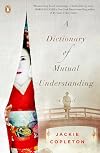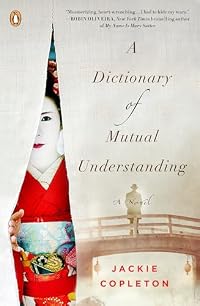
A Dictionary of Mutual Understanding
by Jackie Copleton
On This Page
Description
When Amaterasu Takahashi opens the door of her Philadelphia home to a badly scarred man claiming to be her grandson, she doesn't believe him. Her grandson and her daughter, Yuko, perished nearly forty years ago during the bombing of Nagasaki. But the man carries with him a collection of sealed private letters that open a Pandora's Box of family secrets Ama had sworn to leave behind when she fled Japan. She is forced to confront her memories of the years before the war: of the daughter she show more tried too hard to protect and the love affair that would drive them apart, and even further back, to the long, sake-pouring nights at a hostess bar where Ama first learned that a soft heart was a dangerous thing. Will Ama allow herself to believe in a miracle? show lessTags
Recommendations





















Member Recommendations
Member Reviews
Forty years after the atomic bomb was dropped on Nagasaki, Amaterasu Takahashi, now living in the U.S., is visited by a badly scarred man who claims to be her grandson Hideo. Amaterasu is skeptical having been convinced that her grandson and his mother, her daughter Yuko, died on August 9, 1945. Yuko’s diaries, which she finally reads, and letters from Hideo’s adoptive parents force her to revisit her past: her life before, during and after the war and her relationship with her daughter. A lot of family secrets are revealed.
Each chapter begins with a thematically relevant Japanese word; each adds to the cultural context of the novel. The reader learns the cultural influences which affect the behaviour of the characters. For example, show more one of the first words is haji with the explanation that “the Japanese live in a typical shame culture” and “the Japanese have internal behavioural standards and a deep sense of conscience regarding personal conduct.” Other words are seken-tei (decency) and yasegaman (endurance) and kenkyo (humility), all concepts of virtue to which Amaterasu adheres.
Amaterasu is a very complex character. She has a great deal of regret and intense guilt. She believes that she is responsible for her daughter’s death because she insisted on meeting Yuko at what became the epicentre of the bombing: “my daughter might be here today if it had not been for me. I tell myself I acted out of love and a mother’s selflessness but how important is the motivation when you consider the consequence?” She admits that she has tried to forget the past so she can have “a bearable life” and “to ease the guilt just enough to function.” She doubts that the man on her doorstep is Hideo: “my grandson was too pure for any world that would keep . . . me alive but claim my daughter. Only scavengers and liars and cheats survived. The best of us died young back then.”
The book is an emotional roller-coaster ride. There are times when the reader will be so angry with Amaterasu but then later will cry for her. The same is the case for Sato, a family friend with whom Yuko has a relationship. Sato is a villain and yet he has redeeming qualities. In reality, humans are complicated with both positive and negative traits, and the characters in the novel are very realistic.
There are a number of themes. Obviously, the book examines why people make certain decisions and how they live with the repercussions of those decisions. Amaterasu must try to find some peace when there may be no definitive answers to her questions: What was Yuko going to tell her on the day of the bombing? Is the man who claims to be her grandson related to her? In her treatment of her daughter, was she motivated by love for her or by “hurt fossilised to anger, of rejection turned to hate”?
When I reached the end of the book, I promised myself that I would re-read it. There is undoubtedly much I missed in my first reading. I found this title on the longlist of the 2016 Baileys Women’s Prize for Fiction, and I certainly understand why it appears there.
Please check out my reader's blog (http://schatjesshelves.blogspot.ca/) and follow me on Twitter (@DCYakabuski). show less
Each chapter begins with a thematically relevant Japanese word; each adds to the cultural context of the novel. The reader learns the cultural influences which affect the behaviour of the characters. For example, show more one of the first words is haji with the explanation that “the Japanese live in a typical shame culture” and “the Japanese have internal behavioural standards and a deep sense of conscience regarding personal conduct.” Other words are seken-tei (decency) and yasegaman (endurance) and kenkyo (humility), all concepts of virtue to which Amaterasu adheres.
Amaterasu is a very complex character. She has a great deal of regret and intense guilt. She believes that she is responsible for her daughter’s death because she insisted on meeting Yuko at what became the epicentre of the bombing: “my daughter might be here today if it had not been for me. I tell myself I acted out of love and a mother’s selflessness but how important is the motivation when you consider the consequence?” She admits that she has tried to forget the past so she can have “a bearable life” and “to ease the guilt just enough to function.” She doubts that the man on her doorstep is Hideo: “my grandson was too pure for any world that would keep . . . me alive but claim my daughter. Only scavengers and liars and cheats survived. The best of us died young back then.”
The book is an emotional roller-coaster ride. There are times when the reader will be so angry with Amaterasu but then later will cry for her. The same is the case for Sato, a family friend with whom Yuko has a relationship. Sato is a villain and yet he has redeeming qualities. In reality, humans are complicated with both positive and negative traits, and the characters in the novel are very realistic.
There are a number of themes. Obviously, the book examines why people make certain decisions and how they live with the repercussions of those decisions. Amaterasu must try to find some peace when there may be no definitive answers to her questions: What was Yuko going to tell her on the day of the bombing? Is the man who claims to be her grandson related to her? In her treatment of her daughter, was she motivated by love for her or by “hurt fossilised to anger, of rejection turned to hate”?
When I reached the end of the book, I promised myself that I would re-read it. There is undoubtedly much I missed in my first reading. I found this title on the longlist of the 2016 Baileys Women’s Prize for Fiction, and I certainly understand why it appears there.
Please check out my reader's blog (http://schatjesshelves.blogspot.ca/) and follow me on Twitter (@DCYakabuski). show less
I have very mixed feelings about this book. Some parts I loved, some parts I hated. I was interested to find out what my fellow reading group members thought. It was a real mixture - of really hating it through to my own mixed feelings. I loved the background, the history and even the characters are mostly interesting - even when they are mostly very unlikeable. I hated the supposed "love story" - I mean Yuck!
I don't know that I'd recommend this novel but it has a curious ability to be interesting at times.
I don't know that I'd recommend this novel but it has a curious ability to be interesting at times.
This novel goes back and forth between 1945 Nagasaki and Pennsylvania thirty-eight years later. It describes a painful mental journey back to the past taken by the main character, Amaterasu Takahashi, in order to come to terms not only with the atomic bombing that indiscriminately killed over 70,000 people in her town, but with her own guilt over choices she never had a chance to rectify.
The story opens when Amaterasu is in her eighties, and she answers the door to find a physically deformed man claiming to be Hideo Watanabe, the grandson she thought she lost when the bomb went off in Nagasaki on August 9, 1945. Amaterasu’s daughter Yuko was in a cathedral at the epicenter of the bomb, where Amaterasu asked Yuko to meet her; but show more Amaterasu was running late. Hideo was in school, and most of the students there died; she never found any evidence that her grandson was among the survivors.
Amaterasu spent her life trying to run from the effects of the bomb, but of course, changing location could never eradicate it from her mind. Nevertheless, in 1946, at age 44, she and her husband Kenzo left Japan, first for California and then moving to Pennsylvania. She has altered events in her own mind just to be able to get up each morning and face another day. After a while, she confesses:
“…if called upon to turn the magnifying glass on my past, how to cleave fact from fiction? My memory had intertwined the two like wild nasturtium to some rotting trellis, inextricable, the one dependent on the other.”
Moreover, deep inside, Amaterasu is still who she was then, at the moment of pikadon (the bomb), even though, now, “I was disguised as an old woman.”
When Hideo showed up at her door, bringing with him a packet of letters from his adoptive father, she could no longer avoid coming to grips with what happened and the fact that she asked her daughter to be at what turned out to be the epicenter that day. Why did she - guilty and flawed as she believed she was - get to live, when all those innocents died? Did her own emotional damage destroy her daughter? How can she let it go? How can she learn to separate the love from the bitterness that surrounded it, and embrace the rest of her life? And most importantly, how can she let down the armor she has put up so she would never again face the hurt that can accompany love?
Evaluation: This is a well-written story, but difficult to read, because one must take in not only the personal tragedy of Amaterasu’s own story, but also the horror of the atomic bomb and its aftermath. I didn’t like Amaterasu, but I came to understand her. The author employs the very clever device of beginning each of her chapters with a definition of a word from an English dictionary about Japanese culture; the words not only encapsulate the progression of the plot but help us to take account of the cultural influences upon the characters. The prose is skillful, and we are left with a lovely vision of redemption and hope for the future. show less
The story opens when Amaterasu is in her eighties, and she answers the door to find a physically deformed man claiming to be Hideo Watanabe, the grandson she thought she lost when the bomb went off in Nagasaki on August 9, 1945. Amaterasu’s daughter Yuko was in a cathedral at the epicenter of the bomb, where Amaterasu asked Yuko to meet her; but show more Amaterasu was running late. Hideo was in school, and most of the students there died; she never found any evidence that her grandson was among the survivors.
Amaterasu spent her life trying to run from the effects of the bomb, but of course, changing location could never eradicate it from her mind. Nevertheless, in 1946, at age 44, she and her husband Kenzo left Japan, first for California and then moving to Pennsylvania. She has altered events in her own mind just to be able to get up each morning and face another day. After a while, she confesses:
“…if called upon to turn the magnifying glass on my past, how to cleave fact from fiction? My memory had intertwined the two like wild nasturtium to some rotting trellis, inextricable, the one dependent on the other.”
Moreover, deep inside, Amaterasu is still who she was then, at the moment of pikadon (the bomb), even though, now, “I was disguised as an old woman.”
When Hideo showed up at her door, bringing with him a packet of letters from his adoptive father, she could no longer avoid coming to grips with what happened and the fact that she asked her daughter to be at what turned out to be the epicenter that day. Why did she - guilty and flawed as she believed she was - get to live, when all those innocents died? Did her own emotional damage destroy her daughter? How can she let it go? How can she learn to separate the love from the bitterness that surrounded it, and embrace the rest of her life? And most importantly, how can she let down the armor she has put up so she would never again face the hurt that can accompany love?
Evaluation: This is a well-written story, but difficult to read, because one must take in not only the personal tragedy of Amaterasu’s own story, but also the horror of the atomic bomb and its aftermath. I didn’t like Amaterasu, but I came to understand her. The author employs the very clever device of beginning each of her chapters with a definition of a word from an English dictionary about Japanese culture; the words not only encapsulate the progression of the plot but help us to take account of the cultural influences upon the characters. The prose is skillful, and we are left with a lovely vision of redemption and hope for the future. show less
Familial love, betrayal, and secrets drive the elegant A Dictionary of Mutual Understanding. The narrative is placed mostly in Japan and spans the middle of the 20th Century - from the mid 1930s on. Wrenching and life-changing events befall all the characters, of course, and the changes are both outward and inward. This book demonstrates very clearly author Jackie Copleton’s mastery of human striving and emotion, and also her easy conversance with Japanese culture and language. It is stunning, effective stuff.
First-person protagonist Amaterasu Takahashi sustains loss after loss within these pages, her sorest loss being the death of her daughter in the nuclear attack on Nagasaki. And her daughter Yuko, while alive, also causes show more Amaterasu her deepest worry. She - Yuko - falls for her father’s physician friend, Sato, when only sixteen, and nearly throws her life away for what she believes is love. Amaterasu does everything in her power, not hesitating to deceive and manipulate everyone around her to gain her ends. After the war she and her husband move to America, escaping all the nightmarish family and civic trauma, and she settles into a quiet routine toward the end of her life, with whiskey for company. But then she must face unexpected connections that wake unwanted memories.
Ms. Copleton leads off each chapter with a Japanese word or phrase, and explains its significance to that society’s life and culture. The words often depict traits that are admired in Japan, and words that have a variety of meanings, often in subtle shades and nuances. These vocabulary entries, the “Dictionary” of the title, focus our attention freshly on the characters as events shape and reshape them. But there is a startling and very pleasing extra meaning in “mutual understanding,” one which drives and has driven our dour heroine from page one.
Also, the book has a structure and pace to it that further demonstrate the author’s skill. Amaterasu reluctantly takes out Yuko’s diaries after unexpected events late in her life, and as we read these entries alongside her, she imagines for us the scene and intervening events with a second voice. These juxtapositions, taking place in the plot when they do, affect us with a powerful sense of this author’s elegant conception and execution, and I find her strategy beautiful, a joy to engage.
Take this book up, certainly. Live for a time inside the consciousness of a strong woman who frets and works for those she loves. A gem - startlingly good and memorable. show less
First-person protagonist Amaterasu Takahashi sustains loss after loss within these pages, her sorest loss being the death of her daughter in the nuclear attack on Nagasaki. And her daughter Yuko, while alive, also causes show more Amaterasu her deepest worry. She - Yuko - falls for her father’s physician friend, Sato, when only sixteen, and nearly throws her life away for what she believes is love. Amaterasu does everything in her power, not hesitating to deceive and manipulate everyone around her to gain her ends. After the war she and her husband move to America, escaping all the nightmarish family and civic trauma, and she settles into a quiet routine toward the end of her life, with whiskey for company. But then she must face unexpected connections that wake unwanted memories.
Ms. Copleton leads off each chapter with a Japanese word or phrase, and explains its significance to that society’s life and culture. The words often depict traits that are admired in Japan, and words that have a variety of meanings, often in subtle shades and nuances. These vocabulary entries, the “Dictionary” of the title, focus our attention freshly on the characters as events shape and reshape them. But there is a startling and very pleasing extra meaning in “mutual understanding,” one which drives and has driven our dour heroine from page one.
Also, the book has a structure and pace to it that further demonstrate the author’s skill. Amaterasu reluctantly takes out Yuko’s diaries after unexpected events late in her life, and as we read these entries alongside her, she imagines for us the scene and intervening events with a second voice. These juxtapositions, taking place in the plot when they do, affect us with a powerful sense of this author’s elegant conception and execution, and I find her strategy beautiful, a joy to engage.
Take this book up, certainly. Live for a time inside the consciousness of a strong woman who frets and works for those she loves. A gem - startlingly good and memorable. show less
Originally posted on my blog, Musings of a Bookish Kitty
A Dictionary of Mutual Understanding by Jackie Copleton
Penguin Books, 2015
Fiction; 304 pgs
Amaterasu Takahashi has gone through the motions of living for much of the past forty years. She drinks too much, perhaps, but she has settled into a quiet existence. With that knock on the door and the man before her claiming to be the grandson killed in the atomic bombing, or pikadon, of Nagasaki, Ama refuses to believe it possible. After she shuts the door, she opens the letters he brought her and begins to read, forcing herself to relive the past she has worked so hard to forget. Soon she is digging the journals of her deceased daughter out of the closet and begins to read those as well. show more The past comes flooding back--not only of the events surrounding the attack on Nagasaki, but also of Ama's own childhood.
Told in a non-linear fashion, A Dictionary of Mutual Understanding is Ama's reflection on the past via letters, her daughter's journal, and her own memories. The reader learns of Ama's secrets and biggest regrets, about the role they played in her later actions, about her daughter's affair, and the fallout of that.
The relationship between Ama and her daughter, Yuko, was a complicated one, especially after Yuko began sneaking out. Yuko was bored with her life and falling in love was the best thing that had happened to her. Her parents were furious, not just because of her sneaking around, but with whom she had chosen to sneak around with. Their very family reputation was at stake--but it was really more than that. Much more than Yuko would ever know. Ama's own story is very different from her daughter's in many respects, but it is one she never talked about--of poverty and hostess bars--and it colored her reactions and behavior toward her daughter during those final years of her daughter's life. Ama had only wanted to protect her daughter, to save her, but she wonders now if she had made a mistake.
What stands out in the novel is the devastating impact of the atomic bomb dropped by the United States on Nagasaki. It was the second of its kind to hit the country of Japan, and it's impact was horrific and long lasting. Ama had been scheduled to meet her daughter at a church in the city, but had been running late. Her daughter's body was never found, but her death a foregone conclusion. Ama and her husband were sure their grandson, Hideo, had been killed too. Ama had dropped him off at school that same morning. They had searched for both Hideo and Yuko for weeks after, finding no evidence of their survival.
Each chapter begins with an English word, followed by the Japanese translation and a definition in relation to the Japanese culture. It is a nice touch, adding more nuance to the story being told.
I liked this novel on many levels. It is a sad story to say the least, one of loss and grief, of regrets and secrets kept. It is also the story of forgiving oneself and finding peace with the past. Jackie Copleton's beautiful writing drew me in, and made me feel like I was part of the story, seeing everything as it unfolded and came together.
Source: E-copy from publisher via the First to Read Program for an honest review. show less
A Dictionary of Mutual Understanding by Jackie Copleton
Penguin Books, 2015
Fiction; 304 pgs
Amaterasu Takahashi has gone through the motions of living for much of the past forty years. She drinks too much, perhaps, but she has settled into a quiet existence. With that knock on the door and the man before her claiming to be the grandson killed in the atomic bombing, or pikadon, of Nagasaki, Ama refuses to believe it possible. After she shuts the door, she opens the letters he brought her and begins to read, forcing herself to relive the past she has worked so hard to forget. Soon she is digging the journals of her deceased daughter out of the closet and begins to read those as well. show more The past comes flooding back--not only of the events surrounding the attack on Nagasaki, but also of Ama's own childhood.
Told in a non-linear fashion, A Dictionary of Mutual Understanding is Ama's reflection on the past via letters, her daughter's journal, and her own memories. The reader learns of Ama's secrets and biggest regrets, about the role they played in her later actions, about her daughter's affair, and the fallout of that.
The relationship between Ama and her daughter, Yuko, was a complicated one, especially after Yuko began sneaking out. Yuko was bored with her life and falling in love was the best thing that had happened to her. Her parents were furious, not just because of her sneaking around, but with whom she had chosen to sneak around with. Their very family reputation was at stake--but it was really more than that. Much more than Yuko would ever know. Ama's own story is very different from her daughter's in many respects, but it is one she never talked about--of poverty and hostess bars--and it colored her reactions and behavior toward her daughter during those final years of her daughter's life. Ama had only wanted to protect her daughter, to save her, but she wonders now if she had made a mistake.
What stands out in the novel is the devastating impact of the atomic bomb dropped by the United States on Nagasaki. It was the second of its kind to hit the country of Japan, and it's impact was horrific and long lasting. Ama had been scheduled to meet her daughter at a church in the city, but had been running late. Her daughter's body was never found, but her death a foregone conclusion. Ama and her husband were sure their grandson, Hideo, had been killed too. Ama had dropped him off at school that same morning. They had searched for both Hideo and Yuko for weeks after, finding no evidence of their survival.
Each chapter begins with an English word, followed by the Japanese translation and a definition in relation to the Japanese culture. It is a nice touch, adding more nuance to the story being told.
I liked this novel on many levels. It is a sad story to say the least, one of loss and grief, of regrets and secrets kept. It is also the story of forgiving oneself and finding peace with the past. Jackie Copleton's beautiful writing drew me in, and made me feel like I was part of the story, seeing everything as it unfolded and came together.
Source: E-copy from publisher via the First to Read Program for an honest review. show less
Touching and heartwarming tale about love, lust and loss, which centres around the atomic bomb dropped on Nagasaki. You can tell the author spent time in Japan as you get a real sense of the culture and people through her writing. Books are rarely educational and entertaining in equal measure but this one certainly is and the chapter about the damage wrought by the bomb leaves you in no doubt that the atomic attacks on Japan remain one of humanity's greatest crimes. I visited Hiroshima in 2002 and you can't escape the feeling that the town remains haunted by the appalling atrocity that took place there. Yet there was also a sense of peace and calm about the place, as if the people were moving forward with purpose and hope, determined to show more ensure such darkness would never threaten them again. You get a similar feeling when you finish reading this book and that's a testament to the skills of a wonderful storyteller. Can't recommend this highly enough. show less
This a gorgeously written, multi-level literary fiction. The author has the heart of a poet and she certainly touched my heart many times throughout this moving, compelling story. This story is about so many things but mostly about Amaterasu Takahashi and her love for her daughter, Yuko, and the actions she takes to protect her beloved daughter from harm. Her story brought me to tears.
The book begins when a strange man, horribly scarred by the bombing of Nagasaki, knocks on Amaterasu’s door one day, proclaiming to be her grandson, Hideo, who she believed had died as a child during the bombing so many years ago. Thus begins Amaterasu’s journey through her memories. There was no tearing me away from this book as I journeyed with her show more through her youth and marriage and then through the devastation of Nagasaki in August, 1945 through her meeting with the man who may or may not be her grandson 40 years later. The story is mostly told through memories, letters and diaries and jumps back and forth, but it’s very easy to follow the flow of the story.
I particularly liked that each chapter started with an English word or phrase, then the Japanese word for that word or phrase, and then an explanation of the Japanese understanding of that word or phrase. This wonderfully set the tone for each chapter and nicely conveyed Japanese culture so there was an even better understanding of the story line and the characters living it.
This is a devastating tale of war, a heartrending family drama and an exceptional love story. It’s completely unpredictable and unique and is one that I won’t forget. Highly recommended.
This book was given to me by the publisher through First to Read in return for an honest review. show less
The book begins when a strange man, horribly scarred by the bombing of Nagasaki, knocks on Amaterasu’s door one day, proclaiming to be her grandson, Hideo, who she believed had died as a child during the bombing so many years ago. Thus begins Amaterasu’s journey through her memories. There was no tearing me away from this book as I journeyed with her show more through her youth and marriage and then through the devastation of Nagasaki in August, 1945 through her meeting with the man who may or may not be her grandson 40 years later. The story is mostly told through memories, letters and diaries and jumps back and forth, but it’s very easy to follow the flow of the story.
I particularly liked that each chapter started with an English word or phrase, then the Japanese word for that word or phrase, and then an explanation of the Japanese understanding of that word or phrase. This wonderfully set the tone for each chapter and nicely conveyed Japanese culture so there was an even better understanding of the story line and the characters living it.
This is a devastating tale of war, a heartrending family drama and an exceptional love story. It’s completely unpredictable and unique and is one that I won’t forget. Highly recommended.
This book was given to me by the publisher through First to Read in return for an honest review. show less
Members
- Recently Added By
Lists

2016 Baileys Women's Prize for Fiction
18 works; 10 members
Author Information
1 Work 274 Members
Some Editions
Awards and Honors
Awards
Distinctions
Common Knowledge
- Canonical title
- A Dictionary of Mutual Understanding
- Epigraph
- I was very thirsty, so I was looking for some water. I found some oil on the surface of the water. I really wanted something to drink. After all, I drank that water. ----------Nine -year -old girl injured during the A-bomb ... (show all)attack on Nagasaki on August 9, 1945
The Voice of the waves
That rise before me
Is not so loud
As my weeping,
That I am left behind.
-------------------------------------- Thousand-year-old Japanese poem - Dedication
- To Robert Brooks and William Copelton
- First words
- Endurance -------------Yasegaman: The combination of yaseru (to become skinny) and gaman-suru (to endure) literally means to endure until one becomes emancipated, or endurance for the sake of pride.
- Last words
- (Click to show. Warning: May contain spoilers.)We repeated those words, treasured and for so long lost, and when the tears came so too did the laughter, and in that moment of joy we no longer mourned our dead but celebrated them.
Classifications
Statistics
- Members
- 273
- Popularity
- 117,167
- Reviews
- 22
- Rating
- (3.73)
- Languages
- English, French
- Media
- Paper, Audiobook, Ebook
- ISBNs
- 18
- ASINs
- 4