On This Page
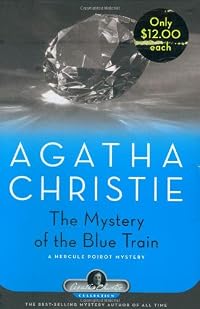
Description
Robbery and brutal murder aboard a luxury transport ensnares the ever-attentive Hercule Poirot in The Mystery of the Blue Train, from Queen of Mystery Agatha ChristieWhen the luxurious Blue Train arrives at Nice, a guard attempts to wake serene Ruth Kettering from her slumbers. But she will never wake again—for a heavy blow has killed her, disfiguring her features almost beyond recognition. What is more, her precious rubies are missing.
The prime suspect is Ruth's estranged husband, show more Derek. Yet Hercule Poirot is not convinced, so he stages an eerie reenactment of the journey, complete with the murderer on board. . . .
. show less
Tags
Recommendations










Member Reviews
Had I not been reading 'The Mystery Of The Blue Train' as part of a monthly group read with the Appointment With Agatha community on GoodReads, I'd probably have abandoned it before I was halfway through. I'm glad I didn't because the second half of the book was entertaining but getting there was a slog.
I'm told that Christie didn't like this book and that she wrote it while going through a divorce and while she was distracted by caring for her young daughter. Perhaps that goes some way towards explaining why parts of the book felt so thinly written and why the narrative was so unfocused.
For the first third of the book, the writing had patches where it was quite threadbare. The dialogue was OK but the text is very lacklustre. It felt show more like a boilerplate text the was put in for a first draft to move the story along and was then never revisited.
The thin writing made me more irritated than usual by the way foreigners were depicted. The text has English exceptionalism bred in the bone. The foreigners in 'The Mystery of the Blue Train' were so cartoonish that they seemed straight off the pages of a Tin Tin comic strip. At least Hergé was trying to be funny.
To be fair, Derek Kettering, the only English nobleman in the book, was an absolute horror. He was also quite believable. Under the present government, a philandering, financially reckless, misogynist like Kettering, prone to lying and betrayal, would probably be made a Cabinet Minister. This perhaps shows that I only dislike Christie's prejudices when they differ from my own.
Where I parted company with Christie was when she presented Kettering as a man ready to be redeemed by the love of a good woman and suggested that such a woman would easily fall in love with him. Bullying narcissist as romantic lead? Not a great choice.
I think Christie gave herself a problem with the 'The Mystery Of The Blue Train' that she wasn't able to solve. She had a big cast, multiple locations, a complex plot and no narrator to pull them all together. This made it hard for me as the reader to know what to focus on. We followed different actors in multiple locations as they crossed each other's paths and affected each other's stories but there was no intensity, no sense of things coming together in an inevitable but as yet unknown pattern. Poirot appeared and then disappeared. All the characters popped in and out of the plot like actors in a French farce. Normally, in Poirot books, Christie uses a central narrator, typically Hastings, to give a cohesive view. Even when Hasting's has fundamentally misunderstood what is going on, the story remains focused.
An unexpected side-effect of not having Hastings as the teller of the tale was how Poirot was presented. It turns out that Poirot, without the soft-focus filter of Hasting's admiration, comes across as insufferably arrogant.
The second half of the book, where we finally got down to the business of solving the mystery, worked reasonably well, although the very elaborate plot was rather clumsily revealed.
There were some very good scenes in the book. Whenever the action moved to St. Mary Meads, everything was suddenly in focus. The dialogue improves and the characters felt real. I also liked watching Poirot extracting information through a mixture of bullying, blackmail and trading favours.
The ending of the book made me roll my eyes. It has Poirot advising a woman who has proven to be intelligent and insightful and who has, in her thirties, become wealthy for the first time, to find a good husband - what superb advice for a life-long bachelor to give. He uses a train metaphor to describe life and falling in love. The basic message was 'something will turn up.' He ends with:
'Trust the train mademoiselle for it is le bon Dieu who drives it'
That may be the stupidest thing I've ever heard Poirot say.
Oh well, next month's Christie book is 'The Seven Dials' which has the grimly determined Inspector Battle rather than Poirot, a murder in a manor house and a plucky heroine, so it's almost bound to be better. show less
‘A mirror shows the truth, but everyone stands in a different place for looking into the mirror.’
I have always thought of The Mystery of the Blue Train as a strange story - not a first rate mystery, not a complete mess, but most definitely not a memorable Christie classic.
As Christie herself tells us in her autobiography, she was not fond of this story either - partly because she didn't feel like she managed to flesh out the characters so they would come alive on the page, and partly because she wrote this story under the pressures of having to earn a paycheck after the separation from her first husband.
I felt more strongly than ever that everything I was saying was idiotic! (Most of it was, too.) I faltered, stammered, hesitated, show more and repeated myself. Really, how that wretched book ever came to be written, I don’t know! To begin with, I had no joy in writing, no elan. I had worked out the plot–a conventional plot, partly adapted from one of my other stories. I knew, as one might say, where I was going, but I could not see the scene in my mind’s eye, and the people would not come alive. I was driven desperately on by the desire, indeed the necessity, to write another book and make some money. That was the moment when I changed from an amateur to a professional. I assumed the burden of a profession, which is to write even when you don’t want to, don’t much like what you are writing, and aren’t writing particularly well. I have always hated The Mystery of the Blue Train, but I got it written, and sent off to the publishers. It sold just as well as my last book had done. So I had to content myself with that–though I cannot say I have ever been proud of it.
Agatha Christie - An Autobiography (pp. 357-358). HarperCollins Publishers. Kindle Edition.
And indeed, for me, too, there is little that stood out in the characters when I first read the story, and the crime and it's motive are, while horrible, fairly uninteresting.
As a result, I have always looked at this story as a first draft of what would become one of my favourite Christie classics - Murder on the Orient Express.
On this most recent re-read, however, details that were not strictly connected with the whodunnit revealed themselves that gave the story another layer, that connected this odd little story to the rest, and the best, of the Christie universe.
If you look closely, you can find that one of the characters, Katherine Grey, does not only have the spark of the brightest of Christie's young things but she's also come from that most intriguing of little villages - that cradle of human psychology in the Christie universe - St Mary Mead, home of a certain fierce and judgmental little old lady whom I can't stand but who, one has to admit, has a certain flair for snooping out crime.
This is as close as we get to Marple and Poirot ever meeting in the same book. They don't (and Christie herself was not in favour of them meeting), but The Mystery of the Blue Train seems like one of the key steps in Christie's development of the Marple series, even if this was perhaps not what the author intended.
The full force of Marple would hit the reading public two years later in Murder at the Vicarage, but there are some hints at village life that seem to have already been on Christie's mind when penning Blue Train. For the Christie enthusiast - or Agathyte as a friend, Moonlight Reader, has christened us fans - this is a delicious little detail that makes the book worth reading if it lacks much of the intelligent and complex plotting of a great Christie novel. show less
I have always thought of The Mystery of the Blue Train as a strange story - not a first rate mystery, not a complete mess, but most definitely not a memorable Christie classic.
As Christie herself tells us in her autobiography, she was not fond of this story either - partly because she didn't feel like she managed to flesh out the characters so they would come alive on the page, and partly because she wrote this story under the pressures of having to earn a paycheck after the separation from her first husband.
I felt more strongly than ever that everything I was saying was idiotic! (Most of it was, too.) I faltered, stammered, hesitated, show more and repeated myself. Really, how that wretched book ever came to be written, I don’t know! To begin with, I had no joy in writing, no elan. I had worked out the plot–a conventional plot, partly adapted from one of my other stories. I knew, as one might say, where I was going, but I could not see the scene in my mind’s eye, and the people would not come alive. I was driven desperately on by the desire, indeed the necessity, to write another book and make some money. That was the moment when I changed from an amateur to a professional. I assumed the burden of a profession, which is to write even when you don’t want to, don’t much like what you are writing, and aren’t writing particularly well. I have always hated The Mystery of the Blue Train, but I got it written, and sent off to the publishers. It sold just as well as my last book had done. So I had to content myself with that–though I cannot say I have ever been proud of it.
Agatha Christie - An Autobiography (pp. 357-358). HarperCollins Publishers. Kindle Edition.
And indeed, for me, too, there is little that stood out in the characters when I first read the story, and the crime and it's motive are, while horrible, fairly uninteresting.
As a result, I have always looked at this story as a first draft of what would become one of my favourite Christie classics - Murder on the Orient Express.
On this most recent re-read, however, details that were not strictly connected with the whodunnit revealed themselves that gave the story another layer, that connected this odd little story to the rest, and the best, of the Christie universe.
If you look closely, you can find that one of the characters, Katherine Grey, does not only have the spark of the brightest of Christie's young things but she's also come from that most intriguing of little villages - that cradle of human psychology in the Christie universe - St Mary Mead, home of a certain fierce and judgmental little old lady whom I can't stand but who, one has to admit, has a certain flair for snooping out crime.
This is as close as we get to Marple and Poirot ever meeting in the same book. They don't (and Christie herself was not in favour of them meeting), but The Mystery of the Blue Train seems like one of the key steps in Christie's development of the Marple series, even if this was perhaps not what the author intended.
The full force of Marple would hit the reading public two years later in Murder at the Vicarage, but there are some hints at village life that seem to have already been on Christie's mind when penning Blue Train. For the Christie enthusiast - or Agathyte as a friend, Moonlight Reader, has christened us fans - this is a delicious little detail that makes the book worth reading if it lacks much of the intelligent and complex plotting of a great Christie novel. show less
A Poirot mystery that does all the things I love about a good Agatha Christie novel. Opening with a handful of chapters that establish the cast of characters, the crime and Poirot's involvement come a third of the way through (a formula of Christie's that I've always enjoyed in Miss Marple mysteries and find no less enjoyable here). There's the charms of reading of 1930s train travel and southern France. Plus a really well crafted mystery to unravel. While I partially deduced the whodunnit, Christie still surprised me with part of the resolution. A really solid read.
She got me again. I can sometimes identify the culprit before she reveals it but not on this one. There is a rich heiress in an unhappy marriage, a famous ruby, a powerful father to the unhappy daughter and a philandering husband (never mind that Mrs. Kettering is on the train to redezvous with her former lover, who is also a potential killer). Was Mrs. Kettering killed for her jewels or did her estranged husband seek to insure he would retain her wealth having discovered she is seeking a divorce? Or is her father enraged that she has taken up again with her former lover who he felt was unfit? It is a delightful read with false trails aplenty and I always enjoy the train as a settng. She has once again assembled a cast of likely show more culprits providing one and all with a motive or desire for the death that keeps the reader looking for suspects. But this one has a major red herring that threw me. I won't spoil it, but it is a good mystery and a great read! show less
This early Poirot is a treat. Written and set in the late 1920s, it's both a highly satisfactory murder mystery, and a glimpse into a world long passed away.
Ruth Kettering, an American heiress, has been at odds with her extremely well-bred but dissolute English husband. She decides to take the famous de luxe Blue Train to escape to the Riveria. But look -- isn't that her husband just a few berths down . . . ?
Needless to say, another prominent passenger on this trip is Hercule Poirot, who appears here in his brash and self-aggrandizing early incarnation. Of course he is called in to consult when the unthinkable becomes the reality.
The only thing I love more than a charming English setting and detail in an Agatha Christie novel is a show more charming foreign setting, and this is an excellent example.
Highly recommended. show less
Ruth Kettering, an American heiress, has been at odds with her extremely well-bred but dissolute English husband. She decides to take the famous de luxe Blue Train to escape to the Riveria. But look -- isn't that her husband just a few berths down . . . ?
Needless to say, another prominent passenger on this trip is Hercule Poirot, who appears here in his brash and self-aggrandizing early incarnation. Of course he is called in to consult when the unthinkable becomes the reality.
The only thing I love more than a charming English setting and detail in an Agatha Christie novel is a show more charming foreign setting, and this is an excellent example.
Highly recommended. show less
https://fromtheheartofeurope.eu/the-mystery-of-the-blue-train-by-agatha-christie...
This one dates from 1928, and features Poirot dragged into the investigation of a murder and jewel theft on Le Train Bleu, which used to run direct overnight from Calais via Paris to the French Riviera. (No point in such a route now that you can get from Paris to Nice in five hours by TGV, or a bit less by air.)
Some of this environment has become familiar to me as I work through my grandmother’s memoirs. The victim here is a rich young American woman moving between England and France (as was my grandmother), and there is another older rich woman living in the Riviera who ran a hospital during the Great War (as did my grandmother’s aunt). It’s also show more notable that all characters are expected to be fluent if not perfect in French.
Agatha Christie herself was reportedly dissatisfied with this book, and I can see some of the flaws that she possibly was conscious of, and some that she possibly was unaware of. There’s some gratuitous anti-semitism. She doesn’t have a good ear for names – “Van Aldin” doesn’t work for a New Yorker with Dutch ancestors; nor does “Papopolous” for a Greek, especially a Greek Jew. The actual murder plot is hilariously convoluted and Poirot’s solution to it is spun almost out of thin air.
But there’s one very well drawn character, Katherine Grey, who benefits from a recent inheritance and gets sucked into the mystery on her way to the Riviera – she reminded me a bit of Anne Beddingfeld in The Man in the Brown Suit, who heads off to Africa in similar circumstances, but a bit older and perhaps more rooted in reality. She is romantically pursued by The Wrong Chap but ends up with The Right Chap, to the frustration of the Teenage Girl – who herself is a standard Christie trope, done a bit better than usual here.
So it’s unusual for me to say this, but I think it actually works better as a Bildungsroman about Katherine than as a detective story. show less
This one dates from 1928, and features Poirot dragged into the investigation of a murder and jewel theft on Le Train Bleu, which used to run direct overnight from Calais via Paris to the French Riviera. (No point in such a route now that you can get from Paris to Nice in five hours by TGV, or a bit less by air.)
Some of this environment has become familiar to me as I work through my grandmother’s memoirs. The victim here is a rich young American woman moving between England and France (as was my grandmother), and there is another older rich woman living in the Riviera who ran a hospital during the Great War (as did my grandmother’s aunt). It’s also show more notable that all characters are expected to be fluent if not perfect in French.
Agatha Christie herself was reportedly dissatisfied with this book, and I can see some of the flaws that she possibly was conscious of, and some that she possibly was unaware of. There’s some gratuitous anti-semitism. She doesn’t have a good ear for names – “Van Aldin” doesn’t work for a New Yorker with Dutch ancestors; nor does “Papopolous” for a Greek, especially a Greek Jew. The actual murder plot is hilariously convoluted and Poirot’s solution to it is spun almost out of thin air.
But there’s one very well drawn character, Katherine Grey, who benefits from a recent inheritance and gets sucked into the mystery on her way to the Riviera – she reminded me a bit of Anne Beddingfeld in The Man in the Brown Suit, who heads off to Africa in similar circumstances, but a bit older and perhaps more rooted in reality. She is romantically pursued by The Wrong Chap but ends up with The Right Chap, to the frustration of the Teenage Girl – who herself is a standard Christie trope, done a bit better than usual here.
So it’s unusual for me to say this, but I think it actually works better as a Bildungsroman about Katherine than as a detective story. show less
Hopefully this is the beginning of Agatha getting her groove back, but she's not quite there yet.
Papa Poirot doesn't even show up until 50 pages into the novel, by which time we've followed jewels being smuggled out of Russia, sold to an American millionaire (Van Aldin), and given as a gift to his headstrong daughter (Ruth), who is on the brink of divorcing her unfaithful British husband (Derek). (She married him for his title; he married her for her money, natch.) She's murdered on a French train, en route to meet her (not-so) secret lover and the jewels disappear. Poirot happens to be on the train, as does her husband, and another young woman named Katherine Grey, to whom Ruth unburdened her troubled mind. All of this is told in show more limited third person p.o.v., which is a departure from previous Poirot stories, and leaves the story feeling unanchored.
Katherine is a great character, a serene woman of 33, who has inherited a hefty sum from a rich woman after being her companion for 10 years. Free of financial worries, she's headed to the Riviera to spend the winter with a wealthy cousin. Her cousin's daughter, Lenox, who is somewhere in her late teens or early twenties, is a delightfully spunky modern girl. Either of these characters would have been great narrators. Instead, they're relegated to pop up occasionally and moon over Derek, who is soon accused by the French police of murdering his soon-to-be ex-wife. (Lenox's mother, Lady Tamplin, is a hilarious send-up of society women as she tries to "mold" her less-cultured cousin.)
Lenox went down again to find her mother and step-father discussing the newcomer.
"Presentable," said Lady Tamplin, "quite presentable. Her clothes are all right. That grey thing is the same model that Gladys Cooper wore in Palm Trees in Egypt."
"Have you noticed her eyes--what?" interposed Mr. Evans.
"Never mind her eyes, Chubby," said Lady Tamplin tartly; "we are discussing the things that really matter."
"Oh, quite," said Mr. Evans, and retired into his shell.
"She doesn't seem to me very--malleable," said Lady Tamplin, rather hesitating to choose the right word.
"She has all the instincts of a lady, as they say in books," said Lenox, with a grin.
(Yes, her husband's name is "Chubby." And he ends sentences with "what?")
A few lines later, when Chubby wonders whether Katherine plays tennis, his wife responds:
"Of course not. She has been a companion, I tell you. Companions don't play tennis--or golf. They might possibly play golf-croquet, but I have always understood that they wind wool and wash dogs most of the day."
When Dame Christie gets satirical, she is on fire!
But the mystery itself is too drawn out. Poirot is often confused, and runs around interviewing and bullying, instead of letting his "little grey cells" do the work.In the end, it's Van Aldin's personal secretary and Ruth's maid, who are actually a notorious criminal known as the Marquis and a former actress, who murdered Ruth for her jewels and sold them. show less
Papa Poirot doesn't even show up until 50 pages into the novel, by which time we've followed jewels being smuggled out of Russia, sold to an American millionaire (Van Aldin), and given as a gift to his headstrong daughter (Ruth), who is on the brink of divorcing her unfaithful British husband (Derek). (She married him for his title; he married her for her money, natch.) She's murdered on a French train, en route to meet her (not-so) secret lover and the jewels disappear. Poirot happens to be on the train, as does her husband, and another young woman named Katherine Grey, to whom Ruth unburdened her troubled mind. All of this is told in show more limited third person p.o.v., which is a departure from previous Poirot stories, and leaves the story feeling unanchored.
Katherine is a great character, a serene woman of 33, who has inherited a hefty sum from a rich woman after being her companion for 10 years. Free of financial worries, she's headed to the Riviera to spend the winter with a wealthy cousin. Her cousin's daughter, Lenox, who is somewhere in her late teens or early twenties, is a delightfully spunky modern girl. Either of these characters would have been great narrators. Instead, they're relegated to pop up occasionally and moon over Derek, who is soon accused by the French police of murdering his soon-to-be ex-wife. (Lenox's mother, Lady Tamplin, is a hilarious send-up of society women as she tries to "mold" her less-cultured cousin.)
Lenox went down again to find her mother and step-father discussing the newcomer.
"Presentable," said Lady Tamplin, "quite presentable. Her clothes are all right. That grey thing is the same model that Gladys Cooper wore in Palm Trees in Egypt."
"Have you noticed her eyes--what?" interposed Mr. Evans.
"Never mind her eyes, Chubby," said Lady Tamplin tartly; "we are discussing the things that really matter."
"Oh, quite," said Mr. Evans, and retired into his shell.
"She doesn't seem to me very--malleable," said Lady Tamplin, rather hesitating to choose the right word.
"She has all the instincts of a lady, as they say in books," said Lenox, with a grin.
(Yes, her husband's name is "Chubby." And he ends sentences with "what?")
A few lines later, when Chubby wonders whether Katherine plays tennis, his wife responds:
"Of course not. She has been a companion, I tell you. Companions don't play tennis--or golf. They might possibly play golf-croquet, but I have always understood that they wind wool and wash dogs most of the day."
When Dame Christie gets satirical, she is on fire!
But the mystery itself is too drawn out. Poirot is often confused, and runs around interviewing and bullying, instead of letting his "little grey cells" do the work.
Members
- Recently Added By
Published Reviews
Cuando el lujoso Tren Azul llega a Niza, un guardia intenta despertar a Ruth Kettering para anunciarle su parada. Pero ella no despertará nunca más, ya que un disparo de gran calibre la ha matado, desfigurando sus rasgos hasta volverla casi irreconocible. Además, sus valiosísimos rubíes han desaparecido. El principal sospechoso del crimen es el arruinado marido de la dama, Derek. Pero show more Poirot no está convencido, y decide hacer una reconstrucción de ese día hasta llegar a la clave del asesinato... show less
added by Pakoniet
Lists

British Mystery
469 works; 14 members

Crime and Mysteries to Read
746 works; 31 members

Agatha Christie Poirot
43 works; 2 members

Books About Murder
313 works; 7 members

Favorite Books from the 1920s
33 works; 3 members

Detective Stories
343 works; 5 members

20th Century Literature
1,161 works; 55 members

Agatha Christie Chronology
93 works; 1 member

TBR
77 works; 1 member

Books Read in 2024
4,623 works; 126 members

Books Read in 2023
5,547 works; 145 members

Books available on Open Library
171 works; 4 members

Books Read in 2020
4,379 works; 124 members

A Rainbow of Books: Colors in the Title
570 works; 24 members

Books with Colourful Titles
171 works; 8 members

Global Reads: Books Set in Western Europe
186 works; 10 members

Books Read in 2026
1,624 works; 59 members
Author Information

2,113+ Works 438,380 Members
One of the most successful and beloved writer of mystery stories, Agatha Mary Clarissa Christie was born in 1890 in Torquay, County Devon, England. She wrote her first novel, The Mysterious Affair at Styles, in 1920, launching a literary career that spanned decades. In her lifetime, she authored 79 crime novels and a short story collection, 19 show more plays, and six novels written under the name of Mary Westmacott. Her books have sold over a billion copies in the English language with another billion in 44 foreign languages. Some of her most famous titles include Murder on the Orient Express, Mystery of the Blue Train, And Then There Were None, 13 at Dinner and The Sittaford Mystery. Noted for clever and surprising twists of plot, many of Christie's mysteries feature two unconventional fictional detectives named Hercule Poirot and Miss Jane Marple. Poirot, in particular, plays the hero of many of her works, including the classic, The Murder of Roger Ackroyd (1926), and Curtain (1975), one of her last works in which the famed detective dies. Over the years, her travels took her to the Middle East where she met noted English archaeologist Sir Max Mallowan. They married in 1930. Christie accompanied Mallowan on annual expeditions to Iraq and Syria, which served as material for Murder in Mesopotamia (1930), Death on the Nile (1937), and Appointment with Death (1938). Christie's credits also include the plays, The Mousetrap and Witness for the Prosecution (1953; film 1957). Christie received the New York Drama Critics' Circle Award for 1954-1955 for Witness. She was also named Dame Commander of the Order of the British Empire in 1971. Christie died in 1976. (Bowker Author Biography) show less
Some Editions
Series
Belongs to Publisher Series
Pocket Mystery/Suspense (82331)
Le Masque (122)
Nova terra (65)
Pocket Books (38)
Oscar Narrativa (1462)
SaPo (162)
Penguin Books (691)
Colecção Vampiro (218)
Work Relationships
Is contained in
Perilous Journeys of Hercule Poirot: Death on the Nile, Murder in Mesopotamia, Mystery of the Blue Train by Agatha Christie
Murder on Board: Three Complete Mystery Novels: The Mystery of the Blue Train / What Mrs. McGillicuddy Saw / Death in the Air by Agatha Christie
Murderers Abroad: They Came to Baghdad / Murder in Mesopotamia / The Mystery of the Blue Train / Passenger to Frankfurt / So Many Steps To Death by Agatha Christie
Agatha Christie Crime Collection: The Listerdale Mystery / The Murder at the Vicarage / The Mystery of the Blue Train by Agatha Christie
1920s Agatha Christie, Vol. 3: The Murder of Roger Ackroyd, The Big Four, The Mystery of the Blue Train by Agatha Christie
A Poirot Quintet: The Murder of Roger Ackroyd; The Mystery of the Blue Train; Dumb Witness; After the Funeral; Death on the Nile by Agatha Christie
Poirot: The French Collection: Death in the Clouds / The Mystery of the Blue Train / The Murder on the Links by Agatha Christie
The Murder at the Vicarage / The Mystery of the Blue Train / Parker Pyne Investigates by Agatha Christie
Hickory Dickory Death / Murder on the Orient Express / The Mystery of the Blue Train / A Pocket Full of Rye by Agatha Christie
Has the adaptation
Common Knowledge
- Canonical title
- The Mystery of the Blue Train
- Original title
- The Mystery of the Blue Train
- Original publication date
- 1928-03-29
- People/Characters
- Hercule Poirot; Monsieur le Marquis; Demetrius Papopolous; Zia Papopolous; Rufus Van Aldin; Richard Knighton (Major) (show all 14); Ruth Kettering; Derek Kettering; Mirelle; Katherine Grey; Rosalie Tamplin (Viscountess); Lenox Tamplin (The Honourable); Ada Mason; Armand de la Roche (Comte)
- Important places
- Paris, Île-de-France, France; Cannes, Alpes-Maritimes, Provence-Alpes-Côte d'Azur, France; Nice, Alpes-Maritimes, Provence-Alpes-Côte d'Azur, France; St. Mary Mead, England, UK; Monte Carlo, Monaco; Antibes, Alpes-Maritimes, Provence-Alpes-Côte d'Azur, France
- Dedication
- Dedicated to
two distinguished members
of the O. F. D.
CARLOTTA and PETER - First words
- It was close on midnight when a man crossed the Place de la Concorde.
- Last words
- (Click to show. Warning: May contain spoilers.)"And trust Hercule Poirot. He knows."
- Original language
- English UK
- Disambiguation notice
- This is a reworking of the plot of the short story "The Plymouth Express."
Classifications
Statistics
- Members
- 5,311
- Popularity
- 2,536
- Reviews
- 107
- Rating
- (3.60)
- Languages
- 29 — Catalan, Chinese, Czech, Danish, Dutch, English, Estonian, Finnish, French, German, Greek, Hebrew, Hungarian, Indonesian, Italian, Japanese, Norwegian (Bokmål), Norwegian, Polish, Portuguese, Romanian, Russian, Serbian, Croatian, Slovenian, Spanish, Swedish, Thai, Turkish
- Media
- Paper, Audiobook, Ebook
- ISBNs
- 223
- UPCs
- 3
- ASINs
- 141