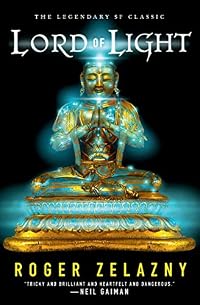
Lord of Light
by Roger Zelazny
On This Page
Description
Earth is long since dead. On a colony planet, a band of men has gained control of technology, made themselves immortal, and now rule their world as the gods of the Hindu pantheon. Only one dares oppose them: he who was once Siddhartha and is now Mahasamatman. Binder of Demons, Lord of Light.Tags
Recommendations





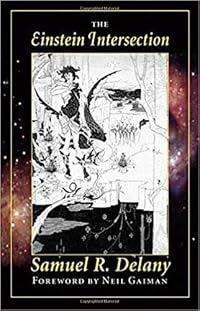

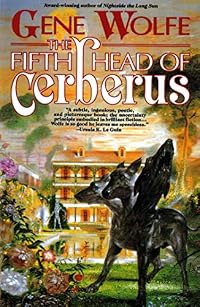

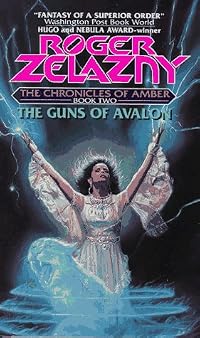
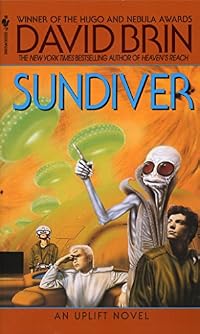


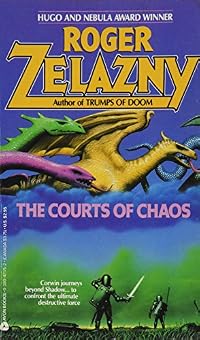

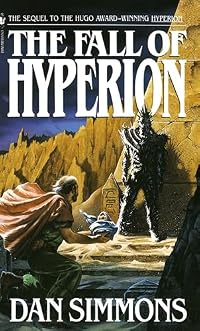
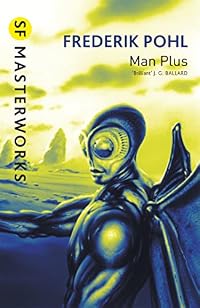
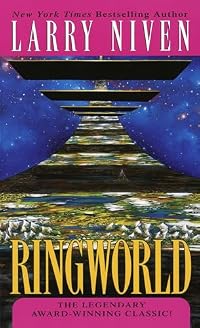

Member Recommendations
storyjunkie Both books carry a philosophical weight to their world-saving. A similar atmosphere to their protagonists, worlds, and occupancy of a more soul-searching lot in the science fiction spectrum make them nicely complementary to each other.
61

PMaranci Another award-winning novel by Roger Zelazny in which science fiction and classic Earth mythology intertwine.
20


by MinaKelly

LamontCranston The same premise of advanced science mimicking religion
Member Reviews
Perfect 60s Sci-Fi
The love/peace/rock movement of the late 60s discovered Buddhism for itself in [b:Siddhartha|52036|Siddhartha|Hermann Hesse|https://i.gr-assets.com/images/S/compressed.photo.goodreads.com/books/1428715580l/52036._SY75_.jpg|4840290], mixed in a little acid and Jefferson Airplane, and the New Age Movement was born, living still in the yoga studio around the corner. Roger Zelazny's Lord of Light is a product of that formative time. Published in 1967, it won the Hugo Award in 1968 for best novel.
But Zelazny's take on the new cultural fad is not so superficial as you might think. He understands how deeply subversive Buddhism was to the established Vedic traditions in India when it first arose - particularly as it threatened show more the established caste system. He imagines a far-off world colonized by humans with technology so advanced it seems miraculous, that allows them to take on the appearance, attributes and powers of Vedic gods, and also to reincarnate themselves into new bodies. He imagines a caste system that technology would spawn. He imagines a rebel among the original colonists - the "Lord of Light" - who would use Buddhist concepts to undermine the technology-enforced caste system and liberate all humans on the planet.
A whole lot of fun and fantastic craftsmanship, not at all dated by the passage of time. show less
The love/peace/rock movement of the late 60s discovered Buddhism for itself in [b:Siddhartha|52036|Siddhartha|Hermann Hesse|https://i.gr-assets.com/images/S/compressed.photo.goodreads.com/books/1428715580l/52036._SY75_.jpg|4840290], mixed in a little acid and Jefferson Airplane, and the New Age Movement was born, living still in the yoga studio around the corner. Roger Zelazny's Lord of Light is a product of that formative time. Published in 1967, it won the Hugo Award in 1968 for best novel.
But Zelazny's take on the new cultural fad is not so superficial as you might think. He understands how deeply subversive Buddhism was to the established Vedic traditions in India when it first arose - particularly as it threatened show more the established caste system. He imagines a far-off world colonized by humans with technology so advanced it seems miraculous, that allows them to take on the appearance, attributes and powers of Vedic gods, and also to reincarnate themselves into new bodies. He imagines a caste system that technology would spawn. He imagines a rebel among the original colonists - the "Lord of Light" - who would use Buddhist concepts to undermine the technology-enforced caste system and liberate all humans on the planet.
A whole lot of fun and fantastic craftsmanship, not at all dated by the passage of time. show less
Lord of Light runs Zelazny's trickster-god antihero through a proper epic this time, using Indian mythology as a front for a story of rebellion against decadent power, and the role that the super-powered can play in liberating the common people. While some of the orientalism and sexism hasn't aged particularly well, the plot is a proper mythological thriller, the setting is top-notch, and the characters seem to fit the scope of the action; unlike the constrained and dying world of Call me Conrad. Zelazny's wordcraft is topnotch as always, and there are some long philosophical passages which I would have marked, if I weren't reading in bed.
On a distant colony world of a dead Earth, man has separated into a race of gods based on Hindu show more mythology, and a mass of ordinary peasants. The gods are the First, the original colonists from Earth, exceptional men and women who use a combination of psionic powers and super-science to rule a world forced into medieval squalor. The Wheel of Karma is very real, used to concentrate and promote conservative and obedient brahmins towards the heavenly city, while banishing Accelerationists and other radicals to the oblivion of true death. While once the world was a vibrant place full of adventure and danger (Rakshasa energy demons foremost among them), now it is a playground and brothel for the decadent gods. Sam, a rebel among the First, uses a version of Buddhism and his own political wiles to wage war against the gods.
A lot stuff comes together real well. The slow revelation of the setting, and the realization that this was set up by people who know about as much about Indian mythology as I do (selections from the Mahabharata in comparative religion class ages ago), but who think it's a fricking metal framework for supernatural powers. Sam and his foil, the deathgod-scientist Yama, as super competent individuals who must use cleverness against the even greater forces that oppose then. It's not so much about any specific technology, but about the idea that given the power to create a paradise, what kind of paradise will people create? show less
On a distant colony world of a dead Earth, man has separated into a race of gods based on Hindu show more mythology, and a mass of ordinary peasants. The gods are the First, the original colonists from Earth, exceptional men and women who use a combination of psionic powers and super-science to rule a world forced into medieval squalor. The Wheel of Karma is very real, used to concentrate and promote conservative and obedient brahmins towards the heavenly city, while banishing Accelerationists and other radicals to the oblivion of true death. While once the world was a vibrant place full of adventure and danger (Rakshasa energy demons foremost among them), now it is a playground and brothel for the decadent gods. Sam, a rebel among the First, uses a version of Buddhism and his own political wiles to wage war against the gods.
A lot stuff comes together real well. The slow revelation of the setting, and the realization that this was set up by people who know about as much about Indian mythology as I do (selections from the Mahabharata in comparative religion class ages ago), but who think it's a fricking metal framework for supernatural powers. Sam and his foil, the deathgod-scientist Yama, as super competent individuals who must use cleverness against the even greater forces that oppose then. It's not so much about any specific technology, but about the idea that given the power to create a paradise, what kind of paradise will people create? show less
Zelazny has a way of plunging the reader into a world which is confusingly familiar and unfamiliar. This book is no exception. The plot of this book is fairly straight forward. However, this book is not really about the plot. It is a novel whose meaning shifts like a kaleidoscope depending on what you currently believe the motivations and true beliefs of the characters to be. I suspect that I could read this book multiple times and each time come to slightly different conclusions about who Sam, Yama, and others really are and what they really are not.
I also appreciate how this novel ages better than many from the same period. Largely, this is because the technology that undergirds the world is intentionally only presented at the level show more of magic. Thus, you don't have any moments of "They anticipated galaxy travelling spaceships but not smartphones?"
In this day and age, it is worth addressing the fact that if this novel were written today, it would almost certainly be decried as a massive cultural appropriation because of its use of Hinduism and Buddhism. I think that it escapes that accusation because the book makes clear that it is the characters within the book who are appropriating religion to their own selfish ends. Whether or not it was Zelazny's intent--and he was writing in the late 60s, so I could see it going either way--this reads more as a commentary on abusive cultural appropriation. show less
I also appreciate how this novel ages better than many from the same period. Largely, this is because the technology that undergirds the world is intentionally only presented at the level show more of magic. Thus, you don't have any moments of "They anticipated galaxy travelling spaceships but not smartphones?"
In this day and age, it is worth addressing the fact that if this novel were written today, it would almost certainly be decried as a massive cultural appropriation because of its use of Hinduism and Buddhism. I think that it escapes that accusation because the book makes clear that it is the characters within the book who are appropriating religion to their own selfish ends. Whether or not it was Zelazny's intent--and he was writing in the late 60s, so I could see it going either way--this reads more as a commentary on abusive cultural appropriation. show less
Zelazny had a style all his own. I wish he were still around giving us more of his unique take on things. Lord of Light is a somewhat challenging yet rewarding read. The fractured timeline adds to early confusion as we start near the end with the back-story subsequently told in flashback form over the next 2/3 of the book. Populated by memorable characters and humorous situations, this is a seminal work of sci-fi/fantasy.
Highly recommended.
Highly recommended.
First thing I read about this book is that it is little bit convoluted and stories are not told in order so that it might be difficult to follow. Second thing I came across is that one needs to try very hard to follow the story because its elements are a little bit confusing.
All of the above caused me to delay reading this book - while I enjoy "convoluted", Memento-like novels I need to be in the mood to go through them.
And then I took the book. And then I started wondering if reviewers that stated the above were actually reading the same book because I found no issue with it in regard to their comments.
Story is very quick in pace, witty dialogue (especially between members of the Pantheon) and characters are really great.
In the show more foreword of the edition I read it states that at the same time with this book [a:Frank Herbert|58|Frank Herbert|https://images.gr-assets.com/authors/1168661521p2/58.jpg]'s [b:Dune|234225|Dune (Dune Chronicles, #1)|Frank Herbert|https://images.gr-assets.com/books/1434908555s/234225.jpg|3634639] came out. Dune became the more popular one and foreword author wonders why.
For me reason is pretty straightforward - in Dune, theology is no different from the Earth's current traditions - you have people with super-powers (as a result of very specific and precise inter-breeding programs) leading vast armies to conquer space (I mean just check what Leto Jr. became at the end). People truly end up one-man armies and divine-like creatures and are basically self-fulfilling prophecy of the Bene Gesserit [that created these omnipotent human beings in the first place]. So from how-to-control-human-race plan we get [as a result] beings of legends that are actually truly omnipotent beings that cannot be described in no other way but as divine.
So nothing new here - lots of elements very common in all of the religions and religious teachings human society encountered so far. Even Fremen are nothing but echo of devout desert tribe of Abrachamic religion lore. Even when Leto Jr decides to let humanity spread among the stars religion is still very much part of life.
And then we have Zelazny's pantheon - these are not divine beings as in Dune but above-average people (in intellect and physique - to be honest this depends on how they end up reincarnated) that use technology - armor, augmented wands, swords, spears, fighting craft, combat machines of every type - to do divine actions. Without these they are above-average human beings but can be brought down in an instance by ordinary people on the field of battle. As soon as they are stripped of their armor, weapon or control mechanisms for the same they fall down in combat as fast as everyone else.
Even their immortality aspect is thanks to the machines and cloning - by moving one's soul into freshly crafted clone (or animal or truly corrupted human body - depending what the "head honcho" Brahma wants do to with people), aka reincarnation.
Problem is that after some time elite that fought the natives of the newly discovered planet deemed themselves above the other colonists and decided to take the control of technology by getting rid (as in killing off) of or accepting into their ranks anyone who knew anything about the technology. The rest - they are told to be good and behave. After couple of generations in which every attempt to progress is cruelly stamped on, the rest lost every previous knowledge and soon devolved into feudal societies. "Pantheon" on the other hand after several lives and reincarnations started believing that they are truly divine creatures and they control everyone below with iron fist and by promising them divinity if they behaved [after a while of course and with disclaimer we-don't-know-when-if ever].
And then Sam, one of the Heaven's finest executioners and combat leaders figures out that what started as war against the native creatures of the planet for sake of the colonists turned into bloodbath and complete oppression of human kind for the sake of the few. Sohe starts the fight against the "Pantheon" that takes years, and several reincarnations but ultimately he succeeds. He ignites the revolt by quoting original religious texts from Earth because he knows the effect of words on general populace and this does the trick. As he says at the end - he started seeding the revolt with the words using words as weapons but at the end he is glad he did it because ideas in those words are good and excellent beacon to guide ones life, they only fall short when it comes to the implementing them in human society. They are ideals and they should remain as such.
And this is the main difference between Herbert's and Zelazny's work - for Zelazny presented divine beings as nothing than petty humans with technology - without it they don't come up to much. They have pantheon because they cannot allow for some of them to join the lower ranks and spread the truth - pantheon is the only way to hold everyone together in the Heavenly domain. This is not a messianic tale (like one of Paul and Leto Jr) but tale of people getting rid of the chains enforced onto them by theocratic society and finally prospering with use of science and common sense. Also there is very subtle presentation of polytheism and monotheism through the actions of Dark One expelled from the Heavenly domain because he wants all of the power for himself.
So this is more touchy book that hits a cord where it is not supposed to. To present it just as another Prometheus story is to err in my opinion.
Novel is about wielding great power with responsibility and enabling better life for all, not just for the few.
Also novel tackles the question of knowledge as shown through character of Yama. While all reincarnated beings need to re-learn their abilities only Yama is always reincarnated with all knowledge because of simple reason - he learns and remembers and keeps the knowledge, does not reinvent the wheel over and over again.
Interestingly enough main character, Sam, is nothing than the catalyst here. He lives, he dies only to be brought back to life for a simple reason - because of his ideas of progress and sharing knowledge.
Great novel, highly recommended to all SF fans. show less
All of the above caused me to delay reading this book - while I enjoy "convoluted", Memento-like novels I need to be in the mood to go through them.
And then I took the book. And then I started wondering if reviewers that stated the above were actually reading the same book because I found no issue with it in regard to their comments.
Story is very quick in pace, witty dialogue (especially between members of the Pantheon) and characters are really great.
In the show more foreword of the edition I read it states that at the same time with this book [a:Frank Herbert|58|Frank Herbert|https://images.gr-assets.com/authors/1168661521p2/58.jpg]'s [b:Dune|234225|Dune (Dune Chronicles, #1)|Frank Herbert|https://images.gr-assets.com/books/1434908555s/234225.jpg|3634639] came out. Dune became the more popular one and foreword author wonders why.
For me reason is pretty straightforward - in Dune, theology is no different from the Earth's current traditions - you have people with super-powers (as a result of very specific and precise inter-breeding programs) leading vast armies to conquer space (I mean just check what Leto Jr. became at the end). People truly end up one-man armies and divine-like creatures and are basically self-fulfilling prophecy of the Bene Gesserit [that created these omnipotent human beings in the first place]. So from how-to-control-human-race plan we get [as a result] beings of legends that are actually truly omnipotent beings that cannot be described in no other way but as divine.
So nothing new here - lots of elements very common in all of the religions and religious teachings human society encountered so far. Even Fremen are nothing but echo of devout desert tribe of Abrachamic religion lore. Even when Leto Jr decides to let humanity spread among the stars religion is still very much part of life.
And then we have Zelazny's pantheon - these are not divine beings as in Dune but above-average people (in intellect and physique - to be honest this depends on how they end up reincarnated) that use technology - armor, augmented wands, swords, spears, fighting craft, combat machines of every type - to do divine actions. Without these they are above-average human beings but can be brought down in an instance by ordinary people on the field of battle. As soon as they are stripped of their armor, weapon or control mechanisms for the same they fall down in combat as fast as everyone else.
Even their immortality aspect is thanks to the machines and cloning - by moving one's soul into freshly crafted clone (or animal or truly corrupted human body - depending what the "head honcho" Brahma wants do to with people), aka reincarnation.
Problem is that after some time elite that fought the natives of the newly discovered planet deemed themselves above the other colonists and decided to take the control of technology by getting rid (as in killing off) of or accepting into their ranks anyone who knew anything about the technology. The rest - they are told to be good and behave. After couple of generations in which every attempt to progress is cruelly stamped on, the rest lost every previous knowledge and soon devolved into feudal societies. "Pantheon" on the other hand after several lives and reincarnations started believing that they are truly divine creatures and they control everyone below with iron fist and by promising them divinity if they behaved [after a while of course and with disclaimer we-don't-know-when-if ever].
And then Sam, one of the Heaven's finest executioners and combat leaders figures out that what started as war against the native creatures of the planet for sake of the colonists turned into bloodbath and complete oppression of human kind for the sake of the few. Sohe starts the fight against the "Pantheon" that takes years, and several reincarnations but ultimately he succeeds. He ignites the revolt by quoting original religious texts from Earth because he knows the effect of words on general populace and this does the trick. As he says at the end - he started seeding the revolt with the words using words as weapons but at the end he is glad he did it because ideas in those words are good and excellent beacon to guide ones life, they only fall short when it comes to the implementing them in human society. They are ideals and they should remain as such.
And this is the main difference between Herbert's and Zelazny's work - for Zelazny presented divine beings as nothing than petty humans with technology - without it they don't come up to much. They have pantheon because they cannot allow for some of them to join the lower ranks and spread the truth - pantheon is the only way to hold everyone together in the Heavenly domain. This is not a messianic tale (like one of Paul and Leto Jr) but tale of people getting rid of the chains enforced onto them by theocratic society and finally prospering with use of science and common sense. Also there is very subtle presentation of polytheism and monotheism through the actions of Dark One expelled from the Heavenly domain because he wants all of the power for himself.
So this is more touchy book that hits a cord where it is not supposed to. To present it just as another Prometheus story is to err in my opinion.
Novel is about wielding great power with responsibility and enabling better life for all, not just for the few.
Also novel tackles the question of knowledge as shown through character of Yama. While all reincarnated beings need to re-learn their abilities only Yama is always reincarnated with all knowledge because of simple reason - he learns and remembers and keeps the knowledge, does not reinvent the wheel over and over again.
Interestingly enough main character, Sam, is nothing than the catalyst here. He lives, he dies only to be brought back to life for a simple reason - because of his ideas of progress and sharing knowledge.
Great novel, highly recommended to all SF fans. show less
http://nwhyte.livejournal.com/1286404.html
It's often a bit worrying to return to the scene of one's youthful enthusiasm to see if the magic is still there - particularly in the case of this novel, bearing in mind the recent discussions of cultural appropriation.
It still worked for me. Zelazny's writing in the first place is vigorous and powerful, and funny also on occasion; it is rather easy to get swept along by the characters with superhuman, semi-divine abilities trying to outwit each other without concentrating too much on the plot. His trademark was always the juxtaposition of the mythic and the demotic, and Lord of Light probably is the peak of his powers at novel length.
The plot also stands the test of time. The rulers of the show more world of Lord of Light have chosen to construct a religion in order to stay in power, and rather than make up their own (as later Zelazny books do) have taken Hinduism off the shelf, as it were, suited as it is to their reincarnation technology. 'Accelerationism' (ie modernisation) among the general populace is ruthlessly repressed. Our hero, Sam, is one of the privileged who rebels, and uses methods of terrorism, war and assassination to undermine the power structures, is captured, executed twice, and eventually returned to life (at the start of the book, most of the story being told in flashback) and victory.
It's not terribly clear that Sam is doing this out of an egalitarian or libertarian commitment to oppose tyranny; it seems more that he (along with Zelazny) favours two different types of enlightenment - personal enlightenment in the (explicitly) Buddhist sense, and cultural enlightenment in the sense of eighteenth-century Europe, in both cases implying freedom from religious dogma and control, and so is committed to bringing them about.
To achieve this, he has to do a deal with the indigenous entities of the planet as well, now known as the Rakashas; he exploits them but also possibly liberates them, and their support is crucial to his ultimate success - a subplot with interesting undertones both historically and psychologically. Note also that the explicitly Christian characters are dubious outsiders who are minor but somewhat unreliable allies (leading an army of soulless zombies). Plenty of cultural irony, directed mainly westwards. show less
It's often a bit worrying to return to the scene of one's youthful enthusiasm to see if the magic is still there - particularly in the case of this novel, bearing in mind the recent discussions of cultural appropriation.
It still worked for me. Zelazny's writing in the first place is vigorous and powerful, and funny also on occasion; it is rather easy to get swept along by the characters with superhuman, semi-divine abilities trying to outwit each other without concentrating too much on the plot. His trademark was always the juxtaposition of the mythic and the demotic, and Lord of Light probably is the peak of his powers at novel length.
The plot also stands the test of time. The rulers of the show more world of Lord of Light have chosen to construct a religion in order to stay in power, and rather than make up their own (as later Zelazny books do) have taken Hinduism off the shelf, as it were, suited as it is to their reincarnation technology. 'Accelerationism' (ie modernisation) among the general populace is ruthlessly repressed. Our hero, Sam, is one of the privileged who rebels, and uses methods of terrorism, war and assassination to undermine the power structures, is captured, executed twice, and eventually returned to life (at the start of the book, most of the story being told in flashback) and victory.
It's not terribly clear that Sam is doing this out of an egalitarian or libertarian commitment to oppose tyranny; it seems more that he (along with Zelazny) favours two different types of enlightenment - personal enlightenment in the (explicitly) Buddhist sense, and cultural enlightenment in the sense of eighteenth-century Europe, in both cases implying freedom from religious dogma and control, and so is committed to bringing them about.
To achieve this, he has to do a deal with the indigenous entities of the planet as well, now known as the Rakashas; he exploits them but also possibly liberates them, and their support is crucial to his ultimate success - a subplot with interesting undertones both historically and psychologically. Note also that the explicitly Christian characters are dubious outsiders who are minor but somewhat unreliable allies (leading an army of soulless zombies). Plenty of cultural irony, directed mainly westwards. show less
What an amazing book! I had started it in college when I bought it as part of joining the Science Fiction book club (remember those days? 8 books for $1, and then you could buy more every month for cheap? A great way to start a library, and there are probably some books on my shelf from those days that are long out of print. Sadly. So this book was one of the buys, and I know I started it in the late 80's/early 90's, because the book jacket was in between pages 9 and 10. And it's definitely one I understand much, much better now than I did then.
It's a series of short stories based on the premise that humanity has left Earth and settled on another planet. They have displaced the original inhabitants, here referred to as demons (an show more air/fire non-corporeal life form) and set themselves up as the pantheon of Hindu dieties. And lo and behold, there is a Buddha in their midst referred to by his nickname "Sam" who challenges the soveriegnty of the Dieties. They have set up temples where death and re-birth are pre-programmed for all who die, even them, and the Dieties take on Aspects that are directly sourced from their chosen Diety: Kali brings destruction, Brahma is the most noble, Yama is the death god, Taska is the archivist (always appears as a monkey), etc. And interwoven within the short stories are hints of the history of the Dieties as well as the conflict between them and the task Sam has set for himself: to destroy the hold that the Dieties have on the human inhabitants of this new planet so that the humans can evolve some basic technology instead of living constantly in the Dark Ages.
The language is the other gripping aspect of this book and it kept me going, even when a story seemed to drag (some do near the end when the wars heat up between the Dieties) or when an individual or a Diety is going through a new story that is almost incomprehensible. I just ease into a well-written book whose language is well-used, sort of the way one would ease into a nice, warm bath. This is one of the best and I am very glad Zelazny did his research and just stood back to see where his imagined/researched characters would go on their new journeys. show less
It's a series of short stories based on the premise that humanity has left Earth and settled on another planet. They have displaced the original inhabitants, here referred to as demons (an show more air/fire non-corporeal life form) and set themselves up as the pantheon of Hindu dieties. And lo and behold, there is a Buddha in their midst referred to by his nickname "Sam" who challenges the soveriegnty of the Dieties. They have set up temples where death and re-birth are pre-programmed for all who die, even them, and the Dieties take on Aspects that are directly sourced from their chosen Diety: Kali brings destruction, Brahma is the most noble, Yama is the death god, Taska is the archivist (always appears as a monkey), etc. And interwoven within the short stories are hints of the history of the Dieties as well as the conflict between them and the task Sam has set for himself: to destroy the hold that the Dieties have on the human inhabitants of this new planet so that the humans can evolve some basic technology instead of living constantly in the Dark Ages.
The language is the other gripping aspect of this book and it kept me going, even when a story seemed to drag (some do near the end when the wars heat up between the Dieties) or when an individual or a Diety is going through a new story that is almost incomprehensible. I just ease into a well-written book whose language is well-used, sort of the way one would ease into a nice, warm bath. This is one of the best and I am very glad Zelazny did his research and just stood back to see where his imagined/researched characters would go on their new journeys. show less
Members
- Recently Added By
Published Reviews
ThingScore 63
As opening lines of novels go, Lord of Light's are among the best I've ever read, and based on how many people have quoted them to me in the last few weeks, the best a lot of you have ever read, too. In twenty-five words, they capture the best-loved aspects of the book — the seamless blend of antiquated cadence and insouciant modern vernacular, of modest sincerity and dry humor — and more, show more they tell us, in part, what the story is about. show less
added by lorax
Fantasy disguised as science fiction disguised as fantasy: Roger Zelazny's Lord of Light
added by sturlington
Lists

Best Science Fiction Novels
816 works; 430 members
Survey of Classic Science Fiction
171 works; 48 members

Hugo Award Winning Novels
63 works; 23 members

S.F. Masterworks (Complete)
229 works; 15 members

Hugo Awards - Best Novel
69 works; 10 members

SF Masterworks
193 works; 8 members

Top Five Books of 2013
1,564 works; 722 members

1960s, Best books published therein
254 works; 22 members

Diversity in Fantasy and Science Fiction
219 works; 31 members

Religious Science Fiction
70 works; 20 members

Good Buddhist Novels
30 works; 4 members

20th Century Literature
1,161 works; 54 members

New wave science fiction
23 works; 2 members

The 5 Parsec Shelf
50 works; 7 members

Top Five Books of 2019
387 works; 111 members

Isaac Arthur’s Book Recommendations
98 works; 3 members

Speculative Fiction to Read
706 works; 32 members

Books Read in 2025
4,060 works; 97 members

Books Read in 2026
1,615 works; 59 members
Favorite Science Fiction
448 works; 214 members

Les 100 principaux titres de la science-fiction (1981)
126 works; 3 members
An evolving science fiction novel canon
50 works; 2 members

Books Read in 2018
4,360 works; 110 members

infjsarah's wishlist
408 works; 2 members

Modern Fantasy Novels based on Non-Western Mythology or Folklore
24 works; 7 members
Favourite Books
1,817 works; 308 members

Philosophical Fiction
97 works; 27 members

Unread books
1,063 works; 82 members

Space Colonization
100 works; 26 members
Author Information

335+ Works 72,477 Members
Roger Zelazny was born in Euclid, Ohio on May 13, 1937. After receiving a B.A. from Case Western Reserve University and a M.A. from Columbia University, he began publishing science fiction stories in 1962. He received six Hugo awards, three Nebula awards including one in 1966 for And Call Me Conrad and 2 Locus awards. He died of kidney failure show more secondary to colorectal cancer on June 14, 1995. (Bowker Author Biography) show less
Some Editions
Awards and Honors
Awards
Distinctions
Notable Lists
Series
Belongs to Publisher Series
Work Relationships
Is contained in
Common Knowledge
- Canonical title*
- Herr des Lichts
- Original title
- Lord of Light
- Original publication date
- 1967
- People/Characters
- Sam (Mahasamatman | Siddhartha | Tathagatha | Binder of Demons | Maitreya | Lord of Light); Yama; Kali; Tak; Ratri; Jan Olvegg (show all 30); Rild (Sugata); Trimurti; Ganesha; Agni; Taraka; Nirriti; Mara; Brahma; Raltariki; Hawkana; Dele; Shiva; Shan of Irabek; Garuda; Lakshmi; Kubera; Krishna; Maya; Ganesha; Helba; Murugan; Rudra; Vama; Kabada
- Important places
- Koona; River Deeva; Khaipur; Mahartha; Alundil; Hellwell Gate, Mount Channa, Ratnagari Mountains, Malwa (show all 9); Hellwell, Mount Channa, Ratnagari Mountains, Malwa; Celestial City, Heaven; Kaniburrha Forest, Heaven
- Dedication
- To Dannie Plachta,
of friendship, wisdom, soma. - First words
- It is said that fifty-three years after his liberation he returned from the Golden Cloud to take up once again the gauntlet of Heaven, to oppose the Order of Life and the gods who ordained it so.
- Quotations
- Names are not important... To speak is to name names, but to speak is not important. A thing happens once that has never happened before. Seeing it, a man looks upon reality. He cannot tell others what he has seen. Others wis... (show all)h to know, however, so they question him saying, 'What is it like, this thing you have seen?' So he tries to tell them. Perhaps he has seen the very first fire in the world. He tells them, 'It is red, like a poppy, but through it dance other colors. It has no form, like water, flowing everywhere. It is warm, like the sun of summer, only warmer. It exists for a time upon a piece of wood, and then the wood is gone, as though it were eaten, leaving behind that which is black and can be sifted like sand. When the wood is gone, it too is gone.' Therefore, the hearers must think reality is like a poppy, like water, like the sun, like that which eats and excretes. They think it is like to anything that they are told it is like by the man who has known it. But they have not looked upon fire. They cannot really know it. They can only know of it. But fire comes again into the world, many times. More men look upon fire. After a time, fire is as common as grass and clouds and the air they breathe. They see that, while it is like a poppy, it is not a poppy, while it is like water, it is not water, while it is like the sun, it is not the sun, and while it is like that which eats and passes wastes, it is not that which eats and passes wastes, but something different from each of these apart or all of these together. So they look upon this new thing and they make a new word to call it. They call it 'fire.'"If they come upon one who still has not seen it and they speak to him of fire, he does not know what they mean. So they, in turn, fall back upon telling him what fire is like. 'As they do so, they know from their own experience that what they are telling him is not the truth, but only a part of it. They know that this man will never know reality from their words, though all the words in the world are theirs to use. He must look upon the fire, smell of it, warm his hands by it, stare into its heart, or remain forever ignorant. Therefore, 'fire' does not matter, 'earth' and 'air' and 'water' do not matter. 'I' do not matter. No word matters. But man forgets reality and remembers words. The more words he remembers, the cleverer do his fellows esteem him. He looks upon the great transformations of the world, but he does not see them as they were seen when man looked upon reality for the first time. Their names come to his lips and he smiles as he tastes them, thinking he knows them in the naming. The thing that has never happened before is still happening. It is still a miracle. The great burning blossom squats, flowing, upon the limb of the world, excreting the ash of the world, and being none of these things I have named and at the same time all of them, and this is reality — the Nameless.
I have many names, and none of them matter.
It is said that fifty-three years after his liberation he returned from the Golden Cloud, to take up once again the gauntlet of Heaven, to oppose the Order of Life and the gods who ordained it so. His followers had prayed for... (show all) his return, though their prayers were sin. Prayer should not trouble one who has gone on to Nirvana, no matter what the circumstances of his going. The wearers of the saffron robe prayed, however, that He of the Sword, Manjusri, should come again among them, The Boddhisatva is said to have heard...
His followers called him Mahasamatman and said he was a god. He preferred to drop the Maha- and the -atman, and called himself Sam. He never claimed to be a god. But then, he never claimed not to be a god. Circumstances being... (show all) what they were, neither admission could be of any benefit. Silence, though, could.
It was in the days of the rains that their prayers went up, not from the fingering of knotted prayer cords or the spinning of prayer wheels, but from the great pray-machine in the monastery of Ratri, goddess of the Night.
Despite his fall from favor, Yama was still deemed mightiest of the artificers, though it was not doubted that the Gods of the City would have him to die the real death were they to learn of the pray-machine. For that matter,... (show all) though, it was not doubted that they would have him to die the real death without the excuse of the pray-machine, also, were he to come into their custody. How he would settle this matter with the Lords of Karma was his own affair, though none doubted that when the time came he would find a way.
"Your prayers and your curses come to the same. Lord Yama," commented the ape. "That is to say, nothing.""It has taken you seventeen incarnations to arrive at this truth?" said Yama. "I can see then why you are still doing ti... (show all)me as an ape."
Not by the normal course of events shall we be restored or matters settled, Tak of the Bright Spear. We must beat our own path.
Sam was the greatest charlatan in the memory of god or man. He was also the worthiest opponent Trimurti ever faced.
I charge you — forget the names you bear, forget the words I speak as soon as they are uttered. Look, rather, upon the Nameless within yourselves, which arises as I address it. It hearkens not to my words, but to the realit... (show all)y within me, of which it is part. This is the atman, which hears me rather than my words. All else is unreal. To define is to lose. The essence of all things is the Nameless. The Nameless is unknowable, mightier even than Brahma. Things pass, but the essence remains. You sit, therefore, in the midst of a dream. "Essence dreams it a dream of form. Forms pass, but the essence remains, dreaming new dreams. Man names these dreams and thinks to have captured the essence, not knowing that he invokes the unreal. These stones, these walls, these bodies you see seated about you are poppies and water and the sun. They are the dreams of the Nameless. They are fire, if you like.
Occasionally, there may come a dreamer who is aware that he is dreaming. He may control something of the dream-stuff, bending it to his will, or he may awaken into greater self-knowledge. If he chooses the path of self-knowle... (show all)dge, his glory is great and he shall be for all ages like unto a star. If he chooses instead the way of the Tantras, combining Samsara and Nirvana, comprehending the world and continuing to live in it, this one is mighty among dreamers.
To dwell within Samsara, however, is to be subject to the works of those who are mighty among dreamers. If they be mighty for good, it is a golden time. If they be mighty for ill, it is a time of darkness. The dream may turn ... (show all)to nightmare.
This night the Lord of Illusion passed among you — Mara, mighty among dreamers — mighty for ill. He did come upon another who may work with the stuff of dreams in a different way. He did meet with Dharma, who may expel a ... (show all)dreamer from his dream. They did struggle, and the Lord Mara is no more.
To struggle against the dreamers who dream ugliness, be they men or gods, cannot but be the will of the Nameless. This struggle will also bear suffering, and so one's karmic burden will be lightened thereby, just as it would ... (show all)be by enduring the ugliness; but this suffering is productive of a higher end in the light of the eternal values of which the sages so often speak.
"For a spur of the moment thing, you came up with a fairly engaging sermon.""Thanks.""Do you really believe what you preached?"Sam laughed. "I'm very gullible when it comes to my own words. I believe everything I say, though ... (show all)I know I'm a liar."
I just wanted to try another line on the audience. It is difficult to stir rebellion among those to whom all things are good. There is no room for evil in their minds, despite the fact that they suffer it constantly. The slav... (show all)e upon the rack who knows that he will be born again — perhaps as a fat merchant — if he suffers willingly — his outlook is not the same as that of a man with but one life to live. He can bear anything, knowing that great as his present pain may be, his future pleasure will rise higher. If such a one does not choose to believe in good or evil, perhaps then beauty and ugliness can be made to serve him as well. Only the names have been changed.
"Yama thinks the Golden Cloud to have changed you.""Perhaps it has.""He believes it to have softened you, weakened you. You have always posed as a mystic, but now he believes you have become one — to your own undoing, to ou... (show all)r undoing."He shook his head, turned around. But he did not see her. Stood she there invisible, or had she withdrawn? He spoke softly and without inflection:"I shall tear these stars from out the heavens," he stated, "and hurl them in the faces of the gods, if this be necessary. I shall blaspheme in every Temple throughout the land. I shall take lives as a fisherman takes fish, by the net, if this be necessary. I shall mount me again up to the Celestial City, though every step be a flame or a naked sword and the way be guarded by tigers. One day will the gods look down from Heaven and see me upon the stair, bringing them the gift they fear most. That day will the new Yuga begin.Ratri and Sam
He played tune after forbidden tune, and the professional musicians put professional expressions of scorn upon their faces; but neneath the table several feet were tapping in slow time with the music.
It is said that, when the Teacher appeared, those of all castes went to hear his teachings, as well as animals, gods and an occasional saint, to come away improved and uplifted. It was generally conceded that he had received ... (show all)enlightenment, except by those who believed him to be a fraud, sinner, criminal or practical joker. These latter ones were not all to be numbered as his enemies; but, on the other hand, not all of those improved and uplifted could be counted as his friends and supporters. His followers called him Mahasamatman and some said he was a god. So, after it was seen that he had been accepted as a teacher, was looked upon with respect, had many of the wealthy numbered as his supporters and had gained a reputation reaching far across the land, he was referred to as Tathagatha, meaning He Who Has Achieved. It must be noted that while the goddess Kali (sometimes known as Durga in her softer moments) never voiced a formal opinion as to his buddhahood, she did render him the singular honor of dispatching her holy executioner to pay him her tribute, rather than a mere hired assassin....
The Buddha, looking imperturbbable, returned his attention to the drama. A monk seated nearby noticed he was tapping his fingers on the ground, and he decided that the Enlightened One must be keeping time with the drumbeats, ... (show all)for it was common knowledge that he was above such things as impatience.
"You may not have this man, oh Death," said the Master of the North, "for he belongs to the world, and we of the world will defend him."
It is told how the Lord of Light descended into the Well of the Demons, to make there a bargain with the chief of the Rakasha. He dealt in good faith, but the Rakasha are the Rakasha. That is to say, they are malefic creature... (show all)s, possessed of great powers, life-span and the ability to assume nearly any shape. The Rakasha are almost indestructible. Their chiefest lack is a true body; their chiefest virtue, their honor toward their gambling debts. That the Lord of Light went to Hellwell at all serves to show that perhaps he was somewhat distraught concerning the state of the world...
Hellwell lies at the top of the world and it leads down to its roots.It is probably as old as the world itself; and if it is not, it should be, because it looks as if it were.
There is a huge, burnished metal door, erected by the First, that is heavy as sin, three times the height of a man and half that distance in width. It is a full cubit thick and bears a head-sized ring of brass, a complicated ... (show all)pressure-plate lock and an inscription that reads, roughly, "Go away. This is not a place to be. If you do try to enter here, you will fail and also be cursed. If somehow you succeed, then do not complain that you entered unwarned, nor bother us with your deathbed prayers." Signed, "The Gods."
Very few feet have ever trod the trail that leads to Hellwell. Of those who visited, most came only to look, to see whether the great door really existed; and when they returned home and told of having seen it, they were gene... (show all)rally mocked.
Think not, oh Siddhartha, that because you wear a different body you go now unrecognized. I look upon the flows of energy which are your real being — not the flesh that masks them.
A facility with oaths is not the most reassuring quality in a bargainer. And your strength is also your weakness in any bargaining at all. You are so strong as to be unable to grant to another the power to control you. You ha... (show all)ve no gods to swear by. The only thing you will honor is a gambling debt, and there are no grounds for gaming here.
"It is a difficult problem," said Taraka. "I should give anything I have to be free — but then, all that I have is power — pure power, in essence uncommittable. A greater force might subdue it, but that is not the ... (show all)answer. I do not really know how to give you satisfactory assurance that my promise will be kept. If I were you, I certainly would not trust me."
"What is your power, Siddhartha? How do you do what you do?" it asked him."Call it electrodirection," said the other, "mind over energy. It is as good a term as any. But whatever you call it, do not seek to cross it again. I ... (show all)can kill you with it, though no weapon formed of matter may be laid upon you. Go now!"
"I came to Hellwell, the wrath of the gods swarming and buzzing at my back. Now sixty-six demons are loose in the world. Very soon, your presence will be felt. The gods will know who has done this thing, and they will take st... (show all)eps against us. The element of surprise will be lost.""We fought the gods in the days of old . . .""And these are not the days of old, Taraka. The gods are stronger now, much stronger. Long have you been bound, and their might has grown over the ages. Even if you command the first army of Rakasha in history, and backing them in battle I raise me up a mighty army of men — even then, will the final result be a thing uncertain. To delay now is to throw everything away."
From Hellwell to Heaven he went, there to commune with the gods. The Celestial City holds many mysteries, including some of the keys to his own past. Not all that transpired during the time he dwelled there is known. It is kn... (show all)own, however, that he petitioned the gods on behalf of the world, obtaining the sympathy of some, the enmity of others. Had he chosen to betray humanity and accept the proffers of the gods, it is said by some that he might have dwelled forever as a Lord of the City and not have met his death beneath the claws of the phantom cats of Kaniburrha...
"You fertility deities are worse than Marxists," he said. "You think that's all that goes on between people. We were just friends for a time, but she is too hard on her friends and so loses them."
"Are you not Maitreya, Lord of Light, for whom the world has waited, lo, these many years — he whose coming I prophesyed long ago in a poem?""No, my name is Sam," he replied, "and I am about to depart the world, not enter i... (show all)nto it. Who are you?""I am a bird who was once a poet. All morning have I flown, since the yawp of Garuda opened the day. I was flying about the ways of Heaven looking for Lord Rudra, hoping to befoul him with my droppings, when I felt the power of a weird come over the land. I have flown far, and I have seen many things, Lord of Light"
I have seen all-colored Mara atop the spire of the highest tower, and I have felt the power of the weird he lays — for I have seen the phantom cats troubled within the wood, then hurrying in this direction. I have seen the ... (show all)tears of a man and of a woman. I have heard the laughter of a goddess. I have seen a bright spear uplifted against the morning, and I have heard an oath spoken. I have seen the Lord of Light at last, of whom I wrote, long ago:
Always dying, never dead;Ever ending, never ended;Loathed in darkness,Clothed in light,He comes, to end a world,As morning ends the night.These lines were writBy Morgan, free,Who shall, the day he dies,See this prophecy."
The bird ruffled his feathers then and was still."I am pleased, bird, that you have had a chance to see many things," said Sam, "and that within the fiction of your metaphor you have achieved a certain satisfaction. Unfortunately, poetic truth differs considerably from that which surrounds most of the business of life.""Hail, Lord of Light!" said the bird, and sprang into the air. As he rose, he was pierced through by an arrow shot from a nearby window by one who hated jackbirds.Sam hurried on.
During the time that followed the death of Brahma, there came upon the Celestial City a period of turmoil. Several among the gods were even expelled from Heaven. It was a time when just about everyone feared being considered ... (show all)an Accelerationist; and, as fate would have it, at some point or other during this period, just about everyone was considered an Accelerationist. Though Great-Souled Sam was dead, his spirit was said to live on, mocking. Then, in the days of disaffection and intrigue that led up to the Great Battle, it was rumored that more than his spirit might have lived on.
Death is mighty, and is no one's friend.
Another name by which he is sometimes called is Maitreya, meaning Lord of Light. After his return from the Golden Cloud, he journeyed to the Palace of Kama at Khaipur, where he planned and built his strength against the Day o... (show all)f the Yuga. A sage once said that one never sees the Day of the Yuga, but only knows it when it is past. For it dawns like any other day and passes in the same wise, recapitulating the history of the world.
Of all creatures, only the Binder had bested the Lord of Hellwell. Then the gods had come to challenge his power. They had been puny in the early days, struggling to discipline their mutant powers with drugs, hypnosis, medita... (show all)tion, neurosurgery — forging them into Attributes — and across the ages, those powers had grown. Four of them had entered Hellwell, only four, and his legions had not been able to repel them. The one called Shiva was strong, but the Binder had later slain him. This was as it should be, for Taraka recognized the Binder as a peer.
Time like an ocean, space like its water, Sam in the middle, standing, decided.
Taraka screamed as Siddhartha rode toward him upon a white horse, the air crackling and smelling of ozone:"No, Binder! Hold your power! My death belongs to Yama . . .""Oh foolish demon!" said Sam. "It need not have been..."
"You? You rose again?""It doesn't count," said Sam. "I didn't do it the hard way."Tears filled the Black One's eyes. "It means you'll win, though," he gasped. "I can't understand why He permitted it..."
I shall return to being a man, and I shall let the people keep the Buddha who is in their hearts. Whatever the source, the message was pure, believe me. That is the only reason it took root and grew.
Death and Light are everywhere, always, and they begin, end, strive, attend, into and upon the Dream of the Nameless that is the world, burning words within Samsara, perhaps to create a thing of beauty. - Last words
- (Click to show. Warning: May contain spoilers.)As the wearers of the saffron robe still meditate upon the Way of Light, and the girl who is named Murga visits the Temple daily, to place before her dark one in his shrine the only devotion he receives, of flowers.
- Blurbers
- Martin, George R.R.
- Original language
- English
- Canonical DDC/MDS
- 813.08762
*Some information comes from Common Knowledge in other languages. Click "Edit" for more information.
Classifications
- Genres
- Science Fiction, Fiction and Literature
- DDC/MDS
- 813.08762 — Literature & rhetoric American literature in English American fiction in English By type Genre fiction Adventure fiction Speculative fiction Science fiction
- LCC
- PS3576 .E43 .L67 — Language and Literature American literature American literature Individual authors 1961-
- BISAC
Statistics
- Members
- 5,714
- Popularity
- 2,284
- Reviews
- 125
- Rating
- (4.03)
- Languages
- 17 — Czech, Dutch, English, Estonian, French, German, Greek, Hebrew, Hungarian, Italian, Korean, Polish, Portuguese, Romanian, Russian, Spanish, Turkish
- Media
- Paper, Audiobook, Ebook
- ISBNs
- 53
- ASINs
- 38