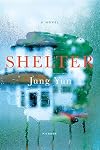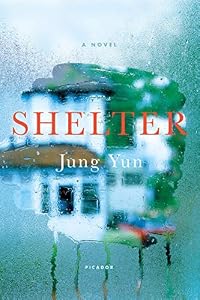
Shelter
by Jung Yun
On This Page
Description
"Kyung Cho's home is worth less money than he owes. A tenure-track professor, he and his wife, Gillian, have always lived beyond their means. Now their decisions have caught up with them, and Kyung is anxious for his family's future: all he wants is to provide the home that was denied him to their son. Not that he ever wanted for pleasing things -- his father moved the family from Korea, and made good money engineering patents for the university that now employs his son. Kyung was raised in show more the town's most affluent neighborhood, in the exquisite house where his parents, Jin and Mae, still live, but his childhood was far from comfortable. Jin was always swift to anger, and whenever he took a hand to Mae, she would inflict the wounds she suffered on Kyung. With the support of his parents' pastor, Kyung brought the cycle to a halt, but he cannot bear the thought of asking them for help. Yet when Jin and Mae become victims of a violent home invasion, the dynamic suddenly changes, and Kyung is compelled to take them in. As the carefully established distance between Kyung and his parents collapses, he must reckon with his childhood, even as the life that he has built begins to crumble. As Shelter veers swiftly toward its startling conclusion, Jung Yun's debut novel leads us through dark and violent territory, where, unexpectedly, the Chos discover hope. Taut and masterfully told, it as riveting as it is profound"-- show lessTags
Recommendations







Member Reviews
Do not read this book if you have commitments the next day. Do not read this book if you are on the bus ride to work. Once you start, you won't be able to stop. Do not pass Go. Do not collect $200.
Yun's darkly domestic, disturbing prose will pull you down a rabbit hole you won't want to go down, but it's too late now and you should've seen her warnings earlier.
Shelter centres around a young Korean-American father, Kyung, who's living beyond his means in a house he can't afford. The story begins with Kyung's mother, Mae coming into his backyard, naked, injured and crying in Korean. Very soon after, Kyung's parents come to live with him and all of their tumultuous past comes to the surface like oil rising to the surface of water. The show more only thing holding the oil in place is the tension in the water.
Yun is a master innovator of the darkly disturbing domesticity I've been craving since I read The Vegetarian by Han Kang. What I appreciate about Yun's writing is that she somehow makes the domestic situation more unsettling than the actual crime that's committed in the opening pages of the book. Her rendition of Korean family dynamics -- the expectations, the social obligations, the mental and emotional strain of a family who never truly communicates because they never learned how -- is something I doubt I'll ever read again.
Then, somehow, the energy changes, Yun adds to the tension, layer by layer, crafting each character with care as someone might chip away at marble, with precision. Kyung is a wonderfully complex character with muddied motivations and emotional reactions that make him feel tangible. Kyung's upset about something and makes a move to apologise, but instead of apologising, he blames the person he meant to apologise to. All at once, I sided with him, I understood and then I went straight back to disliking him.
Then, somewhere in the last 100 pages, the delicate dominos Jung Yun has lined up all begin to fall. One by one, gaining momentum as they had for the centre. I'm still reeling from the conclusion, in fact, I'm not sure I'll ever get over it. I wish I could talk about it. I wish I could disclose it all, but to do that would be to dishonour this book, and I don't want to do that.
I should warn you, if you are at all sensitive to domestic violence, I would give this book a miss. It is an overarching theme in this book and reappears frequently, each time often more intense than the last.
I feel conflicted, like Kyung. I want everyone to read it, but I don't want anyone feeling the way I feel after I read it. But I need someone to talk to about it.
So it goes. show less
Yun's darkly domestic, disturbing prose will pull you down a rabbit hole you won't want to go down, but it's too late now and you should've seen her warnings earlier.
Shelter centres around a young Korean-American father, Kyung, who's living beyond his means in a house he can't afford. The story begins with Kyung's mother, Mae coming into his backyard, naked, injured and crying in Korean. Very soon after, Kyung's parents come to live with him and all of their tumultuous past comes to the surface like oil rising to the surface of water. The show more only thing holding the oil in place is the tension in the water.
Yun is a master innovator of the darkly disturbing domesticity I've been craving since I read The Vegetarian by Han Kang. What I appreciate about Yun's writing is that she somehow makes the domestic situation more unsettling than the actual crime that's committed in the opening pages of the book. Her rendition of Korean family dynamics -- the expectations, the social obligations, the mental and emotional strain of a family who never truly communicates because they never learned how -- is something I doubt I'll ever read again.
Then, somehow, the energy changes, Yun adds to the tension, layer by layer, crafting each character with care as someone might chip away at marble, with precision. Kyung is a wonderfully complex character with muddied motivations and emotional reactions that make him feel tangible. Kyung's upset about something and makes a move to apologise, but instead of apologising, he blames the person he meant to apologise to. All at once, I sided with him, I understood and then I went straight back to disliking him.
Then, somewhere in the last 100 pages, the delicate dominos Jung Yun has lined up all begin to fall. One by one, gaining momentum as they had for the centre. I'm still reeling from the conclusion, in fact, I'm not sure I'll ever get over it. I wish I could talk about it. I wish I could disclose it all, but to do that would be to dishonour this book, and I don't want to do that.
I should warn you, if you are at all sensitive to domestic violence, I would give this book a miss. It is an overarching theme in this book and reappears frequently, each time often more intense than the last.
I feel conflicted, like Kyung. I want everyone to read it, but I don't want anyone feeling the way I feel after I read it. But I need someone to talk to about it.
So it goes. show less
Fascinating. There are so many layers to this story -- the immigrant parents, the struggle with assimilation, interracial marriage, the acts of violence both inside and outside the family, the idea of trying to live up to expectations that are impossible, and what happens when you fail.
It's interesting to read various reviews of this novel and to see what stands out most to different reviewers. For me, it's the idea of familial responsibility and what it means to be a family, to be a child of immigrant parents, to bridge cultural divides and navigate through being both American and Korean.
This is definitely not a light read, but it's certainly a worthwhile one.
I won this book in a goodreads giveaway.
It's interesting to read various reviews of this novel and to see what stands out most to different reviewers. For me, it's the idea of familial responsibility and what it means to be a family, to be a child of immigrant parents, to bridge cultural divides and navigate through being both American and Korean.
This is definitely not a light read, but it's certainly a worthwhile one.
I won this book in a goodreads giveaway.
This acclaimed debut novel deserves all the great attention and accolades it's received. Both a turn-the-page thriller and a literary investigation of a family's survival from trauma, both recent and decades old, the writing elevates the story into deeper understandings of the nuances in family relationships and how they seep into every act of living. It is a refreshing change that Kyung's Korean-ness is not the central focus of the story, and his being Korean is only incidentally part of the narrative, an essential part of his identity, yes, but not the main focus. Yun also manages to make an unlikeable protagonist sympathetic, which is difficult to do, and at times uncomfortable to read. I found myself rooting for him to step up and show more overcome his history, but of course, he couldn't, just as all the others in the novel cannot deny how they were shaped because of their familial histories. Because the story is a thriller, I'm loath to reveal how the novel progresses, but it's a high recommendation that will keep you stuck to it until the last page is turned. show less
Shelter has that "can't put it down" quality that every reader covets. The book shows three generations of a family that are seriously impacted by the behavior of the oldest generation. Kyung is a Korean American married to an Irish woman with a four year old son. He lives close to his parents, and the book starts with a bang when he finds his elderly mother, wandering naked and beaten, through his backyard. The story uses this one family to highlight how childhood trauma has impacts that are far reaching beyond the nuclear family. It reminded me a bit of this year's Everything I Never Told You by Celeste Ng, but I found Shelter to be more riveting.
Yun uses both elements of mystery and psychological suspense to keep the pages turning. show more Although the writing style doesn't remind me of Jonathan Franzen, the characters definitely do. Yun isn't afraid to create less than loveable ones.
This book came very close to a five star read for me because the plotting and pacing both merited a very high rating. There were a few loose ends that were left unresolved and one moment toward the end of the book that really diminished my empathy with the protagonist that lead me to remove one star. However, this book is one I will definitely recommend if you are seeking a fast-paced, engrossing read. There is some graphic violence, and I think that will diminish the appeal for some readers. show less
Yun uses both elements of mystery and psychological suspense to keep the pages turning. show more Although the writing style doesn't remind me of Jonathan Franzen, the characters definitely do. Yun isn't afraid to create less than loveable ones.
This book came very close to a five star read for me because the plotting and pacing both merited a very high rating. There were a few loose ends that were left unresolved and one moment toward the end of the book that really diminished my empathy with the protagonist that lead me to remove one star. However, this book is one I will definitely recommend if you are seeking a fast-paced, engrossing read. There is some graphic violence, and I think that will diminish the appeal for some readers. show less
This acclaimed debut novel deserves all the great attention and accolades it's received. Both a turn-the-page thriller and a literary investigation of a family's survival from trauma, both recent and decades old, the writing elevates the story into deeper understandings of the nuances in family relationships and how they seep into every act of living. It is a refreshing change that Kyung's Korean-ness is not the central focus of the story, and his being Korean is only incidentally part of the narrative, an essential part of his identity, yes, but not the main focus. Yun also manages to make an unlikeable protagonist sympathetic, which is difficult to do, and at times uncomfortable to read. I found myself rooting for him to step up and show more overcome his history, but of course, he couldn't, just as all the others in the novel cannot deny how they were shaped because of their familial histories. Because the story is a thriller, I'm loath to reveal how the novel progresses, but it's a high recommendation that will keep you stuck to it until the last page is turned. show less
Story of a dysfunctional family that has been victimized by an act of brutal violence. The protagonist, Kyung, is a Korean American still suffering from events of the past. He has distanced himself from his parents but finds himself feeling responsible for them after the traumatic event. He struggles with the Korean cultural norms of his parents’ generation. The reader watches while Kyung’s life spirals out of control. Themes include the long-term ramifications of domestic abuse, parental love (or lack thereof), and how individuals make their own shelters when real ones fail them. It is a dark story filled with sadness and trauma.
I had mixed feelings about this book. The author has an impressive ability to describe interpersonal show more relationships succinctly and convincingly. Her prose flows smoothly. Love them or hate them, the characters were firmly established early. I thought this was going to be a new favorite, but it started derailing about half way through and never recovered. The large holes in the plot were rather difficult to overlook and the main players began acting out of character.
As an exploration of abuse, it was an ambitious undertaking, but ultimately fell short for me. I thought the writing was skillful, and I would read another by this author. Here’s hoping the next one contains a bit more optimism. Trigger warnings include rape and abuse. show less
I had mixed feelings about this book. The author has an impressive ability to describe interpersonal show more relationships succinctly and convincingly. Her prose flows smoothly. Love them or hate them, the characters were firmly established early. I thought this was going to be a new favorite, but it started derailing about half way through and never recovered. The large holes in the plot were rather difficult to overlook and the main players began acting out of character.
As an exploration of abuse, it was an ambitious undertaking, but ultimately fell short for me. I thought the writing was skillful, and I would read another by this author. Here’s hoping the next one contains a bit more optimism. Trigger warnings include rape and abuse. show less
Kyung Cho and his Irish-American wife Gillian, are struggling to make ends meet. They have been living beyond their means, for years and the debts are piling up.
Kyung's parents, Jin and Mae, live nearby and they are quite prosperous. Jin is a demanding father and husband and Kyung has always had a difficult relationship with him. When a horrific act of violence, (echoes of In Cold Blood) forces his parents, to move in with Kyung, the tensions begin to escalate and a flood of family secrets begin to surface and threaten to tear the family dynamic apart.
This is a dark, unrelenting, story about parenting, loss, suffering, abuse and the hope of redemption. The author pulls no punches here, so reader beware. It is not an easy read but I was show more impressed with the writing and the strong story-telling. show less
Kyung's parents, Jin and Mae, live nearby and they are quite prosperous. Jin is a demanding father and husband and Kyung has always had a difficult relationship with him. When a horrific act of violence, (echoes of In Cold Blood) forces his parents, to move in with Kyung, the tensions begin to escalate and a flood of family secrets begin to surface and threaten to tear the family dynamic apart.
This is a dark, unrelenting, story about parenting, loss, suffering, abuse and the hope of redemption. The author pulls no punches here, so reader beware. It is not an easy read but I was show more impressed with the writing and the strong story-telling. show less
Members
- Recently Added By
Lists

100 Best Thrillers of All Time
100 works; 6 members

Books Read in 2019
4,052 works; 109 members
Author Information

3 Works 699 Members
Jung Yun was born in South Korea, raised in North Dakota, and her first novel, Shelter (Picador), was long-listed for the Center for Fiction's First Novel Prize, a finalist for Good Reads' Best Fiction Book of 2016, and a finalist for the 2016 Barnes & Noble Discover Great New Writers Program. (Bowker Author Biography)
Awards and Honors
Common Knowledge
- Canonical title
- Shelter
- Original publication date
- 2016-03
- People/Characters
- Kyung Cho; Jin Cho; Mae Cho; Gillian Cho
- Important places
- Massachusetts, USA
- Epigraph
- No man may step in the same river twice, for it is not the same river, and he is not the same man. --HERACLITUS
- Dedication
- To my husband, Joel, who changed everything
- First words
- The boy is standing in the doorway again.
- Last words
- (Click to show. Warning: May contain spoilers.)If they wait here long enough, morning will finally reach them.
- Blurbers
- Bartók, Mira; Scott, James; Chee, Alexander
Classifications
Statistics
- Members
- 504
- Popularity
- 59,342
- Reviews
- 30
- Rating
- (3.73)
- Languages
- English, Italian
- Media
- Paper, Audiobook, Ebook
- ISBNs
- 14
- ASINs
- 3