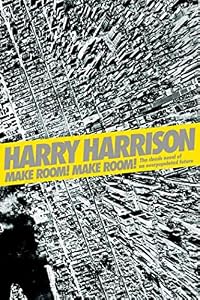
Make Room! Make Room!
by Harry Harrison
On This Page
Description
A stark, unbridled vision of planet Earth on the brink of collapse, and the inspiration behind the classic sci-fi film, Soylent Green. At the close of the twentieth century, a planet overwhelmed by rampant overpopulation teeters on the edge of self-destruction. In New York City alone, 35 million people are squeezed into its packed boroughs, scrambling like rats for the world's dwindling resources. The only food available is a product called Soylent. And while the government tries to maintain show more order, the rich get richer and the poor stay underfoot. Finding a killer in this broken world is one hell of a job. But that's exactly what detective Andy Rusch has been assigned to do. If he can stay alive long enough, he might just solve the biggest case he's ever been on-unless humanity finally fulfills its promise and destroys itself first. show lessTags
Recommendations




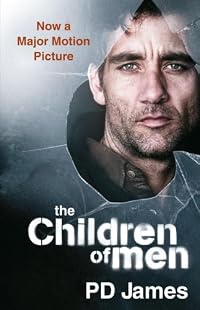

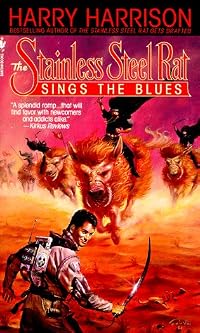

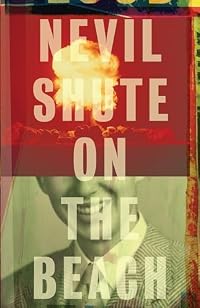

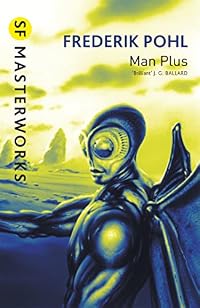


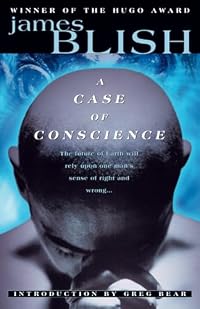
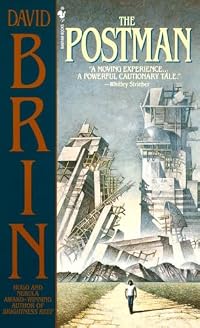

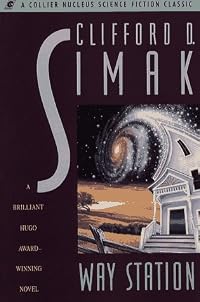


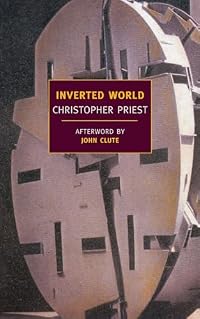

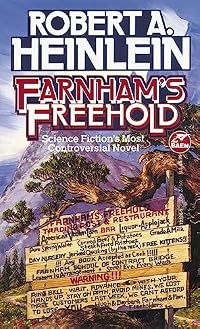
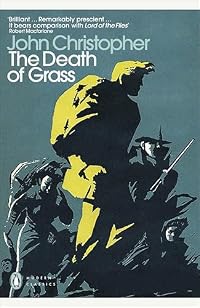
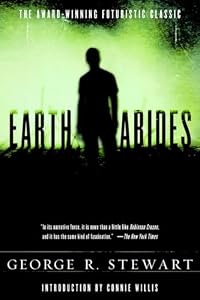
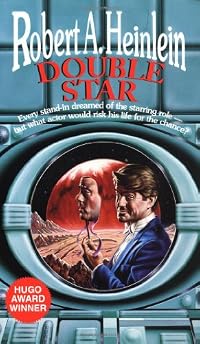


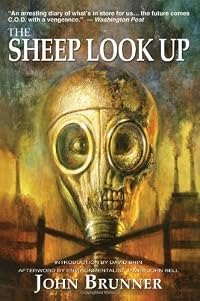

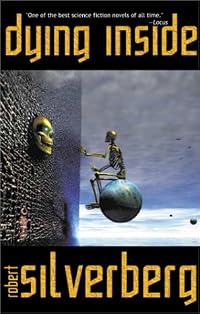



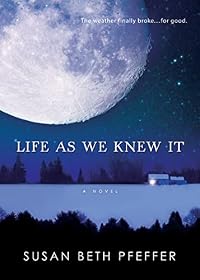


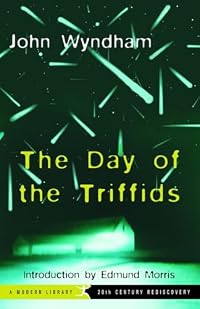


Member Recommendations
sturlington Pair these two books with each and their movie adaptations.

Member Reviews
"Solyent Green is people!" Charlton Heston's character reveals at the end of the classic sci-fi film Solyent Green.
Harry Harrison's sci-fi novel, Make Room! Make Room!, though the source material for the film is an entirely different work though with a similar warning against unbridled consumption and the dangers of overpopulation.
In Harrison's novel, Andy Rusch is under pressure to investigate and solve the murder of a prominent gangster while becoming enamoured by the gangster's mistress. The plot then is a murder-mystery but it is the setting that really distinguishes Make Room! Make Room! and causes it to stand out from other works. It is 1999 and New York City is full - 35 million people are crowded into the city and there are show more food, water, and power shortages. Harrison adeptly creates a believably overcrowded world that is too-quickly coming apart at the seams.
Similar in theme to John Brunner's [b:Stand on Zanzibar|41069|Stand on Zanzibar|John Brunner|http://d202m5krfqbpi5.cloudfront.net/books/1360613921s/41069.jpg|2184253], Make Room! Make Room! excellently addresses the now-present danger of overconsumption and overpopulation that threatens the world's resources. As Harrison writes in the afterword of this edition, though his predictions were generally off the mark, his aim was not to predict but to warn readers of the importance of sustainable development and population control. That warning is as prescient now as it was fifty years ago. show less
Harry Harrison's sci-fi novel, Make Room! Make Room!, though the source material for the film is an entirely different work though with a similar warning against unbridled consumption and the dangers of overpopulation.
In Harrison's novel, Andy Rusch is under pressure to investigate and solve the murder of a prominent gangster while becoming enamoured by the gangster's mistress. The plot then is a murder-mystery but it is the setting that really distinguishes Make Room! Make Room! and causes it to stand out from other works. It is 1999 and New York City is full - 35 million people are crowded into the city and there are show more food, water, and power shortages. Harrison adeptly creates a believably overcrowded world that is too-quickly coming apart at the seams.
Similar in theme to John Brunner's [b:Stand on Zanzibar|41069|Stand on Zanzibar|John Brunner|http://d202m5krfqbpi5.cloudfront.net/books/1360613921s/41069.jpg|2184253], Make Room! Make Room! excellently addresses the now-present danger of overconsumption and overpopulation that threatens the world's resources. As Harrison writes in the afterword of this edition, though his predictions were generally off the mark, his aim was not to predict but to warn readers of the importance of sustainable development and population control. That warning is as prescient now as it was fifty years ago. show less
Above all else, this book is great at creating a central mood that dominates the setting and your mind while reading. It's dark, disgusting, claustrophobic, and corrupt. A mild mystery and cop drama was a great way to explore this mood. I enjoyed the general sense of apathy from most of the characters over the circumstances of their lives, and the ending really reinforced the general feeling of hopelessness that mounted through the book.
That all being said, I do think that Harrison used an extremely heavy hand to deliver his rather singular message against overpopulation. The character that serves as his mouthpiece throughout the book goes on several unnecessary pointed triads about contraceptive and overpopulation, that brought me out show more of the flow of the plot and the mood.
Overall, I enjoyed my time with this book. It dipped a little into the pulp end of fiction, but was deeply immersive and depressing. show less
That all being said, I do think that Harrison used an extremely heavy hand to deliver his rather singular message against overpopulation. The character that serves as his mouthpiece throughout the book goes on several unnecessary pointed triads about contraceptive and overpopulation, that brought me out show more of the flow of the plot and the mood.
Overall, I enjoyed my time with this book. It dipped a little into the pulp end of fiction, but was deeply immersive and depressing. show less
I always seem to expect more from these classics than I get from them. This one is okay... kinda... it is very dry and we don't actually care that the whole world is starving to death (well, all of NYC is anyway)... the characters are all a bit of a jerk and the female character trades on her sex to get by. Oh, sure, this is par for the course, but I always prefer when authors put some work into character development and have women be something other than independently mobile sex toys, or, perhaps, slothy neglectful mothers.
I guess Harrison's underlying premise is that overpopulation would starve out humanity (because "someone"/"the MAN" bans birth control) and, while that might have been an issue in the 60s, nowadays it is more likely show more that we will starve out humanity by virtue of genetic modifications, disease and toxic water contamination... End result = the same, but process of getting there mildly different. (only mildly though because it is still "someone"/"the MAN" who puts their profits from fracking and oil pipelines ahead of clean water, for example).
Anyway, I am glad I read it and can accept that it is a product of its era, driven by the concerns of that era. I won't be looking for more books by Harrison though. show less
I guess Harrison's underlying premise is that overpopulation would starve out humanity (because "someone"/"the MAN" bans birth control) and, while that might have been an issue in the 60s, nowadays it is more likely show more that we will starve out humanity by virtue of genetic modifications, disease and toxic water contamination... End result = the same, but process of getting there mildly different. (only mildly though because it is still "someone"/"the MAN" who puts their profits from fracking and oil pipelines ahead of clean water, for example).
Anyway, I am glad I read it and can accept that it is a product of its era, driven by the concerns of that era. I won't be looking for more books by Harrison though. show less
This is my horror group's pick for November. I got a first edition copy from the library. The book was $3.95 The dust jacket talks ad nauseum about this "realistic novel of life in 1999"... and the "frighteningly realistic novel" and that "none of the realistic elements have been invented." Can you say overkill? I knew I was going to hate it.
And then someone mentioned that this book was the inspiration for the film Soylent Green and I saw the story from a new perspective. Even though the only thing I remember about that movie is Charlton Heston's anguished yell that "Soylent Green is... (oh, come on, you know)", that alone sparked my interest and I devoured the book.
Harrison's writing is simplistic and very straightforward but DAMN, he show more is powerfully descriptive. I could feel the crush of humanity, the millions pressing close to the point of suffocation. I could almost smell the stench of garbage and decay. The story has a claustrophobic air about it and it is amazingly powerful.
So, in spite of myself, I'd have to say that yes, it really IS rather realistic... and scary as hell. I LOVED it. show less
And then someone mentioned that this book was the inspiration for the film Soylent Green and I saw the story from a new perspective. Even though the only thing I remember about that movie is Charlton Heston's anguished yell that "Soylent Green is... (oh, come on, you know)", that alone sparked my interest and I devoured the book.
Harrison's writing is simplistic and very straightforward but DAMN, he show more is powerfully descriptive. I could feel the crush of humanity, the millions pressing close to the point of suffocation. I could almost smell the stench of garbage and decay. The story has a claustrophobic air about it and it is amazingly powerful.
So, in spite of myself, I'd have to say that yes, it really IS rather realistic... and scary as hell. I LOVED it. show less
Those familiar with the famous film adaptation of this novel - Soylent Green (1973) - who then read the book won't recognize much as far as plot goes. Make Room, Make Room was Harry Harrison's literary warning of the dangers the global society faces from overpopulation, told through the events experienced by New York City detective Andy Rusch leading up to the beginning of the new century in the year 1999.
It's easy to point out failed predictions in books written about future dates that have since come and gone, and those willing to criticize Harrison's work will find plenty to point and laugh at. His estimated population of New York City reaching 35 Million by 1999 is off by about 28 Million, although he fares better with his show more prediction of the global population reaching 7 Billion, only being off by a billion on that one.
But of course, these weren't intended to be accurate predictions as much as an exaggerated worst-case scenario based on very real and tangible concerns, such as the eventual depletion of natural resources, the gradual man-driven destruction of the environment, and as the title of the book implies, just trying to make room for an ever-expanding population. Harrison deftly explores the myriad of variables that come into play in such a dystopian future by focusing on the human element through a handful of characters whose lives intersect under these potential conditions. Unlike the film, which injects a corporate espionage driven plot to make the end of the human race a bit more palatable, Harrison's focus is on how people act and react in such extreme environments, and how desperate political and societal attempts at maintaining some semblance of order can often exacerbate the situation even further.
It's a shame that Make Room, Make Room is known primarily through it's film adaptation, as Harrison's treatment of the subject matter reaches a depth that often goes unappreciated by the comparison. show less
It's easy to point out failed predictions in books written about future dates that have since come and gone, and those willing to criticize Harrison's work will find plenty to point and laugh at. His estimated population of New York City reaching 35 Million by 1999 is off by about 28 Million, although he fares better with his show more prediction of the global population reaching 7 Billion, only being off by a billion on that one.
But of course, these weren't intended to be accurate predictions as much as an exaggerated worst-case scenario based on very real and tangible concerns, such as the eventual depletion of natural resources, the gradual man-driven destruction of the environment, and as the title of the book implies, just trying to make room for an ever-expanding population. Harrison deftly explores the myriad of variables that come into play in such a dystopian future by focusing on the human element through a handful of characters whose lives intersect under these potential conditions. Unlike the film, which injects a corporate espionage driven plot to make the end of the human race a bit more palatable, Harrison's focus is on how people act and react in such extreme environments, and how desperate political and societal attempts at maintaining some semblance of order can often exacerbate the situation even further.
It's a shame that Make Room, Make Room is known primarily through it's film adaptation, as Harrison's treatment of the subject matter reaches a depth that often goes unappreciated by the comparison. show less
https://nwhyte.livejournal.com/3401847.html
I read a lot of Harrison's funnier novels when I was younger - the Stainless Steel Rat books, Star Smashers of the Galaxy Rangers, The Men from P.I.G. and R.O.B.O.T. and Bill, the Galactic Hero. None of them is terribly deep. So I was really surprised by how much I got out of Make Room! Make Room! - the future New York (in 1999, rather than 2022) is just as convincingly realised on the page; if anything a bit more so, and the plot is frankly more interesting. Harrison's New York is a more diverse place that Soylent Green's, but just as desperate; Shirl is more fully realised as a character; the initial murder is an burglary gone wrong rather than a conspirracy; the state is less inhuman, but show more society is worse. There was a real heart and soul to Harrison's writing that was completely new to me from this author, and I might look out for some of his other more serious books. show less
I read a lot of Harrison's funnier novels when I was younger - the Stainless Steel Rat books, Star Smashers of the Galaxy Rangers, The Men from P.I.G. and R.O.B.O.T. and Bill, the Galactic Hero. None of them is terribly deep. So I was really surprised by how much I got out of Make Room! Make Room! - the future New York (in 1999, rather than 2022) is just as convincingly realised on the page; if anything a bit more so, and the plot is frankly more interesting. Harrison's New York is a more diverse place that Soylent Green's, but just as desperate; Shirl is more fully realised as a character; the initial murder is an burglary gone wrong rather than a conspirracy; the state is less inhuman, but show more society is worse. There was a real heart and soul to Harrison's writing that was completely new to me from this author, and I might look out for some of his other more serious books. show less
Oddly enough, I kinda expected something hokey before I read this, but instead, I just got a dystopian nightmare of overpopulation.
This isn't unexpected or a bad thing. After all, I've seen Soylent Green and felt the huge impact of the scene where the old man Saul mouths the BIG SECRET through the plane of glass. I remember the riots, the pressure, the senseless violence, and the massive levels of injustice AND stupidity that brought us to this state.
And yet, after reading this novel, that sense is more visceral, more realistic, and a lot less sensational. Yes, there's massive injustice. Just look at the Squatter law that gives priority to squalid massive families regardless of any consideration, or the way no detective is able to do show more his job because life is already worthless.
For '66, this nightmare world that has used up all resources by 1999 and has ignored or actively fought all birth control or warnings, has resorted to sticking its head in the sand.
Sound familiar?
Well, fortunately, our modern world is getting well-adjusted to living with less... and less... and some technologies are letting us live with a bit less squalor than predicted in this novel... and a New York City of 35 million in the novel is pretty damn close to what some cities are reaching now, true, but the quality of life is NOT as bad as predicted in Harrison's novel.
Of course, in some ways, the violence, the poverty, and the cultural clamp-downs are WORSE in our world. It's odd to see our 7.7 billion people displayed against the novel's measly 7.0 billion. And yet... it's interesting because most of the world is a dustbowl and the only place to safely live .. on the dole .. is the big cities, so everyone migrates there.
I'm just saying this is a really fascinating world-building exercise. I love books that predict or fail to predict in really big ways. :)
Does anyone want any meat flakes? It's just snails... right? Yum, yum. show less
This isn't unexpected or a bad thing. After all, I've seen Soylent Green and felt the huge impact of the scene where the old man Saul mouths the BIG SECRET through the plane of glass. I remember the riots, the pressure, the senseless violence, and the massive levels of injustice AND stupidity that brought us to this state.
And yet, after reading this novel, that sense is more visceral, more realistic, and a lot less sensational. Yes, there's massive injustice. Just look at the Squatter law that gives priority to squalid massive families regardless of any consideration, or the way no detective is able to do show more his job because life is already worthless.
For '66, this nightmare world that has used up all resources by 1999 and has ignored or actively fought all birth control or warnings, has resorted to sticking its head in the sand.
Sound familiar?
Well, fortunately, our modern world is getting well-adjusted to living with less... and less... and some technologies are letting us live with a bit less squalor than predicted in this novel... and a New York City of 35 million in the novel is pretty damn close to what some cities are reaching now, true, but the quality of life is NOT as bad as predicted in Harrison's novel.
Of course, in some ways, the violence, the poverty, and the cultural clamp-downs are WORSE in our world. It's odd to see our 7.7 billion people displayed against the novel's measly 7.0 billion. And yet... it's interesting because most of the world is a dustbowl and the only place to safely live .. on the dole .. is the big cities, so everyone migrates there.
I'm just saying this is a really fascinating world-building exercise. I love books that predict or fail to predict in really big ways. :)
Does anyone want any meat flakes? It's just snails... right? Yum, yum. show less
Members
- Recently Added By
Lists

Best Science Fiction Novels
816 works; 426 members

Best Dystopias
280 works; 272 members
Survey of Classic Science Fiction
171 works; 48 members

Read the book and saw the movie
1,170 works; 192 members

Bibliography for Among Others
159 works; 15 members

Dystopian and Apocalyptic Literature
350 works; 74 members

1960s, Best books published therein
254 works; 22 members

Top Five Books of 2014
1,064 works; 398 members

David Brin: Dire Warnings And Self-Preventing Prophecies
17 works; 3 members

Books Read in 2012
815 works; 34 members

1960s
281 works; 16 members
David Pringle's Science Fiction: The 100 Best Novels
101 works; 9 members

Books With Complete Sentence Titles
374 works; 15 members

AbeBooks: 50 essential science fiction books
50 works; 6 members
Reading LIst
648 works; 1 member
Author Information

438+ Works 44,246 Members
Harry Harrison was born Henry Maxwell Dempsey on March 12, 1925 in Stamford, Connecticut. He was drafted into the U. S. Air Corps in 1943 and became a sharpshooter, a military policeman, a gunnery instructor, and a specialist in the prototypes of computer-guided bomb-sights and gun turrets. After being discharged, he graduated from Hunter College show more with a degree in art. By the end of the 1940s, he was running a small studio that specialized in selling illustrations to comics and science-fiction magazines. He then moved on to editing some of the magazines. As the market for comics began to shrink, he started writing for science-fiction magazines. He wrote short science fiction stories and novels including Deathworld, Captive Universe, Montezuma's Revenge, Star Smashers of the Galaxy Rangers, Stonehenge, West of Eden, Stars and Stripes Forever. He also wrote the Stainless Steel Rat series and the Bill, the Galactic Hero series. His novel Make Room! Make Room! Was the inspiration for the movie Soylent Green. He also wrote under the pseudonyms Hank Dempsey, Felix Boyd, Wade Kaempfert, Cameron Hall, Philip St. John, and Leslie Charteris. He died on August 15, 2012 at the age of 87. (Bowker Author Biography) show less
Some Editions
Awards and Honors
Series
Belongs to Publisher Series
Work Relationships
Is contained in
Has the adaptation
Common Knowledge
- Canonical title*
- New York 1999
- Original title
- Make Room! Make Room!
- Alternate titles
- Soylent Green
- Original publication date
- 1966
- People/Characters
- Andrew Fremont Rusch; Shirl Greene; Billy Chung; Michael J. O'Brien
- Important places
- New York, New York, USA
- Related movies
- Soylent Green (1973 | IMDb)
- Dedication
- To TODD and MOIRA For your sakes, children, I hope this proves to be a work of fiction.
- First words
- Prologue: In December 1959 The President of the United States, Dwight D. Eisenhower, said: 'This government ... will not ... as long as I am here, have a positive political doctrine in its program that has to do with this pro... (show all)blem of birth control.
Text: New York City -
- stolen from the trusting Indians by the wily Dutch, taken from the law abiding Dutch by the warlike British, then wrested in turn from the peaceful British by the revolutionary colonials. - Quotations
- So mankind gobbled in a century all the world's resources that had taken millions of years to store up, and no one on the top gave a damn or listened to all the voices that were trying to warn them, they just let us overprodu... (show all)ce and overconsume until now the oil is gone, the topsoil depleted and washed away, the trees chopped down, the animals extinct, the earth poisoned, and all we have to show for this is seven billion people fighting over the scraps that are left, living a miserable existence--and still breeding without control.
- Last words*
- (Click to show. Warning: May contain spoilers.)Die Bildwand schleuderte immer noch die jagenden Buchstaben über den Platz:
544 Millionen Einwohner
in den Vereinigten Staaten.
Glückliches Neues Jahr.
Glückliches Neues Jahrhundert! - Publisher's editor*
- Jeschke, Wolfgang
- Blurbers
- Priest, Christopher
- Original language
- English
*Some information comes from Common Knowledge in other languages. Click "Edit" for more information.
Classifications
Statistics
- Members
- 1,781
- Popularity
- 12,221
- Reviews
- 53
- Rating
- (3.60)
- Languages
- 13 — Czech, Danish, English, Finnish, French, German, Hungarian, Italian, Polish, Portuguese, Spanish, Swedish, Turkish
- Media
- Paper, Audiobook, Ebook
- ISBNs
- 44
- UPCs
- 1
- ASINs
- 31