On This Page
Description
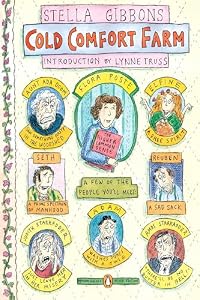
In Gibbons's classic tale, a resourceful young heroine finds herself in the gloomy, overwrought world of a Hardy or Bronte novel and proceeds to organize everyone out of their romantic tragedies into the pleasures of normal life. Flora Poste, orphaned at 19, chooses to live with relatives at Cold Comfort Farm in Sussex, where cows are named Feckless, Aimless, Pointless, and Graceless, and the proprietors, the dour Starkadder family, are tyrannized by Flora's mysterious aunt, who controls the show more household from a locked room. Flora's confident and clever management of an alarming cast of eccentrics is only half the pleasure of this novel. The other half is Gibbons's wicked sendup of romantic cliches, from the mad woman in the attic to the druidical peasants with their West Country accents and mystical herbs. show lessTags
Recommendations



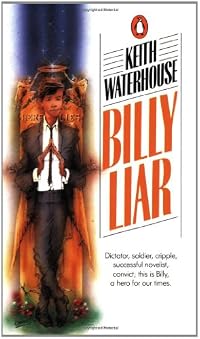

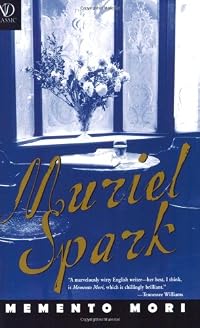
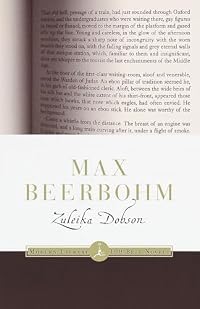
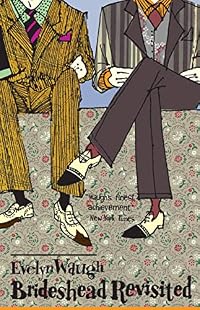
Member Recommendations
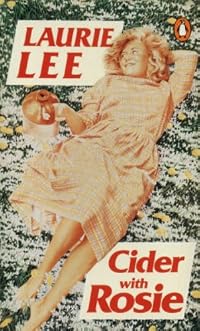
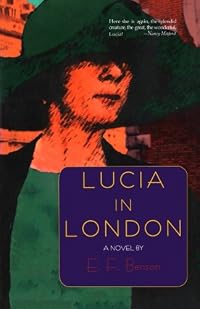
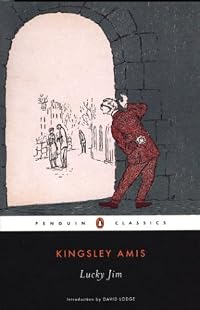
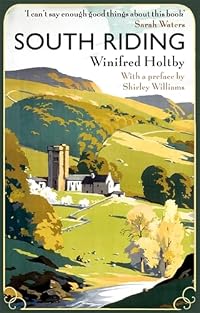
Bjace While it's not in the same genre, the books are similiar. Both Sophy and Flora Post are Miss Fix-its, whose practical, problem-solving approach to life is a contrast to the silliness of their relatives. Also, both are delightful reads in different ways.
60

rebeccanyc Another satire, this time of the Irish countryside, the English in Ireland, and the Catholic church.
20
amanda4242 Both books are sure to cheer up anyone having a miserable day.
10

Cecrow 'Cold Comfort' is a send-up of Mary Webb.
thorold The Rainbow is a great novel that's well worth reading for its own sake, but it's also the supreme example of the over-portentous way of writing about the countryside that makes the parody in Cold Comfort Farm so hilarious.
05
Member Reviews
Like watching a chemical reaction where a solution of part Mary Poppins part Jane Austen dissolves a thick wodge of Thomas Hardy into a bubbling froth, our heroine takes on a farm of melodramatic pastoral archetypes filled with suspicion and paranoia and religion and assorted passions and oppressions and neurosis and casually dismantles them and gives everyone a happy ending using only taste, restraint and intelligence. Most pages yield up at least one laugh-out-loud gem, the names are hilarious and the passages of particular literary merit are marked with stars for your convenience. Utterly lovable.
Better than I'd anticipated. Reading a lot of older stuff, I've learned the hard way that spoofs are generally to be leery of if you don't already know the subject matter they're poking fun at. I've not sampled the worst of the Victorian literature with rural settings that's being targeted, but here's a happy instance where enough can be inferred that Stella Gibbons still lets me in on the joke. From what I gather, they tend to be dark, dreary and weighty. What they were long in need of was a good no-nonsense city dweller to tidy up their act, and that's exactly what Gibbons provides in the character of Flora Poste, a sort of Mary Poppins for the adult set.
It's no easy task Flora is confronted with. Cold Comfort Farm is as intimidating show more as they come, with its elderly tiresome cranks, its dangerously lecherous younger man, its flighty child-like waif on the verge of womanhood, its hell-and-brimstone preacher, etc. Flora is equal to every challenge, even a tiresome would-be love interest who tries to throw her mission off track (but she's having none of it). It's amazing what a little common sense can do when applied to this supposedly cursed setting and its travails that appears to prefer wallowing in its misery sooner than help itself.
Gibbons' brief introduction offers a bonus stab at the genre. In a letter to her (probably fictional) friend, she writes that in this first effort at novel writing she's taken the trouble to highlight with asterisks those paragraphs where she tried hardest to emulate her friend's superior style. When those asterisks appear, what we get are florid descriptive passages written in an almost entirely different voice that grant some passing idea of the Victorian style she's taking down a notch. These samples are probably far more entertaining than the genuine article, but close enough to assure me the originals had this attack on their integrity coming. show less
It's no easy task Flora is confronted with. Cold Comfort Farm is as intimidating show more as they come, with its elderly tiresome cranks, its dangerously lecherous younger man, its flighty child-like waif on the verge of womanhood, its hell-and-brimstone preacher, etc. Flora is equal to every challenge, even a tiresome would-be love interest who tries to throw her mission off track (but she's having none of it). It's amazing what a little common sense can do when applied to this supposedly cursed setting and its travails that appears to prefer wallowing in its misery sooner than help itself.
Gibbons' brief introduction offers a bonus stab at the genre. In a letter to her (probably fictional) friend, she writes that in this first effort at novel writing she's taken the trouble to highlight with asterisks those paragraphs where she tried hardest to emulate her friend's superior style. When those asterisks appear, what we get are florid descriptive passages written in an almost entirely different voice that grant some passing idea of the Victorian style she's taking down a notch. These samples are probably far more entertaining than the genuine article, but close enough to assure me the originals had this attack on their integrity coming. show less
This book is hilarious. More than once I made a fool of myself while reading it in front of other people, bursting out in spontaneous laughter when I got to a particular passage. It is pure parody. But of course, it helps to know what is being parodied: the object of derision here is the rustic, rural life portrayed in countless novels by D. H. Lawrence, Thomas Hardy, and Mary Webb. But even if you’re not familiar with the dark, brooding nature of some of these characters, I think the book remains funny because it has aged very well.
The book begins with the death of the Flora Poste’s parents, and her relatively blasé reaction. Unaffected though she is, she finds that her parents have left no money to support her, and she simply show more cannot bring herself to work for a living. Instead, she decides to impose upon her cousins, the Starkadders at Cold Comfort Farm with only the aid of a favorite book, “The Higher Common Sense.” This is when the fun begins.
On arriving at Cold Comfort Farm, she finds a host of backward, absurd rubes with names like Urk, Elfine, and Amos. (On the farm, there are four cows named Graceless, Aimless, Feckless, and Pointless.) Presiding over the whole clan is the loony, elderly matriarch Aunt Adam Doom, who at one point repeatedly declares that she “saw something nasty in the woodshed.” But none of this manages to perturb Flora, whose Englishness seems to foreordain a neat, tidy plan for everyone involved. She rescues Elfine from a freewheeling “loam and lovechild” life of writing poetry, and marries her off to a local man by the name of Richard Hawk-Monitor. She sets up Mr. Mybug, an officious hack-scholar who is working on a book supposedly demonstrating that the works of the Bronte sisters are really the product of their brother Branwell, with a girl named Rennett. Perhaps her biggest accomplishment is convincing Aunt Adam Doom to leave Cold Comfort Farm to finally leave the room she has confined herself to for twenty years to spend some time in Paris.
This novel is wonderful lightness, but that should not be confused with being light: it is so wonderfully crafted, full of such deft sharpness and acerbic wit that it is difficult to write off as simply a parlor game satire. The narrative voice is memorably tart and sardonic, but not overweening. Whenever you think that Flora will trip up in one of her plans, you find that she is already three steps ahead of you: in fact, she already has you, the reader, figured out. The silly, unbelievable characters do prevent Flora from having a Big Problem to solve, but I always appreciated her ability to compartmentalize, rationalize, and order what she conceived to be a very disorderly universe. It struck me as a very English theme. And you’ll probably walk away from the novel smirking at yourself if you’ve ever admitted that you admired a novel by Thomas Hardy or D. H. Lawrence. show less
The book begins with the death of the Flora Poste’s parents, and her relatively blasé reaction. Unaffected though she is, she finds that her parents have left no money to support her, and she simply show more cannot bring herself to work for a living. Instead, she decides to impose upon her cousins, the Starkadders at Cold Comfort Farm with only the aid of a favorite book, “The Higher Common Sense.” This is when the fun begins.
On arriving at Cold Comfort Farm, she finds a host of backward, absurd rubes with names like Urk, Elfine, and Amos. (On the farm, there are four cows named Graceless, Aimless, Feckless, and Pointless.) Presiding over the whole clan is the loony, elderly matriarch Aunt Adam Doom, who at one point repeatedly declares that she “saw something nasty in the woodshed.” But none of this manages to perturb Flora, whose Englishness seems to foreordain a neat, tidy plan for everyone involved. She rescues Elfine from a freewheeling “loam and lovechild” life of writing poetry, and marries her off to a local man by the name of Richard Hawk-Monitor. She sets up Mr. Mybug, an officious hack-scholar who is working on a book supposedly demonstrating that the works of the Bronte sisters are really the product of their brother Branwell, with a girl named Rennett. Perhaps her biggest accomplishment is convincing Aunt Adam Doom to leave Cold Comfort Farm to finally leave the room she has confined herself to for twenty years to spend some time in Paris.
This novel is wonderful lightness, but that should not be confused with being light: it is so wonderfully crafted, full of such deft sharpness and acerbic wit that it is difficult to write off as simply a parlor game satire. The narrative voice is memorably tart and sardonic, but not overweening. Whenever you think that Flora will trip up in one of her plans, you find that she is already three steps ahead of you: in fact, she already has you, the reader, figured out. The silly, unbelievable characters do prevent Flora from having a Big Problem to solve, but I always appreciated her ability to compartmentalize, rationalize, and order what she conceived to be a very disorderly universe. It struck me as a very English theme. And you’ll probably walk away from the novel smirking at yourself if you’ve ever admitted that you admired a novel by Thomas Hardy or D. H. Lawrence. show less
I was hooked on this comic novel as soon as I began reading the arch Foreword addressed to the mythical (but not imaginary) Anthony Pookworth, Esq., A.B.S., L.L.R. This makes clear that Gibbons, in her debut, intends to send up the popular fiction of her day.
My enjoyment continued for the first two chapters, which introduce us to the heroine, Flora Poste. After finishing her education, she discovers that her recently deceased father was not as prosperous as assumed. Flora is unprepared to support herself in any of the usual ways, and the £100 per year she is left with will hardly finance the lifestyle she enjoys.
She decides she has no choice but to live off relatives, but the only positive (if it can be called that) reply to her show more inquiries takes her to the titular farm in Sussex. Here, she discovers her vocation: she reveals herself to be a more successful version of Jane Austen’s Emma.
I found reading more difficult when the scene first shifted from city to farm. While I quickly got accustomed to the rural Sussex dialect, I found the depiction of the setting and its quirky inhabitants overdrawn. I soon found my footing, though, and it wasn’t long before I was once again laughing out loud.
Gibbons draws attention to her purposely florid prose by assigning one, two, or three stars to what she considers the “finer” passages, in the spirit of a Baedeker guide, as she explains. The first is a two-star passage that opens Chapter Three: “Dawn crept over the Downs like a sinister white animal, followed by the snarling cries of a wind eating its way between the black boughs of the thorns. The wind was the furious voice of this sluggish animal light that was baring the dormers and mullions and scullions of Cold Comfort Farm.”
Even when not mimicking the style of the fiction she is satirizing, Gibbons employs a wide vocabulary and fresh, vivid similes. This was vacation reading, so I didn’t stop to look up the many unfamiliar words, but the sense was always clear from the context.
Except for the lag in interest when the scene shifted to the farm, I enjoyed this novel. In fact, I raced through the second half as Flora’s schemes were set in place and came to fruition. Self-assured, sure-footed Flora succeeds in every way, except for finding out what Aunt Ada Doom witnessed in the woodshed as a young child. show less
My enjoyment continued for the first two chapters, which introduce us to the heroine, Flora Poste. After finishing her education, she discovers that her recently deceased father was not as prosperous as assumed. Flora is unprepared to support herself in any of the usual ways, and the £100 per year she is left with will hardly finance the lifestyle she enjoys.
She decides she has no choice but to live off relatives, but the only positive (if it can be called that) reply to her show more inquiries takes her to the titular farm in Sussex. Here, she discovers her vocation: she reveals herself to be a more successful version of Jane Austen’s Emma.
I found reading more difficult when the scene first shifted from city to farm. While I quickly got accustomed to the rural Sussex dialect, I found the depiction of the setting and its quirky inhabitants overdrawn. I soon found my footing, though, and it wasn’t long before I was once again laughing out loud.
Gibbons draws attention to her purposely florid prose by assigning one, two, or three stars to what she considers the “finer” passages, in the spirit of a Baedeker guide, as she explains. The first is a two-star passage that opens Chapter Three: “Dawn crept over the Downs like a sinister white animal, followed by the snarling cries of a wind eating its way between the black boughs of the thorns. The wind was the furious voice of this sluggish animal light that was baring the dormers and mullions and scullions of Cold Comfort Farm.”
Even when not mimicking the style of the fiction she is satirizing, Gibbons employs a wide vocabulary and fresh, vivid similes. This was vacation reading, so I didn’t stop to look up the many unfamiliar words, but the sense was always clear from the context.
Except for the lag in interest when the scene shifted to the farm, I enjoyed this novel. In fact, I raced through the second half as Flora’s schemes were set in place and came to fruition. Self-assured, sure-footed Flora succeeds in every way, except for finding out what Aunt Ada Doom witnessed in the woodshed as a young child. show less
Rereading it is just as satisfying as the last time. Funny, pragmatic Flora Poste sets out to organize her wayward farm relatives into better lives, and no gothic language or leering darkness will get in her way. Stella Gibbons has a thing or two to teach the Price and Prejudice and Zombies crowd about truly biting parody.
"The education bestowed on Flora Poste by her parents had been expensive, athletic and prolonged; and when they died within a few weeks of one another during the annual epidemic of the influenza or Spanish Plague which occurred in her twentieth year, she was discovered to possess every art and grace save that of earning her own living." (page 11 of this edition)
Having only a tiny inheritance, Flora decides she must find some relatives to stay with until she can find a way to make her way in the world. She has three distant relatives, including one in Scotland, one in Hertfordshire, one in Kensington who breeds dogs, and some distant cousins who live on a farm in Sussex. She writes to them promptly to see if anyone is willing to take her show more in, and gets only one offer, “written upon cheap lined paper, in a bold but illiterate hand” from her great aunt Ada Doom Starkadder of Cold Comfort Farm.
There Flora goes to settle as best she can on a farm “crouched on a bleak hill-side” with her hitherto unmet relatives, a lot as eccentric as any dreamed by the Brontë sisters, and as gloomy and bitter as any you would meet in a book by Thomas Hardy or D. H. Lawrence, only more so, comically more so. They constantly bicker with each other. The livestock on the farm consists of a horse aptly named Viper, Big Business, a bull confined permanently in the barn and cows named Feckless, Aimless, Pointless, and Graceless.
Aunt Ada rules the roost from her bedroom. She’s a recluse who only emerges occasionally to bemoan the fact that she once saw something that no child should ever see in the barn and hysterically claim that as a result of this trauma she will go mad if any member of the family should leave the farm. She also doles out the money sparingly to the family and the farm hands.
Flora decides that these poor people desperately need help. And with guidance gleaned from The Higher Common Sense by the Abbe Fausse-Maigre, and her own organizing skill she sets out to do it. With determination, skillful guile, and clever manipulation she achieves extremely satisfying results. show less
Having only a tiny inheritance, Flora decides she must find some relatives to stay with until she can find a way to make her way in the world. She has three distant relatives, including one in Scotland, one in Hertfordshire, one in Kensington who breeds dogs, and some distant cousins who live on a farm in Sussex. She writes to them promptly to see if anyone is willing to take her show more in, and gets only one offer, “written upon cheap lined paper, in a bold but illiterate hand” from her great aunt Ada Doom Starkadder of Cold Comfort Farm.
There Flora goes to settle as best she can on a farm “crouched on a bleak hill-side” with her hitherto unmet relatives, a lot as eccentric as any dreamed by the Brontë sisters, and as gloomy and bitter as any you would meet in a book by Thomas Hardy or D. H. Lawrence, only more so, comically more so. They constantly bicker with each other. The livestock on the farm consists of a horse aptly named Viper, Big Business, a bull confined permanently in the barn and cows named Feckless, Aimless, Pointless, and Graceless.
Aunt Ada rules the roost from her bedroom. She’s a recluse who only emerges occasionally to bemoan the fact that she once saw something that no child should ever see in the barn and hysterically claim that as a result of this trauma she will go mad if any member of the family should leave the farm. She also doles out the money sparingly to the family and the farm hands.
Flora decides that these poor people desperately need help. And with guidance gleaned from The Higher Common Sense by the Abbe Fausse-Maigre, and her own organizing skill she sets out to do it. With determination, skillful guile, and clever manipulation she achieves extremely satisfying results. show less
Cold Comfort Farm by Stella Gibbons is supposed to be a parody of a certain type of novel that was popular at the time (the nineteen-thirties). Perhaps I am fortunate not to have read these novels for I found Gibbons' novel to be more strange than comic for the first six chapters. It was not until Flora Poste, the bright young heroine, met the brothers Seth and Reuben and her cousin Amos that I began to enjoy the humor in this unusual little book. It seems that Seth's view of women is summed up in his comment to Flora, "Now I - I don't let no women eat me. I eats them instead."(p 82) And if Seth eats women, cousin Amos literally eats everything else (usually more than one helping). So there was some humor in this odd novel and in its show more attempt to parody the romanticised, sometimes doom-laden, accounts of rural life popular at the time by writers such as Mary Webb (author of Precious Bane which I have yet to read beyond page ten). Gibbons was working for the Evening Standard in 1928 when they decided to serialise Webb's first novel, The Golden Arrow, and had the job of summarising the plot of earlier installments. Other novelists in the tradition were apparently parodied by Cold Comfort Farm but the only suggestions that come to my mind would be early Hardy or perhaps Wuthering Heights.
The novel tells the story of Flora Poste who having been orphaned is looking for relatives with whom to live. After rejecting a number of others, she chooses the Starkadders (not a good sign when you're headed for a stay with a family of that name), relatives on her mother's side, who live in the isolated(very!) Cold Comfort Farm, near the fictional Sussex village of Howling. Greeting her as "Robert Poste's child", they take her in to repay some unexplained wrong done to her father.
Each of the extended family has some long-festering emotional problem caused by ignorance, hatred or fear; and the farm is badly run, supposedly cursed, and presided over by the unseen presence of Aunt Ada Doom, who is said to be mad through having seen "something nasty in the woodshed" as a child. As an educated, level-headed urban woman, Flora applies modern common sense to their problems and helps them all adapt to the twentieth century.
Thus we have a contrast between the rustics living in nature, perhaps too close to a "state of nature", and civilization represented by the educated young woman. The rustics don't have a chance, but in bringing order into their chaos I'm not sure that Flora was doing a good thing. This may appear to be a parody of certain overwrought novels, but it may also be an omen of what the twentieth century activists for social change had in mind for England. Some readers may appreciate the humor in this novel more than I did, but I relished the ideas implicit in the story whether intentional or otherwise. show less
The novel tells the story of Flora Poste who having been orphaned is looking for relatives with whom to live. After rejecting a number of others, she chooses the Starkadders (not a good sign when you're headed for a stay with a family of that name), relatives on her mother's side, who live in the isolated(very!) Cold Comfort Farm, near the fictional Sussex village of Howling. Greeting her as "Robert Poste's child", they take her in to repay some unexplained wrong done to her father.
Each of the extended family has some long-festering emotional problem caused by ignorance, hatred or fear; and the farm is badly run, supposedly cursed, and presided over by the unseen presence of Aunt Ada Doom, who is said to be mad through having seen "something nasty in the woodshed" as a child. As an educated, level-headed urban woman, Flora applies modern common sense to their problems and helps them all adapt to the twentieth century.
Thus we have a contrast between the rustics living in nature, perhaps too close to a "state of nature", and civilization represented by the educated young woman. The rustics don't have a chance, but in bringing order into their chaos I'm not sure that Flora was doing a good thing. This may appear to be a parody of certain overwrought novels, but it may also be an omen of what the twentieth century activists for social change had in mind for England. Some readers may appreciate the humor in this novel more than I did, but I relished the ideas implicit in the story whether intentional or otherwise. show less
Members
- Recently Added By
Lists

1001 Books You Must Read Before You Die
1,448 works; 1,131 members

The Guardian's 1000 Novels Everyone Must Read
1,005 works; 546 members

Classics you know you should have read but probably haven't
421 works; 407 members
BBC Big Read
191 works; 45 members

Fiction Featuring Cranky, Eccentric Old Folks
80 works; 35 members

Read the book and saw the movie
1,170 works; 192 members
20th Century Literature
1,161 works; 55 members

Female Author
1,235 works; 67 members

Recommend the 20 best books you've read in the last five years
2,167 works; 605 members
Best Satire
188 works; 29 members

wilfully eccentric little england (cosy read novels, england)
45 works; 15 members
Best of British Literature
226 works; 41 members
Female Protagonist
1,056 works; 56 members

Folio Society
831 works; 49 members

Best Books about Readers
23 works; 14 members
Best Family Stories
241 works; 22 members

In or About the 1930s
198 works; 27 members
BBC's 100 Novels That Shaped Our World
100 works; 22 members

Best Feminist Literature
188 works; 26 members

Top Five Books of 2013
1,564 works; 722 members

Books Set in Great Britain
191 works; 13 members

Houses and Buildings as Characters in Fiction
182 works; 29 members
Favourite Books
1,817 works; 308 members

Best Laugh Out Loud Books
143 works; 49 members
500 Great Books by Women
507 works; 60 members
Classic British Humor
41 works; 8 members

Best family sagas
244 works; 32 members

Readable Classics
110 works; 15 members
LibraryThingers' 1001 Books You Must Read Before You Die
442 works; 29 members

Books tagged "feel good"
129 works; 19 members
BBC Big Read
100 works; 10 members
Small Town Fiction
66 works; 13 members

Global Reads: Books Set in the United Kingdom and Ireland
109 works; 5 members

1,001 BYMRBYD Concensus
723 works; 27 members

NPR Readers Poll: 100 Favorite Funny Books
100 works; 5 members
Literature About Women and Girls
391 works; 39 members

Top Five Books of 2016
795 works; 228 members

A Novel Cure
742 works; 23 members

Hidden Classics
73 works; 15 members
The Guardian's 100 Best Novels Written in English
105 works; 13 members

Quirky Characters
24 works; 7 members

Dysfunctional Families
133 works; 7 members

1930s
262 works; 5 members
Stories Inspired by Other Fiction
127 works; 24 members
Best Domestic Fiction
77 works; 6 members

Unread books
1,063 works; 83 members

Bibliography for How to be a Heroine
148 works; 12 members

Carole's List
445 works; 13 members

Books Read in 2014
2,341 works; 86 members
Emma sequels
11 works; 2 members
Undiscovered Classics to Read
70 works; 15 members

BingoDOG 2015 Challenge
49 works; 3 members

Read This Next
120 works; 3 members

Books Read in 2017
4,248 works; 130 members
First Novels
373 works; 17 members
Books Read in 2016
4,666 works; 199 members
Books to Reread Someday
53 works; 7 members

Works Referenced in The League of Extraordinary Gentlemen
122 works; 6 members
Michael Dirda's Desert Island Books
62 works; 5 members

Books Read in 2013
1,629 works; 51 members

Mustich's 1000 Books to Read Before You Die: A Life Changing List
1,001 works; 18 members
Best Audiobooks
240 works; 114 members

2023 Christmas Gifts
39 works; 11 members

Books Read in 2018
4,360 works; 110 members

Books We Love to Reread
688 works; 296 members
'Books You Can't Live Without: The Top 100', The Guardian, 2007
156 works; 7 members
Our Favorite Comfort Reads
334 works; 200 members

Ambleside Books
459 works; 18 members

Books Read in 2021
5,361 works; 113 members
Down on the Farm
17 works; 6 members
Country Life
13 works; 3 members

Comedy of Manners
73 works; 1 member
Shannon's Read-Alikes List
71 works; 8 members

Books With Winter Words in the Title
42 works; 6 members

Books Read in 2019
4,052 works; 108 members
My TBR
371 works; 3 members
Best Books of the 20th Century
193 works; 5 members
Books referenced in A Very Great Profession: The Woman's Novel 1914-39
199 works; 6 members

KayStJ's to-read list
1,616 works; 11 members

Michael Dirda's 100 Best Comic Novels
100 works; 1 member
Five star books
1,755 works; 108 members
Talk Discussions
Past Discussions
1001 Group Read: Cold Comfort Farm in 1001 Books to read before you die (August 2011)
Author Information

36+ Works 8,774 Members
Stella Gibbons was born on January 5, 1902 in London. She married Allan Bourne Webb in 1933 and had one child. Raised in a poor and unhappy home, she used her vivid imagination as a means of escape, often telling stories to entertain her younger brothers and other children in the neighborhood. She held numerous jobs including drama critic, show more reporter, and fashion writer and was a frequent contributor to magazines such as Punch and Tattler, writing short stories and poetry. Gibbons is best known for her novel Cold Comfort Farm. A satirical portrait of rural British life in the 1930's, it won the Femina Vie Heureuse prize in 1933. In the book, Flora, a socialite, is orphaned and forced to live with relatives in the country. Flora tries to bring order and sense to the gloomy Starkadders on Cold Comfort Farm. To the delight of readers, this novel has been adapted several times as successful British films. Stella Gibbons died on December 19, 1989 in London. (Bowker Author Biography) show less
Some Editions
Awards and Honors
Awards
Notable Lists
BBC's Big Read (88)
Greatest Books algorithm (388)
Series

Belongs to Publisher Series
Work Relationships
Has the adaptation
Is abridged in
Is a parody of
Inspired
Has as a student's study guide
Common Knowledge
- Canonical title
- Cold Comfort Farm
- Original title
- Cold Comfort Farm
- Original publication date
- 1932
- People/Characters
- Flora Poste; Aunt Ada Doom; Judith Starkadder; Seth Starkadder; Reuben Starkadder; Amos Starkadder (show all 17); Elfine Starkadder; Mr Mybug; Claud; Mrs Mary Smiling; Charles Fairford; Adam Lambsbreath; Feckless (cow); Graceless (cow); Pointless (cow); Aimless (cow); Big Business (bull)
- Important places
- Cold Comfort Farm; Sussex, England, UK
- Related movies
- Cold Comfort Farm (1968 | IMDb); Cold Comfort Farm (1995 | IMDb)
- Epigraph
- Let other pens dwell on guilt and misery
Mansfield Park.
NOTE
The action of the story takes place in the near future. - Dedication
- To
Allan and Ina - First words
- To Anthony Pookworthy, Esq., A.B.S., L.L.R.
My dear Tony,
It is with something more than the natural deference of a tyro at the loveliest, most arduous and perverse of the arts in the presence of a master-craftsma... (show all)n that I lay this book before you. (Foreword)
The education bestowed upon Flora Poste by her parents had been expensive, athletic and prolonged; and when they died within a few weeks of one another during the annual epidemic of influenza or Spanish Plague which occured i... (show all)n her twentieth year, she was discovered to possess every art and grace save that of earning her own living. - Quotations
- "I saw something nasty in the woodshed!"
She loved them all dearly, but this evening she just did not want to see them any more.
There have always been Starkadders at Cold Comfort.
"Straw or chaff, leaf or fruit, we mun all come to 't."
"Curses, like rookses, comes home to rest in bosomes and barnses."
It was curious that persons who lived what the novelists call a rich emotional life always seemed to be a bit slow on the uptake.
The trout-sperm in the muddy hollow under Nettle Flitch Weir were agitated, and well they might be. The long screams of the hunting owls tore across the night, scarlet lines on black. In the pauses, every ten minutes, they ma... (show all)ted. It seemed chaotic, but it was more methodically arranged that you might think.
Judith's breath came in long shudders. She thrust her arms deeper into her shawl. The porridge gave an ominous, leering heave; it might almost have been endowed with life, so uncannily did its movements keep pace with the hum... (show all)an passions that throbbed above it.
A thin wind snivelled among the rotting stacks of Cold Comfort, spreading itself in a sheet of flowing sound across the mossed tiles. Darkness whine with the soundless urge of growth in the hedges, but that did not help any.
"Nature is all very well in her place, but she must not be allowed to make things untidy." - Last words
- (Click to show. Warning: May contain spoilers.)To-morrow would be a beautiful day.
(Click to show. Warning: May contain spoilers.)Even to a tyro as unpractised as myself, who has spent the best creative years of her life in the vulgar and meaningless bustle of newspaper offices, there is some consolation, some sudden exaltation into a serener and more ardent air, in subscribing herself,
Ever, my dear Tony,
Your grateful debtor,
Stella Gibbons - Original language
- English
- Canonical DDC/MDS
- 823.912
- Canonical LCC
- PR6013.I24
Classifications
Statistics
- Members
- 6,386
- Popularity
- 1,911
- Reviews
- 240
- Rating
- (3.98)
- Languages
- 6 — Catalan, English, French, German, Italian, Spanish
- Media
- Paper, Audiobook, Ebook
- ISBNs
- 67
- ASINs
- 47