On This Page
Description
Brutha, a simple man leading a quiet life tending his garden, finds his life irrevocably changed when his god, speaking to him through a tortoise, sends him on a mission of peace.Tags
Recommendations
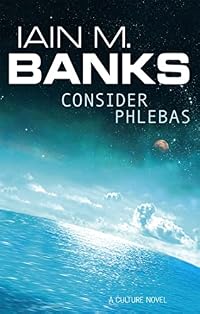
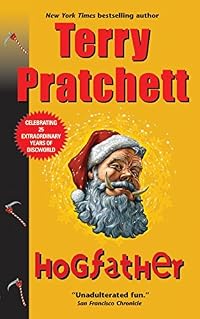
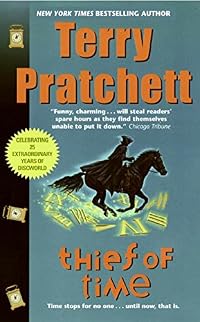
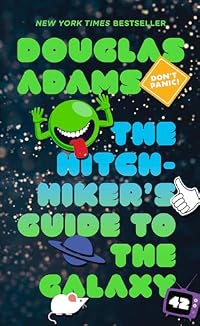

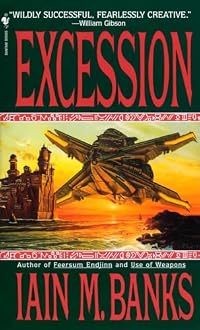
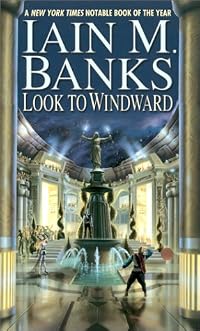
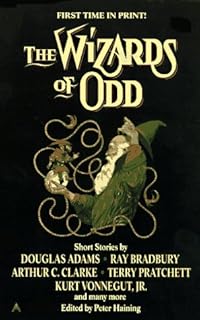
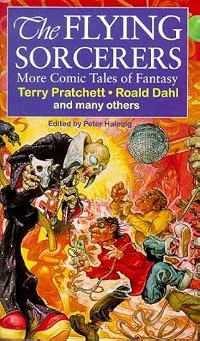
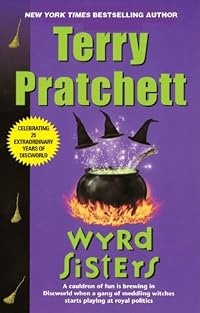
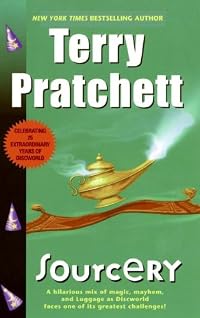
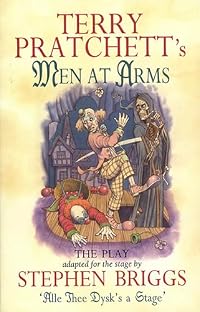
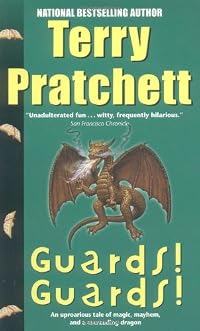
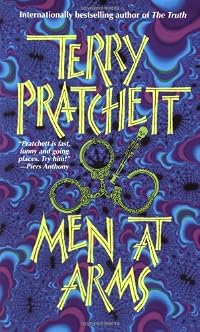
Member Recommendations

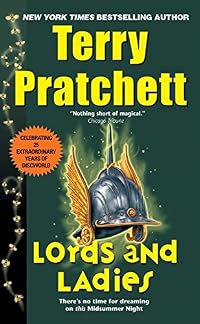
souloftherose Although The Blue Hawk is aimed specifically at children/young adults and Small Gods is an adult book, I think both books examine and raise interesting questions about faith and religion and readers who enjoyed one may well enjoy the other.
20
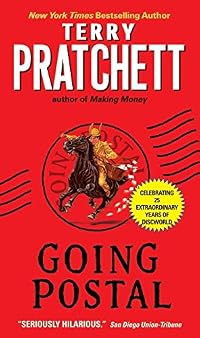
Eat_Read_Knit A very different style of book from a very different genre, but an interesting commentary on the corruption/misuse of religious faith which complements this book's treatment of the same theme.
22

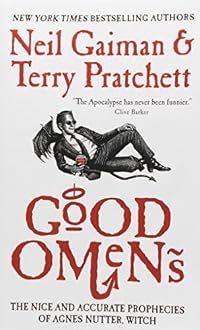
electronicmemory Humorous but also insightful stories about ordinary mortals who find themselves caught up in the - often petty - fights of their gods.

Member Reviews
Everything comes around in the end. The idea that gods are created by belief is a common one that's used elsewhere (the plane of Theros, in Magic: the Gathering lore, operates on this system, and American Gods, by He Who We Shall Not Name Any Longer, was my proper introduction to it), but I think it's best done here.
A lot of this book's philosophy on gods and divinities seems to have made it into my own mindset before I even read the book. I don't personally pass judgment on their existence or non-existence, but their most realistic power is always the effect that belief in them has on people; whether the belief creates the god or the god creates the belief is irrelevant. The sad reality is that, stemming from this, the true power of show more the god is intrinsically linked to the power of their church, even though that is an edifice built by man and not by the god Eventually, the church *becomes* the god, above the original meaning of the religion. The consequences: Vorbis, Harry Powell, and the Westboro Baptist Church.
My personal opinion? I don't tether myself to any religion, or any way of thinking, if I can avoid it. I take what I judge to be of value and leave the rest; I appreciate the value of religion in others, but swear that everything is best in moderation, and worship in particular is best consumed intelligently, lest it become a cult. And, most importantly, THIS IS NOT A GAME. Life is life; live it while you can, and deal with what comes after... well, after.
That's exactly what this book tells us, in Terry's classic way. Absolutely five stars. show less
A lot of this book's philosophy on gods and divinities seems to have made it into my own mindset before I even read the book. I don't personally pass judgment on their existence or non-existence, but their most realistic power is always the effect that belief in them has on people; whether the belief creates the god or the god creates the belief is irrelevant. The sad reality is that, stemming from this, the true power of show more the god is intrinsically linked to the power of their church, even though that is an edifice built by man and not by the god Eventually, the church *becomes* the god, above the original meaning of the religion. The consequences: Vorbis, Harry Powell, and the Westboro Baptist Church.
My personal opinion? I don't tether myself to any religion, or any way of thinking, if I can avoid it. I take what I judge to be of value and leave the rest; I appreciate the value of religion in others, but swear that everything is best in moderation, and worship in particular is best consumed intelligently, lest it become a cult. And, most importantly, THIS IS NOT A GAME. Life is life; live it while you can, and deal with what comes after... well, after.
That's exactly what this book tells us, in Terry's classic way. Absolutely five stars. show less
"You died if you had no believers, and that was what a small god generally worried about." (pg. 61)
I've been reading the Discworld books in publication order and I've been flagging, because the previous few haven't really been the best. Sometimes I've even thought of quietly abandoning the series altogether. Happily, Small Gods proved to be a joy, a real tonic to my jaded outlook on Terry Pratchett's world.
The Discworld in general seems to be hit-or-miss; each book brings the same elements (good ideas, busy plot, magical whimsy, odd humour, and so on) but, with all these variables up in the air, you're never quite sure which ones are going to land right. You just have to read them and hope you've found a good one. That's certainly the show more case with Small Gods: it explores its ideas well, providing some good messages and plenty of opportunities for legitimate humour. The plot also seemed sharper here than in previous books: apart from one sequence towards the end, I never felt confused. I knew who to root for (Brutha's character development is imperfect, but it's there) and who not to root for (Vorbis is one of Pratchett's better villains). The magic was less garish than usual, which I liked, and the rules of the story were clear (there are 'small' gods which require people to believe in them in order to be powerful). I felt like I had a handle on it throughout; I was walking alongside Pratchett rather than struggling to keep up, and the book was all the more enjoyable for that.
Small Gods was one Pratchett book I'd always wanted to read, not only because it's one of the more highly-rated Discworld novels, but because its topics – gods, philosophy, fanaticism, and so on – are ones that I'm particularly interested in. Not only does Pratchett succeed in bringing his thoughtful takes on these ideas to life, he wraps them in a lean, entertaining adventure. That's the Discworld M.O., of course, but it's done as well here as in any I've read so far. It's ironic that this is the book that's got me believing again, and I hope Pratchett continues to show his power in the books ahead. show less
I've been reading the Discworld books in publication order and I've been flagging, because the previous few haven't really been the best. Sometimes I've even thought of quietly abandoning the series altogether. Happily, Small Gods proved to be a joy, a real tonic to my jaded outlook on Terry Pratchett's world.
The Discworld in general seems to be hit-or-miss; each book brings the same elements (good ideas, busy plot, magical whimsy, odd humour, and so on) but, with all these variables up in the air, you're never quite sure which ones are going to land right. You just have to read them and hope you've found a good one. That's certainly the show more case with Small Gods: it explores its ideas well, providing some good messages and plenty of opportunities for legitimate humour. The plot also seemed sharper here than in previous books: apart from one sequence towards the end, I never felt confused. I knew who to root for (Brutha's character development is imperfect, but it's there) and who not to root for (Vorbis is one of Pratchett's better villains). The magic was less garish than usual, which I liked, and the rules of the story were clear (there are 'small' gods which require people to believe in them in order to be powerful). I felt like I had a handle on it throughout; I was walking alongside Pratchett rather than struggling to keep up, and the book was all the more enjoyable for that.
Small Gods was one Pratchett book I'd always wanted to read, not only because it's one of the more highly-rated Discworld novels, but because its topics – gods, philosophy, fanaticism, and so on – are ones that I'm particularly interested in. Not only does Pratchett succeed in bringing his thoughtful takes on these ideas to life, he wraps them in a lean, entertaining adventure. That's the Discworld M.O., of course, but it's done as well here as in any I've read so far. It's ironic that this is the book that's got me believing again, and I hope Pratchett continues to show his power in the books ahead. show less
The Great God Om is down on his luck and forced to team up with the only person alive who still believes in him. Unfortunately for Om, it's the village idiot. Now all Om needs to do is raise this kid up to become the next Prophet, and his problems should be solved, but the church has other plans.
Sounds pretty promising, doesn't it? It's a situation ripe for kicking large holes into some of my favorite things that need large holes kicked into them. But at the 2/3 point, I'm still bored and I'm not really laughing much - not as much as people tell me I should be, anyway.
This is the third time I've tried to get on board the Pratchett train and the third time I've been left standing at the station wondering what all the commotion is about. show more Clearly, he is well loved by a great many - enough so that it's earned him a Knighthood, so I'm certainly not going to criticize his writing or his imagination. I am quite willing to say, "It isn't you, Terry. It's me."
I mean, I see the wry commentary and the curmudgeonly asides. I get the various aspects of modern culture that he is lampooning. I even get the very occasional chuckle. But it just feels too forced for me, like that kid I knew in high school who just kept telling jokes and throwing witty barbs at people, hoping one of them would stick and get a laugh. The sheer sense of desperation overwhelmed any actual funny he might have struck, and left me exhausted more than amused.
Now, I'm not pleased with myself about this. Not in the least. I wanted to like Pratchett. I was hoping that maybe this time around, he would finally "click" for me, and I would be the proverbial kid in a candy store, eyes a'glaze, looking out over the vast plains of his delectable works, eager to gorge myself on his books of plenty. But it didn't happen, and I'm disappointed.
If you've enjoyed other Pratchett books, then I'm sure this one will work just as well for you. And if you're a fan of curmudgeonly sacred cow tipping, then by all means, give this a shot. But if you like your humor to arise more directly from character, rather than from the sheer audacity of what he's lampooning, then you might understand my disappointment.
Good-bye and God Speed, Sir Terry. We shall not meet again. show less
Sounds pretty promising, doesn't it? It's a situation ripe for kicking large holes into some of my favorite things that need large holes kicked into them. But at the 2/3 point, I'm still bored and I'm not really laughing much - not as much as people tell me I should be, anyway.
This is the third time I've tried to get on board the Pratchett train and the third time I've been left standing at the station wondering what all the commotion is about. show more Clearly, he is well loved by a great many - enough so that it's earned him a Knighthood, so I'm certainly not going to criticize his writing or his imagination. I am quite willing to say, "It isn't you, Terry. It's me."
I mean, I see the wry commentary and the curmudgeonly asides. I get the various aspects of modern culture that he is lampooning. I even get the very occasional chuckle. But it just feels too forced for me, like that kid I knew in high school who just kept telling jokes and throwing witty barbs at people, hoping one of them would stick and get a laugh. The sheer sense of desperation overwhelmed any actual funny he might have struck, and left me exhausted more than amused.
Now, I'm not pleased with myself about this. Not in the least. I wanted to like Pratchett. I was hoping that maybe this time around, he would finally "click" for me, and I would be the proverbial kid in a candy store, eyes a'glaze, looking out over the vast plains of his delectable works, eager to gorge myself on his books of plenty. But it didn't happen, and I'm disappointed.
If you've enjoyed other Pratchett books, then I'm sure this one will work just as well for you. And if you're a fan of curmudgeonly sacred cow tipping, then by all means, give this a shot. But if you like your humor to arise more directly from character, rather than from the sheer audacity of what he's lampooning, then you might understand my disappointment.
Good-bye and God Speed, Sir Terry. We shall not meet again. show less
This book should be required reading for anyone who has profoundly held religious beliefs. Pratchett effectively, and with pointed humor, parodies institutionalized religion from many angles, but still allows that sincere and simple belief exists within it. One of Pratchett's best, and that's up against some serious competition.
Small Gods is a treasure, a masterpiece of humanistic philosophy. The theocracy of Om is an aberration on this disc, a harsh empire of unyielding fundamentalists. The massive hierarchy of the Church and Inquisition has stamped out all opposition to Om, and also all true faith, leaving nothing but an immense shell of hypocrisy. And on the Disc, where belief is like air to gods, this means that the Great God Om is sadly diminished, diminished down to a single believer, the Novice Brutha.
Brutha and Om, incarnate in the form of a tortoise, are swept up in a war orchestrated by the head of the inquisition, Vorbis, a man of means without ends. Om is pitted against Ephebe, a city-state of philosophers, guarded by a deadly labyrinth. Brutha show more isn't much of a thinker, but he has an incredible memory, one that Vorbis can use to defeat Ephebe. And so a novice is drawn into a game of politics, philosophy, and long arguments with his Greatly Diminished God over the nature of morality, religion, commandments, and priests.
It's simply my favorite Discworld book, one that's helped me immensely, and is always a joy to return to. show less
Brutha and Om, incarnate in the form of a tortoise, are swept up in a war orchestrated by the head of the inquisition, Vorbis, a man of means without ends. Om is pitted against Ephebe, a city-state of philosophers, guarded by a deadly labyrinth. Brutha show more isn't much of a thinker, but he has an incredible memory, one that Vorbis can use to defeat Ephebe. And so a novice is drawn into a game of politics, philosophy, and long arguments with his Greatly Diminished God over the nature of morality, religion, commandments, and priests.
It's simply my favorite Discworld book, one that's helped me immensely, and is always a joy to return to. show less
Pratchett, Terry. Small Gods. 1992. Discworld No. 13. Penguin Audio, 2022.
The new Penguin Audio editions of the Terry Pratchett novels spurred me to reread Small Gods, Pratchett’s sharpest satire on traditional religion and philosophy. What struck me most this time around is how much effort it takes to teach our clerics, philosophers, and gods basic humanity. Left on their own, too many folks make smiting the first resort. It’s a simple message, but an important one. As a side note, I wonder whether Pratchett was thinking of “Lonesome Valley” by the Carter Family (and countless others) in the dialogue between Death and Vorbis. 5 stars.
The new Penguin Audio editions of the Terry Pratchett novels spurred me to reread Small Gods, Pratchett’s sharpest satire on traditional religion and philosophy. What struck me most this time around is how much effort it takes to teach our clerics, philosophers, and gods basic humanity. Left on their own, too many folks make smiting the first resort. It’s a simple message, but an important one. As a side note, I wonder whether Pratchett was thinking of “Lonesome Valley” by the Carter Family (and countless others) in the dialogue between Death and Vorbis. 5 stars.
The high and mighty Om, has been stuck as a tortoise for over three years now. Considering that a god's strength lies in the number of its believers, this is not a normal occurrence for Om. After all, the country is full of zealous believers at His disposal. They're devout enough to wage war in His name. At the same time, they seem to have trouble hearing His request for more lettuce leaves... except for Brutha, the most simple-minded of them all.
In dire need of protection from non-believing eagles, our tiny little Om-as-a-tortoise will take what He can get, where He can get it.
Small Gods was not particularly high up on my Discworld (re)read list: more like a task to be ticked off, on the way to more interesting books. Something that I show more could see being useful to open other people's eyes about organized religion.
I, for one, have already done the
-"fervent little believer, who worries that the Almighty has seen her wish to do her (long put off) chores on Sundays"
or the
- "spiteful atheist who will strive to insert twice as many mean-spirited remarks as anyone else into all her interactions with the devout"
only to become an
- "occasional eye-roller and constant exasperated sigher".
...and I did it all in heels.
But then little by little, the characters started to grow on me, and I suddenly found myself so hooked that I devoured the whole book within a day!
While the Quisition department's tortures, the mindless religious bigotry, and power hungry coups d'état all left me in various states of disgust, when the narrative perspective would switch to Brutha, I was ready to swing my metaphorical pom-poms his way. Brutha's simple-minded yet thoughtful way of believing was so touching, especially because I was expecting him to do a 180 character change with each of his fervently held beliefs that came crashing down.
Having recently finished a children's book whose "love thy enemies" message left me utterly nonplussed, I was pleasantly surprised to find myself earnestly hoping that Brutha's kindness would eventually pay off, even though I would've been happy to have the main antagonist drop dead at any moment.
Score: 4.8/5 stars
I have to admit that I did end up skimming through some of the more philosophical passages, in favor of the more action-packed scenes, but all in all I can't say I was ever bored. As a matter of fact I even cried at the climactic moment, which is highly unusual for me.
P.S. Fans of Carpe Jugulum should definitely read this, in order to have a better understanding of the legends surrounding the prophet Brutha. show less
In dire need of protection from non-believing eagles, our tiny little Om-as-a-tortoise will take what He can get, where He can get it.
Small Gods was not particularly high up on my Discworld (re)read list: more like a task to be ticked off, on the way to more interesting books. Something that I show more could see being useful to open other people's eyes about organized religion.
I, for one, have already done the
-"fervent little believer, who worries that the Almighty has seen her wish to do her (long put off) chores on Sundays"
or the
- "spiteful atheist who will strive to insert twice as many mean-spirited remarks as anyone else into all her interactions with the devout"
only to become an
- "occasional eye-roller and constant exasperated sigher".
...and I did it all in heels.
But then little by little, the characters started to grow on me, and I suddenly found myself so hooked that I devoured the whole book within a day!
While the Quisition department's tortures, the mindless religious bigotry, and power hungry coups d'état all left me in various states of disgust, when the narrative perspective would switch to Brutha, I was ready to swing my metaphorical pom-poms his way. Brutha's simple-minded yet thoughtful way of believing was so touching, especially because I was expecting him to do a 180 character change with each of his fervently held beliefs that came crashing down.
Having recently finished a children's book whose "love thy enemies" message left me utterly nonplussed, I was pleasantly surprised to find myself earnestly hoping that Brutha's kindness would eventually pay off, even though I would've been happy to have the main antagonist drop dead at any moment.
Score: 4.8/5 stars
I have to admit that I did end up skimming through some of the more philosophical passages, in favor of the more action-packed scenes, but all in all I can't say I was ever bored. As a matter of fact I even cried at the climactic moment, which is highly unusual for me.
P.S. Fans of Carpe Jugulum should definitely read this, in order to have a better understanding of the legends surrounding the prophet Brutha. show less
Members
- Recently Added By
Published Reviews
ThingScore 50
The problem with Small Gods is that its plot is complicated without being especially deft, and many tiny scenes exist solely to move stage scenery. Since a fair number of Pratchett's jokes recur from one book to the next, and many of the jokes in this novel are of the running or repeating variety (virtually every character, seeing Om as a tortoise, remarks, "There's good eating on one of those show more things"), the reader can end up looking for the good lines, like a partygoer digging through a dish of peanuts for the odd cashew. show less
added by Shortride
Lists

Best Fantasy Novels
821 works; 361 members

BBC Big Read
191 works; 46 members

Recommend the 20 best books you've read in the last five years
2,167 works; 600 members

Favourite Books
1,817 works; 316 members

Best Satire
188 works; 27 members

NPRs your picks: top 100 Sci-Fi/Fantasy books
297 works; 78 members

Books featuring monks and/or nuns
165 works; 33 members

Best Laugh Out Loud Books
143 works; 49 members

Top Five Books of 2013
1,564 works; 716 members

Stories About Other Worlds
145 works; 13 members
20th Century Literature
1,161 works; 55 members

Nineties
43 works; 10 members

Philosophical Fiction
97 works; 27 members

Canon de la narrativa universal del siglo XX
254 works; 6 members

Survey of Science Fiction and Fantasy
101 works; 13 members

Nonhuman Protagonists
235 works; 34 members
Folio Society
831 works; 53 members
LibraryThingers' 1001 Books You Must Read Before You Die
442 works; 30 members

Books I've Read More Than Once
602 works; 48 members

1990s
309 works; 17 members

Genre Benders: Comic Fantasy
97 works; 16 members

Religious Fiction
58 works; 12 members
Religion in Fantasy and Horror
38 works; 9 members

Books Read in 2023
5,547 works; 145 members

Mind Expanding Books by hackerkid
581 works; 8 members

A Novel Cure
742 works; 23 members

Books tagged favorites
390 works; 30 members
Speculative Fiction to Read
706 works; 32 members

Huxley's reading log 2016
84 works; 3 members
Five star books
1,755 works; 108 members

Books Read in 2015
3,298 works; 129 members
Best Books of the 20th Century
193 works; 5 members

Favorite Books from the 1990s
32 works; 3 members
Books Read in 2016
4,666 works; 197 members

Books Read in 2017
4,248 works; 129 members

Books I've read
87 works; 2 members

Books Read in 2006
417 works; 8 members

Books Read in 2022
5,164 works; 113 members
BingoDOG - Animals in Adult Fiction
78 works; 19 members

Books Read in 2025
4,090 works; 97 members
Our Favorite Comfort Reads
334 works; 200 members
Books I Read Before The Invention Of The Internet.
144 works; 1 member

Audio Books
29 works; 3 members
Best Audiobooks
240 works; 114 members

Allie's Wishlist
217 works; 2 members
Speculative Fiction
40 works; 2 members

Stories Featuring Reptiles
22 works; 5 members
fictional librarians
53 works; 19 members

Books Read in 2019
4,052 works; 108 members

Books Read in 2011
684 works; 20 members
Humorous Science Fiction and Fantasy
28 works; 6 members

Unread books
1,063 works; 83 members

Best Science Fiction Novels
816 works; 430 members
Author Information

429+ Works 578,331 Members
Terry Pratchett was on born April 28, 1948 in Beaconsfield, United Kingdom. He left school at the age of 17 to work on his local paper, the Bucks Free Press. While with the Press, he took the National Council for the Training of Journalists proficiency class. He also worked for the Western Daily Press and the Bath Chronicle. He produced a series show more of cartoons for the monthly journal, Psychic Researcher, describing the goings-on at the government's fictional paranormal research establishment, Warlock Hall. In 1980, he was appointed publicity officer for the Central Electricity Generating Board with responsibility for three nuclear power stations. His first novel, The Carpet People, was published in 1971. His first Discworld novel, The Colour of Magic, was published in 1983. He became a full-time author in 1987. He wrote more than 70 books during his lifetime including The Dark Side of the Sun, Strata, The Light Fantastic, Equal Rites, Mort, Sourcery, Truckers, Diggers, Wings, Dodger, Raising Steam, Dragons at Crumbling Castle: And Other Tales, and The Shephard's Crown. He was diagnosis with early onset Alzheimer's disease in 2007. He was knighted for services to literature in 2009 and received the World Fantasy award for life achievement in 2010. He died on March 12, 2015 at the age of 66. (Bowker Author Biography) show less
Some Editions
Awards and Honors
Series


Belongs to Publisher Series
Work Relationships
Is contained in
Has the adaptation
Is abridged in
Common Knowledge
- Canonical title
- Small Gods
- Original title
- Small Gods
- Alternate titles
- Dioses menores (España) (España)
- Original publication date
- 1992
- People/Characters
- Brutha (the Novice aka the Chosen One); The Great God Om; Vorbis; Didactylos; Urn; Simony (Sergeant) (show all 14); The Tyrant; Death [Discworld]; Brother Nhumrod; Lu-Tze; St Ungulant; Dhblah; Fri'it; Drunah
- Important places
- Omnia, Discworld; Ephebe, Discworld; Discworld (fictional); Ankh-Morpork, Discworld
- Epigraph
- [None]
- Dedication
- [None]
- First words
- Now consider the tortoise and the eagle.
- Quotations
- And it came to pass that in time the Great God Om spake unto Brutha, the Chosen One: "Psst!"
The figures looked more or less human. And they were engaged in religion. You could tell by the knives (it's not murder if you do it for a god).
Gods don't like people not doing much work. People who aren't busy all the time might start to think.
Or, to put it another way, the existence of a badly put-together watch proved the existence of a blind watchmaker.
Because what gods need is belief, and what humans want is gods.
He knew from experience that true and obvious ideas, such as the ineffable wisdom and judgment of the Great God Om, seemed so obscure to many people that you actually have to kill them before they saw the error of their ways.
Om began to feel the acute depression that steals over every realist in the presence of an optimist.
Fear is a strange soil. Mainly it grows obedience like corn, which grows in rows and makes weeding easy. But sometimes it grows the potatoes of defiance, which flourish underground.
And it all meant this: that there are hardly any excesses of the most crazed psychopath that cannot be easily duplicated by a normal, kindly family man who just comes to work every day and has a job to do.
"Life in this world," he said, "is, as it were, a sojourn in a cave. What can we know of reality? For all we see of the true nature of existence is, shall we say, no more than bewildering and amusing shadows cast upon the inn... (show all)er wall of the cave by the unseen blinding light of absolute truth, from which we may or may not deduce some glimmer of veracity, and we as troglodyte seekers of wisdom can only lift our voices to the unseen and say, humbly, `Go on, do Deformed Rabbit . . . it's my favorite.' "
People have reality-dampers.
It is a popular fact that nine-tenths of the brain is not used and, like most popular facts, it is wrong. Not even the most stupid Creator would go to the trouble of making the human head carr... (show all)y around several pounds of unnecessary gray goo if its only real purpose was, for example, to serve as a delicacy for certain remote tribesmen in unexplored valleys. It is used. And one of its functions is to make the miraculous seem ordinary and turn the unusual into the usual.
Because if this was not the case, then human beings, faced with the daily wondrousness of everything, would go around wearing big stupid grins, similar to those worn by certain remote tribesmen who occasionally get raided by the authorities and have the contents of their plastic greenhouses very seriously inspected. They'd say "Wow!" a lot. And no one would do much work.
Gods don't like people not doing much work. People who aren't busy all the time might start to think.
Part of the brain exists to stop this happening. It is very efficient. It can make people experience boredom in the middle of marvels. - Last words
- (Click to show. Warning: May contain spoilers.)Death watched them walk away.
- Blurbers
- Clute, John
- Original language
- English
Classifications
Statistics
- Members
- 13,366
- Popularity
- 576
- Reviews
- 210
- Rating
- (4.18)
- Languages
- 21 — Bulgarian, Catalan, Czech, Dutch, English, Estonian, Finnish, French, German, Hungarian, Italian, Japanese, Lithuanian, Norwegian (Bokmål), Norwegian, Polish, Russian, Serbian, Spanish, Swedish, Portuguese (Portugal)
- Media
- Paper, Audiobook, Ebook
- ISBNs
- 73
- ASINs
- 29