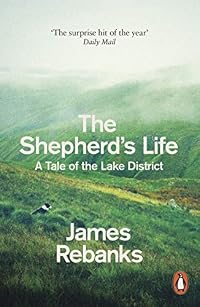
The Shepherd's Life: Modern Dispatches from an Ancient Landscape
by James Rebanks
On This Page
Description
Some people's lives are entirely their own creations. James Rebanks' isn't. The first son of a shepherd, who was the first son of a shepherd himself, his family have lived and worked in the Lake District of Northern England for generations, further back than recorded history. It's a part of the world known mainly for its romantic descriptions by Wordsworth and the much loved illustrated children's books of Beatrix Potter. But James' world is quite different. His way of life is ordered by the show more seasons and the work they demand. It hasn't changed for hundreds of years: sending the sheep to the fells in the summer and making the hay; the autumn fairs where the flocks are replenished; the grueling toil of winter when the sheep must be kept alive, and the light-headedness that comes with spring, as the lambs are born and the sheep get ready to return to the hills and valleys. show lessTags
Recommendations










Member Recommendations
Member Reviews
This is a great, almost deceptively straightforward account of what upland sheep farmers do, and why, and a thought-provoking memoir about what it feels like to grow up in a family with a farming tradition. And it's also a challenge to the reader to provoke us into looking at landscape not just aesthetically, but also in terms of the ways humans have interacted with it productively, and continue to do so.
When Rebanks, as a rebellious teenager counting the days to the end of school, was first presented with the Wainwright-and-Wordsworth way of looking at his native region, he couldn't see the point of it. He'd been brought up to think of fells and fields according to the kind of grazing and weather-protection they offered, who owned show more them, who farmed them, and so on; no-one he knew would be daft enough to climb a hill unless there was work to be done at the top of it. Nowadays he's a bit more nuanced: he admits that Wordsworth had a lot of respect for shepherds and the work they did, he doesn't begrudge Wainwright his escape from Blackburn, and recognises that both have something relevant to say about the region, even if the people who climb mountains clutching their books don't always get it...
The only Lakeland writer he has serious respect for, though, is Beatrix Potter, who, whatever you might think of her children's books, was a committed breeder of Herdwick sheep and a responsible landowner, as well as employing a highly-respected shepherd whose advice she was prepared to listen to. And Herdwick sheep are clearly Rebanks's real passion: he often has to rein himself in when he starts getting lyrical about the finer points of ewes and tups he has known. Even if you barely know one end of a sheep from the other, this makes for interesting reading, because it's so evidently something Rebank cares deeply about and takes the trouble to communicate clearly.
The autobiographical parts of the book are very interesting, too. Firstly, of course, we have to think about the big question of "tradition" — do you have a special claim on something just because it's what your grandfather and father did? Why should people who happened to be born in the Lake District have a better right to work there than those born in Manchester or Blackburn? Rebanks doesn't quite confront this, but he tries to demonstrate how important it is to the work he does that he has been around sheep and shepherds since early childhood. Hill-farming techniques have been optimised in very local ways over hundreds (perhaps thousands) of years, and are best learnt from people with local knowledge. Only long experience gives you the ability to anticipate problems and be in the right place at the right time to deal with them. Also, perhaps less obviously, farming is an activity that involves complicated networks of deals between farmers who have different surpluses and needs at different times, and most of these deals rely on trust that has been built up over a long period. It's much easier to trust someone if you've known and worked with their family for several generations, even if you don't know them personally.
The other striking autobiographical element is his slightly unusual background as someone who got into the least favourable channel of the English education system, left it as early as he could with no qualifications to speak of, and then went back into education as an adult. He has a lot of nicely caustic things to say about the terrible school he went to, as well as making fun of the people who only know him as a sheep-farmer and suddenly start taking him more seriously when they discover that he has an Oxford degree (and a high-powered second job advising UNESCO...).
I have a feeling that this is not just the book you bring back from the gift-shop at (insert Lakeland tourist attraction), but something that will stand up as one of those minor classics of rural writing that people are still discovering with pleasure in secondhand bookshops in fifty years' time. show less
When Rebanks, as a rebellious teenager counting the days to the end of school, was first presented with the Wainwright-and-Wordsworth way of looking at his native region, he couldn't see the point of it. He'd been brought up to think of fells and fields according to the kind of grazing and weather-protection they offered, who owned show more them, who farmed them, and so on; no-one he knew would be daft enough to climb a hill unless there was work to be done at the top of it. Nowadays he's a bit more nuanced: he admits that Wordsworth had a lot of respect for shepherds and the work they did, he doesn't begrudge Wainwright his escape from Blackburn, and recognises that both have something relevant to say about the region, even if the people who climb mountains clutching their books don't always get it...
The only Lakeland writer he has serious respect for, though, is Beatrix Potter, who, whatever you might think of her children's books, was a committed breeder of Herdwick sheep and a responsible landowner, as well as employing a highly-respected shepherd whose advice she was prepared to listen to. And Herdwick sheep are clearly Rebanks's real passion: he often has to rein himself in when he starts getting lyrical about the finer points of ewes and tups he has known. Even if you barely know one end of a sheep from the other, this makes for interesting reading, because it's so evidently something Rebank cares deeply about and takes the trouble to communicate clearly.
The autobiographical parts of the book are very interesting, too. Firstly, of course, we have to think about the big question of "tradition" — do you have a special claim on something just because it's what your grandfather and father did? Why should people who happened to be born in the Lake District have a better right to work there than those born in Manchester or Blackburn? Rebanks doesn't quite confront this, but he tries to demonstrate how important it is to the work he does that he has been around sheep and shepherds since early childhood. Hill-farming techniques have been optimised in very local ways over hundreds (perhaps thousands) of years, and are best learnt from people with local knowledge. Only long experience gives you the ability to anticipate problems and be in the right place at the right time to deal with them. Also, perhaps less obviously, farming is an activity that involves complicated networks of deals between farmers who have different surpluses and needs at different times, and most of these deals rely on trust that has been built up over a long period. It's much easier to trust someone if you've known and worked with their family for several generations, even if you don't know them personally.
The other striking autobiographical element is his slightly unusual background as someone who got into the least favourable channel of the English education system, left it as early as he could with no qualifications to speak of, and then went back into education as an adult. He has a lot of nicely caustic things to say about the terrible school he went to, as well as making fun of the people who only know him as a sheep-farmer and suddenly start taking him more seriously when they discover that he has an Oxford degree (and a high-powered second job advising UNESCO...).
I have a feeling that this is not just the book you bring back from the gift-shop at (insert Lakeland tourist attraction), but something that will stand up as one of those minor classics of rural writing that people are still discovering with pleasure in secondhand bookshops in fifty years' time. show less
As I was reading this book I started to think how very little thought I've ever given to sheep. Sheep were something that were just ... well ... around. Certainly, within walking distance of my childhood home there were fields with sheep in them but I'd never given them a moments thought, apart from at lambing time, and only then because of the cuteness of the lambs. The sheep we encountered on the way to visit my great aunt in the Welsh Valleys were marginally more interesting, mainly because those sheep of the unfenced mountains had a tendency to walk in front of the car at random moments, which made driving more interesting. So it's a tribute to the quality of James Rebanks's book that I've come away with a real feeling of the love show more that he has for his life as a shepherd.
The Shepherd's Life is part description of the hill shepherd's year, part autobiography, part history of the author's family who have farmed in the Lake District for generations, but above all a celebration of the life of the hill farmer. And of course the sheep. Who knew sheep could be so interesting? James Rebanks own passion is for the Herdwick sheep, the traditional breed of the Lake District, sheep that have been are "hefted" (or attached) to their own piece of upland for generation after generation so that they will stay there and not wander. And it could be argued that Rebanks's family are "hefted" too, belonging to the land in a way that is alien to most British people today. Reading this book made me think what a very long time it is since anyone in my own family could have felt that they belonged to the landscape in the way that the author describes, a hundred and fifty years ago at the very least I would imagine.
James Rebanks is a man of strong opinions, not all of which I agree with. But as a portrait of a different way of life, that is continuing traditions in the twenty-first century that have gone on for centuries, this can't be bettered. So highly recommended ... and not just to lovers of sheep. show less
The Shepherd's Life is part description of the hill shepherd's year, part autobiography, part history of the author's family who have farmed in the Lake District for generations, but above all a celebration of the life of the hill farmer. And of course the sheep. Who knew sheep could be so interesting? James Rebanks own passion is for the Herdwick sheep, the traditional breed of the Lake District, sheep that have been are "hefted" (or attached) to their own piece of upland for generation after generation so that they will stay there and not wander. And it could be argued that Rebanks's family are "hefted" too, belonging to the land in a way that is alien to most British people today. Reading this book made me think what a very long time it is since anyone in my own family could have felt that they belonged to the landscape in the way that the author describes, a hundred and fifty years ago at the very least I would imagine.
James Rebanks is a man of strong opinions, not all of which I agree with. But as a portrait of a different way of life, that is continuing traditions in the twenty-first century that have gone on for centuries, this can't be bettered. So highly recommended ... and not just to lovers of sheep. show less
Who knew I wanted to understand everything about sheep herding? But yes, yes I did!
I chose to do a slow tandem read (audio/print) of this memoir. The prose, the rhythm of the work year, the ancient history of the land all contributed to a meditative experience. Rebanks takes us through the farming year as he and his family raise sheep in the Lake District of Northern England. Every task and every setting is described in minute detail by one who lives and loves the work and the land. I couldn’t be further from this lifestyle and yet I was invited in to learn more and appreciate the meaning of a farming way of life. Thank you to the author for this transforming reading experience.
I chose to do a slow tandem read (audio/print) of this memoir. The prose, the rhythm of the work year, the ancient history of the land all contributed to a meditative experience. Rebanks takes us through the farming year as he and his family raise sheep in the Lake District of Northern England. Every task and every setting is described in minute detail by one who lives and loves the work and the land. I couldn’t be further from this lifestyle and yet I was invited in to learn more and appreciate the meaning of a farming way of life. Thank you to the author for this transforming reading experience.
James Rebanks farms sheep in the Lake District, as his father and grandfather did before him. In this biography he takes readers through each season of the year, describing the history of the farm, his life, and the highs and lows of breeding sheep. His love for the landscape is evident, even though it can be inhospitable. Economics have also brought new challenges; unlike his father and grandfather, Rebanks needed to create an additional income stream to support the farm and his family. I most enjoyed Rebanks’ detailed accounts of shepherding during each season such as breeding, lambing, and showing sheep, which were told in parallel with equally interesting developments in his family.
If you are looking for a truly different perspective on life, and/or a totally different kind of book, look no further. Sheep farmer James Rebanks' account of life in the country is as far away from the tourist idea of life in the country as you can possibly get. The narrative is honest, compassionate, down-to-earth and surprising - a true attitude changer and eye opener for the reader. Yes, it is a beautiful life leaving the urban jungle behind, but it is also gruellingly hard and unromantic work. What I dont know about sheperding after having read this book, I dont need to know until I make the plunge into rural life myself. Rebanks gives me reason to think twice about it.
When people think of the Lake District the first thing that comes to mind is the landscape; the majestic fells, the lakes and tarns nestled among the peaks and valleys and the harsh beauty of our National Park. It is a place that has inspired writers and artists for hundreds of years, and has 16 million visitors every year. However, for a number of people they are completely dependent on this landscape to make their living. James Rebanks is one of those people.
The Rebanks family have lived and worked as shepherds in the Lake District for generations. His father was a shepherd before him, and his grandfather taught both of them all he knew. The inexorable grind of the seasons defines what they do and when. The Herdwick flock is moved up show more onto the high fell during the summer, and all the farmers gather to bring it down at the end of the season. The shows and sales are in the autumn when they sell the spare lambs and look for the new males tups to add to their bloodlines and quality of stock. Winter is the hardest time; the incessant rain, heavy snows and storms make keeping the sheep alive a daily battle, even for the tough Herdwicks. Spring brings new challenges as it is lambing time. Most of his flock can manage perfectly well, but there is always those that can’t and need that extra assistance. As another year passes the sheep are move back up onto the fells once again.
‘This is my life. I want no other.’
Rebanks is not afraid of hard work. Following his father and grandfather into this way of life, and he has chosen a tough and demanding career, but he loves it. He paid little attention at school, wanting to be out in the fields and up on the fells, continuing a way of life that people from the Viking age would still recognise. In his early twenties started education again this time with the single mindedness and determination to succeed. It gave him a separate career that supports the work on the farm. Like his father, he is strong minded and opinionated; great qualities for battling through all that the elements and bureaucracy have to throw at him, but not necessarily for making relationships straightforward. He is not the most eloquent or lyrical of writers, he tells it as it is, but the enthusiasm for his way of life comes across is deep hearted and honest and this is what makes this book such a pleasure to read. show less
The Rebanks family have lived and worked as shepherds in the Lake District for generations. His father was a shepherd before him, and his grandfather taught both of them all he knew. The inexorable grind of the seasons defines what they do and when. The Herdwick flock is moved up show more onto the high fell during the summer, and all the farmers gather to bring it down at the end of the season. The shows and sales are in the autumn when they sell the spare lambs and look for the new males tups to add to their bloodlines and quality of stock. Winter is the hardest time; the incessant rain, heavy snows and storms make keeping the sheep alive a daily battle, even for the tough Herdwicks. Spring brings new challenges as it is lambing time. Most of his flock can manage perfectly well, but there is always those that can’t and need that extra assistance. As another year passes the sheep are move back up onto the fells once again.
‘This is my life. I want no other.’
Rebanks is not afraid of hard work. Following his father and grandfather into this way of life, and he has chosen a tough and demanding career, but he loves it. He paid little attention at school, wanting to be out in the fields and up on the fells, continuing a way of life that people from the Viking age would still recognise. In his early twenties started education again this time with the single mindedness and determination to succeed. It gave him a separate career that supports the work on the farm. Like his father, he is strong minded and opinionated; great qualities for battling through all that the elements and bureaucracy have to throw at him, but not necessarily for making relationships straightforward. He is not the most eloquent or lyrical of writers, he tells it as it is, but the enthusiasm for his way of life comes across is deep hearted and honest and this is what makes this book such a pleasure to read. show less
What a fascinating journey this book has been. I REALLY like it. Although it didn't start out well for me. Basically because right off the bat the author showed that he and his cronies were resentful and avidly against education, and well, I'm sort of always been antithesis of that, in the geekiest sort of way. [[They destroyed all the microscopes in their school to see the teacher cry. Makes me faint thinking of it.]]
But this strange beginning was put quickly behind me as the author drew me into his world. A world where he feels a connection to the land and where he and his family can easily trace their way of life back to the 1600s. As a student of history I found his views enlightening, and I had a few slap-head/aha moments where I show more broken through my own mindset to understand the parochial one whereby you might want nothing more than to follow in your grandfather and father's footsteps. Why you might turn away from a chance at University and city life to never want to wander farther from your home than you can walk. Mr. Rebanks made me understand that and more.
As for the anti-education factor that actually plays out in the story arch. I'd tell you more but it might ruin this aspect of the tale. But let's say that the author's eyes were opened by a single book. And if you're old enough to remember the movie Educating Rita there is a parallel here.
.
.
The style of this book is interesting. I know the author found his fame first in tweeting, or so the blurbs say. And I wasn't quite sure when I began reading whether this book was going to be all tweets or what. What it seems to me to be is a narrative that grew out of the tweets. It gives the book a sort Stream of Consciousness feel. I can say that if it flitted a bit from one topic to another, it never bothered me and I had no problems following the story.
THE SHEPHERD'S LIFE wasn't a quick read for me. I'm not sure why because I can say that I was never bored nor tempted to put it down to do something else. It just didn't fly past. Some of that may have been because of the cool words the author introduced. He always explained what they meant but more than once I went off to google the derivation.
The things I loved most was his love for the people, sheep, and way of life. I feel like I shared something special. If you like books like A Farm Dies Once a Year: A Memoir you should read this one too.
~review copy show less
But this strange beginning was put quickly behind me as the author drew me into his world. A world where he feels a connection to the land and where he and his family can easily trace their way of life back to the 1600s. As a student of history I found his views enlightening, and I had a few slap-head/aha moments where I show more broken through my own mindset to understand the parochial one whereby you might want nothing more than to follow in your grandfather and father's footsteps. Why you might turn away from a chance at University and city life to never want to wander farther from your home than you can walk. Mr. Rebanks made me understand that and more.
As for the anti-education factor that actually plays out in the story arch. I'd tell you more but it might ruin this aspect of the tale. But let's say that the author's eyes were opened by a single book. And if you're old enough to remember the movie Educating Rita there is a parallel here.
.
.
The style of this book is interesting. I know the author found his fame first in tweeting, or so the blurbs say. And I wasn't quite sure when I began reading whether this book was going to be all tweets or what. What it seems to me to be is a narrative that grew out of the tweets. It gives the book a sort Stream of Consciousness feel. I can say that if it flitted a bit from one topic to another, it never bothered me and I had no problems following the story.
THE SHEPHERD'S LIFE wasn't a quick read for me. I'm not sure why because I can say that I was never bored nor tempted to put it down to do something else. It just didn't fly past. Some of that may have been because of the cool words the author introduced. He always explained what they meant but more than once I went off to google the derivation.
The things I loved most was his love for the people, sheep, and way of life. I feel like I shared something special. If you like books like A Farm Dies Once a Year: A Memoir you should read this one too.
~review copy show less
Members
- Recently Added By
Lists

Books Read in 2016
4,666 works; 199 members

Books Read in 2017
4,248 works; 130 members

Books Read in 2019
4,052 works; 108 members

2021 - List of books read
53 works; 1 member

Finished in 2025
23 works; 1 member

Top Five Books of 2025
950 works; 302 members
Author Information

7 Works 2,180 Members
Awards and Honors
Awards
Distinctions
Common Knowledge
- Canonical title*
- Het herdersleven
- Original title
- The Shepherd's Life: A Tale of the Lake District
- Original publication date
- 2015
- People/Characters
- James Rebanks
- Important places
- Lake District, Cumbria, England, UK
- Epigraph
- Towards the head of these Dales was found a perfect Republic of Shepherds and Agriculturalists, among whom the plough of each man was confined to the maintenance of his own family, or to the occasional accommodation of his n... (show all)eighbour. Two or three cows furnished each family with milk and cheese. The chapel was the only edifice that presided over these dwellings, the supreme head of this pure Commonwealth; the members of which existed in the midst of a powerful empire, like an ideal society or an organized community, whose constitution had been imposed and regulated by the mountains which protected it. Neither high-born nobleman, knight, nor esquire was here; but many of these humble sons of the hills had a consciousness that the land, which they walked over and tilled, had for more than five hundred years been possessed by men of their name and blood... William Wordsworth, A Guide Through the District of the Lakes in the North of England (1810)
- Dedication
- Dedicated to the memory of my grandfather,
W.H. Rebanks,
and with respect to my father,
T.W. Rebanks - First words
- I realized we were different, really different, on a rainy morning in 1987.
- Last words
- (Click to show. Warning: May contain spoilers.)I want no other.
- Blurbers
- Macdonald, Helen; Cumming, Alan; Crane, Nicholas; Jones, Sadie; Lewis-Stempel, John; Walling, Philip (show all 8); Jones, Cynan; Slater, Nigel
*Some information comes from Common Knowledge in other languages. Click "Edit" for more information.
Classifications
Statistics
- Members
- 1,275
- Popularity
- 18,958
- Reviews
- 42
- Rating
- (4.03)
- Languages
- 9 — Danish, Dutch, English, Finnish, German, Italian, Polish, Spanish, Swedish
- Media
- Paper, Audiobook, Ebook
- ISBNs
- 37
- ASINs
- 11