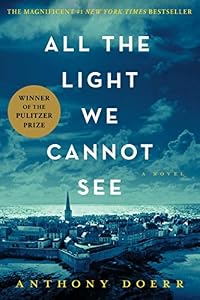
All the Light We Cannot See
by Anthony Doerr
On This Page
Description
"From the highly acclaimed, multiple award-winning Anthony Doerr, a stunningly ambitious and beautiful novel about a blind French girl and a German boy whose paths collide in occupied France as both try to survive the devastation of World War II. Marie Laure lives with her father in Paris within walking distance of the Museum of Natural History where he works as the master of the locks (there are thousands of locks in the museum). When she is six, she goes blind, and her father builds her a show more model of their neighborhood, every house, every manhole, so she can memorize it with her fingers and navigate the real streets with her feet and cane. When the Germans occupy Paris, father and daughter flee to Saint-Malo on the Brittany coast, where Marie-Laure's agoraphobic great uncle lives in a tall, narrow house by the sea wall. In another world in Germany, an orphan boy, Werner, grows up with his younger sister, Jutta, both enchanted by a crude radio Werner finds. He becomes a master at building and fixing radios, a talent that wins him a place at an elite and brutal military academy and, ultimately, makes him a highly specialized tracker of the Resistance. Werner travels through the heart of Hitler Youth to the far-flung outskirts of Russia, and finally into Saint-Malo, where his path converges with Marie-Laure. Doerr's gorgeous combination of soaring imagination with observation is electric. Deftly interweaving the lives of Marie-Laure and Werner, Doerr illuminates the ways, against all odds, people try to be good to one another. Ten years in the writing, All the Light We Cannot See is his most ambitious and dazzling work"-- show lessTags
Recommendations





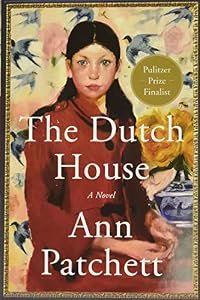
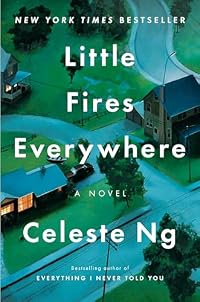

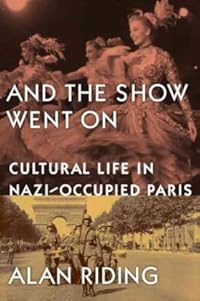

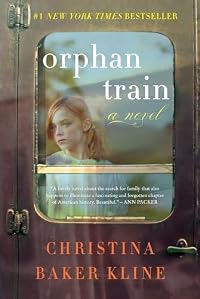










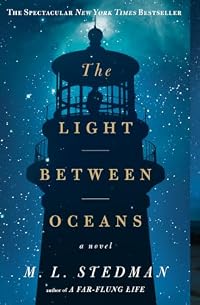
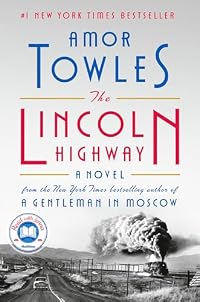
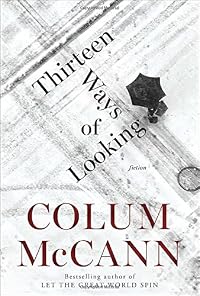
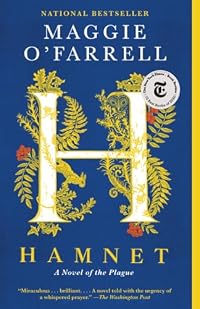





Member Recommendations
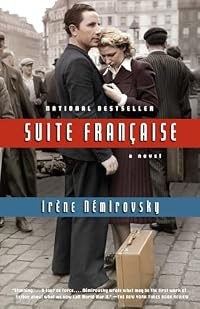
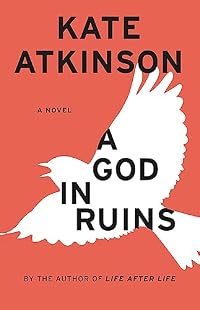
gypsysmom Similar locale in that Guernsey and St. Malo were occupied by the German army during World War II. Resistance is also a main theme in both of them.
202
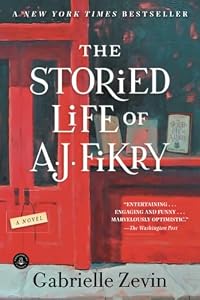
BookshelfMonstrosity Both of these heartbreaking World War II novels cause readers to pine for a happier ending than is possible for the characters. The stylistically complex writing describes the struggles that the characters -- some with physical challenges -- go through to survive.
Also recommended by cataylor
80

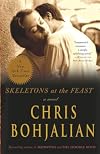

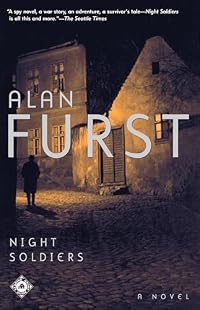
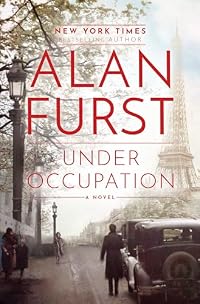
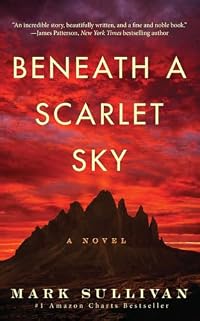
GoST Another novel set in occupied France with a relationship between a German soldier and a French girl.
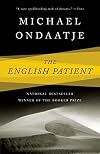
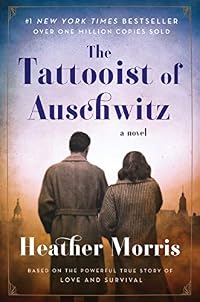
BookshelfMonstrosity These moving, stylistically complex novels reflect on the brutality of World War II and its lingering effects. The characters have diverse backgrounds, some supporting the Germans and others the Allies. Their wartime experiences threaten to ruin their futures.
55
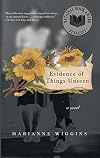
WSB7 Similar overarching theme.
Member Reviews
I thought I had hit maximum capacity for books about WWII last year (even though most of them were excellent reads, like the Book Thief and the English Patient), but apparently I hadn't hit the limit yet since I was fully capable of enjoying this novel.
Much in the same vein as the Book Thief, our protagonists are young and come from rather unique backgrounds. Marie-Laure is the blind daughter of a museum's locksmith from Paris and Werner is an orphaned German boy with a talent for mathematics and mechanics, who must survive very different experiences of the war to be brought together by Marie-Laure's great grandfather's radio at the very finale of the war. Doerr's unlikely choice of both of these characters is one which I'm sure will show more not go unnoticed by readers of this genre, as he strikes a careful balance between the novelty of something new and a well-researched historical reality to carve out a unique space within the larger narrative of WWII.
What I enjoyed most (and was equally horrified by) was Doerr's choice to place Werner into the machinery of the Nazi state that trains young boys to be soldiers. The stark brutality of the training camps is even more extreme in its treatment of its wards than modern camps since it is intensely obvious that these children are being brainwashed to believe only in the power of the State and to carry out brutal acts (even against each other) in its service. Some are there at the will of their parents and others like Werner are there at the will of the State due to their physical or mental potential, with all forces (excepting for Werner) in agreement that this training is the best possible place for these children to be.
Marie-Laure's experience seems much more light-hearted in comparison -she is surrounded by family and takes on the risk of being a partisan of her own volition - but her survival becomes perilous when we become privy to the fact that the diamond that her father was responsible for safekeeping is now in her possession. Her foe is a former jeweller turned Nazi commander who's task it is to oversee the collection (read: theft) of Europe's cultural wealth in the form of paintings, statues, gold, and of course jewels. The supposedly cursed diamond is one which may or not be based on any real-life jem, but the Nazi commander certainly is since it was a major initiative of Hitler's to plunder Europe for all its cultural wealth for "safekeeping" under the hand of the Third Reich. show less
Much in the same vein as the Book Thief, our protagonists are young and come from rather unique backgrounds. Marie-Laure is the blind daughter of a museum's locksmith from Paris and Werner is an orphaned German boy with a talent for mathematics and mechanics, who must survive very different experiences of the war to be brought together by Marie-Laure's great grandfather's radio at the very finale of the war. Doerr's unlikely choice of both of these characters is one which I'm sure will show more not go unnoticed by readers of this genre, as he strikes a careful balance between the novelty of something new and a well-researched historical reality to carve out a unique space within the larger narrative of WWII.
What I enjoyed most (and was equally horrified by) was Doerr's choice to place Werner into the machinery of the Nazi state that trains young boys to be soldiers. The stark brutality of the training camps is even more extreme in its treatment of its wards than modern camps since it is intensely obvious that these children are being brainwashed to believe only in the power of the State and to carry out brutal acts (even against each other) in its service. Some are there at the will of their parents and others like Werner are there at the will of the State due to their physical or mental potential, with all forces (excepting for Werner) in agreement that this training is the best possible place for these children to be.
Marie-Laure's experience seems much more light-hearted in comparison -she is surrounded by family and takes on the risk of being a partisan of her own volition - but her survival becomes perilous when we become privy to the fact that the diamond that her father was responsible for safekeeping is now in her possession. Her foe is a former jeweller turned Nazi commander who's task it is to oversee the collection (read: theft) of Europe's cultural wealth in the form of paintings, statues, gold, and of course jewels. The supposedly cursed diamond is one which may or not be based on any real-life jem, but the Nazi commander certainly is since it was a major initiative of Hitler's to plunder Europe for all its cultural wealth for "safekeeping" under the hand of the Third Reich. show less
ALL THE LIGHT WE CANNOT SEE flips back and forth between Marie-Laure in France and Werner in Germany. Marie-Laure is blind; she lives with her father, who is a locksmith for a museum. As the Germans approach Paris, Marie-Laure and her father flee to her great-uncle Etienne's house in Saint-Malo. Her father may or may not have in his possession the Sea of Flames, one of the museum's greatest treasures; three replicas were made, but he believes he has the original. The diamond is reputed to carry a curious curse: it protects the bearer but brings bad luck to those around him.
Werner is an orphan who lives with his sister in a mining town in Germany; he is fascinated by radios, and teaches himself how to make and repair them. His skill show more attracts the attention of a German officer stationed in the town, and Werner is sent to the National Political Institute of Education at Schulpforta; later, he is sent into the German army, despite being two years too young. He is paired with Volkheimer, a giant who protects him, though he brings death to the partisans with radios that Werner helps to find.
When Werner's work brings him near Saint-Malo, he hears Etienne broadcasting for the resistance, but keeps it a secret, because Etienne's voice is one he remembers from his childhood: Etienne and his brother, Henri, made science programs for children that Werner and his sister Jutta listened to and loved.
Each section is only a few pages long, but switching back and forth is not jarring as one might expect. Each section is from Marie-Laure's or Werner's point of view, with few exceptions: a German jeweler hunting for the Sea of Flames, Jutta and Volkheimer after the war. Doerr evokes Marie-Laure's particular vulnerability well, but with Werner he presents an unusual side of the story: not much historical fiction that I have read shows what it was like for a boy to come of age in Nazi Germany, the propaganda and brainwashing, the inescapability of it.
Quotes
Stones are just stones and rain is just rain and misfortune is just bad luck. Some things are simply more rare than others, and that's why there are locks. (Marie-Laure, 51)
...theories are interesting but what he loves most is building things, working with his hands, connecting his fingers to the engine of his mind. (Werner, 62)
Radio: it ties a million ears to a single mouth. (63)
From a certain angle, the spring seems so calm: warm, tender, each night redolent and composed. And yet everything radiates tension, as if the city has been built upon the skin of a balloon and someone is inflating it toward the breaking point. (70)
"You know the greatest lesson of history? It's that history is whatever the victors say it is. That's the lesson. Whoever wins, that's who decides the history. We act in our own self-interest. Of course we do. Name me a person or a nation who does not. The trick is figuring out where your interests are." (Herr Siedler to Werner, 84)
"A scientist's work, cadet, is determined by two things. His interests and the interests of his time. Do you understand?" (Dr. Hauptmann to Werner at Schulpforta, 154)
How do you ever know for certain that you are doing the right thing? (Marie-Laure's father, 189)
"Do you ever wish," whispers Werner, "that you didn't have to go back?"
"Father needs me to be at Schulpforta. Mother too. It doesn't matter what I want."
"Of course it matters. I want to be an engineer. And you want to study birds....Why else do any of this if not to become who we want to be?"
... "Your problem, Werner," says Frederick, "is that you still believe you own your life." (223)
"There must be order. Life is chaos, gentlemen. And what we represent is an ordering to that chaos. Even down to the genes. We are ordering an evolution of the species. Winnowing out the inferior....This is the great project of the Reich, the greatest project human beings have ever embarked upon." (Hauptmann, 240)
"But minds are not to be trusted. Minds are always drifting toward ambiguity, toward questions, when what you really need is certainty. Purpose. Clarity. Do not trust your minds." (Bastian to Werner at Schulpforta, 264)
"Every rumor carries a seed of truth, Etienne." (Madame Manec, 268)
"I don't want to make trouble, Madame."
"Isn't doing nothing a kind of troublemaking?"
"Doing nothing is doing nothing."
"Doing nothing is as good as collaborating." (Etienne and Madame Manec, 269)
"Don't you ever get tired of believing, Madame? Don't you ever want proof?" (Marie-Laure, 292)
Time is a slippery thing: lose hold of it once, and its string might sail out of your hands forever. (Marie-Laure, 376)
The recognition is immediate. It is as if he has been drowning for as long as he can remember and somebody has fetched him up for air. (Werner, 406)
It seems to Werner that in the space between whatever has happened and whatever is to come hovers an invisible borderland, the known on one side and the unknown on the other. (437)
Even those who have returned, she can tell, have returned different, older than they should be, as though they have been on another planet where years pass more quickly. (Marie-Laure at Gare d'Austerlitz, 493)
It's embarrassingly plain how inadequate language is....Nothing will be healed in this kitchen. Some griefs can never be put right. (Jutta and Volkheimer, 503)
What the war did to dreamers. (Jutta, 506)
It was hard to live through the early 1940s in France and not have the war be the center from which the rest of your life spiraled. (Marie-Laure, 512) show less
Werner is an orphan who lives with his sister in a mining town in Germany; he is fascinated by radios, and teaches himself how to make and repair them. His skill show more attracts the attention of a German officer stationed in the town, and Werner is sent to the National Political Institute of Education at Schulpforta; later, he is sent into the German army, despite being two years too young. He is paired with Volkheimer, a giant who protects him, though he brings death to the partisans with radios that Werner helps to find.
When Werner's work brings him near Saint-Malo, he hears Etienne broadcasting for the resistance, but keeps it a secret, because Etienne's voice is one he remembers from his childhood: Etienne and his brother, Henri, made science programs for children that Werner and his sister Jutta listened to and loved.
Each section is only a few pages long, but switching back and forth is not jarring as one might expect. Each section is from Marie-Laure's or Werner's point of view, with few exceptions: a German jeweler hunting for the Sea of Flames, Jutta and Volkheimer after the war. Doerr evokes Marie-Laure's particular vulnerability well, but with Werner he presents an unusual side of the story: not much historical fiction that I have read shows what it was like for a boy to come of age in Nazi Germany, the propaganda and brainwashing, the inescapability of it.
Quotes
Stones are just stones and rain is just rain and misfortune is just bad luck. Some things are simply more rare than others, and that's why there are locks. (Marie-Laure, 51)
...theories are interesting but what he loves most is building things, working with his hands, connecting his fingers to the engine of his mind. (Werner, 62)
Radio: it ties a million ears to a single mouth. (63)
From a certain angle, the spring seems so calm: warm, tender, each night redolent and composed. And yet everything radiates tension, as if the city has been built upon the skin of a balloon and someone is inflating it toward the breaking point. (70)
"You know the greatest lesson of history? It's that history is whatever the victors say it is. That's the lesson. Whoever wins, that's who decides the history. We act in our own self-interest. Of course we do. Name me a person or a nation who does not. The trick is figuring out where your interests are." (Herr Siedler to Werner, 84)
"A scientist's work, cadet, is determined by two things. His interests and the interests of his time. Do you understand?" (Dr. Hauptmann to Werner at Schulpforta, 154)
How do you ever know for certain that you are doing the right thing? (Marie-Laure's father, 189)
"Do you ever wish," whispers Werner, "that you didn't have to go back?"
"Father needs me to be at Schulpforta. Mother too. It doesn't matter what I want."
"Of course it matters. I want to be an engineer. And you want to study birds....Why else do any of this if not to become who we want to be?"
... "Your problem, Werner," says Frederick, "is that you still believe you own your life." (223)
"There must be order. Life is chaos, gentlemen. And what we represent is an ordering to that chaos. Even down to the genes. We are ordering an evolution of the species. Winnowing out the inferior....This is the great project of the Reich, the greatest project human beings have ever embarked upon." (Hauptmann, 240)
"But minds are not to be trusted. Minds are always drifting toward ambiguity, toward questions, when what you really need is certainty. Purpose. Clarity. Do not trust your minds." (Bastian to Werner at Schulpforta, 264)
"Every rumor carries a seed of truth, Etienne." (Madame Manec, 268)
"I don't want to make trouble, Madame."
"Isn't doing nothing a kind of troublemaking?"
"Doing nothing is doing nothing."
"Doing nothing is as good as collaborating." (Etienne and Madame Manec, 269)
"Don't you ever get tired of believing, Madame? Don't you ever want proof?" (Marie-Laure, 292)
Time is a slippery thing: lose hold of it once, and its string might sail out of your hands forever. (Marie-Laure, 376)
The recognition is immediate. It is as if he has been drowning for as long as he can remember and somebody has fetched him up for air. (Werner, 406)
It seems to Werner that in the space between whatever has happened and whatever is to come hovers an invisible borderland, the known on one side and the unknown on the other. (437)
Even those who have returned, she can tell, have returned different, older than they should be, as though they have been on another planet where years pass more quickly. (Marie-Laure at Gare d'Austerlitz, 493)
It's embarrassingly plain how inadequate language is....Nothing will be healed in this kitchen. Some griefs can never be put right. (Jutta and Volkheimer, 503)
What the war did to dreamers. (Jutta, 506)
It was hard to live through the early 1940s in France and not have the war be the center from which the rest of your life spiraled. (Marie-Laure, 512) show less
O que a guerra representa para quem não decidiu iniciar o conflito? Ou que não pôde escolher não fazer parte dela? Esse é o tema central deste livro do norte-americano Anthony Doerr, que cruza as histórias de dois pré-adolescentes que vivem em países que se tornar "inimigos"na Segunda Guerra Mundial.
O autor constrói a narrativa em avanços e retrocessos no tempo ao longo do conflito. Fala muito pouco de episódios militares, e foca mais em seus personagens: civis, crianças, adolescentes e idosos, de donos de padaria a professores e estudiosos. Mesmo os soldados de "Toda a luz que não podemos ver", independentemente dos objetivos e motivação política de seus líderes, são apenas vítimas.
É um texto muito emotivo. Mantenha show more a caixa de lenços de papel ao alcance das mãos. show less
O autor constrói a narrativa em avanços e retrocessos no tempo ao longo do conflito. Fala muito pouco de episódios militares, e foca mais em seus personagens: civis, crianças, adolescentes e idosos, de donos de padaria a professores e estudiosos. Mesmo os soldados de "Toda a luz que não podemos ver", independentemente dos objetivos e motivação política de seus líderes, são apenas vítimas.
É um texto muito emotivo. Mantenha show more a caixa de lenços de papel ao alcance das mãos. show less
Well damn.
This book, you guys. This book will maybe haunt me. As far as war-related novels that I will remember, it ranks only behind Atonement. I appreciated that it was, I feel, a really well-told story. Others have reviewed it for CBR before, but if you aren’t familiar with it, here’s a quick synopsis. A young girl Marie-Laure is blind and lives with her father, a museum curator, in Paris before the war. They flee when Paris is invaded by Germany. Werner is a German orphan with a younger sister. He is conscripted into military school as a teenager.
The story is told through very short chapters, and alternates between the bombing of Saint-Malo and the years of Marie-Laure and Werner growing up. The writing is extremely vivid; I show more could easily picture every scene. It could have been too flowery, but instead it was just lovely.
I read one review (I believe on CBR) that said it wasn’t real enough in describing war, making it seem more like the bedtime story or fairy tale version. I disagree with that assessment. Or, I should say, it felt that way to that reviewer, but I had a very different experience with the text.
**Start Spoilers**
I thought that the realities of war were brought out remarkably well. I appreciated that this wasn’t just a story about how war impacts soldiers, but about how it impacts individual civilians attempting to live their lives during extraordinary circumstance. For example, the way Madame was risking her life – and the lives of Etienne and Marie-Laure – to participate in the underground anti-war movement was harrowing. My breath caught when Marie-Laure took over. During the chapters on the bombing, I just thought of how someone who literally gets around because she knows the streets so well would have such challenges when the streets are no longer the same. How she couldn’t know if someone had snuck into the home.
And I did not think that the book was overly sympathetic to Werner. Now, if this were the only book or exposure a person ever had to Nazi Germany then sure, it’s clearly not the story of every Nazi soldier. But I think it’s so easy for people to just assume that everyone on the other side of is pure evil. I think it can be much more complicated than that – especially with young children are involved – and dehumanizing ‘the enemy’ makes it all too easy to forget that it’s possible for the person you think of as regular or even good to do some pretty awful things. I also think that Werner’s ending was absolutely appropriate. He’s done something he think is finally right (helping Marie-Laure), and gets so ill that in a fever dream he walks into a minefield. In a sense, it matters greatly that he helped Marie-Laure (for her, obviously), but for him … he still ended up dead from war.
**End Spoilers**
We are reading this for book club, so I’m really looking forward to hearing other peoples’ takes on this one. I don’t read that many novels, but I’m definitely glad I read this one. show less
This book, you guys. This book will maybe haunt me. As far as war-related novels that I will remember, it ranks only behind Atonement. I appreciated that it was, I feel, a really well-told story. Others have reviewed it for CBR before, but if you aren’t familiar with it, here’s a quick synopsis. A young girl Marie-Laure is blind and lives with her father, a museum curator, in Paris before the war. They flee when Paris is invaded by Germany. Werner is a German orphan with a younger sister. He is conscripted into military school as a teenager.
The story is told through very short chapters, and alternates between the bombing of Saint-Malo and the years of Marie-Laure and Werner growing up. The writing is extremely vivid; I show more could easily picture every scene. It could have been too flowery, but instead it was just lovely.
I read one review (I believe on CBR) that said it wasn’t real enough in describing war, making it seem more like the bedtime story or fairy tale version. I disagree with that assessment. Or, I should say, it felt that way to that reviewer, but I had a very different experience with the text.
**Start Spoilers**
I thought that the realities of war were brought out remarkably well. I appreciated that this wasn’t just a story about how war impacts soldiers, but about how it impacts individual civilians attempting to live their lives during extraordinary circumstance. For example, the way Madame was risking her life – and the lives of Etienne and Marie-Laure – to participate in the underground anti-war movement was harrowing. My breath caught when Marie-Laure took over. During the chapters on the bombing, I just thought of how someone who literally gets around because she knows the streets so well would have such challenges when the streets are no longer the same. How she couldn’t know if someone had snuck into the home.
And I did not think that the book was overly sympathetic to Werner. Now, if this were the only book or exposure a person ever had to Nazi Germany then sure, it’s clearly not the story of every Nazi soldier. But I think it’s so easy for people to just assume that everyone on the other side of is pure evil. I think it can be much more complicated than that – especially with young children are involved – and dehumanizing ‘the enemy’ makes it all too easy to forget that it’s possible for the person you think of as regular or even good to do some pretty awful things. I also think that Werner’s ending was absolutely appropriate. He’s done something he think is finally right (helping Marie-Laure), and gets so ill that in a fever dream he walks into a minefield. In a sense, it matters greatly that he helped Marie-Laure (for her, obviously), but for him … he still ended up dead from war.
**End Spoilers**
We are reading this for book club, so I’m really looking forward to hearing other peoples’ takes on this one. I don’t read that many novels, but I’m definitely glad I read this one. show less
Although it has taken me some time to get to All the Light We Cannot See by Anthony Doerr, I can now understand both the hype this book generated and the many awards it earned. This is an excellent tale of historical fiction where the story unfolds in two ways, one being the story of Werner, a German soldier who is a genius in mathematics and electrical technology, while the other is about a blind French girl, Marie Laure, who with her father escapes the invasion of Paris and ends up in Saint-Malo, in the home of her great-uncle for the duration of the war.
While Werner becomes a hunter of radio transmissions, Marie Laure gets involved in the French resistance and along with her uncle, transmits information to the allies. We know that show more these two stories will eventually collide, but we are uncertain of the outcome. There were many heartwarming and heartbreaking moments in the book as it captures the internal and external conflicts of the two main characters.
I found All the Light We Cannot See totally captivating. This is a well crafted book designed to envelope the reader in it’s poetic imagery and the multiple points of view help to create an immersive reading experience. I have a feeling that this book will definitely be among my top favorite reads of 2023. show less
While Werner becomes a hunter of radio transmissions, Marie Laure gets involved in the French resistance and along with her uncle, transmits information to the allies. We know that show more these two stories will eventually collide, but we are uncertain of the outcome. There were many heartwarming and heartbreaking moments in the book as it captures the internal and external conflicts of the two main characters.
I found All the Light We Cannot See totally captivating. This is a well crafted book designed to envelope the reader in it’s poetic imagery and the multiple points of view help to create an immersive reading experience. I have a feeling that this book will definitely be among my top favorite reads of 2023. show less
I've rarely not finished a book... and the writing in this one is, to be honest, masterful. It paints a picture with a lot more skill than most of the light fiction I read. I even got accustomed to the verbs in the present tense.
So why am I not finishing it?
I don't want to spend any more time with the tension right now. The themes are powerful and important but humanity is too distressingly inclined to repeat its mistakes. I did skim parts of the rest of the book and read some analysis, and that's enough for me.
The book takes place mostly in the years before and during World War II. It skips back and forth between two time periods and two young people. One is a blind French girl. The other is an orphan German boy. Both of them are swept show more along in the tides of war, and their stories raise the questions: How much agency does a person have in the face of juggernaut nationalism? How responsible is an individual for atrocities committed by that person's compatriots? How does indirect involvement affect one's conscience? Are the individuals on either side 100% good or 100% evil?
I have to say, it's no wonder this book won a Pulitzer, but at about 40% through, I'm calling it quits. show less
So why am I not finishing it?
I don't want to spend any more time with the tension right now. The themes are powerful and important but humanity is too distressingly inclined to repeat its mistakes. I did skim parts of the rest of the book and read some analysis, and that's enough for me.
The book takes place mostly in the years before and during World War II. It skips back and forth between two time periods and two young people. One is a blind French girl. The other is an orphan German boy. Both of them are swept show more along in the tides of war, and their stories raise the questions: How much agency does a person have in the face of juggernaut nationalism? How responsible is an individual for atrocities committed by that person's compatriots? How does indirect involvement affect one's conscience? Are the individuals on either side 100% good or 100% evil?
I have to say, it's no wonder this book won a Pulitzer, but at about 40% through, I'm calling it quits. show less
Beautiful story -- Doerr has mananged to create something unique and enlightening about the WWII era. Two stories parallel here and eventually intersect: Werner Pfennig is an orphan boy with one sister (Jutta) living in a mining area of Germany with Frau Elena, a benevolent house mother who has taken in several mine orphans. He is an inquisitive boy and has a passion for radio -- he is able to construct one from junk parts he and his sister find in an alley and they listen to broadcasts from around the world -- until it becomes illegal. His path is determined when he repairs a radio for a local Nazi officer and this man sends him on to Schulpforta, an elite school for the strongest, brightest boys in the Reich. There Werner's electrical show more talents are nurtured and ultimately exploited in the war, when he learns to pick up rougue radio transmissions and locate the source. Meanwhile, in France, Marie-Laure, a young blind girl, and her father Daniel -- a brilliant locksmith employed by the National Museum, must flee Paris when the Germans invade. They head to St. Malo, on the Brittany coast where Daniel's great uncle, Etienne lives. He is a WWI vet, but suffered shell-shock and has become a recluse, under the care of the housekeeper Mde. Manec. How they all interact as the Germans encroach on the city stronghold is a beautiful dynamic of trust and healing. An additional plot line is that Daniel has become the keeper of the "Sea of Flames," an exquisite, ancient diamond originally owned by the museum, but sent with him to keep it from the Nazis. A German Sgt. (Von Rumpel) is hunting it down systematically, while the Nazis gain more territory and move closer to St. Malo. Werner is also brought to St. Malo to intercept transmissions from the Resistance which Etienne has been broadcasting from his eccentric home with the help of Marie-Laure who carries the messages in the daily loaf of bread from the baker. Werner and Marie meet when American beseige the city, Von Rumpel closes in, and all appears lost. The kindness and goodness that emerge in the worst of humanity's behavior is what makes this book transcendent. Also telling is the aftermath of war, when even though the Nazis are defeated, life is far from normal and almost begins anew in a different iteration. show less
Members
- Recently Added By
Published Reviews
ThingScore 92
What really makes a book of the summer is when we surprise ourselves. It’s not just about being fascinated by a book. It’s about being fascinated by the fact that we’re fascinated.
The odds: 2-1
All the Light We Cannot See
Anthony Doerr
Pros: Blind daughter of a locksmith meets reluctant Nazi engineering whiz! What more do you want?
Cons: Complex, lyrical historical fiction may not have show more the necessary mass appeal. show less
The odds: 2-1
All the Light We Cannot See
Anthony Doerr
Pros: Blind daughter of a locksmith meets reluctant Nazi engineering whiz! What more do you want?
Cons: Complex, lyrical historical fiction may not have show more the necessary mass appeal. show less
added by feeling.is.first
“All the Light We Cannot See” is more than a thriller and less than great literature. As such, it is what the English would call “a good read.” Maybe Doerr could write great literature if he really tried. I would be happy if he did.
added by zhejw
I’m not sure I will read a better novel this year than Anthony Doerr’s “All the Light We Cannot See.”
added by mysterymax
Lists

Recommend the 20 best books you've read in the last five years
2,167 works; 605 members

Pulitzer Prize Winners for Fiction
102 works; 54 members

Best Historical Fiction
620 works; 259 members

Top Five Books of 2014
1,064 works; 398 members
Historical Fiction
889 works; 90 members

Best 21st Century Books (So Far)
670 works; 85 members

2015 Tournament of Books
16 works; 19 members
National Book Award Finalists 2014
20 works; 16 members

Pleasant Surprises: Books That Exceeded Our Expectations
418 works; 143 members

Top Five Books of 2020
982 works; 350 members
Favourite Books
1,817 works; 316 members

Top Five Books of 2015
811 works; 241 members
Top Five Books of 2016
795 works; 228 members

Top Five Books of 2018
802 works; 265 members

Books recommended by Barack Obama
295 works; 28 members

Pulitzer Prize-Winning Books
42 works; 9 members

Stories of War and Revolution
143 works; 54 members

Top Five Books on LibraryThing
24 works; 7 members

French Books
102 works; 15 members
National Book Award Finalists - Fiction
377 works; 11 members

Books Read in 2015
3,298 works; 129 members

Books About World War II
102 works; 29 members
Books Read in 2016
4,666 works; 197 members

Five star books
1,755 works; 108 members

50 Books from the Past 50 Years
50 works; 8 members

Powell's Indiespensable
79 works; 6 members

Books Read in 2014
2,341 works; 86 members

Folio Prize 2015 Longlist
79 works; 2 members

Phi Beta Kappa reading list
260 works; 8 members
Contemporary Fiction
109 works; 7 members

BBC Radio 4 Bookclub
300 works; 13 members

Books about World War II
241 works; 22 members
2015 Notable Books for Adults
26 works; 4 members
Books Set in France
13 works; 5 members

Indie Next Picks
196 works; 4 members

2016 Book Club Choices
52 works; 7 members

Books Featured on Readers' Review of the Diane Rehm Show
161 works; 8 members

Books Read in 2017
4,248 works; 129 members

SHOULD Read Books!
354 works; 9 members
New Arrivals
3 works; 1 member

Europe
205 works; 6 members

FAB 2021
14 works; 1 member

Dublin Literary Award Longlist 2016
148 works; 4 members
Paris, City of Lights
103 works; 17 members

Maybe This Year? Books to Look Forward To
406 works; 9 members

Books Read in 2022
5,164 works; 113 members

Powell's Indiespensable
15 works; 1 member

SantaThing 2014 Gifts
299 works; 17 members
World War II Novels
28 works; 4 members
NYTimes 10 Best of 2014
10 works; 3 members
World Books
51 works; 4 members

el
1,139 works; 1 member

Books We Discovered On LibraryThing
530 works; 130 members

Coming of Age
33 works; 1 member

Books Read in 2025
4,090 works; 97 members
Books We Want To Read Again For The First Time
384 works; 160 members

.
184 works; 1 member

Books We Couldn't Put Down
443 works; 197 members
THE WAR ROOM
813 works; 24 members

Retrospective of 20th- and 21st-century literature
154 works; 1 member

NYT Readers best of 21st C
100 works; 8 members

Reading Glasses Podcast
410 works; 3 members
Books We Love to Reread
688 works; 296 members

C'ville Page Turners
6 works; 1 member

Books Read in 2024
4,623 works; 126 members
Books With Our Favorite First Lines
168 works; 104 members
Favorite Book Titles
35 works; 1 member

Books With the Most Memorable Titles
478 works; 158 members

Read in 2016
107 works; 6 members

Summer Reading 23
6 works; 1 member

AP Lit
363 works; 6 members

Global Reads: Books Set in Western Europe
186 works; 10 members

Kirkus Reviews Best Fiction of 2014
100 works; 7 members

Mind Expanding Books by hackerkid
581 works; 8 members

Most Frequently Tagged "Read in 2015"
70 works; 1 member
Contemporary Fiction
7 works; 2 members

READ IN 2021
239 works; 4 members

Books Read in 2021
5,361 works; 114 members

Biggest Disappointments
606 works; 168 members
Shirley's Top Reads
9 works; 1 member

Books Read in 2019
4,052 works; 109 members

Library List - Pulitzer
18 works; 1 member
Author Information

17+ Works 34,134 Members
Anthony Doerr was born on October 27, 1973 in Cleveland, Ohio. He is the author of The Shell Collector, About Grace, Four Seasons in Rome, Memory Wall, and All the Light We Cannot See. His fiction has won four O. Henry Prizes and has been anthologized in several anthologies. He has won the Barnes and Noble Discover Prize, the Rome Prize, the New show more York Public Library's Young Lions Award, the National Magazine Award for Fiction, three Pushcart Prizes, two Pacific Northwest Book Award, three Ohioana Book Awards, the 2010 Story Prize, which is considered the most prestigious prize in the U.S. for a collection of short stories, and the Sunday Times EFG Short Story Award, which is the largest prize in the world for a single short story. His novel, All the Light We Cannot See, won the Adult Fiction Award for the Indies Choice Book Awards in 2015, the International Book of the Year at the ABIA Awards and the Pulitzer Prizes for Fiction in 2015. Anthony Doerr also won the 2015 Andrew Carnegie Medal for Excellence in Fiction for this same title. (Bowker Author Biography) show less
Some Editions
Awards and Honors
Awards
Distinctions
Notable Lists
Series
Belongs to Publisher Series
Work Relationships
Is contained in
Is abridged in
Has as a reference guide/companion
Has as a student's study guide
All The Light We Cannot See: A Novel By Anthony Doerr | A BookMarked Summary and Analysis (Chapter By Chapter, All The Light We Cannot See, Anthony Doerr, All The Light We Cannot See review) by All The Light
All The Light We Cannot See: A Novel By Anthony Doerr | Unofficial Summary & Analysis by Razerfin Books
Common Knowledge
- Canonical title*
- Tutta la luce che non vediamo
- Original title
- All the Light We Cannot See
- Alternate titles*
- Subete no mienai hikari
- Original publication date
- 2014
- People/Characters
- Marie-Laure LeBlanc; Werner Pfennig; Madame Manec; Etienne LeBlanc; Frederick; Frau Elena (show all 22); Jutta Pfennig Wette; Walter Bernd; Dr. Giffard; Claudia Förster; Harold Bazin; Martin Sachse; Sergeant Major Reinhold von Rumpel; Dr. Hauptmann; Daniel LeBlanc; Frank Volkheimer; Bastian; Rudolph Siedler; Neumann One; Neumann Two; Hannah Gerlitz; Susanne Gerlitz
- Important places
- Paris, France; Saint-Malo, Ille et Vilaine, Brittany, France; Berlin, Germany; Hotel of Bees; Brittany, France; Number 4 rue Vauborel (show all 13); Children's House; Zollverein (Customs Union); Schulpforta, Bad Kösen, Saxony-Anhalt, Germany; National Political Institute of Education #6, Ilfeld, Thuringia, Germany; Natural History Museum, Paris, France; Jardin des Plantes, Paris, France; France
- Important events
- World War II (1939 | 1945)
- Related movies
- All the Light We Cannot See (2023 | IMDb)
- Epigraph
- In August 1944 the historic walled city of Saint-Malo,
the brightest jewel of the Emerald Coast of Brittany,
France, was almost totally destroyed by fire. . . . Of the
865 buildings within the walls, only 182 remaine... (show all)d
standing and all were damaged to some degree.
—Philip Beck
It would not have been possible for us to take power or
to use it in the ways we have without the radio.
—Joseph Goebbels - Dedication
- For Wendy Weil
1940-2012 - First words
- Leaflets
At dusk they pour from the sky. They blow across the ramparts, turn cartwheels over rooftops, flutter into the ravines between houses. Entire streets swirl with them, flashing white against the cobbles. - Quotations
- If only life were like a Jules Verne novel, thinks Marie-Laure, and you could page ahead when you most needed to, and learn what would happen.
Nothing will be healed in this kitchen. Some griefs can never be put right.
Music spirals out of the radios, and it is splendid to drowse on the davenport, to be warm and fed, to feel the sentences hoist her up and carry her somewhere else.
There is pride, too, though — pride that he has done it alone. That his daughter is so curious, so resilient. There is the humility of being a father to someone so powerful, as if he were only a narrow conduit for another, ... (show all)greater thing. That's how it feels right now, he thinks, kneeling beside her, rinsing her hair: as though his love for his daughter will outstrip the limits of his body. The walls could fall away, even the whole city, and the brightness of that feeling would not wane.
Werner tries to see what Frederick sees: a time before photography, before binoculars. And here was someone willing to tramp out into a wilderness brimming with the unknown and bring back paintings. A book not so much full of... (show all) birds as full of evanescence, of blue-winged trumpeting mysteries.
"Sublimity," Hauptmann says, panting, "you know what that is, Pfenning?" He is tipsy, animated, almost prattling. Never has Werner seen him like this. "It's the instant when one thing is about to become something else. Day to... (show all) night, caterpillar to butterfly. Fawn to doe. Experiment to result. Boy to man."
"It's all right," he told her. "Things hardly ever work on the first try. We'll make another, a better one." Did they? He hopes they did. He seems to remember a little boat—a more seaworthy one—gliding down a river. It sa... (show all)iled around a bend and left them behind. Didn't it?
And is it so hard to believe that souls might also travel those paths? That her father and Etienne and Madame Manec and the German boy named Werner Pfennig might harry the sky in flocks like egrets, like terns, like starlings... (show all)? That great shuttles of souls might fly about, faded but audible if you listen closely enough?
"How about peaches, dear?" murmers Madame Manec, and Marie-Laure can hear a can opening, juice slopping into a bowl. Seconds later, she's eating wedges of wet sunlight.
A sunrise in his mouth. - Last words
- (Click to show. Warning: May contain spoilers.)She listens until his footsteps fade. Until all she can hear are the sighs of cars and the rumble of trains and the sounds of everyone hurrying through the cold.
- Blurbers
- Verghese, Abraham; Moehringer, J. R.; Walter, Jess; Stedman, M.L.
- Original language
- English US
*Some information comes from Common Knowledge in other languages. Click "Edit" for more information.
Classifications
Statistics
- Members
- 23,844
- Popularity
- 207
- Reviews
- 960
- Rating
- (4.27)
- Languages
- 38 — Arabic, Bosnian, Bulgarian, Czech, Danish, Dutch, English, Estonian, Finnish, French, Georgian, German, Greek, Hebrew, Hungarian, Italian, Japanese, Korean, Latvian, Lithuanian, Macedonian, Norwegian (Bokmål), Norwegian, Farsi/Persian, Polish, Romanian, Russian, Serbian, Croatian, Slovak, Slovenian, Spanish, Swedish, Turkish, Portuguese (Portugal), Portuguese (Brazil), Chinese, traditional, Chinese, simplified
- Media
- Paper, Audiobook, Ebook
- ISBNs
- 146
- UPCs
- 2
- ASINs
- 35