On This Page
Description
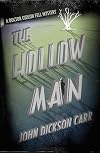
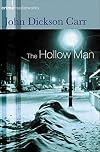
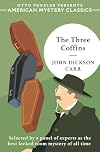
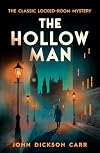
Dr. Gideon Fell solves two impossible murders in one of the most baffling locked room mysteries ever created. Professor Charles Grimaud is found dead in his study just moments after his housekeeper watched him greet a mysterious visitor and welcome him into the room. Yet no sign of the murderer or murder weapon can be found. The housekeeper saw no one leave through the door and the snow outside the only window remains unblemished. An equally puzzling murder has occurred outside, in the show more middle of the street: The illusionist Pierre Fley was walking alone in a snow-covered cul-de-sac when witnesses heard someone shout "The second bullet is for you!" followed by a gunshot. He is found dead, with the revolver that killed both Grimaud and himself by his side and no footprints in the surrounding snow but his own. It appears that both murders must have been committed by a specter?someone not only invisible but lighter than air. But if anyone can find a rational explanation, it is brilliant amateur sleuth Dr. Gideon Fell. In a 1981 survey of mystery experts, The Three Coffins (called The Hollow Man in the UK) was voted the best locked room mystery of all time. It is also celebrated for a scene in which Carr's iconic detective Gideon Fell delivers a speech expounding upon the dozens of methods and variations by which apparently impossible murders may be accomplished. Any fan of locked room mysteries and impossible crimes should consider this book required reading. show lessTags
Recommendations





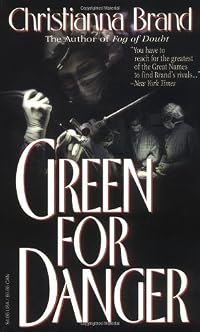


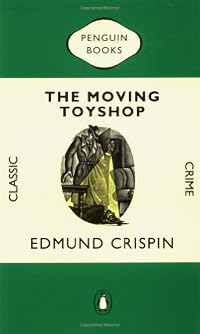


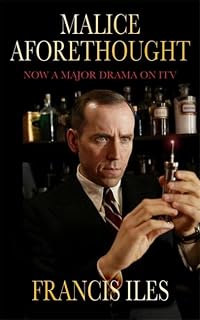

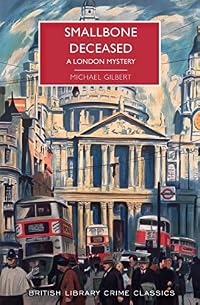











Member Recommendations

Member Reviews
I have remarked before in these pages of my surprise at the doggedness and sheer perseverance (or perhaps I mean simple lack of discernment) evinced by my younger reading self. As I grow older, I find myself re-reading books more frequently. Several times over the last few years I have gone back to a book of which I have fond memories from my first reading of it back in the distant days of my youth, only to find it evoking very different responses now.
Of course, that is sometimes merely a reflection of greater experience of life acquired in the interim, but there have been a substantial number of cases where I baulk in amazement that I ever managed to persevere through to the end, let alone manage that and emerge with positive show more memories.
This was one such case. I recall reading this perhaps thirty ... maybe nearer forty … years ago, at a period when I positively devoured traditional murder mysteries. John Dickson Carr is still esteemed as one of the masters of that particular genre, and this particular book is often cited as his masterpiece, and perhaps the apotheosis of the locked room mystery. Indeed, Dickson Carr devotes one whole chapter to a tutorial on the locked room mystery, delivered by his learned (and exceptionally self-regarding) avatar, Dr Gideon Fell who was protagonist of most of his novels.
I was prompted top reread this after having enjoyed Peter Lovesey’s novel, Bloodhounds, in which his own less cerebral but immensely more pragmatic protagonist, Superintendent Peter Diamond, is faced with a locked room mystery of his own. Lovesey, a prolific and masterful writer of crime fiction himself, ventures into metafiction in Bloodhounds as the victim and field of suspects are all members of a society which meets regularly to discuss their own respective views about crime fiction. The murder, or at least the first of them, confronting Diamond is consciously modelled on events in Dickson Carr’s The Hollow man.
Unfortunately, far from encountering the nostalgic treat that I was anticipating, I found this book very turgid, and written with a self-congratulatory air that I found positively repellent. It has not aged well. Yes, the plot is very cleverly constructed, but the whole book is presented as a simple demonstration of how clever Gideon Fell and John Dickson Carr both are. There is a strong carapace of smugness that I struggled to penetrate.
I don’t think that this is simply a reflection of the book’s age. I have recently reread a few books of similar vintage by the likes of Agatha Christie and Ngaio Marsh, and while it is clear that they hail from a different time, I have had no problems enjoying them for what they are. Anytway, whatever the underlying reason, I will not be revisiting any more of John Dickson Carr’s books for quite a while. show less
Of course, that is sometimes merely a reflection of greater experience of life acquired in the interim, but there have been a substantial number of cases where I baulk in amazement that I ever managed to persevere through to the end, let alone manage that and emerge with positive show more memories.
This was one such case. I recall reading this perhaps thirty ... maybe nearer forty … years ago, at a period when I positively devoured traditional murder mysteries. John Dickson Carr is still esteemed as one of the masters of that particular genre, and this particular book is often cited as his masterpiece, and perhaps the apotheosis of the locked room mystery. Indeed, Dickson Carr devotes one whole chapter to a tutorial on the locked room mystery, delivered by his learned (and exceptionally self-regarding) avatar, Dr Gideon Fell who was protagonist of most of his novels.
I was prompted top reread this after having enjoyed Peter Lovesey’s novel, Bloodhounds, in which his own less cerebral but immensely more pragmatic protagonist, Superintendent Peter Diamond, is faced with a locked room mystery of his own. Lovesey, a prolific and masterful writer of crime fiction himself, ventures into metafiction in Bloodhounds as the victim and field of suspects are all members of a society which meets regularly to discuss their own respective views about crime fiction. The murder, or at least the first of them, confronting Diamond is consciously modelled on events in Dickson Carr’s The Hollow man.
Unfortunately, far from encountering the nostalgic treat that I was anticipating, I found this book very turgid, and written with a self-congratulatory air that I found positively repellent. It has not aged well. Yes, the plot is very cleverly constructed, but the whole book is presented as a simple demonstration of how clever Gideon Fell and John Dickson Carr both are. There is a strong carapace of smugness that I struggled to penetrate.
I don’t think that this is simply a reflection of the book’s age. I have recently reread a few books of similar vintage by the likes of Agatha Christie and Ngaio Marsh, and while it is clear that they hail from a different time, I have had no problems enjoying them for what they are. Anytway, whatever the underlying reason, I will not be revisiting any more of John Dickson Carr’s books for quite a while. show less
Even though I was having eye problems last night, I stupidly stayed up to finish this book. It was so good. So many twists and turns and a perfect locked room murder mystery. It reminded me a bit of "The Tokyo Zodiac Murders" as well as "The Murder at the Vicarage" that you have something that is supposedly impossible, becoming possible. The ending was top notch with all revealed after two (I think there were two) red herrings. Loved this book.
Professor Charles Grimaud is confronted by a mysterious man come across him and soem of his friends who claims that men can arise from the grave and walk through walls. Not going to lie here, was a bit confused where Carr was taking us. But all is explained later on to my and potential readers show more satisfaction.
The man, illusionist Pierre Fley claims that he himself has arisen from a grave and threatens Grimaud by saying that his brother wants him dead. We then follow a few days later and found that Grimaud has been shot and left to die in a room that a man entered and did not leave. When Dr. Gideon Fell and Superintendent Hadley come onto the scene, the question is how did the professor get shot and the would be murderer get away with no one seeing them? Also there are no footprints in the snow so how did the person get away? Did they fly? Believe me I spent most of this book trying out different solutions and was wrong with all of them. Good luck to you if you manage to figure this out.
I don't want to spoil anymore of the plot cause so much happens that at times you are going to go wait a minute? What? And have to go back and re-read.
I loved the writing though at times the story gets a bit bogged down with Fell trying to tell Hadley what he has wrong or telling Hadley that he himself was wrong. I maybe went what a few times. The flow gets better after we get to Grimaud being shot. Not going to lie, the first part confused the life out of me so had to start the story twice in order to get a better sense of people that were being named.
Carr includes diagrams of the room prior to the solution being provided and another diagram after the solution is provided which I totally got a kick out of.
The ending surprised the heck out of me though. I was expecting another paragraph or something, but nothing doing. show less
Professor Charles Grimaud is confronted by a mysterious man come across him and soem of his friends who claims that men can arise from the grave and walk through walls. Not going to lie here, was a bit confused where Carr was taking us. But all is explained later on to my and potential readers show more satisfaction.
The man, illusionist Pierre Fley claims that he himself has arisen from a grave and threatens Grimaud by saying that his brother wants him dead. We then follow a few days later and found that Grimaud has been shot and left to die in a room that a man entered and did not leave. When Dr. Gideon Fell and Superintendent Hadley come onto the scene, the question is how did the professor get shot and the would be murderer get away with no one seeing them? Also there are no footprints in the snow so how did the person get away? Did they fly? Believe me I spent most of this book trying out different solutions and was wrong with all of them. Good luck to you if you manage to figure this out.
I don't want to spoil anymore of the plot cause so much happens that at times you are going to go wait a minute? What? And have to go back and re-read.
I loved the writing though at times the story gets a bit bogged down with Fell trying to tell Hadley what he has wrong or telling Hadley that he himself was wrong. I maybe went what a few times. The flow gets better after we get to Grimaud being shot. Not going to lie, the first part confused the life out of me so had to start the story twice in order to get a better sense of people that were being named.
Carr includes diagrams of the room prior to the solution being provided and another diagram after the solution is provided which I totally got a kick out of.
The ending surprised the heck out of me though. I was expecting another paragraph or something, but nothing doing. show less
Probably the most famous of Carr's Dr. Gideon Fell mysteries, and a frequent occupant of "all-time best mysteries" lists. It's famous, among other things, for its Chapter 17, in which Dr. Fell delivers a lecture on the various types of locked-room mysteries.
In this one, Carr gives us two apparently impossible murders. Two men are in a locked office, and a gunshot is heard. In the few seconds it takes to burst through the door, the killer has disappeared. There is a window through which he could have jumped, but the newly-fallen snow in the yard below is undisturbed. The second killing takes place in the middle of a short dead-end street. There are witnesses at both ends of the street who see a man fall after a gunshot is heard. The show more police determine that he's been shot at close range, but no gunman was seen, and again, the victim is surrounded by snow with no footprints but his own.
The solution to the mysteries is indeed clever, and all of the clues are neatly laid out, many of them scattered into Fell's locked-room lecture. But getting to that solution is a bit of a slog, I'm afraid. Carr's prose is stodgy and dense; plowing through to the final chapters is rather like wading through molasses. (And I say that as someone who enjoys mysteries of this era.)
As for the famous lecture? It's thorough and informative, but it's a great clump of "and now I shall pontificate" that brings the actual story to a screeching halt for a dozen pages. The most interesting thing about it is the moment in which Fell obliterates the fourth wall, saying
"...we're in a detective story, and we don't fool the reader by pretending we're not. Let's not invent elaborate excuses to drag in a discussion of detective stories. Let's candidly glory in the noblest pursuit possible to characters in a book."
Happy to have read this for its historical importance, but I think Carr's prose will keep me from going back for more, despite the cleverness of his solutions. show less
In this one, Carr gives us two apparently impossible murders. Two men are in a locked office, and a gunshot is heard. In the few seconds it takes to burst through the door, the killer has disappeared. There is a window through which he could have jumped, but the newly-fallen snow in the yard below is undisturbed. The second killing takes place in the middle of a short dead-end street. There are witnesses at both ends of the street who see a man fall after a gunshot is heard. The show more police determine that he's been shot at close range, but no gunman was seen, and again, the victim is surrounded by snow with no footprints but his own.
The solution to the mysteries is indeed clever, and all of the clues are neatly laid out, many of them scattered into Fell's locked-room lecture. But getting to that solution is a bit of a slog, I'm afraid. Carr's prose is stodgy and dense; plowing through to the final chapters is rather like wading through molasses. (And I say that as someone who enjoys mysteries of this era.)
As for the famous lecture? It's thorough and informative, but it's a great clump of "and now I shall pontificate" that brings the actual story to a screeching halt for a dozen pages. The most interesting thing about it is the moment in which Fell obliterates the fourth wall, saying
"...we're in a detective story, and we don't fool the reader by pretending we're not. Let's not invent elaborate excuses to drag in a discussion of detective stories. Let's candidly glory in the noblest pursuit possible to characters in a book."
Happy to have read this for its historical importance, but I think Carr's prose will keep me from going back for more, despite the cleverness of his solutions. show less
Clever locked room mystery. Carr's style when writing Dr. Fell is a bit didatic and may turn off some readers but I loved the (somewhat lengthy) exposition Fell gives about the various types of so-called "locked room" mysteries. As he says himself:
" "When the cry of 'This-sort-of-thing-wouldn't-happen!' goes up, when you complain about half-faced fiends and hooded phantoms and blond hypnotic sirens, you are merely saying, 'I don't like this sort of story.' That's fair enough. If you do not like it, you are howlingly right to say so. But when you twist this matter of taste into a rule for judging the merit or even the probability of the story, you are merely saying, 'This series of events couldn't happen, because I shouldn't enjoy show more it if it did.'"
As I was starting this book, I realized that I had read a few other Gideon Fell mysteries before and that Fell wasn't as much fun as Gervase Fen. In other words, I do not much like Carr's mysteries or perhaps just not his writing style.
However, this seemingly insoluble, improbable locked-room mystery in which the murderer didn't even leave footprints in the snow was extremely clever. I thought I had suspected everyone in turn but not once did I come close to the true culprit! Carr plays fair with the reader -- there are no hidden facts brought out only during the solution. In fact, he tells you in the first chapter the names of certain witnesses whose testimony can be relied on to be truthful and complete!! Yet despite this broad hint and Fell uttering cryptic clues periodically, I only deciphered one small aspect of the crime.
In addition, Gideon Fell did make me chuckle several times with his pronouncements, such as when he gives rules about what ghosts should be like in English fiction (they should be seen in old abbeys or cemeteries, not lemonade stands). I also liked his mention of several other mystery novels and authors who excelled at certain types of mysteries during his discourse mentioned above.
Overall, I would recommend this as an excellent example of a certain style of mystery (the locked room) which is no longer fashionable. show less
" "When the cry of 'This-sort-of-thing-wouldn't-happen!' goes up, when you complain about half-faced fiends and hooded phantoms and blond hypnotic sirens, you are merely saying, 'I don't like this sort of story.' That's fair enough. If you do not like it, you are howlingly right to say so. But when you twist this matter of taste into a rule for judging the merit or even the probability of the story, you are merely saying, 'This series of events couldn't happen, because I shouldn't enjoy show more it if it did.'"
As I was starting this book, I realized that I had read a few other Gideon Fell mysteries before and that Fell wasn't as much fun as Gervase Fen. In other words, I do not much like Carr's mysteries or perhaps just not his writing style.
However, this seemingly insoluble, improbable locked-room mystery in which the murderer didn't even leave footprints in the snow was extremely clever. I thought I had suspected everyone in turn but not once did I come close to the true culprit! Carr plays fair with the reader -- there are no hidden facts brought out only during the solution. In fact, he tells you in the first chapter the names of certain witnesses whose testimony can be relied on to be truthful and complete!! Yet despite this broad hint and Fell uttering cryptic clues periodically, I only deciphered one small aspect of the crime.
In addition, Gideon Fell did make me chuckle several times with his pronouncements, such as when he gives rules about what ghosts should be like in English fiction (they should be seen in old abbeys or cemeteries, not lemonade stands). I also liked his mention of several other mystery novels and authors who excelled at certain types of mysteries during his discourse mentioned above.
Overall, I would recommend this as an excellent example of a certain style of mystery (the locked room) which is no longer fashionable. show less
If you like Locked Room mysteries this is truly brillliant. The mystery is fair and fooled me completejy. Carr is very specialized in that small genre that is now so out of date but i love it, I dont wanna hear about the detectives problems with authority, drinking problems or rocky marriage, i wanna deep dive into the mystery and that Carr does. A consequence of that style of writing is that we see less of a character sketch of the detective than in more modern crime books. This is Dr. Fell, mystery solver, and that is the facet of his personality that is on display. In here is also the famous chapter with the lecture on how locked rooms mysteries work and what the possible solutions can be. It is absolutely excellent and has became a show more model for how to write locked room mysteries. For me, one of the best locked room mysteries ever written. show less
The Greatest-Ever Locked Room Mystery?
A review of the American Mystery Classics paperback (October 29, 2024) of the Hamish Hamilton (UK) and Harper (US) originals (1935).
The solutions to many locked room mystery puzzles involve pretty far-fetched and improbable methods of murder. The solutions to the two mysteries of The Three Coffins are in the end quite straightforward, even though you may think in hindsight that it is unlikely that anyone would go to so much trouble to commit a crime.
See cover at https://blogger.googleusercontent.com/img/b/R29vZ2xl/AVvXsEh0AXNyKJH6hLhWtrJqhGJ...
Cover image for the Popular Library paperback edition (1935). Image sourced from The Locked Room.
A feature in this book is the famous Chapter 17, "The Locked Room Lecture," where Dr. Gideon Fell describes the various methods of locked room murders and lists a considerable number of examples from classic detective fiction.
Trivia and Links
This edition of The Three Coffins is part of the Otto Penzler American Mystery Classics series (2018-ongoing). There is a related Goodreads Listopia here with 80 books listed as of early December 2024. There are currently 78 titles listed at the Mysterious Press online bookshop. The official website for the series at Penzler Publishers seems to show only the most recent and upcoming titles.
John Dickson Carr (1906-1977) is one of the 99 authors listed in The Book of Forgotten Authors (2017) by Christopher Fowler. He is No. 20 in the alphabetical listing which you can see towards the bottom of my review here.
John Dickson Carr took the inspiration for Dr. Gideon Fell's appearance from that of author G.K. Chesterton (1874-1936), writer of the Father Brown mysteries and other works.
See photograph at https://upload.wikimedia.org/wikipedia/commons/thumb/7/75/Gilbert_Chesterton.jpg...
Photograph of G.K. Chesterton. Image sourced from Wikipedia.
The source of the name Dr. Fell is apparently from the apocryphal epigram:
A review of the American Mystery Classics paperback (October 29, 2024) of the Hamish Hamilton (UK) and Harper (US) originals (1935).
Those of Dr Fell’s friends who like impossible situations will not find in his casebook any puzzle more baffling or more terrifying. Thus: two murders were committed, in such fashion that the murderer must not only have been invisible, but lighter than air. According to the evidence, this person killed his first victim and literally disappeared. Again according to the evidence, he killed his second victim in the middle of an empty street, with watchers at either end; yet not a soul saw him, and no footprint appeared in the snow.It was only a small panel of 17 mystery show more writers and reviewers in 1981 who voted The Three Coffins (US title) aka The Hollow Man (UK title) as the best locked room mystery of all time, but I'm not here to dispute their decision.
The solutions to many locked room mystery puzzles involve pretty far-fetched and improbable methods of murder. The solutions to the two mysteries of The Three Coffins are in the end quite straightforward, even though you may think in hindsight that it is unlikely that anyone would go to so much trouble to commit a crime.
See cover at https://blogger.googleusercontent.com/img/b/R29vZ2xl/AVvXsEh0AXNyKJH6hLhWtrJqhGJ...
Cover image for the Popular Library paperback edition (1935). Image sourced from The Locked Room.
A feature in this book is the famous Chapter 17, "The Locked Room Lecture," where Dr. Gideon Fell describes the various methods of locked room murders and lists a considerable number of examples from classic detective fiction.
But for the greatest long-range murder ever committed in a locked room, gents, I commend you to one of the most brilliant short detective stories in the history of detective fiction. (In fact, it shares the honours for supreme untouchable top-notch excellence with Thomas Burke's The Hands of Mr Ottermole, Chesterton's The Man in the Passage, and Jacques Futrelle's The Problem of Cell 13).This is Melville Davisson Post's The Doomdorf Mystery - and the long - range assassin is the sun. The sun strikes through the window of the locked room, makes a burning - glass of a bottle of Doomdorf's own raw white wood - alcohol liquor on the table, and ignites through it the percussion cap of a gun hanging on the wall: so that the breast of the hated one is blown open as he lies in his bed.
Trivia and Links
This edition of The Three Coffins is part of the Otto Penzler American Mystery Classics series (2018-ongoing). There is a related Goodreads Listopia here with 80 books listed as of early December 2024. There are currently 78 titles listed at the Mysterious Press online bookshop. The official website for the series at Penzler Publishers seems to show only the most recent and upcoming titles.
John Dickson Carr (1906-1977) is one of the 99 authors listed in The Book of Forgotten Authors (2017) by Christopher Fowler. He is No. 20 in the alphabetical listing which you can see towards the bottom of my review here.
John Dickson Carr took the inspiration for Dr. Gideon Fell's appearance from that of author G.K. Chesterton (1874-1936), writer of the Father Brown mysteries and other works.
See photograph at https://upload.wikimedia.org/wikipedia/commons/thumb/7/75/Gilbert_Chesterton.jpg...
Photograph of G.K. Chesterton. Image sourced from Wikipedia.
The source of the name Dr. Fell is apparently from the apocryphal epigram:
I do not like thee, Doctor Fell,show less
The reason why – I cannot tell;
But this I know, and know full well,
I do not like thee, Doctor Fell.
The Hollow Man by John Dickson Carr is a locked room mystery that was originally published in 1935 which surprised me as the London depicted in the pages here seemed Dickensian in nature. The mystery features the reoccurring character of Dr. Gideon Fell, who relates the famous “locked room lecture” that is a blueprint for most locked room mysteries, laying out the various ways is which a murderer can be successful at using this trope. Actually, I found this lecture to be the most interesting part of the book.
Although this particular mystery has been voted best locked room mystery by a panel of mystery writers in 1981, I personally found it rather boring and contrived. The mystery relies on illusions, switched identities and show more coincidence. The characters were one dimensional, the writing was uninspired and the whole book relied on a plot device that was convoluted and overly elaborate. I found reading the endless speculations, interviews and explanations quite painful. This is the second John Dickson Carr book that I have read, and, I have come to the conclusion that this is not an author for me. show less
Although this particular mystery has been voted best locked room mystery by a panel of mystery writers in 1981, I personally found it rather boring and contrived. The mystery relies on illusions, switched identities and show more coincidence. The characters were one dimensional, the writing was uninspired and the whole book relied on a plot device that was convoluted and overly elaborate. I found reading the endless speculations, interviews and explanations quite painful. This is the second John Dickson Carr book that I have read, and, I have come to the conclusion that this is not an author for me. show less
Members
- Recently Added By
Published Reviews
ThingScore 100
Carr boasts that he has devised over eighty different solutions to the locked-room puzzle, and in one of the novels Fell, a monologist with the best of them, delivers a fascinating lecture on the subject. This is The Three Coffins, to quote the inexcusable American retitling of the British edition The Hollow Man, which perfectly suggests the macabre menace of the story. That man must indeed show more have been hollow who, watched of course by a responsible and innocent witness, was seen to enter a room without other access in which, later, there is found the corpse of the room’s occupant, but of course no hollow man. This is Chestertonian, or Brownian, though its explanation has a Carrian validity. show less
added by SnootyBaronet
Lists

The Guardian's 1000 Novels Everyone Must Read
1,005 works; 549 members

Golden Age of Detection
35 works; 10 members

The Top 100 Crime Novels of All Time
100 works; 15 members

Top 100 Mystery Novels of All Time
98 works; 9 members

H.R.F. Keating's 100 Best Crime & Mystery Books
100 works; 8 members

Books mentioned in Julian Symons’ Bloody Murder
438 works; 6 members

Books Read in 2017
4,248 works; 129 members

Books Read in 2009
464 works; 11 members

Michael Dirda's Desert Island Books
62 works; 5 members

2023 Christmas Gifts
39 works; 11 members

Tozai Mystery Best 100 | The Top 100 Mystery Novels
111 works; 3 members
Must Read Detective Stories (Nick Fuller)
278 works; 2 members
Art Bourgeau's Favorites [Mystery Lovers Companion, 1986]
124 works; 2 members
A Locked Room Library
71 works; 1 member
Author Information

228+ Works 18,973 Members
John Dickson Carr, the master of locked room mysteries, was born in Uniontown, Pennsylvania, in 1906. He was educated at Haverford College and the Sorbonne in Paris. Carr is a prolific writer with more than 80 novels and collections of short stories to his credit. He began his writing career at the age of 26 with his first published novel, It show more Walks At Night. Some of his most popular works are The Three Coffins (1935), The Burning Coat (1937), and The Bride of Newgate (1951). Carr also collaborated with Adrian Doyle, the son of Sir Arthur Conan Doyle in The Exploits of Sherlock Holmes (1954). Carr met his wife in 1932 and settled in England in 1933. He was drafted by the United States military in World War II, and was ordered to remain in England and work with the BBC. He lived in many cities throughout the world until 1967, when he permanently moved to Greenville, South Carolina. John Dickson Carr also wrote mystery novels under the name Carter Dickson. He died in Greenville in 1977. (Bowker Author Biography) show less
Some Editions
Awards and Honors
Notable Lists
Series

Belongs to Publisher Series
I classici del giallo [Mondadori] (1006, 234)
Crime de la Crime (Arbeiderspers)
DuMont's Kriminal-Bibliothek (1042)
Den svarte serie (54)
Mirabilia (67)
Oscar Narrativa (2030)
Adey's Locked Room Murders (0316)
SaPo (258)
Work Relationships
Is contained in
Has the adaptation
Is abridged in
Common Knowledge
- Canonical title*
- Den hule mannen
- Original title
- The Hollow Man
- Alternate titles
- The Three Coffins
- Original publication date
- 1935
- People/Characters
- Dr. Gideon Fell; Dr. Charles Grimaud; Pierre Fley; Stuart Mills; Ernestine Dumont; Anthony Pettis (show all 14); Boyd Mangan; Superintendent Hadley; Ted Rampole; Hubert Drayman; O'Rourke; Jerome Burnaby; Nicholas Horváth; Rosette Grimaud
- Important places
- London, England, UK
- First words
- To the murder of Professor Grimaud, and later the equally incredible crime in Cagliostro Street, many fantastic terms could be applied - with reason.
- Last words
- (Click to show. Warning: May contain spoilers.)"I have committed another crime, Hadley," he said, "I have guessed the truth again."
- Original language
- English
- Disambiguation notice
- Known as The Three Coffins in the US
*Some information comes from Common Knowledge in other languages. Click "Edit" for more information.
Classifications
Statistics
- Members
- 981
- Popularity
- 26,633
- Reviews
- 41
- Rating
- (3.77)
- Languages
- 13 — Chinese, Czech, Dutch, English, Estonian, Finnish, French, German, Italian, Norwegian (Bokmål), Norwegian, Spanish, Swedish
- Media
- Paper, Audiobook, Ebook
- ISBNs
- 37
- ASINs
- 44