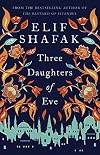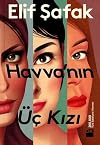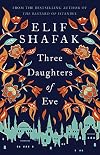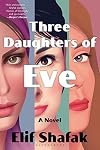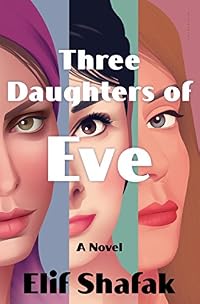
Three Daughters of Eve
by Elif Shafak
On This Page
Description
"The stunning, timely new novel from the acclaimed, internationally bestselling author of The Architect's Apprentice and The Bastard of Istanbul. Peri, a married, wealthy, beautiful Turkish woman, is on her way to a dinner party at a seaside mansion in Istanbul when a beggar snatches her handbag. As she wrestles to get it back, a photograph falls to the ground -- an old polaroid of three young women and their university professor. A relic from a past -- and a love -- Peri had tried show more desperately to forget. Three Daughters of Eve is set over an evening in contemporary Istanbul, as Peri arrives at the party and navigates the tensions that simmer in this crossroads country between East and West, religious and secular, rich and poor. Over the course of the dinner, and amidst an opulence that is surely ill-begotten, terrorist attacks occur across the city. Competing in Peri's mind however are the memories invoked by her almost-lost polaroid, of the time years earlier when she was sent abroad for the first time, to attend Oxford University. As a young woman there, she had become friends with the charming, adventurous Shirin, a fully assimilated Iranian girl, and Mona, a devout Egyptian-American. Their arguments about Islam and feminism find focus in the charismatic but controversial Professor Azur, who teaches divinity, but in unorthodox ways. As the terrorist attacks come ever closer, Peri is moved to recall the scandal that tore them all apart. Elif Shafak is the number one bestselling novelist in her native Turkey, and her work is translated and celebrated around the world. In Three Daughters of Eve, she has given us a rich and moving story that humanizes and personalizes one of the most profound sea changes of the modern world"-- show lessTags
Recommendations













Member Reviews
“It was an ordinary spring day in Istanbul, a long and leaden afternoon like so many others, when she discovered, with a hollowness in her stomach, that she was capable of killing someone.”
Can an attempted robbery and assault force your entire life to flash before your eyes? Can a Polaroid plunge you back into the year that shaped everything — your beliefs, your mistakes, your identity? In Three Daughters of Eve, the answer is a desperate, aching yes.
Elif Shafak needs no introduction, and in this novel, she weaves a tale made of a thousand vivid, interwoven threads. Set between Istanbul and Oxford, this is Peri’s story — a story about faith and doubt, love and loneliness, and what it means to hurt others, to be human, to seek show more happiness. Touching on the cruelty of the Ottoman past, brushed with an elegant note of Magical Realism, Peri narrates her very soul to us. Troubled, intelligent Peri. A true bookworm, caught between a nihilist father and a fundamentalist mother, with books as her only solace. A reader of people. A confused idealist. A quiet young woman who goes about her life troubling no one, longing to be left alone — a lover of hushed debates, having found her haven in Oxford.
Until love strikes. That elemental force before which we are all defenceless.
Through the beautiful character of Peri — can you tell I adored her? — we’re given the chance to view Istanbul and Oxford side by side, like an intricate lecture on Descartes (and yes, I loved that scene…). Turkey, as Shafak presents it, is a country trying to balance between two boats — East and West — and failing to remain steady in either. Her elegant, often wry political and social commentary sketches a chaotic city bowed under the weight of a chaotic culture.
‘We’ are the Christians. The Westerners. ‘They’ are the pious Muslims. Turkey, in this novel, appears as a lighter version of an Islamic State: a place devoid of respect for women, children, Christians, basic human rights — full of hostility, and yet curiously submissive toward the very tyrants it creates. A country clinging to both inferiority and superiority complexes, stranded in cultural limbo.
Oxford, by contrast, is confidence. Its culture is steeped in a past it has claimed and understood. Istanbul’s past is stained with blood, massacres, and inherited barbarity. And Shafak, to her credit, doesn’t shy away from making that point utterly, unflinchingly clear.
‘’It’s hard to break our chains when some of us love being shackled.’’
Peri embodies the quiet, persistent resistance of a woman in a country that punishes femininity with cruelty and control. She walks through Istanbul—the city of rapes—where life bends to men’s convenience. A place where husbands demand virginity tests, where women devour each other over dinner tables dressed as social gatherings. Turkey, with all its contradictions, has no place in Europe—not in this state. And yet, in this brutal landscape, Peri remains tender. Her first love, wild and devastating, offers a glimmer of salvation. In love, we are all defenceless, all innocent.
Mona, with her pious self-righteousness, is a brute dressed in liberal fabric. Shirin, an oversexualized caricature, is an exhausting echo of Western clichés. Neither holds a candle to Peri’s inner light. I almost wish they had never intruded upon the pages of such a soulful novel. And Azure—mysterious, magnetic, brilliant—who wouldn’t fall for him?
''Now I can see it clearly. When we fall in love, we turn the other person into our god - How dangerous is that? And when he doesn't love us back, we respond with anger, resentment, hatred. There’s something about love that resembles faith. It's a kind of blind trust, isn't it? The sweetest euphoria. The magic of connecting with a being beyond our limited, familiar selves. But if we get carried away by love-or by faith-it turns into a dogma,a fixation. The sweetness becomes sour. We suffer in the hands of the gods that we ourselves created.’’
Then Faith enters the game. The women who impose such tyranny on themselves, brainwashed by a twisted piety, faithful to an unapproachable God. How lucky we are to be Christian, because we doubt and believe. We erase and create. Not egoistic believers, but true seekers. That is who Peri is. Not someone who seeks psychics, but one who speaks directly to her God.
Through Safak, we witness attitudes that estrange women from their sacred places. Jesus elevated Woman; fundamentalist Muslims hate her very existence. Azur’s sharp debates on God expose atheists and fundamentalists as two sides of the same coin. Our faith is what keeps us from collapsing; it shelters us from absolute despair. We see God as Love when we love ourselves. Imagine how atheists and fundamentalists view themselves… And this is why, eventually, your downfall comes when you think you have what it takes to ‘decode’ God.
Three Daughters of Eve is one of those rare novels that stays with you long after you close the cover. It seeps into your mind and refuses to leave, leaving behind a swirl of anger, heartbreak, and awe. Elif Shafak doesn’t hand you easy answers or tidy endings. Instead, she drags you into the raw, tangled mess of faith, love, identity — and the cost they demand.
I can’t deny my frustration with Peri’s choices — how love blinded her, how she gave up so much, how she stumbled toward pain. And yet, I found pieces of myself in her — in her doubts, her fierce intelligence, her longing for something more. That flawed, messy humanity makes her unforgettable. This is a story that haunts you, challenges you, tears down what you thought you knew about belief and freedom, and forces you to face uncomfortable truths.
If I write best when I’m furious, then Three Daughters of Eve lit a fire inside me that won’t burn out. Reading it felt like staring into a mirror cracked by love and faith and loss. Even now, my thoughts keep returning to Peri — to the woman I admired, the woman I wanted to save, and the woman who was herself, no matter what.
And even as I struggle to find words worthy of its weight, this much is clear: this is a book to be felt with every fiber of your being, to be wrestled with long after the last page.
‘’She had taken her God - diary with her, into which she now wrote: The eye through which I see God is the same eye through which God sees me, Eckhart says. If I approach God with rigidity, Gold approaches me with rigidity. If I see God through love, God sees me through Love. My eye and God’s eye are One.’’
My reviews can also be found on https://theopinionatedreaderblog.wordpress.com/ show less
Can an attempted robbery and assault force your entire life to flash before your eyes? Can a Polaroid plunge you back into the year that shaped everything — your beliefs, your mistakes, your identity? In Three Daughters of Eve, the answer is a desperate, aching yes.
Elif Shafak needs no introduction, and in this novel, she weaves a tale made of a thousand vivid, interwoven threads. Set between Istanbul and Oxford, this is Peri’s story — a story about faith and doubt, love and loneliness, and what it means to hurt others, to be human, to seek show more happiness. Touching on the cruelty of the Ottoman past, brushed with an elegant note of Magical Realism, Peri narrates her very soul to us. Troubled, intelligent Peri. A true bookworm, caught between a nihilist father and a fundamentalist mother, with books as her only solace. A reader of people. A confused idealist. A quiet young woman who goes about her life troubling no one, longing to be left alone — a lover of hushed debates, having found her haven in Oxford.
Until love strikes. That elemental force before which we are all defenceless.
Through the beautiful character of Peri — can you tell I adored her? — we’re given the chance to view Istanbul and Oxford side by side, like an intricate lecture on Descartes (and yes, I loved that scene…). Turkey, as Shafak presents it, is a country trying to balance between two boats — East and West — and failing to remain steady in either. Her elegant, often wry political and social commentary sketches a chaotic city bowed under the weight of a chaotic culture.
‘We’ are the Christians. The Westerners. ‘They’ are the pious Muslims. Turkey, in this novel, appears as a lighter version of an Islamic State: a place devoid of respect for women, children, Christians, basic human rights — full of hostility, and yet curiously submissive toward the very tyrants it creates. A country clinging to both inferiority and superiority complexes, stranded in cultural limbo.
Oxford, by contrast, is confidence. Its culture is steeped in a past it has claimed and understood. Istanbul’s past is stained with blood, massacres, and inherited barbarity. And Shafak, to her credit, doesn’t shy away from making that point utterly, unflinchingly clear.
‘’It’s hard to break our chains when some of us love being shackled.’’
Peri embodies the quiet, persistent resistance of a woman in a country that punishes femininity with cruelty and control. She walks through Istanbul—the city of rapes—where life bends to men’s convenience. A place where husbands demand virginity tests, where women devour each other over dinner tables dressed as social gatherings. Turkey, with all its contradictions, has no place in Europe—not in this state. And yet, in this brutal landscape, Peri remains tender. Her first love, wild and devastating, offers a glimmer of salvation. In love, we are all defenceless, all innocent.
Mona, with her pious self-righteousness, is a brute dressed in liberal fabric. Shirin, an oversexualized caricature, is an exhausting echo of Western clichés. Neither holds a candle to Peri’s inner light. I almost wish they had never intruded upon the pages of such a soulful novel. And Azure—mysterious, magnetic, brilliant—who wouldn’t fall for him?
''Now I can see it clearly. When we fall in love, we turn the other person into our god - How dangerous is that? And when he doesn't love us back, we respond with anger, resentment, hatred. There’s something about love that resembles faith. It's a kind of blind trust, isn't it? The sweetest euphoria. The magic of connecting with a being beyond our limited, familiar selves. But if we get carried away by love-or by faith-it turns into a dogma,a fixation. The sweetness becomes sour. We suffer in the hands of the gods that we ourselves created.’’
Then Faith enters the game. The women who impose such tyranny on themselves, brainwashed by a twisted piety, faithful to an unapproachable God. How lucky we are to be Christian, because we doubt and believe. We erase and create. Not egoistic believers, but true seekers. That is who Peri is. Not someone who seeks psychics, but one who speaks directly to her God.
Through Safak, we witness attitudes that estrange women from their sacred places. Jesus elevated Woman; fundamentalist Muslims hate her very existence. Azur’s sharp debates on God expose atheists and fundamentalists as two sides of the same coin. Our faith is what keeps us from collapsing; it shelters us from absolute despair. We see God as Love when we love ourselves. Imagine how atheists and fundamentalists view themselves… And this is why, eventually, your downfall comes when you think you have what it takes to ‘decode’ God.
Three Daughters of Eve is one of those rare novels that stays with you long after you close the cover. It seeps into your mind and refuses to leave, leaving behind a swirl of anger, heartbreak, and awe. Elif Shafak doesn’t hand you easy answers or tidy endings. Instead, she drags you into the raw, tangled mess of faith, love, identity — and the cost they demand.
I can’t deny my frustration with Peri’s choices — how love blinded her, how she gave up so much, how she stumbled toward pain. And yet, I found pieces of myself in her — in her doubts, her fierce intelligence, her longing for something more. That flawed, messy humanity makes her unforgettable. This is a story that haunts you, challenges you, tears down what you thought you knew about belief and freedom, and forces you to face uncomfortable truths.
If I write best when I’m furious, then Three Daughters of Eve lit a fire inside me that won’t burn out. Reading it felt like staring into a mirror cracked by love and faith and loss. Even now, my thoughts keep returning to Peri — to the woman I admired, the woman I wanted to save, and the woman who was herself, no matter what.
And even as I struggle to find words worthy of its weight, this much is clear: this is a book to be felt with every fiber of your being, to be wrestled with long after the last page.
‘’She had taken her God - diary with her, into which she now wrote: The eye through which I see God is the same eye through which God sees me, Eckhart says. If I approach God with rigidity, Gold approaches me with rigidity. If I see God through love, God sees me through Love. My eye and God’s eye are One.’’
My reviews can also be found on https://theopinionatedreaderblog.wordpress.com/ show less
Dual timeline story – one set in present-day Istanbul at a dinner party and the other in the early 2000s at Oxford (told via flashback) during protagonist Peri’s university days, where she was heavily influenced by a charismatic and unorthodox professor. Peri is a young Turkish woman caught in an identity struggle between her mother’s traditional religious beliefs and her father’s modern secularity. While at Oxford, she meets Shirin, an Iranian feminist, and Mona, an Egyptian-American devout Muslim.
“Is there really no other way, no other space for things that fall under neither belief nor disbelief – neither pure religion nor pure reason? A third path for people such as me? For those of us who find dualities too rigid and show more don’t wish to conform to them? Because there must be others who feel as I do.”
As with most dual timelines, I preferred one over the other. In this case, the storyline based in Oxford is more compelling. The three daughters, Peri, Shirin, and Mona, form a friendship that is strained by their differing outlooks. They take a philosophy class called “The Mind of God” by eccentric Professor Azur – and what a great character! He comes across as rather full of himself but also challenges his students to expand their viewpoints.
“He had wanted to develop God into a language that was, if not spoken, at least understood and shared by many. God, not as a transcendental being or a vengeful judge or a tribal totem, but as a unifying idea, a common quest. Could the search for God, when stripped of all labels and dogmas, be turned into a neutral space where everyone, including atheists and non-monotheists, could find a discussion of value? Could God unite people, simply as an object of study?”
The Istanbul dinner party segment, held by a wealthy businessman, is less riveting, but provides a platform for discussing business, political, religious, and cultural forces that influence life in modern Turkey. But at the heart of this novel is Peri’s personal struggle:
“She always knew that she was different. A strangeness she must do her best to hide; a scar that would remain forever etched on her skin. She put so much effort into being normal that often she had no energy left to be anything else, leaving her with feelings of worthlessness.”
Shafak is one of my favorite authors. Her writing is stellar. She knows how to craft a story to maintain interest while commenting on today’s social issues. Themes include feminism, spirituality, and multiculturalism. Highly recommended!
4.5 show less
“Is there really no other way, no other space for things that fall under neither belief nor disbelief – neither pure religion nor pure reason? A third path for people such as me? For those of us who find dualities too rigid and show more don’t wish to conform to them? Because there must be others who feel as I do.”
As with most dual timelines, I preferred one over the other. In this case, the storyline based in Oxford is more compelling. The three daughters, Peri, Shirin, and Mona, form a friendship that is strained by their differing outlooks. They take a philosophy class called “The Mind of God” by eccentric Professor Azur – and what a great character! He comes across as rather full of himself but also challenges his students to expand their viewpoints.
“He had wanted to develop God into a language that was, if not spoken, at least understood and shared by many. God, not as a transcendental being or a vengeful judge or a tribal totem, but as a unifying idea, a common quest. Could the search for God, when stripped of all labels and dogmas, be turned into a neutral space where everyone, including atheists and non-monotheists, could find a discussion of value? Could God unite people, simply as an object of study?”
The Istanbul dinner party segment, held by a wealthy businessman, is less riveting, but provides a platform for discussing business, political, religious, and cultural forces that influence life in modern Turkey. But at the heart of this novel is Peri’s personal struggle:
“She always knew that she was different. A strangeness she must do her best to hide; a scar that would remain forever etched on her skin. She put so much effort into being normal that often she had no energy left to be anything else, leaving her with feelings of worthlessness.”
Shafak is one of my favorite authors. Her writing is stellar. She knows how to craft a story to maintain interest while commenting on today’s social issues. Themes include feminism, spirituality, and multiculturalism. Highly recommended!
4.5 show less
A random incident of street-crime prompts bourgeois Istanbul housewife Peri to look back 15 years to her time in Oxford and her encounter there with a controversial philosophy don, Professor Azur. This in turn allows Şafak to have a bit of fun mocking the Turkish upper classes whilst exploring the tensions inevitably set up in people who grow up exposed to a constant debate between Islam, Kemalist secularism, western liberalism and modern capitalist ultra-nationalism. At home in Istanbul the young Peri feels under pressure to accept each rival ideology out of loyalty to the person close to her who represents it; in Oxford she is faced with the bigger challenge of making her own mind up, provoked by Azur and Peri's student friends Mona show more (Muslim feminist) and Shirin (secular fashion-victim). What's more, all this turns out to be happening in 2001, and people of Muslim background are under more pressure than ever to justify themselves in the eyes of westerners. Sometimes it all feels much more like a constructed example in a philosophy textbook than a novel.
There's a lot of interesting discussion in this book, but ultimately - inevitably, I suppose - it doesn't come to any clear conclusion. Şafak doesn't have an easy answer to the problems of the world in her pocket, unfortunately, so we are left with little more than an invitation to be open to debate, to stand up for our own principles, and to listen to the views of people we disagree with. Which is all very well, of course, but from Şafak's reputation as a fearless challenger of censorship and bigotry, I would have expected something a bit less tentative.
All the same, Peri is an engaging character, and there's a lot of nicely observed detail in the book. I enjoyed both the Istanbul and Oxford sections (although I did find it a bit disconcerting to hear someone being nostalgic about student days that took place a full generation after mine...!).
The audiobook narration by Alix Dunmore worked pretty well, for the most part, but I was thrown off a little by the convention she adopts that Turkish characters in the book should always speak with a conspicuous "Turkish accent", whether they are speaking Turkish or English. Obviously, it doesn't make any sense that people should have a foreign accent in their own language, and it is also rather questionable in English - people from the sort of social circles represented in this book, most of them educated abroad, would be mortified at the notion that they speak English with an accent like a carpet-seller... show less
There's a lot of interesting discussion in this book, but ultimately - inevitably, I suppose - it doesn't come to any clear conclusion. Şafak doesn't have an easy answer to the problems of the world in her pocket, unfortunately, so we are left with little more than an invitation to be open to debate, to stand up for our own principles, and to listen to the views of people we disagree with. Which is all very well, of course, but from Şafak's reputation as a fearless challenger of censorship and bigotry, I would have expected something a bit less tentative.
All the same, Peri is an engaging character, and there's a lot of nicely observed detail in the book. I enjoyed both the Istanbul and Oxford sections (although I did find it a bit disconcerting to hear someone being nostalgic about student days that took place a full generation after mine...!).
The audiobook narration by Alix Dunmore worked pretty well, for the most part, but I was thrown off a little by the convention she adopts that Turkish characters in the book should always speak with a conspicuous "Turkish accent", whether they are speaking Turkish or English. Obviously, it doesn't make any sense that people should have a foreign accent in their own language, and it is also rather questionable in English - people from the sort of social circles represented in this book, most of them educated abroad, would be mortified at the notion that they speak English with an accent like a carpet-seller... show less
This is an insightful, moving, story of an educated, gifted, reasonably well placed, Muslim, Turkish woman and her often confused feelings about these core identities and the modern world lead by the West. The three daughters in the novel are grandmother, mother, and teenage daughter. So many questions and problems are raised on how women of Turkey are to live and survive in today's world with no easy answers and solutions. We are left with a sad nightmare for her, her kind, and Turkey and the world.
Quotes: (page 10) “Whether walking or driving, a woman did best to keep her gaze unfocused and turned inward, as if peering into distant memories. When and wherever possible, she should lower her head to convey an unambiguous message of show more modesty, which was not easy, since the perils of urban life, not to mention unsolicited male attention and sexual harassment, required one to be vigilant at all times. How women could be expected to keep their heads down and simultaneously have their eyes open in all directions was beyond Peri.”
(page 56) “It did return, but, having learned her lesson the hard way, Peri mentioned it to no one. Her mother was too superstitious and her father too rational for either of them to be of any help to her in so surreal a matter. Anything remotely uncanny, even if only slightly out of the ordinary, Selima would attribute to a religious cause; and Mensur, to downright insanity. Peri, for her part preferred to commit to neither.”
(page 111) “A good book was a good book and that was all that mattered. Besides, for the life of her, she could not comprehend the reactionary attitude to reading. In many parts of the world you were what you said and what you did and, also, what you read; in Turkey, as in all countries haunted by questions of identity, you were, primarily, what you rejected. It seemed that the more people went on about an author, the less likely it was that they had read their books.”
(page 268) “It means we'll mess things up, we'll blur the lines. We'll bring irreconcilable ideas and unlikely people together. Imagine, an Islamophobe develops a crush on a Muslim woman...or an anti-Semite becomes best friends with a Jew...on and on, until we grasp categories for what they really are: figments of our imagination. The faces we see in the mirors are not really ours. Just reflections. We can find our true selves only in the face of Other. The absolutists, they venerate purity, we hybridity. They wish to reduce everyone down to a single identity. We strive for the opposite: to multiply everyone into a hundred belngings, a thousand beetling hearts. If I am a human, I should be big enough to feel for people everywhere. Look at history. Observe life. It evolves from simplicity to complexity. Not vice versa, that would be devolution.
'But is that too much?' said Peri. 'People need simplification.'
'Nonsense, my dear. Our brains are wired for twists and turns.'”
(page 369 Acknowledgements) “Motherlands are beloved, no doubt; sometimes they can also be exasperating and maddening. Yet I also have come to learn that for writers and poets for whom national borders and cultural barriers are there to be questioned, again and again, there is, in truth, only one motherland, perpetual and portable. Storyland.” show less
Quotes: (page 10) “Whether walking or driving, a woman did best to keep her gaze unfocused and turned inward, as if peering into distant memories. When and wherever possible, she should lower her head to convey an unambiguous message of show more modesty, which was not easy, since the perils of urban life, not to mention unsolicited male attention and sexual harassment, required one to be vigilant at all times. How women could be expected to keep their heads down and simultaneously have their eyes open in all directions was beyond Peri.”
(page 56) “It did return, but, having learned her lesson the hard way, Peri mentioned it to no one. Her mother was too superstitious and her father too rational for either of them to be of any help to her in so surreal a matter. Anything remotely uncanny, even if only slightly out of the ordinary, Selima would attribute to a religious cause; and Mensur, to downright insanity. Peri, for her part preferred to commit to neither.”
(page 111) “A good book was a good book and that was all that mattered. Besides, for the life of her, she could not comprehend the reactionary attitude to reading. In many parts of the world you were what you said and what you did and, also, what you read; in Turkey, as in all countries haunted by questions of identity, you were, primarily, what you rejected. It seemed that the more people went on about an author, the less likely it was that they had read their books.”
(page 268) “It means we'll mess things up, we'll blur the lines. We'll bring irreconcilable ideas and unlikely people together. Imagine, an Islamophobe develops a crush on a Muslim woman...or an anti-Semite becomes best friends with a Jew...on and on, until we grasp categories for what they really are: figments of our imagination. The faces we see in the mirors are not really ours. Just reflections. We can find our true selves only in the face of Other. The absolutists, they venerate purity, we hybridity. They wish to reduce everyone down to a single identity. We strive for the opposite: to multiply everyone into a hundred belngings, a thousand beetling hearts. If I am a human, I should be big enough to feel for people everywhere. Look at history. Observe life. It evolves from simplicity to complexity. Not vice versa, that would be devolution.
'But is that too much?' said Peri. 'People need simplification.'
'Nonsense, my dear. Our brains are wired for twists and turns.'”
(page 369 Acknowledgements) “Motherlands are beloved, no doubt; sometimes they can also be exasperating and maddening. Yet I also have come to learn that for writers and poets for whom national borders and cultural barriers are there to be questioned, again and again, there is, in truth, only one motherland, perpetual and portable. Storyland.” show less
As a freshman in college, I boldly took the senior seminar on Miguel de Unamuno, reading San Manuel Bueno, Martír and Del sentimiento tragíco de la vida as well as his other works. It was one of my favorite classes because the subject matter was so fascinating. Unamuno struggled with the conflict between doubt and faith, the inner conflict that is the unifying theme of Elif Shafak’s Three Daughters of Eve.
Three Daughters of Eve is a novel of ideas and how they can tear a family and even a person apart. Peri’s father is a secular Turk, an admirer of Ataturk and nominally Muslim, contemptuous of superstition and the oppressive traditions. Her mother is increasingly devout, increasingly fundamentalist. Her older brothers are equally show more divided and the family is broken by these divisions, or so it seems to Peri.
Her father pushes Peri to free herself by going to Oxford where she finds a professor who teaches God – not religion, God. In a way, he’s teaching Unamuno’s lesson, faith and doubt go together, uncertainty is the way. In Unamuno’s words, “Without doubt, there is no faith.” She thinks he is the teacher she needs, but his teaching methods are risky, pushing students into conflict.
The “three daughters” seem to be Peri and her two roommates, Shirin and Mona. Shirin is doubt, Mona is faith, and Peri is uncertainty. The perfect experiment for the professor’s theory–an experiment that ends in scandal. However, Mona and Shirin are secondary characters. This is about Peri and focuses on three stages of her life, childhood, college, and maturity. In a sense, she is also the three daughters of Eve.
I liked Three Daughters of Eve. It would be obvious to focus on how Shafak is writing about the Muslim dilemma, the conflict between fundamentalism and modernity. But that’s a shallow understanding of her book. Fundamentalism is rigid in all religions. It is in conflict with modernity in all religions. The conflict between faith and doubt is universal. It’s nothing special about Islam and neither is terrorism. After all, what is the difference between Eric Rudolph and Richard Reid? Congressman Rick Allen says gays deserve to die. Please let’s stop pretending that Islam is so backward when we have people excusing child molesting because Mary was a teenager.
If you read Three Daughters of Eve as about Islam and not about the universal dilemma of faith and doubt, then you will miss the real lesson that professor risked so much to teach.
Three Daughters of Eve will be published on December 5th. I received an e-galley from the publisher through NetGalley.
Three Daughters of Eve at Bloomsbury USA
Elif Shafak author site
https://tonstantweaderreviews.wordpress.com/2017/12/03/9781632869951/ show less
Three Daughters of Eve is a novel of ideas and how they can tear a family and even a person apart. Peri’s father is a secular Turk, an admirer of Ataturk and nominally Muslim, contemptuous of superstition and the oppressive traditions. Her mother is increasingly devout, increasingly fundamentalist. Her older brothers are equally show more divided and the family is broken by these divisions, or so it seems to Peri.
Her father pushes Peri to free herself by going to Oxford where she finds a professor who teaches God – not religion, God. In a way, he’s teaching Unamuno’s lesson, faith and doubt go together, uncertainty is the way. In Unamuno’s words, “Without doubt, there is no faith.” She thinks he is the teacher she needs, but his teaching methods are risky, pushing students into conflict.
The “three daughters” seem to be Peri and her two roommates, Shirin and Mona. Shirin is doubt, Mona is faith, and Peri is uncertainty. The perfect experiment for the professor’s theory–an experiment that ends in scandal. However, Mona and Shirin are secondary characters. This is about Peri and focuses on three stages of her life, childhood, college, and maturity. In a sense, she is also the three daughters of Eve.
I liked Three Daughters of Eve. It would be obvious to focus on how Shafak is writing about the Muslim dilemma, the conflict between fundamentalism and modernity. But that’s a shallow understanding of her book. Fundamentalism is rigid in all religions. It is in conflict with modernity in all religions. The conflict between faith and doubt is universal. It’s nothing special about Islam and neither is terrorism. After all, what is the difference between Eric Rudolph and Richard Reid? Congressman Rick Allen says gays deserve to die. Please let’s stop pretending that Islam is so backward when we have people excusing child molesting because Mary was a teenager.
If you read Three Daughters of Eve as about Islam and not about the universal dilemma of faith and doubt, then you will miss the real lesson that professor risked so much to teach.
Three Daughters of Eve will be published on December 5th. I received an e-galley from the publisher through NetGalley.
Three Daughters of Eve at Bloomsbury USA
Elif Shafak author site
https://tonstantweaderreviews.wordpress.com/2017/12/03/9781632869951/ show less
I really enjoyed the introduction to Peri as a contemporary character before peeling back the years to see some of her formative experiences. Whilst I enjoyed the contemporary sections of the novel and thought that Shafak had interesting thoughts and comments on modern Turkey I found some of the characters one dimensional and at times it felt more like a caricature, perhaps purposely, of the Turkish elite than a compelling cast.
In contrast, I adored the earlier sections. In Istanbul, teenage Peri is an empathetic and fair narrator. Her parents “as incompatible as tavern and mosque” are wonderfully drawn and full of life and alongside her brothers, one of whom is drunk on nationalism, are a magnifying glass to the challenges of show more secularism and religion in modern day Turkey.
Moving to Oxford Peri becomes friendly with two other young Muslim women. In a mirror to her home life one is a devout Egyptian / American (the Believer) and the second is a loudly secularist displaced Iranian (the Sinner). They form an unlikely trio with Peri who, in light of her upbringing, is not surprisingly the Confused. Again, I found all deftly drawn, not only as characters but also highlighting the flaw of assumed identity politics and as a repetition of the theme of secularism vs religion.
These themes are explored again as Peri and Mona join Professor Azur’s seminar series about God. Initially a charismatic if arrogant non traditional lecturer, I quickly found him to be manipulative and unpleasant.
At this point I felt I was reading a five star read – great characters and smart dialogue were underpinned by interesting yet challenging ideas. Unfortunately, I felt at this point the author unnecessarily attempted to add mystery and tension into the plot. Rather than adding to my enjoyment this marred it somewhat and the ending felt a little confused and slap dash. I will however definitely read more of Shafak’s work. show less
In contrast, I adored the earlier sections. In Istanbul, teenage Peri is an empathetic and fair narrator. Her parents “as incompatible as tavern and mosque” are wonderfully drawn and full of life and alongside her brothers, one of whom is drunk on nationalism, are a magnifying glass to the challenges of show more secularism and religion in modern day Turkey.
Moving to Oxford Peri becomes friendly with two other young Muslim women. In a mirror to her home life one is a devout Egyptian / American (the Believer) and the second is a loudly secularist displaced Iranian (the Sinner). They form an unlikely trio with Peri who, in light of her upbringing, is not surprisingly the Confused. Again, I found all deftly drawn, not only as characters but also highlighting the flaw of assumed identity politics and as a repetition of the theme of secularism vs religion.
These themes are explored again as Peri and Mona join Professor Azur’s seminar series about God. Initially a charismatic if arrogant non traditional lecturer, I quickly found him to be manipulative and unpleasant.
At this point I felt I was reading a five star read – great characters and smart dialogue were underpinned by interesting yet challenging ideas. Unfortunately, I felt at this point the author unnecessarily attempted to add mystery and tension into the plot. Rather than adding to my enjoyment this marred it somewhat and the ending felt a little confused and slap dash. I will however definitely read more of Shafak’s work. show less
In some ways a strong, compelling story - I do like a lot about her storytelling style and her questions and insights. But in other ways this didn't quite work for me. I didn't really connect to the framing and felt a bit like I was tricked into a college coming-of-age tale (again). And there are some reveal dumps I felt jarring, I could have just known all along and would still have read. Finally the marketing copy is misleading, and I want to have more of the other 2/3 so that everyone gets dimension. Overall, questions worth asking but not wholly satisfying.
That said, I enjoy Elif Shafak, maybe my expectations for a specific type of story were too high. I'll still read the rest.
That said, I enjoy Elif Shafak, maybe my expectations for a specific type of story were too high. I'll still read the rest.
Members
- Recently Added By
Lists

Netgalley Reads
455 works; 3 members

Books Read in 2016
4,666 works; 199 members

To Read
617 works; 7 members
Author Information

51+ Works 12,182 Members
Elif Shafak is an assistant professor of Near Eastern Studies at the University of Arizona.
Some Editions
Awards and Honors
Distinctions
Common Knowledge
- Canonical title*
- Drie dochters van Eva
- Original title
- Three Daughters of Eve
- Original publication date
- 2016 (Engels) (Engels); 2017 (Nederlands) (Nederlands)
- Important places
- Istanbul, Turkey; Oxfordshire, England, UK
- Epigraph
- What will you do, God, when I die?
When I, your pitcher, broken, lie?
When I, your drink, go stale or dry?
I am your garb, the trade you ply,
You lose your meaning, losing me.
– R. M. Rilk... (show all)e, from The Book of Hours
Would you come if someone called you
by the wrong name?
I wept, because for years
He did not enter my arms;
then one night I was told a secret;
perhaps the name you call God
is not re... (show all)ally His,
maybe it is just an alias.
– Rabia, the first woman Sufi saint, eighth century, Iraq - First words
- It was an ordinary spring day in Istanbul, a long and leaden afternoon like so many others, when she discovered, with a hollowness in her stomach, that she was capable of killing someone.
- Last words
- (Click to show. Warning: May contain spoilers.)As the phone gave one last beep before it died completely, she opened the door of the wardrobe and stepped out.
- Original language*
- Engels
- Canonical DDC/MDS
- 813.6
- Canonical LCC
- PS3619.H328
*Some information comes from Common Knowledge in other languages. Click "Edit" for more information.
Classifications
Statistics
- Members
- 680
- Popularity
- 41,923
- Reviews
- 28
- Rating
- (3.80)
- Languages
- 13 — Bosnian, Danish, Dutch, English, Finnish, French, German, Italian, Portuguese, Romanian, Slovenian, Spanish, Turkish
- Media
- Paper, Audiobook, Ebook
- ISBNs
- 39
- ASINs
- 10