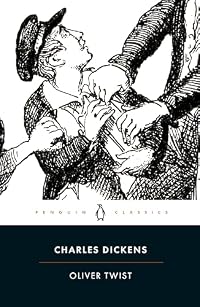
Oliver Twist
by Charles Dickens
On This Page
Description
In nineteenth-century England, a young orphan boy lives in the squalid surroundings of a workhouse until he becomes involved with a gang of thieves.Tags
Recommendations





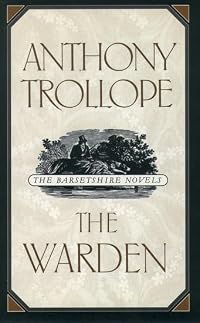
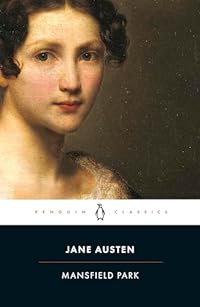

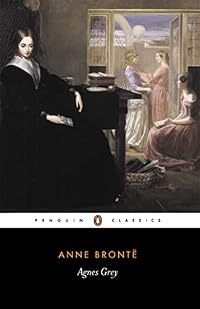
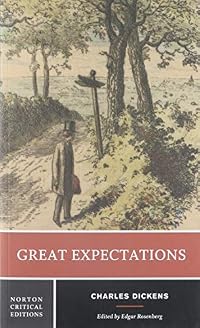
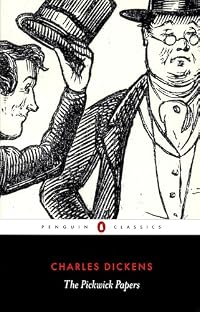
Member Recommendations

anonymous user Unauthorised sequel about the life of the Artful Dodger as an adult when he returns to England.
21

anonymous user Another look at Victorian corruption and crime. More comprehensive and more sinister.
Member Reviews
Othering in Oliver Twist
Special thanks to GR friends Kevin and Caroline
I first read Oliver Twist when I was ten. My parents took me to see the musical theater production, and I was enthralled. I found a copy of the novel among my grandparents' old books, and I devoured it. My heart went out to the poor orphan boy, so mistreated in the workhouse, who escaped to London only to be taken in by a gang of thieves. I followed his misadventures and was thrilled by the happy ending. I was oblivious to the melodrama and the stereotyping that pervaded the text. Then, last month, I revisited the text as an adult.
Before proceeding, I need to explain that I dealt with the text in two formats: the audio version, narrated by Richard Pryce, based on the show more original serialized version of the text from 1837, and the written version, as found in Everyman's Library, which used Dickens' revised 1867 version of the text. In the original 1837 serialization, and to a lesser extent in the 1867 revision, Dickens engages in a form of othering that I found jarring and offensive. He would refer to a character by their ethnicity, religion, or disability rather than by their name and link it to something evil or distasteful.
The most flagrant example is the antisemitism evident in his treatment of Fagin:
"and standing over them, with a toasting-fork in his hand, was a very old shrivelled Jew, whose villainous-looking and repulsive face was obscured by a quantity of matted red hair... Seated round the table were four or five boys, none older than the Dodger ...who whispered a few words to the Jew; and then turned around and grinned at Oliver. So did the Jew himself, toasting fork in hand."(Chapter 8).
This type of imaging and referencing repeats throughout the text.
Dickens also repeatedly links disabilities to moral degeneracy. For example, a nameless character opens the door. "Halloa?" said a little ugly hump-backed man. During the following conversation, with Mr. Losberne (an English gentleman), the text reads "Will you?" sneered the ill-favored cripple. "If you ever want me, 'I'm here." The misshapen little demon set up a yell and danced upon the ground as if wild with rage." (Chapter 32 ).
Similarly, Dickens denigrates the Irish:
"The sole places that seemed to prosper amid the general blight of the place were the public houses, and in them, the lowest orders of the Irish(who are generally the lowest orders of anything.) (Chapter 8).
As these examples demonstrate, Dickens embeds negative stereotyping as a means of othering throughout the text. While I find this practice upsetting, I am a 21st-century reader, responding to a text originally serialized in the 1830s. Are these attitudes the norms of British society during that period? What is a fair way to assess this?
I was reading reviews in journals and on Goodreads. Kevin, in his GR review, tackles these issues, and GR friend Caroline made an astute comment that sums up my feelings:
"I can handle slurs and bigoted sentiments in the characters' speech and thoughts, but not in the narrative. I've always viewed the former as part of characterization and scene-setting (meaning the period of the story). The latter isn't; it's from the author."
In Oliver Twist, it's the narrator's voice, not the characters, that signals the othering. The excessiveness may have bothered some members of the Victorian readership, causing Dickens to make changes to the 1867 edition.
Despite my criticisms, Oliver Twist remains a classic. However, it should be read with a critical eye, especially when taught in schools. show less
Special thanks to GR friends Kevin and Caroline
I first read Oliver Twist when I was ten. My parents took me to see the musical theater production, and I was enthralled. I found a copy of the novel among my grandparents' old books, and I devoured it. My heart went out to the poor orphan boy, so mistreated in the workhouse, who escaped to London only to be taken in by a gang of thieves. I followed his misadventures and was thrilled by the happy ending. I was oblivious to the melodrama and the stereotyping that pervaded the text. Then, last month, I revisited the text as an adult.
Before proceeding, I need to explain that I dealt with the text in two formats: the audio version, narrated by Richard Pryce, based on the show more original serialized version of the text from 1837, and the written version, as found in Everyman's Library, which used Dickens' revised 1867 version of the text. In the original 1837 serialization, and to a lesser extent in the 1867 revision, Dickens engages in a form of othering that I found jarring and offensive. He would refer to a character by their ethnicity, religion, or disability rather than by their name and link it to something evil or distasteful.
The most flagrant example is the antisemitism evident in his treatment of Fagin:
"and standing over them, with a toasting-fork in his hand, was a very old shrivelled Jew, whose villainous-looking and repulsive face was obscured by a quantity of matted red hair... Seated round the table were four or five boys, none older than the Dodger ...who whispered a few words to the Jew; and then turned around and grinned at Oliver. So did the Jew himself, toasting fork in hand."(Chapter 8).
This type of imaging and referencing repeats throughout the text.
Dickens also repeatedly links disabilities to moral degeneracy. For example, a nameless character opens the door. "Halloa?" said a little ugly hump-backed man. During the following conversation, with Mr. Losberne (an English gentleman), the text reads "Will you?" sneered the ill-favored cripple. "If you ever want me, 'I'm here." The misshapen little demon set up a yell and danced upon the ground as if wild with rage." (Chapter 32 ).
Similarly, Dickens denigrates the Irish:
"The sole places that seemed to prosper amid the general blight of the place were the public houses, and in them, the lowest orders of the Irish(who are generally the lowest orders of anything.) (Chapter 8).
As these examples demonstrate, Dickens embeds negative stereotyping as a means of othering throughout the text. While I find this practice upsetting, I am a 21st-century reader, responding to a text originally serialized in the 1830s. Are these attitudes the norms of British society during that period? What is a fair way to assess this?
I was reading reviews in journals and on Goodreads. Kevin, in his GR review, tackles these issues, and GR friend Caroline made an astute comment that sums up my feelings:
"I can handle slurs and bigoted sentiments in the characters' speech and thoughts, but not in the narrative. I've always viewed the former as part of characterization and scene-setting (meaning the period of the story). The latter isn't; it's from the author."
In Oliver Twist, it's the narrator's voice, not the characters, that signals the othering. The excessiveness may have bothered some members of the Victorian readership, causing Dickens to make changes to the 1867 edition.
Despite my criticisms, Oliver Twist remains a classic. However, it should be read with a critical eye, especially when taught in schools. show less
It's been decades since I visited this rags-to-riches tale of an orphan's misfortunes and ultimate triumph over all the wicked people who mistreated, exploited and cheated him from birth to adolescence. Its flaws are many: the melodrama; the wordiness; the casual anti-Semitism; the multiple unlikely coincidences and the too pat ending where everyone, innocent or wicked, gets just what they deserve...and yet there's a darn fine story buried in the pathos and heavy-handed social commentary, and there are brilliant bits of comic relief as well. I'm not sorry to have read it again.
Abject poverty, criminality, conspiracies, violence, ignorance, child neglect, and alcoholism.
I was dumbstruck. I had no idea Oliver Twist was filled with so much of human darkness (Dickens' novel, not the musical with the lovely song "Who Will Buy This Wonderful Morning"). Some parts were hard to read even for this 65 year old adult to read.
> The death of Nancy was horrific. And how tragically accurate that she was so used to physical abuse that she couldn't even imagine a life without it, even predicting it would be her death.
> Sikes on the run--without thoughts, only with instincts--is a character that could be confused as being written by a 20th or 21st century writer.
> The bloodlust of the public was as revolting as the public is show more today, like in 2021 when Gabby Petito went missing and was later found dead.
> Fagin was as selfish and as manipulative as anyone in fiction, or in real life, a man missing a moral compass as we would say now. Yet, while he waited in prison for the morning of his hanging to arrive, one couldn't help observe how such a sentence is not entirely blind justice since it also brings out the worst in humanity.
Oliver Twist isn't really about Oliver Twist. The boy Oliver Twist is a plot device. The real story is about the brutality of 1830s England, its poverty, and its exasperating laws.
Say what you will about Dickens but the man knew how to write to entertain and knew how to reflect his society without flinching.
I listened to the outstanding Librivox recording by Mil Nicholson. Highly recommend it. show less
I was dumbstruck. I had no idea Oliver Twist was filled with so much of human darkness (Dickens' novel, not the musical with the lovely song "Who Will Buy This Wonderful Morning"). Some parts were hard to read even for this 65 year old adult to read.
> The death of Nancy was horrific. And how tragically accurate that she was so used to physical abuse that she couldn't even imagine a life without it, even predicting it would be her death.
> Sikes on the run--without thoughts, only with instincts--is a character that could be confused as being written by a 20th or 21st century writer.
> The bloodlust of the public was as revolting as the public is show more today, like in 2021 when Gabby Petito went missing and was later found dead.
> Fagin was as selfish and as manipulative as anyone in fiction, or in real life, a man missing a moral compass as we would say now. Yet, while he waited in prison for the morning of his hanging to arrive, one couldn't help observe how such a sentence is not entirely blind justice since it also brings out the worst in humanity.
Oliver Twist isn't really about Oliver Twist. The boy Oliver Twist is a plot device. The real story is about the brutality of 1830s England, its poverty, and its exasperating laws.
Say what you will about Dickens but the man knew how to write to entertain and knew how to reflect his society without flinching.
I listened to the outstanding Librivox recording by Mil Nicholson. Highly recommend it. show less
Having now worked my way through most of the Dickens canon, feel confident stating that this isn’t one of his more masterly outings. The plot is transparent, over-reliant on deux ex machina (okay, his plots are *always* over-reliant on improbable coincidence, but this one even more so than most), and the protagonist Oliver is, frankly, a bit of a sop, possessing ample virtue and gratitude but little in the way of intelligence, personality, or gumption. (Not for nothing, this is one of Dickens' earliest works, penned a full 20 years before his brilliant Tale of Two Cities.) So what does it say that I still waited with baited breath to see what would happen in each new chapter? Dickens’ narration is so clever, his characters so show more original, his wit so biting that even a lesser outing still has the power to beguile.
To be fair, I think the reason Dickens doesn't bother to endow Oliver with any particular qualities is because the author is interested in telling an entirely different tale. Our milquetoast protagonist merely provides a narrative device for Dickens to whisk us off on an exploration of London’s repugnant underworld – the frauds, pickpockets, burglars, whores, fences, and murderers that prey not merely on the unwary, but particularly on the desperate, especially children. One reason people may be put off by this story is that the most fully realized characters are wholly odious, from Fagin, the physically and morally repellant leader of a gang of thieves comprised of children he has gleefully corrupted; to Bumble, the absurd parochial Beadle who uses the prestige of his office to mask his casual cruelty; to Sikes, the physically and mentally abusive villain who mistreats his dog and his girlfriend Nancy in equal measure, confident that – in a dark underworld in which they live, where filth is rampant, life is cheap, and exploitation inescapable - neither of them have a choice but to endure his violence.
In anyone else’s hands, this dark tale would be almost unreadable, but what Dickens does so well in all his tales, and certainly here, is to layer this darkness with so much absurdity, humor, wit, and empathy that you keep reading in spite of your revulsion. The scene in which Bumble woos his bride is truly hilarious; the moment that the Artful Dodger meets his fate with a dazzling display of proud insouciance, undeniably affecting; the scene in which Nancy turns her back on the hope of redemption, heartbreaking. And then, in between these scenes, a thousand other moments, some ridiculous, some shocking, some poignant, some ironic, some but all organized into a compelling story and related via Dickens’ deliciously penetrating prose.
Having just recently polished off a bunch of novels that received critical plaudits (Nobel Prize winners, Booker Prize winners, Pen/Faulkner prize winners), feel like I can honestly say that even this relatively weak effort by Dickens deserves to stand alongside the best of what’s being published now. Who else but Dickens is capable of combining the social commentary of Barbara Kingsolver, the grim brutality of Cormac McCarthy, the absurd wit of P.G. Wodehouse, and the unconditional empathy of Toni Morrison into a single affecting tale? show less
To be fair, I think the reason Dickens doesn't bother to endow Oliver with any particular qualities is because the author is interested in telling an entirely different tale. Our milquetoast protagonist merely provides a narrative device for Dickens to whisk us off on an exploration of London’s repugnant underworld – the frauds, pickpockets, burglars, whores, fences, and murderers that prey not merely on the unwary, but particularly on the desperate, especially children. One reason people may be put off by this story is that the most fully realized characters are wholly odious, from Fagin, the physically and morally repellant leader of a gang of thieves comprised of children he has gleefully corrupted; to Bumble, the absurd parochial Beadle who uses the prestige of his office to mask his casual cruelty; to Sikes, the physically and mentally abusive villain who mistreats his dog and his girlfriend Nancy in equal measure, confident that – in a dark underworld in which they live, where filth is rampant, life is cheap, and exploitation inescapable - neither of them have a choice but to endure his violence.
In anyone else’s hands, this dark tale would be almost unreadable, but what Dickens does so well in all his tales, and certainly here, is to layer this darkness with so much absurdity, humor, wit, and empathy that you keep reading in spite of your revulsion. The scene in which Bumble woos his bride is truly hilarious; the moment that the Artful Dodger meets his fate with a dazzling display of proud insouciance, undeniably affecting; the scene in which Nancy turns her back on the hope of redemption, heartbreaking. And then, in between these scenes, a thousand other moments, some ridiculous, some shocking, some poignant, some ironic, some but all organized into a compelling story and related via Dickens’ deliciously penetrating prose.
Having just recently polished off a bunch of novels that received critical plaudits (Nobel Prize winners, Booker Prize winners, Pen/Faulkner prize winners), feel like I can honestly say that even this relatively weak effort by Dickens deserves to stand alongside the best of what’s being published now. Who else but Dickens is capable of combining the social commentary of Barbara Kingsolver, the grim brutality of Cormac McCarthy, the absurd wit of P.G. Wodehouse, and the unconditional empathy of Toni Morrison into a single affecting tale? show less
I reread this recently for the first time since I was a teenager and found (not surprisingly) that I was interested in very different parts of the story than I was when I was younger. I was much more interested in the character of Bill Sykes, and his haunted guilt, fleeing the law. There is a fabulous scene that I had not remembered where he heroically lends a hand during a fire in a desperate effort to rejoin humanity after murdering a friend. Hellfire and damnation mixed in with attempted atonement. It was really quite mesmerizing.
Second best of Dickens' "skinny" novels (Great Expectations is the best) that suffers from two flaws, one major and one less so. First the lesser, after spending the bulk of the novel on the evils of nurture, that is bad nurture, over nature in the end Dickens' resorts to blood, or birth if you will, by resolving Oliver's better nature as at least partly, if not wholly due to his better "blood." This is a sop to the class structure that Dickens' could never quite throw off. To be fair, he isn't the only 19th century English novelist to fall prey to this, Trollope was just as bad.
The second, and most serious flaw, is the egregious anti-Semitism evident in Dickens' handling of Fagin. He is most frequently referred to as the "Jew." I know show more others are going to argue that the author was just "of his time," but I reject this notion. Other authors of this time didn't play upon stereotypical views. Why isn't Sikes referred to as the "Cockney?" It just doesn't wash with the modern reader. I'm sorry but I cannot get past this when reading the novel. For an author to be a bigot is bad enough but to overtly use it with a major character within the context of a work is a huge problem for me.
Otherwise the novel is a solid melodrama with well drawn characters and a good indictment of the horrors heaped on the lower classes by orphanages, work houses, prisons, child labor, and Victorian industrial society in general. show less
The second, and most serious flaw, is the egregious anti-Semitism evident in Dickens' handling of Fagin. He is most frequently referred to as the "Jew." I know show more others are going to argue that the author was just "of his time," but I reject this notion. Other authors of this time didn't play upon stereotypical views. Why isn't Sikes referred to as the "Cockney?" It just doesn't wash with the modern reader. I'm sorry but I cannot get past this when reading the novel. For an author to be a bigot is bad enough but to overtly use it with a major character within the context of a work is a huge problem for me.
Otherwise the novel is a solid melodrama with well drawn characters and a good indictment of the horrors heaped on the lower classes by orphanages, work houses, prisons, child labor, and Victorian industrial society in general. show less
A while back, I decided that I really ought to read some more Dickens. So last year I picked up Great Expectations, which had a good enough story, but which kept reminding me far too much of a friend's comment that he never liked Dickens because it was too obvious they were paying him by the word. But while Oliver Twist might also be legitimately accused of wordiness, in this case that struck me as more charming than tedious, and overall I found it a much more engaging read.
The plot has enough interesting elements, certainly. There's crime and punishment, kindness and cruelty, long-held secrets, and sudden reversals of fortune. Also huge honking coincidences, but at least Dickens introduces them gradually enough to give you time to show more shore up your suspension of disbelief. Oliver himself, though, really isn't much of a character. He's someone to whom things happen, not one who makes things happen, and his only defining traits are innocence, piteousness, and a vague, generic sort of sweetness. But this isn't necessarily a problem; he seems to me to be filling the role of a slightly sentimentalized everychild, and on that level he works well enough.
But what really makes this worth reading isn't the characters or the plot. It's the surprising little moments of human insight, the wonderfully sly and dark satiric humor, and the sharply pointed social commentary. And, unfortunately, while there may be no more workhouses in England, the attitudes towards the poor that Dickens targets here are still too familiar and relevant even now. It's brilliant writing, and if it occasionally brings a little bit of mawkishness or melodrama along with it, I find that entirely forgivable.
Somewhat less forgivable, though, is the portrayal of Fagin as an unpleasantly stereotypical villainous Jew. Interestingly enough, despite everything about this book that I already knew through cultural osmosis, I had never even realized that he was Jewish. Dickens, however, never lets you forget it for an instant. Every other sentence, he's referred to as "the Jew." My impression is that, for whatever it's worth, at least this is more thoughtless stereotyping than active maliciousness. A brief bit of research on the internet reveals that Dickens, having had the offensiveness of this pointed out to him, later revised the last fifteen chapters or so to tone it down. Which is something, I guess, but I don't know that it helps all that much. And it really is very unfortunate, both for the obvious reasons and because without the uncomfortable overtones of anti-Semitism, Fagin really could have been quite an entertainingly smarmy character. And he actually does get some surprisingly poignant moments at the end. show less
The plot has enough interesting elements, certainly. There's crime and punishment, kindness and cruelty, long-held secrets, and sudden reversals of fortune. Also huge honking coincidences, but at least Dickens introduces them gradually enough to give you time to show more shore up your suspension of disbelief. Oliver himself, though, really isn't much of a character. He's someone to whom things happen, not one who makes things happen, and his only defining traits are innocence, piteousness, and a vague, generic sort of sweetness. But this isn't necessarily a problem; he seems to me to be filling the role of a slightly sentimentalized everychild, and on that level he works well enough.
But what really makes this worth reading isn't the characters or the plot. It's the surprising little moments of human insight, the wonderfully sly and dark satiric humor, and the sharply pointed social commentary. And, unfortunately, while there may be no more workhouses in England, the attitudes towards the poor that Dickens targets here are still too familiar and relevant even now. It's brilliant writing, and if it occasionally brings a little bit of mawkishness or melodrama along with it, I find that entirely forgivable.
Somewhat less forgivable, though, is the portrayal of Fagin as an unpleasantly stereotypical villainous Jew. Interestingly enough, despite everything about this book that I already knew through cultural osmosis, I had never even realized that he was Jewish. Dickens, however, never lets you forget it for an instant. Every other sentence, he's referred to as "the Jew." My impression is that, for whatever it's worth, at least this is more thoughtless stereotyping than active maliciousness. A brief bit of research on the internet reveals that Dickens, having had the offensiveness of this pointed out to him, later revised the last fifteen chapters or so to tone it down. Which is something, I guess, but I don't know that it helps all that much. And it really is very unfortunate, both for the obvious reasons and because without the uncomfortable overtones of anti-Semitism, Fagin really could have been quite an entertainingly smarmy character. And he actually does get some surprisingly poignant moments at the end. show less
Members
- Recently Added By
Published Reviews
Oliver Twist, a meek, mild young boy, is born in the workhouse and spends his early years there until, finding the audacity to ask for more food, he is made to leave. Apprenticed to an undertaker by Mr Bumble, Oliver runs away in desperation and falls in with Fagin and his gang of thieves where he begins his new life in the criminal underworld.
Under the tutelage of the satanic Fagin, the show more brutal Bill Sikes and the wily Artful Dodger, Oliver learns to survive, although he is destined not to stay with Fagin but to find his own place in the world.
With its terrifying evocation of the hypocrisy of the wealthy and the depths to which poverty pushes the human spirit, Oliver Twist is both a fascinating examination of evil and a poignant moving novel for all times. show less
Under the tutelage of the satanic Fagin, the show more brutal Bill Sikes and the wily Artful Dodger, Oliver learns to survive, although he is destined not to stay with Fagin but to find his own place in the world.
With its terrifying evocation of the hypocrisy of the wealthy and the depths to which poverty pushes the human spirit, Oliver Twist is both a fascinating examination of evil and a poignant moving novel for all times. show less
added by letonia
Lists

1001 Books You Must Read Before You Die
1,448 works; 1,132 members

The Guardian's 1000 Novels Everyone Must Read
1,005 works; 549 members

Classics you know you should have read but probably haven't
421 works; 407 members
BBC Big Read
191 works; 46 members

Favorite Dickens novels?
16 works; 27 members

Favourite 19th century fiction
257 works; 62 members

Unread books
1,063 works; 83 members

Read the book and saw the movie
1,170 works; 195 members

Favourite Books
1,817 works; 316 members

Recommend the 20 best books you've read in the last five years
2,167 works; 605 members

Favorite Long Books
330 works; 42 members
Literature About Social Class
134 works; 19 members

child hero ~ adult novel
60 works; 12 members

Best Books Set in London
157 works; 42 members
Books I've Read More Than Once
602 works; 48 members
Folio Society
831 works; 53 members
Harold Bloom - The Western Canon: C. The Democratic Age
336 works; 15 members

19th Century
190 works; 16 members
Favorite Coming of Age Novels.
164 works; 51 members

Books Read in 2014
2,341 works; 86 members

150 Best Novels Selected by Brander Matthews (1883)
150 works; 7 members
Out of Copyright
244 works; 14 members

Books Featured on Gilmore Girls
307 works; 21 members
Thieves
18 works; 7 members

Western World's Greatest Books - Project Gutenberg
295 works; 15 members

Year 9 Reading List
29 works; 3 members

Publisher's Weekly Bestsellers Prior to 1895 in Chronological Order
95 works; 6 members

Blue Pyramid 1,276 Best Books of All Time
1,248 works; 32 members
BBC Big Read
100 works; 10 members

Top Five Books of 2014
1,064 works; 397 members
The Well-Educated Mind Reading Challenge
75 works; 7 members
100 World Classics
99 works; 15 members
Newark Public Library's 1904 List of a Thousand of the Best Novels
95 works; 5 members

1,001 BYMRBYD Concensus
723 works; 27 members

Movie Adaptations
111 works; 4 members

Rory Gilmore Book Club
193 works; 5 members

BBC Top Books
78 works; 3 members
Good, Smart, Clean Fiction
46 works; 4 members
Books mentioned in The Diary of a Provincial Lady
59 works; 4 members
F. B. Perkins' List of 100 Best Fiction
100 works; 5 members

Works That Inspired Disney Movies
119 works; 13 members

Well-Educated Mind
150 works; 3 members

Books Read in 2020
4,379 works; 123 members

Bibliography for How to be a Heroine
148 works; 12 members
Books with a Character's Name as the Title
129 works; 9 members

CCE 1000 Good Books List
1,033 works; 12 members
All Things Great Britain
66 works; 1 member

Books on my Kindle
162 works; 3 members
Overdue Podcast
800 works; 9 members

Books Read in 2023
5,547 works; 145 members

Books with racist aspects you wished you had been warned about
29 works; 10 members

Books Read in 2017
4,248 works; 129 members

Generation Joshua
115 works; 3 members

Next 100 books
9 works; 1 member

Books Set in London
49 works; 3 members
Books About Murder
313 works; 7 members
The Complete Rory Gilmore Reading List
506 works; 5 members
School Made Us Read It
380 works; 196 members

el
1,139 works; 1 member

Books Read in 2025
4,090 works; 97 members

.
396 works; 1 member

DigitalDreamDoor top 300
300 works; 4 members

Read
27 works; 1 member
'Books You Can't Live Without: The Top 100', The Guardian, 2007
156 works; 7 members

Ambleside Year 5
55 works; 1 member

Greatest Books, allegedly
484 works; 9 members
The Well-Educated Mind, Susan Wise Bauer, 2016
179 works; 3 members

Books Referenced by Izetbegovic's Islam Between East and West
233 works; 2 members

AP Lit
363 works; 6 members

Mustich's 1000 Books to Read Before You Die: A Life Changing List
1,001 works; 18 members

Recommended Reading : 600 Classics Reviewed, Editors of Salem Press, 2015
634 works; 6 members

Book Titles Mentioned In Newberry Medal And Honor Books
884 works; 3 members
Works in the game of Authors
44 works; 2 members
Stephen King's 'On Writing' reading list
95 works; 4 members

Books I recommend to everyone
29 works; 1 member

Books About Boys
175 works; 15 members

A Reading List
100 works; 3 members
Works Referenced in The League of Extraordinary Gentlemen
122 works; 6 members

Favorite Childhood Books
1,602 works; 512 members

Sonlight Books
1,487 works; 25 members
Ambleside Books
459 works; 18 members
Honey For a Child's Heart
1,152 works; 25 members
Income Inequality
20 works; 4 members

Inheritance and Succession Literature
24 works; 5 members

Books Bought & Received as Gifts in 2014
81 works; 1 member
Puffin Books 70th anniversary handbook recommendations
537 works; 10 members

Armed Services Editions
150 works; 1 member
The League of Extraordinary Gentlemen
87 works; 4 members
Victorian Period
113 works; 10 members
Childhood Favorites
427 works; 24 members
Tagged 19th Century
104 works; 7 members

Five books to read aloud to your kids
35 works; 17 members
Novels featuring Orphans
76 works; 10 members
Fiction with Men's Given Names in the Title
302 works; 11 members

Alphabetical Books
211 works; 3 members

Ryan's Books
34 works; 1 member

Books Read in 2013
1,629 works; 51 members

Books Tagged Abuse
152 works; 4 members

Charles Dickens books
17 works; 1 member

Best Gothic Fiction
110 works; 31 members

Best of World Literature
431 works; 51 members
Author Information

2,578+ Works 313,139 Members
Charles Dickens, perhaps the best British novelist of the Victorian era, was born in Portsmouth, Hampshire, England on February 7, 1812. His happy early childhood was interrupted when his father was sent to debtors' prison, and young Dickens had to go to work in a factory at age twelve. Later, he took jobs as an office boy and journalist before show more publishing essays and stories in the 1830s. His first novel, The Pickwick Papers, made him a famous and popular author at the age of twenty-five. Subsequent works were published serially in periodicals and cemented his reputation as a master of colorful characterization, and as a harsh critic of social evils and corrupt institutions. His many books include Oliver Twist, David Copperfield, Bleak House, Great Expectations, Little Dorrit, A Christmas Carol, and A Tale of Two Cities. Dickens married Catherine Hogarth in 1836, and the couple had nine children before separating in 1858 when he began a long affair with Ellen Ternan, a young actress. Despite the scandal, Dickens remained a public figure, appearing often to read his fiction. He died in 1870, leaving his final novel, The Mystery of Edwin Drood, unfinished. (Bowker Author Biography) show less
Some Editions
Awards and Honors
Series
Belongs to Publisher Series
cbj Klassiker (21951)
Reclam Taschenbuch (20631)
Airmont Classics (9)
Penguin English Library, 2012 series (2012-04)
Penguin Clothbound Classics (2009)
Sammlung Dieterich (106)
Corticelli [Mursia] (14)
Geração Público (16)
Winkler Weltliteratur Dünndruckausgabe (Dickens 10)
El País Aventuras (23)
Dean's Classics (27)
Prisma Klassieken (36)
Zephyr Books (50)
Reader's Enrichment Series (RE 314)
Tus libros (95)
The Pocket Library (PL-514)
Instructor Literature Series (No.260)
A tot vent (153)
Signet Classics (CP 102)
Everyman's Library (233)
insel taschenbuch (0242)
Gallimard, Folio (386)
Work Relationships
Is contained in
Oliver Twist / A Christmas Carol / David Copperfield / A Tale of Two Cities / Great Expectations by Charles Dickens (indirect)
Gesammelte Werke. Die Pickwickier, Nikals Nickleby, Martin Chuzzlewit, Oliver Twist, Weihnachtsgeschichten, Bleakhaus, David Copperfield by Charles Dickens
Oliver Twist; David Copperfield; Our Mutual Friend Volume I Works. "Collector's Unabridged Edition" Vol One Only 1 by Charles Dickens
Great Expectations / Hard Times / Oliver Twist / A Christmas Carol / Bleak House / A Tale of Two Cities by Charles Dickens
Contains
Is retold in
Has the (non-series) sequel
Is an adaptation of
Has the adaptation
Is abridged in
Best Loved Books for Young Readers 11: Bob, Son of Battle / Oliver Twist / A Selection of Modern American Poetry / Cry, The Beloved Country by The Readers Digest
One hundred best novels condensed: 3 of 4 see note: Adam Bede; Tess of the D'Urbervilles; Don Quixote; East Lynne; Count of Monte Cristo; Paul and Virginia; Tom Brown's School Days; Waverley; Dombey and Son; Romola; Legend of Sleepy Hollow; Last of the Mohicans; Wreck of the "Grosvenor"; Right of Way; Coniston; Far from the Madding Crowd; Woman in White; Deemster; Waterloo; Hypatia; Kidnapped; Oliver Twist; Gil Blas; Peg Woffington; Virginians by Edwin Atkins Grozier
Doré's London: All 180 Images from the Original London Series with Selected Writings by Valerie Purton
Is replied to in
Inspired
Has as a commentary on the text
Has as a student's study guide
Common Knowledge
- Canonical title
- Oliver Twist
- Original title
- Oliver Twist; or, The Parish Boy’s Progress
- Alternate titles
- The Adventures of Oliver Twist
- Original publication date
- 1838
- People/Characters
- Oliver Twist (parish boy); Artful Dodger (Jack Dawkins); Fagin; Bill Sikes; Nancy; Monks (show all 49); Rose Leeford (nee Fleming); Jack Dawkins ('Artful Dodger'); Charley Bates; Mr Brownlow; Mr Grimwig; Mrs Mann; Mr Bumble (parish beadle); Mr Gamfield (chimney sweep); Mr Sowerberry (undertaker); Trip (undertaker's dog); Noah Claypole (charity boy); Charlotte (Mrs Sowerberry's maid); Bet (friend of Nancy); Mr Fang (police magistrate); Mrs Bedwin (Mr Brownlow's houskeeper); Bull's Eye (shaggy dog of Sikes); Tom Chitling (felon, associate of Fagin); Toby Crackit (housebreaker, 'Flash'); Barney; Mrs Corney (workhouse matron); Mr Giles (Mrs Maylie's butler); Brittles (Mrs Maylie's boy); Mrs Maylie; Mr Losberne (doctor, friend of Mrs Maylie); Agnes Fleming; Edwin Fleming; Kags (returned transport); Harry Maylie; Mrs Sowerberry (undertaker's wife); Mrs Thingummy (workhouse nurse); Susan (Mrs Mann's maid); Mr Limbkins (chair of Poor Board); Bayton (poor family); Bill (grave digger); Dick (boy at baby farm); Nolly (prisoner); Mr Grannett (Overseer of the Poor); Mr Slout (Master of the workhouse); Morris Bolter (Noah Claypole's pseudonym); Blathers (Bow Street Runner); Duff (Bow Street Runner); Sally (workhouse nurse); Edwin Leeford
- Important places
- London, England, UK; Three Cripples Public House, London, England, UK; Chertsey, Surrey, England, UK; Jacob's Island, London, England, UK; Holborn, London, England, UK; England, UK
- Important events
- 19th century; Victorian Era
- Related movies
- Oliver Twist (1948 | David Lean | IMDb); Oliver! (1968 | Carol Reed | IMDb); Oliver & Company (1988 | animated film | IMDb); Oliver Twist (1997 | TV | IMDb); Oliver Twist (1999 | TV | IMDb); Twist (2003 | IMDb) (show all 8); Oliver Twist (2005 | Roman Polanski | IMDb); Oliver Twist (2007 | TV | IMDb)
- First words
- Among other public buildings in a certain town, which for many reasons it will be prudent to refrain from mentioning, and to which I will assign no fictitious name, there is one anciently common to most towns, great or small:... (show all) to wit, a workhouse; and in this workhouse was born; on a day and date which I need not trouble myself to repeat, inasmuch as it can be of no possible consequence to the reader, in this stage of the business at all events; the item of mortality whose name is prefixed to the head of this chapter.
Like virtually all Dickens' fiction, Oliver Twist shows a remarkable variety of purpose subdued and concentrated into an extraordinary singleness of vision. (Introduction)
Oliver Twist originally appeared in twenty-four monthly instalments in Bentley's Miscellany between February 1837 and April 1839; it was first published in book form in 1838, again by Richard Bentley. (Textual N... (show all)ote)
The greater part of this Tale was originally published in a magazine. (The Author's Preface to the Third Edition) - Quotations
- Please, sir, I want some more.
If the law supposes that, the law is a ass-- a idiot.
What have paupers to do with soul or spirit? It's quite enough that we let 'em have live bodies.
"We have none of us long to wait for Death. Patience, patience! He'll be here soon enough for us all." - Last words
- (Click to show. Warning: May contain spoilers.)I believe it none the less because that nook is in a Church, and she was weak and erring.
(Click to show. Warning: May contain spoilers.)Finally, in Great Expectations, he uses a strikingly similar story of a young hero flanked by kindly patrons and repulsive criminals to realize those rich implications that Oliver Twist had glimpsed with such fitful power. (Introduction)
(Click to show. Warning: May contain spoilers.)I would like to express my indebtedness to Kathleen Tillotson's Clarendon Edition of Oliver Twist, published by Oxford University Press in 1966. (Textual Note)
(Click to show. Warning: May contain spoilers.)I am glad to have it doubted, for in that circumstance I find a sufficient assurance that it needed to be told. (The Author's Preface to the Third Edition) - Publisher's editor
- Bates, Tim; Mighall, Robert; Barber, Laura; Vasey, Lindeth; Paul, Michael; Barry, Karin
- Original language
- English
- Canonical DDC/MDS
- 823.83
- Canonical LCC
- PR4567
- Disambiguation notice
- This is the main work for the book Oliver Twist by Charles Dickens.
Please DO NOT combine film adaptations (DVDs, videos) with the work for the book. These are considered separate and distinct works for LibraryT... (show all)hing cataloging. Also please be careful when editing and deleting information in Common Knowledge, since this is common data that affects everyone in LibraryThing.
Classifications
Statistics
- Members
- 28,321
- Popularity
- 134
- Reviews
- 272
- Rating
- (3.83)
- Languages
- 37 — Arabic, Bulgarian, Catalan, Chinese, Czech, Danish, Dutch, English, Estonian, Finnish, French, German, Galician, Greek, Hungarian, Icelandic, Indonesian, Italian, Japanese, Korean, Lithuanian, Norwegian (Bokmål), Norwegian, Panjabi, Farsi/Persian, Polish, Romanian, Russian, Serbian, Croatian, Slovak, Spanish, Swedish, Turkish, Ukrainian, Vietnamese, Portuguese (Portugal)
- Media
- Paper, Audiobook, Ebook
- ISBNs
- 1,410
- UPCs
- 11
- ASINs
- 570