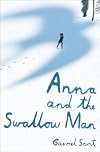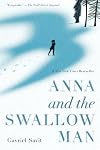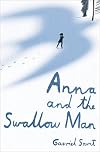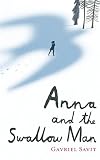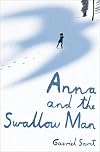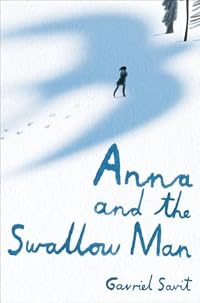
Anna and the Swallow Man
by Gavriel Savit
On This Page
Description
Winner of the 2017 Odyssey Award for Excellence in Audiobook Production A New York Times Bestseller A Booklist Editors' Choice Audio An AudioFile Best Audiobook of the Year A Publishers Weekly Best Book of the Year A Shelf Awareness Best Book of the Year A Bulletin Blue Ribbon Book Winner of the Indies Choice Book Award Winner of the Sydney Taylor Book Award "Exquisite." --The Wall Street Journal "This is masterly storytelling." --The New York show more Times Book Review A stunning, beautiful, and ambitious debut novel set in Poland during the Second World War perfect for readers of All the Light We Cannot See and The Book Thief. Kraków, 1939. A million marching soldiers and a thousand barking dogs. This is no place to grow up. Anna Łania is just seven years old when the Germans take her father, a linguistics professor, during their purge of intellectuals in Poland. She's alone. And then Anna meets the Swallow Man. He is a mystery, strange and tall, a skilled deceiver with more than a little magic up his sleeve. And when the soldiers in the streets look at him, they see what he wants them to see. The Swallow Man is not Anna's father--she knows that very well--but she also knows that, like her father, he's in danger of being taken, and like her father, he has a gift for languages: Polish, Russian, German, Yiddish, even Bird. When he summons a bright, beautiful swallow down to his hand to stop her from crying, Anna is entranced. She follows him into the wilderness. Over the course of their travels together, Anna and the Swallow Man will dodge bombs, tame soldiers, and even, despite their better judgment, make a friend. But in a world gone mad, everything can prove dangerous. Even the Swallow Man. Destined to become a classic, Gavriel Savit's stunning debut reveals life's hardest lessons while celebrating its miraculous possibilities. show lessTags
Recommendations









Member Reviews
"A word is a tiny movement of time
devoted to the conjuring aloud of small corner of what is...
But there was no significance to anything that was,
in that moment,
only what was not."
This is a book for young adults? Teens? I'm astounded.
And I'm jubilant, if this is the kind of book that is geared toward young people now. It proves there must be readers with sharp empathy (and excellent teachers) that appreciate insightful writing with a captivating plot, one that looks at Nazi Germany with unflinching horror and also at humanity's potential for wonderments of generosity.
The picture of the author on the backflap, from ten years ago, looks like he isn't more than 25 years old himself. That is another thing I am taking a moment to rejoice, show more that someone so young can have within him something to gladden even a weary 65 year old. That a young Jewish girl, a tall enigmatic German genius, and a faithful Jewish musician can together, by walking and staying forever on the move, cross Poland, Belarus, Ukraine, and even Russia, and perhaps stay alive--by being unnoticed--in a 1939 world gone the maddest we pray that it will ever go.
No surprise that Savit's writing has been shortlisted for the National Book Award and has been translated into nineteen languages.
It's a dark, heartening story, one that embraces "...stories, not as absolute, irrevocably factual truths that simply don't exist, but as flaccid allegories or metaphors," once more made afresh for us all. show less
devoted to the conjuring aloud of small corner of what is...
But there was no significance to anything that was,
in that moment,
only what was not."
This is a book for young adults? Teens? I'm astounded.
And I'm jubilant, if this is the kind of book that is geared toward young people now. It proves there must be readers with sharp empathy (and excellent teachers) that appreciate insightful writing with a captivating plot, one that looks at Nazi Germany with unflinching horror and also at humanity's potential for wonderments of generosity.
The picture of the author on the backflap, from ten years ago, looks like he isn't more than 25 years old himself. That is another thing I am taking a moment to rejoice, show more that someone so young can have within him something to gladden even a weary 65 year old. That a young Jewish girl, a tall enigmatic German genius, and a faithful Jewish musician can together, by walking and staying forever on the move, cross Poland, Belarus, Ukraine, and even Russia, and perhaps stay alive--by being unnoticed--in a 1939 world gone the maddest we pray that it will ever go.
No surprise that Savit's writing has been shortlisted for the National Book Award and has been translated into nineteen languages.
It's a dark, heartening story, one that embraces "...stories, not as absolute, irrevocably factual truths that simply don't exist, but as flaccid allegories or metaphors," once more made afresh for us all. show less
To my thinking, this book exemplifies astonishing achievement in writing, both on the literal and symbolic levels.
There are only three characters for most of the book; who they are and my best guess at who they are on a “meta” level is as follows: Anna, a seven-year-old girl when we first meet her, personifies both innocence and later innocence destroyed; The Swallow Man, a Werner Heisenberg-like character who, I think, represents the uneasy balance between knowledge (especially, technological advancement) and consideration for ethicality; and Reb Hirschl, who supplies the moral conscience of the story.
The story begins in November 1939 in Kraków, Poland, after Anna’s father has been arrested during a roundup of intellectuals and show more academics. Because her father was a linguist, Anna is multilingual in a sophisticated way:
“Anna knew that different languages dealt in nuances of expression with different levels of explicitness— in one tongue an idiom might lay out quite directly what the speaker meant to communicate, whereas in another, via the legerdemain of a self-effacing metaphor, a depth of feeling or a sly opinion might very well only be hinted at.”
Further, she has learned that while the same word often connotes something different in each language, the word war “is a heavy word in every language.” And she soon gets caught right in the middle of it.
Alone after her father is taken, she begins to follow a tall man who saw that she was abandoned, and who tried to cheer her up by calling down a swallow to her. When she asks his name, he tells her to call him The Swallow Man; real names are too dangerous. They roam the countryside always in hiding, living off the land when they can, and begging - or as a last choice, stealing - when they cannot.
Swallow Man carries only a few possessions with him. One is a large bottle of pills he takes three times a day (for an unknown condition that is revealed as having great significance toward the end of the story). Another is a little girl’s shoe, which we can only assume belonged to a child lost to him. Anna cannot replace this little girl, but unwittingly steps into her place; indeed, she says to him as she implores him to allow her to accompany him:
“I know it’s not good for a girl to be without a father these days. But is it any better for a father to be without a daughter?”
As they travel, the Swallow Man gives Anna lessons, not only in science and geography and biology, but in the art of survival. And in this respect he teaches her a new language, which he calls Road. He tells her their goal is the preservation of an endangered species - a very rare bird that both the Germans [“Wolves”] and Russians [“Bears”] want to find and devour so they will be stronger. Anna asks what makes this bird special and the Swallow Man explains:
“It’s a bird. A bird that flies and sings. And if the Wolves and Bears have their way, no one will ever fly or sing in precisely the same way that it does. Never again. Does it need to be more special than that?”
Does he mean the Jews? Does he mean humaneness, or innocence, or freedom generally? It wasn’t clear to me, but the point could apply to any of them.
Eventually, the two are joined, largely at Anna’s insistence, by another person trying to hide from the Germans: a naive and improbable escapee from a Jewish ghetto, Reb Hirschl. Reb Hirschl’s interactions with Anna actually help to demonstrate one of the Swallow Man’s lessons that he himself seemed to have forgotten:
“Men who try to understand the world without the help of children are like men who try to bake bread without the help of yeast.”
The Swallow Man later admits to Anna: “I had lost sight . . . of the fact that survival in and of itself is not sufficient to support every life equally.”
But eventually, Reb Hirschl, with his censure for the Swallow Man’s “road ethics,” comes between Anna and Swallow Man. He seemed to me in a way to be a one-man Greek chorus.
Ethical issues aren’t the only direct concern. When Swallow Man runs out of his white pills, he starts to turn into someone Anna doesn’t recognize, speaking a language she doesn’t yet know. Increasingly, she must determine what is true from “shadow language,” like that of the gnomon. She doesn’t always understand: nothing was as it appeared, and magical explanations didn’t seem out of the question.
And as the inexorable destruction of the war grinds on, all of them make decisions that cannot be reversed. The destruction of the world at large is echoed in the destruction of the very essence of who they thought they were, and of the qualities they were trying so hard to preserve.
Discussion: The empty spaces in the story are vast. While we are literally plunged into the landscape of WWII, across Poland and into parts of Russia, "war" is spoken of only rarely. The specifics of the Holocaust are just intimated. God is never mentioned. But what makes us human and *keeps* us human - this is a major theme nevertheless.
Savit, in the interview cited below, mentioned the influence of his Jewish education on his appreciation for the polysemy of texts. And in fact, Hebrew scriptures must contain only consonants, forcing the reader into a creative process by having to determine contextual connections and inflections. The lack of textuality in this book also adds to the impact of the story; emotional experiences gain power by not being forced to fit inside the reason-heavy and mostly linear framework mandated by conventional literature.
You could spend an entire book club meeting on each chapter of this book. In fact, I read the last chapter, with its brilliantly constructed title, four times, each instance coming away with a new understanding of what had happened.
Evaluation: This stunning book requires readers to engage in the text more than most; one must not only fill in the blank spaces with what is generally known, as with details about World War II, but also with what can be imagined, such as who and what these characters really are. Reading this book is a thrilling collaborative process between the author and the reader. I hope even those with “Holocaust fatigue” will consider this book; the tragedy is subtle, the imagery is spectacular, and the story is truly sui generis.
Note: This is published by an imprint for young readers, and is marketed in the Young Adult section of bookstores. Should it be there? Not in my opinion. The author had this to say about the matter in an interview:
"It’s interesting how when you write a story that’s centered around a young woman, it gets received as being on the more juvenile side, and that’s an unfortunate reality of the way we think of women’s narratives in the world right now. But, it also sort of opened the book up a little bit. I didn’t immediately think of it as a child’s narrative, but I do think it’s fundamentally a story about a magical time and mindset in childhood, the immediacy of which a lot of us forget as we get older.
I also think we are very fortunate right now that what has traditionally been considered generic fiction—speculative, detective, children’s—is falling by the wayside. Young adult narratives are en vogue. There’s no shame in reading a book we enjoy.” show less
There are only three characters for most of the book; who they are and my best guess at who they are on a “meta” level is as follows: Anna, a seven-year-old girl when we first meet her, personifies both innocence and later innocence destroyed; The Swallow Man, a Werner Heisenberg-like character who, I think, represents the uneasy balance between knowledge (especially, technological advancement) and consideration for ethicality; and Reb Hirschl, who supplies the moral conscience of the story.
The story begins in November 1939 in Kraków, Poland, after Anna’s father has been arrested during a roundup of intellectuals and show more academics. Because her father was a linguist, Anna is multilingual in a sophisticated way:
“Anna knew that different languages dealt in nuances of expression with different levels of explicitness— in one tongue an idiom might lay out quite directly what the speaker meant to communicate, whereas in another, via the legerdemain of a self-effacing metaphor, a depth of feeling or a sly opinion might very well only be hinted at.”
Further, she has learned that while the same word often connotes something different in each language, the word war “is a heavy word in every language.” And she soon gets caught right in the middle of it.
Alone after her father is taken, she begins to follow a tall man who saw that she was abandoned, and who tried to cheer her up by calling down a swallow to her. When she asks his name, he tells her to call him The Swallow Man; real names are too dangerous. They roam the countryside always in hiding, living off the land when they can, and begging - or as a last choice, stealing - when they cannot.
Swallow Man carries only a few possessions with him. One is a large bottle of pills he takes three times a day (for an unknown condition that is revealed as having great significance toward the end of the story). Another is a little girl’s shoe, which we can only assume belonged to a child lost to him. Anna cannot replace this little girl, but unwittingly steps into her place; indeed, she says to him as she implores him to allow her to accompany him:
“I know it’s not good for a girl to be without a father these days. But is it any better for a father to be without a daughter?”
As they travel, the Swallow Man gives Anna lessons, not only in science and geography and biology, but in the art of survival. And in this respect he teaches her a new language, which he calls Road. He tells her their goal is the preservation of an endangered species - a very rare bird that both the Germans [“Wolves”] and Russians [“Bears”] want to find and devour so they will be stronger. Anna asks what makes this bird special and the Swallow Man explains:
“It’s a bird. A bird that flies and sings. And if the Wolves and Bears have their way, no one will ever fly or sing in precisely the same way that it does. Never again. Does it need to be more special than that?”
Does he mean the Jews? Does he mean humaneness, or innocence, or freedom generally? It wasn’t clear to me, but the point could apply to any of them.
Eventually, the two are joined, largely at Anna’s insistence, by another person trying to hide from the Germans: a naive and improbable escapee from a Jewish ghetto, Reb Hirschl. Reb Hirschl’s interactions with Anna actually help to demonstrate one of the Swallow Man’s lessons that he himself seemed to have forgotten:
“Men who try to understand the world without the help of children are like men who try to bake bread without the help of yeast.”
The Swallow Man later admits to Anna: “I had lost sight . . . of the fact that survival in and of itself is not sufficient to support every life equally.”
But eventually, Reb Hirschl, with his censure for the Swallow Man’s “road ethics,” comes between Anna and Swallow Man. He seemed to me in a way to be a one-man Greek chorus.
Ethical issues aren’t the only direct concern. When Swallow Man runs out of his white pills, he starts to turn into someone Anna doesn’t recognize, speaking a language she doesn’t yet know. Increasingly, she must determine what is true from “shadow language,” like that of the gnomon. She doesn’t always understand: nothing was as it appeared, and magical explanations didn’t seem out of the question.
And as the inexorable destruction of the war grinds on, all of them make decisions that cannot be reversed. The destruction of the world at large is echoed in the destruction of the very essence of who they thought they were, and of the qualities they were trying so hard to preserve.
Discussion: The empty spaces in the story are vast. While we are literally plunged into the landscape of WWII, across Poland and into parts of Russia, "war" is spoken of only rarely. The specifics of the Holocaust are just intimated. God is never mentioned. But what makes us human and *keeps* us human - this is a major theme nevertheless.
Savit, in the interview cited below, mentioned the influence of his Jewish education on his appreciation for the polysemy of texts. And in fact, Hebrew scriptures must contain only consonants, forcing the reader into a creative process by having to determine contextual connections and inflections. The lack of textuality in this book also adds to the impact of the story; emotional experiences gain power by not being forced to fit inside the reason-heavy and mostly linear framework mandated by conventional literature.
You could spend an entire book club meeting on each chapter of this book. In fact, I read the last chapter, with its brilliantly constructed title, four times, each instance coming away with a new understanding of what had happened.
Evaluation: This stunning book requires readers to engage in the text more than most; one must not only fill in the blank spaces with what is generally known, as with details about World War II, but also with what can be imagined, such as who and what these characters really are. Reading this book is a thrilling collaborative process between the author and the reader. I hope even those with “Holocaust fatigue” will consider this book; the tragedy is subtle, the imagery is spectacular, and the story is truly sui generis.
Note: This is published by an imprint for young readers, and is marketed in the Young Adult section of bookstores. Should it be there? Not in my opinion. The author had this to say about the matter in an interview:
"It’s interesting how when you write a story that’s centered around a young woman, it gets received as being on the more juvenile side, and that’s an unfortunate reality of the way we think of women’s narratives in the world right now. But, it also sort of opened the book up a little bit. I didn’t immediately think of it as a child’s narrative, but I do think it’s fundamentally a story about a magical time and mindset in childhood, the immediacy of which a lot of us forget as we get older.
I also think we are very fortunate right now that what has traditionally been considered generic fiction—speculative, detective, children’s—is falling by the wayside. Young adult narratives are en vogue. There’s no shame in reading a book we enjoy.” show less
A Polish girl, Anna, is left on her own when her father is taken by the Germans, but her life is drastically changed – and almost certainly saved – when a mysterious gentleman charms her with his bird calls and bids her secretly follow him out of the city and into the woods. They live and travel together as if father and child for several years during the war, always on the move and always evading one or the other group of soldiers, experiencing various meetings and partings with others on similar paths, until the inevitable happens and Anna, who, by the grace of the Swallow Man (the only name she ever has for her companion) has been able to experience a childhood of sorts, is forced to grow up and face the world.
There are *so* many show more WWII novels out there of all kinds, and honestly I’ve mostly grown tired of them. But I’m very glad I gave this one a chance because it’s one of the better ones I’ve read in a long time. It reminds me quite a bit of The Book Thief; it’s dark and sad and deals with awful things, of course, but it still manages to be about the magic of human kindness and the beauty that’s forever in the world, no matter what else inhabits the place. show less
There are *so* many show more WWII novels out there of all kinds, and honestly I’ve mostly grown tired of them. But I’m very glad I gave this one a chance because it’s one of the better ones I’ve read in a long time. It reminds me quite a bit of The Book Thief; it’s dark and sad and deals with awful things, of course, but it still manages to be about the magic of human kindness and the beauty that’s forever in the world, no matter what else inhabits the place. show less
This is the loveliest story about the most unlovely subject. Why is this book designated for grades seven and up? The message is more profound than what is perceived initially on its surface. This is a tale about evil that is witnessed through the eyes of a child and is far more accurately seen in that way, than through the eyes of an adult with the ability to alter and shape it to suit his ability to understand and cope with it. A child sees it without the decorations an adult often surrounds it with to make it more acceptable. A child simply sees the idea for what it is, evil incarnate; good and bad are simple concepts, one is to be sought and one is to be avoided. Anna is a child who possesses the wisdom of a far older person; she show more has the innocence of a child, but she also has the ability to interpret what she sees before her with simple clarity, without the need for a prettier package to soften the impact of what exists around her. She detects good and evil. Of necessity, she learns to survive.
It is 1939; Germany has marched into and conquered Poland. Anna is 7 years old when her father fails to return home, and she is unexpectedly abandoned by a close family friend who had been watching her in her father’s absence. She finds herself suddenly alone in Krakow, Poland, during a time of war. Unable to get into her apartment without a key, she returns to the family friend who left her, and outside his shop, becomes acquainted with “the Swallow Man”. Who is this Swallow Man? He becomes her protector and she becomes his ward. Their symbiotic relationship develops slowly as they wander through forest and field, searching for sustenance and safety. He teaches her how to survive and she teaches him how to feel in ways he seems to have forgotten.
Although the Holocaust is never really directly confronted, the horror and fear it invoked is clearly represented by the narrative and behavior of the characters. There is an absence of laughter and birdsong except at special moments. There is an evident war against Jews, but it is more hinted at than elucidated. The presence of fear and the threat of death as well as the feeling of cold and hunger are always simmering on the surface. The simple description of Bears and Wolves, both as predators who are to be feared for different reasons, paints the picture of the enemies they face, who are not only the Germans, but also are the Russians. There are few friends, and danger is ever present in the animal form, while birds often foreshadow safety.
This little book could be a wonderful tool to teach children about the nature of enemy vs. friend, compassion vs. indifference, survival vs. death, good vs. evil. It is a gentle, subtle, almost poetic presentation of the nature and horror of war, of the inanity and danger of prejudice, in a palatable way. The Holocaust becomes accessible in this book without the horrific descriptions usually used to offer information and instruction about a subject that remains a blight on the history of the world. It offers an opportunity to discuss and understand the event without the blood and gore which often prohibits its free discussion. The book should transcend the age limit for which it was recommended because it is appropriate for all ages.
Because I had both a print and audio of the book, I listened to and read it. Both versions were worthwhile. The narrator, Allan Corduner, was excellent when portraying each character, getting into their minds and attitudes with utter authenticity, forcing the reader to share their experiences. show less
It is 1939; Germany has marched into and conquered Poland. Anna is 7 years old when her father fails to return home, and she is unexpectedly abandoned by a close family friend who had been watching her in her father’s absence. She finds herself suddenly alone in Krakow, Poland, during a time of war. Unable to get into her apartment without a key, she returns to the family friend who left her, and outside his shop, becomes acquainted with “the Swallow Man”. Who is this Swallow Man? He becomes her protector and she becomes his ward. Their symbiotic relationship develops slowly as they wander through forest and field, searching for sustenance and safety. He teaches her how to survive and she teaches him how to feel in ways he seems to have forgotten.
Although the Holocaust is never really directly confronted, the horror and fear it invoked is clearly represented by the narrative and behavior of the characters. There is an absence of laughter and birdsong except at special moments. There is an evident war against Jews, but it is more hinted at than elucidated. The presence of fear and the threat of death as well as the feeling of cold and hunger are always simmering on the surface. The simple description of Bears and Wolves, both as predators who are to be feared for different reasons, paints the picture of the enemies they face, who are not only the Germans, but also are the Russians. There are few friends, and danger is ever present in the animal form, while birds often foreshadow safety.
This little book could be a wonderful tool to teach children about the nature of enemy vs. friend, compassion vs. indifference, survival vs. death, good vs. evil. It is a gentle, subtle, almost poetic presentation of the nature and horror of war, of the inanity and danger of prejudice, in a palatable way. The Holocaust becomes accessible in this book without the horrific descriptions usually used to offer information and instruction about a subject that remains a blight on the history of the world. It offers an opportunity to discuss and understand the event without the blood and gore which often prohibits its free discussion. The book should transcend the age limit for which it was recommended because it is appropriate for all ages.
Because I had both a print and audio of the book, I listened to and read it. Both versions were worthwhile. The narrator, Allan Corduner, was excellent when portraying each character, getting into their minds and attitudes with utter authenticity, forcing the reader to share their experiences. show less
Anna's father is a professor of linguistics in Poland. It's the beginning of World War II, and when her father never returns from a meeting one day, even a child of Anna's seven years understands that she is in a precarious position. When she meets a stranger with a gift for languages, including the language of the birds, she follows him out of the city. Is this mysterious Swallow Man Anna's best hope for survival, or is he fleeing demons that will rise up and trap them both?
This book is lovely and heart-wrenching. It's the sort of story that will appeal to readers of all ages. The author does a great job of slowly revealing the characters, particularly that of the Swallow Man. My only issue with this book is that parts of it, including show more the ending, were a little too vague for me and my need for closure upon finishing a story. Don't let that stop you from reading it, but be prepared to sit with your questions for a while after you're done. I listened to the audiobook, and recommend it highly. show less
This book is lovely and heart-wrenching. It's the sort of story that will appeal to readers of all ages. The author does a great job of slowly revealing the characters, particularly that of the Swallow Man. My only issue with this book is that parts of it, including show more the ending, were a little too vague for me and my need for closure upon finishing a story. Don't let that stop you from reading it, but be prepared to sit with your questions for a while after you're done. I listened to the audiobook, and recommend it highly. show less
Beautifully written story of 7 year old Anna who is left to fend for herself after her father is arrested by the Nazis for being an intellectual in Occupied Poland. While sitting on the street she meets the Swallow Man - a tall, brooding intellectual who eventually decides to take her with him, as he travels all over Poland and the Ukraine in an effort to flee detection by the German and Russian soldiers. The Swallow
Man is an enigma, as he speaks many different languages (as does Anna) , can appear to tame birds out of the sky, but also knows so much about nature that they can essentially live off the land.
Then one day Anna meets a young Jewish clarinet player on the run and this may put them all in peril.
Descriptions of Anna's show more thoughts and feelings are in the third person narrative which gives the reader the impression of a tale that happened long ago being retold. Fans of The Boy in Striped Pjs and The Book Thief will like this book.
I was fascinated by the identity of The Swallow man himself -his vast knowledge of science and languages (including Yiddish which suggests he is Jewish himself),his illness that requires him to take potassium iodide or descend into madness and how he seems to be running away from everyone. It only took me a little while but I worked out that he is meant to be a German equivalent of Oppenheimer (perhaps Heisenberg?)- the tablets are for a thyroid destroyed by radiation poisoning - as at one stage he tells Hirschel , the clarinet player, that he could destroy the world if found.
Looking at pictures of Oppenheimer, the author appears to have also based the Swallow Man's appearance on the famous Nuclear physicist. Interesting and engaging book on the horrors of war. show less
Man is an enigma, as he speaks many different languages (as does Anna) , can appear to tame birds out of the sky, but also knows so much about nature that they can essentially live off the land.
Then one day Anna meets a young Jewish clarinet player on the run and this may put them all in peril.
Descriptions of Anna's show more thoughts and feelings are in the third person narrative which gives the reader the impression of a tale that happened long ago being retold. Fans of The Boy in Striped Pjs and The Book Thief will like this book.
I was fascinated by the identity of The Swallow man himself -his vast knowledge of science and languages (including Yiddish which suggests he is Jewish himself),his illness that requires him to take potassium iodide or descend into madness and how he seems to be running away from everyone. It only took me a little while but I worked out that he is meant to be a German equivalent of Oppenheimer (perhaps Heisenberg?)- the tablets are for a thyroid destroyed by radiation poisoning - as at one stage he tells Hirschel , the clarinet player, that he could destroy the world if found.
Looking at pictures of Oppenheimer, the author appears to have also based the Swallow Man's appearance on the famous Nuclear physicist. Interesting and engaging book on the horrors of war. show less
{The thin man asked,} “You know about rivers?”
Anna nodded.
“A river goes wherever the riverbank does. It never has to ask which way, but only flows along. Yes?”
Anna nodded again.
“Just so,” said the thin man. “What I mean, then, is I’ll be the riverbank and you be the river. In all things. Can you promise me that?
Anna nodded a third time. “Yes,” she said.
“Very well,” said the tall man. “Then you will come with me.”
Anna’s heart flooded with happiness.
“And someday,” said the tall man, “when you are much, much older, you must ask me what erosion is.”
I love that passage: the man’s respect for the child and the acknowledgement that children will eventually forge paths different from their adults’. show more Sadly, it’s the only thing I loved in this book about a seven-year-old girl whose father disappears in the 1939 German roundup of Polish scholars, and who then finds protection by roaming the forests for years in the company of the tall stranger.
I’d had an ARC of the book for six months before I made my third attempt at it, this time on audio. Fairly boring and without the quality of writing to make up for it. Seems a fable with allegorical characters, which I’m not fond of, personally. Plus, the audio reader created a lilting narration, which may make the serious/thoughtful topic palatable to middle-grade/YA readers, but which seemed weirdly carefree to me.
(Review based in part on an advance reading copy provided by the publisher.) show less
Anna nodded.
“A river goes wherever the riverbank does. It never has to ask which way, but only flows along. Yes?”
Anna nodded again.
“Just so,” said the thin man. “What I mean, then, is I’ll be the riverbank and you be the river. In all things. Can you promise me that?
Anna nodded a third time. “Yes,” she said.
“Very well,” said the tall man. “Then you will come with me.”
Anna’s heart flooded with happiness.
“And someday,” said the tall man, “when you are much, much older, you must ask me what erosion is.”
I love that passage: the man’s respect for the child and the acknowledgement that children will eventually forge paths different from their adults’. show more Sadly, it’s the only thing I loved in this book about a seven-year-old girl whose father disappears in the 1939 German roundup of Polish scholars, and who then finds protection by roaming the forests for years in the company of the tall stranger.
I’d had an ARC of the book for six months before I made my third attempt at it, this time on audio. Fairly boring and without the quality of writing to make up for it. Seems a fable with allegorical characters, which I’m not fond of, personally. Plus, the audio reader created a lilting narration, which may make the serious/thoughtful topic palatable to middle-grade/YA readers, but which seemed weirdly carefree to me.
(Review based in part on an advance reading copy provided by the publisher.) show less
Members
- Recently Added By
Lists

Bibliotherapy: Family and Personal Social Issues
174 works; 5 members

World War II Books
34 works; 1 member

Historical Fiction Books
99 works; 5 members

Five star books
1,755 works; 108 members

Fiction: Historical
288 works; 3 members
Author Information

4 Works 830 Members
Gavriel Savit received a BFA in musical theater from the University of Michigan in Ann Arbor. He has acted in several productions including Amazing Grace on Broadway. His first novel, Anna and the Swallow Man, was published in 2016 and made the New York Times bestseller list. (Bowker Author Biography)
Some Editions
Awards and Honors
Awards
Distinctions
Notable Lists
Series
Belongs to Publisher Series
cbt (C. Bertelsmann Taschenbuch) (31167)
Common Knowledge
- Original title
- Anna and the Swallow Man
- Original publication date
- 2016
- Important places
- Poland
- Important events
- World War II, German Occupation of Poland; World War II; Holocaust
Classifications
Statistics
- Members
- 603
- Popularity
- 48,195
- Reviews
- 48
- Rating
- (3.89)
- Languages
- 8 — Chinese, Czech, Dutch, English, German, Korean, Portuguese (Portugal), Spanish
- Media
- Paper, Audiobook, Ebook
- ISBNs
- 34
- ASINs
- 5