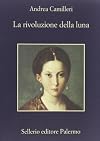
La rivoluzione della luna
by Andrea Camilleri
On This Page
Description
Sicily, April 16 1677. From his deathbed, Charles III's viceroy, Anielo de Guzma n y Carafa, marquis of Castle Rodrigo, names his wife, Don a Eleonora, as his successor. Eleonora de Moura is a highly intelligent and capable woman who immediately applies her political acumen to heal the scarred soul of Palermo, a city afflicted by poverty, misery, and the frequent uprisings they entail.The Marquise implements measures that include lowering the price of bread, reducing taxes for large show more families, re-opening women's care facilities, and establishing stipends for young couples wishing to marryall measures that were considered seditious by the conservative city fathers and by the Church. The machinations of powerful men soon result in Don a Eleonora, whom the Church sees as a dangerous revolutionary, being recalled to Spain. Her rule lasted 27 days ~ one cycle of the moon. show lessTags
Recommendations







Member Reviews
Da Camilleri c'è sempre qualcosa da imparare. Qui un episodio storico, romanzato quanto volete, ci rivela le gesta degnissime di un volontariamente dimenticato viceré spagnolo di sesso femminile nella Sicilia Secentesca. In soli 28 giorni di governo ad interim Doña Eleonora dimostrò più capacità, con le sue leggi a difesa dei poveri e dei deboli e con il repulisti ai danni dei dignitari corrotti, di tutti i suoi predecessori e successori messi assieme.
Poi i personaggi sono sempre Camillereschi, piaccia o non piaccia. Ci sono tutti i cliché à la Montalbano, dall'onesto silente alla bellezza femminile sfolgorante alle macchiette di contorno. A me, piace.
E, sia detto per inciso, Eleonora e il suo alleato dottore sono un capolavoro show more di androginia Joyciana tradotta in pratica letteraria. Una ventata di frischizza. show less
Poi i personaggi sono sempre Camillereschi, piaccia o non piaccia. Ci sono tutti i cliché à la Montalbano, dall'onesto silente alla bellezza femminile sfolgorante alle macchiette di contorno. A me, piace.
E, sia detto per inciso, Eleonora e il suo alleato dottore sono un capolavoro show more di androginia Joyciana tradotta in pratica letteraria. Una ventata di frischizza. show less
The Revolution of the Moon - Andrea Camilleri
A delight to read, The Revolution of the Moon is rich in humour and pathos but equally intellectually rewarding and thought provoking. A beautifully imagined recreation of seventeenth century Sicily. Donna Eleonora Di Mora, is named as her husband’s successor as Viceroy when he dies. The ruling Council is forced to accept her authority until the king either confirms her position or sends a replacement from Spain. Donna Eleonora knows that Palermo is poverty stricken and the councillors are soon aware that she will not be told what to do. What follows is a battle of wills, a fight against calumny, reactionary politics and corruption on one side and an attempt to smother the birth of good show more governance on the other. Donna Eleonora is determined to do something to alleviate the misery of the people. The church and the city fathers, (men of self interest, greedy, venal, cunning and devious), plot and scheme against the lady they consider a menace and a heretic.
Camilleri has a dry wit, irreverent eye and a sense of the farcical. Yet in many ways this is a dark novel. The Revolution of the Moon is the story of a brave and intelligent woman who saw a chance to make a difference for the people of Sicily and to fight for a better system of governance. The Council, oblivious to anything that does not further their own interests, (fuelled by misogyny), attempt to thwart donna Eleonora at every turn. Her reforms are mocked and donna Eleonora exposed to a campaign of hate. This is a very modern tale because the lessons of history are rarely observed; the misogyny at the heart of the novel, the depth of depravity of an unfettered male elite are all exposed. What emerges is a credible portrait of the seventeenth century world, of the Royal and Papal courts and the life of Sicily, both rich and poor. There is a sense from centuries past of how the modern Sicily became the island it is today.
Camilleri has a knack for exposing hypocrisy and the falseness in people. In farce there is truth. The characters are rounded and complex and as the novel unfolds the gravity of the story takes hold. By the last third I was gripped by a desperate desire to see things unfold in a certain way. I know which side I was on and I felt the tension at the denouement.
Camilleri is a grand old man of Italian letters, now in his 90's, he has published many works but it is only in recent years that his non-Montalano novels have been published in English. Now Europa Editions have brought this novel and will be publishing another of Camilleri’s historical novel in December, 'The Sacco Gang'. show less
A delight to read, The Revolution of the Moon is rich in humour and pathos but equally intellectually rewarding and thought provoking. A beautifully imagined recreation of seventeenth century Sicily. Donna Eleonora Di Mora, is named as her husband’s successor as Viceroy when he dies. The ruling Council is forced to accept her authority until the king either confirms her position or sends a replacement from Spain. Donna Eleonora knows that Palermo is poverty stricken and the councillors are soon aware that she will not be told what to do. What follows is a battle of wills, a fight against calumny, reactionary politics and corruption on one side and an attempt to smother the birth of good show more governance on the other. Donna Eleonora is determined to do something to alleviate the misery of the people. The church and the city fathers, (men of self interest, greedy, venal, cunning and devious), plot and scheme against the lady they consider a menace and a heretic.
Camilleri has a dry wit, irreverent eye and a sense of the farcical. Yet in many ways this is a dark novel. The Revolution of the Moon is the story of a brave and intelligent woman who saw a chance to make a difference for the people of Sicily and to fight for a better system of governance. The Council, oblivious to anything that does not further their own interests, (fuelled by misogyny), attempt to thwart donna Eleonora at every turn. Her reforms are mocked and donna Eleonora exposed to a campaign of hate. This is a very modern tale because the lessons of history are rarely observed; the misogyny at the heart of the novel, the depth of depravity of an unfettered male elite are all exposed. What emerges is a credible portrait of the seventeenth century world, of the Royal and Papal courts and the life of Sicily, both rich and poor. There is a sense from centuries past of how the modern Sicily became the island it is today.
Camilleri has a knack for exposing hypocrisy and the falseness in people. In farce there is truth. The characters are rounded and complex and as the novel unfolds the gravity of the story takes hold. By the last third I was gripped by a desperate desire to see things unfold in a certain way. I know which side I was on and I felt the tension at the denouement.
Camilleri is a grand old man of Italian letters, now in his 90's, he has published many works but it is only in recent years that his non-Montalano novels have been published in English. Now Europa Editions have brought this novel and will be publishing another of Camilleri’s historical novel in December, 'The Sacco Gang'. show less
Camilleri is amazing: using the minimal information recorded, he writes a wonderful historical fiction novel about Donna Eleonora di Mora, who governed Sicily as its Viceroy for just one month in 1677, following the death of her husband. She is strikingly beautiful, compassionate, and courageous and does a remarkable job rooting out corruption, bribery, and debauchery among the ruling council and Church. Eleonora brings new laws, helping the poor city and unfortunates, becoming beloved by the people and hated by the powerful, misogynist elite and church leadership, who engineer her dismissal as she serves at the pleasure of the King of Spain. I think Sarterelli could have done more with Eleanora's dialogue, which was often not show more translated at all, leaving the reader to determine what she said. show less
Set in Sicily in the 1677, this book is historical fiction based on a real woman who ruled for 27 days. At the time, Sicily was ruled by a Spanish viceroy. When he died, his Royal Council took advantage of the opportunity to enact edicts in their own interests. These are the bad guys of the story. They are thieves, murderers, embezzlers, and pedophiles. They make a brothel out of a home for orphaned girls. Unbeknownst to them, the viceroy has left his wife, Donna Eleanora, in charge. She eventually plays a key role in uncovering their criminal behaviors.
This story is filled with intrigue, exploitation, and corruption. It a farcical story containing both comedic antics and serious topics. The Spanish Inquisition makes an appearance. I show more particularly liked that it is based on a little-known episode in history. I found it entertaining but a little on the crude side for my taste. show less
This story is filled with intrigue, exploitation, and corruption. It a farcical story containing both comedic antics and serious topics. The Spanish Inquisition makes an appearance. I show more particularly liked that it is based on a little-known episode in history. I found it entertaining but a little on the crude side for my taste. show less
Da Camilleri un gioiellino da leggere assolutamente! Un'affascinante viceré donna (realmente esistita per 4 settimane) nella Sicilia del 1600.
Ratings
Members
- Recently Added By
Lists

Italian Literature
556 works; 41 members
Author Information

451+ Works 41,809 Members
Andrea Camilleri lives in Italy. Andrea Camilleri was born in Porto Empedocle, Sicily on September 6, 1925. He began his studies at Faculty of Literature in 1944 but never finished. He started to publish poems and short stories. He studied stage and film direction at the Silvio D'Amico Academy of Dramatic Arts from 1948 to 1950 and soon began work show more as a director and screen writer. Andrea Camilleri worked on several TV productions such as Inspector Maigret wirh Gino Cervi. In 1971 he returned to the Academy of Dramatic Arts holding the chair of Movie Direction and keeping it for 20 years. In 1978 he wrote his first novel - The Way Things Go which was followed by A Thread of Smoke in 1980. In 1992 he published The Hunting Season which turned out to be a best seller. In 1994 Andrea Camilleri published the first in a long series of novels - The Shape of Water which features the character Inspector Montalbano - a ficticious Sicilian detective in the police force of Vigata, an imaginary Sicilian town. The TV adaption of this book took off in popularity and Andrea Camilleri's home town was renamed Porto Empedocle Vigata. In 1998 he won the Nino Mortoglio International Book Award. He received an honorary degree from the University of Pisa in 2005. Camilleri has worked as a television and theater director, as well as a screenwriter. In 1978 he wrote his first novel, Il Corso delle Cose. The Montalbano series, featuring the Sicilian detective Inspector Montalbano, is Camilleri's most famous work of fiction, and it has been adapted into a television series. Camilleri had written a few historical novels when, in 1994, he wrote The Shape of Water, the first book starring a Sicilian detective based in the fictional town of Vigata. Camilleri won the Nino Martoglio International Book Award in 1998. He is considered to be one of Italy's greatest contemporary writers. Andrea Camilleri passed away on July 17, 2019 at the age of 93. (Bowker Author Biography) show less
Series
Belongs to Publisher Series
La memoria [Sellerio] (919)
Common Knowledge
- Canonical title
- La rivoluzione della luna
- Original title
- La rivoluzione della luna
- Original publication date
- 2013
- People/Characters
- Eleonora de Mura
- Important places
- Palermo, Italy
- Dedication*
- A Rosetta
- First words
- Die Sitzung des Heiligen Königlichen Rates, die der Vizekönig Don Angel de Guzmán, Marqués von Castel Rodrigo, an jedem Mittwochmorgen Schlag zehn Uhr im Palast eröffnete, begann auch an diesem Tag, dem 3. September des ... (show all)Jahres 1677, wie üblich nach einem streng festgelegten Reglement.
- Quotations*
- La maggior parti della genti non ci criditti, si fici pirsuasa che fusse ‘no sgherzo. Non era cosa concepibili che ‘na fimmina potissi mittirsi a governari la Sicilia.
Ed erano ancora tutte prisenti, e forsi aumentate, 'ste conseguenzie, al momento della morti di Don Angel. E quindi, se non era stato capace d’arrisolvirle un omo, di certo non ‘nni sarebbi stata capaci ‘na fimmina.
... (show all)La quali, è cosa cognita, vali meno assà di un omo. E certe vote, meno ancora d'una bona vestia.
E se, putacaso si metti 'n testa che lei vali chiossà, abbisogna subito rimittirla a posto. - Last words
- (Click to show. Warning: May contain spoilers.)Und da dein Mühen sich nun hat gelohnt,
Donna Lionora, ins Herz schau uns ganz:
darin wirst du finden einen winzigen Mond,
dieser bist du, denn du regierst voller Glanz. - Original language
- Italian
*Some information comes from Common Knowledge in other languages. Click "Edit" for more information.
Classifications
- Genres
- Fiction and Literature, General Fiction, Historical Fiction
- DDC/MDS
- 853.914 — Literature & rhetoric Italian, Romanian & related literatures Italian fiction 1900- 20th Century 1945-1999
- LCC
- PQ4863 .A3894 .R4448 — Language and Literature French, Italian, Spanish and Portuguese literatures Italian literature Individual authors, 1961-2000
- BISAC
Statistics
- Members
- 236
- Popularity
- 136,552
- Reviews
- 5
- Rating
- (3.97)
- Languages
- 6 — English, French, German, Italian, Portuguese, Spanish
- Media
- Paper, Audiobook, Ebook
- ISBNs
- 24
- ASINs
- 8