On This Page
Description
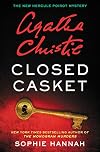
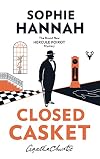
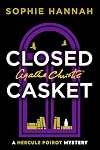
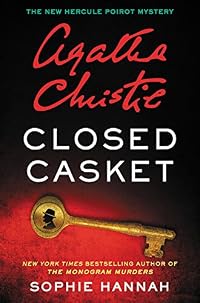
"What I intend to say to you will come as a shock ..." With these words, Lady Athelinda Playford -- one of the world's most beloved children's authors -- springs a surprise on the lawyer entrusted with her will. As guests arrive for a party at her Irish mansion, Lady Playford has decided to cut off her two children without a penny . . . and leave her vast fortune to someone else: an invalid who has only weeks to live. Among Lady Playford's visitors are two strangers: the famous Belgian show more detective Hercule Poirot, and Inspector Edward Catchpool of Scotland Yard. Neither knows why he has been invited -- until Poirot begins to wonder if Lady Playford expects a murder. But why does she seem so determined to provoke a killer? And why -- when the crime is committed despite Poirot's best efforts to stop it -- does the identity of the victim make no sense at all? show lessTags
Recommendations







Member Reviews
I approached this book with an open mind as I am quite an Agatha Christie fan and have been since my early teens. I am happy to report that I was pleasantly surprised by this country house murder story set in Ireland, the second in a recently commissioned series of Hercule Poirot mysteries.
Sophie Hannah has introduced a new character in the form of Inspector Edward Catchpool. It is he who tells the story and he has a very different voice to other Christie detectives. Once I had got my head around that fact, I rather enjoyed it.
I think it does capture the essence of Agatha Christie's style, but it is not an exact imitation. I think it would be very difficult to replicate Christie's method completely. It's a bit of a slow burner and the show more plot is quite complex. It has, however, all the classic 'whodunnit' features in that everyone is a suspect and there are plenty of twists and turns plus the odd red herring! There's also some dry and subtle humour running through it.
All in all I found it an entertaining and intriguing mystery which kept me on my toes until the summing up and the final reveal. I haven't read the first Hercule Poirot mystery by Sophie Hannah but am now looking forward to doing so!
Many thanks to Lovereading.co.uk for giving me the opportunity to read and review this book. show less
Sophie Hannah has introduced a new character in the form of Inspector Edward Catchpool. It is he who tells the story and he has a very different voice to other Christie detectives. Once I had got my head around that fact, I rather enjoyed it.
I think it does capture the essence of Agatha Christie's style, but it is not an exact imitation. I think it would be very difficult to replicate Christie's method completely. It's a bit of a slow burner and the show more plot is quite complex. It has, however, all the classic 'whodunnit' features in that everyone is a suspect and there are plenty of twists and turns plus the odd red herring! There's also some dry and subtle humour running through it.
All in all I found it an entertaining and intriguing mystery which kept me on my toes until the summing up and the final reveal. I haven't read the first Hercule Poirot mystery by Sophie Hannah but am now looking forward to doing so!
Many thanks to Lovereading.co.uk for giving me the opportunity to read and review this book. show less
Hercule Poirot fangirl that I am, I really wanted to like this. But the characters and setting are so uninteresting, the red herrings so unengaging, the pacing so dolorous, and the solution so strained, don’t feel like I can in good conscience recommend this.
The character of Hercule Poirot is phoned in: he possesses all the mannerisms of the Christie original but without an iota of charm or wit. The narrator, a police detective who has worked with Poirot on an earlier case, is almost entirely without personality, lacking either Hastings’ sweetness or Ariadne Oliver’s sarcastic charm. Hannah spends a lot of time on the psychological motivations of the characters, but can’t save them from coming off as cartoonish and inauthentic. show more And there’s nothing about the plot to spark interest: no activity, no ambiance of suspense or danger, no novelty … not even a promising cliff, a dubious fortune-teller, a lost heir who once toured with an acting company, or a bit with a dog.
While Hannah technically abides by the “rules” of the genre by providing all the clues required to solve the case, some of them aren’t presented until quite late, which felt a bit cheat-y. Though one aspect of the solution is mildly ingenious, the rest of the solution falls somewhere on a scale between “done before (and better)” and “seriously?” And don’t even get me started on the plot holes.
Sorry not to be more encouraging! I’m probably being over-particular (it’s not like Christie was a deft hand at characterization either, right?), but was hoping for a novel that wouldn’t just replicate Christie’s formula but also recreate the midcentury allure and period campiness of the originals show less
The character of Hercule Poirot is phoned in: he possesses all the mannerisms of the Christie original but without an iota of charm or wit. The narrator, a police detective who has worked with Poirot on an earlier case, is almost entirely without personality, lacking either Hastings’ sweetness or Ariadne Oliver’s sarcastic charm. Hannah spends a lot of time on the psychological motivations of the characters, but can’t save them from coming off as cartoonish and inauthentic. show more And there’s nothing about the plot to spark interest: no activity, no ambiance of suspense or danger, no novelty … not even a promising cliff, a dubious fortune-teller, a lost heir who once toured with an acting company, or a bit with a dog.
While Hannah technically abides by the “rules” of the genre by providing all the clues required to solve the case, some of them aren’t presented until quite late, which felt a bit cheat-y. Though one aspect of the solution is mildly ingenious, the rest of the solution falls somewhere on a scale between “done before (and better)” and “seriously?” And don’t even get me started on the plot holes.
Sorry not to be more encouraging! I’m probably being over-particular (it’s not like Christie was a deft hand at characterization either, right?), but was hoping for a novel that wouldn’t just replicate Christie’s formula but also recreate the midcentury allure and period campiness of the originals show less
This rather intricate mystery has some clues for astute readers to pick up, and some red herrings to add confusion. But readers are not privy to enough clues to solve the murder until close to the end of the story. And that, likely, is what makes it a compelling tale. Lady Playford has changed her will, leaving most of her vast fortune, not to her two grown children, but to her personal secretary. She makes this announcement at a dinner, to the astonishment of her family, employees, and invited guests. Needless to say, it does not end well for one of these people. People may complain that this continuation of Agatha Christie’s characters is not true to writing style of Christie, but even if that were true, it should not detract from show more the fact that this story is well written in its own right. The writing is tight, the story is well thought out, and the new character of Edward Catchpool works well as the narrator of the story. show less
Buying Closed Casket was the triumph of hope over experience. In 2014 author Sophie Hannah released The Monogram Murders, the first Hercule Poirot novel since Curtain: Poirot's Last Case: A Hercule Poirot Mystery was published in 1975. While not up to Dame Agatha Christie’s highest standards, Hannah’s novel wasn’t too shabby. So I bought Closed Casket hoping for better than a pleasant read and for something less convoluted and implausible than The Monogram Murders.
Was my hope justified? Not a chance.
Just as Jill Paton Walsh can’t quite capture the voice of Dorothy L. Sayers, Hannah can’t really sound like Christie in the way that, say, Laurie R. King can channel Sir Arthur Conan Doyle. But I’ve never really held that against show more Hannah. However, Hannah seems to think that the way to recreate a successful Christie novel is to pepper a house party with lots of loathsome characters and then set Poirot and Scotland Yard detective Edward Catchpool (a transparent Captain Hastings surrogate) to bumble about. Early in the novel, a viciously rude character asks Poirot if he’s left his brain in London; soon I began to suspect the same thing. Hannah’s Poirot is much less astute and more needlessly secretive than the real one and, unlike Hastings, Edward Catchpool is paranoid and unlikable.
Author Athelinda “Athie” Playford has made a great success with her series of children’s mysteries featuring a gang of 10-year-old sleuths led by her moppet heroine “Shrimp” Seddon. Lady Playford decides to disinherit her dimwitted son and her venomous, selfish daughter in favor of her Pollyannaish secretary, Joseph Scotcher, a man dying of kidney disease so advanced that he is confined to a wheelchair and attended full time by a nurse. All of the characters — saving Hercule Poirot and Dr. Randall Kimpton, the fiancé of Lady Playford’s daughter Claudia — are so cardboard that you could make cereal boxes out of them.
Naturally, part of the mystery would be why a robust woman like Lady Playford would bother with changing her will in the autumn to benefit a man who won’t live to inherit; however, when the clever, imaginative Lady Playford reveals her reason, it makes no sense at all. In addition, Lady Playford, an obviously intelligent woman, seems shocked when her children aren’t happy with the new will. Damn! Why would they be? Closed Casket isn’t as lousy as The Big Four, Christie’s worst novel by far, but it’s a pretty pedestrian novel with a denouement that would seem contrived if I hadn’t been past caring by that point.
I’ve been trying to think for whom this book would be a good read. Christie scholars? No, they’d be better off with the original novels and Christie’s correspondence and notes. Christie devotees, desperate for yet one more glimpse of the Belgian detective? I guess, for some, Closed Casket would be better than nothing, although, in my case, I wish I could get back the 10 hours I spent listening to it on Audible. Actually, the person I would most recommend to read this book would be Christie’s grandson, Mathew Prichard, in the vain hope that he would see that he sold out his grandmother for 30 pieces of silver. Mr. Prichard, you could have done much better than hand over your legacy to the lackluster Sophie Hannah. If you find a new author to write the next Hercule Poirot/Edward Catchpool novel, I might be back for more. Otherwise, this is goodbye. show less
Was my hope justified? Not a chance.
Just as Jill Paton Walsh can’t quite capture the voice of Dorothy L. Sayers, Hannah can’t really sound like Christie in the way that, say, Laurie R. King can channel Sir Arthur Conan Doyle. But I’ve never really held that against show more Hannah. However, Hannah seems to think that the way to recreate a successful Christie novel is to pepper a house party with lots of loathsome characters and then set Poirot and Scotland Yard detective Edward Catchpool (a transparent Captain Hastings surrogate) to bumble about. Early in the novel, a viciously rude character asks Poirot if he’s left his brain in London; soon I began to suspect the same thing. Hannah’s Poirot is much less astute and more needlessly secretive than the real one and, unlike Hastings, Edward Catchpool is paranoid and unlikable.
Author Athelinda “Athie” Playford has made a great success with her series of children’s mysteries featuring a gang of 10-year-old sleuths led by her moppet heroine “Shrimp” Seddon. Lady Playford decides to disinherit her dimwitted son and her venomous, selfish daughter in favor of her Pollyannaish secretary, Joseph Scotcher, a man dying of kidney disease so advanced that he is confined to a wheelchair and attended full time by a nurse. All of the characters — saving Hercule Poirot and Dr. Randall Kimpton, the fiancé of Lady Playford’s daughter Claudia — are so cardboard that you could make cereal boxes out of them.
Naturally, part of the mystery would be why a robust woman like Lady Playford would bother with changing her will in the autumn to benefit a man who won’t live to inherit; however, when the clever, imaginative Lady Playford reveals her reason, it makes no sense at all. In addition, Lady Playford, an obviously intelligent woman, seems shocked when her children aren’t happy with the new will. Damn! Why would they be? Closed Casket isn’t as lousy as The Big Four, Christie’s worst novel by far, but it’s a pretty pedestrian novel with a denouement that would seem contrived if I hadn’t been past caring by that point.
I’ve been trying to think for whom this book would be a good read. Christie scholars? No, they’d be better off with the original novels and Christie’s correspondence and notes. Christie devotees, desperate for yet one more glimpse of the Belgian detective? I guess, for some, Closed Casket would be better than nothing, although, in my case, I wish I could get back the 10 hours I spent listening to it on Audible. Actually, the person I would most recommend to read this book would be Christie’s grandson, Mathew Prichard, in the vain hope that he would see that he sold out his grandmother for 30 pieces of silver. Mr. Prichard, you could have done much better than hand over your legacy to the lackluster Sophie Hannah. If you find a new author to write the next Hercule Poirot/Edward Catchpool novel, I might be back for more. Otherwise, this is goodbye. show less
Agatha Christie created some of the most memorable and beloved characters ever to populate a mystery novel - Miss Marple and Hercule Poirot. The first Poirot novel was published in 1920 and the last in 1975. Forty odd years later, Sophie Hannah was tapped to write a new novel featuring this iconic detective, with the Christie estate's blessing. That first novel was The Monogram Murders.
The latest Poirot novel from Hannah is the newly released Closed Casket.
Hannah introduced us to a new character in The Monogram Murders - Scotland Yard Detective Edward Catchpool.
1929. In Closed Casket, both Poirot and Catchpool are invited as guests to the estate of children's writer Lady Athelinda Playford. (I loved the references to her character show more Shrimp Seddon) Why, they both wonder? It becomes apparent that 'Athie' is worried that her planned announcement to a house full of staff, family and guests may provoke someone - to murder. Despite Poirot and Catchpool's efforts to thwart any such attempt, a murder does occur. The local, somewhat inept, Garda insist that no one leave the house. And so, Poirot and Catchpool begin their own investigation. I was somewhat reminded of Christie's And Then There Were None in which the murderer can only be one of the residents of the house.
I wasn't sold on Catchpool in the last book - he came off as somewhat pedestrian and seemed to be only there to serve as narrator and blank slate for Poirot. I'm happy to say that Hannah has filled out this character, given him more of a personality and yes, more of a brain. In this book, he is part of the investigation, with his own thoughts and deductions, not merely a foil for Poirot's ideas.
But it is Poirot's 'little gray cells' that drive the investigation. I always have enjoyed the deductions, the piecing together, the reasoning, the seemingly innocuous clue tucked into a paragraph along the way. Christie - and Hannah - force the reader to pay attention. The whodunit can change rapidly as each new revelation is revealed. There is no way to successfully guess who the culprit is. Hannah successfully captures Poirot's style, mannerisms, dialogue and idiosyncrasies.
Hannah has also recreated Christie's traditional mystery style in Closed Casket. The estate setting, the quirky bunch of suspects and the convoluted path to the final culprit. I adored the final reveal in the drawing room - such a civilized discussion of murder. (The dialogue in the book is just excellent - clever, humourous and cutting.) There's much to be said for 'old style' investigations.
Those looking for a book written as Agatha Christie won't find it in Closed Casket. But those looking for a classic mystery written in the style of Christie will enjoy this book. I did. show less
The latest Poirot novel from Hannah is the newly released Closed Casket.
Hannah introduced us to a new character in The Monogram Murders - Scotland Yard Detective Edward Catchpool.
1929. In Closed Casket, both Poirot and Catchpool are invited as guests to the estate of children's writer Lady Athelinda Playford. (I loved the references to her character show more Shrimp Seddon) Why, they both wonder? It becomes apparent that 'Athie' is worried that her planned announcement to a house full of staff, family and guests may provoke someone - to murder. Despite Poirot and Catchpool's efforts to thwart any such attempt, a murder does occur. The local, somewhat inept, Garda insist that no one leave the house. And so, Poirot and Catchpool begin their own investigation. I was somewhat reminded of Christie's And Then There Were None in which the murderer can only be one of the residents of the house.
I wasn't sold on Catchpool in the last book - he came off as somewhat pedestrian and seemed to be only there to serve as narrator and blank slate for Poirot. I'm happy to say that Hannah has filled out this character, given him more of a personality and yes, more of a brain. In this book, he is part of the investigation, with his own thoughts and deductions, not merely a foil for Poirot's ideas.
But it is Poirot's 'little gray cells' that drive the investigation. I always have enjoyed the deductions, the piecing together, the reasoning, the seemingly innocuous clue tucked into a paragraph along the way. Christie - and Hannah - force the reader to pay attention. The whodunit can change rapidly as each new revelation is revealed. There is no way to successfully guess who the culprit is. Hannah successfully captures Poirot's style, mannerisms, dialogue and idiosyncrasies.
Hannah has also recreated Christie's traditional mystery style in Closed Casket. The estate setting, the quirky bunch of suspects and the convoluted path to the final culprit. I adored the final reveal in the drawing room - such a civilized discussion of murder. (The dialogue in the book is just excellent - clever, humourous and cutting.) There's much to be said for 'old style' investigations.
Those looking for a book written as Agatha Christie won't find it in Closed Casket. But those looking for a classic mystery written in the style of Christie will enjoy this book. I did. show less
I never give negative reviews to a book, knowing that the author worked hard to create it (and doing something I cannot do). In this case however, I felt compelled to give my opinion. I have previously read the first of Sophie Hannah's "Poirot" novels and didn't care for it, but felt that I needed to read more of the series before I wrote my thoughts down. I feel that some of the best parts of the Agatha Christie's novels are the characters that she created, and how the reader is made to feel sympathetic or to be repelled towards them. Ms. Hannah seems unable to create a character that I don't dislike. Now, I don't understand her refusal to use previously used "Poirot" characters (i.e. Hastings, Japp, Mrs. Oliver), but maybe it is show more better. Her narrator, Inspector Catchpool, is perhaps one of the most unlikable characters I have ever come across. He is, quite frankly, a jerk. He is opinionated and smug. He comes across as hating Poirot, even though he writes about him. He is so very stupid that he makes Hastings look like Sherlock Holmes. Ms. Hannah's books (and I have only read her Poirot books) are not even interesting, and I couldn't wait to finish it. It doesn't feel like it is taking place in the 1930s either. Now, Agatha Christie is not always perfect (and I have read her Poirot books several times), being rather racist at times (I know. I know, they were written in a different time period), and sometimes a bit formulaic, but I always love re-reading them. She was a very special author. I shouldn't compare Sophie Hannah to her, and try not to. I have read the Robert Goldsborough "Nero Wolfe" books and enjoy them. I have purchased the third Sophie Hannah "Poirot" book and will read it. I hope I will enjoy it. show less
Closed Casket – Hercule Poirot Returns
Sophie Hannah has risen to the challenge to become the voice and mind of Hercule Poirot and mimic everything that the Grand Dame of Crime Fiction created. Hannah has picked up where Agatha Christie left off and it is impossible to notice that Poirot came to life over 100 years before, this is a seamless addition to the Christie canon.
Hercule Poirot has been invited over to the newly independent Ireland, as the guest of aristocratic author Lady Playford to her country estate of Lillieoak. We are told the story of Closed Casket, through the eyes and voice of Inspector Edward Catchpole of Scotland Yard, a friend and colleague of Poirot’s.
It is October 1929, and both Poirot and Catchpole wonder why show more they have both been invited to stay as guests. Everything becomes clear over the first night why they are both house guests, when Lady Playford’s secretary, Joseph Scotcher, after dinner is found murdered. So begins the classic Christie, Manor House style mystery.
Throughout the book we get to know all the characters a lot more and some of their thoughts that they have not told each other. Poirot who has his ‘grey cells’ thinking is intrigued by what has gone on, and investigates further, to the annoyance of the Irish Police Inspector sent to investigate the murder.
Even at the Coroner’s Inquest Poirot recognises that everything that they have been told and what has been said in court is not necessarily the truth. The suspects all have their own quirks and secrets that they do not want to come out, as did the murder victim. Like Christie, Hannah does not delve too deeply in to the characters, but is consumed by the whole even of murder in a Country House.
In parts of Closed Casket you can be forgiven if you feel that Christie could have written those passages, but that is the art of an excellent author, who has studied her subjects of Poirot and Christie. It would be easy to point out the things Christie did make Poirot do, but Hannah does, but clearly different people bring their own quirks to the story.
Closed Casket does not disappoint, and I am sure Christie herself would have been delighted with this story if she had written it. For fans of Poirot all his nuances are there, from his gate, his OCD, and how he expresses himself in Franco-English. Sophie Hannah has written Closed Casket so well, that Poirot is just as he was when Christie wrote her last, this is a seamless continuation.
An excellent book that fans of Poirot and Christie will love and take to heart. show less
Sophie Hannah has risen to the challenge to become the voice and mind of Hercule Poirot and mimic everything that the Grand Dame of Crime Fiction created. Hannah has picked up where Agatha Christie left off and it is impossible to notice that Poirot came to life over 100 years before, this is a seamless addition to the Christie canon.
Hercule Poirot has been invited over to the newly independent Ireland, as the guest of aristocratic author Lady Playford to her country estate of Lillieoak. We are told the story of Closed Casket, through the eyes and voice of Inspector Edward Catchpole of Scotland Yard, a friend and colleague of Poirot’s.
It is October 1929, and both Poirot and Catchpole wonder why show more they have both been invited to stay as guests. Everything becomes clear over the first night why they are both house guests, when Lady Playford’s secretary, Joseph Scotcher, after dinner is found murdered. So begins the classic Christie, Manor House style mystery.
Throughout the book we get to know all the characters a lot more and some of their thoughts that they have not told each other. Poirot who has his ‘grey cells’ thinking is intrigued by what has gone on, and investigates further, to the annoyance of the Irish Police Inspector sent to investigate the murder.
Even at the Coroner’s Inquest Poirot recognises that everything that they have been told and what has been said in court is not necessarily the truth. The suspects all have their own quirks and secrets that they do not want to come out, as did the murder victim. Like Christie, Hannah does not delve too deeply in to the characters, but is consumed by the whole even of murder in a Country House.
In parts of Closed Casket you can be forgiven if you feel that Christie could have written those passages, but that is the art of an excellent author, who has studied her subjects of Poirot and Christie. It would be easy to point out the things Christie did make Poirot do, but Hannah does, but clearly different people bring their own quirks to the story.
Closed Casket does not disappoint, and I am sure Christie herself would have been delighted with this story if she had written it. For fans of Poirot all his nuances are there, from his gate, his OCD, and how he expresses himself in Franco-English. Sophie Hannah has written Closed Casket so well, that Poirot is just as he was when Christie wrote her last, this is a seamless continuation.
An excellent book that fans of Poirot and Christie will love and take to heart. show less
Members
- Recently Added By
Lists

Agatha Christie Poirot
43 works; 2 members

Books Read in 2023
5,547 works; 145 members
Author Information

74+ Works 12,637 Members
Sophie Hannah was born in 1971 in Manchester, England. She is a bestselling, award-winning poet. Hannah went to the University of Manchester and published her first book of poems, The Hero and the Girl Next Door, at the age of 24. In 2004 she won first prize in the Daphne Du Maurier Festival Short Story Competition for her psychological suspense show more story, The Octopus Nest. Hannah was recently chosen by Agatha Christie's estate to resurrect her beloved detective, Hercule Poirot. Her subsequent novel, The Monogram Murders, was published in 2014. (Bowker Author Biography) show less
All Editions
Some Editions
Series

Work Relationships
Common Knowledge
- Canonical title
- Closed Casket
- Original title
- Closed casket
- Original publication date
- 2016
- People/Characters
- Hercule Poirot; Edward Catchpool; Lady Athelinda Playford; Michael Gathercole
- Dedication
- For Matthew and James Prichard and family, with love
- First words
- Michael Gathercole stared at the closed door in front of him and tried to persuade himself that now was the moment to knock, as the aged grandfather clock in the hall downstairs stuttered its announcement of the hour.
- Last words
- (Click to show. Warning: May contain spoilers.)"Edward, may I ask you something? Would you mind dreadfully if I put you in a book one day?"
- Original language
- English
Classifications
Statistics
- Members
- 964
- Popularity
- 27,239
- Reviews
- 37
- Rating
- (3.43)
- Languages
- 12 — Dutch, English, Estonian, Finnish, French, German, Hungarian, Italian, Portuguese, Spanish, Swedish, Turkish
- Media
- Paper, Audiobook, Ebook
- ISBNs
- 53
- ASINs
- 10