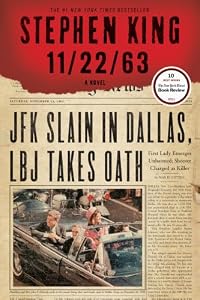
11/22/63
by Stephen King
On This Page
Description
On November 22, 1963, three shots rang out in Dallas, President Kennedy died, and the world changed. What if you could change it back? The author's new novel is about a man who travels back in time to prevent the JFK assassination. In this novel that is a tribute to a simpler era, he sweeps readers back in time to another moment, a real life moment, when everything went wrong: the JFK assassination. And he introduces readers to a character who has the power to change the course of history. show more Jake Epping is a thirty-five-year-old high school English teacher in Lisbon Falls, Maine, who makes extra money teaching adults in the GED program. He receives an essay from one of the students, a gruesome, harrowing first person story about the night fifty years ago when Harry Dunning's father came home and killed his mother, his sister, and his brother with a hammer. Harry escaped with a smashed leg, as evidenced by his crooked walk. Not much later, Jake's friend Al, who runs the local diner, divulges a secret: his storeroom is a portal to 1958. He enlists Jake on an insane, and insanely possible, mission to try to prevent the Kennedy assassination. So begins Jake's new life as George Amberson and his new world of Elvis and JFK, of big American cars and sock hops, of a troubled loner named Lee Harvey Oswald and a beautiful high school librarian named Sadie Dunhill, who becomes the love of Jake's life, a life that transgresses all the normal rules of time. show lessTags
Recommendations
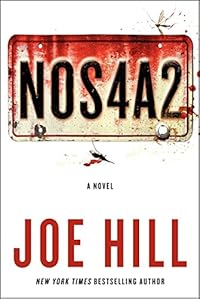
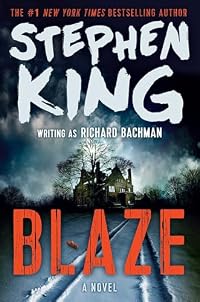
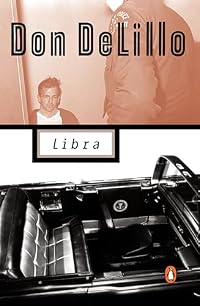
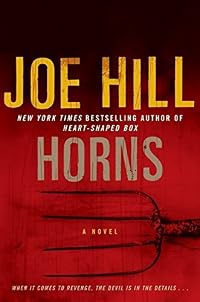









Member Recommendations
It by Stephen King
watertiger The characters from IT are referenced in 11/22/63
sturlington A section of 11/22/63 is set in Derry and features characters from It.
202
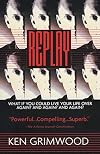
dltj Shares a similar plot line that covers part of the same time period, and "Replay" even includes a story fragment about November 22, 1963.
80
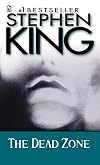
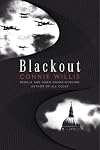
Navarone Both books are about time travel and how the future is affected due to the actions you make.
40
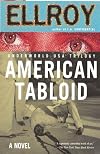
glwebb If you liked 11/22/63 then American Tabloid should be right up your street. A very snappy, complicated, twisted look at the Kennedy Presidency and assassination. Ellroy dishes up a counterfactual history that seems almost too real to be anything other than the secret truth.
41
stevetempo No change in history here...but a cross time romance is featured...if you saw and enjoyed the movie...read the book.
20
krazy4katz Both novels are epic. They both have elements of time travel and a sense that minor actions can lead to major unintended consequences.
43
mene Both books are about time travel through a kind of portal. In both books, the time traveller finds love on the other side, but the effects of the time travel and the way it works are different. In King's book, the time traveller also actively tries to change history, while in Gabaldon's book, the time traveller uses her knowledge of future events a lot less actively.
33
Member Reviews
Stevie, Stevie. The spark has gone. It's not me, it's you. I loved reading your novels when I was about twelve, but the old ones haven't aged well, and your new material is basically recycled self-promotion. So, we've come to a parting of the ways. I gave this one a try because of the subject, only to discover that you have turned into a modern day Charles Dickens, paid by the word, before having to suffer through 600 pages of padding around an overblown sci-fi novella before JFK was even mentioned.
Your 'hero', far from modest, is a hulking great Gary Stu, like most of your teacher/writer narrators, but more than that, Jake/George is also deadly dull. He's a mockery of a tough guy, out to save the world by changing history, who can show more swear like a trooper (sadly, for an English teacher) but sounds more like a middle-aged teacher trying to talk like his students. He gets the girl - and shows her how to lurve - saves the school play, infiltrates the mob and stops the bad guy, but after about two hundred pages, I was secretly hoping that Oswald would turn round and shoot your narrator instead. The love interest is not much better - in fact, Sadie is a dreadful cliche, a virgin librarian who keeps falling over her own feet and actually needs rescuing by the hero. I know she is meant to be a product of her era, but you could have given her some redeeming quality to show how brave and endearing she's meant to be, instead of leaving Jake/George to bore the reader to death by reminding them every other sentence.
Speaking of the 60s, I'm already familiar with your hazy, rose-tinted brand of nostalgia, Mr King, but your 'Land of Ago' manages to be both patronising and pathetically dull. 'Food tasted good; milk was delivered directly to your door', you write, people didn't lock their doors, talked to their neighbours, and buying guns was so much easier, gosh-darnit! Basically, this is the small town life that you portray in most of your novels, including IT - rehashed for my reading pleasure in the early chapters of this novel - where women are victims of domestic abuse and children are either bullied or traumatised by living nightmares. Or both. I wouldn't mind travelling back in time to 1960s London, but you can keep late 1950s America, thanks.
Though I'm sure your motives were pure, Mr King - and you write in your afterword that you first thought of writing this novel back in 1972 - what you have actually created with 11.22.63 is a self-parody. The concept is neat enough - if you could change the past, would you? Should you? - but the result is a romance novel wrapped around a kernel of sci-fi, then padded out with repetitive subplots and narrative devices (amnesia? Really?). Even the theme of the book is kindly signposted ad nauseum - 'time turns on a dime/is obdurate/harmonises', etc. I did reach the end, finally, and was even disappointed there - why not just throw in the little bald docs from Insomnia and complete a hat trick of self-references?
Maybe I was expecting too much, but the title of your novel turned out to be a hollow promise. I'm sure you did your research into the assassination and Oswald, yet you skimped on making the past - and most especially JFK - seem real. That accent cod New England accent was embarrassing, even in print! And when one of the background characters actually said, 'I don't care if it's the President of the United States calling' ('Uh, sirs ...'), I cringed.
Not that you'll notice - certainly not if you arebeing paid by the ounce - but from here on out, I think I'll leave you to your Norman Rockwell yesteryear and bad sci-fi vision of the future, Mr King. show less
Your 'hero', far from modest, is a hulking great Gary Stu, like most of your teacher/writer narrators, but more than that, Jake/George is also deadly dull. He's a mockery of a tough guy, out to save the world by changing history, who can show more swear like a trooper (sadly, for an English teacher) but sounds more like a middle-aged teacher trying to talk like his students. He gets the girl - and shows her how to lurve - saves the school play, infiltrates the mob and stops the bad guy, but after about two hundred pages, I was secretly hoping that Oswald would turn round and shoot your narrator instead. The love interest is not much better - in fact, Sadie is a dreadful cliche, a virgin librarian who keeps falling over her own feet and actually needs rescuing by the hero. I know she is meant to be a product of her era, but you could have given her some redeeming quality to show how brave and endearing she's meant to be, instead of leaving Jake/George to bore the reader to death by reminding them every other sentence.
Speaking of the 60s, I'm already familiar with your hazy, rose-tinted brand of nostalgia, Mr King, but your 'Land of Ago' manages to be both patronising and pathetically dull. 'Food tasted good; milk was delivered directly to your door', you write, people didn't lock their doors, talked to their neighbours, and buying guns was so much easier, gosh-darnit! Basically, this is the small town life that you portray in most of your novels, including IT - rehashed for my reading pleasure in the early chapters of this novel - where women are victims of domestic abuse and children are either bullied or traumatised by living nightmares. Or both. I wouldn't mind travelling back in time to 1960s London, but you can keep late 1950s America, thanks.
Though I'm sure your motives were pure, Mr King - and you write in your afterword that you first thought of writing this novel back in 1972 - what you have actually created with 11.22.63 is a self-parody. The concept is neat enough - if you could change the past, would you? Should you? - but the result is a romance novel wrapped around a kernel of sci-fi, then padded out with repetitive subplots and narrative devices (amnesia? Really?). Even the theme of the book is kindly signposted ad nauseum - 'time turns on a dime/is obdurate/harmonises', etc. I did reach the end, finally, and was even disappointed there - why not just throw in the little bald docs from Insomnia and complete a hat trick of self-references?
Maybe I was expecting too much, but the title of your novel turned out to be a hollow promise. I'm sure you did your research into the assassination and Oswald, yet you skimped on making the past - and most especially JFK - seem real. That accent cod New England accent was embarrassing, even in print! And when one of the background characters actually said, 'I don't care if it's the President of the United States calling' ('Uh, sirs ...'), I cringed.
Not that you'll notice - certainly not if you arebeing paid by the ounce - but from here on out, I think I'll leave you to your Norman Rockwell yesteryear and bad sci-fi vision of the future, Mr King. show less
I surprised myself: I actually read it -- to the bitter end. No skipping, skimming or even browsing. (I do question my sanity at times, but that's another story.)
There is nothing more enticing to the human psyche, I would venture, than to play with the possibility of going back in time and correcting the mistakes of the past. Everyone has some secret wound: something to repine over, or lament; everyone has that murmur in the ear that says, "what if I could do it all again". That, in the end, is the attraction of this novel and why despite the mediocre reviews overall, we have all hung in there, to the last page, to see how it would turn out. Inevitably, most of us were disappointed.
Stephen King is an exceptional story teller -- but not show more such a great writer. When his novels turn up on the silver screen, there is nothing better. He captures the heart and mind of America -- and nobody can probe a wound, or heal it, like Stephen King. On the other hand, when his ideas are worked out on paper, they are so much smaller, so much duller than what he intends. He flounders. He stumbles. He repeats himself far too often. He works a phrase to distraction. He bores us.
11/22/63 was just that: a whole lot of boredom, coloured in with a few great ideas. If it had been a movie, it would no doubt have been riveting. As a novel, I offer 3 generous stars.
What kept me reading was the desire to erase the old wound: JFK's assassination. What would America have been, what would the world have been, if Lee Harvey Oswald had turned left, instead of right, on a certain day in 1963 and never murdered JFK? As idealists, as nostalgists, we all assume that if Oswald had been turned from his purpose, we would have lived halcyon days under sunny skies. We never think it might have been quite different, much darker. Would we have experienced the changes that ensued as a result of an entire nation being mobilized by his assassination? Would MLK have been the prime mover of the civil rights, and would RFK been the force for change that he was? This is the wound we all want to explore, and heal.
In the end, King barely graces the issue. Out of almost-900 pages, I would say JFK/Oswald occupy about 10 percent. The rest of the novel dallies in mid-century nostalgia, re-living 50s high school dances and riding around in cool cars and saying cool things. There is nothing here. Like the vast expanses of desert: we get "a whole lotta nothin', and nothin' more".
It was like watching an endless loop of Father Knows Best, or Leave it to Beaver. Mildly entertaining, sometimes slightly annoying, but on the whole rather wholesome and innocent, in a slightly off beat way. Perhaps a cross between Father Knows Best, Dragnet and Car 54, Where Are You, for it is difficult at times to keep from smiling at some of the protagonist's antics.
If I had to do it over again? I think I'd stay with feet and imagination firmly planted in 2014. show less
There is nothing more enticing to the human psyche, I would venture, than to play with the possibility of going back in time and correcting the mistakes of the past. Everyone has some secret wound: something to repine over, or lament; everyone has that murmur in the ear that says, "what if I could do it all again". That, in the end, is the attraction of this novel and why despite the mediocre reviews overall, we have all hung in there, to the last page, to see how it would turn out. Inevitably, most of us were disappointed.
Stephen King is an exceptional story teller -- but not show more such a great writer. When his novels turn up on the silver screen, there is nothing better. He captures the heart and mind of America -- and nobody can probe a wound, or heal it, like Stephen King. On the other hand, when his ideas are worked out on paper, they are so much smaller, so much duller than what he intends. He flounders. He stumbles. He repeats himself far too often. He works a phrase to distraction. He bores us.
11/22/63 was just that: a whole lot of boredom, coloured in with a few great ideas. If it had been a movie, it would no doubt have been riveting. As a novel, I offer 3 generous stars.
What kept me reading was the desire to erase the old wound: JFK's assassination. What would America have been, what would the world have been, if Lee Harvey Oswald had turned left, instead of right, on a certain day in 1963 and never murdered JFK? As idealists, as nostalgists, we all assume that if Oswald had been turned from his purpose, we would have lived halcyon days under sunny skies. We never think it might have been quite different, much darker. Would we have experienced the changes that ensued as a result of an entire nation being mobilized by his assassination? Would MLK have been the prime mover of the civil rights, and would RFK been the force for change that he was? This is the wound we all want to explore, and heal.
In the end, King barely graces the issue. Out of almost-900 pages, I would say JFK/Oswald occupy about 10 percent. The rest of the novel dallies in mid-century nostalgia, re-living 50s high school dances and riding around in cool cars and saying cool things. There is nothing here. Like the vast expanses of desert: we get "a whole lotta nothin', and nothin' more".
It was like watching an endless loop of Father Knows Best, or Leave it to Beaver. Mildly entertaining, sometimes slightly annoying, but on the whole rather wholesome and innocent, in a slightly off beat way. Perhaps a cross between Father Knows Best, Dragnet and Car 54, Where Are You, for it is difficult at times to keep from smiling at some of the protagonist's antics.
If I had to do it over again? I think I'd stay with feet and imagination firmly planted in 2014. show less
This novel was unlike any other I’ve read of Stephen King’s. It was completely devoid of horror and intertwined creepiness and was instead closer to an action-thriller. There was an element of science fiction through the introduction of time travel but that was only a vehicle to transfer the main character into the 1963 setting. The book was fast paced and it was easy to plow through the rather hefty 849 pages. The characters were well defined and the plot was perfectly planned.
Unlike his other works where he was master of the universe and could make up anything he liked, King had to put a lot of research into this story because of the amount of historical facts that are on record for the events upon which the story is based. show more Through his extensive detail, the reader is given quite a bit of insight into the personal life and character of Lee Harvey Oswald and his state of mind at that pivotal point in history.
The most important theme of the book is that everything happens for a reason. If we could go back in time, changing even the most insignificant event would most likely result in a present state far worse than what we have now. Saving the life of JFK resulted in a world in which no one would want to live and it was fortunate that there was a mechanism provided to the main character to reset the course of events back to their original path.
A love story between George/Jake and Sadie was also central to the book. It added a deep human character untypical of a King novel and was both enjoyable and ultimately heart-wrenching. I think this allowed King to take advantage of one of his talents in making the reader uncomfortable through easily manipulated emotions. This is probably what makes this book so effective even without adding some of his more psychologically disturbing themes. show less
Unlike his other works where he was master of the universe and could make up anything he liked, King had to put a lot of research into this story because of the amount of historical facts that are on record for the events upon which the story is based. show more Through his extensive detail, the reader is given quite a bit of insight into the personal life and character of Lee Harvey Oswald and his state of mind at that pivotal point in history.
The most important theme of the book is that everything happens for a reason. If we could go back in time, changing even the most insignificant event would most likely result in a present state far worse than what we have now. Saving the life of JFK resulted in a world in which no one would want to live and it was fortunate that there was a mechanism provided to the main character to reset the course of events back to their original path.
A love story between George/Jake and Sadie was also central to the book. It added a deep human character untypical of a King novel and was both enjoyable and ultimately heart-wrenching. I think this allowed King to take advantage of one of his talents in making the reader uncomfortable through easily manipulated emotions. This is probably what makes this book so effective even without adding some of his more psychologically disturbing themes. show less
I have never been what you'd call a crying man.
No, wait! I wasn't talking about me. I cry at the drop of a hat. Especially if it lands in a puddle. No, I was starting my review with the sentence that Stephen King uses to start 11.22.63, his latest tome. Well, latest as of right now; if you come back tomorrow he'll probably have polished off another one.
I shan't finish my review with the sentence that King uses to finish 11.22.63, that'd somewhat give away the huge plot twist, where we find out that the book's narrator Jake Epping is actually the Dark Tower's Jake Chambers! And that he's actually JFK's father! And JFK is actually Roland of Gilead! And they're all aliens!
Actually none of those things are true… or are they?! No, they're show more really not. (Or are they...?) Ha ha, just kidding, they're not true.
Or are they?
Sorry, sorry, I'll stop doing that now. (...Or will I?)
Seriously though, this is one of those Stephen King novels, like [b:Under the Dome|6470269|Under the Dome|Stephen King|http://d.gr-assets.com/books/1338853151s/6470269.jpg|6760952], that one can attach the tag “science fiction” to because of some otherwise inexplicable overarching plot device. In Under the Dome it was, well, the Dome. Here it's time travel. Here though, unlike in Under the Dome, King wisely doesn't try to explain the how of the time travelling, it's enough that it is. Besides, we're clearly back in the Dark Tower universe with this novel, and how could it be otherwise when the central plot point is an attempt to save the life of the original gunslinger, JFK? And in the Dark Tower-verse it somehow doesn't seem so odd that a secondary school English teacher should find himself in late 1950s Maine, probably just one of those thin places in time.
Another easy tag to slap on the work is “love story”. There is after all plenty of time for the hero to meet a girl between the late 1950s and the eponymous date with destiny. I wouldn't have said King was a great writer of romantic sub-plots, and he has said it's not really his forte. Well apparently we were both wrong because this isn't a bit of filler to keep up the page count, this is the story. And a beautifully told one it was too. Several hats got dropped in puddles these past few weeks, that's for sure.
I'm not really writing a great review right now; after a lousy couple of days and a two-hundred page reading session to polish off this book tonight I'm feeling somewhat dazed. So I'll perhaps leave the closing statement to a better writer than me. He's called Stephen King, you've probably never heard of him. In the prologue he best sums things up. When it comes to writing, he says through the narrator, spelling and grammar are important, but A writing assignments are the ones that provoke an emotional response. 11.22.63 is just short of that “ ”, but an A it would get in spades. show less
No, wait! I wasn't talking about me. I cry at the drop of a hat. Especially if it lands in a puddle. No, I was starting my review with the sentence that Stephen King uses to start 11.22.63, his latest tome. Well, latest as of right now; if you come back tomorrow he'll probably have polished off another one.
I shan't finish my review with the sentence that King uses to finish 11.22.63, that'd somewhat give away the huge plot twist, where we find out that the book's narrator Jake Epping is actually the Dark Tower's Jake Chambers! And that he's actually JFK's father! And JFK is actually Roland of Gilead! And they're all aliens!
Actually none of those things are true… or are they?! No, they're show more really not. (Or are they...?) Ha ha, just kidding, they're not true.
Or are they?
Sorry, sorry, I'll stop doing that now. (...Or will I?)
Seriously though, this is one of those Stephen King novels, like [b:Under the Dome|6470269|Under the Dome|Stephen King|http://d.gr-assets.com/books/1338853151s/6470269.jpg|6760952], that one can attach the tag “science fiction” to because of some otherwise inexplicable overarching plot device. In Under the Dome it was, well, the Dome. Here it's time travel. Here though, unlike in Under the Dome, King wisely doesn't try to explain the how of the time travelling, it's enough that it is. Besides, we're clearly back in the Dark Tower universe with this novel, and how could it be otherwise when the central plot point is an attempt to save the life of the original gunslinger, JFK? And in the Dark Tower-verse it somehow doesn't seem so odd that a secondary school English teacher should find himself in late 1950s Maine, probably just one of those thin places in time.
Another easy tag to slap on the work is “love story”. There is after all plenty of time for the hero to meet a girl between the late 1950s and the eponymous date with destiny. I wouldn't have said King was a great writer of romantic sub-plots, and he has said it's not really his forte. Well apparently we were both wrong because this isn't a bit of filler to keep up the page count, this is the story. And a beautifully told one it was too. Several hats got dropped in puddles these past few weeks, that's for sure.
I'm not really writing a great review right now; after a lousy couple of days and a two-hundred page reading session to polish off this book tonight I'm feeling somewhat dazed. So I'll perhaps leave the closing statement to a better writer than me. He's called Stephen King, you've probably never heard of him. In the prologue he best sums things up. When it comes to writing, he says through the narrator, spelling and grammar are important, but A writing assignments are the ones that provoke an emotional response. 11.22.63 is just short of that “ ”, but an A it would get in spades. show less
Rating: 5* of five
The Publisher Says: If you had the chance to change the course of history, would you? Would the consequences be what you hoped?
Jake Epping 35 teaches high school English in Lisbon Falls, Maine, and cries reading the brain-damaged janitor's story of childhood Halloween massacre by their drunken father. On his deathbed, pal Al divulges a secret portal to 1958 in his diner back pantry, and enlists Jake to prevent the 11/22/1963 Dallas assassination of American President John F. Kennedy. Under the alias George Amberson, our hero joins the cigarette-hazed full-flavored world of Elvis rock 'n roll, Negro discrimination, and freeway gas guzzlers without seat belts. Will Jake lurk in impoverished immigrant slums beside show more troubled loner Lee Harvey Oswald, or share small-town friendliness with beautiful high school librarian Sadie Dunhill, the love of his life?
My Review: Jake Epping is a modestly successful high-school English teacher with a bad, broken marriage to an alcoholic behind him, a future of great sameness before him, and a date with destiny that cannot be foreseen. He is, in short, you, or me, or any other Stephen King hero.
What happens to Jake is, he gets a chance to change the world. Seriously. No spoilers here, but Jake gets a chance to make 11/22/63 just another date on the calendar Pope Julius invented for us. How? Through a little rabbit-hole in time that a friend of Jake's finds, uses, and tries to accomplish the salvation of Kennedy through the use of: Living from September 9, 1958, until he can get rid of Lee Harvey Oswald before November 22, 1963. But the past, you see, doesn't want to be changed. So the guy gets terminal cancer, comes home to 2011, and zaps Jake with the job of changing the future by changing the past.
Jake does. Boy, does he ever. Way big does he change the future.
Nothing in life is free. Remember the first time you heard that? Was it your mom or your dad who laid it on you? How hard did you kick against knowing it, and for how long?
Jake takes a week. I aged a hundred years in the week Jake took. So will you.
And that's all I'll say. Well, no, not all.
Every life has its losses, mine included. They're not so interesting to other people, of course, because folks are mostly interested in their own miseries and haven't got a lot of energy to spare for the troubles of others. Okay, fine; what fiction does is, it gives us a chance to have a catharsis, in the ancient Greek sense, the reason they invented plays and melodrama and tragedy and comedy. It was therapy to go to a play and scream and cry and howl with laughter. The whole point was to get it all out. Catharsis.
I experienced many moments of catharsis in reading this book. I was wrung dry of tears on several happy and several sad occasions. I relived the might-have-beens of my own little life. I redrew the contours of history a couple times, inspired by King's redrawings.
I was swept up in a story that I so wanted to be told, and I was completely aghast when it was over because I didn't want it to be over, and I didn't want the finality of the ending to step on my gouty toes the way I thought it would.
But, like so many before me, I stubbed my toe on the stair of King's story and said ouch, before I realized it was a stair. Stairs go up, or they go down, but you'll never know which in the darkness until you feel for the next one.
But the deal is, once you know which way you're going, you're already there, committed to the movement. Exactly, in other words, like living life.
This is why Stephen King is our own Mr. Dickens. I hate Dickens' bloated, boring prose and his tedious, ridiculous plots, but he and King both write the books that offer catharsis to the audience of the age. (Just for gods' sweet sake, quit trying to pretend Chuckles is still speaking to you! And those gawdawful dull Shakespeare plays, stop it! You know you hate 'em like the rest of us do!)
The ending of the story was, for this reader, a catharsis of epic proportions. I hate and envy Jake, I bleed inside for him, I want to comfort him and slug him. I am undone by jealousy for his last harmony between past and present. I want one, too.
I got it, my last harmony, and you might too, if you'll read the 840pp of exciting and fast-paced life in 11/22/63. Please do. show less
The Publisher Says: If you had the chance to change the course of history, would you? Would the consequences be what you hoped?
Jake Epping 35 teaches high school English in Lisbon Falls, Maine, and cries reading the brain-damaged janitor's story of childhood Halloween massacre by their drunken father. On his deathbed, pal Al divulges a secret portal to 1958 in his diner back pantry, and enlists Jake to prevent the 11/22/1963 Dallas assassination of American President John F. Kennedy. Under the alias George Amberson, our hero joins the cigarette-hazed full-flavored world of Elvis rock 'n roll, Negro discrimination, and freeway gas guzzlers without seat belts. Will Jake lurk in impoverished immigrant slums beside show more troubled loner Lee Harvey Oswald, or share small-town friendliness with beautiful high school librarian Sadie Dunhill, the love of his life?
My Review: Jake Epping is a modestly successful high-school English teacher with a bad, broken marriage to an alcoholic behind him, a future of great sameness before him, and a date with destiny that cannot be foreseen. He is, in short, you, or me, or any other Stephen King hero.
What happens to Jake is, he gets a chance to change the world. Seriously. No spoilers here, but Jake gets a chance to make 11/22/63 just another date on the calendar Pope Julius invented for us. How? Through a little rabbit-hole in time that a friend of Jake's finds, uses, and tries to accomplish the salvation of Kennedy through the use of: Living from September 9, 1958, until he can get rid of Lee Harvey Oswald before November 22, 1963. But the past, you see, doesn't want to be changed. So the guy gets terminal cancer, comes home to 2011, and zaps Jake with the job of changing the future by changing the past.
Jake does. Boy, does he ever. Way big does he change the future.
Nothing in life is free. Remember the first time you heard that? Was it your mom or your dad who laid it on you? How hard did you kick against knowing it, and for how long?
Jake takes a week. I aged a hundred years in the week Jake took. So will you.
And that's all I'll say. Well, no, not all.
Every life has its losses, mine included. They're not so interesting to other people, of course, because folks are mostly interested in their own miseries and haven't got a lot of energy to spare for the troubles of others. Okay, fine; what fiction does is, it gives us a chance to have a catharsis, in the ancient Greek sense, the reason they invented plays and melodrama and tragedy and comedy. It was therapy to go to a play and scream and cry and howl with laughter. The whole point was to get it all out. Catharsis.
I experienced many moments of catharsis in reading this book. I was wrung dry of tears on several happy and several sad occasions. I relived the might-have-beens of my own little life. I redrew the contours of history a couple times, inspired by King's redrawings.
I was swept up in a story that I so wanted to be told, and I was completely aghast when it was over because I didn't want it to be over, and I didn't want the finality of the ending to step on my gouty toes the way I thought it would.
But, like so many before me, I stubbed my toe on the stair of King's story and said ouch, before I realized it was a stair. Stairs go up, or they go down, but you'll never know which in the darkness until you feel for the next one.
But the deal is, once you know which way you're going, you're already there, committed to the movement. Exactly, in other words, like living life.
This is why Stephen King is our own Mr. Dickens. I hate Dickens' bloated, boring prose and his tedious, ridiculous plots, but he and King both write the books that offer catharsis to the audience of the age. (Just for gods' sweet sake, quit trying to pretend Chuckles is still speaking to you! And those gawdawful dull Shakespeare plays, stop it! You know you hate 'em like the rest of us do!)
The ending of the story was, for this reader, a catharsis of epic proportions. I hate and envy Jake, I bleed inside for him, I want to comfort him and slug him. I am undone by jealousy for his last harmony between past and present. I want one, too.
I got it, my last harmony, and you might too, if you'll read the 840pp of exciting and fast-paced life in 11/22/63. Please do. show less
I hesitate to add another review of this book because there are already so many of them, but I will say that I really enjoyed this journey through the fifties and sixties. I have never read anything by Stephen King before, but I heard him discussing this book on some morning talk show, and I thought that the premise was just so intriguing. I also thought that he was really brave to take on a subject that so many people know so much about. I was not alive when Kennedy was assassinated, but I have five older sisters who were, and I have come to appreciate that it is a moment, for those who experienced it, that is forever ingrained on their psyche. Much like 9/11, it is an event that did not seem either plausible or possible but happened show more and was somehow captured on video and thus played repeatedly by the various media outlets, so that long after the footage had been archived, we continued to play it over and over again in our heads because our hearts could not process the information - senseless tragedy does that.
The main character of the story, Jake Epping, is also too young to have experienced the events that he travels back in time to change. This is a brilliant choice by King, I think, as Jake is then seeing history unfold with new eyes; he is not burdened with remembering where he was and what he was doing as events unfold. Jake is also an English teacher and this makes for a nice marriage with King's writing style, which is peppered with delicious imagery, dry wit, and wonderful literary references. For example, "...the dime had come from the future; it was a copper sandwich, really no more than a penny with pretensions." And also, "...he went scattering away from me along the side of the shed, pushing with his hands and sliding on his butt. I'd say he looked like a crippled spider, but he didn't. He looked like what he was: a wino with a brain that was damp going on wet."
Wonderful writing aside, the plot and pacing of the book were also good. At 849 pages, this is no small novel, but it is a quick read. A few readers have mentioned that the book seemed a little too long, and it did drag a bit about the 50-60% mark, but i don't know which parts I would have left out. I gave it 5 stars, which for me is a book that I would not only recommend, but that I also throughly loved and will read again. show less
The main character of the story, Jake Epping, is also too young to have experienced the events that he travels back in time to change. This is a brilliant choice by King, I think, as Jake is then seeing history unfold with new eyes; he is not burdened with remembering where he was and what he was doing as events unfold. Jake is also an English teacher and this makes for a nice marriage with King's writing style, which is peppered with delicious imagery, dry wit, and wonderful literary references. For example, "...the dime had come from the future; it was a copper sandwich, really no more than a penny with pretensions." And also, "...he went scattering away from me along the side of the shed, pushing with his hands and sliding on his butt. I'd say he looked like a crippled spider, but he didn't. He looked like what he was: a wino with a brain that was damp going on wet."
Wonderful writing aside, the plot and pacing of the book were also good. At 849 pages, this is no small novel, but it is a quick read. A few readers have mentioned that the book seemed a little too long, and it did drag a bit about the 50-60% mark, but i don't know which parts I would have left out. I gave it 5 stars, which for me is a book that I would not only recommend, but that I also throughly loved and will read again. show less
I'm not the biggest fan of Stephen King, but you can't go wrong with a good time-travel story. In another author's hands, a novel about going back in time to stop JFK being assassinated might be a bit cliché, but King has that storytelling knack and makes the tale fresh. However, I was a bit disappointed that he didn't play even slightly with any of the conspiracy theories, just for the twisty fun of it – in 11.22.63, King plays it pretty much straight, i.e. that Lee Harvey Oswald acted alone.
In fact, the surprising thing about 11.22.63 is that much of it isn't about the Kennedy assassination at all. One of the main drawbacks, in my opinion, about Stephen King is his indulgence; there's scarcely a novel of his that could not readily show more be cut in half by a ruthless editor, and that's true of the 750-page 11.22.63 also. The first 300 pages or so see the protagonist, Jake Epping, test cause-and-effect by going back and stopping an unrelated murder from happening, and only then addressing Dallas. Jake stalks Oswald (and this sticks close to fact, being very well-researched) and the book remains gripping, even if we do end up – due in no small part to that tangent in the first 300 pages – a bit impatient to get to that all-important date of the book's title. And despite the length and indulgence, we know very little about how the time-travel works (you just walk into a closet and then, boom). I also found the final act a bit hasty, with Jake's foiling of Oswald clumsy in spite of the lengthy planning (and the jeopardy caused by the mob beatdown and subsequent amnesia being a bit hackneyed). King's brief vision of an apocalyptic, earthquake-riddled future (i.e. the present day) in a world where Kennedy was indeed saved, seemed to me very silly and overblown.
King's indulgence, however, is also the book's charm as well as its failing. We are fully immersed in the world of 1958 to 1963 that Jake steps back into; first as the low-hanging fruit of nostalgia but then increasingly just due to the richness of it as presented by King. He doesn't shy away from the dark undercurrent of those years, particularly with the society's treatment of women and minorities, but he doesn't get on his soapbox either. Rather, he shows us Jake living in this world, and falling in love, and pretty soon you're reading the book for that and not for the assassination. Jake's relationship with Sadie is endearing, and the final ending (after that disappointing hastiness and apocalyptic narm) is quite moving. A lean time-travel thriller about stopping the JFK assassination might have been more exciting and crowd-pleasing in the short-term, but it is King's textured early-Sixties world and sweet Jake/Sadie relationship which really pays off in the long-term and makes the book continue to shine. show less
In fact, the surprising thing about 11.22.63 is that much of it isn't about the Kennedy assassination at all. One of the main drawbacks, in my opinion, about Stephen King is his indulgence; there's scarcely a novel of his that could not readily show more be cut in half by a ruthless editor, and that's true of the 750-page 11.22.63 also. The first 300 pages or so see the protagonist, Jake Epping, test cause-and-effect by going back and stopping an unrelated murder from happening, and only then addressing Dallas. Jake stalks Oswald (and this sticks close to fact, being very well-researched) and the book remains gripping, even if we do end up – due in no small part to that tangent in the first 300 pages – a bit impatient to get to that all-important date of the book's title. And despite the length and indulgence, we know very little about how the time-travel works (you just walk into a closet and then, boom). I also found the final act a bit hasty, with Jake's foiling of Oswald clumsy in spite of the lengthy planning (and the jeopardy caused by the mob beatdown and subsequent amnesia being a bit hackneyed). King's brief vision of an apocalyptic, earthquake-riddled future (i.e. the present day) in a world where Kennedy was indeed saved, seemed to me very silly and overblown.
King's indulgence, however, is also the book's charm as well as its failing. We are fully immersed in the world of 1958 to 1963 that Jake steps back into; first as the low-hanging fruit of nostalgia but then increasingly just due to the richness of it as presented by King. He doesn't shy away from the dark undercurrent of those years, particularly with the society's treatment of women and minorities, but he doesn't get on his soapbox either. Rather, he shows us Jake living in this world, and falling in love, and pretty soon you're reading the book for that and not for the assassination. Jake's relationship with Sadie is endearing, and the final ending (after that disappointing hastiness and apocalyptic narm) is quite moving. A lean time-travel thriller about stopping the JFK assassination might have been more exciting and crowd-pleasing in the short-term, but it is King's textured early-Sixties world and sweet Jake/Sadie relationship which really pays off in the long-term and makes the book continue to shine. show less
Members
- Recently Added By
Published Reviews
ThingScore 100
It all adds up to one of the best time-travel stories since H. G. Wells. King has captured something wonderful. Could it be the bottomlessness of reality? The closer you get to history, the more mysterious it becomes. He has written a deeply romantic and pessimistic book. It’s romantic about the real possibility of love, and pessimistic about everything else.
added by Shortride
Lists

Recommend the 20 best books you've read in the last five years
2,167 works; 600 members

Best Science Fiction Novels
816 works; 430 members

Top Five Books of 2013
1,564 works; 716 members

Best Time Travel Novels
165 works; 124 members

Best Alternate History
111 works; 60 members

ALA The Reading List
490 works; 28 members

Best 21st Century Books (So Far)
670 works; 86 members

Best time travel books
56 works; 22 members

Books That Will Keep You on the Edge of Your Seat
73 works; 20 members

Favorite Long Books
330 works; 42 members

Slipstream or Interstitial Fiction
160 works; 19 members

Read the book and saw the movie
1,170 works; 195 members

Books With a Twist
69 works; 46 members

Dystopian and Apocalyptic Literature
350 works; 74 members

Top 5 Books by Stephen King
27 works; 18 members

Must-Read Maine
146 works; 91 members

Top Five Books of 2014
1,064 works; 397 members

Top Five Books of 2020
982 works; 348 members

Science Fiction
42 works; 7 members

Favourite Books
1,817 works; 316 members

What if... a speculative history list
25 works; 2 members

Summer Reads 2014
207 works; 70 members

Top Five Books of 2021
604 works; 181 members

Books Set in Texas
34 works; 8 members
Historical Fiction
889 works; 90 members

Speculative Fiction: Slipstream Literature
166 works; 16 members
Top Five Books of 2016
795 works; 228 members
Stephen King Bibliography
77 works; 3 members

Derry and Castle Rock Books By Stephen King
21 works; 3 members

Books With Numbers in the Title
308 works; 13 members

To Read - Horror
137 works; 14 members

Books I Re-read (...and re-read... and re-read)
25 works; 2 members
Speculative Fiction to Read
706 works; 32 members
Books Set in Small Towns and Villages
278 works; 16 members

Favorite Romance Fiction
247 works; 115 members

Books tagged favorites
390 works; 30 members

1960s
281 works; 16 members

Best books read in 2011
200 works; 50 members

Stephen King books
81 works; 1 member
Favorite Science Fiction
452 works; 215 members
Mind Expanding Books by hackerkid
581 works; 8 members

infjsarah's wishlist
408 works; 2 members

Fiction With Familiar Settings
279 works; 92 members

Mustich's 1000 Books to Read Before You Die: A Life Changing List
1,001 works; 18 members

Books read in 2014
66 works; 1 member

Books Read in 2023
5,547 works; 145 members
Books We Love to Reread
688 works; 296 members

Reading Glasses Podcast
410 works; 3 members

NYT Readers best of 21st C
100 works; 8 members

el
1,139 works; 1 member

Fantasy TBR
17 works; 1 member
Books That Made Us Cry
278 works; 145 members
Books We Couldn't Put Down
443 works; 197 members
Eerie eTales
192 works; 3 members

SHOULD Read Books!
354 works; 9 members
Time Travel Stories
12 works; 2 members
Recommended AltHist
24 works; 1 member

Books Read in 2016
4,666 works; 199 members
Historical Figures in Fiction
51 works; 5 members

Alternate Americas
15 works; 7 members

Unshelved Book Clubs
579 works; 5 members

Books Read in 2013
1,629 works; 51 members

Jarett's Books
86 works; 1 member

Best books I read in 2013
152 works; 3 members

BingoDOG - Genre Benders
74 works; 14 members

Most Disturbing Books
124 works; 27 members
Tagged 20th Century
33 works; 4 members

Academia in Fiction
158 works; 23 members

To Read
617 works; 7 members

Read in 2016
107 works; 6 members
Time Travel Stories
64 works; 6 members
Best School Stories
219 works; 22 members
John F. Kennedy
8 works; 2 members

Books Read in 2011
684 works; 20 members

Books Read in 2018
4,360 works; 110 members

Books Tagged Abuse
152 works; 4 members
Books With Time Words in the Title
160 works; 4 members

Books Read in 2019
4,052 works; 108 members
Overdue Podcast
803 works; 9 members

Books Read in 2012
815 works; 34 members

Biggest Disappointments
606 works; 164 members

Books We Resisted Reading
175 works; 103 members
Top-Rated Books on LibraryThing
272 works; 117 members
Talk Discussions
Past Discussions
May 2014's SK Flavor of the Month - 11/22/63 in King's Dear Constant Readers (June 2015)
Author Information

966+ Works 867,771 Members
Stephen King was born in Portland, Maine, on September 21, 1947. After graduating with a Bachelor's degree in English from the University of Maine at Orono in 1970, he became a teacher. His spare time was spent writing short stories and novels. King's first novel would never have been published if not for his wife. She removed the first few show more chapters from the garbage after King had thrown them away in frustration. Three months later, he received a $2,500 advance from Doubleday Publishing for the book that went on to sell a modest 13,000 hardcover copies. That book, Carrie, was about a girl with telekinetic powers who is tormented by bullies at school. She uses her power, in turn, to torment and eventually destroy her mean-spirited classmates. When United Artists released the film version in 1976, it was a critical and commercial success. The paperback version of the book, released after the movie, went on to sell more than two-and-a-half million copies. Many of King's other horror novels have been adapted into movies, including The Shining, Firestarter, Pet Semetary, Cujo, Misery, The Stand, and The Tommyknockers. Under the pseudonym Richard Bachman, King has written the books The Running Man, The Regulators, Thinner, The Long Walk, Roadwork, Rage, and It. He is number 2 on the Hollywood Reporter's '25 Most Powerful Authors' 2016 list. King is one of the world's most successful writers, with more than 100 million copies of his works in print. Many of his books have been translated into foreign languages, and he writes new books at a rate of about one per year. In 2003, he received the National Book Foundation Medal for Distinguished Contribution to American Letters. In 2012 his title, The Wind Through the Keyhole made The New York Times Best Seller List. King's title's Mr. Mercedes and Revival made The New York Times Best Seller List in 2014. He won the Edgar Allan Poe Award in 2015 for Best Novel with Mr. Mercedes. King's title Finders Keepers made the New York Times bestseller list in 2015. Sleeping Beauties is his latest 2017 New York Times bestseller. (Bowker Author Biography) Stephen King is the author of more than thirty books, all of them worldwide bestsellers. Among his most recent are "Hearts in Atlantis", "The Girl Who Loved Tom Gordon", "Bag of Bones", & "The Green Mile". "On Writing" is his first book of nonfiction since "Danse Macabre", published in 1981. He served as a judge for Prize Stories: The Best of 1999, The O. Henry Awards. He lives in Bangor, Maine with his wife, novelist Tabitha King. King's book, The Bazaar of Bad Dreams: Stories, made the 2015 New York Times bestseller list. (Publisher Provided) show less
Some Editions
Awards and Honors
Awards
Distinctions
Notable Lists
Work Relationships
Is contained in
Contains
Has the adaptation
Has as a reference guide/companion
Common Knowledge
- Canonical title
- 11/22/63
- Original title
- 11/22/63
- Alternate titles*
- Dallas '63
- Original publication date
- 2011-01-01
- People/Characters
- John F. Kennedy; Jake Epping; Sadie Dunhill; Lee Harvey Oswald; Al Templeton; Harold "Harry" Dunning (show all 45); Deacon "Deke" Simmons; Ellen Dockerty; George de Mohrenschildt; Yellow Card Man; George Amberson; Charles "Chaz" Frati; Bill Turcotte; Bill Titus; Mimi Corcoran Simmons; Marina Oswald; James P. Hosty; Frank Anicetti; Frank Dunning; Doris Dunning; Arthur "Tugga" Dunning; Ellen Dunning; Fred Toomey; Richie Tozier; Beverly Marsh; Dorsey Corcoran; Norbert Keene; Randy Baker; Jay Baker; Andrew Cullum; Marnie Cullum; Carolyn Poulin; Marguerite Oswald; Robert Oswald; Jim La Due; Mike Coslaw; Bobbi Jill Allnut; Donald Bellingham; Coach Borman; John Clayton; Vince Knowles; Roger Kuchel; Ivy Templeton; Erin Tolliver; Hattie Wilkenson
- Important places
- Lisbon Falls, Maine, USA; Jodie, Texas, USA; Derry, Maine, USA; Texas School Book Depository, Dallas, Texas, USA; Fort Worth, Texas, USA; Benbrook, Texas, USA (show all 17); Tamarac Motor Court; Baumers Barber Shop; Mason's Menswear; Derry Town House, Derry, Maine, USA; Derry City Hall, Derry, Maine, USA; Maine, USA; Dallas, Texas, USA; Sebago Lake, Maine, USA; Sunset Point, Florida, USA; Tampa, Florida, USA; New Orleans, Louisiana, USA
- Important events
- Assassination of John F. Kennedy; Halloween (1958)
- Related movies
- 11.22.63 (2016 | IMDb)
- Epigraph
- It is virtually not assimilable to our reason that a small lonely man felled a giant in the midst of his limousines, his legions, his throng, and his security. If such a nonentity destroyed the leader of the most powerful nat... (show all)ion on earth, then a world of disproportion engulfs us, and we live in a universe that is absurd.
- Norman Mailer
If there is love, smallpox scars are as pretty as dimples.
- Japanese proverb
Dancing is life. - Dedication
- For Zelda
Hey, honey, welcome to the party - First words
- I have never been what you call a crying man.
- Quotations
- But stupidity is one of two things we see most clearly in retrospect. The other is missed chances.
Although emotionally delicate and eminently bruisable, teenagers are short on empathy. That comes later in life, if at all.
Life turns on a dime. - Last words
- (Click to show. Warning: May contain spoilers.)Then the music takes us, the music rolls away the years, and we dance.
- Blurbers
- Child, Lee
- Original language
- English
- Canonical DDC/MDS
- 813.54
- Canonical LCC
- PS3561.I483
*Some information comes from Common Knowledge in other languages. Click "Edit" for more information.
Classifications
- Genres
- Science Fiction, Horror, Fiction and Literature, Historical Fiction
- DDC/MDS
- 813.54 — Literature & rhetoric American literature in English American fiction in English 1900-1999 1945-1999
- LCC
- PS3561 .I483 — Language and Literature American literature American literature Individual authors 1961-
- BISAC
Statistics
- Members
- 16,738
- Popularity
- 398
- Reviews
- 849
- Rating
- (4.22)
- Languages
- 25 — Chinese, Czech, Danish, Dutch, English, Finnish, French, German, Greek, Hungarian, Italian, Japanese, Korean, Norwegian (Bokmål), Norwegian, Polish, Portuguese, Romanian, Russian, Slovak, Slovenian, Spanish, Swedish, Turkish, Ukrainian
- Media
- Paper, Audiobook, Ebook
- ISBNs
- 122
- ASINs
- 48