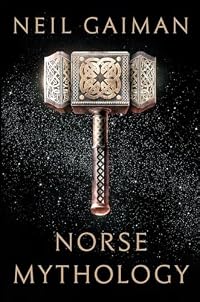
Norse Mythology
by Neil Gaiman
On This Page
Description
Neil Gaiman has long been inspired by ancient mythology in creating the fantastical realms of his fiction. Now he presents his fashioning of the primeval Norse myths into a novel, which begins with the genesis of the legendary nine worlds, delves into the exploits of the deities, dwarves, and giants, and culminates in Ragnarok, the twilight of the gods and the rebirth of a new time and people. Gaiman stays true to the myths while vividly recreating the characters--the gods with their show more fiercely competitive natures, their susceptibility to being duped and to dupe others, and their tendencey to let passion ignite their actions--and making these long-ago myths breathe pungent life again.-- show lessTags
Recommendations




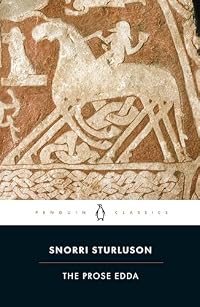


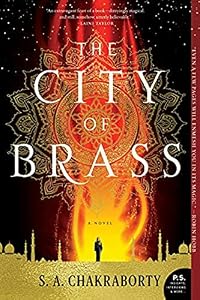
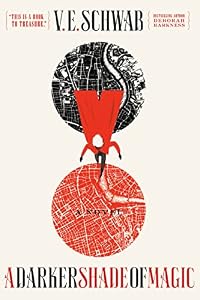
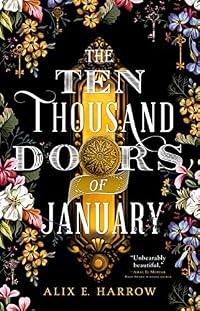
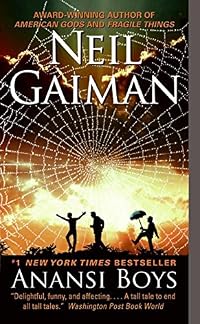
Member Recommendations
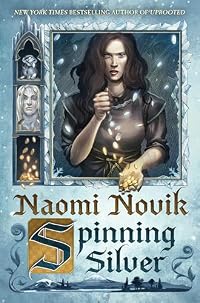
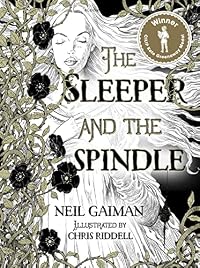
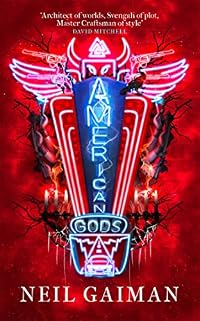
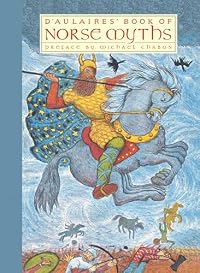
CGlanovsky The Edda feels like the primary source material for Gaiman's retelling
161
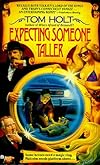
themulhern The one is a fine retelling of Norse mythology, the other is humorous fantasy based on Norse mythology. So they compliment each other nicely. And both are written rather cleverly.
Member Reviews
As a young boy I revelled in Roger Lancelyn Green’s reworking of old legends, and remember reading and rereading his collection, Tales of the Norsemen, which introduced me to Odin, Thor, Loki and the rest of the Norse gods. So, it seems, did Neil Gaiman, and he pays tribute to Green’s books, and also to Kevin Crosseley-Holland’s more modern recounting of the stories in the foreword to his own retelling. He brings the stories to life, rendering the stories accessible without compromising the nature of the originals.
I imagine that the Norse myths must provide a wealth of study material for the anthropologist. There is a lack of cohesion in the form behind the stories. There are many times when the Norse gods seem almost human. show more Early on, Odin is so desperate to drink from Mimr’s well, recognised as a source of wisdom and foresight, that he is prepared to sacrifice one of his eyes. Zeus or Apollo could have generated a hundred new eyes at the drop of a hat if they had so wished, but Odin was condemned to remaining one-eyed from then onwards. At other times, however, the gods seem capable of changing form and size.
Loki, steeped in mischief and mindless evil, has to borrow the goddess Freya’s falcon suit in order to fly, but in the same incident can suddenly turn another character into a hazelnut. Tyr, god of war, loses his sword hand while trying to subdue Fenris, the monstrous wolf, and is left to fight left-handed thereafter.
Gaiman writes these compelling stories in a simple, straightforward manner, bringing out their charm and an essential humour – there is, after all, a boyish camaraderie between Thor and Loki … at least, when Thor isn’t threatening to kill Loki. Gaiman also reflects, however, the grim side to the myths which resonate with the underlying tragedy of existence. Everything the gods do is set against their awareness of the approach of Ragnarok, the final battle between the gods and the giants, which would mark the end of the world. The gods knew that, like mortal men, they too might be doomed, and passed their time in Asgard knowing that their time was gradually, relentlessly, ticking away.
This is an excellent introduction for anyone yet to discover the Norse myths, and an enjoyable reworking for any old hands such as myself. show less
I imagine that the Norse myths must provide a wealth of study material for the anthropologist. There is a lack of cohesion in the form behind the stories. There are many times when the Norse gods seem almost human. show more Early on, Odin is so desperate to drink from Mimr’s well, recognised as a source of wisdom and foresight, that he is prepared to sacrifice one of his eyes. Zeus or Apollo could have generated a hundred new eyes at the drop of a hat if they had so wished, but Odin was condemned to remaining one-eyed from then onwards. At other times, however, the gods seem capable of changing form and size.
Loki, steeped in mischief and mindless evil, has to borrow the goddess Freya’s falcon suit in order to fly, but in the same incident can suddenly turn another character into a hazelnut. Tyr, god of war, loses his sword hand while trying to subdue Fenris, the monstrous wolf, and is left to fight left-handed thereafter.
Gaiman writes these compelling stories in a simple, straightforward manner, bringing out their charm and an essential humour – there is, after all, a boyish camaraderie between Thor and Loki … at least, when Thor isn’t threatening to kill Loki. Gaiman also reflects, however, the grim side to the myths which resonate with the underlying tragedy of existence. Everything the gods do is set against their awareness of the approach of Ragnarok, the final battle between the gods and the giants, which would mark the end of the world. The gods knew that, like mortal men, they too might be doomed, and passed their time in Asgard knowing that their time was gradually, relentlessly, ticking away.
This is an excellent introduction for anyone yet to discover the Norse myths, and an enjoyable reworking for any old hands such as myself. show less
Norse mythology has an epic grandeur. Gods, giants, and looming over all of it, Ragnarok. Neil Gaiman was drawn to Norse mythology at a young age through The Mighty Thor comics. He reinvented Odin in American Gods. And in this book, he returns to the Eddas to offer his own interpretation of the sagas.
As always, Gaiman is a pure delight as a wordsmith. In his version of the story, Loki is the protagonist, a force of chaos who gets the gods into trouble and then out of it, until they imprison him, and he turns against them in the final battle. I grew up on Greek myths, and while all true myths resonate, Norse mythology has a very different feel. The Norse gods are a family, but it's less intense than Olympus, so often defined by Zeus' show more lust and Hera's jealousy. The world of Norse mythology is wild and forbidding, full of giants cannier and stronger than the gods. Mortals appear infrequently, and almost almost as the subject of moralizing messages about not transgressing cultural norms.
Any modern retelling is a matter of interpretation, and an actual scholar may have some quibbles. I don't. This book is delightful. show less
As always, Gaiman is a pure delight as a wordsmith. In his version of the story, Loki is the protagonist, a force of chaos who gets the gods into trouble and then out of it, until they imprison him, and he turns against them in the final battle. I grew up on Greek myths, and while all true myths resonate, Norse mythology has a very different feel. The Norse gods are a family, but it's less intense than Olympus, so often defined by Zeus' show more lust and Hera's jealousy. The world of Norse mythology is wild and forbidding, full of giants cannier and stronger than the gods. Mortals appear infrequently, and almost almost as the subject of moralizing messages about not transgressing cultural norms.
Any modern retelling is a matter of interpretation, and an actual scholar may have some quibbles. I don't. This book is delightful. show less
If you’ve read any of Gaiman’s other work you know he has a love for global mythologies and they often inform his own story telling (American Gods being a prime example). Here he revisits one of his earliest influences
By returning to surviving primary sources he spins a modern interpretation of selected stories of the Norse gods. Each story stands alone, but together they weave a colorful, wicked, and humorous story that runs from creation to destruction.
Reading these I could easily imagine myself being sat by a roaring fire in village hall late one winter’s evening with a flagon of mead in hand listening to Gaiman spin these yarns to an enraptured audience.
By returning to surviving primary sources he spins a modern interpretation of selected stories of the Norse gods. Each story stands alone, but together they weave a colorful, wicked, and humorous story that runs from creation to destruction.
Reading these I could easily imagine myself being sat by a roaring fire in village hall late one winter’s evening with a flagon of mead in hand listening to Gaiman spin these yarns to an enraptured audience.
O talento de Stan Lee e seus parceiros na criação de super-heróis para a Marvel é inegável. Mas, ao menos no caso de Thor e seu indefectível martelo, já estava tudo pronto para a turma das HQs adaptar. É o que fica nítido na leitura de "Mitologia Nórdica", de Neil Gaiman, ele mesmo um declarado admirador do Deus do Trovão, seu pai Odin, o irmão Loki e toda os habitantes de Asgard.
As relações entre deuses, gigantes, anões e outros personagens mitológicos se sucedem ao longo das crônicas da obra. Chama a atenção a sequência de engodos, tramoias e ardis com que as nobres divindades tentam passar para trás umas às outras o tempo todo.
Não raro, o assunto acaba em pancadaria. O ardiloso Loki tem a capacidade de sempre show more piorar as coisas. E há passagens surpreendentes e de humor impagável, como Thor ter de se vestir de mulher para enganar o ladrão que roubou seu martelo Mjolnir para tentar recuperá-lo.
O estelionato é frequente, mas há também muitos códigos de honra. E respeito à mulher, que tem espaço para recusa ao desempenho de alguns papéis menos nobres. Estamos falando de uma obra que reúne lendas anteriores ao cristianismo. As walkírias eram divindades encarregadas de recolher as almas dos guerreiros e conduzi-las até Valhalla, o salão dos mortos.
Não se surpreenda em encontrar personagens muito familiares em obras como "Senhor dos Anéis" ou "Harry Potter". J. R. R. Tolkien e J. K. Rowling beberam à vontade das fontes escandinavas. Se quiser saciar sua sede também, "Mitologia Nórdica" tem edição em português da Intrínseca. Na versão em áudio, a locução é do próprio Neil Gaiman, um deleite extra. show less
As relações entre deuses, gigantes, anões e outros personagens mitológicos se sucedem ao longo das crônicas da obra. Chama a atenção a sequência de engodos, tramoias e ardis com que as nobres divindades tentam passar para trás umas às outras o tempo todo.
Não raro, o assunto acaba em pancadaria. O ardiloso Loki tem a capacidade de sempre show more piorar as coisas. E há passagens surpreendentes e de humor impagável, como Thor ter de se vestir de mulher para enganar o ladrão que roubou seu martelo Mjolnir para tentar recuperá-lo.
O estelionato é frequente, mas há também muitos códigos de honra. E respeito à mulher, que tem espaço para recusa ao desempenho de alguns papéis menos nobres. Estamos falando de uma obra que reúne lendas anteriores ao cristianismo. As walkírias eram divindades encarregadas de recolher as almas dos guerreiros e conduzi-las até Valhalla, o salão dos mortos.
Não se surpreenda em encontrar personagens muito familiares em obras como "Senhor dos Anéis" ou "Harry Potter". J. R. R. Tolkien e J. K. Rowling beberam à vontade das fontes escandinavas. Se quiser saciar sua sede também, "Mitologia Nórdica" tem edição em português da Intrínseca. Na versão em áudio, a locução é do próprio Neil Gaiman, um deleite extra. show less
Here it is - the infamous Jurassic Park. I still remember how amazingly huge this was in theater when I was growing up. The thing I remember most was the truck's glass shaking in cue with the T-Rex's footsteps. Deliciously suspenseful. Does the book hold up?
As plots go, let's face it - this one's simply awesome. Who doesn't dig dinosaurs to some degree? It brings out the wonder and child in all of us. And man is always itching for yet another story to slap his hand and warn him about playing God in the black dangers of SCIENCE. Du-du-dum! So besides dinos, mad scientists, we get cool smart people who make funny comments, children who get on the nerves, a huge island, convenient storms, and fried state of the art security. Rock on!
While show more the entire novel is good, the beginning is where it's really all at. Such fun creepiness and buildup sets the mood. Being of mediocre wit myself, my patience DID lag with some of the many, many technical eplorations/jargon whey they first come to the island to flaunt their expertise, but I still give props to Crichton for holding the pacing level, even if the expected climax climb is from slightly predictable circumstances.
Characters are an intriguing ensemble. First, the little girl irritated me to no end, and I ended up loathing the devilish girl-child almost immediately. Sadly my hatred didn't fade as the pages turned. Her whining was atrocious. Oddly, in the movie she is the older and more secure one, but in the book the younger. She consistently makes dangers worse, doesn't listen, puts others in precarious situations, and made me want to shake her. Ian Malcolm's dry wit is likeable enough but in the novel he's barely around. The mad scientist is unpleasant and stands as a different sort from his film version. The dinosaur scientists are just average. And yes, as before, Crichton does tend to invent characters for the sake of story.
Crichton's writing is nifty, although I did find an occasional error and think he relies a little too heavily on the "comma just in case" method. Still, he charmed my inner reader with wording that's plausible and easy to take in. He comes across as having a beef with science. Not just because this is a precautionary tale (that doesn't always mean anything beyond good story telling), but he also puts in a foreward and injection of thoughts on the irresponsibility of the scientific establishment in general.
The T-Rex is focused on more in the book than the film. While the raptors stole the cinema-light there, T-Rex ruled the roost here. There was an especially creepy water scene while he is giving chase.
Overall this book is certainly worth the hype and I'm pleased they chose to make it into a blockbuster film. They had plenty of excellent source material to draw from, even if they changed a good amount. Genuine chills, tension, fascinating subject material which works with new twists. Chilling more than suspenseful - especially the two opening scenes with the bitten man carried to the isolated medic and the little girl getting a nasty surprise on the beach. If you're a fan of the movie (or, if you're not), still check out the book. show less
As plots go, let's face it - this one's simply awesome. Who doesn't dig dinosaurs to some degree? It brings out the wonder and child in all of us. And man is always itching for yet another story to slap his hand and warn him about playing God in the black dangers of SCIENCE. Du-du-dum! So besides dinos, mad scientists, we get cool smart people who make funny comments, children who get on the nerves, a huge island, convenient storms, and fried state of the art security. Rock on!
While show more the entire novel is good, the beginning is where it's really all at. Such fun creepiness and buildup sets the mood. Being of mediocre wit myself, my patience DID lag with some of the many, many technical eplorations/jargon whey they first come to the island to flaunt their expertise, but I still give props to Crichton for holding the pacing level, even if the expected climax climb is from slightly predictable circumstances.
Characters are an intriguing ensemble. First, the little girl irritated me to no end, and I ended up loathing the devilish girl-child almost immediately. Sadly my hatred didn't fade as the pages turned. Her whining was atrocious. Oddly, in the movie she is the older and more secure one, but in the book the younger. She consistently makes dangers worse, doesn't listen, puts others in precarious situations, and made me want to shake her. Ian Malcolm's dry wit is likeable enough but in the novel he's barely around. The mad scientist is unpleasant and stands as a different sort from his film version. The dinosaur scientists are just average. And yes, as before, Crichton does tend to invent characters for the sake of story.
Crichton's writing is nifty, although I did find an occasional error and think he relies a little too heavily on the "comma just in case" method. Still, he charmed my inner reader with wording that's plausible and easy to take in. He comes across as having a beef with science. Not just because this is a precautionary tale (that doesn't always mean anything beyond good story telling), but he also puts in a foreward and injection of thoughts on the irresponsibility of the scientific establishment in general.
The T-Rex is focused on more in the book than the film. While the raptors stole the cinema-light there, T-Rex ruled the roost here. There was an especially creepy water scene while he is giving chase.
Overall this book is certainly worth the hype and I'm pleased they chose to make it into a blockbuster film. They had plenty of excellent source material to draw from, even if they changed a good amount. Genuine chills, tension, fascinating subject material which works with new twists. Chilling more than suspenseful - especially the two opening scenes with the bitten man carried to the isolated medic and the little girl getting a nasty surprise on the beach. If you're a fan of the movie (or, if you're not), still check out the book. show less
A fairly classic retelling of Norse myths was actually not what I was expecting, but I liked it very much. The cleanliness of the stories really spoke to me, and Gaimans' sarcasm that sometimes leaked through really was the finishing touch. I just wished there were more stories to tell, and I think I wouldn't even mind if Gaiman just came up with a couple of "original" Norse myths.
I was going to describe this as "Neil Gaiman's retelling of the Norse myths," but on reflection I'm not sure that's quite the right word. "Retelling" covers a lot of territory, including works with only a vague resemblance to their source material, and I have the strong impression that Gaiman is sticking very close to the originals. So it's probably better to call this a "telling" of the Norse myths, one more among the many that people have done over the centuries. And it's fairly simply told, without lots of novelistic elaboration, but Gaiman does bring a subtle and entertaining sense of humor to it, as well as perhaps bringing a little bit of humanity to the characters. (Well, all right, "humanity" isn't quite the right word either, show more when applied to gods, but it's close enough.)
I think I had read other versions of most of these myths before, at some point or another, but not recently enough that I remembered too many of the details about them, and I found them very interesting to revisit. Some of the stories are strange and deeply mythic, some silly, and some dark, but on the whole they're all interesting and imaginative, sometimes in ways that leave me wondering at how humans even came up with them and what creative genius lost to the mists of time invented this or that particular detail.
I'm also a little amused at how strongly my main takeaway about Norse mythology here is just that the Norse gods are dicks. Entertainingly so, often enough, but dicks nonetheless. Especially Loki, the patron god of internet trolls, who is hilarious until he isn't... and then really, really isn't. (I just kind of wish I could have kept him from being Tom Hiddleston in my head. I mean, I like Tom Hiddleston, but it was just distracting.) show less
I think I had read other versions of most of these myths before, at some point or another, but not recently enough that I remembered too many of the details about them, and I found them very interesting to revisit. Some of the stories are strange and deeply mythic, some silly, and some dark, but on the whole they're all interesting and imaginative, sometimes in ways that leave me wondering at how humans even came up with them and what creative genius lost to the mists of time invented this or that particular detail.
I'm also a little amused at how strongly my main takeaway about Norse mythology here is just that the Norse gods are dicks. Entertainingly so, often enough, but dicks nonetheless. Especially Loki, the patron god of internet trolls, who is hilarious until he isn't... and then really, really isn't. (I just kind of wish I could have kept him from being Tom Hiddleston in my head. I mean, I like Tom Hiddleston, but it was just distracting.) show less
Members
- Recently Added By
Lists

Top Five Books of 2017
757 works; 230 members

Recommend the 20 best books you've read in the last five years
2,167 works; 605 members
Top Five Books of 2018
802 works; 265 members

Books Read in 2017
4,248 works; 129 members

Kirkus Starred Fiction Reviews of Books Published in 2017
412 works; 7 members

Books Read in 2018
4,360 works; 110 members

Books Read in 2019
4,052 works; 109 members

Books by Jewish Authors
68 works; 5 members

Books Read in 2020
4,379 works; 124 members

Loan Library
38 works; 1 member

Best Audiobooks
240 works; 114 members

Lista d1
22 works; 1 member

Read in 2019
48 works; 1 member

Mythology
9 works; 2 members
Author Information

Neil Gaiman was born in Portchester, England on November 10, 1960. He worked as a journalist and freelance writer for a time, before deciding to try his hand at comic books. Some of his work has appeared in publications such as Time Out, The Sunday Times, Punch, and The Observer. His first comic endeavor was the graphic novel series The Sandman. show more The series has won every major industry award including nine Will Eisner Comic Industry Awards, three Harvey Awards, and the 1991 World Fantasy Award for best short story, making it the first comic ever to win a literary award. He writes both children and adult books. His adult books include The Ocean at the End of the Lane, which won a British National Book Awards, and the Locus Award for Best Fantasy Novel for 2014; Stardust, which won the Mythopoeic Award as best novel for adults in 1999; American Gods, which won the Hugo, Nebula, Bram Stoker, SFX, and Locus awards; Anansi Boys; Trigger Warning: Short Fictions and Disturbances; and The View from the Cheap Seats: Selected Nonfiction, which is a New York Times Bestseller. His children's books include The Day I Swapped My Dad for Two Goldfish; Coraline, which won the Elizabeth Burr/Worzalla, the BSFA, the Hugo, the Nebula, and the Bram Stoker awards; The Wolves in the Walls; Odd and the Frost Giants; The Graveyard Book, which won the Newbery Award in 2009 and The Sandman: Overture which won the 2016 Hugo Awards Best Graphic Story. (Bowker Author Biography) show less
Some Editions
Awards and Honors
Awards
Distinctions
Work Relationships
Common Knowledge
- Canonical title
- Norse Mythology
- Original title
- Norse Mythology
- Original publication date
- 2017-02-07
- People/Characters
- Odin; Thor; Loki; Freya; Frey; Balder (as Baldur) (show all 70); Surtur (as Surtr); Ymir; Audhumla; Buri; Bor; Vili; Ve; Ask; Embla; Nidhogg; Mimir; Hel; Verdandi; Skuld; Hoenir; Heimdall; Sif; Brokk; Eitri; Bragi; Sleipnir; Thrym; Var; Kvasir; Fjalar; Galar; Fenrir; Skirnir; Gilling; Suttung; Huginn; Muninn; Gunnlod; Egil; Thialfi; Roskva; Skrymir; Utgard-Loki (as Utgardaloki); Logi; Hugi; Elli; Idunn; Thiazi; Skadi; Njord; Geri; Freki; Gerd; Fjolnir; Aegir; Ran; Hymir; Frigg; Hod; Hermod; Vali; Rind; Thokk; Sigyn; Hrym; Garm; Vidar; Magni; Modi
- Important places
- Asgard; Jotunheim
- Important events
- Ragnarok
- Dedication
- For Everett, Old Stories for a new boy
- First words
- Introduction
It's as hard to have a favorite sequence of myths as it is to have a favorite style of cooking (some nights you might want Thai food, some nights sushi, other nights you crave the plain home cooking you grew ... (show all)up on).
Many gods and goddesses are named in Norse mythology. - Last words
- (Click to show. Warning: May contain spoilers.)Balder will smile, like the sun coming out, and reach down, and he will move his first piece.
And the game begins anew. - Blurbers
- Tatar, Maria; Zipes, Jack; Le Guin, Ursula K.; Lovegrove, James; Dirda, Michael
- Original language
- English
- Canonical DDC/MDS
- 293.13
- Canonical LCC
- BL860.G35
Classifications
- Genres
- Fiction and Literature, Fantasy
- DDC/MDS
- 293.13 — Religion Other religions Germanic religion Mythologies Mythology--Germanic religion
- LCC
- BL860 .G35 — Philosophy, Psychology and Religion Religions. Mythology. Rationalism Religions. Mythology. Rationalism History and principles of religions European. Occidental Germanic and Norse
- BISAC
Statistics
- Members
- 11,736
- Popularity
- 752
- Reviews
- 384
- Rating
- (4.04)
- Languages
- 21 — Bulgarian, Czech, Danish, Dutch, English, Estonian, Finnish, French, German, Hungarian, Indonesian, Italian, Polish, Romani, Russian, Spanish, Swedish, Turkish, Ukrainian, Portuguese (Brazil), Chinese, traditional
- Media
- Paper, Audiobook, Ebook
- ISBNs
- 91
- UPCs
- 1
- ASINs
- 27