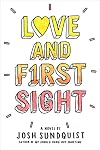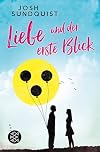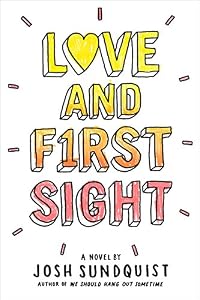
Love and First Sight
by Josh Sundquist
On This Page
Description
"Sixteen-year-old blind teen Will Porter undergoes an experimental surgery that enables him to see for the first time, all while navigating a new school, new friends, and a crush"--Tags
Recommendations

Member Reviews
nitially, because I didn't read the author's notes first (who does that?!?!?) I was convinced that the author had some intimate knowledge with the visually impaired world. But now that I've finished the book and read the authors notes, I realize he did his research, which REALLY paid off imho and made the book SO enjoyable. I loved the humour but also the way the book made me reexamine some of the things I took for granted. Can't wait to share this book with my middle school readers. I predict they're gonna love it. I've already purchased a second copy instead of Valentine's Day chocolate.
Veramente un gran bel libro che, oltre a essermi piaciuto molto, è stato capace di farmi scoprire e, soprattutto, capire qualcosa che non conoscevo.
La cecità è una condizione molto particolare e capire cosa vuol dire acquistare la vista per chi è cieco dalla nascita è qualcosa che non si può immaginare ma che questo libro riesce a far comprendere in maniera unica. La realtà che si crea nella mente di chi non vede e non ha mai visto è ben differente da quella di chi vede, e anche solo capire cosa siano i colori è qualcosa che va al di là dell’immaginazione di chi li ha sempre visti.
Una storia scritta veramente benissimo e che, oltre ad entrare in profondità nelle problematiche di una realtà difficile e sconosciuta, riesce show more anche a divertire con i suoi personaggi unici, particolari e pieni di umanità nonostante le loro “diversità”.
Da leggere assolutamente. show less
La cecità è una condizione molto particolare e capire cosa vuol dire acquistare la vista per chi è cieco dalla nascita è qualcosa che non si può immaginare ma che questo libro riesce a far comprendere in maniera unica. La realtà che si crea nella mente di chi non vede e non ha mai visto è ben differente da quella di chi vede, e anche solo capire cosa siano i colori è qualcosa che va al di là dell’immaginazione di chi li ha sempre visti.
Una storia scritta veramente benissimo e che, oltre ad entrare in profondità nelle problematiche di una realtà difficile e sconosciuta, riesce show more anche a divertire con i suoi personaggi unici, particolari e pieni di umanità nonostante le loro “diversità”.
Da leggere assolutamente. show less
On his first day at a new school, blind sixteen-year-old Will Porter accidentally groped a girl on the stairs, sat on another student in the cafeteria, and somehow drove a classmate to tears. High school can only go up from here, right?
As Will starts to find his footing, he develops a crush on a charming, quiet girl named Cecily. Then an unprecedented opportunity arises: an experimental surgery that could give Will eyesight for the first time in his life. But learning to see is more difficult than Will ever imagined, and he soon discovers that the sighted world has been keeping secrets. It turns out Cecily doesn't meet traditional definitions of beauty--in fact, everything he'd heard about her appearance was a lie engineered by their show more so-called friends to get the two of them together. Does it matter what Cecily looks like? No, not really. But then why does Will feel so betrayed? show less
As Will starts to find his footing, he develops a crush on a charming, quiet girl named Cecily. Then an unprecedented opportunity arises: an experimental surgery that could give Will eyesight for the first time in his life. But learning to see is more difficult than Will ever imagined, and he soon discovers that the sighted world has been keeping secrets. It turns out Cecily doesn't meet traditional definitions of beauty--in fact, everything he'd heard about her appearance was a lie engineered by their show more so-called friends to get the two of them together. Does it matter what Cecily looks like? No, not really. But then why does Will feel so betrayed? show less
I first discovered Josh Sundquist by reading his memoir, and giggling the entire way through it. I'm not generally a non-fiction reader, but I devoured that book. That meant that when I found out that Sundquist had written a YA book, I knew I had to read it. I couldn't wait to see how his wit and honesty translated to a fiction novel.
First off, I have to give credit where credit is due. It's very obvious from the first few pages of this story that Sundquist did a tremendous amount of research on visual impairment, and worked hard to make sure that he was accurately portraying Will's day to day routine. Pair that with a lovingly crafted character, complete with Sundquist's signature wit, and you have a story that is a joy to read. I fell show more in love with Will, and the rest was history.
When the experimental surgery came into the picture, I found myself riveted. Everything was described in intricate detail, but it never felt overbearing. Instead, I found myself in the same situation as Will. Wondering if the surgery would be worth it, cheering him on when he was doing well, and lamenting with him when things weren't going well. His parents were so wonderfully supportive, if a little over involved at times, and there was this whole aura of growth and love to this book. It was a happy place to be.
Even if the friendship turned romance hadn't been a main portion of this book, I would have still loved it. Still, I couldn't help but fall for the slow growth of Cecily and Will's relationship. Cecily's acceptance of Will, her ability to open things up for him with wonderful analogies, tugged at my heart strings. I knew that fight was imminent, and of course I was right. What is YA without teenage tension? Still, it all felt so perfect. Not a single sentence of this book felt out of place. It all worked to build up Will, and show how amazing a person he was.
I'd highly recommend this for your reading list! If it's not there already, it's well worth a second look. show less
First off, I have to give credit where credit is due. It's very obvious from the first few pages of this story that Sundquist did a tremendous amount of research on visual impairment, and worked hard to make sure that he was accurately portraying Will's day to day routine. Pair that with a lovingly crafted character, complete with Sundquist's signature wit, and you have a story that is a joy to read. I fell show more in love with Will, and the rest was history.
When the experimental surgery came into the picture, I found myself riveted. Everything was described in intricate detail, but it never felt overbearing. Instead, I found myself in the same situation as Will. Wondering if the surgery would be worth it, cheering him on when he was doing well, and lamenting with him when things weren't going well. His parents were so wonderfully supportive, if a little over involved at times, and there was this whole aura of growth and love to this book. It was a happy place to be.
Even if the friendship turned romance hadn't been a main portion of this book, I would have still loved it. Still, I couldn't help but fall for the slow growth of Cecily and Will's relationship. Cecily's acceptance of Will, her ability to open things up for him with wonderful analogies, tugged at my heart strings. I knew that fight was imminent, and of course I was right. What is YA without teenage tension? Still, it all felt so perfect. Not a single sentence of this book felt out of place. It all worked to build up Will, and show how amazing a person he was.
I'd highly recommend this for your reading list! If it's not there already, it's well worth a second look. show less
Difficult to stop reading, once you start -- a strong imagining and sensitive portrayal of a blind teenager's integration into high school and opportunity to experiment with sight. I appreciate Will's voice -- he's a regular, snarky, misfit teenager, who just happens to be touch and hearing gifted, thank you very much. A good perspective and great read.
Not as bad as I'd feared - but not as good as I'd hoped.
(Full disclosure: I received a free electronic ARC for review through Netgalley. This review contains clearly marked spoilers.)
"A door swings open, dinging a bell. I recognize the next sound: the deliberate but controlled steps, treading gently, as if she’s trying not to leave footprints. I’ve never seen a footprint, of course, but my understanding is that the harder you press, the more of an impression you leave behind."
Sixteen-year-old Will Porter has attended boarding schools and summer camps for blind and visually impaired kids his whole life - but now it's time to go mainstream. Will wants to finish out his high school career in his hometown of Toano, Kansas - even if it's show more over the vociferous objections of his over-stressed helicopter mom. Unfortunately, Will's first day in public school is a bit of a disaster: he gropes a random girl in the stairwell, makes a fellow classmate cry, and plops down on yet another student's lap in the caf.
But Will quickly finds his niche in Toano High School. He takes a shining to journalism, where the teacher - Mrs. Everbrook - treats him like every other student. He partners up with and eventually befriends Cecily, whose knack for photography complements Will's way with words. He falls in with Nick, Ion, and Whitford who, along with Cecily, represent the entirety of Toano High's academic quiz team. Will even convinces Cecily to try out for the morning announcer cohosting gig, despite her obvious - and inexplicable - reluctance.
And then, just a few months into the semester, Will's mom drops a bombshell in his lap. At the hospital where his father works, there's an experimental surgery to "cure" blindness that's accepting applicants. The operation is a two-stage process: a retinal stem cell transplant, followed by a corneal transplant within two weeks. Even if it's successful, the surgery comes with a whole bunch of risks: Will's body could reject the new corneas, while the immunosuppressant drugs will leave him susceptible to common illnesses such as the flu. If the new eyes "take," Will will have to rewire his brain to properly perceive and process all the unfamiliar, overwhelming visual input. It's not as simple as waking up and being able to see; rather, Will will have to learn how to perform this new task that his eyes and brain have never done before.
The primary conflict in the story is how this surgery impacts Will's budding romance with Cecily. Love and First Sight is one of those books that sounds like it could be really awful and offensive ... but might (just might!) prove unexpectedly subversive and progressive. (See, e.g., The Continent. I added it to my TBR early on, only to drop it when the Twitter commentary started rolling in.) As it turns out, Love and First Sight falls somewhere in between.
** Caution: Possible spoilers ahead! **
The synopsis kind of skirts around Cecily's appearance, making it sound like maybe she's merely "ugly" (with a big nose, à la Roxanne, perhaps?), while her friends, in a bid to hook these two crazy kids up, talk Cecily up to be some kind of international, smoking hot supermodel. When Will finally gets his first sight of her, his shallow side wins out. Or at least this is the impression I got from the description. Thankfully, what I feared might happen does not actually come to pass.
Rather, Cecily has a large, purplish birthmark that covers the upper half of her face, earning her the nickname "Batgirl." (In my fantasies, I dreamed of an alternate universe where Cecily owned this slur, reappropriated it even, and strutted around the halls of Toano High wearing gold Doc Martens and a purple cape, wielding her digital camera like a weapon.) Her friends - and Cecily herself - simply fail to mention this one very obvious and defining feature when describing her to Will.
When Will is finally able to see her - or rather, understand that the lines and angles he's seeing do indeed make up the face that is Cecily's - he notes the existence of the birthmark. He understands that Cecily's face doesn't look quite like all the other faces he's seeing, but doesn't automatically classify this as a bad thing. Having never been bombarded with images of ideal or traditional beauty, Will has no opinion on the birthmark either way. He already loves Cecily, and he finds her beautiful. The whole of her, inside and out.
Yet the story needs conflict, so rather than be upset that she's "ugly" (Will openly bristles when his mom refers to the birthmark as a "disfigurement"), Will is angry that Cecily lied to him. That she kept this one Very Significant thing to herself. That she didn't want to go out of her way talk about being bullied, to delve into the source of this shame and embarrassment when she could just as easily not. Will interprets it as Cecily taking advantage of his blindness to feel better about herself, but that's a really selfish and self-centered way of looking at things. Especially coming from a guy who, for example, left his sunglasses at home on the first day of school because he didn't want to draw unnecessary attention to himself. Like Cecily, Will wants desperately to fit in, to not be defined by a congenital condition that he didn't choose and that does not define the whole of him. You'd think he'd cut Cecily a little slack, you know?
Instead, he goes on a pretty childish rampage, deleting his comments on her Facebook page and then defriending her altogether. He even tosses the box of photographs she gave him in the garbage, and then dumps a jar of mayo on the pile for good measure. I guess, as a 38-year-old, I should cut teenagers some slack, but it all feels pretty overly dramatic and out of proportion to the (perceived) offense.
On the positive side, the rift only lasts about twenty pages, so there's that.
Look. I get that the story needs some sort of tension, but I much rather would've seen it play out between Will and a society that says he couldn't/shouldn't/wouldn't love a girl like Cecily. That's where the cultural critique is at.
** End of spoilers. **
As for the rest of the story, it's pretty evenly split between things I love, and things I hated. The scenes between Will and Cecily are mostly lovely. I really enjoyed watching them interact, particularly those times when Cecily struggled to find the right words to describe a sensory experience to Will (and vice versa). Based on actual research, Will's quest to gain sight is fascinating. And though I'm not blind - nor do I have close friends or family members who are - Sundquist seems to do a good job of detailing how visually impaired folks experience the world, and navigate one shaped by "the tyranny of the visual."
On the downside, the male characters all feel pretty juvenile. For example, upon leaning that Will's dad is a surgeon, Nick insists that all male urologists must be gay, because why else would a straight guy want to look at penises professionally? (Also apparently there are only two settings, straight or gay.) Will comments on the principal's fat rolls several times, and Whitford is weirdly, regressively possessive of his girlfriend. Given how sensitively Sundquist handles Will's visual impairment, all these other microaggressions are especially annoying. (Ion rightfully calls Nick homophobic, thankfully, but all the other aforementioned incidents go unchallenged.)
And then there's the joke about sexual assault, right there in the very first chapter. When navigating the stairwell, Will accidentally grabs a girl's breast. An honest mistake, and it would've been excusable if not for this bit:
"That’s what a white cane will do for you: Not only can you get away with copping a feel, the girl assumes it was her fault and apologizes for it. Let me assure you, random girl, you have nothing to be sorry about. Completely my fault. And my pleasure."
Nope nope nope. Intentionally grabbing someone else's body parts without their permission is sexual assault, full stop. (And yes, this is what we're talking about here; otherwise there wouldn't be anything to "get away" with. Plus, if it's truly an accident, wouldn't you feel chagrined, as opposed to smugly self-satisfied?) In fact this seems to be the go-to M.O. of our President-Elect, which Sundquist probably didn't know when writing this story, but makes it all the more offensive to see now.
Honestly, I almost threw in the towel then and there. Proceed as you will.
http://www.easyvegan.info/2017/01/06/love-and-first-sight-by-josh-sundquist/ show less
(Full disclosure: I received a free electronic ARC for review through Netgalley. This review contains clearly marked spoilers.)
"A door swings open, dinging a bell. I recognize the next sound: the deliberate but controlled steps, treading gently, as if she’s trying not to leave footprints. I’ve never seen a footprint, of course, but my understanding is that the harder you press, the more of an impression you leave behind."
Sixteen-year-old Will Porter has attended boarding schools and summer camps for blind and visually impaired kids his whole life - but now it's time to go mainstream. Will wants to finish out his high school career in his hometown of Toano, Kansas - even if it's show more over the vociferous objections of his over-stressed helicopter mom. Unfortunately, Will's first day in public school is a bit of a disaster: he gropes a random girl in the stairwell, makes a fellow classmate cry, and plops down on yet another student's lap in the caf.
But Will quickly finds his niche in Toano High School. He takes a shining to journalism, where the teacher - Mrs. Everbrook - treats him like every other student. He partners up with and eventually befriends Cecily, whose knack for photography complements Will's way with words. He falls in with Nick, Ion, and Whitford who, along with Cecily, represent the entirety of Toano High's academic quiz team. Will even convinces Cecily to try out for the morning announcer cohosting gig, despite her obvious - and inexplicable - reluctance.
And then, just a few months into the semester, Will's mom drops a bombshell in his lap. At the hospital where his father works, there's an experimental surgery to "cure" blindness that's accepting applicants. The operation is a two-stage process: a retinal stem cell transplant, followed by a corneal transplant within two weeks. Even if it's successful, the surgery comes with a whole bunch of risks: Will's body could reject the new corneas, while the immunosuppressant drugs will leave him susceptible to common illnesses such as the flu. If the new eyes "take," Will will have to rewire his brain to properly perceive and process all the unfamiliar, overwhelming visual input. It's not as simple as waking up and being able to see; rather, Will will have to learn how to perform this new task that his eyes and brain have never done before.
The primary conflict in the story is how this surgery impacts Will's budding romance with Cecily. Love and First Sight is one of those books that sounds like it could be really awful and offensive ... but might (just might!) prove unexpectedly subversive and progressive. (See, e.g., The Continent. I added it to my TBR early on, only to drop it when the Twitter commentary started rolling in.) As it turns out, Love and First Sight falls somewhere in between.
** Caution: Possible spoilers ahead! **
The synopsis kind of skirts around Cecily's appearance, making it sound like maybe she's merely "ugly" (with a big nose, à la Roxanne, perhaps?), while her friends, in a bid to hook these two crazy kids up, talk Cecily up to be some kind of international, smoking hot supermodel. When Will finally gets his first sight of her, his shallow side wins out. Or at least this is the impression I got from the description. Thankfully, what I feared might happen does not actually come to pass.
Rather, Cecily has a large, purplish birthmark that covers the upper half of her face, earning her the nickname "Batgirl." (In my fantasies, I dreamed of an alternate universe where Cecily owned this slur, reappropriated it even, and strutted around the halls of Toano High wearing gold Doc Martens and a purple cape, wielding her digital camera like a weapon.) Her friends - and Cecily herself - simply fail to mention this one very obvious and defining feature when describing her to Will.
When Will is finally able to see her - or rather, understand that the lines and angles he's seeing do indeed make up the face that is Cecily's - he notes the existence of the birthmark. He understands that Cecily's face doesn't look quite like all the other faces he's seeing, but doesn't automatically classify this as a bad thing. Having never been bombarded with images of ideal or traditional beauty, Will has no opinion on the birthmark either way. He already loves Cecily, and he finds her beautiful. The whole of her, inside and out.
Yet the story needs conflict, so rather than be upset that she's "ugly" (Will openly bristles when his mom refers to the birthmark as a "disfigurement"), Will is angry that Cecily lied to him. That she kept this one Very Significant thing to herself. That she didn't want to go out of her way talk about being bullied, to delve into the source of this shame and embarrassment when she could just as easily not. Will interprets it as Cecily taking advantage of his blindness to feel better about herself, but that's a really selfish and self-centered way of looking at things. Especially coming from a guy who, for example, left his sunglasses at home on the first day of school because he didn't want to draw unnecessary attention to himself. Like Cecily, Will wants desperately to fit in, to not be defined by a congenital condition that he didn't choose and that does not define the whole of him. You'd think he'd cut Cecily a little slack, you know?
Instead, he goes on a pretty childish rampage, deleting his comments on her Facebook page and then defriending her altogether. He even tosses the box of photographs she gave him in the garbage, and then dumps a jar of mayo on the pile for good measure. I guess, as a 38-year-old, I should cut teenagers some slack, but it all feels pretty overly dramatic and out of proportion to the (perceived) offense.
On the positive side, the rift only lasts about twenty pages, so there's that.
Look. I get that the story needs some sort of tension, but I much rather would've seen it play out between Will and a society that says he couldn't/shouldn't/wouldn't love a girl like Cecily. That's where the cultural critique is at.
** End of spoilers. **
As for the rest of the story, it's pretty evenly split between things I love, and things I hated. The scenes between Will and Cecily are mostly lovely. I really enjoyed watching them interact, particularly those times when Cecily struggled to find the right words to describe a sensory experience to Will (and vice versa). Based on actual research, Will's quest to gain sight is fascinating. And though I'm not blind - nor do I have close friends or family members who are - Sundquist seems to do a good job of detailing how visually impaired folks experience the world, and navigate one shaped by "the tyranny of the visual."
On the downside, the male characters all feel pretty juvenile. For example, upon leaning that Will's dad is a surgeon, Nick insists that all male urologists must be gay, because why else would a straight guy want to look at penises professionally? (Also apparently there are only two settings, straight or gay.) Will comments on the principal's fat rolls several times, and Whitford is weirdly, regressively possessive of his girlfriend. Given how sensitively Sundquist handles Will's visual impairment, all these other microaggressions are especially annoying. (Ion rightfully calls Nick homophobic, thankfully, but all the other aforementioned incidents go unchallenged.)
And then there's the joke about sexual assault, right there in the very first chapter. When navigating the stairwell, Will accidentally grabs a girl's breast. An honest mistake, and it would've been excusable if not for this bit:
"That’s what a white cane will do for you: Not only can you get away with copping a feel, the girl assumes it was her fault and apologizes for it. Let me assure you, random girl, you have nothing to be sorry about. Completely my fault. And my pleasure."
Nope nope nope. Intentionally grabbing someone else's body parts without their permission is sexual assault, full stop. (And yes, this is what we're talking about here; otherwise there wouldn't be anything to "get away" with. Plus, if it's truly an accident, wouldn't you feel chagrined, as opposed to smugly self-satisfied?) In fact this seems to be the go-to M.O. of our President-Elect, which Sundquist probably didn't know when writing this story, but makes it all the more offensive to see now.
Honestly, I almost threw in the towel then and there. Proceed as you will.
http://www.easyvegan.info/2017/01/06/love-and-first-sight-by-josh-sundquist/ show less
I don’t know if I choose books by females or if there seems to be more books for tweens written by women. I was happy to see a book by a male author. The narrator did a great job, for I listened to the audiobook from Audiobook Sync. I really enjoyed this novel and recommend it.
Will’s first week of high school is memorable. He uses the girl’s restroom; he sits on a guy; and, he makes a girl cry and run from the classroom. Poor guy! Will has only attended schools for the blind, but he knows that he needs to live in the real world and know how to navigate his way in a sighted world. They guy he sits on has a great sense of humor, so Will now has his lunch table and a group of friends. They are all part of the Academic Quiz Team.
Will show more wants to be a writer, so he is in journalism. He likes the journalism/English teacher because she doesn’t give him any slack and is honest with him. In this class, he volunteers to go to the art showing at a museum with Cecily when no one else volunteers. He’ll write the article; she’ll take the photographs. At the museum, Cecily discovers how much sight colors our world. Will is allowed to touch the paintings. He tells Cecily that he feels a triangle. She re-looks at the picture and agrees there is a triangle. When she explains the painting is of a road going into the distance, Will cannot understand how a road, which has parallel lines, can be a triangle. For someone who has never seen anything, Will cannot understand perspective. Cecily is able to explain art to Will. This is when they become friends.
Cecily has her own problems; she’s been bullied her entire life. Throughout the novel, you’ll wonder why. Is it what she looks like? Is it something else? What’s emphasized is that Will’s blindness allows him to just meet people and know them without being influenced by society’s perceptions of looks.
I enjoyed this mild love story; it’s hard not to like Cecily. She’s a good person. Sometimes Will annoyed me because he presented himself as victim when he couldn’t get beyond himself. When there is a possibility that a miracle surgery can bring eyesight to him, Will jumps at the chance.
The best part of the novel is how it deals with the concept of perspective. We judge and see life through our own perspective. What if sight were removed? Would we be kinder and accept more people? Would we take advantage of each other because no one can see? What does sight add? I learned a great deal about blindness and how much sight is part of our world, our choices, and our personality. show less
Will’s first week of high school is memorable. He uses the girl’s restroom; he sits on a guy; and, he makes a girl cry and run from the classroom. Poor guy! Will has only attended schools for the blind, but he knows that he needs to live in the real world and know how to navigate his way in a sighted world. They guy he sits on has a great sense of humor, so Will now has his lunch table and a group of friends. They are all part of the Academic Quiz Team.
Will show more wants to be a writer, so he is in journalism. He likes the journalism/English teacher because she doesn’t give him any slack and is honest with him. In this class, he volunteers to go to the art showing at a museum with Cecily when no one else volunteers. He’ll write the article; she’ll take the photographs. At the museum, Cecily discovers how much sight colors our world. Will is allowed to touch the paintings. He tells Cecily that he feels a triangle. She re-looks at the picture and agrees there is a triangle. When she explains the painting is of a road going into the distance, Will cannot understand how a road, which has parallel lines, can be a triangle. For someone who has never seen anything, Will cannot understand perspective. Cecily is able to explain art to Will. This is when they become friends.
Cecily has her own problems; she’s been bullied her entire life. Throughout the novel, you’ll wonder why. Is it what she looks like? Is it something else? What’s emphasized is that Will’s blindness allows him to just meet people and know them without being influenced by society’s perceptions of looks.
I enjoyed this mild love story; it’s hard not to like Cecily. She’s a good person. Sometimes Will annoyed me because he presented himself as victim when he couldn’t get beyond himself. When there is a possibility that a miracle surgery can bring eyesight to him, Will jumps at the chance.
The best part of the novel is how it deals with the concept of perspective. We judge and see life through our own perspective. What if sight were removed? Would we be kinder and accept more people? Would we take advantage of each other because no one can see? What does sight add? I learned a great deal about blindness and how much sight is part of our world, our choices, and our personality. show less
Members
- Recently Added By
Lists

Books Read in 2019
4,052 works; 108 members
Author Information

8 Works 1,040 Members
Awards and Honors
Notable Lists
Classifications
Statistics
- Members
- 268
- Popularity
- 118,995
- Reviews
- 29
- Rating
- (3.77)
- Languages
- English, German, Italian
- Media
- Paper, Audiobook, Ebook
- ISBNs
- 14
- ASINs
- 3