On This Page
Description
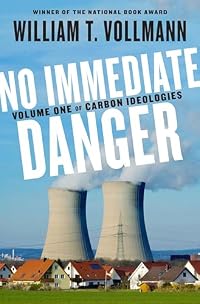
In his nonfiction, William T. Vollmann has won acclaim as a singular voice tackling some of the most important issues of our age. Now, Vollmann turns to a topic that will define the generations to come-the factors and human actions that have led to global warming. Vollmann begins No Immediate Danger, the first volume of Carbon Ideologies, by examining and quantifying the many causes of climate change, from industrial manufacturing and agricultural practices to fossil fuel extraction, show more economic demand for electric power, and the justifiable yearning of people all over the world to live in comfort. Turning to nuclear power first, Vollmann then recounts multiple visits that he made at significant personal risk over the course of seven years to the contaminated no-go zones and sad ghost towns of Fukushima, Japan, beginning shortly after the tsunami and reactor meltdowns of 2011. Equipped first only with a dosimeter and then with a scintillation counter, he measured radiation and interviewed tsunami victims, nuclear evacuees, anti-nuclear organizers, and pro-nuclear utility workers. Featuring Vollmann's signature wide learning, sardonic wit, and encyclopedic research, No Immediate Danger builds up a powerful, sobering picture of the ongoing nightmare of Fukushima. show lessTags
Recommendations













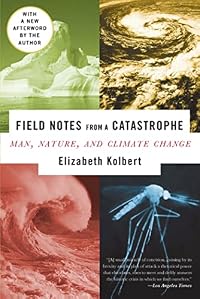


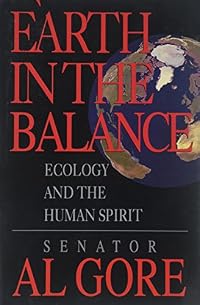

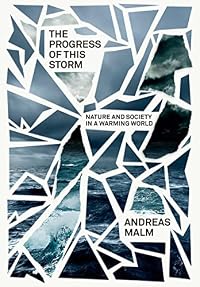






Member Recommendations

Member Reviews
There were several times when the monotony of his interviews set my mind adrift, but overall this is a book worthy of our attention. Who else but WTV, at this time in our history of letters, is equipped to take on such a contentious and, more often than not, ambiguous topic: carbon. More specifically, the dangers of converting carbon, from coal, oil, natural gas, etc. This first volume of his two-part Carbon Ideologies is split into three parts: (1) a 200-page primer that covers everything you could want to know about energy consumption and greenhouse emissions; a 300-page journalistic adventure as only WTV could present; and (3) a compendium of definitions, conversions charts, etc., akin to the appendixes found in his Seven Dreams show more novels. I'm relatively new to WTV, but already I am blown away by his intelligence, curiosity, and work ethic. This guys reads and writes for 16 hours a day, I've heard, and lives devoid of a TV, cell phone, etc. Above all, this book stimulated my own concern and curiosity about environmental issues that I am more inclined to ignore--after all, there is "no immediate danger." Already I have jumped into studying water life cycles, organic gardening, composting, and interviewing local entities involved in our collective carbon footprint in one way or another. show less
I'm not sure if Vollman intended this, but this book struck me as a kind of Das Kapital for the climate change age. Just like Marx, Vollman starts his book heavy on the figures, breaking down in detail the carbon usage of different energy sources, and even expressing various conveniences of daily life in terms of how many pounds of coal they burn. Vollman warns us that we could just skip this part, but as in Marx's Capital, I found this section to be kind of mesmerizing and essential to Vollman's whole project of beating into our heads how screwed we all are. The whole conceit of writing the book as a letter to a future inhabitant of a climate hellscape was disturbing but sometimes a little annoying. I appreciate it as part of Vollman's show more blackpilled outlook on the whole phenomena.
The majority of this volume details Vollman's several trips to Japan in the wake of the 3/11/2011 Fukushima tsunami and nuclear disaster, which despite being seemingly memory-holed by most in America, was devastating. It's a nightmare to imagine what the people living there went through to experience a massive earthquake, then a 15 meter tsunami, then a nuclear reactor meltdown in a matter of days. Vollman interviews survivors and wanders about various depopulated zones scanning various things. It sounds monotonous, but Vollman's strength as a writer makes it hypnotic. While Vollman's bias is obviously anti-nuclear, his reporting on the levels of radiation around the disaster site show the variability of toxicity in a fallout area - some areas were barely above normal background levels, while closer inspection by Vollman's frisker often revealed dangerous levels concentrated in strange and inconspicuous areas. As someone interested in the native flora of the eastern US and fighting invasives, there was a kind of bizarro world quality to the innumerable references to goldenrod growing in the disaster zone, an invasive plant in Japan strangely well adapted to colonizing abandoned rice paddies. There is something haunting about the image of acres of goldenrod bright yellow, blowing gently in a radioactive wind. show less
The majority of this volume details Vollman's several trips to Japan in the wake of the 3/11/2011 Fukushima tsunami and nuclear disaster, which despite being seemingly memory-holed by most in America, was devastating. It's a nightmare to imagine what the people living there went through to experience a massive earthquake, then a 15 meter tsunami, then a nuclear reactor meltdown in a matter of days. Vollman interviews survivors and wanders about various depopulated zones scanning various things. It sounds monotonous, but Vollman's strength as a writer makes it hypnotic. While Vollman's bias is obviously anti-nuclear, his reporting on the levels of radiation around the disaster site show the variability of toxicity in a fallout area - some areas were barely above normal background levels, while closer inspection by Vollman's frisker often revealed dangerous levels concentrated in strange and inconspicuous areas. As someone interested in the native flora of the eastern US and fighting invasives, there was a kind of bizarro world quality to the innumerable references to goldenrod growing in the disaster zone, an invasive plant in Japan strangely well adapted to colonizing abandoned rice paddies. There is something haunting about the image of acres of goldenrod bright yellow, blowing gently in a radioactive wind. show less
Everyone is encouraging that I power on through the next volume. There is some haunting journalism here. There's also a great deal of scattered analysis and attendant hand wringing.
My wife bought me both volumes for my birthday and they arrived while I was till on my sojourn at the resort. She read 100 pages and we discussed such yesterday. the helplessness of everyone. People acting in good faith. How Vollmann hectors people, particularly the 25 year old and asks why since she's Japanese she's comfortable nuclear energy given the history of Hiroshima and Nagasaki.
It is from this position of impotence that the survey of radiation is especially nuanced. It is an invisible phenomenon, much like our strange non-empirical relationship with show more electricity and petrol. show less
My wife bought me both volumes for my birthday and they arrived while I was till on my sojourn at the resort. She read 100 pages and we discussed such yesterday. the helplessness of everyone. People acting in good faith. How Vollmann hectors people, particularly the 25 year old and asks why since she's Japanese she's comfortable nuclear energy given the history of Hiroshima and Nagasaki.
It is from this position of impotence that the survey of radiation is especially nuanced. It is an invisible phenomenon, much like our strange non-empirical relationship with show more electricity and petrol. show less
Interesting and somewhat humorous while being incredibly depressing. I really enjoyed Vollmann's use of charts to compare and break down various numbers on emissions and radiation to make them significantly more understandable and imaginable for the layperson. I may read the second volume at some point if I am ever feeling optimistic about our situation and need a major comedown.
Vollmann writes for impoverished future humans, who are asking What were we thinking? Volume I is mostly about the aftermath of the Fukushima nuclear disaster. Vollmann visits multiple times, taking along a "pancake frisker" which provides radiation levels at the various locations he visits.
Ratings
Members
- Recently Added By
Author Information

Journalist and novelist William T. Vollmann was born in 1959 and educated at Cornell University. He worked as a comptuer programmer before becoming a journalist and covering Bosnia, Sarajevo and Afghanistan. He has written extensively since 1987, when his first book, You Bright and Risen Angels, was published. The Atlas (1996) won the PEN Center show more USA West Award for the best novel by a writer living west of the Mississippi. His newest work of Non-Fiction is entitled, Imperial. (Bowker Author Biography) show less
Awards and Honors
Awards
Series

Common Knowledge
- Canonical title
- No Immediate Danger
- Original title
- No Immediate Danger: Volume One of Carbon Ideologies
Classifications
- Genres
- Nonfiction, Science & Nature, General Nonfiction, History
- DDC/MDS
- 363.17 — Social sciences Social problems and social services Other social problems and services Public safety programs Hazardous materials
- LCC
- HD9502 .A2 .V65 — Social sciences Industries. Land use. Labor Industries. Land use. Labor Special industries and trades Energy industries. Energy policy. Fuel trade
- BISAC
Statistics
- Members
- 160
- Popularity
- 201,162
- Reviews
- 5
- Rating
- (3.67)
- Languages
- English
- Media
- Paper, Audiobook, Ebook
- ISBNs
- 6
- ASINs
- 1