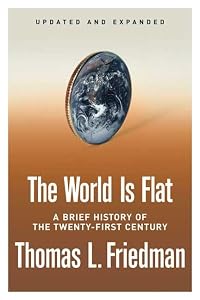
The World Is Flat: A Brief History of the Twenty-First Century
by Thomas L. Friedman
On This Page
Description
"One mark of a great book is that it makes you see things in a new way, and Mr. Friedman certainly succeeds in that goal," the Nobel laureate Joseph E. Stiglitz wrote in The New York Times, reviewing The World is Flat in 2005. With his inimitable ability to translate complex foreign policy and economic issues, Friedman brilliantly demystifies the new flat world for listeners, making sense of the advances in technology and communications that challenge us to run even faster just to stay in show more place. For these updated and expanded editions, Friedman has added more hours of commentary, fresh stories and insights. New material includes:- A mapping of the New Middle—the places and spaces in the flat world where middle-class jobs will be found—and portraits of the character types who will find success as New Middlers
- An account of the qualities American parents and teachers need to cultivate in young people so that they will be able to thrive in the flat world
- An account of the "globalization of the local": how the flattening of the world is actually strengthening local and regional identities rather than homogenizing the world
More than ever, The World Is Flat is an essential update on globalization, its successes and discontents, powerfully illuminated by one of our most respected journalists.
Tags
Recommendations
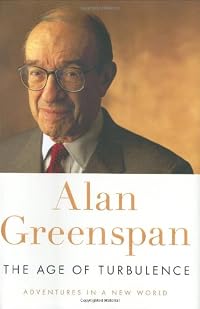

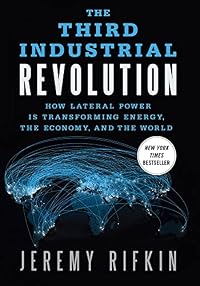
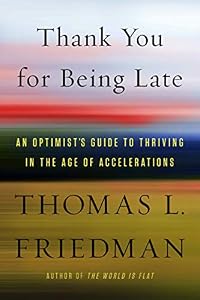
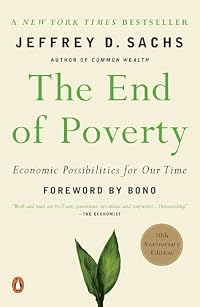





Member Recommendations
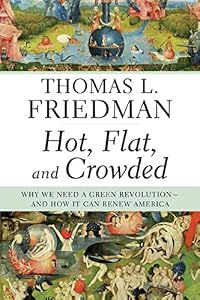
Hot, Flat, and Crowded: Why We Need a Green Revolution and How It Can Renew America by Thomas L. Friedman
skyiscool Hot, Flat, and Crowded builds off many of the topics that Friedman presents in The World Is Flat. Although both books adequately stand on their own, they together form an informed and powerful worldview.
11
Rigour Read the Communist Manifesto to truly understand globalization (whatever your personal ideology is).
11
Member Reviews
I tried to plow through this book, but Thomas Friedman is the most brain-dead parrot of the ruling class I have ever known, so I couldn't finish it.
His view of globalization is that now, thanks to the paternalistic global order constructed by US multinational corporations, there is cultural and monetary things of worth out there in the vast unexplored jungles of savagery called "not the United States." As an ahistorical text that ignores the fact that elites have been trading from Occident to and from Orient for hundreds of years, the book ignores entirely the poor.
How wonderful it is to be ruling class in this new era, where poor people from all over the world can service the rich like Friedman. What an asshole.
Recommended for: show more fireplaces, doors that need stopping, houses without coasters, etc. show less
His view of globalization is that now, thanks to the paternalistic global order constructed by US multinational corporations, there is cultural and monetary things of worth out there in the vast unexplored jungles of savagery called "not the United States." As an ahistorical text that ignores the fact that elites have been trading from Occident to and from Orient for hundreds of years, the book ignores entirely the poor.
How wonderful it is to be ruling class in this new era, where poor people from all over the world can service the rich like Friedman. What an asshole.
Recommended for: show more fireplaces, doors that need stopping, houses without coasters, etc. show less
It is a good, optimistic read on a variety of fronts. Unfortunately, he got a big one wrong in citing the so-called McDonalds Theory.
In 1909, an English author named Norman Angell wrote a book titled "The Great Illusion" which he won a Noble Peace Prize in 1933. His primary argument was that the commercial and industrial interconnectedness of Europe and its peripheral nations such as the US and Canada would make war too destructive to bear and was thus a powerful deterrent against war. Many readers overshot and believed all the way until Germany invaded Belgium in 1914 that war was impossible. Even afterwards, all were convinced by Angell's arguments that war would be short and sweet. Unfortunately, that very narrow approach to social show more conflict which thinks everything spins around economics, was sadly mistaken and a whole generation of Europeans was wiped out, with the remainder losing faith in any of the buttresses that had made their civilizations great - God, country, family, rationality.
The McDonalds theory states the same principle. The McDonalds theory states that if 2 countries both have a McDonalds they are unlikely to war on each other as the presence of a McDonalds implies an advanced set of economic, social and legal preconditions and economic interconnectedness. By viewing increasing commercial ties as a basis for international diplomacy, Friedman shows a definite lack of awareness of world history. Reality and history both show us that while increased commercial relations may provide a braking action toward conflict, it is not a principle factor in most scenarios. One can see how India and Pakistan both having McDonalds hasn't affected their animosity. Unfortunately, both having McDonalds does not correlate to economic interdependence. China is making aggressive territorial moves, yet it is highly interconnected with all of those same neighbors. WW1 saw European civilization commit suicide over national prestige. WW2 saw Europe take the whole world down as a result of its interconnectedness. Europe's economy was so completely blasted, it took 30 years and billions in foreign aid and investment to get it back on its feet.
While I have nothing against free trade and globalization, let's not overstate its impact on the decision makers. show less
In 1909, an English author named Norman Angell wrote a book titled "The Great Illusion" which he won a Noble Peace Prize in 1933. His primary argument was that the commercial and industrial interconnectedness of Europe and its peripheral nations such as the US and Canada would make war too destructive to bear and was thus a powerful deterrent against war. Many readers overshot and believed all the way until Germany invaded Belgium in 1914 that war was impossible. Even afterwards, all were convinced by Angell's arguments that war would be short and sweet. Unfortunately, that very narrow approach to social show more conflict which thinks everything spins around economics, was sadly mistaken and a whole generation of Europeans was wiped out, with the remainder losing faith in any of the buttresses that had made their civilizations great - God, country, family, rationality.
The McDonalds theory states the same principle. The McDonalds theory states that if 2 countries both have a McDonalds they are unlikely to war on each other as the presence of a McDonalds implies an advanced set of economic, social and legal preconditions and economic interconnectedness. By viewing increasing commercial ties as a basis for international diplomacy, Friedman shows a definite lack of awareness of world history. Reality and history both show us that while increased commercial relations may provide a braking action toward conflict, it is not a principle factor in most scenarios. One can see how India and Pakistan both having McDonalds hasn't affected their animosity. Unfortunately, both having McDonalds does not correlate to economic interdependence. China is making aggressive territorial moves, yet it is highly interconnected with all of those same neighbors. WW1 saw European civilization commit suicide over national prestige. WW2 saw Europe take the whole world down as a result of its interconnectedness. Europe's economy was so completely blasted, it took 30 years and billions in foreign aid and investment to get it back on its feet.
While I have nothing against free trade and globalization, let's not overstate its impact on the decision makers. show less
In 2006, Time named "You" its Person of the Year - an acknowledgment that user-generated content is increasingly driving the decentralization and spread of information today. Technology has empowered everyone who is connected to be a provider, not just passive consumer, of their own information. And it is from this equidistance and legitimation by technology, Friedman argues, that the world has become flat.
He's wrong, of course, and he's too in love with his own free market capitalist narrative of a flat world to be able to see so. Perhaps a more honest title would be 'The Market is Flat,' or 'First World Industrialized Countries are Flat.' He brushes off such criticisms in the introduction with "I know the world is not actually flat," show more but proceeds without actually keeping this in mind. The world is not flat because only countries and industries who are already engaged in and validated by the global market get to participate; with an increasingly competitive global market, emerging and developing nations and industries have an even more narrow gap into which to enter.
And even within the countries and industries who are participants in the global market, the world is not flat because so many of these enterprises are built upon such bald-faced exploitation of individuals. Friedman's two favorite examples of the flattening of the world are Walmart and China. (Actually, that alone should tell you a ton about this book.) He presents the flat world as being empowering, somehow, but under such ruthless systems of capitalism, individuals are becoming increasingly more commodified and fungible. Maybe everything and everyone looks flat from the view at the top, but it is a horrifying viewpoint to espouse that the world's flattening is a good thing because people can now be exploited and dehumanized more efficiently than ever.
Friedman also comes across as surprisingly conservative with regards to America's place in the global market: he is traditionally competitive and concerned with how America will continue to fare, with strong undertones of an Us versus Them mentality. And I wish that he had exhibited the self-awareness to recognize this, as it raises the question of whether 'America' (both the nation and the idea) is even relevant anymore to Friedman's flat world idealization. He apparently thinks it is; I don't know how he continues to justify that. Unless he takes pleasure in the idea that the world is becoming increasingly flatter in order to accommodate America's hyper-capitalist growth (eg, America's use of India for customer service). Ultimately, Friedman seems to be in love with the idea of a new Cold War between China and America, competing for who can slash prices fastest and own the world first. Unfortunately, he seems to lose sight of other values - humanity, for one. The confirmation bias and privilege inherent in his hypothesis that the world is flat are amazingly myopic and egregiously offensive. show less
He's wrong, of course, and he's too in love with his own free market capitalist narrative of a flat world to be able to see so. Perhaps a more honest title would be 'The Market is Flat,' or 'First World Industrialized Countries are Flat.' He brushes off such criticisms in the introduction with "I know the world is not actually flat," show more but proceeds without actually keeping this in mind. The world is not flat because only countries and industries who are already engaged in and validated by the global market get to participate; with an increasingly competitive global market, emerging and developing nations and industries have an even more narrow gap into which to enter.
And even within the countries and industries who are participants in the global market, the world is not flat because so many of these enterprises are built upon such bald-faced exploitation of individuals. Friedman's two favorite examples of the flattening of the world are Walmart and China. (Actually, that alone should tell you a ton about this book.) He presents the flat world as being empowering, somehow, but under such ruthless systems of capitalism, individuals are becoming increasingly more commodified and fungible. Maybe everything and everyone looks flat from the view at the top, but it is a horrifying viewpoint to espouse that the world's flattening is a good thing because people can now be exploited and dehumanized more efficiently than ever.
Friedman also comes across as surprisingly conservative with regards to America's place in the global market: he is traditionally competitive and concerned with how America will continue to fare, with strong undertones of an Us versus Them mentality. And I wish that he had exhibited the self-awareness to recognize this, as it raises the question of whether 'America' (both the nation and the idea) is even relevant anymore to Friedman's flat world idealization. He apparently thinks it is; I don't know how he continues to justify that. Unless he takes pleasure in the idea that the world is becoming increasingly flatter in order to accommodate America's hyper-capitalist growth (eg, America's use of India for customer service). Ultimately, Friedman seems to be in love with the idea of a new Cold War between China and America, competing for who can slash prices fastest and own the world first. Unfortunately, he seems to lose sight of other values - humanity, for one. The confirmation bias and privilege inherent in his hypothesis that the world is flat are amazingly myopic and egregiously offensive. show less
http://pixxiefishbooks.blogspot.com/2...
All you need to know about this book is summarized thus: Ugh.
For those of you who feel that isn't an adequate review, read on:
I was looking forward to reading this book. It had been recommended to me by a few people, and I kept seeing it at bookstores - even those bookstores that only sell a handful of English-language books. But the fact it was alongside Danielle Steele and Da Vinci's Code* should have tipped me off.
I made it through 300-some pages, so 2/3 of the way through, before I decided enough was enough, that I had much more worthy books on my shelf, and I wasn't going to read it anymore. The problem was, I didn't like the book from about page 5! I was giving Friedman the benefit of the show more doubt. I thought he might change! Alas, I can be too patient of a reader sometimes.
Friedman is a columnist at the New York Times and I guess his The Lexus and the Olive Tree is considered (by some, at least) to be the definitive work on the Middle East. Well, all I can say is that I hope it is better-researched and more critical than The World is Flat. This book reads like a long, lengthy, never-ending magazine article. And, with all due respect to magazine writers, here we have an incredibly BAD magazine article. He has lengthy quotes from various players in the global market, but they are all CEOs and other people who have already bought into the 'flat world' way of thinking. In other words, Friedman seems to have only spoken to people who already agree with his thesis. That just doesn't 'do it' for me.
I need to start reading with sticky-tabs handy. There were many sentences and paragraphs that made me snort derisively, and I wish I could find one now to share with you. The amount of times Friedman pointed something out that was either blatantly obvious or blatantly one-sided just made me cringe. What? He's going to spend another 550 pages telling me businesses need to go global, that they can't do it all themselves and remain economically efficient? Tell me something I don't know. Or at least, tell me in a way that could possibly garner some debate. Maybe - here's a radical idea - maybe tell me what an anti-globalization activist thinks of his 'flat world' inevitability. How about those countries who have yet been unable to jump onto the globalization bandwagon (for ex., swathes of Africa)? Oh, the world exists only of the United States, India, China and Bangladesh. I see. Am I really supposed to swallow the line that outsourcing American accounting to Indian accountants is good for everyone because now Indian accountants can stay in India and be employed (the fact that the Indian wage is a fraction of the American wage is discussed no further by Friedman other than as a statement of fact) while the American accountant can exercise his true talents of more complicated accounting (ie., rather than just straightening out Friedman's taxes once a year, he can sit down with Friedman and figure out how to best shelter Friedman's income from taxes). How about paying a bit of lip service to the other side of the coin? Isn't that what journalism should be about??? No, Friedman has already written off anyone who doesn't see globalization as the future. And that's just lazy writing, as far as I'm concerned.
If anyone knows a good book on globalization, please let me know. But this sure ain't it. Keep your $17 (what I wasted on it).
* OK, I'm sure Da Vinci's Code is a good book and shouldn't be tossed in with Danielle Steele. But it's just disgustingly everywhere!!! show less
All you need to know about this book is summarized thus: Ugh.
For those of you who feel that isn't an adequate review, read on:
I was looking forward to reading this book. It had been recommended to me by a few people, and I kept seeing it at bookstores - even those bookstores that only sell a handful of English-language books. But the fact it was alongside Danielle Steele and Da Vinci's Code* should have tipped me off.
I made it through 300-some pages, so 2/3 of the way through, before I decided enough was enough, that I had much more worthy books on my shelf, and I wasn't going to read it anymore. The problem was, I didn't like the book from about page 5! I was giving Friedman the benefit of the show more doubt. I thought he might change! Alas, I can be too patient of a reader sometimes.
Friedman is a columnist at the New York Times and I guess his The Lexus and the Olive Tree is considered (by some, at least) to be the definitive work on the Middle East. Well, all I can say is that I hope it is better-researched and more critical than The World is Flat. This book reads like a long, lengthy, never-ending magazine article. And, with all due respect to magazine writers, here we have an incredibly BAD magazine article. He has lengthy quotes from various players in the global market, but they are all CEOs and other people who have already bought into the 'flat world' way of thinking. In other words, Friedman seems to have only spoken to people who already agree with his thesis. That just doesn't 'do it' for me.
I need to start reading with sticky-tabs handy. There were many sentences and paragraphs that made me snort derisively, and I wish I could find one now to share with you. The amount of times Friedman pointed something out that was either blatantly obvious or blatantly one-sided just made me cringe. What? He's going to spend another 550 pages telling me businesses need to go global, that they can't do it all themselves and remain economically efficient? Tell me something I don't know. Or at least, tell me in a way that could possibly garner some debate. Maybe - here's a radical idea - maybe tell me what an anti-globalization activist thinks of his 'flat world' inevitability. How about those countries who have yet been unable to jump onto the globalization bandwagon (for ex., swathes of Africa)? Oh, the world exists only of the United States, India, China and Bangladesh. I see. Am I really supposed to swallow the line that outsourcing American accounting to Indian accountants is good for everyone because now Indian accountants can stay in India and be employed (the fact that the Indian wage is a fraction of the American wage is discussed no further by Friedman other than as a statement of fact) while the American accountant can exercise his true talents of more complicated accounting (ie., rather than just straightening out Friedman's taxes once a year, he can sit down with Friedman and figure out how to best shelter Friedman's income from taxes). How about paying a bit of lip service to the other side of the coin? Isn't that what journalism should be about??? No, Friedman has already written off anyone who doesn't see globalization as the future. And that's just lazy writing, as far as I'm concerned.
If anyone knows a good book on globalization, please let me know. But this sure ain't it. Keep your $17 (what I wasted on it).
* OK, I'm sure Da Vinci's Code is a good book and shouldn't be tossed in with Danielle Steele. But it's just disgustingly everywhere!!! show less
This book was originally published in 2005 and updated in 2007. I read the 2007 edition. I know it is not a newly published work, but reading it now gives the reader a look back at the 'good old days' before the Great Recession. This book is a discussion of globalization and how it has changed life in the twenty-first century. A lot has changed in the three years since this book was published. Sometimes it is hard to remember what it was like back in the good old days.
When I began to read this book (which was more than six months ago- I've been very busy with school), it seemed as if Friedman was a crazy cheerleader for globalization and classical economics. But, the more I read the more it seems like he was a crazy optimist for show more globalization and what it could do for humanity if it was done with some sort of ethical tone to it. I agree with some of his ideas and disagree with others but overall this is a good book to read if for nothing more than a history lesson of just how fantastic and rosy things seemed before the economy collapsed in 2007. Of course, hindsight is 20/20, but he completely leaves out any mention of the economic boom being fueled by the real estate bubble. Were we really so blind back then?
One especially glaring example of this is Friedman's characterization of Ireland as the economy that was doing everything right. They did do some things right like investing in the education of their people, but the growth was based on the ethereal real estate and derivatives market. Ireland was at the top of the world and now they are worse off than they were before they started their amazing race to the top. I'm sure there are similar examples of this same type of thing from the 1920s before the Great Depression.
Friedman does, however, have some great ideas about educational reform. Sadly though, these ideas are not really new. I just finished another book, Teaching as a Subversive Activity, that had many of the same ideas and it was published in 1969 (Review to come...). These ideas seem so simple but have been very difficult to implement (teach innovation and critical thinking, allow imagination to flourish). But, that's another soap box for another review.
Overall, this is a really interesting read that I would have finished much sooner if not for those darn books I had to read for classes. I would recommend it to everyone because much of what he discusses will affect the reader (if it hasn't already) in this new, flat world.
A definite recommend. show less
When I began to read this book (which was more than six months ago- I've been very busy with school), it seemed as if Friedman was a crazy cheerleader for globalization and classical economics. But, the more I read the more it seems like he was a crazy optimist for show more globalization and what it could do for humanity if it was done with some sort of ethical tone to it. I agree with some of his ideas and disagree with others but overall this is a good book to read if for nothing more than a history lesson of just how fantastic and rosy things seemed before the economy collapsed in 2007. Of course, hindsight is 20/20, but he completely leaves out any mention of the economic boom being fueled by the real estate bubble. Were we really so blind back then?
One especially glaring example of this is Friedman's characterization of Ireland as the economy that was doing everything right. They did do some things right like investing in the education of their people, but the growth was based on the ethereal real estate and derivatives market. Ireland was at the top of the world and now they are worse off than they were before they started their amazing race to the top. I'm sure there are similar examples of this same type of thing from the 1920s before the Great Depression.
Friedman does, however, have some great ideas about educational reform. Sadly though, these ideas are not really new. I just finished another book, Teaching as a Subversive Activity, that had many of the same ideas and it was published in 1969 (Review to come...). These ideas seem so simple but have been very difficult to implement (teach innovation and critical thinking, allow imagination to flourish). But, that's another soap box for another review.
Overall, this is a really interesting read that I would have finished much sooner if not for those darn books I had to read for classes. I would recommend it to everyone because much of what he discusses will affect the reader (if it hasn't already) in this new, flat world.
A definite recommend. show less
While reading this book, I could not help thinking about how many of the topics Friedman discusses correspond to many of the topics that Barack Obama posited in his campaign. Since both men brought so many issues to the fore, I was trying to figure out if there was a single word that could sum up their stances. I loathe stealing Obama's line, but the only word I could come up with was change. The fact is that the world is not only changing right before our eyes, but it will continue to change drastically as we move along. Both Obama and Friedman are trying to prepare us for the changes that have already taken place as well as the changes that are still to come.
The main focus of this book is globalization. The overall feeling I got from show more reading it was that now is not the time to debate whether or not globalization is good for the economy or for society - that time has passed long ago. Now is the time to figure out how to use it most effectively, creatively, and intelligently. We cannot bury our heads in the sand and go on as if we are still living in the industrial economy. We have to realize that we are in another revolution that will challenge all of our assumptions about dividing lines, land boundaries, intelligence, priorities, and peoples.
Through research, interviews, and travels, Friedman points out the flatness of the world over and over again. Also, he painstakingly tells of how it got to be that way from the dot-com boom and the laying of the fiber optic cables to outsourcing and supply-chaining. He makes a strong case and puts the answers into the readers hands effortlessly, leaving no doubt that he knows what he is talking about.
While I could go on about how the United States is missing major opportunities to be the major player in the globalization game (starting with creating a large crop of engineers and scientist, which has drastically declined in the education pool since the 1960s), it is the geopolitical implications that struck me the most. More than ever, countries are going to have to work together to create an environment which will allow as many individuals as possible to contribute to society. And that includes finding ways to get underdeveloped countries involved - not an easy task. Friedman made a poignant statement that stayed with me. He said, "The developed will be challenged by the underdeveloped much more profoundly. I worry, because so much political stability is built on economic stability, and economic stability is not going to be a feature of the flat world."
Reading this book three years after it was published has been an experience. Part of me wishes I had read it earlier, but another part of me is glad I waited. In waiting, I have been able to see how the events that were predicted actually unfolded. I have been able to see exactly in which ways Friedman has been correct and how his view of the changes in our world has come to pass. Friedman has brought great insight to this subject, has done his research, and is daily being proven correct. Now the question that remains is: Will we listen? show less
The main focus of this book is globalization. The overall feeling I got from show more reading it was that now is not the time to debate whether or not globalization is good for the economy or for society - that time has passed long ago. Now is the time to figure out how to use it most effectively, creatively, and intelligently. We cannot bury our heads in the sand and go on as if we are still living in the industrial economy. We have to realize that we are in another revolution that will challenge all of our assumptions about dividing lines, land boundaries, intelligence, priorities, and peoples.
Through research, interviews, and travels, Friedman points out the flatness of the world over and over again. Also, he painstakingly tells of how it got to be that way from the dot-com boom and the laying of the fiber optic cables to outsourcing and supply-chaining. He makes a strong case and puts the answers into the readers hands effortlessly, leaving no doubt that he knows what he is talking about.
While I could go on about how the United States is missing major opportunities to be the major player in the globalization game (starting with creating a large crop of engineers and scientist, which has drastically declined in the education pool since the 1960s), it is the geopolitical implications that struck me the most. More than ever, countries are going to have to work together to create an environment which will allow as many individuals as possible to contribute to society. And that includes finding ways to get underdeveloped countries involved - not an easy task. Friedman made a poignant statement that stayed with me. He said, "The developed will be challenged by the underdeveloped much more profoundly. I worry, because so much political stability is built on economic stability, and economic stability is not going to be a feature of the flat world."
Reading this book three years after it was published has been an experience. Part of me wishes I had read it earlier, but another part of me is glad I waited. In waiting, I have been able to see how the events that were predicted actually unfolded. I have been able to see exactly in which ways Friedman has been correct and how his view of the changes in our world has come to pass. Friedman has brought great insight to this subject, has done his research, and is daily being proven correct. Now the question that remains is: Will we listen? show less
This book was a real eye-opener for me. It's a very upbeat and optimistic treatment of the causes and effects of globalisation, but I found most of the arguments very compelling.
It could have done with a little trimming - this is the second edition, and was expanded to include new content, but at times I felt that some points were reiterated a little too often and that a few anecdotes could perhaps have been left out without damaging the end result.
It's unapologetically US-centric, as the author is quite openly using the book as a platform to argue for changes in US education and economic policies which he believes are necessary for the US to take advantage of the changes globalisation brings.
All in all though, I found this to be an show more engrossing read. It will date badly, but despite this (and its other faults) I think it's worth a high score simply for the way in which it helped me examine the topic more closely than before. show less
It could have done with a little trimming - this is the second edition, and was expanded to include new content, but at times I felt that some points were reiterated a little too often and that a few anecdotes could perhaps have been left out without damaging the end result.
It's unapologetically US-centric, as the author is quite openly using the book as a platform to argue for changes in US education and economic policies which he believes are necessary for the US to take advantage of the changes globalisation brings.
All in all though, I found this to be an show more engrossing read. It will date badly, but despite this (and its other faults) I think it's worth a high score simply for the way in which it helped me examine the topic more closely than before. show less
Members
- Recently Added By
Published Reviews
ThingScore 50
Friedman describes his honest reaction to this new world while he's at one of India's great outsourcing companies, Infosys. He was standing, he says, ''at the gate observing this river of educated young people flowing in and out.… They all looked as if they had scored 1600 on their SAT's."
added by mikeg2 — edited by Muscogulus
On an ideological level, Friedman's new book is the worst, most boring kind of middlebrow horseshit. If its literary peculiarities could somehow be removed from the equation, The World Is Flat would appear as no more than an unusually long pamphlet replete with the kind of plug-filled, free-trader leg-humping that passes for thought in this country. It is a tale of a man who walks 10 feet in show more front of his house armed with a late-model Blackberry and comes back home five minutes later to gush to his wife that hospitals now use the internet to outsource the reading of CAT scans. Man flies on planes, observes the wonders of capitalism, says we're not in Kansas anymore. (He actually says we're not in Kansas anymore.) That's the whole plot right there. If the underlying message is all that interests you, read no further, because that's all there is. show less
added by dchaikin — edited by Muscogulus
Lists

Books bought at library sales
98 works; 4 members

Top Five Books of 2014
1,064 works; 397 members

Unread books
1,063 works; 83 members

Best General History Books
50 works; 22 members

Reading list
170 works; 1 member
The Great Courses: Earth at the Crossroads
48 works; 1 member

Mind Expanding Books by hackerkid
581 works; 8 members

If Books Could Kill Podcast
50 works; 1 member

My List
302 works; 1 member

Favourite Books
1,817 works; 316 members
Author Information

19+ Works 28,846 Members
Journalist Thomas L. Friedman was born in 1953 in Minneapolis, Minnesota. Friedman graduated from Brandeis University with a degree in Mediterranean Studies and earned a graduate degree from Oxford in Modern Middle East Studies. His reporting on the war in Lebanon won the George Polk Award, the Pulitzer Prize, and the Livingston Award for Young show more Journalists. He won a second Pulitzer for his work in Israel. Friedman began his career as a correspondent for United Press International and later served as bureau chief for the New York Times in Beirut and Jerusalem. He moved to the op-ed page of The New York Times as a foreign affairs columnist. In 2002, Friedman won his third Pulitzer Prize, this time for Commentary. Friedman wrote about his experiences as a Jewish-American reporter in the Middle East in From Beirut to Jerusalem, which won the National Book Award in 1989. The bestselling Lexus and the Olive Tree won the 2000 Overseas Press Club Award for best nonfiction book on foreign policy. He wrote Longitudes and Attitudes: Exploring the World After September 11 and The World Is Flat, which received the first Financial Times and Goldman Sachs Business Book of the Year Award. His other works include Hot, Flat, and Crowded, Hot, Flat, and Crowded 2.0, and That Used to Be Us which made The New York Times Best Seller List for 2012. His title, Thank You for Being Late, made the New York Times Best Seller List in 2016. (Bowker Author Biography) show less
Some Editions
Awards and Honors
Awards
Distinctions
Series
Belongs to Publisher Series
Work Relationships
Contains
Common Knowledge
- Canonical title
- The World Is Flat: A Brief History of the Twenty-First Century
- Original title
- The World Is Flat: A Brief History of the Twenty-first Century
- Alternate titles*
- 世界是平的:把握這個趨勢,在21世紀才有競爭力
- Original publication date
- 2005-04-05
- Important places
- India; USA; Middle East; China; Bangalore, India
- Dedication
- To Matt and Kay and to Ron
- First words
- No one ever gave me directions like this on a golf course before: "Aim at either Microsoft or IBM."
Why go through the trouble of writing an expanded and updated version of The World is Flatonly a year after the book was first published? • • Introduction to the Updated and Expanded Edition - Last words
- (Click to show. Warning: May contain spoilers.)While your lives have been powerfully shaped by 9/11, the world needs you to be forever the generation of 11/9—the generation of strategic optimists, the generation with more dreams than memories, the generation that wakes up each morning and not only imagines that things can be better but also acts on that imagination every day.
(Click to show. Warning: May contain spoilers.)Give me just one hundred examples like Aramex, and I will start to give you a different context—and narrative. • • Conclusion in the Updated and Expanded Edition - Blurbers
- Stiglitz, Joseph E.; Bass, Warren; Zakaria, Fareed; Wright, Robert; Grayling, A.C.
- Canonical DDC/MDS
- 303.4833; 330
*Some information comes from Common Knowledge in other languages. Click "Edit" for more information.
Classifications
- Genres
- Economics, General Nonfiction, Business, Nonfiction, History
- DDC/MDS
- 303.4833 — Social sciences Social sciences, sociology & anthropology Social processes Social change Causes of change Development of science and technology Communication
- LCC
- HM846 .F74 — Social sciences Sociology (General) Sociology Social change
- BISAC
Statistics
- Members
- 13,867
- Popularity
- 540
- Reviews
- 171
- Rating
- (3.68)
- Languages
- 18 — Arabic, Czech, Dutch, English, Finnish, French, German, Hungarian, Indonesian, Italian, Japanese, Lithuanian, Norwegian (Bokmål), Polish, Portuguese, Spanish, Turkish, Chinese, traditional
- Media
- Paper, Audiobook, Ebook
- ISBNs
- 72
- ASINs
- 37