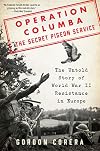
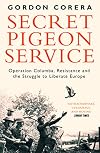
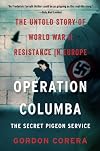
Operation Columba--The Secret Pigeon Service: The Untold Story of World War II Resistance in Europe
by Gordon Corera
On This Page
Description
The fascinating, untold story of how British intelligence secretly used homing pigeons as part of a clandestine espionage operation to gather information, communicate, and coordinate with members of the Resistance to defeat the Nazis in occupied Europe during World War II.Between 1941 and 1944, British intelligence dropped sixteen thousand homing pigeons in an arc across Nazi-occupied Europe, from Bordeaux, France to Copenhagen, Denmark, as part of a spy operation code-named Columba. show more Returning to MI14, the secret government branch in charge of the "Special Pigeon Service," the birds carried messages that offered a glimpse of life under the Germans in rural France, Holland, and Belgium. Written on tiny pieces of rice paper tucked into canisters and tied to the birds' legs, these messages were sometimes comic, often tragic, and occasionally invaluable—reporting details of German troop movements and fortifications, new Nazi weapons, radar systems, and even the deployment of the feared V-1 and V-2 rockets used to terrorize London.
The people who sent these messages were not trained spies. They were ordinary men and women willing to risk their lives in the name of freedom, including the "Leopold Vindictive" network—a small group of Belgian villagers led by an extraordinary priest named Joseph Raskin. The intelligence Raskin sent back by pigeon proved so valuable that it reached Churchill and MI6 parachuted agents behind enemy lines to assist him.
Gordon Corera uses declassified documents and extensive original research to tell the story of the Operation Columba and the Secret Pigeon Service for the first time. A powerful tale of wartime espionage, bitter rivalries, extraordinary courage, astonishing betrayal, harrowing tragedy, and a quirky, quarrelsome band of spy masters and their special mission, Operation Columba opens a fascinating new chapter in the annals of World War II. It is ultimately, the story of how, in one of the darkest and most dangerous times in history, under threat of death, people bravely chose to resist.
. show less
Tags
Recommendations











Member Recommendations
Member Reviews
I am slightly wary of posting this review on 1 April as I recognise that some people might wonder whether the book is genuine. It is indeed an authentic history of the use of pigeons by the intelligence services during the war. At the behest of MI6, thousands of carrier pigeons were dropped in small crates over territory occupied by the Germans during the Second World War.
These crates came complete with tiny parachutes, and each contained a carrier pigeon, a small supply of food and a message in the local language requesting that whoever might find the bird should feed it, and then affix messages and descriptions of any local German army or air force installations. Of course, many crates landed without being found, leaving the poor show more occupant to die of thirst and hunger. Many more were intercepted by German soldiers, while still more were discovered but, in a time of severe food shortages, ended up in a grateful recipient’s oven. Still, a considerable number were discovered by locals who, at great risk to themselves, took the pigeons home, and prepared notes to be sent back to Britain, where a network had been established to collate and process the information provided. This was, of course, far from fool proof, and there was no reliable way of sifting genuine intelligence material provided by members of the Resistance from deliberate misinformation sent by Germans.
This all now seems somehow very twee, and almost desperate, but at the time of the Second World War, pigeon owning was far more common in Britain and Western Europe, especially so in Belgium, whence much of the most useful intelligence originated. Pigeon fanciers across the United Kingdom agreed to surrender some of their finest birds to help the war effort.
Gordon Corera is perhaps best known as the Security and intelligence correspondent for the BBC, and it is clear that he has had access to some very detailed, and presumably generally inaccessible, records. His book is well written, and sheds a fascinating insight into this little-known aspect of the intelligence gathering mechanisms from the war.
My one slight cavil about the book is that he seems to be stretching to make a free-standing work out of it. I wonder whether it might have worked better in a slightly condensed form as a couple of chapters in a longer history of intelligence work. show less
These crates came complete with tiny parachutes, and each contained a carrier pigeon, a small supply of food and a message in the local language requesting that whoever might find the bird should feed it, and then affix messages and descriptions of any local German army or air force installations. Of course, many crates landed without being found, leaving the poor show more occupant to die of thirst and hunger. Many more were intercepted by German soldiers, while still more were discovered but, in a time of severe food shortages, ended up in a grateful recipient’s oven. Still, a considerable number were discovered by locals who, at great risk to themselves, took the pigeons home, and prepared notes to be sent back to Britain, where a network had been established to collate and process the information provided. This was, of course, far from fool proof, and there was no reliable way of sifting genuine intelligence material provided by members of the Resistance from deliberate misinformation sent by Germans.
This all now seems somehow very twee, and almost desperate, but at the time of the Second World War, pigeon owning was far more common in Britain and Western Europe, especially so in Belgium, whence much of the most useful intelligence originated. Pigeon fanciers across the United Kingdom agreed to surrender some of their finest birds to help the war effort.
Gordon Corera is perhaps best known as the Security and intelligence correspondent for the BBC, and it is clear that he has had access to some very detailed, and presumably generally inaccessible, records. His book is well written, and sheds a fascinating insight into this little-known aspect of the intelligence gathering mechanisms from the war.
My one slight cavil about the book is that he seems to be stretching to make a free-standing work out of it. I wonder whether it might have worked better in a slightly condensed form as a couple of chapters in a longer history of intelligence work. show less
Operation Columba: The Secret Pigeon Service by Gordon Corera details a fascinating time in British military history when patriotism took flight.
The book is as suspenseful as any John le Carré or Graham Greene novel. It’s a true British spy story about the pigeon carriers who flew messages, intelligence gatherings and tiny maps across the English Channel during WWII.
Like all espionage sagas, surveillance, sabotage, refugees and spies are involved, as well as messenger pigeons who infiltrate German-occupied Europe while engaging in dogfights with German hawks.
The story’s action is structured around the British Army’s Special Pigeon Service and the heroic tale of “Leopold Vindictive”, a network of Belgian farmers led by the show more priest Joseph Raskin. The resistance group became amateur secret agents when they found British spy birds in their fields. Attaching tiny notes and maps to their legs, they released them back to England.
Interwoven with the daring accounts of the villagers behind enemy lines are details of the involvement of the Military Intelligence and the Special Operations agents who provided a crucial link with the group.
Corera’s book showcases how each time the pigeons flew across the English Channel, they became a symbol of hope that the countries gripped by the Nazi regime would be eventually free. show less
The book is as suspenseful as any John le Carré or Graham Greene novel. It’s a true British spy story about the pigeon carriers who flew messages, intelligence gatherings and tiny maps across the English Channel during WWII.
Like all espionage sagas, surveillance, sabotage, refugees and spies are involved, as well as messenger pigeons who infiltrate German-occupied Europe while engaging in dogfights with German hawks.
The story’s action is structured around the British Army’s Special Pigeon Service and the heroic tale of “Leopold Vindictive”, a network of Belgian farmers led by the show more priest Joseph Raskin. The resistance group became amateur secret agents when they found British spy birds in their fields. Attaching tiny notes and maps to their legs, they released them back to England.
Interwoven with the daring accounts of the villagers behind enemy lines are details of the involvement of the Military Intelligence and the Special Operations agents who provided a crucial link with the group.
Corera’s book showcases how each time the pigeons flew across the English Channel, they became a symbol of hope that the countries gripped by the Nazi regime would be eventually free. show less
 This review was written for LibraryThing Early Reviewers.
Gordon Corera’s book “Operation Columbia: The Secret Pigeon Service: the untold story of World War II resistance in Europe” is what I needed to read in this time and place. It is a history of war but it is not soaked in blood and misery, at least not human blood and misery. The people whose story this is are an inspiring / amusing / courageous collection of competent (ish) characters. Best of all it exposed me to new information and sparked my curiosity. I knew about Cher Ami, from WWI. I have even seen her taxidermied body in the Smithsonian Museum of American History. I did not know that homing pigeons were used in WWII and beyond. I did not know that after much debate it was decided that, like dogs, pigeons intelligence and show more bravery should be recognized with military awards. Did you know that pigeons were awarded more commendations during WWII than dogs?
Corera’s book was enjoyable, informative, and it made me feel a little respect for carrier pigeons. show less
Corera’s book was enjoyable, informative, and it made me feel a little respect for carrier pigeons. show less
This review was written for LibraryThing Early Reviewers.“The Belgian farmer could see there was something odd in his field… It was early on a July morning in 1941, just over a year after Nazi tanks had swept through the country… [It] was a small container with a length of white material attached… a parachute. Inside he could see a pair of eyes..and the unmistakable sound of a pigeon cooing… Attached to the side of the container was a message – a request for help”.
World War II and history buffs! Gordon Corera’s newest book takes you into the skies over England and Belgium – attached to the leg of a carrier pigeon! This is a well-researched story of Nazi aggression, Britain’s military and intelligence services, Belgium’s brave hometown resistance fighters and the show more thousands of trained homing pigeons battling bullets and bad weather.
Homing pigeons have been popular for hundreds of years, in peacetime, with civilians (nicknamed “pigeon fanciers”) and proved to be an invaluable asset in wartime communication. In 1941, the coastline of Europe is controlled by the Nazi war machine leaving England as a sitting duck for invasion. England was desperate to learn the status of the Nazi preparations to mount an invasion, and later, intelligence was needed for planning their own invasion of Europe allied by the United States.
Agents positioned behind lines in Nazi-controlled Europe had a dangerous, limited and unreliable method of transmitting intelligence in a timely manner via radio. Delivering intelligence information via hand-offs to countries outside Nazi control took months, risked lives, and was months old and practically useless. Desperate times called for desperate measures; hence the development of Project Columba.
Corera sifted through World War II military and intelligence records, letters and correspondence preserved by families of the brave resistance fighters. The result brings those perilous wartime years to life into the homes and lives of the average citizenry of Belgium, into the thickets and fortifications on the beaches, behind bars in the horrors of the Nazi camps, and into the secret enclaves of the British government agencies – often revealing the humanness and warts of those involved on all sides.
Quoting General William Tecumseh Sherman, “War is hell”.
The book is written in an easy to read style. Using the sparse facts available, creates a compelling story of heroism, self-sacrifice, and patriotism of individuals willing to look beyond self for the sake of country.
Fabulous read. Sure to please history buffs.
Advanced Reading Copy in e-book form provided via Edelweiss and a print copy awarded from LibraryThing show less
World War II and history buffs! Gordon Corera’s newest book takes you into the skies over England and Belgium – attached to the leg of a carrier pigeon! This is a well-researched story of Nazi aggression, Britain’s military and intelligence services, Belgium’s brave hometown resistance fighters and the show more thousands of trained homing pigeons battling bullets and bad weather.
Homing pigeons have been popular for hundreds of years, in peacetime, with civilians (nicknamed “pigeon fanciers”) and proved to be an invaluable asset in wartime communication. In 1941, the coastline of Europe is controlled by the Nazi war machine leaving England as a sitting duck for invasion. England was desperate to learn the status of the Nazi preparations to mount an invasion, and later, intelligence was needed for planning their own invasion of Europe allied by the United States.
Agents positioned behind lines in Nazi-controlled Europe had a dangerous, limited and unreliable method of transmitting intelligence in a timely manner via radio. Delivering intelligence information via hand-offs to countries outside Nazi control took months, risked lives, and was months old and practically useless. Desperate times called for desperate measures; hence the development of Project Columba.
Corera sifted through World War II military and intelligence records, letters and correspondence preserved by families of the brave resistance fighters. The result brings those perilous wartime years to life into the homes and lives of the average citizenry of Belgium, into the thickets and fortifications on the beaches, behind bars in the horrors of the Nazi camps, and into the secret enclaves of the British government agencies – often revealing the humanness and warts of those involved on all sides.
Quoting General William Tecumseh Sherman, “War is hell”.
The book is written in an easy to read style. Using the sparse facts available, creates a compelling story of heroism, self-sacrifice, and patriotism of individuals willing to look beyond self for the sake of country.
Fabulous read. Sure to please history buffs.
Advanced Reading Copy in e-book form provided via Edelweiss and a print copy awarded from LibraryThing show less
This review was written for LibraryThing Early Reviewers.Not just a story about pigeons during World War II, it is also the story of a brave group of Belgian civilians who gathered valuable information, at the risk of paying the ultimate price. I thought this was extremely well written and interesting to read and definitely covered a small niche of the war, giving it a unique perspective. This one is about people and pigeons, not about weapons and armies. Definitely worth reading if just for the human interest stories.
This review was written for LibraryThing Early Reviewers.Operation Columba skillfully balances novel-like interest and detail-focused history. I enjoyed myself every chapter and came out of it with a better understanding of WWII British intelligence as well as a great deal of the politics between spy agencies. It shifts between discussing resistance cells, the technology behind the operations, the actions and politics of British military intelligence, and the unique world of pigeon keeping in a world war that could make extensive use of them. I feel it focuses a little too much on too small a group of resistance conspirators, but it's understandable considering that's how the writer gained initial interest in the topic.
If the topic sounds remotely interesting to you, you won't be disappointed show more by reading it. The story is rich and criminally under-told, I recommend it profusely to anyone with an interest in the second world war or the history of military intelligence. show less
If the topic sounds remotely interesting to you, you won't be disappointed show more by reading it. The story is rich and criminally under-told, I recommend it profusely to anyone with an interest in the second world war or the history of military intelligence. show less
This review was written for LibraryThing Early Reviewers.A well researched account of the British "pigeon warfare" efforts during the Second World War (with some glances at the pigeon efforts by other nations in both that conflict and earlier affairs). Mostly an excellent account, though I confess there were points at which I wanted more about the pigeons and their efforts and less on the bureaucratic background. Definitely a worthwhile story, though, and a book I quite enjoyed.
This review was written for LibraryThing Early Reviewers.Members
- Recently Added By
Author Information

8 Works 905 Members
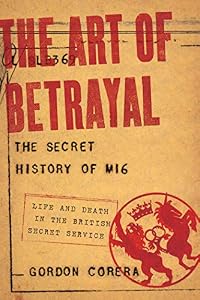
Gordon Corera is a Security Correspondent for BBC News. He has presented major documentaries for the BBC on cybersecurity. He also the author of The Art of Betrayal. Gordon lives in London.
Classifications
Statistics
- Members
- 182
- Popularity
- 177,999
- Reviews
- 27
- Rating
- (3.87)
- Languages
- Dutch, English
- Media
- Paper, Audiobook, Ebook
- ISBNs
- 14
- ASINs
- 4