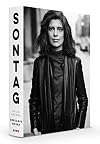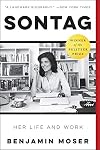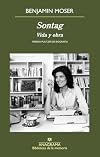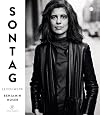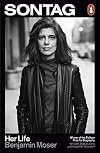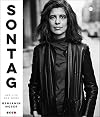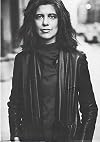
Sontag: Her Life and Work
by Benjamin Moser
On This Page
Description
"Benjamin Moser's Sontag, a biography of Susan Sontag, is a portrait of the iconoclastic and prolific essayist, novelist, and critic and her role in the history of American intellectualism" --Tags
Recommendations














Member Reviews
I am a fan of biographies that are well-written and this is one of the best. Moser weaves the details of Sontag's life in with the ideas that moved her to write in a way that reads like a beautiful novel. The result leaves the reader with the feeling that one knows her from the inside out and shares in her successes, her hesitations, and her ability to embrace the world of ideas as well as the visceral world of human relations.
An exhaustive award winning study of one of the most complex women who ever lived. A darling of the New York literary society who for decades was a Jekyll and Hyde with the people who knew and loved her. She was driven in life by feelings of abandonment by her beautiful mother who was often absent. Sontag treated her son in the same way. She was a lovely woman who was never alone but felt lonely. After a short marriage producing her son all of her other meaningful personal relationships were with women. She would never admit to being bisexual. A really interesting read.
A fine, intense and detailed biography of US intellectual, essayist and novelist Susan Sontag.
Moser dug deep to show the complexity and contradictions of this woman. I can't remember who said that holding two contradictory concepts in the mind suggests adulthood. I am not sure that is the case, as with many, and Sontag, those contradictions are 'the child' and 'the adult'. Far more vulnerable than perceived from the outside, and this vulnerability leading, in later life especially, to bullying behaviour to those around her she was meant to love.
Unquestionably a fine if occasionally flawed mind. Time to revisit some of her essays.
Moser dug deep to show the complexity and contradictions of this woman. I can't remember who said that holding two contradictory concepts in the mind suggests adulthood. I am not sure that is the case, as with many, and Sontag, those contradictions are 'the child' and 'the adult'. Far more vulnerable than perceived from the outside, and this vulnerability leading, in later life especially, to bullying behaviour to those around her she was meant to love.
Unquestionably a fine if occasionally flawed mind. Time to revisit some of her essays.
Sontag: Her Life and Work from Benjamin Moser is both a disappointment and a book I would still recommend. Such is the nature of an authorized biography by a mediocre writer whose reputation was built off of a biography that was largely borrowed, all the way down to chapter titles and narrative structure.
As he did with Lispector, Moser tries to inject himself into the biography through questionable interpretations (of both the psychological nature toward Sontag and the literary nature toward her work). Moser prefers hyperbole and less than verifiable conjecture to writing facts, but at least he didn't claim a rape as fact with no definitive proof as he did in his biography of Lispector. If you read this for the wealth of facts and ideas show more (from others) he presents, which is quite a lot, and just discount his poor attempts at interpreting and trying to create a frame when one is not necessary, this book offers a lot for any fan of Sontag. I do look forward to a biography by a trustworthy biographer at some point, though since this was essentially commissioned by the family there won't be as much new information but perhaps some genuine insight from the writer, which is why we like good biographers.
Because Moser had to do the research here rather than crib a previous biography, he presents a lot of new information. I think the best parts are when we get a perspective from someone about a work or period in Sontag's life that had not been public knowledge previously. The sections based on what people willing (encouraged by the family?) to speak with Moser had to say are by far the most interesting ones.
Sontag was a notoriously difficult person, probably more so than most, but she also offered and gave of herself as well. To those closest to her? Not always. But to those of us who read her and had our own little ongoing debates with her published persona she gave quite a bit. She is one of those writers who you don't have to agree with entirely in order to get something from her work. She insists that you actively engage with her thoughts, that you defend your own if you're going to disagree with hers. That was not common then and is downright rare now. She likely influenced as many people who disagreed with her as those who agreed with her.
I recommend this book to anyone who wants to start filling in gaps in what you know about Sontag. If you aren't very familiar with her work or her life, I still recommend it but not as strongly because of the way Moser wrote it. Susan Sontag deserved much better than him, and I'm sure at some point she will get it. Until then, this is the most comprehensive we have.
Reviewed from a copy made available by the publisher via NetGalley. show less
As he did with Lispector, Moser tries to inject himself into the biography through questionable interpretations (of both the psychological nature toward Sontag and the literary nature toward her work). Moser prefers hyperbole and less than verifiable conjecture to writing facts, but at least he didn't claim a rape as fact with no definitive proof as he did in his biography of Lispector. If you read this for the wealth of facts and ideas show more (from others) he presents, which is quite a lot, and just discount his poor attempts at interpreting and trying to create a frame when one is not necessary, this book offers a lot for any fan of Sontag. I do look forward to a biography by a trustworthy biographer at some point, though since this was essentially commissioned by the family there won't be as much new information but perhaps some genuine insight from the writer, which is why we like good biographers.
Because Moser had to do the research here rather than crib a previous biography, he presents a lot of new information. I think the best parts are when we get a perspective from someone about a work or period in Sontag's life that had not been public knowledge previously. The sections based on what people willing (encouraged by the family?) to speak with Moser had to say are by far the most interesting ones.
Sontag was a notoriously difficult person, probably more so than most, but she also offered and gave of herself as well. To those closest to her? Not always. But to those of us who read her and had our own little ongoing debates with her published persona she gave quite a bit. She is one of those writers who you don't have to agree with entirely in order to get something from her work. She insists that you actively engage with her thoughts, that you defend your own if you're going to disagree with hers. That was not common then and is downright rare now. She likely influenced as many people who disagreed with her as those who agreed with her.
I recommend this book to anyone who wants to start filling in gaps in what you know about Sontag. If you aren't very familiar with her work or her life, I still recommend it but not as strongly because of the way Moser wrote it. Susan Sontag deserved much better than him, and I'm sure at some point she will get it. Until then, this is the most comprehensive we have.
Reviewed from a copy made available by the publisher via NetGalley. show less
Sontag: Her Life and Work
by Benjamin Moser
I received an ARC of this book through the Goodreads giveaway program.
I am not impressed with the level of detail in this book. Moser extends great effort to supply details that are irrelevant to Sontag's life and work. Moser does not make the case that they are relevant in any way. While it's important for a researcher to be meticulous and thorough, including all this detail bogs down the narrative and makes the material impenetrable. It's taken me ages to get through the first half of the book, and I am not a slow reader!
Here are examples of Moser's indulgence: he carries on for two pages about Robert Maynard Hutchins and his vision for a rigorous, merit-based liberal arts education at the show more University of Chicago (where Sontag studied as an undergrad), when a succinct paragraph would have sufficed. He contrasts this with more pages detailing the cutthroat, competitive atmosphere at Harvard (where Sontag pursued her graduate degree), and relates an example of how some Harvard scholars conspired to make a fool out of Jacob Taubes, a visiting professor. Why is this relevant? There's no indication that Sontag was involved in the practical joke, that she was even present when it happened, that Taubes ever discussed the incident with her, or that she even knew about it. Moser goes on for pages about Taubes' wife, Susan Taubes: her background, and the nature of her marriage to Taubes (characterized by disastrous "unorthodox sexual arrangements").
The mark of a good biographer is to do extensive research and then sift through these details to convey the relevant points to the reader. Moser fails miserably in this injunction to self-edit. It is as if Moser just wants to prove to the reader that he did extensive research. He tries to analyze Sontag's character / her motivations / her psyche, but his conclusions are strained. The entire first chapter is a headache to muddle through because it is such a hot mess of gumball machine psychoanalysis. His strong disdain for his subject underlines ever sentence; I am sure many readers interested in this biography are people who revere Sontag , so it's possible Moser is showing disdain to combat that reverence. He also is extremely prudish about anything touching on the subject of sex or sexuality, whether Sontag's or someone else's.
I have no doubt that I will finish this book someday, but for now I've lost interest so I'll put it aside for a while.
~bint show less
by Benjamin Moser
I received an ARC of this book through the Goodreads giveaway program.
I am not impressed with the level of detail in this book. Moser extends great effort to supply details that are irrelevant to Sontag's life and work. Moser does not make the case that they are relevant in any way. While it's important for a researcher to be meticulous and thorough, including all this detail bogs down the narrative and makes the material impenetrable. It's taken me ages to get through the first half of the book, and I am not a slow reader!
Here are examples of Moser's indulgence: he carries on for two pages about Robert Maynard Hutchins and his vision for a rigorous, merit-based liberal arts education at the show more University of Chicago (where Sontag studied as an undergrad), when a succinct paragraph would have sufficed. He contrasts this with more pages detailing the cutthroat, competitive atmosphere at Harvard (where Sontag pursued her graduate degree), and relates an example of how some Harvard scholars conspired to make a fool out of Jacob Taubes, a visiting professor. Why is this relevant? There's no indication that Sontag was involved in the practical joke, that she was even present when it happened, that Taubes ever discussed the incident with her, or that she even knew about it. Moser goes on for pages about Taubes' wife, Susan Taubes: her background, and the nature of her marriage to Taubes (characterized by disastrous "unorthodox sexual arrangements").
The mark of a good biographer is to do extensive research and then sift through these details to convey the relevant points to the reader. Moser fails miserably in this injunction to self-edit. It is as if Moser just wants to prove to the reader that he did extensive research. He tries to analyze Sontag's character / her motivations / her psyche, but his conclusions are strained. The entire first chapter is a headache to muddle through because it is such a hot mess of gumball machine psychoanalysis. His strong disdain for his subject underlines ever sentence; I am sure many readers interested in this biography are people who revere Sontag , so it's possible Moser is showing disdain to combat that reverence. He also is extremely prudish about anything touching on the subject of sex or sexuality, whether Sontag's or someone else's.
I have no doubt that I will finish this book someday, but for now I've lost interest so I'll put it aside for a while.
~bint show less
Another page turner by Attica Locke, Heaven My Home is so much more than a mystery. She weaves a complex story of human relationships and history around the plot. I don't usually like mysteries, but I like her writing because it's about os much more than trying to outwit the detective.
Enjoyed listening to this portrait of one of the few popular "intellectuals" of our time. Saddened--though not, maybe, surprised--by hearing about some of her less attractive characteristics in her role as mother, lover, mentee, etc. And her Tucson roots were a total surprise...
Members
- Recently Added By
Published Reviews
Lists

Lit Lattes Ep 006
12 works; 1 member
Author Information

7+ Works 1,001 Members
Awards and Honors
Awards
Distinctions
The Guardian Book of the Day (2019-09-05)
Observer Book of the Week (2019-09-08)
Notable Lists
Series
Belongs to Publisher Series
Open Domein (55)
Common Knowledge
- Canonical title*
- Sontag: haar leven en werk
- Original publication date
- 2019
*Some information comes from Common Knowledge in other languages. Click "Edit" for more information.
Classifications
- Genres
- Biography & Memoir, Literature Studies and Criticism
- DDC/MDS
- 818.5409 — Literature & rhetoric American literature in English American miscellaneous writings in English 20th Century 1945-1999
- LCC
- PS3569 .O6547 .Z767 — Language and Literature American literature American literature Individual authors 1961-
- BISAC
Statistics
- Members
- 507
- Popularity
- 58,905
- Reviews
- 14
- Rating
- (4.15)
- Languages
- 9 — Chinese, Dutch, English, French, German, Italian, Polish, Portuguese (Portugal), Spanish
- Media
- Paper, Audiobook, Ebook
- ISBNs
- 20
- ASINs
- 7