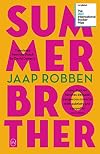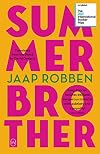
Summer Brother
by Jaap Robben
On This Page
Description
"Thirteen-year-old Brian lives in a trailer on a forgotten patch of land with his divorced and uncaring father. His older brother Lucien, physically and mentally disabled, has been institutionalized for years. While Lucien's home is undergoing renovations, he is sent to live with his father and younger brother for the summer. Their detached father leaves Brian to care for Lucien's special needs. But how do you look after someone when you don't know what they need? How do you make the right show more choices when you still have so much to discover?"--FantasticFiction.com. show lessTags
Recommendations





































Member Reviews
The narrator is 13-year-old Brian Chevalier. He lives with his father Maurice in a filthy, rundown trailer. Maurice, a ne'er-do-well, learns that he can get money if he cares for his physically and mentally disabled son for the summer while his assisted-living residence is being renovated. Of course Brian becomes Lucien’s primary care giver. A strong bond develops between the brothers and Lucien even shows signs of physical improvement when he is not as sedated as he seems to be at the residence. All is not well, however, as they are threatened with eviction.
The characterization of Brian is very realistic. Appropriately for his age, he is naïve, impulsive, emotionally immature, and curious about sex. Despite his flaws, like an show more occasional unthinking disregard for Lucien’s safety, there is no doubt that he loves his brother. Unfortunately, Brian, not having any other role model, has picked up some of his father’s behaviours. For instance, he knows how to pressure a person to get money. Brian may not want to be like his father, but it seems almost inevitable that he will be like him. His mother has moved on to another marriage and seems to have abandoned Brian to his life with his father. Emile, a man who moves into another trailer, offers more of a positive example, but Brian’s time with him is limited for a number of reasons. He is told that the trailer is not a good home for him, but he has no options.
Maurice is anything but admirable. He leaves Brian in charge of his brother when giving Lucien proper care is not an easy task. He is shiftless, leaving his sons every day with no explanation for his absences. He is known to police. He is not beyond using his son’s disability to get money and cover crimes. Besides being neglectful, Maurice is also abusive. It is clear that Brian fears his father who has violent outbursts. The reader does get glimpses of positive traits, but there is little to like about the man. What puzzled me is the choice of name for the father. I know Maurice Chevalier as a French actor and singer and wondered if the author’s choice of name was intentional. (And this raises another question: why did the Dutch author choose to set his novel in France?)
Tension exists throughout the book. Will Brian be able to care for his brother and keep him safe? Will they be evicted by the landlords who are becoming more and more impatient with Maurice’s rent non-payment and lies? Brian’s relationship with Selma, a 19-year-old resident at the home, is unsettling. Maurice, though he can be funny and charming, is a threatening presence. I kept waiting for something serious to happen.
I also found myself feeling sad and angry. Brian deserves a better life, but he just doesn’t have any opportunities. He tells Lucien, “’When I’m old enough, you can come and live with me,’” but it’s a promise that will be difficult to keep. Maurice is a dysfunctional person and that dysfunction may very well prove to be generational since Brian has been largely abandoned to a father who models inappropriate, if not dangerous, behaviour.
Because of the subject matter, the book is not always an easy read, but it realistically and unsentimentally portrays life on the margins of society. The novel is described as “an honest, tender account of brotherly love,” and that too is true. That love is the one hopeful note.
Note: I received an eARC from the publisher via NetGalley.
Please check out my reader's blog (https://schatjesshelves.blogspot.com/) and follow me on Twitter (@DCYakabuski). show less
The characterization of Brian is very realistic. Appropriately for his age, he is naïve, impulsive, emotionally immature, and curious about sex. Despite his flaws, like an show more occasional unthinking disregard for Lucien’s safety, there is no doubt that he loves his brother. Unfortunately, Brian, not having any other role model, has picked up some of his father’s behaviours. For instance, he knows how to pressure a person to get money. Brian may not want to be like his father, but it seems almost inevitable that he will be like him. His mother has moved on to another marriage and seems to have abandoned Brian to his life with his father. Emile, a man who moves into another trailer, offers more of a positive example, but Brian’s time with him is limited for a number of reasons. He is told that the trailer is not a good home for him, but he has no options.
Maurice is anything but admirable. He leaves Brian in charge of his brother when giving Lucien proper care is not an easy task. He is shiftless, leaving his sons every day with no explanation for his absences. He is known to police. He is not beyond using his son’s disability to get money and cover crimes. Besides being neglectful, Maurice is also abusive. It is clear that Brian fears his father who has violent outbursts. The reader does get glimpses of positive traits, but there is little to like about the man. What puzzled me is the choice of name for the father. I know Maurice Chevalier as a French actor and singer and wondered if the author’s choice of name was intentional. (And this raises another question: why did the Dutch author choose to set his novel in France?)
Tension exists throughout the book. Will Brian be able to care for his brother and keep him safe? Will they be evicted by the landlords who are becoming more and more impatient with Maurice’s rent non-payment and lies? Brian’s relationship with Selma, a 19-year-old resident at the home, is unsettling. Maurice, though he can be funny and charming, is a threatening presence. I kept waiting for something serious to happen.
I also found myself feeling sad and angry. Brian deserves a better life, but he just doesn’t have any opportunities. He tells Lucien, “’When I’m old enough, you can come and live with me,’” but it’s a promise that will be difficult to keep. Maurice is a dysfunctional person and that dysfunction may very well prove to be generational since Brian has been largely abandoned to a father who models inappropriate, if not dangerous, behaviour.
Because of the subject matter, the book is not always an easy read, but it realistically and unsentimentally portrays life on the margins of society. The novel is described as “an honest, tender account of brotherly love,” and that too is true. That love is the one hopeful note.
Note: I received an eARC from the publisher via NetGalley.
Please check out my reader's blog (https://schatjesshelves.blogspot.com/) and follow me on Twitter (@DCYakabuski). show less
This book was nothing like what I expected. Between the title and the cover color/design I was expecting something summery and beachy. Which does not feel Booker International at all, so I also did not know what to expect.
It is not those things. It is sad and heartbreaking and infuriating and there are so many things to think about here. So. Many. Things.
A 13-year-old underparented boy having a relationship with a mentally disabled 19-year-old girl who lives in the same facility as his brother.
The severely disabled 17-year-old brother who is heavily drugged due to biting.
The boys' parents having split the kids at their divorce.
Dad being a cheat, liar, and thief who does not parent or hold down a job.
Dad bringing the 17-year-old home show more for the summer because of the stipend.
Dad leaving the 13-year-old to be the 17-year-old's nurse on a near daily basis.
Dad's using the 17-year-old to garner pity for himself.
Brian (13) learns so much about his brother Lucien's actual abilities over the summer.
And there is more. But no spoilers here. Jealousy, greed, anger, frustration. Dad seems to mean well, but he also cannot function like an adult. show less
It is not those things. It is sad and heartbreaking and infuriating and there are so many things to think about here. So. Many. Things.
A 13-year-old underparented boy having a relationship with a mentally disabled 19-year-old girl who lives in the same facility as his brother.
The severely disabled 17-year-old brother who is heavily drugged due to biting.
The boys' parents having split the kids at their divorce.
Dad being a cheat, liar, and thief who does not parent or hold down a job.
Dad bringing the 17-year-old home show more for the summer because of the stipend.
Dad leaving the 13-year-old to be the 17-year-old's nurse on a near daily basis.
Dad's using the 17-year-old to garner pity for himself.
Brian (13) learns so much about his brother Lucien's actual abilities over the summer.
And there is more. But no spoilers here. Jealousy, greed, anger, frustration. Dad seems to mean well, but he also cannot function like an adult. show less
The basic concept of the story...
A boy's special brother comes home for the summer, cementing the bond between them, while opening his eyes to differences between their worlds. It mentioned it being a good fit for those who enjoyed Rain Man.
Thing is...
...once I got between the pages, I got a whole lot more than I bargained for.
The family that this special boy had was beyond ill prepared for his visit, and in fact should have been kept far away from him, seeing as the dad couldn't be bothered to care for one boy, let alone two, anything close to properly...and the mother couldn't bare to accept the situation for what it was. The dad wasn't simply negligent, but abhorrently so. He schemed and lied, pawned and stole, broken more than he show more ever fixed, and flat out couldn't handle his life, and left it and everyone in it to chance. Now, there's a peculiar about face in the end portion of the story, which albeit decidedly wrong, did show a scrap of humanity towards his son, but it was nowhere near enough to being something to redeem himself.
In hindsight, I suppose I can see it illustrating that every family has its challenges, some more so than others, but it's not so much in what we provide monetarily for them, as it is the love we show them, the care we take of them, and the way we hold them in our hearts. It also had me believing that not everyone is suited for the challenges that special needs like this present, but there's certainly no shame in seeking the help they need from outside sources.
In the end...it was a tough read, and that ending was not amenable to my own somewhat delicate senses, but if gets its message of family across, the message of everyone deserving care, love and security, than I'm all for it.
**copy received for review; opinions are my own show less
A boy's special brother comes home for the summer, cementing the bond between them, while opening his eyes to differences between their worlds. It mentioned it being a good fit for those who enjoyed Rain Man.
Thing is...
...once I got between the pages, I got a whole lot more than I bargained for.
The family that this special boy had was beyond ill prepared for his visit, and in fact should have been kept far away from him, seeing as the dad couldn't be bothered to care for one boy, let alone two, anything close to properly...and the mother couldn't bare to accept the situation for what it was. The dad wasn't simply negligent, but abhorrently so. He schemed and lied, pawned and stole, broken more than he show more ever fixed, and flat out couldn't handle his life, and left it and everyone in it to chance. Now, there's a peculiar about face in the end portion of the story, which albeit decidedly wrong, did show a scrap of humanity towards his son, but it was nowhere near enough to being something to redeem himself.
In hindsight, I suppose I can see it illustrating that every family has its challenges, some more so than others, but it's not so much in what we provide monetarily for them, as it is the love we show them, the care we take of them, and the way we hold them in our hearts. It also had me believing that not everyone is suited for the challenges that special needs like this present, but there's certainly no shame in seeking the help they need from outside sources.
In the end...it was a tough read, and that ending was not amenable to my own somewhat delicate senses, but if gets its message of family across, the message of everyone deserving care, love and security, than I'm all for it.
**copy received for review; opinions are my own show less
An uncommon novel about people who are often left out of the discussion. Told in a simple style that lets the characters and their actions speak for themselves, this is a touching story of brothers making their way through difficult situations.
3.5 rounded to 4
Het is mogelijk dit boek binnen 6 á 8 uur te lezen, op een dag. De uren erna besef je pas hoe goed het in elkaar steekt, hoe kunstig de leefwereld van deze puber tijdens deze zomervakantie is geschetst.
Een kritiekpunt kan zijn de grote mate van vrouwonvriendelijkheid- of de afwijzing van zijn moeder.
De puber waar het over gaat ondergaat het assertieve gedrag van zijn alcoholische vader, maar hij bezint zich er niet op. Hij verricht zelf diverse grensoverschrijdende handelingen, die bij de lezer een mengeling van spanning en afkeuring oproepen.
Mensen met een verstandelijke beperking worden als belangrijke ander voor deze puber gepresenteerd. Daarin doet het denken aan het boek Joey uit de jaren 70, of aan one flew over the cuckoo's show more nest, of steinbeck's about mice and man, of aan het recente muidhond , of aan de geverfde vogel.
Diverse thema's zitten knap in het boek vervlochten: ontluikende sexualiteit, alcoholisme, morele oordelen, zelfkant van de maatschappij, de puberteit, kritiek op de zorg voor de verstandelijk beperkten, sommige ziektebeelden als Lesch-Nyhan syndroom, spasticiteit.
Het eind is wat zwakker. show less
Een kritiekpunt kan zijn de grote mate van vrouwonvriendelijkheid- of de afwijzing van zijn moeder.
De puber waar het over gaat ondergaat het assertieve gedrag van zijn alcoholische vader, maar hij bezint zich er niet op. Hij verricht zelf diverse grensoverschrijdende handelingen, die bij de lezer een mengeling van spanning en afkeuring oproepen.
Mensen met een verstandelijke beperking worden als belangrijke ander voor deze puber gepresenteerd. Daarin doet het denken aan het boek Joey uit de jaren 70, of aan one flew over the cuckoo's show more nest, of steinbeck's about mice and man, of aan het recente muidhond , of aan de geverfde vogel.
Diverse thema's zitten knap in het boek vervlochten: ontluikende sexualiteit, alcoholisme, morele oordelen, zelfkant van de maatschappij, de puberteit, kritiek op de zorg voor de verstandelijk beperkten, sommige ziektebeelden als Lesch-Nyhan syndroom, spasticiteit.
Het eind is wat zwakker. show less
Jul 25, 2019Dutch
1
Brian is 12, woont met zijn volstrekt egoïstische en onbekwame vader in een caravan. Zijn broertje woont in een verpleegtehuis, want zwaar gehandicapt. Hij komt een poosje logeren wegens verbouwing van het huis waar woont. Er wordt een vergoeding geboden aan de vader als hij de jongen een poosje in huis neemt. Moeder is op huwelijksreis en kan zo wie zo de situatie geheel niet aan. En zo wordt Brian volkomen verantwoordelijk voor de dagelijkse zorg voor een meervoudig zwaar gehandicapt broertje. Hij houdt veel van hem en zorgt goed en lief voor hem. Er is op het terrein waar ze worden nog een eenzame want door zijn vrouw de deur uitgezette man komen wonen die Brian een beetje help en ook aardig voor hem is. Bovendien doet doet Brian show more ook nog zijn eerste liefdeservaring op met Selma, een medebewoonster van het verpleegtehuis. Heel droevig en treurig allemaal maar met zoveel liefde geschreven verhaal... prachtig prachtig. show less
Jun 21, 2019Dutch
1
Members
- Recently Added By
Lists

Books Read in 2019
4,052 works; 108 members
Author Information

19+ Works 417 Members
Some Editions
Awards and Honors
Common Knowledge
- Canonical title
- Summer Brother
- Original title
- Zomervacht
- Original publication date
- 2018-09-04
- Original language*
- Nederlands
- Disambiguation notice*
- Bij onjuiste combinaties van titel en ISBN wordt door de meeste combiners de titel als doorslaggevend beschouwd (zie https://www.librarything.co... (show all)m/topic/308...). ISBN 904451671X hoort eigenlijk bij De zuurtjes.
Onjuiste combinatie van titel en ISBN, niet combineren met Zomervacht
*Some information comes from Common Knowledge in other languages. Click "Edit" for more information.
Classifications
- Genres
- Fiction and Literature, General Fiction
- DDC/MDS
- 839.3137 — Literature & rhetoric German & related literatures Other Germanic literatures Netherlandish literatures Dutch Dutch fiction 21st Century
- LCC
- PT5001 — Language and Literature German, Dutch and Scandinavian literatures Dutch literature General
- BISAC
Statistics
- Members
- 124
- Popularity
- 261,787
- Reviews
- 8
- Rating
- (3.84)
- Languages
- Dutch, English, Slovenian
- Media
- Paper, Ebook
- ISBNs
- 8
- ASINs
- 1