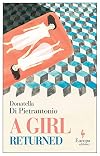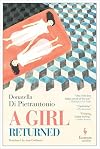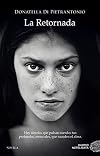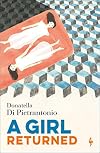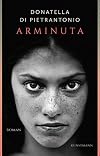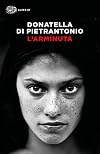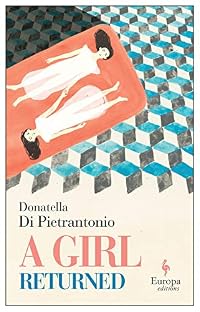
A Girl Returned
by Donatella Di Pietrantonio
On This Page
Description
Told with an immediacy and a rare expressive intensity that has earned it countless adoring readers and one of Italy's most prestigious literary prizes, A Girl Returned is a powerful novel rendered with sensitivity and verve by Ann Goldstein, translator of the works of Elena Ferrante. Set against the stark, beautiful landscape of Abruzzo in central Italy, this is a compelling story about mothers and daughters, about responsibility, siblings, and caregiving. Without warning or explanation, an show more unnamed thirteen-year-old girl is sent away from the family she has always thought of as hers, to live with her birth family, a large, chaotic assortment of individuals whom she has never met and who seem anything but welcoming. Thus begins a new life, one of struggle, tension, and conflict, especially between the young girl and her mother. But, in her relationship with Adriana and Vincenzo, two of her newly acquired siblings, she will find the strength to start again and to build a new and enduring sense of self. show lessTags
Recommendations



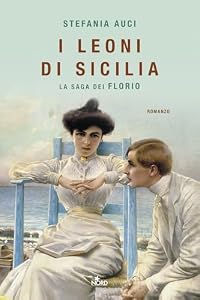
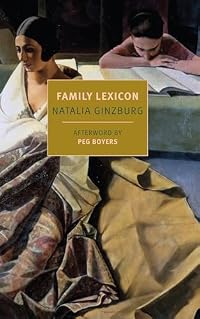

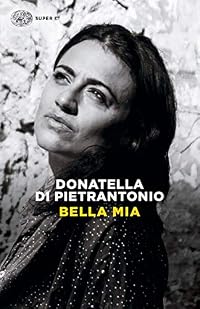

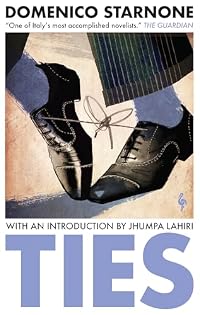


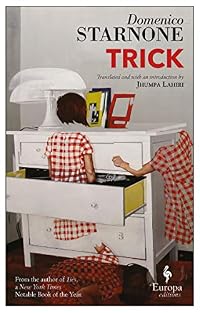

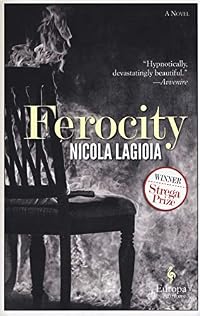
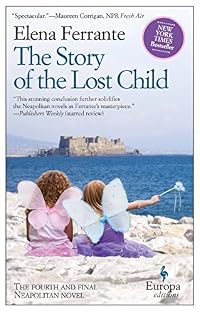
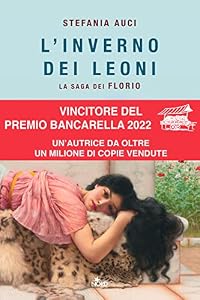




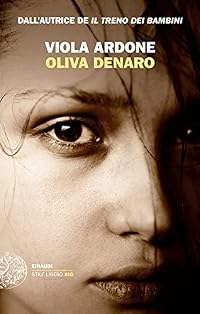
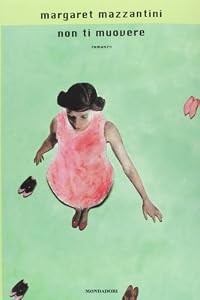
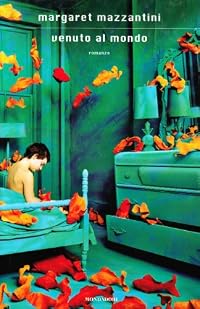
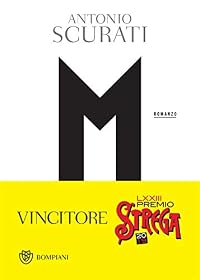

Member Recommendations
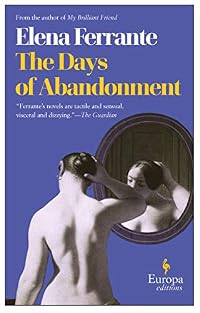
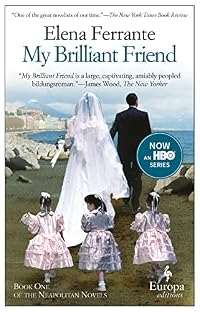
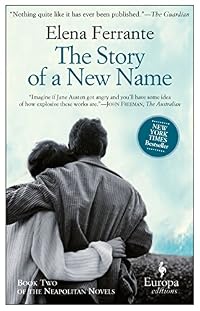
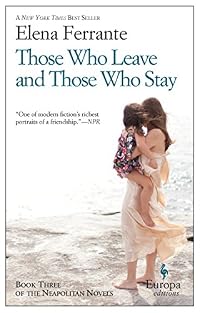
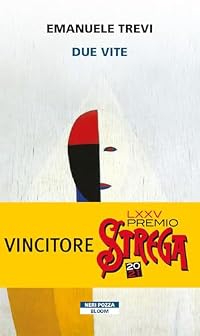
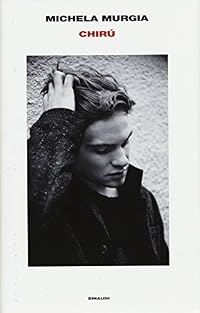
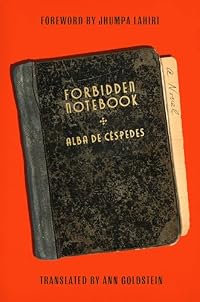
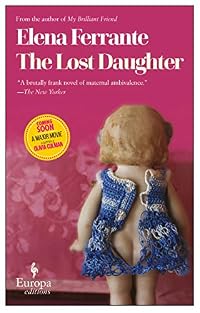
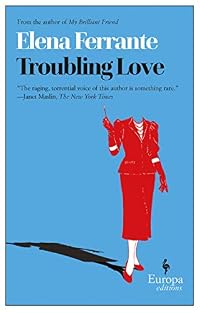
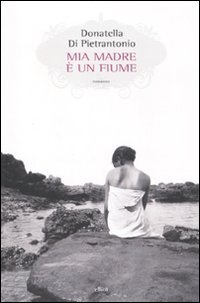
RidgewayGirl Both novels center around a girl living in a poor Italian community. Both share the same translator.
Member Reviews
Unë isha Arminuta, e kthyera. Flisja një gjuhë tjetër dhe nuk dija më se kujt i përkisja. Fjala “nënë” më kishte ngecur në fyt, si një nyjë gërvishtëse.
Edhe pse nuk dua ta di se ku është ajo, më mungon ashtu siç të mungon shëndeti apo siguria.
Për të rrëfyer të tatëpjetat e jetës duhen fjalë të vrazhda, të drejtpërdrejta, dhe Donatella Di Pietrantonio e njeh mirë hijeshinë që mbartin ato.
Pena e saj ka një tingull unik, që përcjell aq dritë, sa mund të na ndriçojë me delikatesë rrugëtimin drejt një historie të zjarrtë.
Edhe pse nuk dua ta di se ku është ajo, më mungon ashtu siç të mungon shëndeti apo siguria.
Për të rrëfyer të tatëpjetat e jetës duhen fjalë të vrazhda, të drejtpërdrejta, dhe Donatella Di Pietrantonio e njeh mirë hijeshinë që mbartin ato.
Pena e saj ka një tingull unik, që përcjell aq dritë, sa mund të na ndriçojë me delikatesë rrugëtimin drejt një historie të zjarrtë.
I just loved this short novel centers that on a thirteen-year-old girl who is abruptly sent away from the couple she had grown up believing were her parents and returned to the family of her birth parents. She's disoriented and this new family is not entirely welcoming. Her change in circumstances also means that her comfortable middle-class world is exchanged for that of a low income family with a lot of instability. She has three older brothers, only one of whom is kind to her, and a new younger sister, with whom she now shares a bed.
The translation for this novel is by Ann Goldstein, who also translated Elena Ferrante's Neapolitan quartet and so the similarities are more than just the shared setting of a poor Italian neighborhood, show more but this novel is less sweeping soap opera than it is a coming-of-age story where a girl finds herself unmoored and then discovers her own resilience.
This is the first of Di Pietrantonio's novels to be translated into English and I am eagerly awaiting more. show less
The translation for this novel is by Ann Goldstein, who also translated Elena Ferrante's Neapolitan quartet and so the similarities are more than just the shared setting of a poor Italian neighborhood, show more but this novel is less sweeping soap opera than it is a coming-of-age story where a girl finds herself unmoored and then discovers her own resilience.
This is the first of Di Pietrantonio's novels to be translated into English and I am eagerly awaiting more. show less
Preso ieri in biblioteca e divorato in un pomeriggio. Son sempre diffidente quando mi consigliano libri che hanno fatto piangere e che tutti osannano, ho gusti particolari. Beh, questa volta sono pienamente d'accordo con chi consiglia il titolo. Ci sono alcune imperfezioni, rileggendolo a mente fredda, ma i pregi sono molto maggiori. Lo stile è come piace a me, non tace niente ma alterna i fatti nudi e crudi a una interpretazione personale, non a livello manzoniano; ma comunque il narrato in prima persona aiuta ad immergersi non solo nella storia ma anche nell'anima della protagonista e probabilmente aiuta l'immedesimazione nel personaggio (e badate bene che io apprezzo di più le opere in terza persona proprio perché è più show more difficile da scrivere per catturare il lettore). Si parla di maternità, ovviamente, e si potrebbe parlare anche solo di questo tema: adozioni, maternità surrrogata sui generis, il famoso "chi è veramente madre". Ma a mio parere quello che smuove il testo è molto più ampio. E' un occhio cresciuto quello che narra le vicende accadute, e appare riscattato, anche se con ancora addosso i propri mostri. Le vicende sono raccontate con un registro che non passa sopra a nessun episodio, nemmeno a quelli peggiori, ma controbilanciandoli con una onestà di vedute, senza manicheismi, leggendo la bontà che si nasconde nel cattivo e la fragile apparenza che a volte si rivela essere quello che si credeva buono. E questo senza nessuna condanna assoluta, ma con una sguardo superiore, che pare avvolgere questo mondo, nonostante tutto, con un affetto potente. Credo che sia un po' il modo in cui noi tutti guardiamo al nostro passato, con chiari anche gli errori e gli orrori, ma ormai con la coscienza (e forse la malinconia) che è passato, appunto. Due domande in fondo nascono quando si arriva alla fine. La prima è chi sono i veri poveri, qual è il vero affetto. Il ruolo delle apparenze, appunto. La capacità (oggi forse in crisi se non proprio persa) di cogliere le sfumature, quanto mai necessarie per giudicare dei contesti in cui mancano soldi ed istruzione come pure nei contesti aridi in cui il denaro permette una evoluzione a livello sociale che non sempre però si accompagna a quella del cuore. La seconda è quanto tempo è passato. L'unica data che si trova nel libro è un 1975, quando sono nata io. A livello di storia, un battito d'ali. Le realtà descritte nel libro parrebbero superate, ma ogni periodo di crisi ci mette di fronte al fatto che nessuna conquista è per sempre e che i diritti vanno difesi. La difesa di un determinato diritto però impone che lo stesso diritto sia estendibile ad altri, e non riservato solo ad alcuni. E oggi che torniamo a vedere da vicino certe situazioni di emarginazione e povertà, spesso ci dimentichiamo che le abbiamo combattute e forse vinte, ma poco fa. Un attimo fa. E dovrebbe muoverci a pietà. Aggiungo una terza riflessione brevissima (chi mi segue sa che è un mio rovello interiore): il ruolo dell'istruzione nel recupero di una persona. Ruolo fondamentale, che però a tutt'oggi, quando l'istruzione basilare pare a portata di tutti, registra comunque uno scarto tra chi recepisce e chi non recepisce. E questo scarto credo che sia lo smacco personale di chi è stato almeno una volta nella vita educatore e si è visto ragazzi pur intelligenti scappargli dalle mani e preferire vie più facili. Non spaventatevi della mia recensione: è un libro breve, denso e che merita moltissimo. show less
4.5⭐️
On an August afternoon in 1975, a thirteen-year-old girl (our narrator) drags a suitcase up the stairs to an apartment belonging to her biological parents. She is 'returned' to her family by her adoptive parents, the only family she has ever known and whom she believed to be her true parents. This family, this apartment just a bus ride away from her seaside home and her new siblings are all alien to her. This family is related to her adoptive father and she was adopted by Signora Adalgisa when she was an infant of six months – an arrangement mutually agreed upon by both sets of parents. The circumstances surrounding her 'return' remain a mystery to her. She worries for the health of her adoptive mother. Is she sick? Is she show more even alive? Will she ever return to the safe, happy cocoon that was once her home? She is thrust into a life completely different from the one she was accustomed to -an only child, living in a seaside community with loving parents, friends, dance classes and wanting for nothing. Here she becomes part of a dysfunctional family plagued by poverty and abusive dynamics within. Her parents mostly ignore her with her mother expecting her to be well versed in household chores including plucking a chicken, her older brothers taunt and bully her except for the eighteen-year-old Vincenzo whose interest in her leads to some uncomfortable moments.
“I wasn’t acquainted with hunger and I lived like a foreigner among the hungry. The privilege I bore from my earlier life distinguished me, isolated me in the family. I was the arminuta, the one who’d returned. I spoke another language and I no longer knew who I belonged to.”
Adriana, her younger sister and Guiseppe, her youngest brother who has a developmental disability are the only two people she connects with, a connection that continues into her adulthood, details of which she gives brief glimpses of as she narrates these incidents from a timeline twenty year in the future. She shares how she is unable to connect with her “parents”- a disconnect that continues throughout her narrative referring to them as “the mother” and “the father”. When tragedy strikes the family “the mother” retreats into herself further.
“In time I lost that confused idea of normality, too, and today I really don’t know what place a mother is. It’s absent from my life the way good health, shelter, certainty can be absent. It’s an enduring emptiness, which I know but can’t get past. My head whirls if I look inside it. A desolate landscape that keeps you from sleeping at night and constructs nightmares in the little sleep it allows. The only mother I never lost is the one of my fears.”
As the story progresses and the reasons for her abandonment by her adoptive mother are revealed, her world is once again turned upside down and our protagonist is compelled to question the very definition of motherhood and family. The protagonist’s loneliness, confusion and inner turmoil in her darkest moments are palpable and will break your heart.
A Girl Returned by Donatella Di Pietrantonio (translated by Ann Goldstein), is a sad, moving and powerful novel that explores the themes of family, coming-of-age, trust, abandonment and resilience. The author’s strength lies in her characterizations and the realistic depiction of complex relationships.
A character that stands out in our narrator's story is Adriana, her younger sister. Accustomed to the hardships of life and the abusive environment in their home, Adriana, only ten years old and still wetting the bed welcomes her older sister, is both protective and possessive of her at school and at home, even willing to take the blows directed towards her by their mother in moments of rage. Initially, our narrator is embarrassed by her sister’s lack of fine manners, her shabby appearance and her rustic diction and there are moments of friction and resentment from Adriana’s side as well but as time progresses she becomes the only person our protagonist can truly rely on, her only light in the darkness.
“My sister. Like an improbable flower, growing in a clump of earth stuck in the rock. From her I learned resistance. We look less like each other now, but we find the same meaning in this being thrown into the world. In our alliance we survived.”
The writing is unambiguous and elegant and the narrative is sharp and well-paced, laced with real emotions without exaggeration or melodrama with its share of memorable characters (some likable and some not so much) - all of which render this a compelling read. This is a short novel and I felt invested in the lives of our narrator and her sister Adriana. I wanted to know more about their lives. In other words, I did not want the story to end. This is a book that will stay with me for a long time. I look forward to reading more of Donatella Di Pietrantonio’s work in the future.
(Readers should note that Vincenzo’s behavior towards the protagonist borders on incestuous, which may upset some readers, though this angle is not developed beyond a certain point in the story and thankfully, does not feature as a running theme but is used to depict one of the dysfunctional situations the protagonist is exposed to in her new home.) show less
On an August afternoon in 1975, a thirteen-year-old girl (our narrator) drags a suitcase up the stairs to an apartment belonging to her biological parents. She is 'returned' to her family by her adoptive parents, the only family she has ever known and whom she believed to be her true parents. This family, this apartment just a bus ride away from her seaside home and her new siblings are all alien to her. This family is related to her adoptive father and she was adopted by Signora Adalgisa when she was an infant of six months – an arrangement mutually agreed upon by both sets of parents. The circumstances surrounding her 'return' remain a mystery to her. She worries for the health of her adoptive mother. Is she sick? Is she show more even alive? Will she ever return to the safe, happy cocoon that was once her home? She is thrust into a life completely different from the one she was accustomed to -an only child, living in a seaside community with loving parents, friends, dance classes and wanting for nothing. Here she becomes part of a dysfunctional family plagued by poverty and abusive dynamics within. Her parents mostly ignore her with her mother expecting her to be well versed in household chores including plucking a chicken, her older brothers taunt and bully her except for the eighteen-year-old Vincenzo whose interest in her leads to some uncomfortable moments.
“I wasn’t acquainted with hunger and I lived like a foreigner among the hungry. The privilege I bore from my earlier life distinguished me, isolated me in the family. I was the arminuta, the one who’d returned. I spoke another language and I no longer knew who I belonged to.”
Adriana, her younger sister and Guiseppe, her youngest brother who has a developmental disability are the only two people she connects with, a connection that continues into her adulthood, details of which she gives brief glimpses of as she narrates these incidents from a timeline twenty year in the future. She shares how she is unable to connect with her “parents”- a disconnect that continues throughout her narrative referring to them as “the mother” and “the father”. When tragedy strikes the family “the mother” retreats into herself further.
“In time I lost that confused idea of normality, too, and today I really don’t know what place a mother is. It’s absent from my life the way good health, shelter, certainty can be absent. It’s an enduring emptiness, which I know but can’t get past. My head whirls if I look inside it. A desolate landscape that keeps you from sleeping at night and constructs nightmares in the little sleep it allows. The only mother I never lost is the one of my fears.”
As the story progresses and the reasons for her abandonment by her adoptive mother are revealed, her world is once again turned upside down and our protagonist is compelled to question the very definition of motherhood and family. The protagonist’s loneliness, confusion and inner turmoil in her darkest moments are palpable and will break your heart.
A Girl Returned by Donatella Di Pietrantonio (translated by Ann Goldstein), is a sad, moving and powerful novel that explores the themes of family, coming-of-age, trust, abandonment and resilience. The author’s strength lies in her characterizations and the realistic depiction of complex relationships.
A character that stands out in our narrator's story is Adriana, her younger sister. Accustomed to the hardships of life and the abusive environment in their home, Adriana, only ten years old and still wetting the bed welcomes her older sister, is both protective and possessive of her at school and at home, even willing to take the blows directed towards her by their mother in moments of rage. Initially, our narrator is embarrassed by her sister’s lack of fine manners, her shabby appearance and her rustic diction and there are moments of friction and resentment from Adriana’s side as well but as time progresses she becomes the only person our protagonist can truly rely on, her only light in the darkness.
“My sister. Like an improbable flower, growing in a clump of earth stuck in the rock. From her I learned resistance. We look less like each other now, but we find the same meaning in this being thrown into the world. In our alliance we survived.”
The writing is unambiguous and elegant and the narrative is sharp and well-paced, laced with real emotions without exaggeration or melodrama with its share of memorable characters (some likable and some not so much) - all of which render this a compelling read. This is a short novel and I felt invested in the lives of our narrator and her sister Adriana. I wanted to know more about their lives. In other words, I did not want the story to end. This is a book that will stay with me for a long time. I look forward to reading more of Donatella Di Pietrantonio’s work in the future.
(Readers should note that Vincenzo’s behavior towards the protagonist borders on incestuous, which may upset some readers, though this angle is not developed beyond a certain point in the story and thankfully, does not feature as a running theme but is used to depict one of the dysfunctional situations the protagonist is exposed to in her new home.) show less
Suddenly and without warning, a young girl’s parents send her to live with a different family which, it turns out, is her biological family. The adults provide no explanation, and since the story is told in the first person, the reader is just as much in the dark as the girl. She goes from being an only child to one of many children, and must adapt to her new family’s relative poverty. The only bright spot is finding that she has a younger sister; the two become close. The girl never loses hope of being reunited with the couple she still views as her family, and doggedly questions her natural parents to understand why she was returned to them.
The spare prose of A Girl Returned was translated from the Italian by Ann Gold, the show more translator for Elena Ferrante’s Neapolitan novels, and it reads well. The girl’s confusion and emotions are palpable. Like her, I wanted to know the truth and I became invested in her welfare. But the reveal was forced, and the reason for the girl’s return was not fully believable (avoiding spoilers: the family was shielding her from a secret, but one she was old enough to understand and live with). This ultimately left me with a “just okay” feeling about this book. show less
The spare prose of A Girl Returned was translated from the Italian by Ann Gold, the show more translator for Elena Ferrante’s Neapolitan novels, and it reads well. The girl’s confusion and emotions are palpable. Like her, I wanted to know the truth and I became invested in her welfare. But the reveal was forced, and the reason for the girl’s return was not fully believable (avoiding spoilers: the family was shielding her from a secret, but one she was old enough to understand and live with). This ultimately left me with a “just okay” feeling about this book. show less
A Girl Returned by Donatella Di Pietrantonio is the first translated novella that I've read. Or at least it's the first book I've read that I noticed was translated.
The narrator is never given a name, but we start with her being returned to her first mother when the woman she though was her mother becomes sick. She is thrust into a family that she didn't know existed, who do not have the same economic advantages that mother and father had. The family is already poor, with numerous children, and none of them seem eager to have her there, especially since it means another mouth to feed.
The novella doesn't have one storyline that goes throughout the book, except that she is trying to fit in and just make it through. Every chapter is a show more different memory from her life with first mother and the family, as she tries to figure out her place in their world. She did become close to her sister Adriana, and her oldest brother Vincenzo, but the rest of the family never really bothered with her.
All in all, a moving novella about a girl torn between two lives, trying to find her way in a new home with a new family. show less
The narrator is never given a name, but we start with her being returned to her first mother when the woman she though was her mother becomes sick. She is thrust into a family that she didn't know existed, who do not have the same economic advantages that mother and father had. The family is already poor, with numerous children, and none of them seem eager to have her there, especially since it means another mouth to feed.
The novella doesn't have one storyline that goes throughout the book, except that she is trying to fit in and just make it through. Every chapter is a show more different memory from her life with first mother and the family, as she tries to figure out her place in their world. She did become close to her sister Adriana, and her oldest brother Vincenzo, but the rest of the family never really bothered with her.
All in all, a moving novella about a girl torn between two lives, trying to find her way in a new home with a new family. show less
After the Scandinavian era of crime fiction, we now seem to be in the era of Italian coming of age books featuring female leads. In the spirit of Elena Ferrante comes this short novelette about an Italian girl shuffled between families.
I enjoyed it, although it seems to be too short - there could have been more development of the plot, and the hero. But if one of the benefits of reading is to take you to people and places off the familiar path, this book hits the nail on the head.
I enjoyed it, although it seems to be too short - there could have been more development of the plot, and the hero. But if one of the benefits of reading is to take you to people and places off the familiar path, this book hits the nail on the head.
Members
- Recently Added By
Published Reviews
ThingScore 81
This lacerating hurt – conveyed with powerful immediacy in this translation by Ann Goldstein, who also brought Elena Ferrante’s work into English – stings throughout the novel, but also becomes the impetus for resilience and self-determination.
added by Nickelini
Clues are introduced with stinging details, like the citrus trace of the former mother’s perfume, lingering after a surreptitious visit. In Italy this novel was Di Pietrantonio’s third, and she has worked up impressive narrative craft. She knows just when and where to slip the pieces of her jigsaw into place — all while leaving emotional gaps, psychic wounds that can never heal. Now and show more again the story provides a flash-forward, allowing us to see the players’ adult destinies, and a couple of these contribute to the sense of a happy ending. Others, however, resonate with the pangs of a society badly split, as the now-grown narrator confronts her devastated notion of intimacy: “On the pillow every night the same knot of phantoms awaits me, the obscure terrors.” show less
added by Nickelini
A gripping, deeply moving coming-of-age novel; immensely readable, beautifully written, and highly recommended.
added by Nickelini
Lists

Italian Literature
556 works; 41 members

Elena Ferrante's 40 favourite books by female authors
40 works; 10 members

Kirkus Starred Fiction Reviews of Books Published in 2019
411 works; 12 members
Author Information

Some Editions
Awards and Honors
Awards
Common Knowledge
- Canonical title
- A Girl Returned
- Original title
- L'Arminuta
- Original publication date
- 2017-02-14
- People/Characters*
- L'Arminuta; Adriana; Vincenzo; Adalgisa
- Important places
- Italy
- Epigraph*
- Ancora oggi, in certo modo, io sono rimasta ferma a quella fanciullesca estate: intorno a cui la mia anima ha continuato a girare e a battere senza tregua, come un insetto intorno a una lampada accecante.
Elsa Morante,... (show all) Menzogna e sortilegio. - Dedication*
- A Piergiorgio, che c'è stato cosí poco
- First words*
- A tredici anni non conoscevo piú l'altra mia madre.
- Last words*
- (Click to show. Warning: May contain spoilers.)Stringendo un poco le palpebre l'ho presa prigioniera tra le ciglia.
- Original language
- Italian
*Some information comes from Common Knowledge in other languages. Click "Edit" for more information.
Classifications
- Genres
- Fiction and Literature, General Fiction
- DDC/MDS
- 853.92 — Literature & rhetoric Italian, Romanian & related literatures Italian fiction 1900- 21st Century
- LCC
- PQ4904 .I2167 .A86 — Language and Literature French, Italian, Spanish and Portuguese literatures Italian literature Individual authors, 2001-
- BISAC
Statistics
- Members
- 459
- Popularity
- 66,063
- Reviews
- 26
- Rating
- (4.05)
- Languages
- 10 — Danish, Dutch, English, French, German, Italian, Norwegian, Portuguese, Spanish, Swedish
- Media
- Paper, Audiobook, Ebook
- ISBNs
- 27
- ASINs
- 7