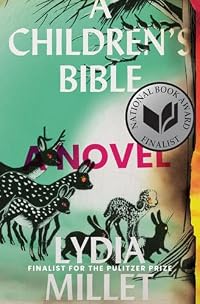
A Children's Bible
by Lydia Millet
On This Page
Description
Pulitzer Prize finalist Lydia Millet's sublime new novel-her first since the National Book Award long-listed Sweet Lamb of Heaven-follows a group of twelve eerily mature children on a forced vacation with their families at a sprawling lakeside mansion. Contemptuous of their parents, who pass their days in a stupor of liquor, drugs, and sex, the children feel neglected and suffocated at the same time. When a destructive storm descends on the summer estate, the group's ringleaders-including show more Eve, who narrates the story-decide to run away, leading the younger ones on a dangerous foray into the apocalyptic chaos outside. As the scenes of devastation begin to mimic events in the dog-eared picture Bible carried around by her beloved little brother, Eve devotes herself to keeping him safe from harm. A Children's Bible is a prophetic, heartbreaking story of generational divide-and a haunting vision of what awaits us on the far side of Revelation. show lessTags
Recommendations




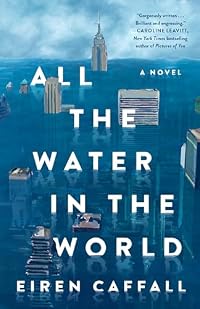


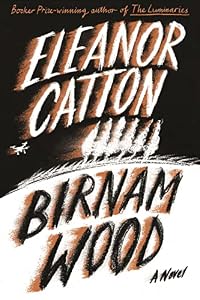
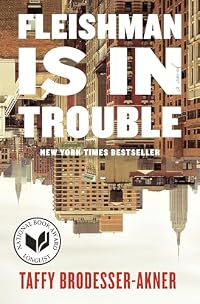
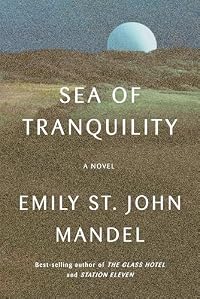
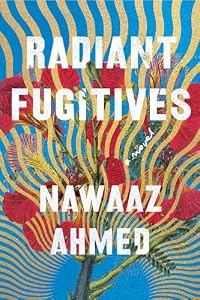
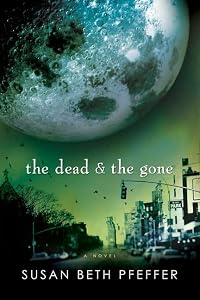
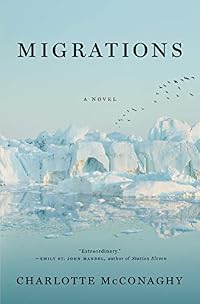

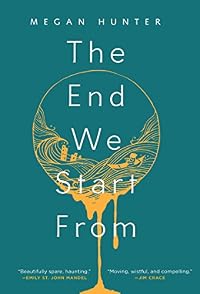
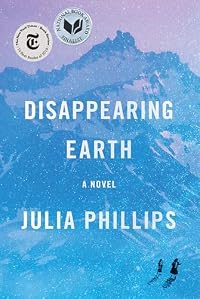
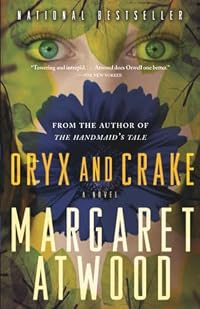

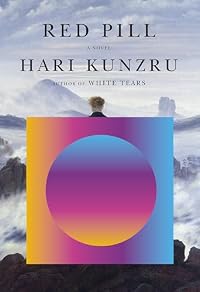

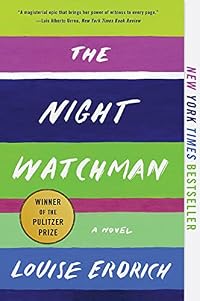
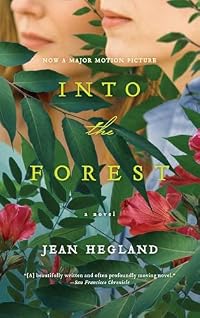

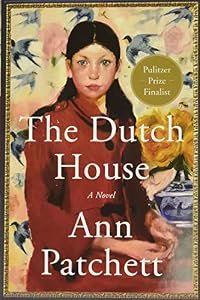
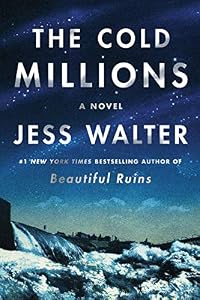

Member Recommendations

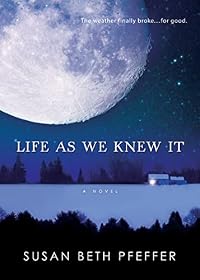
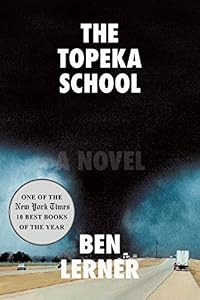
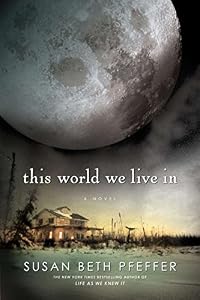
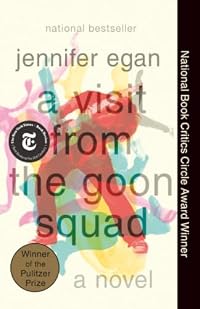
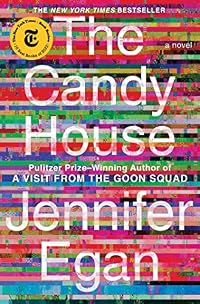
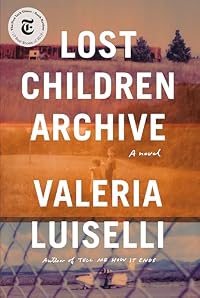
hairball Adults failing, young people trying to make their way forward in a world that's climate-spiraling.
Member Reviews
what an excellent screed against the way the adults of this world are relying on the children to save everyone, to make the decisions, to do the hard work of making the world livable and survivable. how we turn a blind eye, but they can't and so they don't. how we love our kids - the ones specifically ours - but how that doesn't manifest in actually taking care of them, or in loving others or the world they need to be able to continue on.
the writing is great, the voice is tough, the biblical allusions powerful. so so good.
(and it's read by one of my favorite narrators.)
the writing is great, the voice is tough, the biblical allusions powerful. so so good.
(and it's read by one of my favorite narrators.)
This book really made me think about the world we are leaving the next generation. The story is about a group of kids, mostly teenagers, who are on a summer vacation with their parents in a rented house in the Northeast somewhere. The parents behave very badly and basically ignore their children who are left to their own devices. When a catastrophic storm hits the children are very resourceful while the parents escape into hedonism. There are several biblical allegories but they don't drive the story. However, one religious reference stuck with me. One of the children carries around a children's bible. He hasn't had a religious education but he reads into the bible a coded message . God equals science and just as people have faith in show more God to save them, they must believe in science to save them too. The parents are not science deniers, but the children condemn them for doing nothing to save our world from climate change. It's a damning message that Millet delivers well. show less
“Once we had let them do everything for us—assumed they would. Then came the day we didn’t want them to. Still later we found out that they hadn’t done everything at all. They’d left out the important part. And it was known as: the future. “
A Children’s Bible is a quick, enjoyable parable-like tale, told from the point of view of a teenage girl, Eve. A group of teenagers have traveled to luxurious shore house in Rhode Island where their parents are having a sort of reunion. The teens go off on their own and make a game of not revealing which parents are theirs, because they are all embarrassed by them. “It didn’t have to be spoken aloud that our association with them diminished us and compromised our personal show more integrity. “
This quickly becomes a climate change novel which both paints and accuses the parents as ruining the world around them. Millet writes in an interview: “Real parents are ancestors, who act out of a duty to the future of those under their care. Real parents are those who understand that the future has to be guarded, not only for their own children but for all who come after them. If we’re derelict in that duty — which we should take to be a sacred one — we may as well abandon the idea that we’re parents and admit we’re nothing more than breeders.” The parents here are worthless, spending their time drinking too much, ignoring their children. Millet doesn’t even give them names. Eve has a younger brother, Jack, who is reading a children’s Bible and starts to see the parallels to their experience here, especially when a hurricane destroys their house and causes power and food shortages. So yes there’s a flood, a Moses, a birth in a barn, a crucifixion. The biblical allegories abound but it’s fascinating to see the revealed in futuristic terms. The author’s tone and sense of humor make the novel interesting and make this reader question my similarity to those depicted. Recommend
Lines:
Say what you like about us, our legs and arms were strong and streamlined. I realize that now. Our stomachs were taut and unwrinkled, our foreheads similar. When we ran, if we chose to, we ran like flashes of silk. We had the vigor of those freshly born.
For it was under the influence, when parents got sloppy, that they shed their protective shells. Without which they were slugs. They left a trail of slime.
The bottom exposed her ass crack and the top was pretty funny: her nipples showed through the white of the bra cups like dark eyes.
The peasant mother was leaning in the door. Her salt-and-pepper hair stuck out in small braids all over her head. Looked like someone had tried for cornrows and ended up with a grimy shag rug.
What people wanted to be, but never could, traveled along beside them. Company. show less
A Children’s Bible is a quick, enjoyable parable-like tale, told from the point of view of a teenage girl, Eve. A group of teenagers have traveled to luxurious shore house in Rhode Island where their parents are having a sort of reunion. The teens go off on their own and make a game of not revealing which parents are theirs, because they are all embarrassed by them. “It didn’t have to be spoken aloud that our association with them diminished us and compromised our personal show more integrity. “
This quickly becomes a climate change novel which both paints and accuses the parents as ruining the world around them. Millet writes in an interview: “Real parents are ancestors, who act out of a duty to the future of those under their care. Real parents are those who understand that the future has to be guarded, not only for their own children but for all who come after them. If we’re derelict in that duty — which we should take to be a sacred one — we may as well abandon the idea that we’re parents and admit we’re nothing more than breeders.” The parents here are worthless, spending their time drinking too much, ignoring their children. Millet doesn’t even give them names. Eve has a younger brother, Jack, who is reading a children’s Bible and starts to see the parallels to their experience here, especially when a hurricane destroys their house and causes power and food shortages. So yes there’s a flood, a Moses, a birth in a barn, a crucifixion. The biblical allegories abound but it’s fascinating to see the revealed in futuristic terms. The author’s tone and sense of humor make the novel interesting and make this reader question my similarity to those depicted. Recommend
Lines:
Say what you like about us, our legs and arms were strong and streamlined. I realize that now. Our stomachs were taut and unwrinkled, our foreheads similar. When we ran, if we chose to, we ran like flashes of silk. We had the vigor of those freshly born.
For it was under the influence, when parents got sloppy, that they shed their protective shells. Without which they were slugs. They left a trail of slime.
The bottom exposed her ass crack and the top was pretty funny: her nipples showed through the white of the bra cups like dark eyes.
The peasant mother was leaning in the door. Her salt-and-pepper hair stuck out in small braids all over her head. Looked like someone had tried for cornrows and ended up with a grimy shag rug.
What people wanted to be, but never could, traveled along beside them. Company. show less
When a group of people who went to college together rent a house for the summer, all the kids are relegated to bunk in the attic. As they watch their parents behave very badly, they decide to band together and to refuse all parental involvement for the summer. Evie is fifteen and she keeps an eye on her little brother, her parents being all too willing to ignore the children in favor of drinking and being with their old friends. When disaster in the form of a hurricane strikes, the children discover that they are better off relying on each other and set off for safety.
This is another fantastic and unusual novel by Lydia Millet. It's so well conceived and executed that after finishing, I had to sit back and just think about it for show more awhile. There's not a word or scene that isn't necessary to the story she's telling and despite the themes being clear, nothing is over-emphasized. If you're already a fan of this under-rated author, you'll love A Children's Bible, if you've never read anything by her, this is a fine place to start. show less
This is another fantastic and unusual novel by Lydia Millet. It's so well conceived and executed that after finishing, I had to sit back and just think about it for show more awhile. There's not a word or scene that isn't necessary to the story she's telling and despite the themes being clear, nothing is over-emphasized. If you're already a fan of this under-rated author, you'll love A Children's Bible, if you've never read anything by her, this is a fine place to start. show less
I was led to believe the whole novel was a re-working of creation myths. There are definitely creation motifs in the story, but I think it more accurate to explain the book as a re-imagined biblical account. It's a very short, quick-moving account of several families (numbers are never disclosed and I didn't care to try to calculate the approximations) who rent a home on the coast for the summer. When a tropical storm hits and throws the area into chaos, it's the kids who persevere and trouble-shoot to survive, not the parents who are too stuck in their affluent financial world with its conveniences and alcohol. So yes, there's a idyllic garden of eden, "save the animals" Noah's ark and a flood, twins who almost kill (not sure if it's show more Cain/Abel or Isaac/Esau but likely the former), finding a person floating along who leads them to a promised land flowing with milk and honey, saving angels, invaders who oppress until a mysterious person swoops in and rescues the families, a new world order and further unravelling into entropy again, with a "relevation/revelation" mention in the conclusion. So, it's the biblical narrative but without the prevailing sense of hope and saving grace that people get out of the bible. I don't think it's mocking the bible or Christians, I think rather it's mocking humans for how cyclical our history is, how we ruin everything with our propensity to laziness, apathy, assumptions that life is and will be good with minimal effort. That "false gods" (in the book they are alcohol and drugs, primarily) are worthwhile pursuits and that we can buy our world without taking care of the planet. The book uses this backdrop to point a finger at the previous generations whose attitudes are so laissez-faire that they've put us into this climate crisis. it's the kids generation that has better wherewithal to do something, but even for them it might be too late.
All this commentary in a short, fast-paced, interesting story that most people will probably not even notice it. show less
All this commentary in a short, fast-paced, interesting story that most people will probably not even notice it. show less
A satirical and darkly funny allegory in which the reader will recognize the many biblical allusions. The story concerns a group of teens on vacation in a rented house with their woefully inadequate and hedonistic parents (referred to only as the "parents," "mother," or "father"). A storm interrupts the vacation, and the children must fend for themselves. If you are of an older generation and reading this doesn't make you feel uncomfortable, you're not paying attention. Millet is sounding the warning bell on climate change and giving us all a sharp poke for our denial of what is happening in front of our eyes and our refusal to inconvenience ourselves to protect future generations. Pair this with Leave the World Behind, which tackles show more the same subject using a similar framework. show less
I can't think of how a book could be more 2020 than this. Just finished last night and I am absolutely gutted by this book.
I got it from the library because I've enjoyed two of her other books but didn't know anything about it going in. That might have been a good thing, but it was also a little disorienting because the book involves climate change disaster, a mini-pandemic, and armed militia groups...like Millet was tapped into many people's exact fears at this exact moment.
I can't really explain why this affected me so much. The writing is simple and almost dreamlike, and the whole story has the quality of a fable, with many layers of allusion. It is a perfectly crafted horror story for our time.
I got it from the library because I've enjoyed two of her other books but didn't know anything about it going in. That might have been a good thing, but it was also a little disorienting because the book involves climate change disaster, a mini-pandemic, and armed militia groups...like Millet was tapped into many people's exact fears at this exact moment.
I can't really explain why this affected me so much. The writing is simple and almost dreamlike, and the whole story has the quality of a fable, with many layers of allusion. It is a perfectly crafted horror story for our time.
Members
- Recently Added By
Published Reviews
ThingScore 75
A bleak and righteously angry tale determined to challenge our rationalizations about climate change.
added by Charon07
Lists

2021 Tournament of Books
18 works; 12 members

Best Dystopias
280 works; 277 members

Top Five Books of 2021
604 works; 181 members

Top Five Books of 2020
982 works; 350 members

Dystopian and Apocalyptic Literature
350 works; 74 members

National Book Award Finalists - Fiction
377 works; 11 members

Houses and Buildings as Characters in Fiction
182 works; 29 members

Beginner's Guide to Climate Fiction
24 works; 7 members

2022 Christmas Gifts
60 works; 13 members

Adult Stories Involving Animals
76 works; 6 members

Books Read in 2021
5,361 works; 114 members

Fiction Published in 2020
32 works; 1 member

Reading Group 2021
5 works; 1 member

Books Read in 2025
4,090 works; 97 members
Author Information

27+ Works 4,415 Members
Lydia Millet is the author of Omnivores and George Bush, Dark Prince of Love. She lives in Tucson, Arizona and New York City. (Bowker Author Biography)
Some Editions
Awards and Honors
Awards
Distinctions
Common Knowledge
- Canonical title
- A Children's Bible
- Original publication date
- 2020
- Important events
- climate change
- First words
- Once we lived in a summer country.
- Quotations
- What people wanted to be, but never could, traveled along beside them. Company. (pg. 140)
- Last words
- (Click to show. Warning: May contain spoilers.)We call that hope, you see.
- Canonical DDC/MDS
- 813.54
Classifications
Statistics
- Members
- 1,151
- Popularity
- 21,710
- Reviews
- 58
- Rating
- (3.75)
- Languages
- 7 — Catalan, Dutch, English, French, German, Portuguese, Spanish
- Media
- Paper, Audiobook, Ebook
- ISBNs
- 18
- UPCs
- 1
- ASINs
- 4