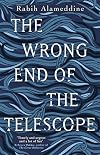
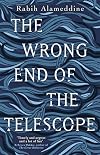
The Wrong End of the Telescope
by Rabih Alameddine
On This Page
Description
Mina Simpson, a Lebanese doctor, arrives at the infamous Moria refugee camp on Lesbos after being urgently summoned for help by her friend who runs an NGO there. Alienated from her family except for her beloved brother, Mina has avoided being so close to her homeland for decades. But with a week off work and apart from her wife of thirty years, Mina hopes to accomplish something meaningful, among the abundance of Western volunteers who pose for selfies with beached dinghies and the camp's show more children. Soon, a boat crosses bringing Sumaiya, a fiercely resolute Syrian matriarch with terminal liver cancer. Determined to protect her children and husband at all costs, Sumaiya refuses to alert her family to her diagnosis. Bonded together by Sumaiya's secret, a deep connection sparks between the two women, and as Mina prepares a course of treatment with the limited resources on hand, she confronts the circumstances of the migrants' displacement, as well as her own constraints in helping them. show lessTags
Recommendations


























Member Reviews
Rating: 5* of five (but watch this space...)
I RECEIVED MY DRC FROM THE PUBLISHER VIA EDELWEISS+. THANK YOU.
My Review: When you are faced with an overwhelming event...say, the Syrian refugee crisis of 2016...which is, in itself, the result of a series of overwhelming events outside the control of any individual who is suffering the consequences of others' bad decisions...where do you even begin to process the emotional and psychic overwhelm of the event?
In Rabih Alameddine's The Wrong End of the Telescope, you begin by finding the voice you need to make alienation, victimization, and the abjection of fleeing everything you've ever known against your will, truly personal. Enter Mina Simpson. She is a trans woman in a lesbian relationship show more (one thing I found ever-so-slightly on the nose was setting a lesbian's tale on Lesbos...but that's where it happened in reality) with a Haitian psychologist, and fellow Chicagoan, Francine. She is a physician summoned to help with the overwhelming floods of refugees from Syria's dissolution by her friend and fellow transwoman (but heterosexual), Emma. Also a doctor, Emma cries for help that Mina arrives to offer exactly as the Holidays result in a vast sea of wealthy-Westerner disaster tourists showing up to "do their bit" to help...Them.
Mina's life as a trans person in Lebanon was harrowing, as I expect most trans people's live are everywhere. There is so much hate directed at trans people all over the world, from every imaginable quarter, that it was a genuine pleasure to see Mina's older brother and sole remaining family member was loving, accepting, and even if not capable of going against the Will of the Family in public, honestly supportive of Mina as her real self. What it has done *for* her, however, is made her adept at navigating the undercurrents of family life. Mina's actions relating to Sumaiya, one of "Them" and possessor of a powerful will in a dying body, prove that Mina is a woman of the most beautifully tender spirit, capable of understanding that love for another can not conquer all and does not confer metaphysical or physical superpowers...but does summon forth reserves of strength that inspire awe in her, and in me.
The story isn't always obvious. I mean by that the presence of the author, Alameddine, on the page is second-person and the main character, our narrator, is addressing him. (He includes a very amusing, exaggerated self-caricature at 12% in the Kindle file that does not give him near enough credit for being so delightful a persona.) The pattern of addressing "you" in MSS is one I am generally not in favor of...I've gotten out of bed, dressed myself, and driven to a charity-box run by people I dislike to deposit a book told in second person so I wouldn't ever run across it again...but done as Author Alameddine does it here, makes me feel included, a part of a larger story. That alone would merit all five stars!
There are many other reasons I loved this read as immoderately as I did. The Lesbian setting makes the fact that this refugee crisis isn't the first in the area, bringing up events that not that many of his readers will know about like the Anatolian expulsion of the millennia-old Greek population and the tragedy of Smyrna, both in 1922 at the birth of modern Turkey. The 2016 refugee crisis, likewise a manufactured event meant to hurt vulnerable people, and similarly is still ramifying through European society (goddesses please bless the departed Chancellor Merkel for her willingness to commit to rehoming a million Syrians in Germany, however self-serving it was in light of their collapsed birth rate), though not always to Europe's credit, is powerfully involving. But they did *something* and we, in the USA, did bugger-all. Like we're doing for the Afghans we abandoned. Like we did for the Kurds we abandoned.
But I digress. And disagreeably.
Author Alameddine's Lebanese queerness allowed him to be Mina in more ways than another writer could. This results in a series of beautiful insights:
Tinges of violet...the Minotaur, who ate both boys and girls equally, whose one weakness the ineffable Theseus found by penetrating his labyrinth...the despair of a rigid father setting his son a path in life and imagining that, despite the boy's strength and his quick wits, that he has failed to achieve the father's goals for him...the clouds of obfuscation, the sense of the Present being a fog-bank and only the keenest senses can suss out the proper course (whether it be towards or away from some obstacle). And more, given that this is a moment that Mina's just arrived and is in her car, trying to navigate while overwhelmed by the vastness of clouds obscuring her path to be of service...I could go on, but why? You'll read it, you'll find your own reasons to love the words on these pages.
Mina's marriage to Francine, which she dates to thirty years before the book's events...January 9, 1986, to be precise...began when, as Mina says, she saw Francine "...{dancing} as if she was exploring her body in space." Anyone, anyone who could inspire such a sentence is a worthy object of love as well as partner in commitment! And to make Mina, the awkward and the marginal, the object of reciprocal love and attention, was a stroke of genius. How many of us have the experience of marrying in accordance with Iris Murdoch's deathless marriage (and writing) aperçu: "One should never commit oneself until one is amazed at one's luck."
Possibly the wickedest moment of the book is the ending, where the story of how the story came to be told is told at last: The question posed by psychiatrist Francine to the writer (whose "...default state of being" is whining), in her comfortable Chicago apartment:
And this, more than anything else Author Alameddine wrote in this beautiful work, stopped me in my tracks. Like the people in the scene, I bolted upright. Isn't this what we who read voraciously have always claimed Literature does? Allows its devotees to live a million lives, not just focus on one (probably tedious and humdrum) little existence? I like to think it can, and does, and clearly so does Author Alameddine.
But I caution the gentleman against pursuing the Frankenstein retelling he posits...Ahmed Saadawi already staked that corner out, don't you know. (That whole scene of writerly angst and desperation was slapstick funny, and made me chortle chuckle and guffaw...thanks!)
What I'm getting at here is a simple thing: I gave this book five stars, and I think it could get the annual nod of "six stars of five," barring something else this amazing coming across my field of vision. That means, in case I'm not quite making myself clear, that I think this book belongs on your shelf, reading device, or library holds list, wherever you triage the must-read-nows of your literary life. It is profound, profoundly beautiful, and fearless in its ambitious scope and craftsmanship.
I wait for this experience every time I open a book. It is a thrill to get it. show less
I RECEIVED MY DRC FROM THE PUBLISHER VIA EDELWEISS+. THANK YOU.
My Review: When you are faced with an overwhelming event...say, the Syrian refugee crisis of 2016...which is, in itself, the result of a series of overwhelming events outside the control of any individual who is suffering the consequences of others' bad decisions...where do you even begin to process the emotional and psychic overwhelm of the event?
In Rabih Alameddine's The Wrong End of the Telescope, you begin by finding the voice you need to make alienation, victimization, and the abjection of fleeing everything you've ever known against your will, truly personal. Enter Mina Simpson. She is a trans woman in a lesbian relationship show more (one thing I found ever-so-slightly on the nose was setting a lesbian's tale on Lesbos...but that's where it happened in reality) with a Haitian psychologist, and fellow Chicagoan, Francine. She is a physician summoned to help with the overwhelming floods of refugees from Syria's dissolution by her friend and fellow transwoman (but heterosexual), Emma. Also a doctor, Emma cries for help that Mina arrives to offer exactly as the Holidays result in a vast sea of wealthy-Westerner disaster tourists showing up to "do their bit" to help...Them.
Mina's life as a trans person in Lebanon was harrowing, as I expect most trans people's live are everywhere. There is so much hate directed at trans people all over the world, from every imaginable quarter, that it was a genuine pleasure to see Mina's older brother and sole remaining family member was loving, accepting, and even if not capable of going against the Will of the Family in public, honestly supportive of Mina as her real self. What it has done *for* her, however, is made her adept at navigating the undercurrents of family life. Mina's actions relating to Sumaiya, one of "Them" and possessor of a powerful will in a dying body, prove that Mina is a woman of the most beautifully tender spirit, capable of understanding that love for another can not conquer all and does not confer metaphysical or physical superpowers...but does summon forth reserves of strength that inspire awe in her, and in me.
The story isn't always obvious. I mean by that the presence of the author, Alameddine, on the page is second-person and the main character, our narrator, is addressing him. (He includes a very amusing, exaggerated self-caricature at 12% in the Kindle file that does not give him near enough credit for being so delightful a persona.) The pattern of addressing "you" in MSS is one I am generally not in favor of...I've gotten out of bed, dressed myself, and driven to a charity-box run by people I dislike to deposit a book told in second person so I wouldn't ever run across it again...but done as Author Alameddine does it here, makes me feel included, a part of a larger story. That alone would merit all five stars!
There are many other reasons I loved this read as immoderately as I did. The Lesbian setting makes the fact that this refugee crisis isn't the first in the area, bringing up events that not that many of his readers will know about like the Anatolian expulsion of the millennia-old Greek population and the tragedy of Smyrna, both in 1922 at the birth of modern Turkey. The 2016 refugee crisis, likewise a manufactured event meant to hurt vulnerable people, and similarly is still ramifying through European society (goddesses please bless the departed Chancellor Merkel for her willingness to commit to rehoming a million Syrians in Germany, however self-serving it was in light of their collapsed birth rate), though not always to Europe's credit, is powerfully involving. But they did *something* and we, in the USA, did bugger-all. Like we're doing for the Afghans we abandoned. Like we did for the Kurds we abandoned.
But I digress. And disagreeably.
Author Alameddine's Lebanese queerness allowed him to be Mina in more ways than another writer could. This results in a series of beautiful insights:
...the aforementioned Mediterranean, yes, glorious. Or was this the Aegean, which Aegeus threw himself into when he thought his son Theseus had failed against the Minotaur? The clouds were such that both the asphalt and the water had the same color, a bluish slate, the color of oxidization on copper with a tinge of periwinkle violet.
Tinges of violet...the Minotaur, who ate both boys and girls equally, whose one weakness the ineffable Theseus found by penetrating his labyrinth...the despair of a rigid father setting his son a path in life and imagining that, despite the boy's strength and his quick wits, that he has failed to achieve the father's goals for him...the clouds of obfuscation, the sense of the Present being a fog-bank and only the keenest senses can suss out the proper course (whether it be towards or away from some obstacle). And more, given that this is a moment that Mina's just arrived and is in her car, trying to navigate while overwhelmed by the vastness of clouds obscuring her path to be of service...I could go on, but why? You'll read it, you'll find your own reasons to love the words on these pages.
Mina's marriage to Francine, which she dates to thirty years before the book's events...January 9, 1986, to be precise...began when, as Mina says, she saw Francine "...{dancing} as if she was exploring her body in space." Anyone, anyone who could inspire such a sentence is a worthy object of love as well as partner in commitment! And to make Mina, the awkward and the marginal, the object of reciprocal love and attention, was a stroke of genius. How many of us have the experience of marrying in accordance with Iris Murdoch's deathless marriage (and writing) aperçu: "One should never commit oneself until one is amazed at one's luck."
Possibly the wickedest moment of the book is the ending, where the story of how the story came to be told is told at last: The question posed by psychiatrist Francine to the writer (whose "...default state of being" is whining), in her comfortable Chicago apartment:
"Have you considered writing about an American couple in suburbia to help the Syrian refugees? If you did a good job, Syrian refugees would be able to inhabit the skin of Americans, walk in their Cole Haans, empathize with their boredom and angst."
And this, more than anything else Author Alameddine wrote in this beautiful work, stopped me in my tracks. Like the people in the scene, I bolted upright. Isn't this what we who read voraciously have always claimed Literature does? Allows its devotees to live a million lives, not just focus on one (probably tedious and humdrum) little existence? I like to think it can, and does, and clearly so does Author Alameddine.
But I caution the gentleman against pursuing the Frankenstein retelling he posits...Ahmed Saadawi already staked that corner out, don't you know. (That whole scene of writerly angst and desperation was slapstick funny, and made me chortle chuckle and guffaw...thanks!)
What I'm getting at here is a simple thing: I gave this book five stars, and I think it could get the annual nod of "six stars of five," barring something else this amazing coming across my field of vision. That means, in case I'm not quite making myself clear, that I think this book belongs on your shelf, reading device, or library holds list, wherever you triage the must-read-nows of your literary life. It is profound, profoundly beautiful, and fearless in its ambitious scope and craftsmanship.
I wait for this experience every time I open a book. It is a thrill to get it. show less
The story narrates the travels of Lebanese doctor Mina Simpson to the notorious Moria refugee camp in Lesbos, Greece, after receiving an urgent call for assistance from her friend who manages an NGO there. As a Trans woman, Mina has avoided going so near to her birthplace for decades because she is estranged from her family, with the exception of her loving brother Mazen. However, Mina intends to do something significant during her week off work and without her wife of thirty years, amidst the hordes of Western volunteers who take photos with beached dinghies and the camp's kids.
Sumaiya, a very defiant Syrian matriarch who has terminal liver cancer, is soon transported across by boat. Sumaiya refuses to tell her family about her show more diagnosis since she is adamant about protecting her kids and spouse at any costs. Sumaiya's secret brings her together with Mina, who plans a course of therapy with the few resources at her disposal, she must face the circumstances that led to the migrants' displacement as well as her own limitations in being able to assist them.
Told through a compilation of short vignettes, I found this novel a touching and emotionally uplifting story of a trans woman's success in difficult situations. What comes through is the warmth and humanity of the heroine and her modern odyssey in theLevant. show less
Sumaiya, a very defiant Syrian matriarch who has terminal liver cancer, is soon transported across by boat. Sumaiya refuses to tell her family about her show more diagnosis since she is adamant about protecting her kids and spouse at any costs. Sumaiya's secret brings her together with Mina, who plans a course of therapy with the few resources at her disposal, she must face the circumstances that led to the migrants' displacement as well as her own limitations in being able to assist them.
Told through a compilation of short vignettes, I found this novel a touching and emotionally uplifting story of a trans woman's success in difficult situations. What comes through is the warmth and humanity of the heroine and her modern odyssey in theLevant. show less
In a Nutshell: If you are a literary fiction fan, you can’t miss out on this one!
Story:
The book is written in very short chapters, and as they are in first person, they feel more like reading someone’s journal entries. And just like journal entries, they cover a wide range of topics, both in the past and in the present. Mina muses over her struggles with her mother to accept Mina as a girl born in a boy’s body, her relationships and her thirty year old marriage with Francine, her relations with the rest of her family, her childhood, her interactions with the other volunteers and the refugees, especially with Sumaiya (a determined mother who is battling terminal cancer without wanting her family to know the extent of her illness), her opinion of some of the “humanitarian tourists” who were more interested in selfies than in actual help,... Every part of the writing goes straight to the heart.
Some of the chapters are addressed to an unknown person. To my utter shame, it took me ages to figure out whom these chapters were addressed to. But once I did, the beauty of those chapters was enhanced even further by their poignancy and determination. Realising the secret person’s identity was a brilliant experience!
The chapter titles are innovative in form. They represent the content accurately without giving any clue of what's included in the content. That's exactly how chapter titles should be. I hate it when the title reveals what's going to come in that particular chapter. I also enjoyed how the author blended fact and fiction seamlessly into the narrative. The addition of the factual events created a deeper impact about the extent of the refugee crisis. I need to praise the level of the language as well. What an outstanding vocabulary! The precise word for the precise sentiment throughout! I relished this reading for the lexicon as much as for the content.
This is the story of a journey of self-realization and social awareness. It is queer. (Whichever meaning of 'queer' you choose to apply here will be correct.) It is a complex read because of the numerous rambling conversation-style chapters. It is slow because it is a literary fiction in the truest sense of the word. It is humorous. It is realistic. It is emotional. It is hard-hitting. It doesn’t shy back from tough discussions. It is…worth a read. But note that it is also quite intense and overwhelming. Read it on a strong day.
4.25 stars from me.
Thank you to Grove Atlantic and NetGalley for the ARC of the book in exchange for an honest review.
***********************
Join me on the Facebook group, Readers Forever!, for more reviews, book-related discussions and fun. show less
Story:
Mina, a surgeon in her fifties, a naturalised American of Lebanese-Syrian origin, a trans woman, a lesbian: this is the intriguing person in whose first person perspective you will hear this book.show more
Mina has arrived at the Moria refugee camp on Lesbos Island at the invitation of her friend, Emma, who runs an NGO there. After being alienated from most of her family except her brother because of her gender identity, Mina finds it overwhelming to be so near her original country after three decades. However, she seeks some kind of fulfilment while using her skills as a surgeon and a speaker of Arabic to help out those brave souls who have crossed the
Aegean Sea at a high personal and financial cost in the hope of a better, safer future. “The Wrong End of the telescope” follows Mina’s experiences and ponderings in Lesbos Island.
The book is written in very short chapters, and as they are in first person, they feel more like reading someone’s journal entries. And just like journal entries, they cover a wide range of topics, both in the past and in the present. Mina muses over her struggles with her mother to accept Mina as a girl born in a boy’s body, her relationships and her thirty year old marriage with Francine, her relations with the rest of her family, her childhood, her interactions with the other volunteers and the refugees, especially with Sumaiya (a determined mother who is battling terminal cancer without wanting her family to know the extent of her illness), her opinion of some of the “humanitarian tourists” who were more interested in selfies than in actual help,... Every part of the writing goes straight to the heart.
Some of the chapters are addressed to an unknown person. To my utter shame, it took me ages to figure out whom these chapters were addressed to. But once I did, the beauty of those chapters was enhanced even further by their poignancy and determination. Realising the secret person’s identity was a brilliant experience!
The chapter titles are innovative in form. They represent the content accurately without giving any clue of what's included in the content. That's exactly how chapter titles should be. I hate it when the title reveals what's going to come in that particular chapter. I also enjoyed how the author blended fact and fiction seamlessly into the narrative. The addition of the factual events created a deeper impact about the extent of the refugee crisis. I need to praise the level of the language as well. What an outstanding vocabulary! The precise word for the precise sentiment throughout! I relished this reading for the lexicon as much as for the content.
This is the story of a journey of self-realization and social awareness. It is queer. (Whichever meaning of 'queer' you choose to apply here will be correct.) It is a complex read because of the numerous rambling conversation-style chapters. It is slow because it is a literary fiction in the truest sense of the word. It is humorous. It is realistic. It is emotional. It is hard-hitting. It doesn’t shy back from tough discussions. It is…worth a read. But note that it is also quite intense and overwhelming. Read it on a strong day.
4.25 stars from me.
Thank you to Grove Atlantic and NetGalley for the ARC of the book in exchange for an honest review.
***********************
Join me on the Facebook group, Readers Forever!, for more reviews, book-related discussions and fun. show less
On Rabih Alameddine's web page, The Wrong End of the Telescope is described as "a transporting new novel about an Arab American trans woman’s journey among Syrian refugees on Lesbos island." It's also a novel about much more: how families pull apart and come back together; end-of-life decision-making; "humanitarian tourism"; the complexity of the many stories of even the smallest group of people; how and why we choose to pull up roots and head into a new unknown; gender and sexuality; and how we learn who we are and who we love. In other words, this is a book about Everything—and I mean that in a good way.
Underlying this novel is the premise that Mina Simpson, the central character, is writing this book because a friend of hers, who show more is a well-known author, has found himself unable to write about the Syrian refugee crisis and urged her to take on this task. The novel is written as if Mina were talking to her writer friend, with broad use of second-person narration, and feels simultaneously a deeply personal document and a statement to the world. "You will remember when" sorts of references abound, but ultimately don't distance readers. Rather, these let the reader view the world from multiple perspectives.
This novel has me thinking about intersectionality, the interconnectedness of social categories such as race, class, and gender that create overlapping and interdependent systems of discrimination or disadvantage. Mina isn't just a trans woman: she's a lesbian, she's Lebanese, but has lived in the U.S. since being rejected by her family years ago, she's a physician, she's in a thirty-year committed relationship with Francine, a Haitian psychiatrist she met in med school. Intersectionality.
Pretty much every other major character in The Wrong End of the Telescope has a similarly complex identity. A friend who runs an NGO providing services to refugees, mostly Syrian, who come in overcrowded boats to the island of Lesbos, a gateway to life in Europe and to a life not overwhelmed by the ongoing impact of Syria's complex and violent civil war, has urged Mina to come work with these refugees. This friend is also a trans woman, but "straight." On the island, Mina is joined by her brother, the only member of her extended family still in contact with her. He has embraced the fact that the brother he was raised with has turned out to be a sister. He's divorced. His wife has custody of their children and has moved to Dubai. On the island this trio meet the writer, a gay man who is committed to documenting refugee lives, but who has come to Lesbos as a volunteer, not a writer, and is overwhelmed by the experience of working with these individuals without his literary identity allowing him to maintain an authorial distance.
The above paragraph packs in a lot of information. I include these many details because they illustrates the complex intersectionality in The Wrong End of the Telescope.
Added to this mix of characters are a Syrian family, part of the initial group of refugees Mina works with. The mother has terminal liver cancer, but has managed to travel this far with her family. Now, however, she's ready to end her life and for her family to go on without her.
In the hands of a less-skilled writer, this complexity could feel melodramatic. Alameddine keeps it down to earth, "normal" if you will. And the normality of all this complexity is what makes the book so remarkable. The Wrong End of the Telescope begins slowly, and the second-person narration is distancing at first, but the reader becomes fiercely engaged as the novel progresses. Ultimately, The Wrong End of the Telescope is a "must-read" that pays off in remarkable richness the effort the reader makes to enter the world of the book.
I received a free electronic review copy of this title from the publisher via NetGalley; the opinions are my own. show less
Underlying this novel is the premise that Mina Simpson, the central character, is writing this book because a friend of hers, who show more is a well-known author, has found himself unable to write about the Syrian refugee crisis and urged her to take on this task. The novel is written as if Mina were talking to her writer friend, with broad use of second-person narration, and feels simultaneously a deeply personal document and a statement to the world. "You will remember when" sorts of references abound, but ultimately don't distance readers. Rather, these let the reader view the world from multiple perspectives.
This novel has me thinking about intersectionality, the interconnectedness of social categories such as race, class, and gender that create overlapping and interdependent systems of discrimination or disadvantage. Mina isn't just a trans woman: she's a lesbian, she's Lebanese, but has lived in the U.S. since being rejected by her family years ago, she's a physician, she's in a thirty-year committed relationship with Francine, a Haitian psychiatrist she met in med school. Intersectionality.
Pretty much every other major character in The Wrong End of the Telescope has a similarly complex identity. A friend who runs an NGO providing services to refugees, mostly Syrian, who come in overcrowded boats to the island of Lesbos, a gateway to life in Europe and to a life not overwhelmed by the ongoing impact of Syria's complex and violent civil war, has urged Mina to come work with these refugees. This friend is also a trans woman, but "straight." On the island, Mina is joined by her brother, the only member of her extended family still in contact with her. He has embraced the fact that the brother he was raised with has turned out to be a sister. He's divorced. His wife has custody of their children and has moved to Dubai. On the island this trio meet the writer, a gay man who is committed to documenting refugee lives, but who has come to Lesbos as a volunteer, not a writer, and is overwhelmed by the experience of working with these individuals without his literary identity allowing him to maintain an authorial distance.
The above paragraph packs in a lot of information. I include these many details because they illustrates the complex intersectionality in The Wrong End of the Telescope.
Added to this mix of characters are a Syrian family, part of the initial group of refugees Mina works with. The mother has terminal liver cancer, but has managed to travel this far with her family. Now, however, she's ready to end her life and for her family to go on without her.
In the hands of a less-skilled writer, this complexity could feel melodramatic. Alameddine keeps it down to earth, "normal" if you will. And the normality of all this complexity is what makes the book so remarkable. The Wrong End of the Telescope begins slowly, and the second-person narration is distancing at first, but the reader becomes fiercely engaged as the novel progresses. Ultimately, The Wrong End of the Telescope is a "must-read" that pays off in remarkable richness the effort the reader makes to enter the world of the book.
I received a free electronic review copy of this title from the publisher via NetGalley; the opinions are my own. show less
4.5/5
Dr. Mina Simpson is a Lebanese American physician who travels to Syria to provide medical aid in the migrant camps on the Greek island of Lesbos where displaced migrants from Syria are temporarily housed till they commence on the next leg of their journey. She is joined by Emma , her friend who is a nurse, Rasheed a social worker and later her brother Mazen who still lives in Lebanon.
With them is also "the writer" who is addressed throughout the novel and is depicted as a generous person who wants to help but is too overwhelmed with what he is witnessing and tends to distance himself at times .He is is seen trying to convince Mina to write about her experiences.
“Writing simplifies life, you said, forces coherence on discordant show more narratives, unless it doesn’t, and most of the time it doesn’t, because really, how can one make sense of the senseless? One puts a story in a linear order, posits cause and effect, and then thinks one has arrived. Writing one’s story narcotizes it. Literature today is an opiate."
The Wrong End of the Telescope describes Mina's experiences in the refugee camp - the people she meets and befriends , the patients she treats and the feelings of anguish and helplessness that is brought on by witnessing firsthand the plight of the fleeing Syrian refugees. She also describes the efforts and motivations of social workers and volunteers who flock the area to aid the refugees with a bit of satire and humor. Interwoven with the stories of the camp (s) is Mina's own story. Mina ,born Ayman, is a trans woman , disowned by her own family, happily married to Francine and settled in the United States. She has not visited Lebanon in forty years . Mazen is the only family member who has kept in touch with her .
The novel is broken into small chapters and flits between Mina's own story and those of the refugees. Never does the author come across as too political or preachy while drawing upon real life incidents that have gained worldwide attention and very tactfully shows the human angle associated with events happening in that part of the world from the perspectives of the refugees - old and young , volunteers and social workers. He also explores the inner conflict of refugees who leave their home country and assimilate with their adopted country hoping that such assimilation would truly provide a new lease of life only to find that often that might not be the case. The author's reference to Greek mythology in parts of this book makes for a rich reading experience.
Given the subject matter I expected this book to be hard to take in . But with beautiful prose and a respectful, delicate approach to the sensitive issues broached in this exquisite novel the brilliance of Rabih Alameddine’s masterful storytelling shines through. The Hakawati was the first Rabih Alameddine novel that I read and absolutely fell in love with. The Wrong End of the Telescope is my fifth book by Rabih Alameddine and I truly look forward to reading more of his work! show less
Dr. Mina Simpson is a Lebanese American physician who travels to Syria to provide medical aid in the migrant camps on the Greek island of Lesbos where displaced migrants from Syria are temporarily housed till they commence on the next leg of their journey. She is joined by Emma , her friend who is a nurse, Rasheed a social worker and later her brother Mazen who still lives in Lebanon.
With them is also "the writer" who is addressed throughout the novel and is depicted as a generous person who wants to help but is too overwhelmed with what he is witnessing and tends to distance himself at times .He is is seen trying to convince Mina to write about her experiences.
“Writing simplifies life, you said, forces coherence on discordant show more narratives, unless it doesn’t, and most of the time it doesn’t, because really, how can one make sense of the senseless? One puts a story in a linear order, posits cause and effect, and then thinks one has arrived. Writing one’s story narcotizes it. Literature today is an opiate."
The Wrong End of the Telescope describes Mina's experiences in the refugee camp - the people she meets and befriends , the patients she treats and the feelings of anguish and helplessness that is brought on by witnessing firsthand the plight of the fleeing Syrian refugees. She also describes the efforts and motivations of social workers and volunteers who flock the area to aid the refugees with a bit of satire and humor. Interwoven with the stories of the camp (s) is Mina's own story. Mina ,born Ayman, is a trans woman , disowned by her own family, happily married to Francine and settled in the United States. She has not visited Lebanon in forty years . Mazen is the only family member who has kept in touch with her .
The novel is broken into small chapters and flits between Mina's own story and those of the refugees. Never does the author come across as too political or preachy while drawing upon real life incidents that have gained worldwide attention and very tactfully shows the human angle associated with events happening in that part of the world from the perspectives of the refugees - old and young , volunteers and social workers. He also explores the inner conflict of refugees who leave their home country and assimilate with their adopted country hoping that such assimilation would truly provide a new lease of life only to find that often that might not be the case. The author's reference to Greek mythology in parts of this book makes for a rich reading experience.
Given the subject matter I expected this book to be hard to take in . But with beautiful prose and a respectful, delicate approach to the sensitive issues broached in this exquisite novel the brilliance of Rabih Alameddine’s masterful storytelling shines through. The Hakawati was the first Rabih Alameddine novel that I read and absolutely fell in love with. The Wrong End of the Telescope is my fifth book by Rabih Alameddine and I truly look forward to reading more of his work! show less
When her friend calls her, Mina Simpson comes to Lesbos to help. The doctor can assist the refugees who land on the island not only physically but, since she is of Lebanese descent, she also speaks the language of the Syrians who risk their life to flee the war raging in their home country. For Mina, the Greek island is the closest she has been to her family for decades, as a trans woman, she never found her place there, only when she came to the USA could she live freely. With the first boat she sees lands the family of Sumaiya who first refuses to be examined by the doctor. But somehow, there is a spark of understanding between the two and Mina quickly understands why the other woman refuses any treatment: she knows already that she show more is terminally ill and the only thing she wanted to make sure was to bring her family to a save place.
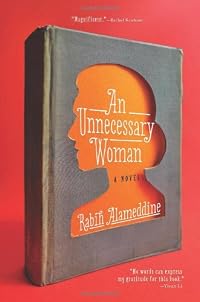
“The Wrong End of the Telescope” is the third book I read of the author and again, he did not disappoint my high expectations even though it took me some time to figure out who the narrator is talking to. Just like in “An Unnecessary Woman”, we find a strong heroine who follows her ideas and yet is not totally stubborn and ignorant but sensitive to what her actions do to others. The plot centres around the refugee crisis which has been the top news for some years now and cleverly mixes fact and fiction by also integrating actual incidents.
Mina comes to the island with a clear aim: she wants to help. She is trained and thus qualified to do the work. Apart from her, there are many young people who have been attracted by the news, their situation is a bit different. Most of them arrived well-meaning, yet, taking photos of themselves helping and documenting the disastrous situation in the refugee camps seems to be their top priority, actually helping only comes second. Most of them seem to be unaware of their inadequate behaviour; the sensation seeking journalists, on the contrary, know exactly why they are there and that they prof from other people’s sufferance.
The protagonist differs strongly here, well, she differs from most people and her personal story is also not without traumatic experiences having grown up in the wrong body in a country where such a concept simply does not exist. She, like the refugees, knows what it means to lose home, to lose the people you love and to start anew in a different country, a different culture not knowing what the future might bring. She is well respected and her knowledge of both cultures allows her to critically comment on the flaws that both exhibit. As an outsider here and there, she is like an unrelated observer who thus can also highlight common traits members might not see.
Depending on the side of the telescope you use, you can get a closer or a more distant view of what you are looking at. Alameddine does both in his novel, on the one hand, he closely portrays the fate of one family, one mother, on the other hand, he also widens the frame of the refugee crisis. In addressing Mina’s narration to an unnamed and disillusioned writer, we also get both perspectives: looking at the world’s state on a wide you, you can simply despair, on the other hand, on a more personal level, there is still hope and so much good the single person can do.
Without a doubt, Rabih Alameddine is a wonderful narrator with a genius for integrating food for thought into brilliant narration. show less
“The Wrong End of the Telescope” is the third book I read of the author and again, he did not disappoint my high expectations even though it took me some time to figure out who the narrator is talking to. Just like in “An Unnecessary Woman”, we find a strong heroine who follows her ideas and yet is not totally stubborn and ignorant but sensitive to what her actions do to others. The plot centres around the refugee crisis which has been the top news for some years now and cleverly mixes fact and fiction by also integrating actual incidents.
Mina comes to the island with a clear aim: she wants to help. She is trained and thus qualified to do the work. Apart from her, there are many young people who have been attracted by the news, their situation is a bit different. Most of them arrived well-meaning, yet, taking photos of themselves helping and documenting the disastrous situation in the refugee camps seems to be their top priority, actually helping only comes second. Most of them seem to be unaware of their inadequate behaviour; the sensation seeking journalists, on the contrary, know exactly why they are there and that they prof from other people’s sufferance.
The protagonist differs strongly here, well, she differs from most people and her personal story is also not without traumatic experiences having grown up in the wrong body in a country where such a concept simply does not exist. She, like the refugees, knows what it means to lose home, to lose the people you love and to start anew in a different country, a different culture not knowing what the future might bring. She is well respected and her knowledge of both cultures allows her to critically comment on the flaws that both exhibit. As an outsider here and there, she is like an unrelated observer who thus can also highlight common traits members might not see.
Depending on the side of the telescope you use, you can get a closer or a more distant view of what you are looking at. Alameddine does both in his novel, on the one hand, he closely portrays the fate of one family, one mother, on the other hand, he also widens the frame of the refugee crisis. In addressing Mina’s narration to an unnamed and disillusioned writer, we also get both perspectives: looking at the world’s state on a wide you, you can simply despair, on the other hand, on a more personal level, there is still hope and so much good the single person can do.
Without a doubt, Rabih Alameddine is a wonderful narrator with a genius for integrating food for thought into brilliant narration. show less
A story of two Syrian/Lebanese immigrants to the US, one trans one gay, told in both first and second person, set mostly on Lesbos during the first January of the refugee crisis there. Sometimes sour, sometimes bitter but with a deep humanity and a wry set of titles for the short sections in which it is told.
Untypically, the issues the two face and have faced seem more to do with where they have come from than dealing with and adjusting to where they have settled.
Untypically, the issues the two face and have faced seem more to do with where they have come from than dealing with and adjusting to where they have settled.
Members
- Recently Added By
Published Reviews
ThingScore 100
Empathy is of limited use in the face of horror and injustice – depictions of which abound in this seventh novel from Alameddine, a Lebanese writer living in the US. It’s a beautiful, well paced, enraging, funny and heartbreaking book.
added by Nevov
Lists

2022 Notable Books for Adults
25 works; 3 members

Anticipated 2021 Reads
231 works; 7 members

Books Read in 2022
5,164 works; 111 members

Fiction: Historical
288 works; 3 members

Sexuality & Gender
160 works; 3 members

World Books
51 works; 4 members

Refugee crisis
40 works; 1 member
Author Information

14+ Works 3,699 Members
He is a writer & artist living in San Francisco. He is the author of the critically acclaimed Koolaids: The Art of War & The Perv. (Bowker Author Biography)
Some Editions
Awards and Honors
Awards
Distinctions
Notable Lists
Common Knowledge
- Original publication date
- 2021-09-21
- Important places
- Syria; Lesbos, Greece; Lebanon
- First words
- He was my people - he and I kneaded by the same hands. He was on the shorter side, my height, not in the greatest shape. His hair had less gray than mine but was the same shade of dark. We had similar facial features. I would... (show all) have recognized that he was from the Levant even without the Palestine Red Crescent Society vest he sported. -Round and Round We Go
- Canonical DDC/MDS
- 813.54
Classifications
Statistics
- Members
- 246
- Popularity
- 131,298
- Reviews
- 10
- Rating
- (4.18)
- Languages
- English
- Media
- Paper, Audiobook, Ebook
- ISBNs
- 7
- ASINs
- 3