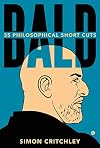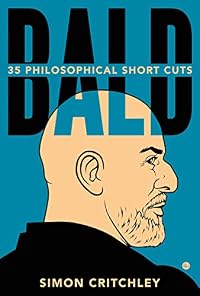
Bald: 35 Philosophical Short Cuts
by Simon Critchley
29 Members (4.00)
On This Page
Description
A new and expansive collection of essays from one of the world's best-known popular philosophers The moderator of the New York Times' Stone column and the author of numerous books on everything from Greek tragedy to David Bowie, Simon Critchley has been a strong voice in popular philosophy for more than a decade. This volume brings together thirty ? 'five essays, originally published in the Times, on a wide range of topics, from the dimensions of Plato's academy and the mysteries of Eleusis show more to Philip K. Dick, Mormonism, money, and the joy and pain of Liverpool Football Club fans. In an engaging and jargon ? 'free style, Critchley writes with honesty about the state of world as he offers philosophically informed and insightful considerations of happiness, violence, and faith. Stripped of inaccessible academic armatures, these short pieces bring philosophy out of the ivory tower and demonstrate an exciting new way to think in public. show lessTags
Recommendations












Member Reviews
Members
- Recently Added By
Published Reviews
ThingScore 50
Academic writing is, very often, very bad. Academics are notorious for using dry, technical language with lots of dreary hesitations, stiff qualifications, absurd jargon and passive phrasing. Sometimes this can be useful for getting into nuanced ideas, but more commonly it mystifies, confuses and covers up weaknesses like a bad comb-over.
In Simon Critchley’s new book Bald: 35 philosophical show more short cuts, he refuses standard academic “protective headgear” or an “elaborate scholastic toupee”. Just as Critchley accepted going fully bald at forty, he strived to go bald with his writing, exposing his thinking in uncovered ways. Bald is a collection of thirty-five bite-size, eclectic essays mostly published originally in “The Stone” column in the New York Times that ran from 2010 to 2021. The essays are organized into eight sections, loosely grouped around questions such as “Happiness?” and “What Are Philosophers For?” or themes including “I Believe” and “The Tragedy of Violence”.
In the first section, “Happiness?”, Critchley argues that there is no formula for happiness, that hope is delusional, and that authenticity is dangerous, at least when it becomes a grasping for personal success at any cost. What we need instead, he argues – inspired by both Friedrich Nietzsche and the Athenian historian Thucydides – is the courage to face up to the fact that happiness is found in carving out the space to give attention to things, along with an awareness that we can’t be happy unless we are also sometimes melancholy, and able to accept our mortality.
The theme of happiness spills over into the second section, “I Believe”, which is full of surprises – not least its sympathetic take on Mormonism. Critchley attempts to combat casual prejudice against the religion, and likens Mormonism’s “theological, poetic and political audacity” to Romanticism. Its allure, he explains, is that it promises that anyone can become God. A Mormon explained to Critchley that God is plural, finite and was originally a man who became divine. If mere mortals put enough effort into finding salvation, they too can learn to become exalted. This belief is also why Mormons “share the love” so widely: “If divinity tastes so good, then why keep all the goodness to oneself?” Critchley does nod to the fact that, in practice, the religion works out much better for heterosexual men than it does for anyone else.
There is a lovely essay about how Søren Kierkegaard encourages us to cultivate inwardness, and about his formulation of a Christian spin on Descartes’s cogito that Critchley frames as: “I owe [love], therefore I am”. In a plot twist, Critchley suggests that the faithless may, in fact, be better at this particular species of Christian belief than the faithful, given that the former tend to be more comfortable with uncertainty. In another essay in this section, the author suggests that one of the biggest problems in our society is that money has become the “one true God” because “everything is for sale and everyone is a prostitute insofar as value can be ultimately determined in financial terms”. The section does, however, end on an optimistic note, with a vivid essay that advances football fandom as a viable polytheistic religion, given that it allows the worship of multiple gods (teams), accepts that everyone thinks theirs is the best, that they all rally around a common history and set of values, and that it teaches fans how to accept failure and disappointment.
The heart of the book appears in the third section, “What Are Philosophers For?”. To philosophize is to scratch the itches of existence. Scratching can bring relief, more pain, or both, but Critchley is of the belief that philosophy is no salve. “Philosophy is not Neosporin. It is not a healing balm. It is the opposite, an irritant, which is why Socrates described himself as a gadfly.” This also seems to be what Critchley is really trying to do in Bald: he is not only showcasing his writing, but also helping readers to see where the big questions of life might be negatively affecting us without our realizing, and to create space and clarity to look carefully at the irritants.
“To philosophize”, Critchley claims, “is to take your time, even when you have no time, when time is constantly pressing at your back.” It is also why it might seem that philosophy hasn’t advanced in thousands of years: because philosophizing isn’t about knowing the answers, it’s learning how to ask good questions, to keep asking them and to love the chaos. We don’t need answers – not even to the meaning of life. Frank Cioffi, who taught Critchley during his undergraduate degree, argued that what’s more helpful than answers are clarity and focus amid life’s tumult: “What we need are multifarious descriptions of many things, further descriptions of phenomena that change the aspect under which they are seen, that light them up and let us see them anew … We might feel refreshed and illuminated, even slightly transformed, after a moment of clarification, but we aren’t going to stop scratching that itch”.
In his essay “When Socrates Met Phaedrus: Eros in philosophy” Critchley analyses Plato’s dialogue in which Socrates and Phaedrus go for a walk on a hot summer day. Phaedrus, a dim character, has just heard a speech on love and is bewitched by it, failing to recognize that it is mere sophistry. “He is like someone nowadays who compulsively watches TED talks”, Critchley writes. Since Phaedrus loves speeches, Socrates gives speeches about the nature of rhetoric and how to distinguish the good from the bad: good speeches aren’t just about impressing listeners, they lead the soul towards a love of truth. This is the purpose of philosophical dialogue more generally: to “inflame a philosophical eros”, that is, a commitment to philosophy’s aim of seeking truth. Socrates relates to Phaedrus in a way that he understands and enjoys – and succeeds in persuading him to love wisdom.
There are odes to Philip K. Dick, a “garage philosopher” – meaning an amateur philosopher and autodidact – and David Bowie, who, Critchley suggests, was a closet anti-nihilist whose “absolute and unconditional affirmation of life” echoes throughout his lyrics. A spectacularly entertaining essay is titled “PBS” (which refers both to Critchley’s Pepto-Bismol coloured shirt and to something considerably crasser), in which he narrates an altercation with an obscenity-yelling, red-convertible-sports-car driver from New Jersey to explore the phenomenology of swearing.
Many of these essays take on a decidedly existential tone, drawing on the likes of Nietzsche, Kierkegaard, Fyodor Dostoevsky and Jean-Paul Sartre (though notably not Simone de Beauvoir). Critchley makes reference to more than 200 philosophical, historical and political figures. Fewer than ten of those are women, and fewer still are non-western. Still, the topics are diverse enough to interest a general reader, and Critchley’s style is seductive; he doesn’t take himself too seriously. He shares personal stories and flashbacks amid the polemics (his passion for watching football with his son; how he almost severed his hand as a teenager) and he puts forward his political views without bludgeoning readers. This approach – of personal narrative blended with philosophical analysis – gives a sense of warmth and intimacy to essays that are otherwise structurally crisp and polished.
Critchley’s underlying message is that philosophy is not something you should do on your own. “Philosophy should come with the kind of health warning one finds on packs of European cigarettes: PHILOSOPHY KILLS”, partly because it literally killed the “first philosopher” Thales (who thought that everything was water and, while ruminating on the stars, fell into a well and drowned), and partly because philosophy is a process of dialogue, of collectively sticking our necks out and putting our heads together to discuss ideas, and of changing our minds. And, as Critchley writes, “in philosophy, we have to meet others on their ground and in their own terms and try and bring them around, slowly, cautiously and with good humor … Sometimes it succeeds, and sometimes it fails”. If Critchley’s aim is to inflame readers’ philosophical eros through persuasive rhetoric, then this excellent collection is certainly a success.
Skye C. Cleary is the author of Existentialism and Romantic Love, and co-editor of How to Live a Good Life. Her book about Simone de Beauvoir’s philosophy is due to appear next year. She teaches at Barnard College and the City College of New York.
TLS - July 30, 2021 show less
In Simon Critchley’s new book Bald: 35 philosophical show more short cuts, he refuses standard academic “protective headgear” or an “elaborate scholastic toupee”. Just as Critchley accepted going fully bald at forty, he strived to go bald with his writing, exposing his thinking in uncovered ways. Bald is a collection of thirty-five bite-size, eclectic essays mostly published originally in “The Stone” column in the New York Times that ran from 2010 to 2021. The essays are organized into eight sections, loosely grouped around questions such as “Happiness?” and “What Are Philosophers For?” or themes including “I Believe” and “The Tragedy of Violence”.
In the first section, “Happiness?”, Critchley argues that there is no formula for happiness, that hope is delusional, and that authenticity is dangerous, at least when it becomes a grasping for personal success at any cost. What we need instead, he argues – inspired by both Friedrich Nietzsche and the Athenian historian Thucydides – is the courage to face up to the fact that happiness is found in carving out the space to give attention to things, along with an awareness that we can’t be happy unless we are also sometimes melancholy, and able to accept our mortality.
The theme of happiness spills over into the second section, “I Believe”, which is full of surprises – not least its sympathetic take on Mormonism. Critchley attempts to combat casual prejudice against the religion, and likens Mormonism’s “theological, poetic and political audacity” to Romanticism. Its allure, he explains, is that it promises that anyone can become God. A Mormon explained to Critchley that God is plural, finite and was originally a man who became divine. If mere mortals put enough effort into finding salvation, they too can learn to become exalted. This belief is also why Mormons “share the love” so widely: “If divinity tastes so good, then why keep all the goodness to oneself?” Critchley does nod to the fact that, in practice, the religion works out much better for heterosexual men than it does for anyone else.
There is a lovely essay about how Søren Kierkegaard encourages us to cultivate inwardness, and about his formulation of a Christian spin on Descartes’s cogito that Critchley frames as: “I owe [love], therefore I am”. In a plot twist, Critchley suggests that the faithless may, in fact, be better at this particular species of Christian belief than the faithful, given that the former tend to be more comfortable with uncertainty. In another essay in this section, the author suggests that one of the biggest problems in our society is that money has become the “one true God” because “everything is for sale and everyone is a prostitute insofar as value can be ultimately determined in financial terms”. The section does, however, end on an optimistic note, with a vivid essay that advances football fandom as a viable polytheistic religion, given that it allows the worship of multiple gods (teams), accepts that everyone thinks theirs is the best, that they all rally around a common history and set of values, and that it teaches fans how to accept failure and disappointment.
The heart of the book appears in the third section, “What Are Philosophers For?”. To philosophize is to scratch the itches of existence. Scratching can bring relief, more pain, or both, but Critchley is of the belief that philosophy is no salve. “Philosophy is not Neosporin. It is not a healing balm. It is the opposite, an irritant, which is why Socrates described himself as a gadfly.” This also seems to be what Critchley is really trying to do in Bald: he is not only showcasing his writing, but also helping readers to see where the big questions of life might be negatively affecting us without our realizing, and to create space and clarity to look carefully at the irritants.
“To philosophize”, Critchley claims, “is to take your time, even when you have no time, when time is constantly pressing at your back.” It is also why it might seem that philosophy hasn’t advanced in thousands of years: because philosophizing isn’t about knowing the answers, it’s learning how to ask good questions, to keep asking them and to love the chaos. We don’t need answers – not even to the meaning of life. Frank Cioffi, who taught Critchley during his undergraduate degree, argued that what’s more helpful than answers are clarity and focus amid life’s tumult: “What we need are multifarious descriptions of many things, further descriptions of phenomena that change the aspect under which they are seen, that light them up and let us see them anew … We might feel refreshed and illuminated, even slightly transformed, after a moment of clarification, but we aren’t going to stop scratching that itch”.
In his essay “When Socrates Met Phaedrus: Eros in philosophy” Critchley analyses Plato’s dialogue in which Socrates and Phaedrus go for a walk on a hot summer day. Phaedrus, a dim character, has just heard a speech on love and is bewitched by it, failing to recognize that it is mere sophistry. “He is like someone nowadays who compulsively watches TED talks”, Critchley writes. Since Phaedrus loves speeches, Socrates gives speeches about the nature of rhetoric and how to distinguish the good from the bad: good speeches aren’t just about impressing listeners, they lead the soul towards a love of truth. This is the purpose of philosophical dialogue more generally: to “inflame a philosophical eros”, that is, a commitment to philosophy’s aim of seeking truth. Socrates relates to Phaedrus in a way that he understands and enjoys – and succeeds in persuading him to love wisdom.
There are odes to Philip K. Dick, a “garage philosopher” – meaning an amateur philosopher and autodidact – and David Bowie, who, Critchley suggests, was a closet anti-nihilist whose “absolute and unconditional affirmation of life” echoes throughout his lyrics. A spectacularly entertaining essay is titled “PBS” (which refers both to Critchley’s Pepto-Bismol coloured shirt and to something considerably crasser), in which he narrates an altercation with an obscenity-yelling, red-convertible-sports-car driver from New Jersey to explore the phenomenology of swearing.
Many of these essays take on a decidedly existential tone, drawing on the likes of Nietzsche, Kierkegaard, Fyodor Dostoevsky and Jean-Paul Sartre (though notably not Simone de Beauvoir). Critchley makes reference to more than 200 philosophical, historical and political figures. Fewer than ten of those are women, and fewer still are non-western. Still, the topics are diverse enough to interest a general reader, and Critchley’s style is seductive; he doesn’t take himself too seriously. He shares personal stories and flashbacks amid the polemics (his passion for watching football with his son; how he almost severed his hand as a teenager) and he puts forward his political views without bludgeoning readers. This approach – of personal narrative blended with philosophical analysis – gives a sense of warmth and intimacy to essays that are otherwise structurally crisp and polished.
Critchley’s underlying message is that philosophy is not something you should do on your own. “Philosophy should come with the kind of health warning one finds on packs of European cigarettes: PHILOSOPHY KILLS”, partly because it literally killed the “first philosopher” Thales (who thought that everything was water and, while ruminating on the stars, fell into a well and drowned), and partly because philosophy is a process of dialogue, of collectively sticking our necks out and putting our heads together to discuss ideas, and of changing our minds. And, as Critchley writes, “in philosophy, we have to meet others on their ground and in their own terms and try and bring them around, slowly, cautiously and with good humor … Sometimes it succeeds, and sometimes it fails”. If Critchley’s aim is to inflame readers’ philosophical eros through persuasive rhetoric, then this excellent collection is certainly a success.
Skye C. Cleary is the author of Existentialism and Romantic Love, and co-editor of How to Live a Good Life. Her book about Simone de Beauvoir’s philosophy is due to appear next year. She teaches at Barnard College and the City College of New York.
TLS - July 30, 2021 show less
added by AntonioGallo
Author Information

65+ Works 3,429 Members
English philosopher Simon Critchley was born on February 27, 1960. He earned his BA (1985) and PhD (1988) from the University of Essex in England. Critchley received his M.Phil. from France's University of Nice in 1987. Critchley has held university fellow, lecturer, reader, and professor positions and was the Director of the Centre for show more Theoretical Studies at the University of Essex. Additionally, Critchley was President of the British Society for Phenomenology from 1994-1999, he held a Humboldt Research Fellowship in Philosophy at the University of Frankfurt, and was Programme Director of the Collège International de Philosophie. Since 2004 Critchley has taught philosophy at the New School for Social Research in New York. Critchley's publications include "The Ethics of Deconstruction: Derrida and Levinas," the collection of essays "Ethics-Politics-Subjectivity," "Continental Philosophy: A Very Short Introduction," "On Humour," "Things Merely Are," "Infinitely Demanding," and the New York Times bestseller "The Book of Dead Philosophers". (Bowker Author Biography) show less
Classifications
Statistics
- Members
- 29
- Popularity
- 899,183
- Rating
- (4.00)
- Languages
- English
- Media
- Paper, Ebook
- ISBNs
- 2