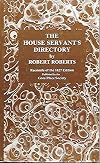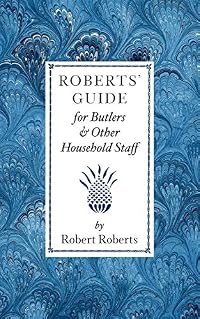
Roberts' Guide for Butlers and Household Staff
by Robert Roberts
On This Page
Description
Robert Roberts' The House Servant's Directory, first published in 1827 and the standard for household management for decades afterward, is remarkable for several reasons: It is one of the first books written by an African American and issued by a commercial press, and it was written while Roberts (ca. 1780-1860) was in the employ of Christopher Gore (1758-1827), a former senator from and governor of Massachusetts (and ancestor of the novelist Gore Vidal). Gore Place, where Roberts worked show more from 1825 to 1827, is one of the grandest neoclassical mansions built in America. Not only was the extraordinary set of recommendations that Roberts made about relations between servants and their masters unique for its time, but his many recipes for cleaning furniture and clothing and for purchasing, preparing, and serving food and drink for small and large dinners are also still useful today. As portrayed in Graham Hodges' introduction, Roberts' own story is a unique window into the work habits and thoughts of America's domestic workers and into antebellum African American politics. Of particular note is Roberts' contribution to the emergence of new self-perceptions of black manliness. Written at a time when male Americans in general were reconsidering the construction of masculinity, Roberts' advice to his fellow servants fostered black dignity for work that few felt merited respect, and his counsel to employers on proper treatment of their servants insisted on their humanity and respect for their skills. show lessTags
Recommendations































Member Reviews
First published in 1827, this is a nifty little book full of instructions, tips and "receipts" for cleaning, polishing furniture, carving, table arranging, planning one's work day, dressing, speaking to one's superiors, answering bells....anything and everything a good servant might need to know. Fun for all devotees of "Upstairs, Downstairs" and "Downton Abbey", although this was published in the United States, and perhaps may not have been quite up to British standards. Nevertheless, Mr. Roberts' employer, The Hon. Christopher Gore of Massachusetts, was favorably impressed with the book, and wrote to the publisher to "Consider me a subscriber for such number as six dollars will pay for." Many of the cleaning compounds sound quite show more lethal, and others contain ingredients most of us would probably find difficult to identify--powdered hartshorn balls, oil of vitriol, killed quicksilver, rottenstone, gum lac, gall nuts, butter of antimony..... More common components include gin, leeks, egg whites, mutton suet, rain water, chalk, and good old hot soapsuds. A good many clean pipkins, junk bottles and old silk handerchiefs seemed to be called for. The section on "Going to Market" was particularly fascinating. Did you know that a stale woodcock can be spotted if it appears "dry-footed, or if their noses are slimy, and their throats muddy and moorish"? I'll never buy an old woodcock again, I'm sure, and I now know how to tell the difference between a cock and a hen...lobster. show less
The House Servant's Directory...1827.
Ratings
Members
- Recently Added By
Author Information
1 Work 158 Members
Some Editions
Series
Belongs to Publisher Series
Common Knowledge
- Canonical title
- Roberts' Guide for Butlers and Household Staff
- Original title
- The House Servant's Directory: Or, a Monitor for Private Families : Comprising Hints on the Arrangement and Performance of Servants' Work
- Alternate titles
- Roberts' Guide for Butlers and Household Staff
- Original publication date
- 1827
Classifications
Statistics
- Members
- 160
- Popularity
- 203,624
- Reviews
- 2
- Rating
- (3.90)
- Languages
- English
- Media
- Paper, Ebook
- ISBNs
- 13
- ASINs
- 8