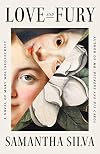
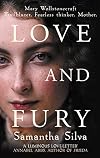
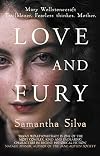
Love and Fury
by Samantha Silva
On This Page
Description
"Midwife Parthenia Blenkinsop has delivered countless babies over the course of her career, and when she arrives at Mary Wollstonecraft's door, everything appears normal. But after the baby girl is delivered, the women will spend the next harrowing days together, fighting for the survival of both mother and daughter. Over those eleven days, Mary Wollstonecraft recounts the life she dared to live amidst the impossible constraints and prejudices of the late 18th century, rejecting the tyranny show more of men and marriage, risking everything to demand equality for herself and all women. She weaves her riveting tale to keep her fragile daughter alive and give her a reason to fight, even as her own strength wanes. Wollstonecraft's urgent story of loss and triumph forms the heartbreakingly brief intersection between the lives of a mother and daughter who will change the arc of history and thought for centuries to come. In radiant, emotionally gripping prose, Samantha Silva delivers an ode to the dazzling life of Mary Wollstonecraft, one of the world's most influential thinkers and mother of the famous novelist Mary Shelley. But at its heart, Love and Fury is a story about the power of a woman reclaiming her own narrative and passing along that legacy to her daughter"-- show lessTags
Recommendations











Member Reviews
A powerful, personal, and deeply emotional story about a brilliant woman many consider to be the first feminist, Mary Wollstonecraft Godwin — the mother of Mary Wollstonecraft Shelley. The daughter is also famous as the author of the novel, FRANKENSTEIN and the wife of poet Percy Bysshe Shelley.
At the beginning, Mary Wollstonecraft is in labor, attended by Mrs. B., a local London midwife. It’s a difficult birth, causing the very concerned Mr. Godwin to call in a couple of physicians. (This, in 1797 when midwives knew so much more than doctors about the process of giving birth, but doctors carried more prestige.)
Mary soon becomes ill prompting Mrs. B. to stay on as nurse. To help pass the time, Mrs. B. suggests that Mary tell her show more infant daughter her life story. And that provides the structure for this novel: alternating chapters by Mary and Mrs. B. Mary’s chapters, obviously, focus on events in the past, Mrs. B’s chapters address the progress of the illness and portray Mary’s “current” life.
There is much sadness in Mary’s story. One among six siblings, her father is a brutal, abusive, failure of a man — drawn primarily to alcohol and gambling. The result is a family living with increasingly diminishing resources. What limited love Mary’s mother has is fixated in an almost romantic way on her eldest son, so that Mary winds up with much of the caretaking responsibilities for her brothers and sisters.
At the same time, Mary, an exceptionally bright and curious child, hungers for the kind of education given only to boys. She grabs knowledge wherever she can find it. But those opportunities are all too rare.
As her life unfolds, Mary’s travels take her to Portugal, France (during the French Revolution), and Scandinavia. Her outspoken commitment to never marry, her intelligence, and her increasing renown as a published author put her in the orbit of artists, writers, and some of the most prominent minds of her day. She learns about love, suffers losses, and ultimately finds contentment in a world with carefully prescribed rules that limit nearly all options except marriage to women.
The book is beautifully written, very emotional, and, at times, hard to read. There is physical, sexual, and animal abuse and attempted suicide. So this is not for the faint hearted. But also so much drama and beauty that for me, it was worth riding the roller coaster. show less
At the beginning, Mary Wollstonecraft is in labor, attended by Mrs. B., a local London midwife. It’s a difficult birth, causing the very concerned Mr. Godwin to call in a couple of physicians. (This, in 1797 when midwives knew so much more than doctors about the process of giving birth, but doctors carried more prestige.)
Mary soon becomes ill prompting Mrs. B. to stay on as nurse. To help pass the time, Mrs. B. suggests that Mary tell her show more infant daughter her life story. And that provides the structure for this novel: alternating chapters by Mary and Mrs. B. Mary’s chapters, obviously, focus on events in the past, Mrs. B’s chapters address the progress of the illness and portray Mary’s “current” life.
There is much sadness in Mary’s story. One among six siblings, her father is a brutal, abusive, failure of a man — drawn primarily to alcohol and gambling. The result is a family living with increasingly diminishing resources. What limited love Mary’s mother has is fixated in an almost romantic way on her eldest son, so that Mary winds up with much of the caretaking responsibilities for her brothers and sisters.
At the same time, Mary, an exceptionally bright and curious child, hungers for the kind of education given only to boys. She grabs knowledge wherever she can find it. But those opportunities are all too rare.
As her life unfolds, Mary’s travels take her to Portugal, France (during the French Revolution), and Scandinavia. Her outspoken commitment to never marry, her intelligence, and her increasing renown as a published author put her in the orbit of artists, writers, and some of the most prominent minds of her day. She learns about love, suffers losses, and ultimately finds contentment in a world with carefully prescribed rules that limit nearly all options except marriage to women.
The book is beautifully written, very emotional, and, at times, hard to read. There is physical, sexual, and animal abuse and attempted suicide. So this is not for the faint hearted. But also so much drama and beauty that for me, it was worth riding the roller coaster. show less
A powerful, personal, and deeply emotional story about a brilliant woman many consider to be the first feminist, Mary Wollstonecraft Godwin — the mother of Mary Wollstonecraft Shelley. The daughter is also famous as the author of the novel, FRANKENSTEIN and the wife of poet Percy Bysshe Shelley.
At the beginning, Mary Wollstonecraft is in labor, attended by Mrs. B., a local London midwife. It’s a difficult birth, causing the very concerned Mr. Godwin to call in a couple of physicians. (This, in 1797 when midwives knew so much more than doctors about the process of giving birth, but doctors carried more prestige.)
Mary soon becomes ill prompting Mrs. B. to stay on as nurse. To help pass the time, Mrs. B. suggests that Mary tell her show more infant daughter her life story. And that provides the structure for this novel: alternating chapters by Mary and Mrs. B. Mary’s chapters, obviously, focus on events in the past, Mrs. B’s chapters address the progress of the illness and portray Mary’s “current” life.
There is much sadness in Mary’s story. One among six siblings, her father is a brutal, abusive, failure of a man — drawn primarily to alcohol and gambling. The result is a family living with increasingly diminishing resources. What limited love Mary’s mother has is fixated in an almost romantic way on her eldest son, so that Mary winds up with much of the caretaking responsibilities for her brothers and sisters.
At the same time, Mary, an exceptionally bright and curious child, hungers for the kind of education given only to boys. She grabs knowledge wherever she can find it. But those opportunities are all too rare.
As her life unfolds, Mary’s travels take her to Portugal, France (during the French Revolution), and Scandinavia. Her outspoken commitment to never marry, her intelligence, and her increasing renown as a published author put her in the orbit of artists, writers, and some of the most prominent minds of her day. She learns about love, suffers losses, and ultimately finds contentment in a world with carefully prescribed rules that limit nearly all options except marriage to women.
The book is beautifully written, very emotional, and, at times, hard to read. There is physical, sexual, and animal abuse and attempted suicide. So this is not for the faint hearted. But also so much drama and beauty that for me, it was worth riding the roller coaster. show less
At the beginning, Mary Wollstonecraft is in labor, attended by Mrs. B., a local London midwife. It’s a difficult birth, causing the very concerned Mr. Godwin to call in a couple of physicians. (This, in 1797 when midwives knew so much more than doctors about the process of giving birth, but doctors carried more prestige.)
Mary soon becomes ill prompting Mrs. B. to stay on as nurse. To help pass the time, Mrs. B. suggests that Mary tell her show more infant daughter her life story. And that provides the structure for this novel: alternating chapters by Mary and Mrs. B. Mary’s chapters, obviously, focus on events in the past, Mrs. B’s chapters address the progress of the illness and portray Mary’s “current” life.
There is much sadness in Mary’s story. One among six siblings, her father is a brutal, abusive, failure of a man — drawn primarily to alcohol and gambling. The result is a family living with increasingly diminishing resources. What limited love Mary’s mother has is fixated in an almost romantic way on her eldest son, so that Mary winds up with much of the caretaking responsibilities for her brothers and sisters.
At the same time, Mary, an exceptionally bright and curious child, hungers for the kind of education given only to boys. She grabs knowledge wherever she can find it. But those opportunities are all too rare.
As her life unfolds, Mary’s travels take her to Portugal, France (during the French Revolution), and Scandinavia. Her outspoken commitment to never marry, her intelligence, and her increasing renown as a published author put her in the orbit of artists, writers, and some of the most prominent minds of her day. She learns about love, suffers losses, and ultimately finds contentment in a world with carefully prescribed rules that limit nearly all options except marriage to women.
The book is beautifully written, very emotional, and, at times, hard to read. There is physical, sexual, and animal abuse and attempted suicide. So this is not for the faint hearted. But also so much drama and beauty that for me, it was worth riding the roller coaster. show less
In the past month I've been luckier in my audio book choices than in my print endeavours. This was a fascinating if sad story about the mother, a feminist in her own right, of the author of Frankenstein. Mary Wollstonecraft is about to give birth to her daughter Mary, and her midwife, Mrs. B., in an effort to take her mind off her travails, tells her to narrate her story to her about to be born child. In alternating chapters we hear from the midwife and we learn of Mary's story.
Knew little of her life, such a sad one, full not pain and anguish, cruelty, but despite this she found ways, and a few good men to advise and educate. She died singling, but despite such a short life, she accomplished much. Women had so few choices then, show more depended on the providence of their husbands, stuck so often in miserable lives, unable to support themselves and their children, if they should leave. Mary learned from her mother's life and vowed to never marry. Although near the end of her life, she does marry, this book explains why she made this choice. A story that needed to be told.
Wonderfully written and narrated by Ell Potter. show less
Knew little of her life, such a sad one, full not pain and anguish, cruelty, but despite this she found ways, and a few good men to advise and educate. She died singling, but despite such a short life, she accomplished much. Women had so few choices then, show more depended on the providence of their husbands, stuck so often in miserable lives, unable to support themselves and their children, if they should leave. Mary learned from her mother's life and vowed to never marry. Although near the end of her life, she does marry, this book explains why she made this choice. A story that needed to be told.
Wonderfully written and narrated by Ell Potter. show less
This is a fictionalized account of the life of Mary Wollstonecraft, the mother of Mary Shelly. Set in England and Paris, Mary rebelled early. Her father was abusive; her mother weak. She soon realized that the life of a woman was almost entirely ruled by men.
The story is told in backflashes as Mary lies dying after the birth of her second child. In alternate chapters with the midwife, the back story of each woman emerges. Mary was a brilliant writer and thinker and had no worries about upsetting the mores of society. She developed a deep friendship/love with another woman who died early. Mary worked to help support her sisters and the family of her friend.
In Paris she fell in love with an American and had his child. Still her struggles show more continued.
The setting of the book is interesting as are many of the real historical characters; however, I'm not sure about the method of telling - particularly her reference to "my little bird" so constantly referring to her new born daughter (Mary Shelley). Her philosophy is so "up front" and at times takes over from the story. Ok read, - just not great. show less
The story is told in backflashes as Mary lies dying after the birth of her second child. In alternate chapters with the midwife, the back story of each woman emerges. Mary was a brilliant writer and thinker and had no worries about upsetting the mores of society. She developed a deep friendship/love with another woman who died early. Mary worked to help support her sisters and the family of her friend.
In Paris she fell in love with an American and had his child. Still her struggles show more continued.
The setting of the book is interesting as are many of the real historical characters; however, I'm not sure about the method of telling - particularly her reference to "my little bird" so constantly referring to her new born daughter (Mary Shelley). Her philosophy is so "up front" and at times takes over from the story. Ok read, - just not great. show less
I don't know why this story dragged for me!! I've been waiting to read it for months, and when I tell you, I ran to Barnes & Noble to get a copy because I just couldn't wait for the library to get it in. The writing was beautiful, the story was great, but something was missing!! I really enjoyed the beginning, and I really enjoyed the end, but the middle was hard to get through.
All in all, it was a truly unique read that I recommend! 3.8 stars rounded down because I just didn't love it.
All in all, it was a truly unique read that I recommend! 3.8 stars rounded down because I just didn't love it.
I listened to the audiobook and I do wonder if I would have enjoyed reading a print version more. I find Mary Wollstonecraft fascinating and this novel covers her life and journey as a woman and writer. I liked this book, but I've read others about Mary and overall I liked those more.
Ich mochte das Buch sehr. Mary Wollstonecraft ist eine beeindruckende Persönlichkeit und wenn man es nicht wüsste, dass ihre Biografie wirklich so verlaufen ist, könnte man es kaum glauben. Aus wirklich sehr schwierigen Verhältnissen stammend ist sie unbeirrt ihren Weg gegangen, setzte sich für Menschen- und Frauenrechte ein. Was für eine Tragödie, dass sie so jung im Kindbett an einer Sepsis sterben musste!
Diese letzten Tage von Mary Wollstonecraft schildert das Buch. Einerseits blickt Mary selbst auf ihr Leben zurück und erzählt es ihrer neugeborenen Tochter (der späteren Mary Shelley). Andererseits wird die Sicht der alten Hebamme Mrs. Blenkinsop geschildert, die beeindruckt ist von der gegenseitigen Liebe des Ehepaars und show more der Würde der Kranken. Dieser Handlungsstrang ist zwar sehr interessant, zumal man erfährt, wie die Behandlung und der Krankheitsverlauf (vermutlich) abliefen. Andererseits ist es eine sehr private Erfahrung - Mrs B. wünscht sich am Ende, sie hätte ihren Mann mehr geliebt bzw. es ihm mehr mitgeteilt. Man könnte von Mary Wollstonecraft vermutlich auch anderes lernen als diesen Rückzug in die private Paarbeziehung. Im Buch aber ist es passend, das Politische der Autorin wird sehr stark auch mit dem Privaten vermischt und aus diesem erklärt. So war es sicher auch, aber vermutlich nicht nur. Auch das kommt im Buch heraus, die Erfahrungen der französischen Revolution, die Reisen in verschiedene Länder. Und auch das beeindruckt mich wieder: Allein schon, dass sie als Autodidaktin Sprachen lernte um in Frankreich zu leben. Ihr Bildungshunger, ihre Intelligenz, ihr Mut machen mich wirklich sprachlos. Und das ist ein Verdienst dieser schönen Biographie, dass einem Mary Wollstonecraft so nahe kommt. show less
Diese letzten Tage von Mary Wollstonecraft schildert das Buch. Einerseits blickt Mary selbst auf ihr Leben zurück und erzählt es ihrer neugeborenen Tochter (der späteren Mary Shelley). Andererseits wird die Sicht der alten Hebamme Mrs. Blenkinsop geschildert, die beeindruckt ist von der gegenseitigen Liebe des Ehepaars und show more der Würde der Kranken. Dieser Handlungsstrang ist zwar sehr interessant, zumal man erfährt, wie die Behandlung und der Krankheitsverlauf (vermutlich) abliefen. Andererseits ist es eine sehr private Erfahrung - Mrs B. wünscht sich am Ende, sie hätte ihren Mann mehr geliebt bzw. es ihm mehr mitgeteilt. Man könnte von Mary Wollstonecraft vermutlich auch anderes lernen als diesen Rückzug in die private Paarbeziehung. Im Buch aber ist es passend, das Politische der Autorin wird sehr stark auch mit dem Privaten vermischt und aus diesem erklärt. So war es sicher auch, aber vermutlich nicht nur. Auch das kommt im Buch heraus, die Erfahrungen der französischen Revolution, die Reisen in verschiedene Länder. Und auch das beeindruckt mich wieder: Allein schon, dass sie als Autodidaktin Sprachen lernte um in Frankreich zu leben. Ihr Bildungshunger, ihre Intelligenz, ihr Mut machen mich wirklich sprachlos. Und das ist ein Verdienst dieser schönen Biographie, dass einem Mary Wollstonecraft so nahe kommt. show less
Jul 10, 2023 (Edited)German
Members
- Recently Added By
Lists

Maybe This Year? Books to Look Forward To
406 works; 9 members

Books Read in 2022
5,164 works; 113 members

Netgalley Reads
455 works; 3 members
Author Information
4 Works 814 Members
Awards and Honors
Awards
Distinctions
Common Knowledge
- Canonical title
- Love and Fury
- People/Characters
- Mary Wollstonecraft; William Godwin
- Dedication
- For all our daughters
- First words
- Mrs. Blenkinsop arrived at a neat circle of three-story houses at the edge of North London, surprised to find her charge at the open door, holding her ripe belly with both hands and ushering her inside with an easy smile and ... (show all)no apparent terror of the event to come.
- Last words
- (Click to show. Warning: May contain spoilers.)Sorrow, my sweet girl, will bring you to your knees, time and again, but so will beauty, so too love, enough to rise again, to try again, to live as all beings wish to live: free.
Classifications
Statistics
- Members
- 162
- Popularity
- 201,162
- Reviews
- 7
- Rating
- (3.84)
- Languages
- English, French, Italian
- Media
- Paper, Audiobook, Ebook
- ISBNs
- 18
- ASINs
- 5