Daughters of the Doge (Richard Stocker)
by Edward Charles
On This Page
Description
Love and intrigue in Tintoretto's Venice . . .Venice, 1556: a wealthy, bustling, multi-cultural city, with a standard of living four times that of anywhere else in Europe. Into this exciting world comes twenty-year-old English protestant Richard Stocker, recovering from the execution of his friend Lady Jane Grey (a friendship recounted in Edward Charles's debut novel In the Shadow of Lady Jane.) Soon Richard finds himself caught up in the complexities of La Serenissima, and involved with show more three of the city's most remarkable women: Faustina Contarini, a nun imprisoned in a convent by her noble family; Yasmeen Ahmed, Muslim clerk and book-keeper to the great artist Tintoretto; and Veronica Franco, artists' model, courtesan and poet. Each has her own story to tell, but they have one thing in common: they are all daughters of the Doge, held captive by the contradictory laws and regulations of this teeming city. This is a thrilling account of a young man's transformation, as he discovers love, faith and deception in a colourfully evoked Renaissance Venice. show lessTags
Recommendations











Member Reviews
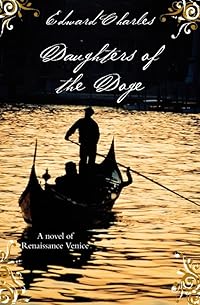
Daughters of the Doge is one of my charity shop purchases. There are days when you go into a charity shop and you end up leaving with 10 books, simply because they seem to have interesting book after interesting book. It's a historical novel set in the mid 1550's, mainly in Venice. In fact, it was the sleek cover with its dusky image of a gondola which caught my eye.
Richard Stocker is a young English protestant. Unfortunately for him though, Catholic Queen Mary sits on the English throne and tensions are high between the religions. Richard's position is more precarious than most given the fact that he had been a companion to Lady Jane Gray, who had been executed by Queen Mary. All this is recounted in the first Richard Stocker novel, In show more the Shadow of Lady Jane, but rest assured, you do not have to have read the first novel to understand the events in this second novel.
Richard is unsure of his path in life, but fate offers him a chance to travel to Italy, more specifically Venice. He has a strong interest in medicine and being accepted to study at Padua University is a possibility. But while in Venice, he discovers a talent for art and drawing in the studio of the great artist Tintoretto. He also meets three remarkable, and beautiful women who all play their part in the development of his life. There is the stunning and calculating courtesan Veronica Franco who teaches him about the subtle undercurrents of Venetian life, the demure and intelligent Yasmeen, a Muslim who captures his heart and finally, captive nun Faustina. Together, these women represent the diversity of Venice and are the Daughters of the Doge.
It's a weird coincidence that I've just finished Sarah Dunant's amazing novel Sacred Hearts, also set in the world of Renaissance convents. Unfortunately though, this novel fails to reach the same heights as Dunant's book. It is somewhat repetitive and predictable with rather flat characters. The author does take the rather 21st century concept of not knowing your path in life and applies it to a character in the 16th century, but ultimately Charles fails to bring the main character to life. show less
Richard Stocker is a young English protestant. Unfortunately for him though, Catholic Queen Mary sits on the English throne and tensions are high between the religions. Richard's position is more precarious than most given the fact that he had been a companion to Lady Jane Gray, who had been executed by Queen Mary. All this is recounted in the first Richard Stocker novel, In show more the Shadow of Lady Jane, but rest assured, you do not have to have read the first novel to understand the events in this second novel.
Richard is unsure of his path in life, but fate offers him a chance to travel to Italy, more specifically Venice. He has a strong interest in medicine and being accepted to study at Padua University is a possibility. But while in Venice, he discovers a talent for art and drawing in the studio of the great artist Tintoretto. He also meets three remarkable, and beautiful women who all play their part in the development of his life. There is the stunning and calculating courtesan Veronica Franco who teaches him about the subtle undercurrents of Venetian life, the demure and intelligent Yasmeen, a Muslim who captures his heart and finally, captive nun Faustina. Together, these women represent the diversity of Venice and are the Daughters of the Doge.
It's a weird coincidence that I've just finished Sarah Dunant's amazing novel Sacred Hearts, also set in the world of Renaissance convents. Unfortunately though, this novel fails to reach the same heights as Dunant's book. It is somewhat repetitive and predictable with rather flat characters. The author does take the rather 21st century concept of not knowing your path in life and applies it to a character in the 16th century, but ultimately Charles fails to bring the main character to life. show less
This novel had so much potential – an exquisite setting in one of the richest periods of history, a cast of artists and royalty, and a personable hero – but I didn’t feel it ever quite delivered on its promise.
For the most part, it reads like a novel marketed at the young adult market, but occasionally the language changes to something that is definitely more adult in nature, so that it hovers on the brink between then, neither one thing nor the other. The narrative is also constantly interrupted by the stating of specific dates throughout, which I thought hindered proceedings, rather than propelling the story forward in any way – it gave it quite a fragmented feel and I found myself only able to read it in shorter bursts, never show more once compelled to sit for any length of time and read a longer section in one go – there just wasn’t enough to keep me interested for longer than about twenty minutes at a time and my mind would wander.
The characters are largely two-dimensional – none of them feel particularly fleshed out, although there is a more attention given to Veronica Franco, the beguiling courtesan, and her scenes were some of the most beautiful and smoothly-written. This was partially due to the fact that those scenes were mostly within an art studio, and the only time Charles really wrote with any passion was while describing the activity within the studio and the history of different techniques – those passages were a dream to read. The narrator, Richard, was personable enough, but he seemed remarkably immature for a young man of twenty and much was made of his “coming of age”. There were constant references to his growing up (made by the man himself) which felt out of place in the text and did nothing to enhance the story. Yes, this was a coming of age, but the subtleties of his situation were more than enough to indicate this to any reader without him constantly reminding himself that he needed to mature.
The sub-story of a royal plot was, to me, the most exciting possibility, but this was largely side-lined and forgotten, much to my disappointment. Several characters were introduced specifically for the purposes of the plot against Queen Mary, but it was never fully explored and a great opportunity for added intrigue was missed. On top of this, everything falls into place far too neatly and felt very contrived towards the end.
Overall, I was disappointed and unimpressed – the author could have really pushed himself and written something that sparkled, but I feel he was trying too hard to play it safe and didn’t challenge himself. It’s a pleasant enough read, but nothing to write home about. show less
For the most part, it reads like a novel marketed at the young adult market, but occasionally the language changes to something that is definitely more adult in nature, so that it hovers on the brink between then, neither one thing nor the other. The narrative is also constantly interrupted by the stating of specific dates throughout, which I thought hindered proceedings, rather than propelling the story forward in any way – it gave it quite a fragmented feel and I found myself only able to read it in shorter bursts, never show more once compelled to sit for any length of time and read a longer section in one go – there just wasn’t enough to keep me interested for longer than about twenty minutes at a time and my mind would wander.
The characters are largely two-dimensional – none of them feel particularly fleshed out, although there is a more attention given to Veronica Franco, the beguiling courtesan, and her scenes were some of the most beautiful and smoothly-written. This was partially due to the fact that those scenes were mostly within an art studio, and the only time Charles really wrote with any passion was while describing the activity within the studio and the history of different techniques – those passages were a dream to read. The narrator, Richard, was personable enough, but he seemed remarkably immature for a young man of twenty and much was made of his “coming of age”. There were constant references to his growing up (made by the man himself) which felt out of place in the text and did nothing to enhance the story. Yes, this was a coming of age, but the subtleties of his situation were more than enough to indicate this to any reader without him constantly reminding himself that he needed to mature.
The sub-story of a royal plot was, to me, the most exciting possibility, but this was largely side-lined and forgotten, much to my disappointment. Several characters were introduced specifically for the purposes of the plot against Queen Mary, but it was never fully explored and a great opportunity for added intrigue was missed. On top of this, everything falls into place far too neatly and felt very contrived towards the end.
Overall, I was disappointed and unimpressed – the author could have really pushed himself and written something that sparkled, but I feel he was trying too hard to play it safe and didn’t challenge himself. It’s a pleasant enough read, but nothing to write home about. show less
Ratings
Members
- Recently Added By
Author Information
17 Works 164 Members
Classifications
Statistics
- Members
- 27
- Popularity
- 1,005,932
- Reviews
- 2
- Rating
- (3.17)
- Languages
- English
- Media
- Paper, Audiobook, Ebook
- ISBNs
- 7
- ASINs
- 1