Balzac and the Little Chinese Seamstress: A Novel
by Dai Sijie
On This Page
Description
At the height of Mao's infamous Cultural Revolution, two boys are among hundreds of thousands exiled to the countryside for "re-education." The narrator and his best friend, Luo, guilty of being the sons of doctors, find themselves in a remote village where, among the peasants of Phoenix mountain, they are made to cart buckets of excrement up and down precipitous winding paths. Their meager distractions include a violin--as well as, before long, the beautiful daughter of the local tailor. show more But it is when the two discover a hidden stash of Western classics in Chinese translation that their re-education takes its most surprising turn. While ingeniously concealing their forbidden treasure, the boys find transit to worlds they had thought lost forever. And after listening to their dangerously seductive retellings of Balzac, even the Little Seamstress will be forever transformed. show lessTags
Recommendations
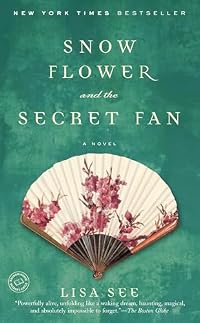
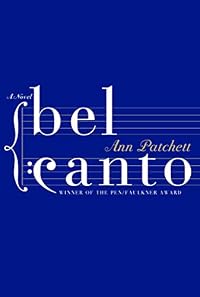
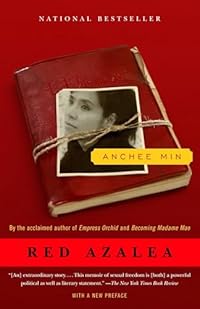
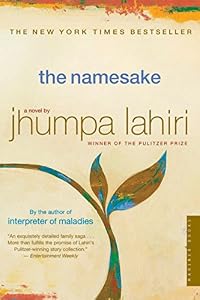
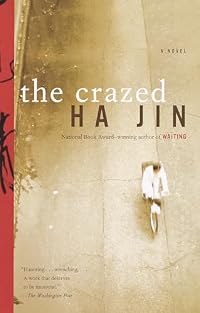

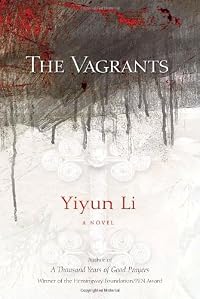
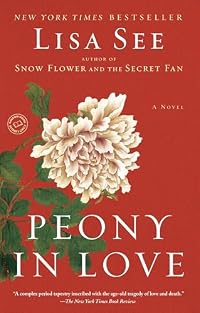

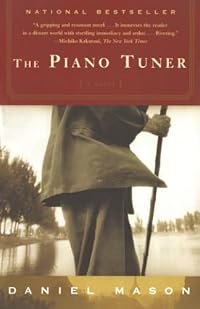
Member Recommendations
Member Reviews
Perspective is a magic. Sijie, a survivor himself, manages to conjure up a touching, and often funny, story in a dark time. Our current class and intellectual and political divides around the world might make 1960s China seem a downright quotidian anachronism - but perspective. Reading this book, called to mind another survivor's work, [Woman from Shanghai], which was a more realistically, if fictionalized, brutal account. Sijie doesn't so much shy from the real as focus on the struggle to maintain hope and humanity. The two boys in the account are yanked from home and forced into service but find solace in the simple act of story-telling. While much of the literary illusions in the book were familiar, I suspect there was a fair bit of show more Chinese folklore that was lost to me. Indeed, the book itself felt like a fable, one with a moral about hatred and fascism. While all that sounds quite heavy, Sijie waves a light wand to make it quite beautiful and funny along the way.
4 bones!!!! show less
4 bones!!!! show less
During China's Cultural Revolution, two young men, the best of friends, are sent to a remote village for re-education. Two things help them make it through the years they spend away from their families, their school, their city: a beautiful girl and forbidden copies of Balzac. The boys fall in love with both.
This is the basic premise of Balzac and the Little Chinese Seamstress by Dai Sijie, translated from the French by Ina Rilke. The book is slight, a quick read at just under 200 pages. The story is light-hearted, the boys face neither serious danger nor serious consequences though they constantly push against the authority they live under. The characters are well-drawn, fully believable people. The setting is well described The plot show more keeps the reader moving along at an entertaining clip.
I just didn't like it.
Maybe it reminded me too much of what I didn't like about City of Thieves which is also about two young men basically having a rollicking adventure in the midst of terrible tragedy. Balzac and the Little Chinese Seamstress was picked by my book club which has been picking very safe reading lately. I keep thinking of Franz Kafka as quoted on Gautami Tripaty's blog, "We ought to only read the kind of books that wound and stab us." Balzac and the Little Chinese Seamstress neither wounds nor stabs. A book set during China's Cultural Revolution ought to do both.
I grew so tired of the rich kid protagonists and their cultural superiority, their clear sense that they were better than everyone in the village, that by the end of the book, I was beginning to root for the Cultural Revolution a bit. I'm not rooting for the Cultural Revolution, not at all, but when do we get the story of those villagers? What was it like for the peasants who spent tens, maybe hundreds of generations in isolated poverty while the world grew rich around them. What was it like to suddenly see a violin in middle-age when you'd never seen anything like it before? I'm looking for the Chinese writer who'll give voice to those villagers, write their version of The White Tiger. I bet that book would wound and stab. show less
This is the basic premise of Balzac and the Little Chinese Seamstress by Dai Sijie, translated from the French by Ina Rilke. The book is slight, a quick read at just under 200 pages. The story is light-hearted, the boys face neither serious danger nor serious consequences though they constantly push against the authority they live under. The characters are well-drawn, fully believable people. The setting is well described The plot show more keeps the reader moving along at an entertaining clip.
I just didn't like it.
Maybe it reminded me too much of what I didn't like about City of Thieves which is also about two young men basically having a rollicking adventure in the midst of terrible tragedy. Balzac and the Little Chinese Seamstress was picked by my book club which has been picking very safe reading lately. I keep thinking of Franz Kafka as quoted on Gautami Tripaty's blog, "We ought to only read the kind of books that wound and stab us." Balzac and the Little Chinese Seamstress neither wounds nor stabs. A book set during China's Cultural Revolution ought to do both.
I grew so tired of the rich kid protagonists and their cultural superiority, their clear sense that they were better than everyone in the village, that by the end of the book, I was beginning to root for the Cultural Revolution a bit. I'm not rooting for the Cultural Revolution, not at all, but when do we get the story of those villagers? What was it like for the peasants who spent tens, maybe hundreds of generations in isolated poverty while the world grew rich around them. What was it like to suddenly see a violin in middle-age when you'd never seen anything like it before? I'm looking for the Chinese writer who'll give voice to those villagers, write their version of The White Tiger. I bet that book would wound and stab. show less
Two "city boys", Luo and our unnamed narrator, are sent to the village of Phoenix in the Sky for re-education in 1971, during the Cultural Revolution. They meet and fall in love with the Little Seamstress, who lives in another village, and discover that their friend Four Eyes has some contraband of his own.
In two hundred pages, the author has written such an interesting tale about the power of story - whether it's books, cinema, or music - on both an individual and social level. The boys came for re-education, but what they end up learning isn't exactly what the government intended. Their story is understated, easy to read, and humorous, without being simple. A great book club pick that would reward rereading.
In two hundred pages, the author has written such an interesting tale about the power of story - whether it's books, cinema, or music - on both an individual and social level. The boys came for re-education, but what they end up learning isn't exactly what the government intended. Their story is understated, easy to read, and humorous, without being simple. A great book club pick that would reward rereading.
Audiobook narrated by B D Wong
5*****
What a delightful book - beautifully written - poetic. During China's Cultural Revolution, three young men are sent to a mountain villages for re-education. The area is near the border with Tibet, and the local peasants subsist on treacherous terrain. The high mountain passes make travel from one town to another difficult and dangerous. Two of the boys are settled in Phoenix in the Sky, where they live in a stilt “house” that is really the village’s storage facility. Their friend, “Four eyes” is in a different town, and they discover that he has a secret horde of books. They are captivated by the books and also by the little seamstress, daughter of the district’s tailor.
The boys proceed show more to try to win the little seamstress – and her protective and watchful father - with their story-telling, relating the works of titans of Western literature: Balzac, Dumas, Hugo, Flaubert, etc. The outcome is not what they had expected.
Sijie gives us descriptions of the harshness of the terrain and of their forced labor. The scenes in the coal mine were particularly harrowing. But there are many humorous scenes, as well.
I have read this little gem of a novel several times. It is luminously written, and even makes me want to read Balzac (although I still haven't done so). For me, it answers the question, "Why do you read so much?"
The audiobook is masterfully performed by B D Wong. He really brings these characters to life.
There is also a movie, originally produced in French (Sijie who, himself, was “re-educated” during the ‘70s, now lives in Paris and originally wrote the book in French). I saw it as part of a film festival. The cinematography is gorgeous. But the ending is different and was a huge disappointment to me.
NOTE: Review updated on fourth reading, Dec 2021. show less
5*****
What a delightful book - beautifully written - poetic. During China's Cultural Revolution, three young men are sent to a mountain villages for re-education. The area is near the border with Tibet, and the local peasants subsist on treacherous terrain. The high mountain passes make travel from one town to another difficult and dangerous. Two of the boys are settled in Phoenix in the Sky, where they live in a stilt “house” that is really the village’s storage facility. Their friend, “Four eyes” is in a different town, and they discover that he has a secret horde of books. They are captivated by the books and also by the little seamstress, daughter of the district’s tailor.
The boys proceed show more to try to win the little seamstress – and her protective and watchful father - with their story-telling, relating the works of titans of Western literature: Balzac, Dumas, Hugo, Flaubert, etc. The outcome is not what they had expected.
Sijie gives us descriptions of the harshness of the terrain and of their forced labor. The scenes in the coal mine were particularly harrowing. But there are many humorous scenes, as well.
I have read this little gem of a novel several times. It is luminously written, and even makes me want to read Balzac (although I still haven't done so). For me, it answers the question, "Why do you read so much?"
The audiobook is masterfully performed by B D Wong. He really brings these characters to life.
There is also a movie, originally produced in French (Sijie who, himself, was “re-educated” during the ‘70s, now lives in Paris and originally wrote the book in French). I saw it as part of a film festival. The cinematography is gorgeous. But the ending is different and was a huge disappointment to me.
NOTE: Review updated on fourth reading, Dec 2021. show less
This almost ethereal little novel about the ways that ideas (as found in books) can change us touched me deeply enough to put it aside mid-way through in order to pick up and read a copy of Balzac's Ursule Mirouet, the work that touched off the journey embarked upon by the characters. Deft and delightful without being saccharine, this fable manages to capture both large (Chinese Cultural Revolution, first love, great literature's universality) and small (toothaches, storytelling, ) themes with equal aplomb.
My favorite image in the book was of the woman, perched on a wooden chair, strapped to a porter's back as he climbed a mountain path, while she calmly sat knitting. Lovely!
One question for Sijie: can you please explain the break in show more the narrative toward the end when you shifted narrators? Thank you.
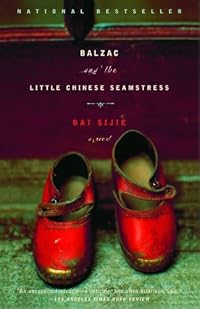
Minor beef with the publisher of the edition I read: the shoes? worn by the Seamstress? They were pink, not red. And canvas, not leather. Geez. show less
My favorite image in the book was of the woman, perched on a wooden chair, strapped to a porter's back as he climbed a mountain path, while she calmly sat knitting. Lovely!
One question for Sijie: can you please explain the break in show more the narrative toward the end when you shifted narrators? Thank you.
Minor beef with the publisher of the edition I read: the shoes? worn by the Seamstress? They were pink, not red. And canvas, not leather. Geez. show less
Back in the 1950s, the Chinese Communist party began shipping "counter-revolutionaries" (basically, anyone with money or an education) off into the Chinese countryside to be "re-educated" - aka develop an appreciation for such rural virtues as poverty, ignorance, and grueling labor. This short, episodic novel recounts the adventures of two BFFs sent off to be re-educated not because they themselves are intellectuals (neither of them come off as being particularly bright), but for the crime of being the sons of educated parents.
Exiled to a rural village on the side of a steep mountain, the boys settle into their new lives with little resistance. Eventually one of our protagonists falls for a beautiful young seamstress from another show more village, and their intellectual boredom is for a while dissipated by the acquisition of a suitcase full of forbidden western books, but that's about all there is in the way of plot. The rest of the novel is a series of more or less piquant episodes - "The time we tried to collect authentic folks songs from the village eccentric," "The time we went into town to see a movie," "The time the headmaster made us pull his rotten tooth," "The time we had to cross a scary crevasse" - told in prose that is almost childlike in its simplicity and repetition.
Yes, there's a bit of gentle irony at the end when the boys' brief flirtation with forbidden erudition results in disappointment and disillusionment - an outcome the Communist party would surely have approved - but that's about as deep as this gets when it comes to themes or meaning.
Enjoyed learning more about this period in history, and the invitation to reflect on storytelling's ability to ignite curiosity, empathy, and human potential. But the biggest question I have at the end of this has to do with Dai Sijie's storytelling rather than the story itself. Being entirely unfamiliar with Chinese fiction, I'm can't be sure whether this novel's simplistic storytelling, passive characters, and unsatisfying resolution are flaws, deliberate narrative choices, or merely represent authentic Chinese storytelling tropes and traditions? Perhaps this is one of those books that can't be critiqued using western literary conventions as a norm. show less
Exiled to a rural village on the side of a steep mountain, the boys settle into their new lives with little resistance. Eventually one of our protagonists falls for a beautiful young seamstress from another show more village, and their intellectual boredom is for a while dissipated by the acquisition of a suitcase full of forbidden western books, but that's about all there is in the way of plot. The rest of the novel is a series of more or less piquant episodes - "The time we tried to collect authentic folks songs from the village eccentric," "The time we went into town to see a movie," "The time the headmaster made us pull his rotten tooth," "The time we had to cross a scary crevasse" - told in prose that is almost childlike in its simplicity and repetition.
Yes, there's a bit of gentle irony at the end when the boys' brief flirtation with forbidden erudition results in disappointment and disillusionment - an outcome the Communist party would surely have approved - but that's about as deep as this gets when it comes to themes or meaning.
Enjoyed learning more about this period in history, and the invitation to reflect on storytelling's ability to ignite curiosity, empathy, and human potential. But the biggest question I have at the end of this has to do with Dai Sijie's storytelling rather than the story itself. Being entirely unfamiliar with Chinese fiction, I'm can't be sure whether this novel's simplistic storytelling, passive characters, and unsatisfying resolution are flaws, deliberate narrative choices, or merely represent authentic Chinese storytelling tropes and traditions? Perhaps this is one of those books that can't be critiqued using western literary conventions as a norm. show less
Oh, how I wanted to love this book! And, oh, how I simply did not by the end! This short novel starts out with two young men who have been sent to the Chinese countryside -- to a small village halfway up a mountain, in fact -- for "reeducation" after the rise of the Communist party. Their parents and families are considered too Western, or too liberal, or just not Communist enough, and therefore these two lads must learn to be good workers and good citizens, in the eyes of the regime, before they are allowed to return to their homes. This sounds like an inauspicious beginning, but from the moment we meet these two characters -- as they charm the village headman with the power of an alarm clock -- the novel's light touch and almost show more fairy-tale-like atmosphere enchant us.
The first three-quarters of the novel offers up, essentially, a love letter to youth, to forbidden love -- of both literature and women -- and to the individual. It is, in many ways, a coming-of-age novel -- though the figure who truly comes of age here isn't necessarily the one you expect -- and the story is touched with nostalgia even when it describes hardship.
It isn't until almost the very end that the wonderful balance of the book starts to disintegrate. Were I still in grad school, I might argue that the break down is intentional -- and indeed it might be. Dai Sijie inserts three seemingly random interludes toward the end that describe a scene of emotional significance; while the grad student in me wants to see these passages as homages to the poetic interjections of ancient Chinese novelists, for the leisure reader the effect is jarring. Each interlude breaks away a piece of the spell that the reader has been happily wandering in the midst of for most of the book. When the narrative resumes, the gloss is lost and nothing quite feels the same.
Again, it could be a crafted point -- the end of the novel, which I will not reveal here, is not a fairy-tale ending (though it is symbolically satisfying), so perhaps it is for the best that the golden light in which the first portion of the story basked is gone, in order for the reader to appreciate what is happening more clearly. Still, I think I would have liked the ending more had I not lost the connection that had sustained my interest and appreciation for the bulk of the book.
I say "bulk of the book", but in truth there is no bulk to speak of. This is a slim, swift story, barely a novel at all, and its size and pace invite a quick reading, but perhaps I would have been better off to slow down and savor each piece of the story carefully. That might have insulated me from the effect of the interludes, but one only perceives such things in hindsight. With things as they stand, I can only offer this warning for future readers: enjoy this book more slowly than you want to, and prepare to be frustrated near the end. show less
The first three-quarters of the novel offers up, essentially, a love letter to youth, to forbidden love -- of both literature and women -- and to the individual. It is, in many ways, a coming-of-age novel -- though the figure who truly comes of age here isn't necessarily the one you expect -- and the story is touched with nostalgia even when it describes hardship.
It isn't until almost the very end that the wonderful balance of the book starts to disintegrate. Were I still in grad school, I might argue that the break down is intentional -- and indeed it might be. Dai Sijie inserts three seemingly random interludes toward the end that describe a scene of emotional significance; while the grad student in me wants to see these passages as homages to the poetic interjections of ancient Chinese novelists, for the leisure reader the effect is jarring. Each interlude breaks away a piece of the spell that the reader has been happily wandering in the midst of for most of the book. When the narrative resumes, the gloss is lost and nothing quite feels the same.
Again, it could be a crafted point -- the end of the novel, which I will not reveal here, is not a fairy-tale ending (though it is symbolically satisfying), so perhaps it is for the best that the golden light in which the first portion of the story basked is gone, in order for the reader to appreciate what is happening more clearly. Still, I think I would have liked the ending more had I not lost the connection that had sustained my interest and appreciation for the bulk of the book.
I say "bulk of the book", but in truth there is no bulk to speak of. This is a slim, swift story, barely a novel at all, and its size and pace invite a quick reading, but perhaps I would have been better off to slow down and savor each piece of the story carefully. That might have insulated me from the effect of the interludes, but one only perceives such things in hindsight. With things as they stand, I can only offer this warning for future readers: enjoy this book more slowly than you want to, and prepare to be frustrated near the end. show less
Members
- Recently Added By
Lists

Best books about books
209 works; 104 members

Unread books
1,063 works; 83 members

Historical Fiction
889 works; 91 members

Best Fiction Set in China
43 works; 26 members

Books I've Read More Than Once
602 works; 49 members

Revolutions
72 works; 5 members

Books Featured on Readers' Review of the Diane Rehm Show
161 works; 8 members

Books Read in 2020
4,379 works; 124 members

KayStJ's to-read list
1,616 works; 11 members

Books Read in 2012
815 works; 34 members
Books translated from Romance Languages into English
102 works; 6 members

Translingualism
191 works; 4 members

Books With the Most Memorable Titles
478 works; 158 members

Rory Gilmore Reading Challenge
34 works; 2 members

Florida
366 works; 3 members

Books Read in 2024
4,623 works; 126 members
The Complete Rory Gilmore Reading List
506 works; 5 members
Books Featured on Gilmore Girls
307 works; 21 members
Author Information

15 Works 8,606 Members
Dai Sijie is a Chinese-born filmmaker and novelist who has lived and worked in France since 1984
Some Editions
Awards and Honors
Awards
Distinctions
Series
Belongs to Publisher Series
Gallimard, Folio (3565)
Work Relationships
Is contained in
Has the adaptation
Has as a reference guide/companion
Has as a student's study guide
Common Knowledge
- Canonical title*
- Balzac i la petita modista xinesa
- Original title
- Balzac et la petite tailleuse chinoise
- Alternate titles*
- Бальзак и портниха-китаяночка
- Original publication date
- 2000
- People/Characters
- Luo; The narrator (Ma); The Headman; Four-eyes; The Miller; The Tailor
- Important places
- Phoenix of the Sky; China
- Important events
- Cultural Revolution
- Related movies
- Xiao cai feng (2002 | IMDb)
- First words
- The village headman, a man of about fifty, sat cross-legged in the centre of the room, close to the coals burning in a hearth that was hollowed out of the floor; he was inspecting my violin.
- Last words
- (Click to show. Warning: May contain spoilers.)"She said that she had learnt one thing from Balzac: that a woman's beauty is a treasure beyond price."
- Blurbers
- Tan, Amy; Massie, Allan; Case, Brian; Lancelin, Aude; Min, Anchee
- Original language
- French
- Disambiguation notice
- This is the novel. Please do not combine it with the film.
*Some information comes from Common Knowledge in other languages. Click "Edit" for more information.
Classifications
- Genres
- Fiction and Literature, General Fiction, Historical Fiction
- DDC/MDS
- 843.92 — Literature & rhetoric French & related literatures French fiction 1900- 2000-
- LCC
- PQ2664 .A437 .B3513 — Language and Literature French, Italian, Spanish and Portuguese literatures French literature Modern literature 1961-2000
- BISAC
Statistics
- Members
- 7,468
- Popularity
- 1,532
- Reviews
- 244
- Rating
- (3.59)
- Languages
- 22 — Catalan, Chinese, Czech, Danish, Dutch, English, Finnish, French, German, Greek, Hebrew, Hungarian, Icelandic, Italian, Latvian, Norwegian (Bokmål), Polish, Portuguese, Romanian, Russian, Spanish, Swedish
- Media
- Paper, Audiobook, Ebook
- ISBNs
- 84
- ASINs
- 31