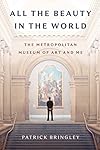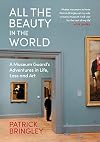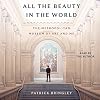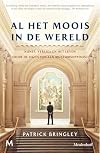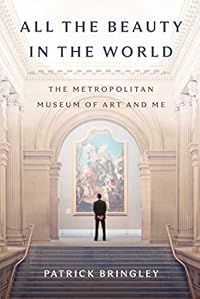
All the Beauty in the World: The Metropolitan Museum of Art and Me
by Patrick Bringley
On This Page
Description
A fascinating, revelatory portrait of the Metropolitan Museum of Art and its treasures by a former New Yorker staffer who spent a decade as a museum guard.Millions of people climb the grand marble staircase to visit the Metropolitan Museum of Art every year. But only a select few have unrestricted access to every nook and cranny. They're the guards who roam unobtrusively in dark blue suits, keeping a watchful eye on the two million square foot treasure house. Caught up in his glamorous show more fledgling career at The New Yorker, Patrick Bringley never thought he'd be one of them. Then his older brother was diagnosed with fatal cancer and he found himself needing to escape the mundane clamor of daily life. So he quit The New Yorker and sought solace in the most beautiful place he knew.
To his surprise and the reader's delight, this temporary refuge becomes Bringley's home away from home for a decade. We follow him as he guards delicate treasures from Egypt to Rome, strolls the labyrinths beneath the galleries, wears out nine pairs of company shoes, and marvels at the beautiful works in his care. Bringley enters the museum as a ghost, silent and almost invisible, but soon finds his voice and his tribe: the artworks and their creators and the lively subculture of museum guards—a gorgeous mosaic of artists, musicians, blue-collar stalwarts, immigrants, cutups, and dreamers. As his bonds with his colleagues and the art grow, he comes to understand how fortunate he is to be walled off in this little world, and how much it resembles the best aspects of the larger world to which he gradually, gratefully returns.
In the tradition of classic workplace memoirs like Lab Girl and Working Stiff, All The Beauty in the World is a surprising, inspiring portrait of a great museum, its hidden treasures, and the people who make it tick, by one of its most intimate observers. show less
Tags
Recommendations





























Member Recommendations


Member Reviews
As an old art history student and former employee (library clerk) at the Cleveland Museum of Art, I was eager to get my hands on this. And I loved it.
In the wake of the wrenching death of his beloved older brother, Patrick Bringley redirects his life. He quits an entry-level job in the very rarefied atmosphere of The New Yorker magazine, and decides he wants to spend his days quietly, unobtrusively, with space to breathe and think. To do so surrounded by the splendor of the Metropolitan Museum of Art is the answer. He spent ten years, four days a week, in a dark blue polyester suit, pacing, leaning, watching, musing, counting, and chatting in those halls. This lovely, open-hearted book strikes the delicate balance between the museum and show more the "me," where so many writers get it wrong, coming down heavily on the side of themselves. He keeps his curious, enthusiastic, generous gaze turned outward: on the art, on the museum visitors, on his colleagues, and it is through his descriptions and observations that we get a sense of who he is. He gives us a backstage tour of the basements and hallways, light switches and locker rooms; idiosyncratic rituals of post assignments; affectionate character sketches of the diverse guard corps; and hard-earned understanding of the impact of gallery flooring (wood is comfortable; marble is not; and good socks are serious business, funded by the museum). Bringley is a friendly guide through galleries of painting, statuary, Islamic tiles, medieval armor, African sculpture, and Chinese scrolls, considering the different impacts these have when examined with a fresh and open eye, absorbed over many hours of pondering.
A gem of rumination on life, art, people, and one great and beautiful museum. show less
In the wake of the wrenching death of his beloved older brother, Patrick Bringley redirects his life. He quits an entry-level job in the very rarefied atmosphere of The New Yorker magazine, and decides he wants to spend his days quietly, unobtrusively, with space to breathe and think. To do so surrounded by the splendor of the Metropolitan Museum of Art is the answer. He spent ten years, four days a week, in a dark blue polyester suit, pacing, leaning, watching, musing, counting, and chatting in those halls. This lovely, open-hearted book strikes the delicate balance between the museum and show more the "me," where so many writers get it wrong, coming down heavily on the side of themselves. He keeps his curious, enthusiastic, generous gaze turned outward: on the art, on the museum visitors, on his colleagues, and it is through his descriptions and observations that we get a sense of who he is. He gives us a backstage tour of the basements and hallways, light switches and locker rooms; idiosyncratic rituals of post assignments; affectionate character sketches of the diverse guard corps; and hard-earned understanding of the impact of gallery flooring (wood is comfortable; marble is not; and good socks are serious business, funded by the museum). Bringley is a friendly guide through galleries of painting, statuary, Islamic tiles, medieval armor, African sculpture, and Chinese scrolls, considering the different impacts these have when examined with a fresh and open eye, absorbed over many hours of pondering.
A gem of rumination on life, art, people, and one great and beautiful museum. show less
“...definition of art: something more beautiful than it has any right to be.”
“Much of the greatest art, I find, seeks to remind us of the obvious.”
Patrick Bringley has written the most kind-hearted and touching memoir I’ve ever had the pleasure of reading. If you are after crazy museum escapades and tall tales, this is not it (there are some ;)). If you are after art history, this is not it. This is a book of grief and heartache; of love, grace and slow healing.
When your parents give you the love of art, it is a blessing. Patrick’s first visit to the Met as a child is beautiful. “What was beautiful in the painting was not like words, it was like paint – silent, direct, and concrete, resisting transformation even into show more thought. As such, my response to the picture was trapped inside me, a bird fluttering in my chest.” (The painting in question is Pieter Bruegel’s The Harvesters.)
The mundane details of the museum guard job are described in ways that are not mundane at all. After you’ve had this job for a while, you can tell who is a New Yorker and who isn’t, who has been to a great art museum before, and who is here for the first time. The author has respect and patience and care for them all. There is a lot of pride in a job well done.“I’m surprised at the meaning I begin to find in even small interactions with guards and visitors.”
Oh, by the way, would you prefer a twelve-hour day on a wood floor or en eight-hour day on a marble floor? (Hint: pick the former.) There are days when you hope that your post will be beside Titian (I would cherish the same hope, if I were a museum guard ;))
I love, love, love the way the author writes about art. It’s so personal, so universal, so humane. I’m happy to have walked through the museum with him. Ancient Egypt, Ancient Greece. Chinese paintings and music. Art from the African continent. The Renaissance. The impressionists. Etc...
“In a typical gallery, ten or twenty gold-framed windows are blowing holes through the four walls.” Yes, great paintings tend to do that...
I wish that this book were longer. Patrick Bringley, your memoir was a beautiful and unexpected gift. Thank you. show less
“Much of the greatest art, I find, seeks to remind us of the obvious.”
Patrick Bringley has written the most kind-hearted and touching memoir I’ve ever had the pleasure of reading. If you are after crazy museum escapades and tall tales, this is not it (there are some ;)). If you are after art history, this is not it. This is a book of grief and heartache; of love, grace and slow healing.
When your parents give you the love of art, it is a blessing. Patrick’s first visit to the Met as a child is beautiful. “What was beautiful in the painting was not like words, it was like paint – silent, direct, and concrete, resisting transformation even into show more thought. As such, my response to the picture was trapped inside me, a bird fluttering in my chest.” (The painting in question is Pieter Bruegel’s The Harvesters.)
The mundane details of the museum guard job are described in ways that are not mundane at all. After you’ve had this job for a while, you can tell who is a New Yorker and who isn’t, who has been to a great art museum before, and who is here for the first time. The author has respect and patience and care for them all. There is a lot of pride in a job well done.“I’m surprised at the meaning I begin to find in even small interactions with guards and visitors.”
Oh, by the way, would you prefer a twelve-hour day on a wood floor or en eight-hour day on a marble floor? (Hint: pick the former.) There are days when you hope that your post will be beside Titian (I would cherish the same hope, if I were a museum guard ;))
I love, love, love the way the author writes about art. It’s so personal, so universal, so humane. I’m happy to have walked through the museum with him. Ancient Egypt, Ancient Greece. Chinese paintings and music. Art from the African continent. The Renaissance. The impressionists. Etc...
“In a typical gallery, ten or twenty gold-framed windows are blowing holes through the four walls.” Yes, great paintings tend to do that...
I wish that this book were longer. Patrick Bringley, your memoir was a beautiful and unexpected gift. Thank you. show less
I think this is the epitome of a good memoir for me; the author is what’s considered a regular guy who isn’t extraordinary, but he sees the world in an extraordinary way. It’s truly a meditation on grief and handling it in the way that works best, and I’m inspired by that. It wouldn’t surprise me to hear that more people are applying to be security guards at the Met after reading this as it does sound like a dream to be surrounded by the art every day (he made an excellent point that the “suits” just rush by it on their way to offices). Wonderful linking to all the works mentioned as well; I loved this so much and think I may reread it before it goes back to the library.
I fell in love with this book.
It’s a beautifully written and a really touching memoir. He’s a good storyteller. I liked how he went back and forth with times in his life and with a change of focus, especially with his museum job and with his brother and with his family life. His narrative was riveting.
I haven’t been to the Met in nearly 50 years and I’ve never been to the Cloisters. I might have enjoyed this book even more if I was more familiar with the museum. I would like to visit it (and many NYC museums) again. The armchair traveling I did when reading this book whetted my appetite for another real visit.
I loved reading about the guards and their various backgrounds.
I appreciated how he gave Emilie Lemakis some page space show more and made a point of saying this was her real name and encouraging his readers to buy her art. I did a google search on her – very interesting.
This is a special book. It’s a memoir, an art book, a history book, a philosophy book, and a great book about a great museum. As I read I wanted to learn more about most of what the author was writing. The art, the artists, the history, the Met, and more.
I now wish I’d kept my copy of The Quilts of Gee’s Bend, at least long enough to look at the quilts again.
Despite the long chapters it was an easy read and I found it hard to put down and couldn’t wait to get back to it.
I appreciated the humor!
I greatly enjoyed the drawings by Maya McMahon. They made the book even better. Because of them I would not recommend reading an audio edition of this book. I’m unclear about why she does not get official illustrator credit. There are also a couple of images that include a thank you to museums for permission to include them in this book.
I’m thinking I might now have some different perspectives when looking at artworks during museum visits and I’ll definitely feel more curious about the museum guards I encounter. show less
It’s a beautifully written and a really touching memoir. He’s a good storyteller. I liked how he went back and forth with times in his life and with a change of focus, especially with his museum job and with his brother and with his family life. His narrative was riveting.
I haven’t been to the Met in nearly 50 years and I’ve never been to the Cloisters. I might have enjoyed this book even more if I was more familiar with the museum. I would like to visit it (and many NYC museums) again. The armchair traveling I did when reading this book whetted my appetite for another real visit.
I loved reading about the guards and their various backgrounds.
I appreciated how he gave Emilie Lemakis some page space show more and made a point of saying this was her real name and encouraging his readers to buy her art. I did a google search on her – very interesting.
This is a special book. It’s a memoir, an art book, a history book, a philosophy book, and a great book about a great museum. As I read I wanted to learn more about most of what the author was writing. The art, the artists, the history, the Met, and more.
I now wish I’d kept my copy of The Quilts of Gee’s Bend, at least long enough to look at the quilts again.
Despite the long chapters it was an easy read and I found it hard to put down and couldn’t wait to get back to it.
I appreciated the humor!
I greatly enjoyed the drawings by Maya McMahon. They made the book even better. Because of them I would not recommend reading an audio edition of this book. I’m unclear about why she does not get official illustrator credit. There are also a couple of images that include a thank you to museums for permission to include them in this book.
I’m thinking I might now have some different perspectives when looking at artworks during museum visits and I’ll definitely feel more curious about the museum guards I encounter. show less
All the Beauty in the World, Patrick Bringley, author and narrator
This book was a joy to read and listen to because although some authors are not the best choice to read their own books, this author was the best choice. He was a narrator par excellence, and the same goes for his storytelling. His explanations and descriptions of the art world brought me into the Metropolitan Museum alongside him. As he traveled around the world in the galleries, inhaling each exhibit, as a guard, so did I.
Just a young man, newly graduated from college, he landed a great job opportunity at the New Yorker Magazine. His life was on a trajectory to success. As people have been known to say, man plans, G-d laughs. At work, Patrick was beginning to feel like show more a cog in the wheel, doing his job, but growing lazy. He felt as if he was not bringing anything valuable to the table that would make his work outstanding. Then, Patrick's beloved brother Tom, not quite two years older than he, fell gravely ill. Tom was the "smart one", working in the field of science. Even so, he could not save himself. At the age of 27, after a valiant and courageous battle, Tom died. Patrick was devastated.
Filled with grief and disappointment, he left his job at the magazine and applied for and got a job as a guard at the Metropolitan Museum of Art, a place where he believed he could embrace his grief and experience the loneliness he desired in order to heal. He moved from gallery to gallery, exhibit to exhibit and brought each painting to life for the reader. He filled his life with the lives of the artists. He spoke with such genuine feeling about every one of them and seemed to understand the psyche of the artists he referenced, so that I, as the reader, felt I was also intimately acquainted with their reasons for painting and their artistic style. He took me on a tour of the world and of art history that was different than any I have experienced before. It was like walking alongside Patrick and the artist on the same plane and in the same time. The tidbits of information he offered were invaluable.
Patrick remained at the museum for a decade. After five years, he married Tara and two children followed. They brought contentment to his life and removed his need to continue to embrace loneliness. He was more able to deal with his loss and his grief. Another 5 years passed and he finally moved on. The museum had been the perfect place for Bringley to lose himself and live vicariously through the lives of the artists and the visitors. Some of the artists were obscure to me, some were well-known, but every one he offered up was interesting and successful and his descriptions of every painting was enlightening. It was simply a pure pleasure to learn about, and bear witness to, the life and work that brought him so much pleasure and solace. The job demanded nothing from him that he couldn’t give and he gave all he could give to the guardianship of the treasures housed there. Today, Bringley engages in public speaking and also leads some private art tours. I cannot imagine a more a wonderful guide. I felt as if I was standing next to Patrick, the guard, telling me what I could do and what I could not, as I read, He enriched my experience with his every word and thought concerning the paintings and the museum.
The reader will travel through the corridors and the galleries with him, and thus also through history and the entire world. His love and appreciation of the art world that guided him through his grief and his growth, his marriage and fatherhood is gently revealed. His is a very relatable journey, and it is one of the most beautiful tours of the Met, the reader will ever encounter. Every sentence contained a message, a fact, a story about the author, artist, the museum, and life. The experience was enriching; the information priceless.
This is a tender story about a young man as he embraced his loneliness and his grief, and for a decade, traveled through the world of art to relieve his pain and rebuild his spirit. As he breathes life into the museum, he brings his own life back to the center and appreciates everything around him more. show less
This book was a joy to read and listen to because although some authors are not the best choice to read their own books, this author was the best choice. He was a narrator par excellence, and the same goes for his storytelling. His explanations and descriptions of the art world brought me into the Metropolitan Museum alongside him. As he traveled around the world in the galleries, inhaling each exhibit, as a guard, so did I.
Just a young man, newly graduated from college, he landed a great job opportunity at the New Yorker Magazine. His life was on a trajectory to success. As people have been known to say, man plans, G-d laughs. At work, Patrick was beginning to feel like show more a cog in the wheel, doing his job, but growing lazy. He felt as if he was not bringing anything valuable to the table that would make his work outstanding. Then, Patrick's beloved brother Tom, not quite two years older than he, fell gravely ill. Tom was the "smart one", working in the field of science. Even so, he could not save himself. At the age of 27, after a valiant and courageous battle, Tom died. Patrick was devastated.
Filled with grief and disappointment, he left his job at the magazine and applied for and got a job as a guard at the Metropolitan Museum of Art, a place where he believed he could embrace his grief and experience the loneliness he desired in order to heal. He moved from gallery to gallery, exhibit to exhibit and brought each painting to life for the reader. He filled his life with the lives of the artists. He spoke with such genuine feeling about every one of them and seemed to understand the psyche of the artists he referenced, so that I, as the reader, felt I was also intimately acquainted with their reasons for painting and their artistic style. He took me on a tour of the world and of art history that was different than any I have experienced before. It was like walking alongside Patrick and the artist on the same plane and in the same time. The tidbits of information he offered were invaluable.
Patrick remained at the museum for a decade. After five years, he married Tara and two children followed. They brought contentment to his life and removed his need to continue to embrace loneliness. He was more able to deal with his loss and his grief. Another 5 years passed and he finally moved on. The museum had been the perfect place for Bringley to lose himself and live vicariously through the lives of the artists and the visitors. Some of the artists were obscure to me, some were well-known, but every one he offered up was interesting and successful and his descriptions of every painting was enlightening. It was simply a pure pleasure to learn about, and bear witness to, the life and work that brought him so much pleasure and solace. The job demanded nothing from him that he couldn’t give and he gave all he could give to the guardianship of the treasures housed there. Today, Bringley engages in public speaking and also leads some private art tours. I cannot imagine a more a wonderful guide. I felt as if I was standing next to Patrick, the guard, telling me what I could do and what I could not, as I read, He enriched my experience with his every word and thought concerning the paintings and the museum.
The reader will travel through the corridors and the galleries with him, and thus also through history and the entire world. His love and appreciation of the art world that guided him through his grief and his growth, his marriage and fatherhood is gently revealed. His is a very relatable journey, and it is one of the most beautiful tours of the Met, the reader will ever encounter. Every sentence contained a message, a fact, a story about the author, artist, the museum, and life. The experience was enriching; the information priceless.
This is a tender story about a young man as he embraced his loneliness and his grief, and for a decade, traveled through the world of art to relieve his pain and rebuild his spirit. As he breathes life into the museum, he brings his own life back to the center and appreciates everything around him more. show less
When his older brother dies of cancer at a young age, Patrick Bringley couldn't imagine working a desk job while dealing with his grief. Instead he works as a guard at The Metropolitan Museum of Art, one of over 600 in the organization's largest department. In this memoir, Bringley offers reflections on the art displayed on the museum from the perspective of someone who looked at them for ten years. He also offers stories of the visitors to the museum, often empathetic when it would be easy to be snooty. His relationships with the other guards - of widely divergent ages and geographical backgrounds - and their daily routines are also acutely observed. It's a very thoughtful and humane work that reflects on the dignity of work from the show more position of someone often overlooked by the public. It's a book that, as Bringley puts it, helps you not to learn about art, but from art!
Favorite Passages:
Favorite Passages:
"I had lost someone. I did not wish to move on from that. In a sense I didn't wish to move at all."
I like baffled people. I think they are right to stagger around the Met discombobulated, and more educated people are wrong when they take what they see in stride.show less
This nonfiction book is a fascinating look at the Metropolitan Museum of Art as well as a touching account of grief. And while the combination may seem strange at first, it is this meshing of two unlikely subjects that makes this book unique. Author Patrick Bringley lost his older brother to cancer while they were both in their twenties. Patrick left his job at the New Yorker and became a guard at the museum while he dealt with his grief. He worked there ten years, and he takes his readers through the various galleries on the pages of this book. He also recounts how he managed his grief, married his sweetheart, had kids of his own, and made new friends. His interactions with the visitors to the museum are also interesting as is his job show more there. His world shrank after his brother died, but the museum allowed it to expand again: as he embraced the art world, he also embraced the world at large. show less
Members
- Recently Added By
Lists

Recommend the 20 best books you've read in the last five years
2,167 works; 601 members

Top Five Books of 2023
767 works; 317 members

Books Read in 2024
4,623 works; 126 members
Author Information

2 Works 870 Members
Awards and Honors
Awards
Distinctions
Common Knowledge
- Canonical title*
- 博物館的守望者:美國大都會藝術博物館與我
- Original title
- All the Beauty in the World: The Metropolitan Museum of Art and Me
- Original publication date
- 2022-08-04
- Important places
- Metropolitan Museum of Art, New York, New York, USA
- Dedication
- For Tom
ταλαίφρων - First words
- In the basement of the Metropolitan Museum of Art, below the Arms and Armor wing and outside the guards' Dispatch Office, there are stacks of empty art crates.
- Quotations
- I am not very skilled at it, which means that I can get better.
Grief is among other things a loss of rhythm.
For a long time I resisted, but I've found my group of like-minded young people who make me feel not alone. We are in our late twenties and early thirties, an age when you stop showing off to your friends and begin to lean on... (show all) them for support. It's a tricky age. The apprentice stage of adulthood is ending, honest-to-God adulthood looms, and you have to figure out what to do with your life, again, and maybe this time for real. Of the four of us, I'm the only oddball who became a museum guard on purpose. Simon wanted to be a teacher. Blake majored in geology. Lucy holds an MFA in poetry. And there is not a lot of certainty at our table concerning what exactly we're up to in life, even as it's becoming increasingly clear that this is it, this is life.
The greatest art is produced by people hemmed in by circumstances, making patchwork efforts to create something beautiful, useful, true.
Life is long, I'm discovering. If you die young, it isn't long. But if you don't die young, you're in the curious position of thinking you've grown all the way up, and yet there are decades more—five, six, maybe seven of th... (show all)em—through which you will need to progress. - Last words
- (Click to show. Warning: May contain spoilers.)At 5:30 I unclip my threadbare tie and bound down the Grand Staircase.
- Original language
- English US
*Some information comes from Common Knowledge in other languages. Click "Edit" for more information.
Classifications
Statistics
- Members
- 869
- Popularity
- 31,054
- Reviews
- 32
- Rating
- (4.06)
- Languages
- 5 — Chinese, traditional, Dutch, English, Polish, Spanish
- Media
- Paper, Audiobook, Ebook
- ISBNs
- 12
- ASINs
- 5