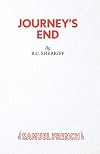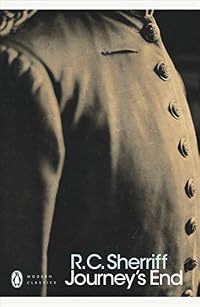
Journey's End [play]
by R. C. Sherriff
On This Page
Description
It’s March 1918, and World War I is raging in Europe. In the trenches in northern France, a group of British officers, led by the war-weary Captain Stanhope, ready themselves for a major German attack while facing their worst fears. R.C. Sherriff drew on his own experiences in World War I to create the play, which premiered in 1928 and is now considered one of the preeminent works about the horrors of war. Recorded at The Invisible Studios, West Hollywood, in February 2024. Adapted and show more Directed by Martin JarvisProducing Director: Susan Albert Loewenberg An L.A. Theatre Works full cast recording, starring: James Callis as Lieutenant HibbertJosh Cole as 2nd Lieutenant RaleighJack Cutmore-Scott as Captain StanhopeTobias Echeverria as Young German Soldier, English SoldierAdam Godley as Lieutenant OsborneIan Ogilvy as The ColonelDarren Richardson as MasonSimon Templeman as 2nd Lieutenant TrotterMatthew Wolf as Captain Hardy, Company Sergeant-Major Senior Producer: Anna Lyse EriksonPrepared for audio by Mark HoldenRecorded and edited by Neil WogensonDesigned by Neil Wogenson, Charles Carroll and Mark Holden, and mixed by Charles Carroll for The Invisible Studios, West Hollywood.Senior Radio Producer: Ronn LipkinFoley Artist: Stacey Martinez. show lessTags
Recommendations











Member Reviews
Journey's End is considered a classic of First World War literature now, but at the time, it was rejected by almost every producer in the West End (‘How can I put on a play with no leading lady?’ one manager complained, providing Sherriff with the title to his future autobiography). It finally secured a pitiful two-night run at the Apollo in December of 1928, where it had the great good fortune to feature an unknown twenty-one-year-old actor in the lead role – one Laurence Olivier. It, and he, never looked back.
It's a beautiful part for an actor, in a play that's wonderfully lean and controlled – a claustrophobic, tense study of combat trauma in three efficient acts. There is only one set – the inside of a British dugout – show more and we are not allowed out of it for the duration of the play, watching the interactions between Captain Stanhope and his four officers as a major German attack approaches.
All of them deal with the tension in their own ways – Stanhope self-medicates with whisky; Osborne, his second in command, is calm and stoical; Hibbert attempts to feign a debilitating ‘neuralgia’; and Trotter concentrates on enjoying his food to the fullest.
The newest arrival, Raleigh, knew Stanhope at school (where he was ‘skipper of rugger at Barford, and kept wicket for the eleven’); he has pulled strings to be in his boyhood hero's company, and through him we see the changes that a year on the Western Front has wrought on Stanhope.
In its setting, and in the dynamic of its characters, you can see this play standing squarely behind almost every televisual and film representation of the trenches ever since. (It is practically a blueprint for Blackadder Goes Forth, with company cook Mason doing duty as comic relief.) It is also very moving – perhaps most of all because its characters are not against the war at all. They believe that what they're doing is important; we, watching from a distance, are almost overwhelmed by the meaningfulness that can be created from futility. show less
It's a beautiful part for an actor, in a play that's wonderfully lean and controlled – a claustrophobic, tense study of combat trauma in three efficient acts. There is only one set – the inside of a British dugout – show more and we are not allowed out of it for the duration of the play, watching the interactions between Captain Stanhope and his four officers as a major German attack approaches.
All of them deal with the tension in their own ways – Stanhope self-medicates with whisky; Osborne, his second in command, is calm and stoical; Hibbert attempts to feign a debilitating ‘neuralgia’; and Trotter concentrates on enjoying his food to the fullest.
The newest arrival, Raleigh, knew Stanhope at school (where he was ‘skipper of rugger at Barford, and kept wicket for the eleven’); he has pulled strings to be in his boyhood hero's company, and through him we see the changes that a year on the Western Front has wrought on Stanhope.
In its setting, and in the dynamic of its characters, you can see this play standing squarely behind almost every televisual and film representation of the trenches ever since. (It is practically a blueprint for Blackadder Goes Forth, with company cook Mason doing duty as comic relief.) It is also very moving – perhaps most of all because its characters are not against the war at all. They believe that what they're doing is important; we, watching from a distance, are almost overwhelmed by the meaningfulness that can be created from futility. show less
A modern movie of Journey's End has just been released in the UK and I was recently privileged to view, quite frankly I was astounded by what I saw, so moved by this sober and thoughtful interpretation that I decided to acquire and read the original dramatic play published in 1928 by R C Sherriff who based his novel on his own experiences of life (if we can call it that) in the trenches of Northern France during the spring of 1918.
At the start of world war 1 there appeared to be no shortage of young men following the advice from Lord Kitchener..."Your country needs you" These young romantic conscripts happily boarded troop trains heading for the trenches of St Quentin in northern France in order to fight for king and country. What they show more encountered was an entrenched position as two opposing sides faced each other across a muddy desolate no man's land. Life in the trenches was abominable. As well as the constant fear of mortars with the resulting shrapnel, soldiers cut to ribbons, muddy conditions giving rise to trench foot and a large expanding rodent problem. If we add to this the overzealous use of mustard gas then a picture reminiscent of a living hell is an apt description.
Given these facts there seemed to be no shortage of volunteers eager to travel through this dystopian landscape where the average life expectancy of a soldier or officer was a mere six weeks. There was a total lack of reality in the minds of commanding officers quite happy to send millions of men to an untimely death cut down by machine gun fire, entangled in barbed wire, or simply blown to pieces by a direct shell hit. If we are to believe numerous accounts the stiff upper lip prevailed and the language of the time; rugger, chap, topping, jolly introduced a surreal quality to this living hell....."A dugout got blown up and came down in the men's tea. They were frightfully annoyed"...."He was the skipper of rugger at Barford, and kept wicket for the eleven. A jolly good bat, too"...
I have been very moved by reading Journey's End and the final images instills a very sombre note. The book explores issues of friendship and comradeship, the desolation of the human mind under extreme conditions, the utter futility of war, and the senseless sacrifice of millions of lives by an inept leadership who was utterly blind to the realities of battle in the blood drenched battlefields of Northern France show less
At the start of world war 1 there appeared to be no shortage of young men following the advice from Lord Kitchener..."Your country needs you" These young romantic conscripts happily boarded troop trains heading for the trenches of St Quentin in northern France in order to fight for king and country. What they show more encountered was an entrenched position as two opposing sides faced each other across a muddy desolate no man's land. Life in the trenches was abominable. As well as the constant fear of mortars with the resulting shrapnel, soldiers cut to ribbons, muddy conditions giving rise to trench foot and a large expanding rodent problem. If we add to this the overzealous use of mustard gas then a picture reminiscent of a living hell is an apt description.
Given these facts there seemed to be no shortage of volunteers eager to travel through this dystopian landscape where the average life expectancy of a soldier or officer was a mere six weeks. There was a total lack of reality in the minds of commanding officers quite happy to send millions of men to an untimely death cut down by machine gun fire, entangled in barbed wire, or simply blown to pieces by a direct shell hit. If we are to believe numerous accounts the stiff upper lip prevailed and the language of the time; rugger, chap, topping, jolly introduced a surreal quality to this living hell....."A dugout got blown up and came down in the men's tea. They were frightfully annoyed"...."He was the skipper of rugger at Barford, and kept wicket for the eleven. A jolly good bat, too"...
I have been very moved by reading Journey's End and the final images instills a very sombre note. The book explores issues of friendship and comradeship, the desolation of the human mind under extreme conditions, the utter futility of war, and the senseless sacrifice of millions of lives by an inept leadership who was utterly blind to the realities of battle in the blood drenched battlefields of Northern France show less
Set in one of the many depressing dugouts in the trenches of World War I ‘Journey’s End’ is often cited as one of the best anti-war plays, and after finally reading it I understand why. The play allows a brief glance into the experiences of the officers in an Infantry company who must occupy their time on the Front Line just before an attack.
Raleigh, a young school leaver fresh out of training, joins his old school friend and hero Stanhope, who has drastically changed after surviving three years in France. The play explores how the officers of the company cope with the strain of dealing with the uncountable horrors they must witness. Camaraderie and escapism seem to help the men to forget but when Raleigh’s school boy naivety is show more contrasted against his counterparts it is easy to see how the idealistic hopes of a generation were turned to disillusion. Men are taken away ruthlessly with no time to mourn their loss and the scarring effect of the war is seen ever more vividly as each act passes.
‘Journey’s End’ manages to convey the futility of war concisely and creates sympathetic characters who allow us a momentary glimpse into the war and an understanding of how much men, just like them, were forced to endure. show less
Raleigh, a young school leaver fresh out of training, joins his old school friend and hero Stanhope, who has drastically changed after surviving three years in France. The play explores how the officers of the company cope with the strain of dealing with the uncountable horrors they must witness. Camaraderie and escapism seem to help the men to forget but when Raleigh’s school boy naivety is show more contrasted against his counterparts it is easy to see how the idealistic hopes of a generation were turned to disillusion. Men are taken away ruthlessly with no time to mourn their loss and the scarring effect of the war is seen ever more vividly as each act passes.
‘Journey’s End’ manages to convey the futility of war concisely and creates sympathetic characters who allow us a momentary glimpse into the war and an understanding of how much men, just like them, were forced to endure. show less
Set in a British trench at the tail end of the First World War, this play covers a span of four days and packs in a lot of plot and characters. My favourite was Trotter, who for some reason I pictured as a Nick Frost sort of character, although I also liked Osborne, the weary veteran. This was the sort of play where I wish I'd been able to interact with the characters before their fateful four days chronicled here; they really came to life for me. Hoping that the rumour of a movie adaptation will become fact, because there's a lot of material here that could be explored. Recommended if you like to read about the First World War.
I have read many books on the First World War; very few of which have been novels. My non-fiction reading covers pretty much all areas of the war: land, naval, air, diplomatic, political, economic, social, etc. So I do have a good understanding of the various facets of the war. I found this play to be particularly moving, as well accurate in its portrayal of the interactions among the officers in this infantry company in the few days remaining before the final German offensive on March 21, 1918.
Highly recommend. A fast, absorbing read.
Highly recommend. A fast, absorbing read.
I would love to see this play performed. It's the blueprint for almost all of the WWI dramas which followed it. This play enabled R.C. Sherriff to turn to writing full-time, and launched the acting career of Laurence Olivier. Journey's End is set wholly in an officers' dugout, and shows various convincing responses to having to fight from the trenches.
I'm not very good at reading plays, but this really kept my attention. I would have loved to have seen this with the young Lawrence Olivier as Stanhope. It is a fascinating look at class in the trenches. As well as being an interesting war story. Good strong characters. Quite the page turner!
Members
- Recently Added By
Lists

Books about World War I
80 works; 14 members

Books mentioned in The Diary of a Provincial Lady
59 works; 4 members

THE WAR ROOM
813 works; 24 members

Books Read in 2024
4,623 works; 126 members

My Play Collection
769 works; 3 members

Writers In Public Domain 2026
90 works; 1 member
Author Information

33+ Works 2,177 Members
Some Editions
Awards and Honors
Awards
Distinctions
Series
Belongs to Publisher Series
Work Relationships
Is contained in
Has the adaptation
Common Knowledge
- Canonical title
- Journey's End [play]
- Original publication date
- 1928
- Important events
- World War I
- Related movies
- Journey's End (1930 | IMDb); Die andere Seite (1931 | IMDb); Journey's End (1988 | IMDb); Aces High (1976 | IMDb); Journey's End (2017 | IMDb)
- Canonical DDC/MDS
- 822.912
- Disambiguation notice
- This is the play. Please do not combine with the author's later novelisation, co-written with Vernon Bartlett.
Classifications
Statistics
- Members
- 567
- Popularity
- 51,508
- Reviews
- 9
- Rating
- (4.09)
- Languages
- Danish, English, German, Swedish
- Media
- Paper, Ebook
- ISBNs
- 12
- ASINs
- 21