On This Page
Description
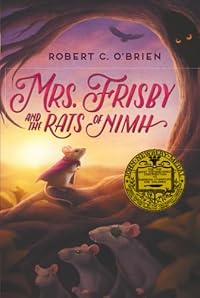
Having no one to help her with her problems, a widowed mouse visits the rats whose former imprisonment in a laboratory made them wise and long lived.Tags
Recommendations

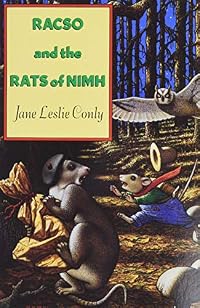




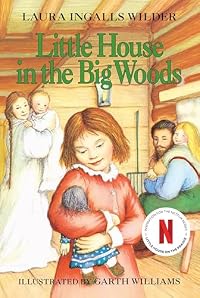

Member Recommendations
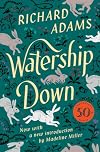
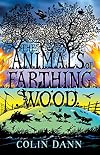
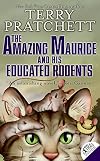


ncgraham A wonderful, haunting post-apocalyptic thriller by the same author. Same sense of doom as in Mrs. Frisby, but an even better read.
13


Member Reviews
Mrs. Frisby is a recently-widowed mouse living on a human's farm with her 4 children. When one of her children gets sick, she must ask the colony of strange rats living nearby for help. She learns that they are superintelligent rats that escaped from someplace called "Nimh" and are trying to make a life for themselves.
I know this is an award-winning classic, but I was completely underwhelmed. There were innumerable errors in logic in the book, everything from Mrs. Frisby experiencing several summers and winters (mice live 1-2 years) and having 4 children of different ages (mice have litters) who also remember summer and winter (mice are full grown at 4 weeks) to problems with the overall philosophy of the book.
The rats are striving to show more live a life without stealing from humans, but that is entirely based on the premise that there's no such thing as rats that don't steal from humans, which just is not true. Nicodemus says "We discovered early on that in order to stop stealing we would, for awhile, have to steal more than ever," referring to taking seeds and equipment from the farmer so that they could take it into the forest to start their new life. Um, why? All kinds of animals live in the forest without stealing from humans. And if the rats really wanted to they could just cultivate the plants they find in the forest, there's no reason to take a bunch of oats and tools with them if they are so worried about stealing.
This anti-laziness (where laziness = stealing) philosophy is pushed hard. In particular, Nicodemus tells two stories to prove his point. The first is about a woman who is the first in her town to get a vacuum cleaner. All the other women are jealous that her floor is so clean so they get vacuum cleaners too. The demand for vacuums leads the vacuum company to build a factory in the town and the pollution expelled by the factory makes the air so dirty that the women can never vacuum their floors as clean as they were before they had vacuums. This story is vague enough that it doesn't matter if it's true or not, but what is the point of it? The second story is from a science book that Nicodemus read, which stated that rodents were once the most civilized animals on earth, but their lives were too easy and they got lazy and stopped progressing. Then monkeys, whose lives were tougher, came out of the trees and drove away the rodents and evolved into humans. This story just doesn't make any sense. Why would rodents lives be any easier than monkeys/humans? The anti-laziness philosophy seems to be much of the point of the book, when simply stating that the rats needed to move away from humans so that they wouldn't get caught by NIMH scientists would have been much more effective, and the plot would have been the same.
Mrs. Frisby doesn't seem any less smart than the rats, nor did she ever notice that she was significantly less smart than her husband. Most of what the rats know they learned from reading books, and Mrs. Frisby can read. She overhears several complex human conversations and has no trouble understanding any of them. What, exactly, is supposed to make the rats so special? Also, if the rats are so smart and read so many non-fiction books, including two sets of encyclopedias, how did they never find out what "NIMH" meant?
There's some sexism here as well. Jonathan Frisby was out planning and scheming with the rats every day and never told his wife he knew them, but we don't even know Mrs. Frisby's first name. She's only referred to as "Mrs. Frisby" and "Mrs. Jonathan Frisby", despite the fact that she's the main character. The book explicitly states that Mrs. Frisby's female children cry while her male children just "look sad". While it is mentioned that some of the NIMH rats are female, the only ones who have any action or have names are male.
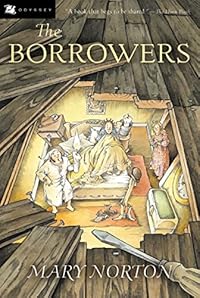
If you enjoy books about small animals talking and acting like humans, you'd be much better off with A Cricket in Times Square, Redwall, Watership Down, or The Borrowers (technically tiny humans but same premise) which all make way more sense than this. show less
I know this is an award-winning classic, but I was completely underwhelmed. There were innumerable errors in logic in the book, everything from Mrs. Frisby experiencing several summers and winters (mice live 1-2 years) and having 4 children of different ages (mice have litters) who also remember summer and winter (mice are full grown at 4 weeks) to problems with the overall philosophy of the book.
The rats are striving to show more live a life without stealing from humans, but that is entirely based on the premise that there's no such thing as rats that don't steal from humans, which just is not true. Nicodemus says "We discovered early on that in order to stop stealing we would, for awhile, have to steal more than ever," referring to taking seeds and equipment from the farmer so that they could take it into the forest to start their new life. Um, why? All kinds of animals live in the forest without stealing from humans. And if the rats really wanted to they could just cultivate the plants they find in the forest, there's no reason to take a bunch of oats and tools with them if they are so worried about stealing.
This anti-laziness (where laziness = stealing) philosophy is pushed hard. In particular, Nicodemus tells two stories to prove his point. The first is about a woman who is the first in her town to get a vacuum cleaner. All the other women are jealous that her floor is so clean so they get vacuum cleaners too. The demand for vacuums leads the vacuum company to build a factory in the town and the pollution expelled by the factory makes the air so dirty that the women can never vacuum their floors as clean as they were before they had vacuums. This story is vague enough that it doesn't matter if it's true or not, but what is the point of it? The second story is from a science book that Nicodemus read, which stated that rodents were once the most civilized animals on earth, but their lives were too easy and they got lazy and stopped progressing. Then monkeys, whose lives were tougher, came out of the trees and drove away the rodents and evolved into humans. This story just doesn't make any sense. Why would rodents lives be any easier than monkeys/humans? The anti-laziness philosophy seems to be much of the point of the book, when simply stating that the rats needed to move away from humans so that they wouldn't get caught by NIMH scientists would have been much more effective, and the plot would have been the same.
Mrs. Frisby doesn't seem any less smart than the rats, nor did she ever notice that she was significantly less smart than her husband. Most of what the rats know they learned from reading books, and Mrs. Frisby can read. She overhears several complex human conversations and has no trouble understanding any of them. What, exactly, is supposed to make the rats so special? Also, if the rats are so smart and read so many non-fiction books, including two sets of encyclopedias, how did they never find out what "NIMH" meant?
There's some sexism here as well. Jonathan Frisby was out planning and scheming with the rats every day and never told his wife he knew them, but we don't even know Mrs. Frisby's first name. She's only referred to as "Mrs. Frisby" and "Mrs. Jonathan Frisby", despite the fact that she's the main character. The book explicitly states that Mrs. Frisby's female children cry while her male children just "look sad". While it is mentioned that some of the NIMH rats are female, the only ones who have any action or have names are male.
If you enjoy books about small animals talking and acting like humans, you'd be much better off with A Cricket in Times Square, Redwall, Watership Down, or The Borrowers (technically tiny humans but same premise) which all make way more sense than this. show less
I read and enjoyed Mrs. Frisby and the Rats of NIMH and watched the movie The Secret of NIMH which is based upon it when I was about the same age my animal-loving daughter is now. So, naturally when she was looking for a book to read I handed this to her. She read about a third of it and decided it was boring and stopped reading. This prompted me to pick up the book and read through it to see if I was merely remembering it with the rose colored glasses of youth. It turns out, that not only is Mrs. Frisby as good as I remember it being, it is actually much better than that.
Mrs. Frisby is the central character in the action, a widowed field mouse living with her children on the Fitzgibbon farm. The family lives in the farmer's fields show more during the winter, and moves to another location for the summer to avoid being killed during the spring plowing. Unfortunately for Mrs. Frisby, her youngest son Timothy falls ill, after consulting the wise old mouse Mr. Ages, she learns that he cannot be moved. Mrs. Frisby rescues a crow, who takes her to see a wise owl to get advice. Upon learning that she is the widow of Johnathan Frisby, she is sent to see the rats of NIMH, a secretive bunch that live under a rose bush in the Fitzgibbons' garden. Once she meets up with the rats and their leader Nicodemus, the real story of the book unfolds.
It turns out that the rats are the result of genetic experiments in a lab that goes by the acronym NIMH. They have human intelligence, can read and write, use machines, and electricity. It turns out that Jonathan Frisby (and Mr. Ages) were also part of the experiment. The mice agree to move Mrs. Frisby's house if she will drug the farmer's cat. She is captured and learns that people from NIMH have discovered where the rats are and intend to come and exterminate them prompting the rats to put into motion their plan to evacuate and try to set up their own society where they can live without acting as parasites on human labor. Mrs. Frisby is front and center throughout the action, which makes her a rare and well written example of a female protagonist in a young adult book that is not specifically aimed at girls.
The story, originally written in 1971, seems remarkably ahead of its time. The rats are modified using genetic engineering (how this is done other than through a series of injections isn't explained, although since the story is told from the rats' perspective, and they don't fully understand it, this is understandable). Having created rodents with human (or close to human) intelligence, the response of the people who uncover them is immediately to try to exterminate them. This raises a lot of serious questions for a book aimed at children - having made the rats sentient, do the humans owe them respect? The book, told from the perspective of the various animals, clearly advocates for their side. And the sad thing is, when confronted by a non-human intelligence (even if it is one we created ourselves), the "destroy it" response of the human actors in the story seems altogether too plausible. With genetic engineering becoming part of the ordinary landscape of science now, the serious questions about what responsibility humans will have for their creations are being pushed to the forefront. Although it is unlikely that a situation will develop like that of the rats in the book, the broader questions concerning the technology remain.
The only real weakness of the book is that, given the behavior of the unmodified animals in the story - mostly Mrs. Frisby, the crow Jeremy, and the wise old owl - there seems to have been little need to modify the rats to give them intelligence. Mrs. Frisby is able to read, having been taught by her husband. She, Jeremy, and the owl are capable of holding extended and somewhat abstract conversation, and so on. Granted, to make a story involving talking animals work, some concessions in this area have to be made, but it lessens the impact of the increased intelligence that the rats have been given to have other animals seemingly not more than a tiny step behind them. Really, the only difference between the rats and the other animals appears to be that the rats can use machines, but it appears that Mrs. Frisby, given a little instruction, would have no trouble using the machines too. In the end though, this is merely a quibble and doesn't seriously detract from the story.
As a final note, I must point out that the book diverges from the movie in significant ways. The most important of which is that there is no mystical element in the book - the rats are enhanced by genetic engineering, and there is no magical amulet. Secondly, though Jenner is equally misguided in the book as he is in the movie, he is not as villainous in the book. His actions cause trouble for the rat colony, but the harm is unintentional and he doesn't actually appear "on camera". It is clear to me that these elements were added to the story to "punch up" the action and give the story an antagonist that was not human. Apparently the idea of a story in which the "villains" were humans opposing a colony of rats sounded like a box office loser to someone somewhere in the production chain, and thus Jenner was made into a classic animated animal villain. These changes make the story definitely different, and in my opinion, detract from it. However, the book itself is, of course, unaffected leaving us the superior story for our reading pleasure.
This has also been posted to my blog Dreaming About Other Worlds. show less
Mrs. Frisby is the central character in the action, a widowed field mouse living with her children on the Fitzgibbon farm. The family lives in the farmer's fields show more during the winter, and moves to another location for the summer to avoid being killed during the spring plowing. Unfortunately for Mrs. Frisby, her youngest son Timothy falls ill, after consulting the wise old mouse Mr. Ages, she learns that he cannot be moved. Mrs. Frisby rescues a crow, who takes her to see a wise owl to get advice. Upon learning that she is the widow of Johnathan Frisby, she is sent to see the rats of NIMH, a secretive bunch that live under a rose bush in the Fitzgibbons' garden. Once she meets up with the rats and their leader Nicodemus, the real story of the book unfolds.
It turns out that the rats are the result of genetic experiments in a lab that goes by the acronym NIMH. They have human intelligence, can read and write, use machines, and electricity. It turns out that Jonathan Frisby (and Mr. Ages) were also part of the experiment. The mice agree to move Mrs. Frisby's house if she will drug the farmer's cat. She is captured and learns that people from NIMH have discovered where the rats are and intend to come and exterminate them prompting the rats to put into motion their plan to evacuate and try to set up their own society where they can live without acting as parasites on human labor. Mrs. Frisby is front and center throughout the action, which makes her a rare and well written example of a female protagonist in a young adult book that is not specifically aimed at girls.
The story, originally written in 1971, seems remarkably ahead of its time. The rats are modified using genetic engineering (how this is done other than through a series of injections isn't explained, although since the story is told from the rats' perspective, and they don't fully understand it, this is understandable). Having created rodents with human (or close to human) intelligence, the response of the people who uncover them is immediately to try to exterminate them. This raises a lot of serious questions for a book aimed at children - having made the rats sentient, do the humans owe them respect? The book, told from the perspective of the various animals, clearly advocates for their side. And the sad thing is, when confronted by a non-human intelligence (even if it is one we created ourselves), the "destroy it" response of the human actors in the story seems altogether too plausible. With genetic engineering becoming part of the ordinary landscape of science now, the serious questions about what responsibility humans will have for their creations are being pushed to the forefront. Although it is unlikely that a situation will develop like that of the rats in the book, the broader questions concerning the technology remain.
The only real weakness of the book is that, given the behavior of the unmodified animals in the story - mostly Mrs. Frisby, the crow Jeremy, and the wise old owl - there seems to have been little need to modify the rats to give them intelligence. Mrs. Frisby is able to read, having been taught by her husband. She, Jeremy, and the owl are capable of holding extended and somewhat abstract conversation, and so on. Granted, to make a story involving talking animals work, some concessions in this area have to be made, but it lessens the impact of the increased intelligence that the rats have been given to have other animals seemingly not more than a tiny step behind them. Really, the only difference between the rats and the other animals appears to be that the rats can use machines, but it appears that Mrs. Frisby, given a little instruction, would have no trouble using the machines too. In the end though, this is merely a quibble and doesn't seriously detract from the story.
As a final note, I must point out that the book diverges from the movie in significant ways. The most important of which is that there is no mystical element in the book - the rats are enhanced by genetic engineering, and there is no magical amulet. Secondly, though Jenner is equally misguided in the book as he is in the movie, he is not as villainous in the book. His actions cause trouble for the rat colony, but the harm is unintentional and he doesn't actually appear "on camera". It is clear to me that these elements were added to the story to "punch up" the action and give the story an antagonist that was not human. Apparently the idea of a story in which the "villains" were humans opposing a colony of rats sounded like a box office loser to someone somewhere in the production chain, and thus Jenner was made into a classic animated animal villain. These changes make the story definitely different, and in my opinion, detract from it. However, the book itself is, of course, unaffected leaving us the superior story for our reading pleasure.
This has also been posted to my blog Dreaming About Other Worlds. show less
A marvelous story - a classic for a reason! A mouse called Mrs. Frisby has a problem: her son Timothy is too sick to move from their winter home to their summer home, and the clock is ticking: soon it will be warm enough that the farmer will plow the garden where they've been living. Mrs. Frisby bravely consults Mr. Ages, another mouse who serves as a local doctor; then she gets help from a crow named Jeremy and a wise old owl, who sends her to the rats.
There, Mrs. Frisby learns a surprising secret about her late husband's origins and the rats themselves, who escaped from a laboratory and are incredibly smart and long-lived. She participates in a plan to subdue the farm cat, Dragon, so that the rats can help her - and she's able to show more help them, in turn.
It looks as though there are two sequels by another author, and a movie (retitled The Secret of NIMH).
Quote
"By teaching us how to read, they had taught us how to get away." show less
There, Mrs. Frisby learns a surprising secret about her late husband's origins and the rats themselves, who escaped from a laboratory and are incredibly smart and long-lived. She participates in a plan to subdue the farm cat, Dragon, so that the rats can help her - and she's able to show more help them, in turn.
It looks as though there are two sequels by another author, and a movie (retitled The Secret of NIMH).
Quote
"By teaching us how to read, they had taught us how to get away." show less
I'm not sure how I missed this book when it came out. I am an avid mouse and rat lover. Anyway, better late than never I suppose! This is the story of a widow mouse with four children. They live in a brick home in the garden of a farmer during the winter, then in spring, they move to their home by the brook in the forest. They must do this before the farmer plows his garden in the spring. There is a complication this spring however. The season has come earlier than ever and one of the children is recovering from pneumonia. If they move in the chill, he is likely to become ill again and die. If they wait too long, they will all surely die when the plow comes. What is a mother to do?
I appreciated the way that the author kept the animals show more to animal behavior and dilemmas for the most part. The notable exception being the rats, but there is an explanation for that. Occasionally the mama would think in inappropriate similes, but not enough to jar the story, and the fact that it is a fantasy story allows for that. What all the above analysis fails to account for is the utter charm of the tale. I was caught up in this mama's problem and the way she bravely faced it. Some of the rat story dragged a bit for me, but the predicament of this mommy mouse tugged at my heart. The ending is bittersweet and perfect for being so. show less
I appreciated the way that the author kept the animals show more to animal behavior and dilemmas for the most part. The notable exception being the rats, but there is an explanation for that. Occasionally the mama would think in inappropriate similes, but not enough to jar the story, and the fact that it is a fantasy story allows for that. What all the above analysis fails to account for is the utter charm of the tale. I was caught up in this mama's problem and the way she bravely faced it. Some of the rat story dragged a bit for me, but the predicament of this mommy mouse tugged at my heart. The ending is bittersweet and perfect for being so. show less
5/13/22
Remember that little promise to myself that I mentioned in my last review, that I would try to focus on reading the books I already have? Yeah, total joke. Found a bunch of warm-and-fuzzy-childhood-memories books in the local little free library, and of course I have to read them before passing them on to the kids in the family who are actually the target audience!
5/15/22
That was a lot more philosophical than I remembered. Pretty sure I was only quizzed on the plot points, not given reflection prompts such as, "Do you agree with Nicodemus that civilization will stop evolving if life gets too easy?"
[Which, no, I don't. I think that if it's easier to do the basics of survival, then intelligent creatures will put their minds to show more other things, like arts and education and overall improving life.]
Ahem. Anywho...
Mrs. Frisby is a tremendously plucky little mouse who, it must be said, is way smarter than she's given any credit for.Seriously, she learns to read and keeps up intellectually with mice and rats who have been genetically enhanced, and yet none of them comment on this. She's a widow with four little children to care for. Unfortunately, her youngest is deathly ill and the annual move from winter quarters in the Fitzgibbon's farmhouse garden to damp, springtime summer quarters in the forest would probably kill him. She saves a crow who, as a favor, takes her to an owl--which, of course, would eat her under other circumstances--for advice. Said owl advises her to talk to the strange rats that live in the rosebush near the farmhouse.
The rats, it turns out,are super-intelligent escapees from NIMH, where they were genetically modified to have very long lives and, crucially, very advanced intelligence. They're engineers and mechanics, as well as little philosophers who've started thinking about why, if they're living a life of luxury under the rosebush, with electricity and elevators and running water, they don't feel content. Part of it is the shame of living of stealing. That I get. The other is that life is too easy because they don't have to work hard. That sounds uber-capitalist and gross. But I digress. The rats have decided to not only strike out on their own in the forest, but to go primitive, destroying their tools and engines rather than, for example, figuring out how to generate their own electricity.
Since Mrs. Frisby's husband was one of two mice also genetically modified, and who was great friends with the rats, they put their engineering prowess to work to move Mrs. Frisby's cinderblock winter home to a safer location. To assist their efforts, Mrs. Frisby volunteers to drug the farm cat, Dragon (great name), so that it won't attack the rats at work. Dang, mama! While at it, she learns some crucial information that could mean life or death for the rats of NIMH.
Mrs. Frisby and the Rats of NIMH is a grand adventure that I loved when I read it in class in 4th grade and loved when I read it again as an adult. Maybe it's the size of the characters that made their exploits feel so big and exciting: I did love books about animals, dolls, and small people who adapted human-sized things into them-sized uses. The narrative is extremely efficient--there's never a dull moment between Mrs. Frisby's story and Nicodemus's story about where the rats came from--without skimping on atmospheric details. So often I read books from my childhood and realize how much heavy lifting my own imagination did. Not the case here.
Now, it will come as no surprise to anyone that I found this charming book--originally published in 1971--sadly more sexist than I remembered. Poor Mrs. Frisby has no first name, though her dead husband does. Obviously the rats must have females among them, but the only one we ever meet is a silly child with a silly crush on an adult rat. They only time other female rats are mentioned is for "the wives'" silly desire to decorate the rats' home. Let's not forget the shrewish literal shrew who gets in the way of progress. What silly females! And although Mrs. Frisby rocks all the socks--braves crows, owls, cats, rats, humans, and more--no one ever goes, "Huh, that's some mouse."
Ah well, you can't change the past. Though the new The Cricket in Times Square edition is trying. O'Brien died just a few years after this book released, so it would be up to his estate to decide whether they would like to massage the text a little to make it a bit more modern. Give Mrs. Frisby a name, make a couple of the male rats female, etc. It would take very little!
Good, solid memories. Read it with your kids!
Quote Roundup
p. 24) After talking to a crow: Birdbrain, thought Mrs. Frisby, and then recalled what her husband used to say: The size of the brain is no measure of its capacity. And well she might recall it, for the crow's head was double the size of her own.
p. 26) "We all help one another against the cat," she said.
This repeats a couple times throughout the book. As a cat owner, I was tickled. Good thing the Fitzgibbons didn't have a dog!
p. 160) From Nicodemus's narrative: But there was one book, written by a famous scientist [how do the rats know this?], that had a chapter about rats. Millions of years ago, he said, rats seemed to be ahead of all the other animals, seemed to be making a civilization of their own. They were well organized and built quite complicated villages in the fields. Their descendants today are the rats known as prairie dogs.
But somehow it didn't work. The scientist thought maybe it was because the rats' lives were too easy; while other animals (especially the monkeys) were living in the woods and getting tougher and smarter, the prairie dogs grew soft and lazy and made no more progress.
I wonder who this scientist is. I get the feeling that this scientific book may have been what inspired O'Brien to write his own children's fiction book!
p. 175) "You've got this idea stuck in your head [said one rat]. We've got to start from nothing and work hard and build a rat civilization. I say, why start from nothing if you can start with everything? We've already gota civilization."
"No [said Nicodemus]. We haven't. We're just living on the edge of somebody else's, like fleas on a dog's back. If the dog drowns, the fleas drown, too."
Very good closing point by Nicodemus. But I'm also a bit with Jenner. A civilization doesn't have to start from nothing, and in any case, rat civilization is already going to be built on human civilization because everything they know, they learned from humans! show less
Remember that little promise to myself that I mentioned in my last review, that I would try to focus on reading the books I already have? Yeah, total joke. Found a bunch of warm-and-fuzzy-childhood-memories books in the local little free library, and of course I have to read them before passing them on to the kids in the family who are actually the target audience!
5/15/22
That was a lot more philosophical than I remembered. Pretty sure I was only quizzed on the plot points, not given reflection prompts such as, "Do you agree with Nicodemus that civilization will stop evolving if life gets too easy?"
[Which, no, I don't. I think that if it's easier to do the basics of survival, then intelligent creatures will put their minds to show more other things, like arts and education and overall improving life.]
Ahem. Anywho...
Mrs. Frisby is a tremendously plucky little mouse who, it must be said, is way smarter than she's given any credit for.
The rats, it turns out,
Since Mrs. Frisby's husband was one of two mice also genetically modified, and who was great friends with the rats, they put their engineering prowess to work to move Mrs. Frisby's cinderblock winter home to a safer location. To assist their efforts, Mrs. Frisby volunteers to drug the farm cat, Dragon (great name), so that it won't attack the rats at work. Dang, mama! While at it, she learns some crucial information that could mean life or death for the rats of NIMH.
Mrs. Frisby and the Rats of NIMH is a grand adventure that I loved when I read it in class in 4th grade and loved when I read it again as an adult. Maybe it's the size of the characters that made their exploits feel so big and exciting: I did love books about animals, dolls, and small people who adapted human-sized things into them-sized uses. The narrative is extremely efficient--there's never a dull moment between Mrs. Frisby's story and Nicodemus's story about where the rats came from--without skimping on atmospheric details. So often I read books from my childhood and realize how much heavy lifting my own imagination did. Not the case here.
Now, it will come as no surprise to anyone that I found this charming book--originally published in 1971--sadly more sexist than I remembered. Poor Mrs. Frisby has no first name, though her dead husband does. Obviously the rats must have females among them, but the only one we ever meet is a silly child with a silly crush on an adult rat. They only time other female rats are mentioned is for "the wives'" silly desire to decorate the rats' home. Let's not forget the shrewish literal shrew who gets in the way of progress. What silly females! And although Mrs. Frisby rocks all the socks--braves crows, owls, cats, rats, humans, and more--no one ever goes, "Huh, that's some mouse."
Ah well, you can't change the past. Though the new The Cricket in Times Square edition is trying. O'Brien died just a few years after this book released, so it would be up to his estate to decide whether they would like to massage the text a little to make it a bit more modern. Give Mrs. Frisby a name, make a couple of the male rats female, etc. It would take very little!
Good, solid memories. Read it with your kids!
Quote Roundup
p. 24) After talking to a crow: Birdbrain, thought Mrs. Frisby, and then recalled what her husband used to say: The size of the brain is no measure of its capacity. And well she might recall it, for the crow's head was double the size of her own.
p. 26) "We all help one another against the cat," she said.
This repeats a couple times throughout the book. As a cat owner, I was tickled. Good thing the Fitzgibbons didn't have a dog!
p. 160) From Nicodemus's narrative: But there was one book, written by a famous scientist [how do the rats know this?], that had a chapter about rats. Millions of years ago, he said, rats seemed to be ahead of all the other animals, seemed to be making a civilization of their own. They were well organized and built quite complicated villages in the fields. Their descendants today are the rats known as prairie dogs.
But somehow it didn't work. The scientist thought maybe it was because the rats' lives were too easy; while other animals (especially the monkeys) were living in the woods and getting tougher and smarter, the prairie dogs grew soft and lazy and made no more progress.
I wonder who this scientist is. I get the feeling that this scientific book may have been what inspired O'Brien to write his own children's fiction book!
p. 175) "You've got this idea stuck in your head [said one rat]. We've got to start from nothing and work hard and build a rat civilization. I say, why start from nothing if you can start with everything? We've already gota civilization."
"No [said Nicodemus]. We haven't. We're just living on the edge of somebody else's, like fleas on a dog's back. If the dog drowns, the fleas drown, too."
Very good closing point by Nicodemus. But I'm also a bit with Jenner. A civilization doesn't have to start from nothing, and in any case, rat civilization is already going to be built on human civilization because everything they know, they learned from humans! show less
This is a book I had long been curious about, having only seen the film itself once I was in high school. The film is a classic of animation, brilliantly directed by Don Bluth of All Dogs Go to Heaven, An American Tale, and The Land Before Time fame. The movie is a masterpiece, and was indeed Bluth's directorial debut. It would only make sense for the book to be similarly wonderful, right? And oh, oh it was.
[b: Mrs. Frisby and the Rats of NIMH|9822|Mrs. Frisby and the Rats of NIMH (Rats of NIMH, #1)|Robert C. O'Brien|https://images.gr-assets.com/books/1351191064s/9822.jpg|839692] stars a young mouse mother, Mrs. Frisby, as she seeks a solution to a vexing problem. Her youngest son, Timothy, has fallen ill with pneumonia and so can't show more join the rest of the family as they move to their summer residence. Mr. Fitzgibbon will soon be plowing the field they live in, and if they stay they all will die. Perhaps, though, just perhaps the rats will have a solution. They're known to be quite smart, after all...
This is one of the few books that casts rats in a positive light, and it does so in a wonderful way. I could recognize some of my silly boys in the characters, their wants and personalities. It's great in its anthropomorphic portrayal of the animals, but it never quite pushes the anthropomorphism as far as these books tend to. They still have beds of moss and little burrows, they still live like the animals they are, only more intelligently. It also poses the interesting notion of what would a group of civilized rats look like? What would be the civilization they built and how would it differ from our own?
A great book that raises some interesting questions about the way we, and animals, live. Can't wait to hear what my friend's kids think of it. :) show less
[b: Mrs. Frisby and the Rats of NIMH|9822|Mrs. Frisby and the Rats of NIMH (Rats of NIMH, #1)|Robert C. O'Brien|https://images.gr-assets.com/books/1351191064s/9822.jpg|839692] stars a young mouse mother, Mrs. Frisby, as she seeks a solution to a vexing problem. Her youngest son, Timothy, has fallen ill with pneumonia and so can't show more join the rest of the family as they move to their summer residence. Mr. Fitzgibbon will soon be plowing the field they live in, and if they stay they all will die. Perhaps, though, just perhaps the rats will have a solution. They're known to be quite smart, after all...
This is one of the few books that casts rats in a positive light, and it does so in a wonderful way. I could recognize some of my silly boys in the characters, their wants and personalities. It's great in its anthropomorphic portrayal of the animals, but it never quite pushes the anthropomorphism as far as these books tend to. They still have beds of moss and little burrows, they still live like the animals they are, only more intelligently. It also poses the interesting notion of what would a group of civilized rats look like? What would be the civilization they built and how would it differ from our own?
A great book that raises some interesting questions about the way we, and animals, live. Can't wait to hear what my friend's kids think of it. :) show less
Still absolutely charming. A widowed mouse mother is determined to move her young family before the farmer's plough destroys their winter home. She braves farmyards, forests, owls and cats, befriends birds in need and rats in unexpected peril to discover her world is a much bigger place than she could possibly expect. With unexpected themes of lab research, enhanced intelligence, extended aging (heartbreaking when you think about it) and a commune of socialist genius rats thrown in for good measure this is both a rousing adventure and an inspiring tale of a simple lady determined overcoming obstacles.
Members
- Recently Added By
Lists

Favorite Childhood Books
1,602 works; 512 members

Best Newbery Medal Winners
94 works; 53 members

Favorite Animal Fiction
359 works; 154 members
1001 Children's Books You Must Read Before You Grow Up
774 works; 100 members

Best Children's Books You've Read
197 works; 74 members

EEK! A Mouse ::: Best Children's Books
95 works; 13 members
NPRs Ultimate Backseat Bookshelf: 100 Must-Reads for kids 9-14
222 works; 30 members

Read the book and saw the movie
1,170 works; 195 members

Best Books About Animals
143 works; 48 members
Children's Fantasy
73 works; 10 members

Best middle grade books
130 works; 23 members

Mensa for Kids Excellence in Reading Award Program (Grades K-3)
64 works; 6 members

Elevenses
316 works; 88 members
Nonhuman Protagonists
235 works; 34 members

Sonlight Books
1,487 works; 25 members
my children books reading list-from 100 great books
101 works; 7 members

Childhood Favorites
427 works; 24 members

Newbery Medal Winners - By Year
105 works; 7 members

Children's Classics Worth Reading
68 works; 9 members

Satori Smiles Children's Book List
262 works; 7 members
Books I Wish I’d Read as a Kid
32 works; 4 members
Ambleside Books
459 works; 18 members

Blue Pyramid 1,276 Best Books of All Time
1,248 works; 32 members

CCE 1000 Good Books List
1,033 works; 12 members

Geek Dad Read to Your Kids List
79 works; 4 members

4th Grade Books
312 works; 5 members

Female Protagonist
1,056 works; 56 members

LibraryThingers' 1001 Books You Must Read Before You Die
442 works; 30 members

Puffin Books 70th anniversary handbook recommendations
537 works; 10 members

Recommended Reading List
219 works; 1 member
Before Austen Comes Aesop
318 works; 9 members

Books We Love to Reread
688 works; 296 members

SYES Library Wishlist
1,080 works; 4 members

Favorite Books from the 1970s
28 works; 3 members

Five star books
1,755 works; 108 members
School Made Us Read It
380 works; 196 members

Favorite Kids Books (chapter, middle grade)
168 works; 4 members
Children's Adventure
53 works; 4 members

Books We Loved As Children
603 works; 252 members
1970s
657 works; 23 members

Books Read in 2009
464 works; 11 members

Books Read in 2019
4,052 works; 108 members
Overdue Podcast
803 works; 9 members
Animals in the Title
498 works; 11 members

Books Read in 2017
4,248 works; 130 members

Middle-Grade Novels with Mice
24 works; 9 members

Books Read in 2015
3,298 works; 126 members
Speculative Fiction to Read
706 works; 32 members

Summer Reads 2014
207 works; 70 members
Best Fantasy Novels
821 works; 357 members
Books tagged favorites
390 works; 30 members
The Five Books That Represent Us
390 works; 147 members

Best Young Adult
399 works; 101 members

Books About Girls
219 works; 17 members
Talk Discussions
Past Discussions
MAY - SPOILERS - Mrs. Frisby and the Rats of NIMH in The Green Dragon (May 2014)
Author Information

Robert C. O'Brien was a distinguished author and journalist, whose other books for young readers include The Silver Crown and Z for Zachariah. Mrs. Frisby and the Rats of NIMH was the basis for the motion picture, the Secret of NIMH.
Some Editions
Awards and Honors
Awards
Notable Lists
Series

The Rats of NIMH (1)
Belongs to Publisher Series
Work Relationships
Has the adaptation
Is abridged in
Has as a student's study guide
Has as a teacher's guide
Common Knowledge
- Canonical title
- Mrs. Frisby and the Rats of NIMH
- Original title
- Mrs. Frisby and the Rats of NIMH
- Alternate titles
- The Secret of NIMH; Mrs Frisby and the Rats of NIMH
- Original publication date
- 1971
- People/Characters
- Mrs. Frisby; Timothy Frisby; Nicodemus; Justin; Brutus; Jenner (show all 7); Mr. Ages
- Important places
- The rosebush
- Related movies
- The Secret of NIMH (1982 | IMDb)
- Dedication
- To Catherine Fitzpatrick
- First words
- Mrs. Frisby, the head of a family of field mice, lived in an underground house in the vegetable garden of a farmer named Mr. Fitzgibbon.
- Quotations
- It was this, of course, that made our life so easy that it seemed pointless. We did not have enough work to do because a thief's life is always based on somebody else's work.
All doors are hard to unlock until you have the key. - Last words
- (Click to show. Warning: May contain spoilers.)Outside, the brook swam quietly through the woods, and up above them the warm wind blew through the newly opened leaves of the big oak tree. They went to sleep.
- Original language
- English
- Disambiguation notice
- Mrs. Frisby and the Rats of NIMH, also published as: The Secret of NIMH. Do not combine with the film The Secret of NIMH.
Classifications
- Genres
- Kids, Fiction and Literature, Children's Books
- DDC/MDS
- 813.54 — Literature & rhetoric American literature in English American fiction in English 1900-1999 1945-1999
- LCC
- PZ7 .O135 .M — Language and Literature Fiction and juvenile belles lettres Fiction and juvenile belles lettres Juvenile belles lettres
- BISAC
Statistics
- Members
- 13,270
- Popularity
- 584
- Reviews
- 187
- Rating
- (4.17)
- Languages
- 12 — Chinese, Danish, English, Finnish, French, German, Greek, Italian, Romanian, Spanish, Swedish, Turkish
- Media
- Paper, Audiobook, Ebook
- ISBNs
- 75
- ASINs
- 54